
Technologies
Highguard Review: I Can’t Get Enough of Horseback Gunplay and Raiding Bases
Despite a confusing debut at The Game Awards, this shooter is a cleverly forged amalgam of Apex Legends, Valorant and MOBA gameplay.
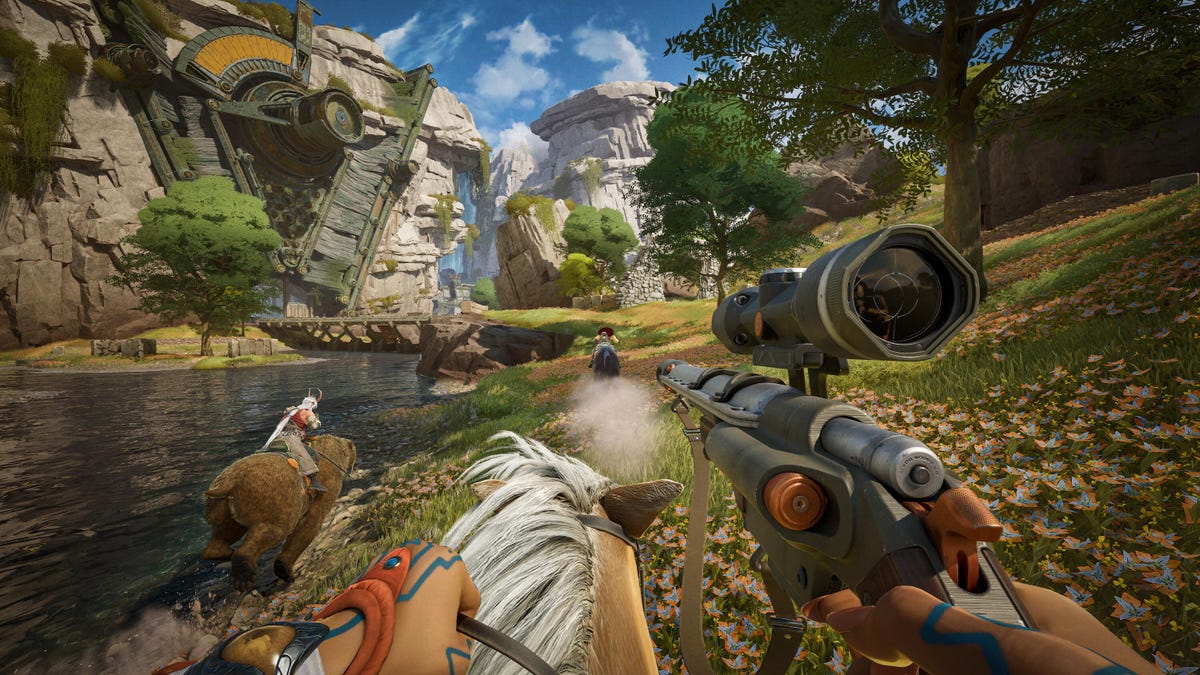
I was hurtling across a fantasy landscape on horseback with my two companions, racing toward the enemy base with the opposing team hot on our heels, a magic sword on my back that would win us the match, and all I could think was, Hell yes, this rules. I spent the entire day gleefully queuing back into more sessions to recapture that moment.
At an event in Los Angeles, I got to play Highguard days ahead of its launch. While I walked into the preview without a clue about what the game was, 8 hours later, I was more hyped for this shooter than any I’d played since Apex Legends (2019). That’s fitting, as many of the developers at Highguard are veterans of Apex studio Respawn who left to form a new company, Wildlight Entertainment, and make something completely new.
Fans may know Highguard from its reveal at The Game Awards in an admittedly confusing trailer. In several conversations during the preview, Wildlight developers acknowledged that the trailer didn’t properly represent their game, but they’re confident that players will change their tune once they get their hands on the game, which is available now and free to play on PS5, Xbox Series X and PC. It has full cross-play and cross-progression, too.
I’d be shocked if those developers aren’t proven right. Wildlight faces a nigh-impossible task in explaining their game in a trailer. Broadly, Highguard is a multiplayer shooter that teeters on the edge of chaos but blends elements of different games into a carefully refined dish of palate-pleasing novelty. With elements of Apex Legends, Valorant, Rainbow Six: Siege and League of Legends, Highguard is an amalgam with few rivals in its lane.
As a casual shooter fan with hundreds of hours each in Destiny 2 and Apex Legends, I found Highguard’s squad-based gameplay to be right up my alley. During the eight matches I played in my preview, I picked up the game pretty quickly and finished the day wanting to queue up for more.
Wildlight plans to upload dozens of videos explaining each of the game’s components, from its Warden hero classes (eight at launch) to weapons to maps to bases. But it’s not nearly as complicated as it sounds on paper — all thanks to lots of design iteration as the studio spent the last four years making their inspired Frankenstein of a multiplayer game.
What makes Highguard the world’s first Raid Shooter
For lack of a proper multiplayer descriptor, Wildlight invented its own: Raid Shooter. This combines first-person shooting, the lane skirmishing of MOBAs and the base raiding of games like Rainbow Six: Siege.
At launch, there’s only a single mode in the game, Raid, that pits a pair of three-person teams against each other. Matches in this mode last between 15 and 25 minutes (or shorter if either team steamrolls). Each match loops a set of four phases, each time-limited to keep matches flowing. Trust me, those loops will feel like second nature after a few matches.
Before each match begins, players pick their Warden, each a distinct hero with different passive, tactical and ultimate abilities (much like Apex Legends). Squads then vote on their pick from four different bases (of six at launch, with more coming). This is what they’ll defend from enemy raiding, each with a different layout better suiting some Wardens and play styles over others. Think of it like picking between Cinderella’s Castle, Helm’s Deep or Castle Dracula, which slot into the game’s maps. (Players only get to choose their base, not the larger map, for each match.)
Once the match starts, the first phase begins, giving players a minute to fortify their base’s walls, which can be destroyed with gunfire or tools. When the base’s shield opens, the gear phase begins. Squads have 2 minutes to ride out into the broader map to pick up more powerful versions of the guns they choose at launch, as well as find armor and mine minerals to spend at shops.
While squads are free to fight each other at any time in that second phase, the third phase shoves teams together in a true brawl. After a visible countdown, a special sword drops down for both squads to fight over. The Shieldbreaker, as the blade is called, must be brought to the enemy team’s base and slammed into the edge of its shield to crack it open.
Once the Shieldbreaker is deployed, the fourth phase — the Raid — begins. A siege tower emerges from a portal where the Shieldbreaker was stabbed into the enemy base and slams into the shield until it splits apart. Then the attacking team invades the base of the defending team, seeking to burn it down.
Each base has 100 hit points. By deploying the Shieldbreaker, attacking players deal 30 damage to the enemy base, but to finish it off, they have two options: deploy bombs at two generators on the periphery of the base to deal 35 base damage apiece, or go for broke and plant explosives at the Anchor Stone, which takes longer to destroy, but will instantly win the game if detonated. Defenders can defuse bombs, forcing attackers to plant them again, but the Raid phase lasts only a few minutes; if the defense is successful and nothing is destroyed, the attackers’ base is dealt 30 damage as punishment.
After that, the phases restart: build your base back up, find more gear, fight over the Shieldbreaker and start a Raid. To amp up the pressure, each new loop increases the rarity of the weapons you’ll find, increasing their lethality via faster reloading and firing speeds. Gold-colored legendary guns are significantly deadlier — one we coveted during the preview, a revolver, lets you fan the hammer to fire blindingly quickly.
Because there are no other game modes at launch, it lives or dies on how much that gameplay appeals to players. On paper, it’s a sampler platter of elements from other games. In practice, each phase flows so smoothly into the next that you’d never guess it had ever resembled anything else.
But from the Wildlight developers’ perspective, this is the terminus of a long, long journey figuring out how all these disparate pieces work together.
Years of chipping away to get to the Raid Shooter’s final form
I joined a group interview among several other journalists at the preview to chat with Jason Torfin, vice president of product and publishing at Wildlight, as well as a writer on the game and Mohammad Alavi, the game’s lead designer.
Both are veterans of Respawn and described a lot of lessons learned from surprise launching Apex Legends in 2019 on the same day it was announced. As fate would have it, Highguard is launching nearly seven years to the day after that release. Aside from fixing bugs and issues that inevitably crop up, they explained how they’ve honed their production pipeline to reliably get out new content. During the preview, the team shared a roadmap for new «episode» seasons, coming every two months, each featuring a new Warden and map.
Live-service games like Highguard retain players by releasing additional content over time. By showing a clear plan for the months ahead, Wildlight hopes to build trust with the game’s player base that they’ll keep supporting and adding to Highguard, retaining their interest among stiff competition from established multiplayer titles like Arc Raiders, Battlefield 6, Helldivers 2 and Overwatch.
Wildlight has other guidelines to build player trust. In-game items are all cosmetic and won’t offer gameplay advantages. While monetization is necessary for a free-to-play game to stay afloat, Highguard’s store at launch will have items from the $9 battle pass-like War Chest bundles of cosmetics to $20 exotic mounts. War Chests won’t expire and can be bought any time after they’re released. Players who don’t want to spend money can still earn cosmetics through weekly and seasonal challenges.
On top of that, every new Warden, weapon, base and map is free for all players. As Torfin explained, the team wants to make sure the game respects players’ time and money, which he says not all live service games competing for attention do.
Raid won’t necessarily be Highguard’s only mode. The roadmap we were shown had limited-time modes, like the just-for-fun ones that popped up in Apex Legends, Torfin said. These could lead to permanent options. Over the course of developing Highguard, there were a lot of gameplay ideas that didn’t work, but could be revisited and make it into a limited-time mode. Sometimes these are «sugar junk food that you just need for a week,» Torfin said in response to another journalist’s question. Other times, they’re engaging enough to become real additions.
Highguard is a multiplayer-only game, but there is a background story that’s seeded through item descriptions and product bundles that players can piece together. In response to another journalist’s question, Torfin described that «the world of Highguard is itself a character,» a continent that reappeared like Atlantis after 300 years of absence. Two weeks after the game launches, its second episode of content will drop, including the first inklings of story that will continue to be added alongside new maps and wardens. Eventually, Wildlight wants to branch out to other media to continue telling the story in comics, novels, animated shorts and so on.
Getting to the Raid mode we see today, Highguard’s first and so far only way to play, was a long process. At one point, the game pitted four three-player teams against each other, but it wasn’t fun to have your base raided while out attacking another squad’s empty home turf. And cutting the team count in half to just dueling squads didn’t solve the issue. To draw players toward each other, developers innovated a «lock and key» mechanic to focus on one base at a time to begin raiding — and why not make it a rad magic sword?
A lot of refinement came from the Wildlight developers’ competitive urge. Originally, the bases didn’t have a health bar, and every wall needed to be pulled down, and Torfin recalled an internal match that lasted 4 hours until the servers broke. But every decision led to making a game with «a lot of competitive integrity,» he said. That means making the game fair and balanced, something that’s easy to get into but hard to master, Alavi noted. But for sweatier players, there will be a Ranked version of Raid mode coming two weeks after launch, which will let players test their mettle as they try climbing competitive ranks.
But what about the opposite audience — will the game’s complexity be too much for casual players? I asked the developers whether I, who scraped together wins over my journalist counterparts but got demolished by a team of Wildlight’s best internal players, would enjoy the game.
«I suck at our game, so I’m right there with you,» Alavi said, laughing. And yet, «we, the devs, play it constantly, and we come from all walks of how good we are at shooters.»
Ranked mode will siphon off some sweaty players, Alavi said, giving casuals a bit of breathing room. And there are plenty of more complicated elements from games that influenced Highguard that have been left out, like League of Legends’ complex item recipes. Tactically, Highguard also includes several comeback mechanics designed to level the playing field. Because each phase resets part of the match, teams have repeated opportunities to let players gear back up and get another go at winning a Shieldbreaker fight.
To illustrate his point, Alavi recalled a match where his team was losing 100 to 10, in which letting the enemy team even get the Shieldbreaker would result in a loss. He bought an item to plant bombs faster, picked up a legendary gun from a shop, won their phases to start a raid and planted their bomb on the Anchor Stone before the enemy team knew what happened. Boom! Alavi’s joy was infectious, a had-to-be-there moment that I recognized from my own mad horseback dash to win my game — something that Highguard seems refined to produce.
«Having these comeback mechanics is super important. Is it gonna happen every time? No,» Alavi said. «But you know, even just getting that sugar high that one time keeps me coming back for more.»
Technologies
McDonald’s KPop Demon Hunter Meals Include Bright Purple Nugget Sauce
The Derpy McFlurry mixes popping boba pearls and berry sauce into a soft-serve dessert.

McDonald’s has seen success with themed combo meals, including its holiday Grinch Meal. Now, the fast-food chain is capitalizing on Netflix’s Oscar-winning animated film, KPop Demon Hunters, with new upcoming menu items and both a breakfast meal and a lunch/dinner offering. Let’s hope you like the color purple.
The HUNTR/X Meal, named for the K-pop girl group in the movie, is a 10-piece chicken McNuggets meal that includes a medium drink and three special menu items.
Ramyeon McShaker fries come with a small bag of soy, garlic, sesame and spice seasoning, along with regular McDonald’s french fries. You sprinkle the seasoning into the provided bag, dump in the fries, shake it all up and eat.
The meal includes two new sauces for the fries and nuggets. Hunter sauce is a sweet chili sauce mixing notes of chili, garlic and pepper. But my favorite item on this new menu is Demon sauce, a bold mustard sauce with some heat and a bold purple color. There’s just not enough dark purple food out there.
There’s also a new dessert, the Derpy McFlurry, which blends creamy vanilla soft serve with berry-flavored popping boba pearls, served with a swirl of wild berry sauce. McDonald’s named it for the supernatural feline, Derpy Tiger, from the movie.
If breakfast is your bag, the new morning meal is the Saja Boys Breakfast Meal, named for the movie’s boy band.
It includes a Spicy Saja McMuffin sandwich, which is a sausage McMuffin with egg and a spicy Saja sauce, hash browns and a small drink.
Both meals come with a photocard for one of the bands and a Derpy card. The Derpy card includes a QR code you can scan to unlock online content about the film.
The full KPop Demon Hunters menu should be available at participating McDonald’s beginning March 31.
The McDonald’s Grinch meal (and its accompanying patterned socks) sold out quickly, so KPop Demon Hunters fans may want to mark their calendars and nab a meal when they are released.
Technologies
Melania Trump Escorted by Talking Humanoid Robot at White House Tech Summit
The first lady shared the spotlight with the robot to promote the use of artificial intelligence in education.
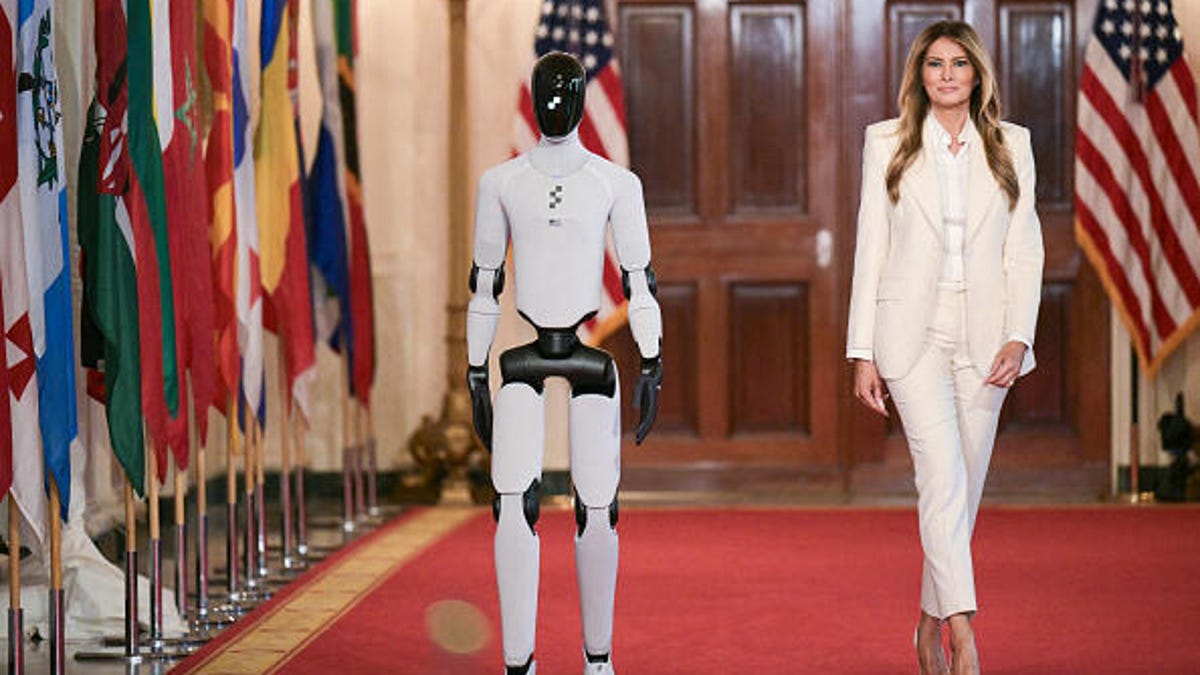
An unexpected guest escorted Melania Trump at the Fostering the Future Together Global Coalition Summit on Wednesday: a Figure 03 humanoid robot.
During the event, the first lady pitched a future where AI-powered humanoid robots — presented as an idealized educator named «Plato» — provide students with personalized and instant access to human knowledge, including philosophy and art.
The Figure 03 robot is made by Silicon Valley-based robotics company Figure AI, which introduced its third-generation humanoid robot in October last year. The Figure 03 robot costs around $25,000, according to Forbes.
Figure 03 was designed for people to use in their homes, with demo videos showing it folding laundry, lifting eggs from a carton, using a washing machine and delivering drinks to its owners lounging by the pool. It was also shown in corporate use cases as a receptionist and a package deliverer. Using a proprietary AI engine called Helix, it can autonomously perform these tasks and respond to your voice commands.
The humanoid was seen walking slowly down the red carpet at the tech summit and then delivering opening remarks.
«I’m grateful to be part of this historic movement to empower children with technology and education,» the Figure 03 humanoid robot said. It then said «welcome» in various languages.
The first lady later said that AI-powered humanoid robots could exist in children’s homes as an aid to their education to «boost analytic skills and problem solving and adopt in real time to a student’s pace, prior knowledge and even emotional state.»
The two-day summit is hosting leaders from 45 nations and 28 technology organizations, and is intended to «empower children through education and technology,» according to a White House statement. Guests included representatives from tech giants such as Google, OpenAI, Microsoft and AI data analytics company Palantir.
The summit is part of the first lady’s Be Best: Fostering the Future initiative, which aims to help children learn using advanced technology. It was introduced in 2018 as an awareness campaign aimed at combating cyberbullying and helping children affected by the opioid crisis.
US Education Secretary Linda McMahon spoke about AI being one of the Department of Education’s main priorities on the first day of the summit.
«If we’re able to scale these resources effectively by investing in AI infrastructure and training, we can offer expert instructions across countless fields, to hire volumes of people at a fraction of the cost,» McMahon said Tuesday at a round table meeting.
According to McMahon, the Department of Education has already dedicated millions of dollars in grants to support the use of AI in schools.
The event follows criticism of the Trump administration’s 2025 executive order to dismantle the Department of Education. While the Department of Education hasn’t been officially abolished, it has undergone significant policy changes, funding cuts and workforce reductions.
The introduction of a humanoid robot at the summit sparked significant backlash among many who are wary of the technology’s role in the classroom. Critics took to social media to voice concerns that these machines could eventually replace teachers, stripping the education system of essential human connection, and leading to increased layoffs and cost-cutting.
On one Huffington Post Instagram post featuring the robot, commenters expressed deep skepticism, with one user sarcastically noting, «Nice, getting rid of educators in favor of a robot,» while another flatly rejected the concept, stating, «No, I don’t want to imagine a world with emotionless robots educating our children.»
The White House did not immediately respond to a request for comment.
Technologies
Nintendo Dropped a Switch 2 Update With a New Mode You’ll Want to Turn On Immediately
This new feature is one of the best yet.
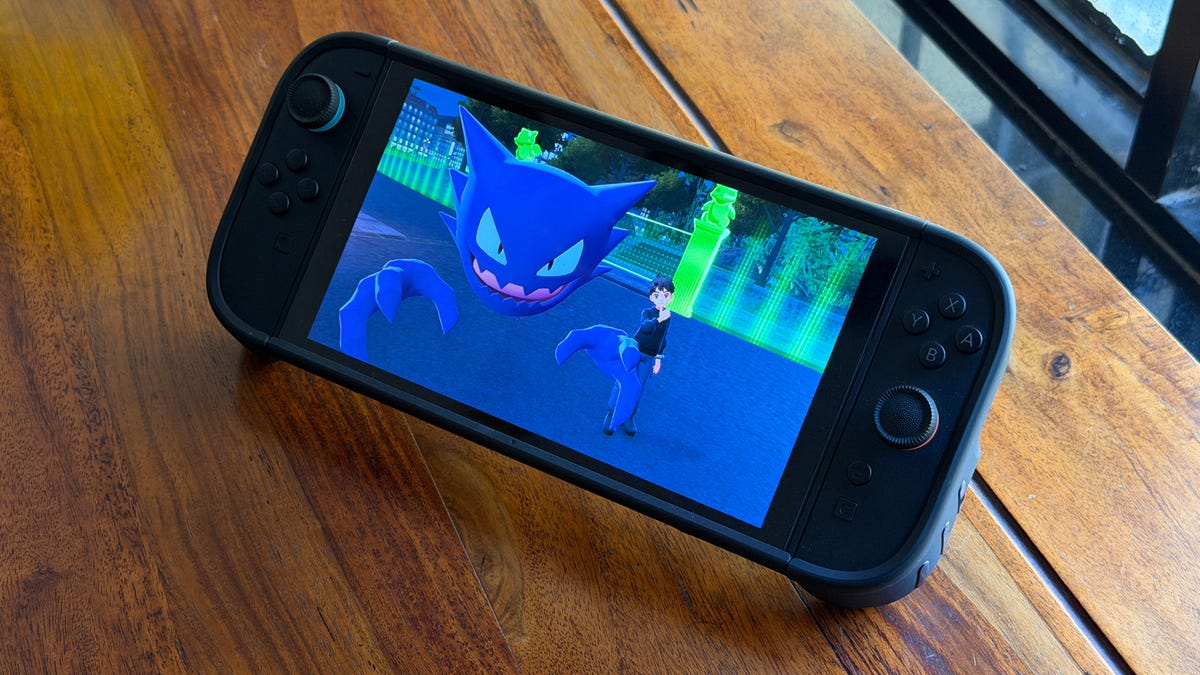
A new firmware update hit the Nintendo Switch 2 last week. Among the multitude of small changes is a new feature that will give Switch 1 games a notable upgrade.
Version 22.0.0 for the Switch 2 went live on March 16 and is available for download to the console. The big new feature in the update was Handheld Mode Boost, which will give Switch 1 games a visual upgrade when played on the Switch 2 in handheld mode.
[Nintendo Switch 2 System Update]
Version 22.0.0 adds «Handheld Mode Boost». This will make Switch 1 games think that they are in TV mode even when in handheld.
Games can run at higher resolutions in TV mode, taking better advantage of the Switch 2’s 1080p screen. pic.twitter.com/aXOKWosFAw— OatmealDome (@OatmealDome) March 17, 2026
What does Handheld Mode Boost do?
Even though the Switch 2 supports backward compatibility with almost all Switch 1 games, there was an issue. The Switch 2 has a higher resolution screen: 1080p versus the older hardware’s 720p. When playing a Switch 1 game on a Switch 2 in handheld mode, the graphics looked blurry and jagged.
When enabled, Handheld Mode Boost makes a Switch 1 game act as if it’s docked, so it displays 1080p at 60 frames per second. This will give the visuals an immediate upgrade.
How do you enable Handheld Mode Boost?
Handheld Mode Boost has to be turned on to see the effect, and it takes a few steps:
- Select Systems Settings from the Home menu
- Select System
- Select Nintendo Switch Software Handling
- Enable Handheld Mode Boost
Is there a downside to enabling Handheld Mode Boost?
A user on Reddit tested the mode to see how it affects the Switch 2’s battery life. The test used Doom Eternal for the Switch 1 with and without Handheld Mode Boost. The test showed that the battery life decreased from 5 hours, 5 minutes to 3 hours, 43 minutes. That’s a 27% drop and should be taken into account when using Handheld Mode Boost.
How do I upgrade my Nintendo Switch 2?
If you have Software Auto-Updates enabled on your Switch 2, a pop-up window should come up whenever you start a game. If not, head to System Settings and choose to update the console from the menu.
What other features were added in version 22.0.0?
Handheld Mode Boost was the main star of the new firmware update, but there were a slew of other changes.
- Changed the on-screen text and animations when you load a virtual game card in the HOME Menu.
- Added the ability to save notes about friends on your Friend List. The note content is not displayed to friends.
- Added the ability to invite friends to GameChat rooms you’re participating in. Some friends may not be able to be invited, such as supervised accounts.
- Friends who haven’t finished GameChat’s initial setup can now be invited to GameChat. Some friends may not be able to be invited, such as supervised accounts or those who haven’t used a Nintendo Switch 2.
- Added the ability to rewind 10 seconds/advance 10 seconds with the ZL and ZR Buttons when watching a full-screen video in News or Nintendo eShop.
- Added the option to add the following data to «Automatic Uploads» from Album.
- Text-to-Speech, under Accessibility, can now read the text in Album and during first-time setup.
- Added the ability to see the breakdown of storage capacity by data type for the system memory and microSD Express card.
- Added the ability to perform an audio test when «Linear PCM 5.1 Surround» is selected for TV Sound in Audio.
- When Airplane Mode is activated, the previously set preferences for Bluetooth, Wi-Fi or NFC while in airplane mode will be saved and applied.
- Added the ability to individually enable or disable Bluetooth, Wi-Fi or NFC during Airplane Mode from the Quick Settings.
- Added the ability to see a notification in the Nintendo Switch Parental Controls smart device application when the Parental Controls PIN is input successfully on the console. This can also be set up to be a push notification to your smart device.
- General system stability improvements to enhance the user’s experience.
-
 Technologies3 года ago
Tech Companies Need to Be Held Accountable for Security, Experts Say
-
 Technologies3 года ago
Best Handheld Game Console in 2023
-
 Technologies3 года ago
Tighten Up Your VR Game With the Best Head Straps for Quest 2
-
 Technologies4 года ago
Black Friday 2021: The best deals on TVs, headphones, kitchenware, and more
-
 Technologies5 лет ago
Google to require vaccinations as Silicon Valley rethinks return-to-office policies
-
 Technologies5 лет ago
Verum, Wickr and Threema: next generation secured messengers
-
 Technologies4 года ago
Olivia Harlan Dekker for Verum Messenger
-
 Technologies4 года ago
The number of Сrypto Bank customers increased by 10% in five days