
Technologies
iPhone 17E vs. iPhone 16E: Is the Spec Bump Worth the Extra Cash?
The iPhone 17E could be the budget upgrade we’ve been waiting for. We break down every spec change from the 16E to see if this $599 model is worth your cash.
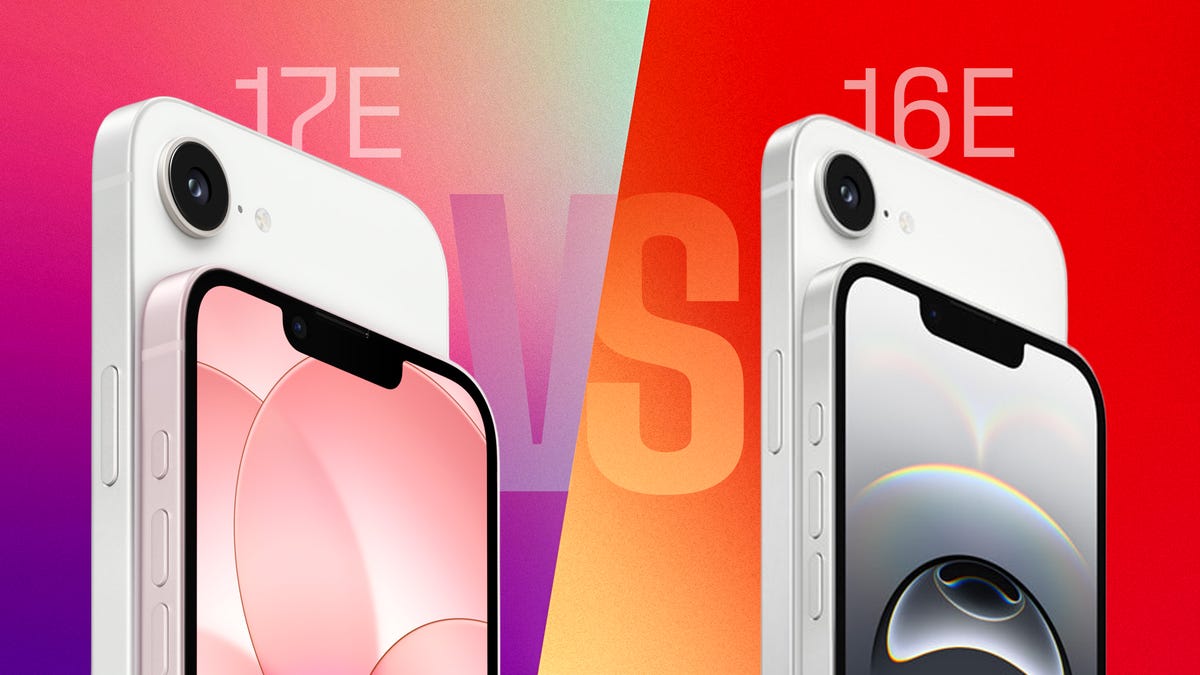
Apple’s iPhone 17E was announced earlier this week with a price of $599, bringing several compelling spec and feature upgrades to the company’s most affordable iPhone. It also serves as a nice complement to the $599 MacBook Neo, with more color options, including an attractive pink color. If you already own an iPhone 16E, you might be wondering whether it’s worth upgrading to the newer model.
Beyond specs, Apple has made two key upgrades: improved durability and quality-of-life features, such as introducing MagSafe and increasing base storage.
Here’s what you need to consider before deciding on an upgrade.
Display and build
The iPhone 17E and iPhone 16E have the same dimensions. They are both 5.78 by 2.82 by 0.31 inches, and they both have a 6.1-inch Super Retina XDR OLED display. The resolution of 2,532×1,170 pixels works out to 460 pixels per inch, and both have a peak brightness of 1,200 nits for HDR content and a typical max brightness of 800 nits. Overall, this will translate into an equally crisp and bright display for both models, with the same notch at the top for the selfie camera.
In terms of overall design and appearance, including the button layout and aluminum frame, the two phones are essentially identical. Neither is going to be as hand- or pocket-busting as the iPhone 17 Pro Max with its 6.9-inch screen. However, the iPhone 17E is slightly heavier at 5.96 ounces compared to the 16E’s 5.88 ounces.
This difference likely comes down to Apple’s durability upgrades for the newer model. The 17E uses Ceramic Shield 2 for the front glass, which offers three times the scratch resistance of the plain old Ceramic Shield on the iPhone 16E.
Both phones are also IP68 rated, offering water resistance down to 6 meters for up to 30 minutes.
There’s a slight difference with color options. The iPhone 17E comes in three colors — black, white and the ever-popular pink color — while the iPhone 16E limits you to black and white.
Ultimately, nothing in the hardware we’d say really moves the needle, aside from the added screen durability, though you could always get a screen protector and case if you’re worried.
Hardware, battery and storage
The big changes with phones start when you take a peek under the hood. The iPhone 17E has a newer A19 chip. It comes with a six-core CPU with two performance and four efficiency cores, as well as a four-core GPU with Neural Accelerators. It also has a 16-core Neural Engine and hardware-accelerated ray tracing. This is a step above the A18 chip in the iPhone 16E, which has the same core configuration but lacks the Neural Engine that comes with the GPU.
We haven’t run performance benchmarks or tested the iPhone 17E’s A19 chip yet, but we expect the newer chipset to offer a performance boost over the A18.
Worth noting is that in our review of the iPhone 16E, it performed well in its CPU benchmark, scoring higher than the iPhone 16, iPhone 15, and iPhone SE. In graphics performance, the iPhone 16 had an advantage over the iPhone 16E thanks to its extra GPU core, but we expect that will be a different story with the A19 on the iPhone 17E, since it has the same chip as the iPhone 17, just with one less GPU core.
iPhone 17E vs. iPhone 16E
| iPhone 17E | Apple iPhone 16E | |
|---|---|---|
| Display size, tech, resolution, refresh rate | 6.1-inch OLED display; 2,532×1,170 pixels; 60Hz refresh rate | 6.1-inch OLED display; 2,532×1,170 pixels; 60Hz refresh rate |
| Pixel density | 460ppi | 460ppi |
| Dimensions (inches) | 5.78×2.82×0.31 in | 5.78×2.82×0.31 in |
| Dimensions (millimeters) | 146.7×71.5×7.8 mm | 146.7×71.5×7.8 mm |
| Weight (grams, ounces) | 169g (5.96oz) | 167g (5.88oz) |
| Mobile software | iOS 26 (at launch) | iOS 18 (at launch) |
| Camera | 48 megapixel (wide) | 48 megapixel (wide) |
| Front-facing camera | 12 megapixel | 12 megapixel |
| Video capture | 4K/60fps | 4K/60fps |
| Processor | Apple A19 | Apple A18 |
| RAM + storage | RAM unknown + 256GB, 512GB | RAM unknown + 128GB, 256GB, 512GB |
| Expandable storage | None | None |
| Battery | 4,005 mAh | 4,005 mAh |
| Fingerprint sensor | None, Face ID | None, Face ID |
| Connector | USB-C, MagSafe | USB-C |
| Headphone jack | None | None |
| Special features | Action button, Apple C1X 5G modem, Apple Intelligence, Ceramic Shield 2, Emergency SOS, satellite connectivity, IP68 resistance, 15W Qi wireless charging, MagSafe | Action button, Apple C1 5G modem, Apple Intelligence, Ceramic Shield, Emergency SOS, satellite connectivity, IP68 resistance, 20W wired charging, 7.5W Qi wireless charging |
| US price starts at | $599 (256GB) | $599 (128GB) |
That means in benchmark tests, we expect the iPhone 17E to outperform both the iPhone 16E and iPhone 16 in graphics performance, but it’s likely to fall short of the iPhone 17.
«Benchmark tests for the CPU in Geekbench 6 place the iPhone 17 above the iPhone 16 Pro Max, as well as the full iPhone 15 lineup,» said Abrar Al-Heeti, CNET senior technology reporter, in her iPhone 17 review. «In a graphics test using 3DMark’s Wild Life Extreme, the iPhone 17 exceeded the performance of the entire iPhone 16 series, but was topped by the Galaxy S25 lineup.»
In real-world use, we don’t expect any performance issues with the newer iPhone 17E since it’s likely to fall right between the iPhone 16E and iPhone 17 in terms of performance.
«The phone had no issues playing video games, editing and saving videos and using Apple Intelligence,» said Patrick Holland, a managing editor at CNET, commenting on his day-to-day use of the iPhone 16E.
The other significant change comes from the storage upgrade. The iPhone 17E starts at a higher base storage model: 256GB for $599 and 512GB for $799, with the 128GB option dropped from the iPhone 16E. This is a pretty nice change, especially for those who were often brushing up against the storage limit of the entry model.
The truly substantial improvement between generations comes with the addition of MagSafe to the iPhone 17E, which was one of our big gripes when we tested the iPhone 16E. MagSafe being included in this generation means you now have support for a vast array of MagSafe cases, mounts, chargers, docks and other accessories.
This also bumps wireless charging support to Qi 2 at 15 watts, up from the 7.5-watt Qi wireless charging on the iPhone 17E. However, neither is as good as the iPhone 17, which supports 25-watt Qi charging. Both phones come with USB-C ports for charging and data, so that hasn’t changed, with a 50% charge in 30 minutes.
Cameras
The cameras haven’t seen a substantial change either. Both the iPhone 17E and 16E feature a 48-megapixel Fusion camera system as their primary rear sensor. That’s not unexpected, since Apple usually reserves its multisensor setup for the mainstay line, like the iPhone 17 and iPhone 16.
You get optical image stabilization for both 1x and 2x optical zoom, True Tone flash, Photonic Engine, Deep Fusion, Smart HDR 5, Night mode, Portrait Lighting and more.
One minor note: The iPhone 17E Portrait mode includes Depth and Focus controls, while the iPhone 16E Portrait mode had only Depth controls.
With the front camera, again, the setup remains the same. A 12MP TrueDepth camera is used for Face ID. For video recording, both support 4K Dolby Vision up to 60 frames per second and 1080p Slo-mo video at 240fps. Naturally, you get OIS and spatial audio and stereo recording too.
Looking at our iPhone 16E review should give you a fairly good idea of how well the iPhone 17E snaps pictures, though naturally, we’ll be testing it ourselves.
«The 16E’s main camera takes lovely photos, even when using night mode,» said Holland about the iPhone 16E. «It has a 48-megapixel sensor, which has enough resolution for sensor cropping to offer a 2x magnification, and the results are decent. Images look sharp, have a nice dynamic range (good for high-contrast lighting like sunrises/sunsets), and colors are attractively subdued.»
Apple software and connectivity
On the software end, you should expect essentially identical software. Both support Apple Intelligence and Siri and will get the latest iOS updates. The iPhone 17E comes with iOS 26 installed, while the iPhone 16E launched with iOS 18.3 but also supports iOS 26.
When it comes to connectivity, both the iPhone 17E and iPhone 16E have a nearly identical loadout. They support 5G (sub-6GHz) with 4×4 MIMO, gigabit LTE, Wi-Fi 6 and Bluetooth 5.3. You also get NFC, VoLTE and Wi-Fi calling. Both also support dual eSIMs.
The sole difference is that the iPhone 17E comes with the C1X modem, while the iPhone 16E has the C1 modem.
Should you upgrade?
There are two reasons you might consider upgrading from the iPhone 16E to the iPhone 17E. First, if you’re often running out of storage space on a 128GB iPhone 16E, you can get the iPhone 17E for $599 starting at 256GB. Or you can spring for the 512GB model for $799 if your needs are more substantial.
The other big reason is MagSafe. I won’t lie: There’s a pretty significant improvement in quality of life with MagSafe if you’ve had to worry about plugging or unplugging a cable. MagSafe-compatible accessories also make it easy to use cases, phone mounts, wallet attachments and other accessories. However, worth noting is that you can pick up third-party cases that add magnets to give you MagSafe compatibility.
Now, are those two reasons enough to pay $599 for a phone that you probably paid the same price for just a year ago? I’d say probably not. You’d likely be better off with the iPhone 17 base model if you’re looking for a more substantial performance and feature upgrade.
However, if you have a much older model or you’re an Android user looking for a cheap entry point into the Apple ecosystem, getting an iPhone 17E might be worth it.
Technologies
Today’s NYT Connections: Sports Edition Hints and Answers for April 8, #562
Here are hints and the answers for the NYT Connections: Sports Edition puzzle for April 8 No. 562.
Looking for the most recent regular Connections answers? Click here for today’s Connections hints, as well as our daily answers and hints for The New York Times Mini Crossword, Wordle and Strands puzzles.
Today’s Connections: Sports Edition is a tough one. If you’re struggling with today’s puzzle but still want to solve it, read on for hints and the answers.
Connections: Sports Edition is published by The Athletic, the subscription-based sports journalism site owned by The Times. It doesn’t appear in the NYT Games app, but it does in The Athletic’s own app. Or you can play it for free online.
Read more: NYT Connections: Sports Edition Puzzle Comes Out of Beta
Hints for today’s Connections: Sports Edition groups
Here are four hints for the groupings in today’s Connections: Sports Edition puzzle, ranked from the easiest yellow group to the tough (and sometimes bizarre) purple group.
Yellow group hint: Working out.
Green group hint: Cover your face.
Blue group hint: NFL players.
Purple group hint: Leap.
Answers for today’s Connections: Sports Edition groups
Yellow group: Exercises in singular form.
Green group: Sporting jobs that require masks.
Blue group: Hall of Fame defensive ends.
Purple group: ____ jump.
Read more: Wordle Cheat Sheet: Here Are the Most Popular Letters Used in English Words
What are today’s Connections: Sports Edition answers?
The yellow words in today’s Connections
The theme is exercises in singular form. The four answers are crunch, plank, situp and squat.
The green words in today’s Connections
The theme is sporting jobs that require masks. The four answers are catcher, fencer, football player and goaltender.
The blue words in today’s Connections
The theme is Hall of Fame defensive ends. The four answers are Dent, Peppers, Strahan and Youngblood.
The purple words in today’s Connections
The theme is ____ jump. The four answers are broad, high, long and triple.
Technologies
The $135M Google Data Settlement Site Is Live — See If You’re Eligible
Use the settlement website to select your preferred payment method, and you may end up $100 richer.
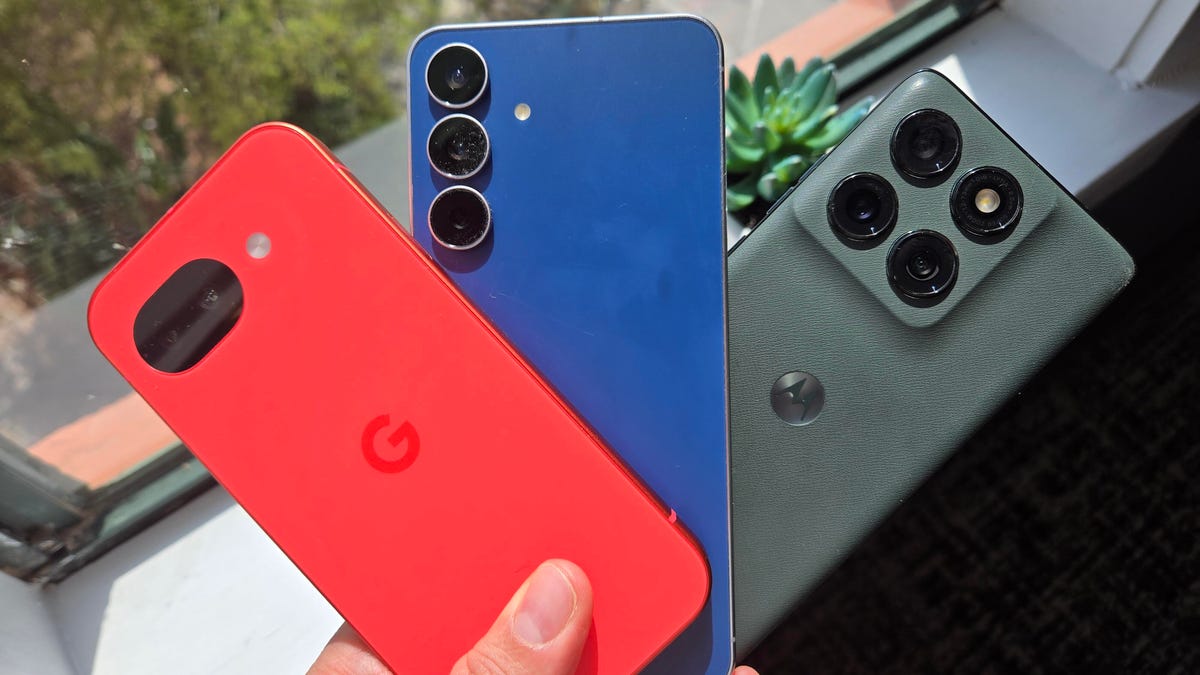
You can now file a claim in the $135 million Google data settlement. The case centers on claims that Android devices transmitted user data without consent. Specifically, the class action lawsuit Taylor v. Google LLC contends that Google’s Android devices passively transferred cellular data to Google without user permission, even when the devices were idle. While not admitting fault, Google reached a preliminary settlement in January, agreeing to pay $135 million to about 100 million US Android phone users.
The official settlement website for the lawsuit is now live. The final approval hearing won’t occur until June 23, when the court will consider whether Google’s settlement is fair and listen to objections. After that, the court will decide whether to approve the $135 million settlement.
In the meantime, if you qualify and want to be paid as part of the settlement, you can select your preferred payment method on the official website. There, you can find information on speaking at the June 23 court hearing and on how to exclude yourself or write to the court to object by May 29.
As part of the settlement, Google will update its Google Play terms of service to clarify that certain data transfers do occur passively even when you’re not using your Android device, and that cellular data may be relied upon when not connected to Wi-Fi. This can’t always be disabled, but users will be asked to consent to it when setting up their device.
Google will also fully stop collecting data when its «allow background data usage» option is toggled off.
Who can be part of the settlement?
In order to join the Taylor v. Google LLC settlement, you must meet four qualifications:
- Be a living, individual human being in the US.
- Have used an Android mobile device with a cellular data plan.
- Have used the aforementioned device at any time from Nov. 12, 2017, to the date when the settlement receives final approval.
- You’re not a class member in the Csupo v. Google LLC lawsuit, which is similar but specifically for California residents.
The final approval hearing is on June 23, so you can add your payment method until then. The hearing’s date and time may change, and any updates will be posted on the settlement website.
If you choose to do nothing, you will still be issued a settlement payment, but you may not receive it if you don’t select a payment method.
How much will I get paid?
It’s not currently known exactly how much each settlement class member will receive, but the cap is $100. Payments will be distributed after final court approval and after any appeals are resolved.
After all administrative, tax and attorney costs are paid, the settlement administrator will attempt to pay each member an equal amount. If any funds remain after payments are sent, and it’s economically feasible, they will be redistributed to members who were previously and successfully paid. If it’s not economically feasible, the funds will go to an organization approved by the court.
Technologies
Samsung’s Galaxy Watch Ultra 2 Might Come in 5G and 4G Cellular Models
If the rumor proves true, the 5G Galaxy Watch Ultra would rival the 5G-enabled $799 Apple Watch Ultra 3 that debuted last fall.
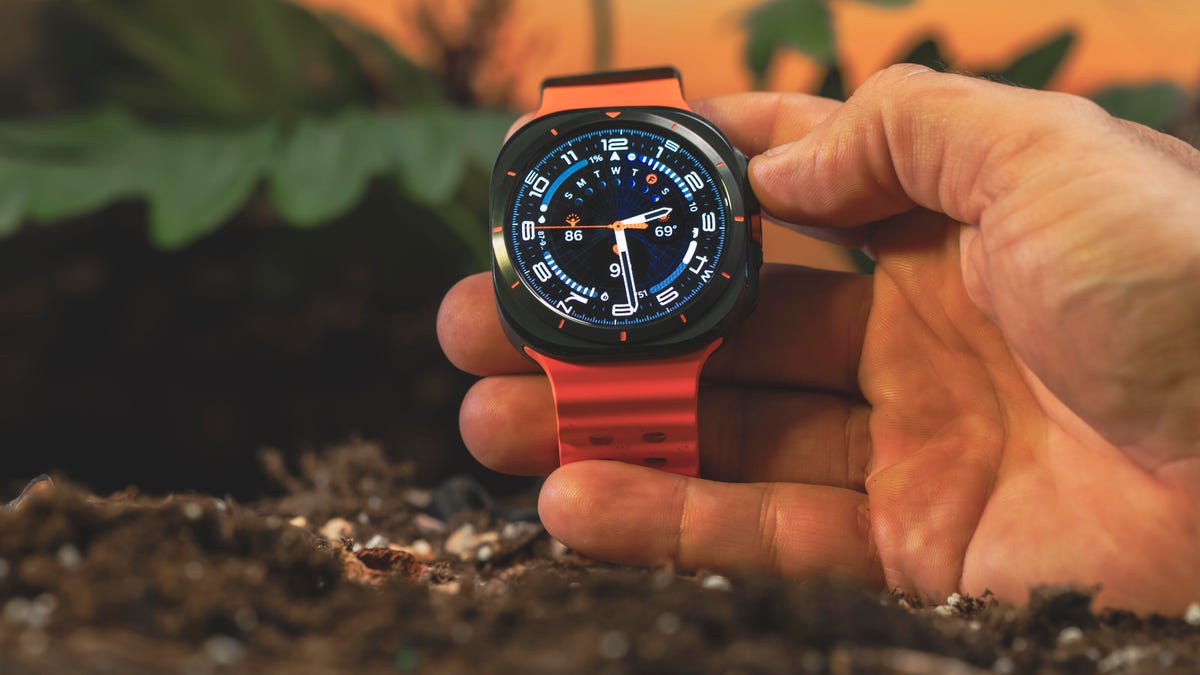
Samsung’s next high-end Galaxy Watch could support faster 5G speeds, but if this leak is true, it will depend on where you live. The rumored Samsung Galaxy Watch Ultra 2 might come in 5G and 4G cellular models, with availability for each smartwatch depending on the country.
According to the Dutch website Galaxy Club (and spotted by SamMobile), Samsung’s servers may have revealed a series of model numbers that point to 5G, 4G and Wi-Fi-enabled editions of the next Galaxy Watch Ultra, which would succeed the original model that debuted in 2024.
A representative for Samsung did not immediately respond to a request for comment.
The Galaxy Club website speculates that the 5G edition would be sold in the US and Korean markets, while the 4G edition would sell in the rest of the world. In the US, a 5G version of the Galaxy Watch Ultra would rival the 5G-enabled $799 Apple Watch Ultra 3, which debuted last fall. The 4G edition would have broader compatibility worldwide, since the earlier network is far more established.
It will likely be a few months until we hear anything official about the Galaxy Watch Ultra 2. Samsung typically unveils its new watches in the summer alongside its Galaxy Z Fold and Z Flip foldable phones. Last year, Samsung unveiled the Galaxy Watch 8 and the Galaxy Watch 8 Classic, but otherwise left the prior 2024 Ultra in the lineup for those looking for a larger 47mm smartwatch.
-
 Technologies3 года ago
Tech Companies Need to Be Held Accountable for Security, Experts Say
-
 Technologies3 года ago
Best Handheld Game Console in 2023
-
 Technologies3 года ago
Tighten Up Your VR Game With the Best Head Straps for Quest 2
-
 Technologies4 года ago
Black Friday 2021: The best deals on TVs, headphones, kitchenware, and more
-
 Technologies5 лет ago
Google to require vaccinations as Silicon Valley rethinks return-to-office policies
-
 Technologies5 лет ago
Verum, Wickr and Threema: next generation secured messengers
-
 Technologies4 года ago
Olivia Harlan Dekker for Verum Messenger
-
 Technologies4 года ago
The number of Сrypto Bank customers increased by 10% in five days