
Technologies
iPhone 17E vs. iPhone 16E Specs: Is It Time to Upgrade Your Affordable iPhone?
The $599 iPhone 17E comes with some notable improvements over the iPhone 16E. Here’s what’s new.

Apple’s iPhone 17E is officially out at a $599 price, bringing a nice set of upgrades to its more affordable iPhone. If you own an iPhone 16E, you might be wondering whether the changes here are enough to justify buying the newer model.
Apple has made two key upgrades, not just in specs but also in durability and quality-of-life features, like introducing MagSafe and increasing base storage.
Here’s what you need to consider before deciding on an upgrade.
Display and build
The iPhone 17E and iPhone 16E both have the same dimensions. They are both 5.78 by 2.82 by 0.31 inches, and they both have a 6.1-inch Super Retina XDR OLED display. The resolution works out to 25,312 by 11,700 at 460 pixels per inch, so there isn’t much of a difference here, and both have a peak brightness of 1200 nits for HDR content and a typical max brightness of 800 nits. Overall, this will translate into an equally crisp and bright display for both models, with the same notch.
In terms of overall design and appearance, including the button layout and aluminum frame, the two phones are essentially identical. Neither is going to be as hand- or pocket-busting as the iPhone 17 Pro Max with its 6.9-inch screen. However, the iPhone 17E is slightly heavier at 5.96 ounces compared to the 16E’s 5.88 ounces.
This difference likely comes down to Apple’s durability upgrades for the newer model. The 17E uses Ceramic Shield 2 for the front glass, which offers three times the scratch resistance of the plain old Ceramic Shield on the iPhone 16E.
Both phones are also IP68 rated, offering water resistance up to 6 meters for up to 30 minutes.
There’s a slight difference with color options. The iPhone 17E comes in three colors — black, white and the ever-popular pink color — while the iPhone 16E limits you to black and white.
Ultimately, nothing in the hardware we’d say really moves the needle, aside from the added screen durability, though you could always get a screen protector and case if you’re worried.
Hardware, battery and storage
The big changes with phones start when you take a peek under the hood. The iPhone 17E has a newer A19 chip. It comes with a six-core CPU with two performance and four efficiency cores, as well as a four-core GPU with Neural Accelerators. It also has a 16-core Neural Engine and hardware-accelerated ray tracing. This is a step above the A18 chip in the iPhone 16E, which has the same core configuration but lacks the Neural Engine that comes with the GPU.
We haven’t run performance benchmarks or tested the iPhone 17E’s A19 chip yet, but we expect the newer chipset to offer a performance boost over the A18.
Worth noting is that in our review of the iPhone 16E, it performed well in its CPU benchmark, scoring higher than the iPhone 16, iPhone 15, and iPhone SE. In graphics performance, the iPhone 16 had an advantage over the iPhone 16E thanks to its extra GPU core, but we expect that will be a different story with the A19 on the iPhone 17E since it has the same chip as the iPhone 17, just with one less GPU core.
iPhone 17E vs. iPhone 16E
| iPhone 17E | Apple iPhone 16E | |
| Display size, tech, resolution, refresh rate | 6.1-inch OLED display; 2,532×1,170 pixels; 60Hz refresh rate | 6.1-inch OLED display; 2,532×1,170 pixels; 60Hz refresh rate |
| Pixel density | 460ppi | 460ppi |
| Dimensions (inches) | 5.78×2.82×0.31 in | 5.78×2.82×0.31 in |
| Dimensions (millimeters) | 146.7×71.5×7.8 mm | 146.7×71.5×7.8 mm |
| Weight (grams, ounces) | 169g (5.96oz) | 167g (5.88oz) |
| Mobile software | iOS 26 (at launch) | iOS 18 (at launch) |
| Camera | 48 megapixel (wide) | 48 megapixel (wide) |
| Front-facing camera | 12 megapixel | 12 megapixel |
| Video capture | 4K/60fps | 4K/60fps |
| Processor | Apple A19 | Apple A18 |
| RAM + storage | RAM unknown + 256GB, 512GB | RAM unknown + 128GB, 256GB, 512GB |
| Expandable storage | None | None |
| Battery | 4,005 mAh | 4,005 mAh |
| Fingerprint sensor | None, Face ID | None, Face ID |
| Connector | USB-C, MagSafe | USB-C |
| Headphone jack | None | None |
| Special features | Action button, Apple C1X 5G modem, Apple Intelligence, Ceramic Shield 2, Emergency SOS, satellite connectivity, IP68 resistance, 15W Qi wireless charging, MagSafe | Action button, Apple C1 5G modem, Apple Intelligence, Ceramic Shield, Emergency SOS, satellite connectivity, IP68 resistance, 20W wired charging, 7.5W Qi wireless charging |
| US price starts at | $599 (256GB) | $599 (128GB) |
That means in benchmark tests, we expect the iPhone 17E to outperform both the iPhone 16E and iPhone 16 in graphics performance, but it’s likely to fall short of the iPhone 17.
«Benchmark tests for the CPU in Geekbench 6 place the iPhone 17 above the iPhone 16 Pro Max, as well as the full iPhone 15 lineup,» said Abrar Al-Heeti, CNET senior technology reporter, in her iPhone 17 review. «In a graphics test using 3DMark’s Wild Life Extreme, the iPhone 17 exceeded the performance of the entire iPhone 16 series, but was topped by the Galaxy S25 lineup.»
In real-world use, we don’t expect any performance issues with the newer iPhone 17E since it’s likely to fall right between the iPhone 16E and iPhone 17 in terms of performance.
«In everyday use, the phone had no issues playing video games, editing and saving videos and using Apple Intelligence,» said Patrick Holland, CNET managing editor, commenting on his day-to-day use of the iPhone 16E.
The other significant change comes from the storage upgrade. The iPhone 17E starts at a higher base storage model: 256GB for $599 and 512GB for $799, with the 128GB option dropped from the iPhone 16E. This is a pretty nice change, especially for those who were often brushing up against the storage limit of the entry model.
The truly substantial improvement between generations comes with the addition of MagSafe to the iPhone 17E, which was one of our big gripes when we tested the iPhone 16E. MagSafe being included in this generation means you now have support for a vast array of MagSafe cases, mounts, chargers, docks and other accessories.
This also bumps wireless charging support to Qi 2 at 15W, up from the 7.5W Qi wireless charging on the iPhone 17E. However, neither is as good as the iPhone 17, which supports 25W Qi charging. Both phones come with USB-C ports for charging and data, so that hasn’t changed, with a 50% charge in 30 minutes.
Cameras
The cameras haven’t seen a substantial change either. Both the iPhone 17E and 16E feature a 48-megapixel Fusion camera system as their primary rear sensor. That’s not unexpected, since Apple usually reserves its multisensor setup for the mainstay line, like the iPhone 17 and iPhone 16.
You get optical image stabilization for both 1x and 2x optical zoom, True Tone flash, Photonic Engine, Deep Fusion, Smart HDR 5, Night mode, Portrait Lighting and more.
One minor note: The iPhone 17E Portrait mode includes Depth and Focus controls, while the iPhone 16E Portrait mode had only Depth controls.
With the front camera, again, the setup remains the same. A 12MP TrueDepth camera is used for Face ID. For video recording, both support 4K Dolby Vision up to 60 frames per second and 1080p Slo-mo video at 240fps. Naturally, you get OIS and spatial audio and stereo recording too.
Looking at our iPhone 16E review should give you a fairly good idea of how well the iPhone 17E snaps pictures, though naturally, we’ll be testing it ourselves.
«The 16E’s main camera takes lovely photos, even when using night mode,» said Holland about the iPhone 16E. «It has a 48-megapixel sensor, which has enough resolution for sensor cropping to offer a 2x magnification, and the results are decent. Images look sharp, have a nice dynamic range (good for high-contrast lighting like sunrises/sunsets), and colors are attractively subdued.»
Apple software and connectivity
On the software end, you should expect essentially identical software. Both support Apple Intelligence and Siri and will get the latest iOS updates. The iPhone 17E comes with iOS 26 installed, while the iPhone 16E launched with iOS 18.3 but also supports iOS 26.
When it comes to connectivity, both the iPhone 17E and iPhone 16E have a nearly identical load out. They support 5G (sub-6 GHz) with 4×4 MIMO, gigabit LTE, Wi-Fi 6 and Bluetooth 5.3. You also get NFC, VoLTE and Wi-Fi calling. Both also support dual eSIMs and storage for 8 or more.
The sole difference is that the iPhone 17E comes with the C1X modem, while the iPhone 16E has the C1 modem.
Should you upgrade?
There are two reasons you might consider upgrading from the iPhone 16E to the iPhone 17E. First, if you’re often running out of storage space on a 128GB iPhone 16E, you can get the iPhone 17E for $599 starting at 256GB. Or you can spring for the 512GB model for $799 if your needs are more substantial.
The other big reason is MagSafe. We won’t lie: There’s a pretty significant improvement in quality of life with MagSafe if you’ve had to worry about plugging or unplugging a cable. MagSafe-compatible accessories also make it easy to use cases, phone mounts, wallet attachments and other accessories. However, worth noting is that you can pick up third-party cases that add magnets to give you MagSafe compatibility.
Now, are those two reasons enough to pay $599 for a phone that you probably paid the same price for just a year ago? We’d say probably not. You’d likely be better off with the iPhone 17 base model if you’re looking for a more substantial performance and feature upgrade.
However, if you have a much older model or you’re an Android user looking for a cheap entry point into the Apple ecosystem, getting an iPhone 17E might be worth it.
Technologies
Melania Trump Escorted by Talking Humanoid Robot at White House Tech Summit
The first lady shared the spotlight with the robot to promote the use of artificial intelligence in education.
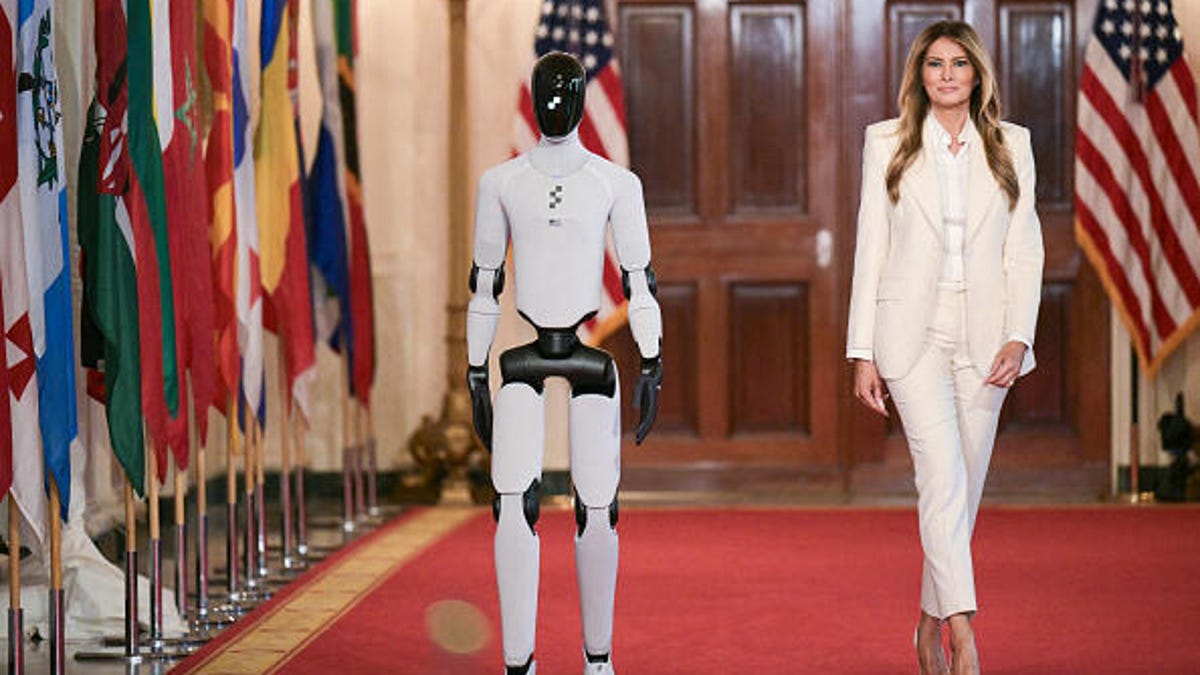
An unexpected guest escorted Melania Trump at the Fostering the Future Together Global Coalition Summit on Wednesday: a Figure 03 humanoid robot.
During the event, the first lady pitched a future where AI-powered humanoid robots — presented as an idealized educator named «Plato» — provide students with personalized and instant access to human knowledge, including philosophy and art.
The Figure 03 robot is made by Silicon Valley-based robotics company Figure AI, which introduced its third-generation humanoid robot in October last year. The Figure 03 robot costs around $25,000, according to Forbes.
Figure 03 was designed for people to use in their homes, with demo videos showing it folding laundry, lifting eggs from a carton, using a washing machine and delivering drinks to its owners lounging by the pool. It was also shown in corporate use cases as a receptionist and a package deliverer. Using a proprietary AI engine called Helix, it can autonomously perform these tasks and respond to your voice commands.
The humanoid was seen walking slowly down the red carpet at the tech summit and then delivering opening remarks.
«I’m grateful to be part of this historic movement to empower children with technology and education,» the Figure 03 humanoid robot said. It then said «welcome» in various languages.
The first lady later said that AI-powered humanoid robots could exist in children’s homes as an aid to their education to «boost analytic skills and problem solving and adopt in real time to a student’s pace, prior knowledge and even emotional state.»
The two-day summit is hosting leaders from 45 nations and 28 technology organizations, and is intended to «empower children through education and technology,» according to a White House statement. Guests included representatives from tech giants such as Google, OpenAI, Microsoft and AI data analytics company Palantir.
The summit is part of the first lady’s Be Best: Fostering the Future initiative, which aims to help children learn using advanced technology. It was introduced in 2018 as an awareness campaign aimed at combating cyberbullying and helping children affected by the opioid crisis.
US Education Secretary Linda McMahon spoke about AI being one of the Department of Education’s main priorities on the first day of the summit.
«If we’re able to scale these resources effectively by investing in AI infrastructure and training, we can offer expert instructions across countless fields, to hire volumes of people at a fraction of the cost,» McMahon said Tuesday at a round table meeting.
According to McMahon, the Department of Education has already dedicated millions of dollars in grants to support the use of AI in schools.
The event follows criticism of the Trump administration’s 2025 executive order to dismantle the Department of Education. While the Department of Education hasn’t been officially abolished, it has undergone significant policy changes, funding cuts and workforce reductions.
The introduction of a humanoid robot at the summit sparked significant backlash among many who are wary of the technology’s role in the classroom. Critics took to social media to voice concerns that these machines could eventually replace teachers, stripping the education system of essential human connection, and leading to increased layoffs and cost-cutting.
On one Huffington Post Instagram post featuring the robot, commenters expressed deep skepticism, with one user sarcastically noting, «Nice, getting rid of educators in favor of a robot,» while another flatly rejected the concept, stating, «No, I don’t want to imagine a world with emotionless robots educating our children.»
The White House did not immediately respond to a request for comment.
Technologies
Nintendo Dropped a Switch 2 Update With a New Mode You’ll Want to Turn On Immediately
This new feature is one of the best yet.
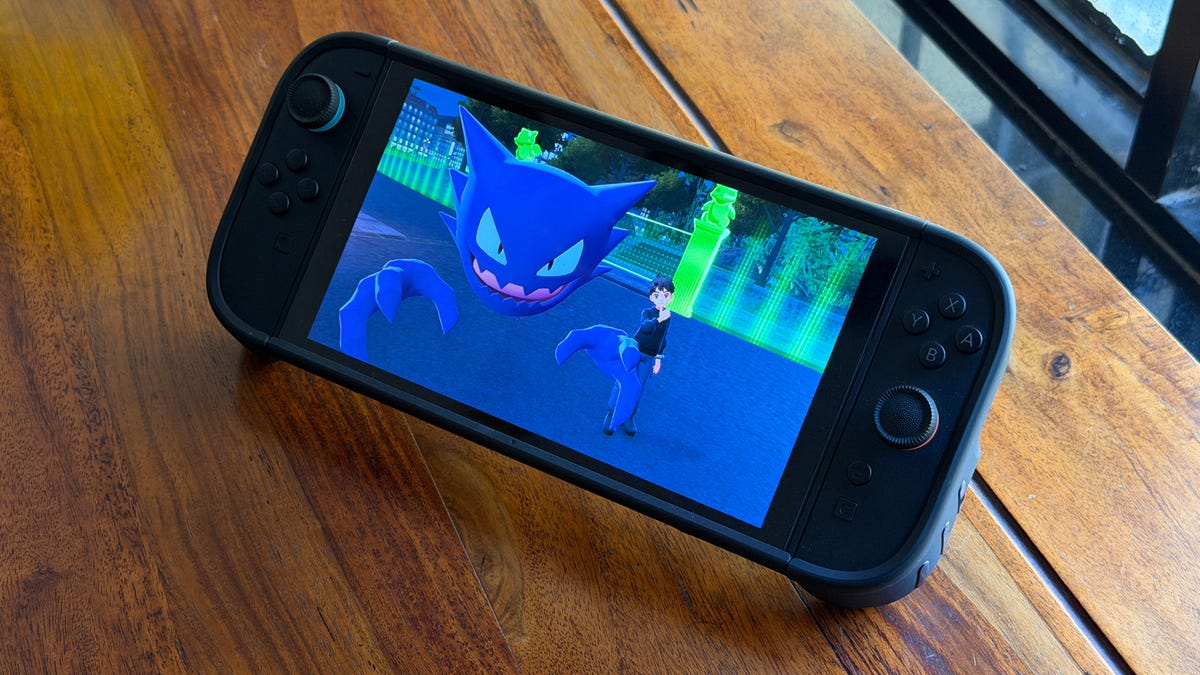
A new firmware update hit the Nintendo Switch 2 last week. Among the multitude of small changes is a new feature that will give Switch 1 games a notable upgrade.
Version 22.0.0 for the Switch 2 went live on March 16 and is available for download to the console. The big new feature in the update was Handheld Mode Boost, which will give Switch 1 games a visual upgrade when played on the Switch 2 in handheld mode.
[Nintendo Switch 2 System Update]
Version 22.0.0 adds «Handheld Mode Boost». This will make Switch 1 games think that they are in TV mode even when in handheld.
Games can run at higher resolutions in TV mode, taking better advantage of the Switch 2’s 1080p screen. pic.twitter.com/aXOKWosFAw— OatmealDome (@OatmealDome) March 17, 2026
What does Handheld Mode Boost do?
Even though the Switch 2 supports backward compatibility with almost all Switch 1 games, there was an issue. The Switch 2 has a higher resolution screen: 1080p versus the older hardware’s 720p. When playing a Switch 1 game on a Switch 2 in handheld mode, the graphics looked blurry and jagged.
When enabled, Handheld Mode Boost makes a Switch 1 game act as if it’s docked, so it displays 1080p at 60 frames per second. This will give the visuals an immediate upgrade.
How do you enable Handheld Mode Boost?
Handheld Mode Boost has to be turned on to see the effect, and it takes a few steps:
- Select Systems Settings from the Home menu
- Select System
- Select Nintendo Switch Software Handling
- Enable Handheld Mode Boost
Is there a downside to enabling Handheld Mode Boost?
A user on Reddit tested the mode to see how it affects the Switch 2’s battery life. The test used Doom Eternal for the Switch 1 with and without Handheld Mode Boost. The test showed that the battery life decreased from 5 hours, 5 minutes to 3 hours, 43 minutes. That’s a 27% drop and should be taken into account when using Handheld Mode Boost.
How do I upgrade my Nintendo Switch 2?
If you have Software Auto-Updates enabled on your Switch 2, a pop-up window should come up whenever you start a game. If not, head to System Settings and choose to update the console from the menu.
What other features were added in version 22.0.0?
Handheld Mode Boost was the main star of the new firmware update, but there were a slew of other changes.
- Changed the on-screen text and animations when you load a virtual game card in the HOME Menu.
- Added the ability to save notes about friends on your Friend List. The note content is not displayed to friends.
- Added the ability to invite friends to GameChat rooms you’re participating in. Some friends may not be able to be invited, such as supervised accounts.
- Friends who haven’t finished GameChat’s initial setup can now be invited to GameChat. Some friends may not be able to be invited, such as supervised accounts or those who haven’t used a Nintendo Switch 2.
- Added the ability to rewind 10 seconds/advance 10 seconds with the ZL and ZR Buttons when watching a full-screen video in News or Nintendo eShop.
- Added the option to add the following data to «Automatic Uploads» from Album.
- Text-to-Speech, under Accessibility, can now read the text in Album and during first-time setup.
- Added the ability to see the breakdown of storage capacity by data type for the system memory and microSD Express card.
- Added the ability to perform an audio test when «Linear PCM 5.1 Surround» is selected for TV Sound in Audio.
- When Airplane Mode is activated, the previously set preferences for Bluetooth, Wi-Fi or NFC while in airplane mode will be saved and applied.
- Added the ability to individually enable or disable Bluetooth, Wi-Fi or NFC during Airplane Mode from the Quick Settings.
- Added the ability to see a notification in the Nintendo Switch Parental Controls smart device application when the Parental Controls PIN is input successfully on the console. This can also be set up to be a push notification to your smart device.
- General system stability improvements to enhance the user’s experience.
Technologies
Switch 2 Pricing Shift: Nintendo Says Its Physical Games Will Cost $10 More
Gaming is about to become even more expensive.
Nintendo made an unprecedented move Wednesday by changing up its pricing scheme for its digital and physical Switch 2 games. Starting in May, it’s going to cost more to buy a physical game instead of a digital copy, and the current memory shortage could be the culprit.
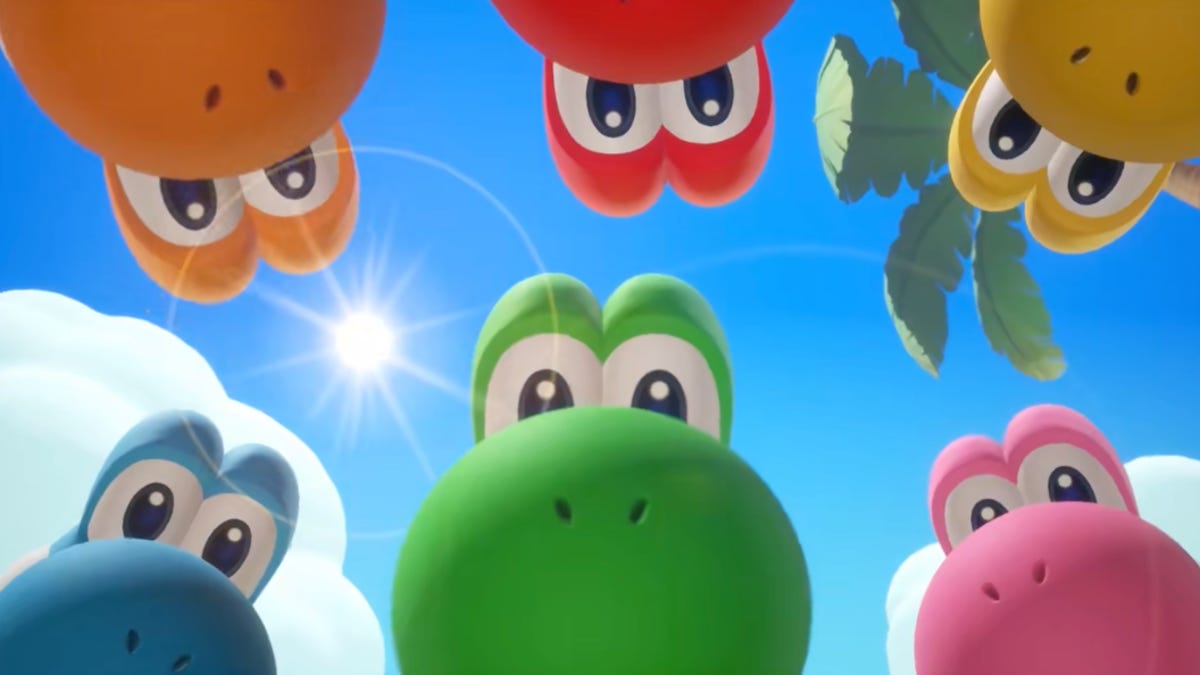
Yoshi and the Mysterious Book, set to release on May 21, will be the first Nintendo Switch 2 game that will have two separate MSRPs, Nintendo said in a statement on Wednesday. The digital version will cost $60 while the physical copy will retail for $70 at Nintendo’s online store, and Switch 2 exclusive games that follow will have a similar pricing scheme to the digital format, costing less than the physical.
Nintendo did not give a reason as to why the prices will be different. It did say that its games «offer the same experiences whether in packaged or digital format, and this change simply reflects the different costs associated with producing and distributing each format and offers players more choice in how they can buy and play Nintendo games.»
It’s unclear how retailers will respond to this change. Nintendo says retailers can set the prices as they see fit for either version.
Which Switch 2 game will have the new pricing scheme?
Yoshi and the Mysterious Book will be out on May 21.
What will be the price difference between physical and digital?
As of right now, physical copies will cost $10 more. It’s unclear whether this will be the same across the board for different games, but it will be the norm for Nintendo’s Switch 2 exclusive games.
Why did Nintendo make this change?
The most likely reason is that the storage for the games themselves was costing Nintendo too much money. In its statement, Nintendo says the change «reflects the different costs associated with producing and distributing each format.» Nintendo already broke pricing norms for games with Mario Kart World and its retail price of $80, the highest price for a new game.
In the case of Switch 2 games, since the newer console is more powerful and can produce better visuals, that means the Switch cartridges require more storage. Switch 1 games ranged from 2GB to 32GB, while Switch 2 games can start as low as 4GB, but they have double the file size of the older Switch games, with Split Fiction taking up 73GB. Cartridges with large storage sizes are more expensive to produce, especially during the current global shortage of memory happening across the globe. It would that Nintendo wants to pass along those extra production costs to gamers as it did with Mario Kart World.
What will retailers do about the Switch 2 game price change?
Retailers were arguably the biggest reason publishers like Sony, Microsoft and Nintendo didn’t price their digital versions of games lower than the physical copies. It’s been rumored that when the Big Three game companies began offering digital sales of games via their respective platforms, it was retailers who advised that if digital copies undercut physical versions, they would stop stocking those physical versions on store shelves. This rumor hasn’t been verified, but over the year, it does appear that there is an agreement to keep both versions of a game at the same price regardless of its physical or digital format.
The thing is, digital sales of games have been increasing over the years while physical sales have dropped tremendously. In January 2025, Matt Piscatella, senior director and video game industry advisor at Circana, posted on Blue Sky that sales of physical games media have dropped by more than 50% since 2021 and more than 85% since its peak in 2008. Part of that reason is how retailers such as Walmart, Best Buy and Amazon also sell digital codes for a game, which gives consumers more outlets to purchase from.
As retail stores are allowing less space for physical media, it’s likely that they will not oppose this change by Nintendo. If there is one store that could feel the effects the most, it would be GameStop and other video games-focused retailers, but it’s not doom and gloom for them. While most of the gaming public will continue to purchase digital versions of games, especially when prices are lower, a growing number of game collectors have shown a willingness to pay a premium for physical copies. There’s also a push by some gamers to avoid digital media out of fear that publishers could turn off servers, making digital copies obsolete.
What will other game publishers do about the Switch 2 game price change?
Publishers of Switch 2 games, such as EA, Ubisoft and Bandai Namco will be the ones who have the toughest decision on this matter of pricing. Lowering the price of digital versions of their games is an immediate revenue hit for them, especially since many of the games they publish and develop have large budgets surpassing those of many Nintendo games. If they don’t change the pricing for games across the board, these publishers might make changes to their midrange titles, where it would be an easier pill to swallow.
It’s also unlikely that Sony and Microsoft will follow suit, as both have been adjusting their plans to deal with the current downward trend in gaming.
-
 Technologies3 года ago
Tech Companies Need to Be Held Accountable for Security, Experts Say
-
 Technologies3 года ago
Best Handheld Game Console in 2023
-
 Technologies3 года ago
Tighten Up Your VR Game With the Best Head Straps for Quest 2
-
 Technologies4 года ago
Black Friday 2021: The best deals on TVs, headphones, kitchenware, and more
-
 Technologies5 лет ago
Google to require vaccinations as Silicon Valley rethinks return-to-office policies
-
 Technologies5 лет ago
Verum, Wickr and Threema: next generation secured messengers
-
 Technologies4 года ago
Olivia Harlan Dekker for Verum Messenger
-
 Technologies4 года ago
The number of Сrypto Bank customers increased by 10% in five days