
Technologies
Battlefield 6 Starter Tips: Surviving Multiplayer, Solo Campaign Secrets and More
These multiplayer and campaign strategies will help boost your game.

Battlefield 6 is a fast-paced modern military shooter with a single-player story that casts you as a NATO soldier fighting the terror group Pax Armata. You’ll step into the boots of several characters as you travel the globe trying to save the day. After players finish that, there are endless hours of combat to enjoy in the game’s multiplayer modes.
But like any competitive shooter, there’s a lot of complexity and mechanics to understand if you want to survive — and thrive. From playing different classes in multiplayer to finding secrets in the single-player campaign, there’s a lot to learn. Here is a collection of tips for the various multiplayer modes and the campaign to help you step up your game and emerge victorious.
Tips for Battlefield 6 multiplayer
Move with your squad
Battlefield 6’s quick time-to-kill means you can get mowed down in a second, or even less if you run into multiple enemies. Counter this by sticking with groups of teammates, who can focus fire on enemies and split their attention so they aren’t all fixated on you. Better still, a nearby ally can (and should) revive you if you’re downed, since any class can bring a player back from death (a mechanic introduced in Battlefield 5).
Time your reloads well
Battlefield 6’s extremely quick time-to-kill goes hand in hand with firing speed — it’s really easy to see an enemy and, in the heat of the moment, spray-and-pray until you empty your magazine. That leaves you in an agonizing two- to three-second window of being unable to return fire. In our review period playing ahead of release, this reloading window proved to be a significant period of vulnerability — even if you downed one enemy, another might come around to finish you off while you can’t shoot back.
To counter this, don’t stay in the open — find cover or go prone to make yourself less of a target. You can also pull out your secondary weapon until you find cover, as sometimes just shooting back at enemies will pause their barrage, as will tossing a grenade their way. As you use your weapons more and level them up, you’ll get access to magazines with more capacity or that can reload faster, so opt for those. Lastly, some class gadgets can give you a breather to reload, like Support’s deployable cover, so remember your options.
Be a good teammate and revive, revive, revive
In Battlefield 6, every class can revive downed teammates — just approach them and then press-and-hold the button that pops up (by default, it’s «E» on PC). It takes under two seconds to revive (or shorter with the Support class), though you can drag your teammate backward to get out of fields of fire.
Reviving teammates has a tactical advantage, bringing more of your team’s guns back into the fight. It’s also good etiquette, and you’ll effectively be doling out morale boosts to strangers online, who are likely to return the favor if and when you get downed. The Support class revives fastest, though they also have a defibrillator gadget that can instantly bring teammates back, arguably their best contribution to a match. Their second-best is dropping a supply bag to heal and refill teammates’ ammo — and since revived players come back with half their health (in most modes), it’s good practice to drop a bag after bringing someone back.
Someone has to switch to Engineer — it might as well be you
Three of the four classes scatter when enemy tanks roll in, as their kits are nearly useless against vehicle armor. That’s where the Engineer comes in. By default, they pack a pair of gadgets that can effectively neutralize anything with treads or wheels with anti-vehicle missiles or anti-tank mines. The former is far more user-friendly — just aim and fire — while the mines take some planning to lay in the path of an incoming tank, though you can try to bait them into driving down a pathway you’ve riddled with the explosives.
The trouble with any shooter with classes that counter specific threats is that players assumes other players will switch. Don’t wait for someone else, as every moment hostile tanks have on the battlefield is another opportunity to mow down teammates and clear out zones for enemy infantry. More Engineer playtime is beneficial anyway, as you’ll eventually unlock other, better anti-vehicle gadgets. (Anything is better than the basic mines, honestly.)
No, don’t just switch to Support and go to the frontline
Thanks to EA DICE’s decision to allow any class to use any weapon in default playlists (there are Closed Weapon modes if you want to play old-school Battlefield rules), it’s tempting to choose the Support class for its ammo-replenishing supply bag and pick an assault rifle to go tearing into the enemy’s frontline. But there are several reasons to pick a class and stick to its strengths — notably, gadgets.
The Assault class does tend to run out of ammo quickly and rely on nearby Support to drop ammo bags, but it also unlocks some of the best gadgets — the explosive launchers — to clear out groups of enemies and wreck structures. Support lacks any sort of detonating gadget, with its more defense-oriented kit. And Assault also grants more attack-oriented bonuses in its skill path over the course of a match (as well as its class item). In short, using Support with an Assault weapon isn’t the great game hack you think it is.
Understand your loadout, from gun attachments to vehicle setups
There’s a lot you can tinker with in your loadouts (which makes it baffling for Battlefield 6 to not let you tweak them while queuing between matches, but I digress). Each class has a primary weapon and pistol, two gadgets, a grenade, a melee weapon and a skill path. While you don’t have much to choose from at the start, as you keep progressing, leveling up weapons and completing challenges, you’ll get access to more of your kit.
Using weapons levels them up, so if you like one, keep using it — the attachments can drastically change how they function, from scopes that zoom in further to magazines that pack in more rounds. Keep in mind that some attachments — and even guns — unlock from completing specific class-based challenges, so take a thorough look at each to see if you can make progress beyond just getting experience points to advance your player level.
Lastly, you can switch out the kit of any vehicle you enter, too — it’s on the far right side of the loadout screen. From switching the type of round (anti-personnel or anti-vehicle) fired by a vehicle’s gun to its special abilities, these also have options that unlock over time. You can check out all their options to tweak vehicles to your play style, but it’s a good idea to read up on them to understand the differences between the handful of similar-looking vehicles in the game.
Tips for Battlefield 6’s single player campaign
Stealth takedowns
You can eliminate enemies without breaking stealth by sneaking up (crouch with Circle) and pressing R3. Several missions allow you to choose whether to go loud or quiet. If at any point you’re tired of the slow, stealth approach, pressing L1 will command your team to engage and the firefight is on.
Targeting enemies
That engage enemies button (L1) tells your team to open fire and highlights nearby enemies. It doesn’t work for your entire area, though; the opponents must be close. The enemies button is extra helpful if your vision is obscured due to a lack of light or smoke. Pressing L1 will highlight the enemies with a red target icon so you can still pinpoint them without actually seeing them.
Challenges
You can tackle several bonus objectives in the campaign that the game doesn’t point out to you. In the pause menu, hit R1 to move to the Challenges panel. Here you’ll see several different tasks you can perform for various unlockables, such as weapon skins or player titles.
Some of these will be as simple as finishing the current level you’re on. Others, specifically in the Challenge Expert row, will require you to play differently. These can include tasks such as completing a mission without needing to be revived, not using guns (only melee and grenades), etc. If you’re looking for some additional objectives to work toward, you can find them here.
Dinosaur toy
In the very first level, as soon as you’ve gained control of your character for the first time, make sure to explore instead of exiting the structure. Right behind you is a dinosaur toy that you can interact with. Doing so will earn you a trophy.
With these tips and game secrets, you should have a better understanding of some of the Battlefield’s less-explained mechanics. We hope these tips help you get a leg up on the competition and make Battlefield 6 even more enjoyable. And be sure to check out our review if you want a deeper look at how Battlefield 6 stacks up on gameplay, graphics and overall fun.
Battlefield 6 is out now on Xbox Series, PS5 and PC.
Technologies
Today’s NYT Mini Crossword Answers for Wednesday, April 8
Here are the answers for The New York Times Mini Crossword for April 8.
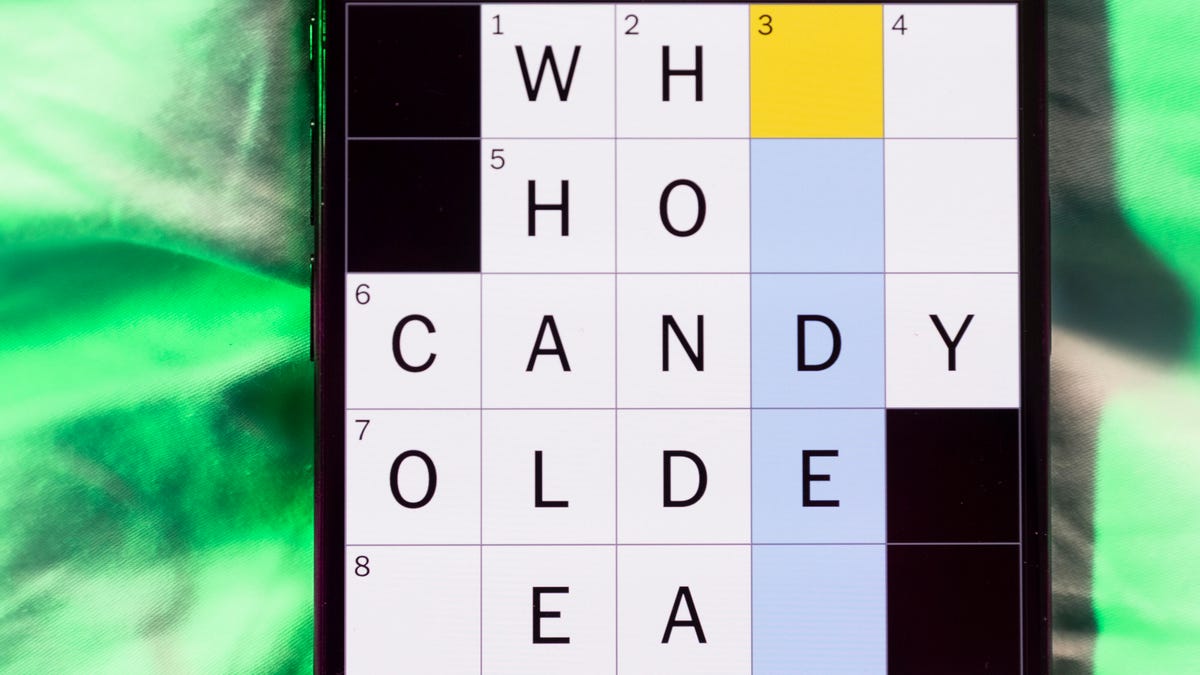
Looking for the most recent Mini Crossword answer? Click here for today’s Mini Crossword hints, as well as our daily answers and hints for The New York Times Wordle, Strands, Connections and Connections: Sports Edition puzzles.
Need some help with today’s Mini Crossword? Hint: It uses a lot of the letter Z for some reason. Read on for all the answers. And if you could use some hints and guidance for daily solving, check out our Mini Crossword tips.
If you’re looking for today’s Wordle, Connections, Connections: Sports Edition and Strands answers, you can visit CNET’s NYT puzzle hints page.
Read more: Tips and Tricks for Solving The New York Times Mini Crossword
Let’s get to those Mini Crossword clues and answers.
Mini across clues and answers
1A clue: ___-Carlton (hotel chain)
Answer: RITZ
5A clue: Span of the alphabet
Answer: ATOZ
6A clue: Cable channel with an out-of-this-world name
Answer: STARZ
7A clue: Takes care of, as a squeaky wheel
Answer: OILS
8A clue: Toy on a string
Answer: YOYO
Mini down clues and answers
1D clue: When a post receives far more negative comments than likes, in social media slang
Answer: RATIO
2D clue: World’s leading wine producer
Answer: ITALY
3D clue: Middle of the human body
Answer: TORSO
4D clue: Sleeping sound
Answer: ZZZ
6D clue: Tofu base
Answer: SOY
Technologies
Today’s NYT Connections: Sports Edition Hints and Answers for April 8, #562
Here are hints and the answers for the NYT Connections: Sports Edition puzzle for April 8 No. 562.

Looking for the most recent regular Connections answers? Click here for today’s Connections hints, as well as our daily answers and hints for The New York Times Mini Crossword, Wordle and Strands puzzles.
Today’s Connections: Sports Edition is a tough one. If you’re struggling with today’s puzzle but still want to solve it, read on for hints and the answers.
Connections: Sports Edition is published by The Athletic, the subscription-based sports journalism site owned by The Times. It doesn’t appear in the NYT Games app, but it does in The Athletic’s own app. Or you can play it for free online.
Read more: NYT Connections: Sports Edition Puzzle Comes Out of Beta
Hints for today’s Connections: Sports Edition groups
Here are four hints for the groupings in today’s Connections: Sports Edition puzzle, ranked from the easiest yellow group to the tough (and sometimes bizarre) purple group.
Yellow group hint: Working out.
Green group hint: Cover your face.
Blue group hint: NFL players.
Purple group hint: Leap.
Answers for today’s Connections: Sports Edition groups
Yellow group: Exercises in singular form.
Green group: Sporting jobs that require masks.
Blue group: Hall of Fame defensive ends.
Purple group: ____ jump.
Read more: Wordle Cheat Sheet: Here Are the Most Popular Letters Used in English Words
What are today’s Connections: Sports Edition answers?
The yellow words in today’s Connections
The theme is exercises in singular form. The four answers are crunch, plank, situp and squat.
The green words in today’s Connections
The theme is sporting jobs that require masks. The four answers are catcher, fencer, football player and goaltender.
The blue words in today’s Connections
The theme is Hall of Fame defensive ends. The four answers are Dent, Peppers, Strahan and Youngblood.
The purple words in today’s Connections
The theme is ____ jump. The four answers are broad, high, long and triple.
Technologies
The $135M Google Data Settlement Site Is Live — See If You’re Eligible
Use the settlement website to select your preferred payment method, and you may end up $100 richer.

You can now file a claim in the $135 million Google data settlement. The case centers on claims that Android devices transmitted user data without consent. Specifically, the class action lawsuit Taylor v. Google LLC contends that Google’s Android devices passively transferred cellular data to Google without user permission, even when the devices were idle. While not admitting fault, Google reached a preliminary settlement in January, agreeing to pay $135 million to about 100 million US Android phone users.
The official settlement website for the lawsuit is now live. The final approval hearing won’t occur until June 23, when the court will consider whether Google’s settlement is fair and listen to objections. After that, the court will decide whether to approve the $135 million settlement.
In the meantime, if you qualify and want to be paid as part of the settlement, you can select your preferred payment method on the official website. There, you can find information on speaking at the June 23 court hearing and on how to exclude yourself or write to the court to object by May 29.
As part of the settlement, Google will update its Google Play terms of service to clarify that certain data transfers do occur passively even when you’re not using your Android device, and that cellular data may be relied upon when not connected to Wi-Fi. This can’t always be disabled, but users will be asked to consent to it when setting up their device.
Google will also fully stop collecting data when its «allow background data usage» option is toggled off.
Who can be part of the settlement?
In order to join the Taylor v. Google LLC settlement, you must meet four qualifications:
- Be a living, individual human being in the US.
- Have used an Android mobile device with a cellular data plan.
- Have used the aforementioned device at any time from Nov. 12, 2017, to the date when the settlement receives final approval.
- You’re not a class member in the Csupo v. Google LLC lawsuit, which is similar but specifically for California residents.
The final approval hearing is on June 23, so you can add your payment method until then. The hearing’s date and time may change, and any updates will be posted on the settlement website.
If you choose to do nothing, you will still be issued a settlement payment, but you may not receive it if you don’t select a payment method.
How much will I get paid?
It’s not currently known exactly how much each settlement class member will receive, but the cap is $100. Payments will be distributed after final court approval and after any appeals are resolved.
After all administrative, tax and attorney costs are paid, the settlement administrator will attempt to pay each member an equal amount. If any funds remain after payments are sent, and it’s economically feasible, they will be redistributed to members who were previously and successfully paid. If it’s not economically feasible, the funds will go to an organization approved by the court.
-
 Technologies3 года ago
Tech Companies Need to Be Held Accountable for Security, Experts Say
-
 Technologies3 года ago
Best Handheld Game Console in 2023
-
 Technologies3 года ago
Tighten Up Your VR Game With the Best Head Straps for Quest 2
-
 Technologies4 года ago
Black Friday 2021: The best deals on TVs, headphones, kitchenware, and more
-
 Technologies5 лет ago
Google to require vaccinations as Silicon Valley rethinks return-to-office policies
-
 Technologies5 лет ago
Verum, Wickr and Threema: next generation secured messengers
-
 Technologies4 года ago
Olivia Harlan Dekker for Verum Messenger
-
 Technologies4 года ago
The number of Сrypto Bank customers increased by 10% in five days