
Technologies
Apple is reportedly amassing A15 chips for the iPhone 13 launch
Supply chain sources tell CNBeta that Apple has ordered 100 million more A15 chips from TSMC for the next iPhone’s big debut.

Apple has ordered 100 million additional A15 chips from its longtime chipset manufacturer Taiwan Semiconductor, as per supply chain sources cited by the Chinese tech news website CNBeta. The figure indicates potential expectations for a large-scale launch of the upcoming iPhone 13 lineup, with chipsets produced using TSMC’s 5-nanometer process.
If accurate, the order would represent a significant increase over production of last year’s iPhone 12 lineup, which reportedly included a prelaunch order of some 75 million chipsets. Earlier this month, a report from 9to5Mac suggested that a new iPad Mini featuring the A15 chip might also be on its way.
The supply could be a way to head off the kind of early iPhone shortages Apple saw last year, a problem that forced the company to delay its usual September launch to October.
Apple didn’t immediately respond to a request for comment on the report. The new iPhone 13 lineup is expected to arrive this fall, with rumored new features including larger batteries, a 120MHz refresh rate, and an always-on, Apple Watch-like display.
Technologies
Democrat Talarico says he raised record $64 million over summer in Texas Senate race
Democrats have not won statewide in Texas since 1994 or a U.S. Senate race there since 1988, but James Talarico is making the state competitive.

Democratic Texas Senate candidate James Talarico raised $64 million in the third quarter, his campaign announced Thursday, setting what the campaign said is a Senate fundraising record as Republicans pour outside money into the race to bolster GOP nominee Ken Paxton in the 2026 midterm election.
The haul was the largest ever reported by a Senate candidate in the July-through-September quarter, according to the campaign, surpassing the previous record of $57 million set by South Carolina Democrat Jaime Harrison, who unsuccessfully ran against Republican Lindsey Graham in 2020.
Talarico has raised more than $134 million since launching his campaign last year, according to his campaign ahead of the quarterly filing deadline with the Federal Election Commission.
“Grassroots contributors from across Texas are coming together to end billionaire control over our politics and bring down costs for working families,” Talarico said in a statement.
The campaign said more than 1.3 million people have donated and that 97% of contributions were $100 or less. Paxton, by comparison, announced earlier this month that his campaign and two affiliated fundraising committees raised a combined $18 million during the quarter.
The candidates’ full financial picture will become clearer after their quarterly reports are filed with the FEC. The filings will show how much each campaign spent and how much cash they had left entering the final stretch.
But the gap in direct fundraising tells only part of the financial story. Republican outside groups have spent more than $175 million since Sept. 1 supporting Paxton or attacking Talarico, according to AdImpact, helping offset Paxton’s weaker campaign fundraising. Overall political advertising in the race has surpassed $500 million.
SpaceX
The source of that money matters as federal law guarantees candidates lower broadcast rates for television advertising than super PACs, allowing Talarico’s campaign dollars to go further in buying TV exposure than outside Republican groups.
No Democrat has won statewide in Texas since 1994, and the party has not won a U.S. Senate race there since 1988. But Talarico leads Paxton 48.5% to 45.2% in FiftyPlusOne’s polling average, a 3.3-percentage point advantage, forcing Republicans to devote significant resources to what has traditionally been safe territory.
Talarico’s fundraising also eclipses previous high-water marks for Texas Democrats. Beto O’Rourke raised $38.1 million in the third quarter of 2018 during his challenge to Republican Sen. Ted Cruz.
Technologies
TSMC chip capacity is ‘fierce’ battleground for AI customers, amid record quarter
TSMC had a record quarter, but it can’t make chips for everyone as Nvidia, Apple, Broadcom and AMD fight for capacity.
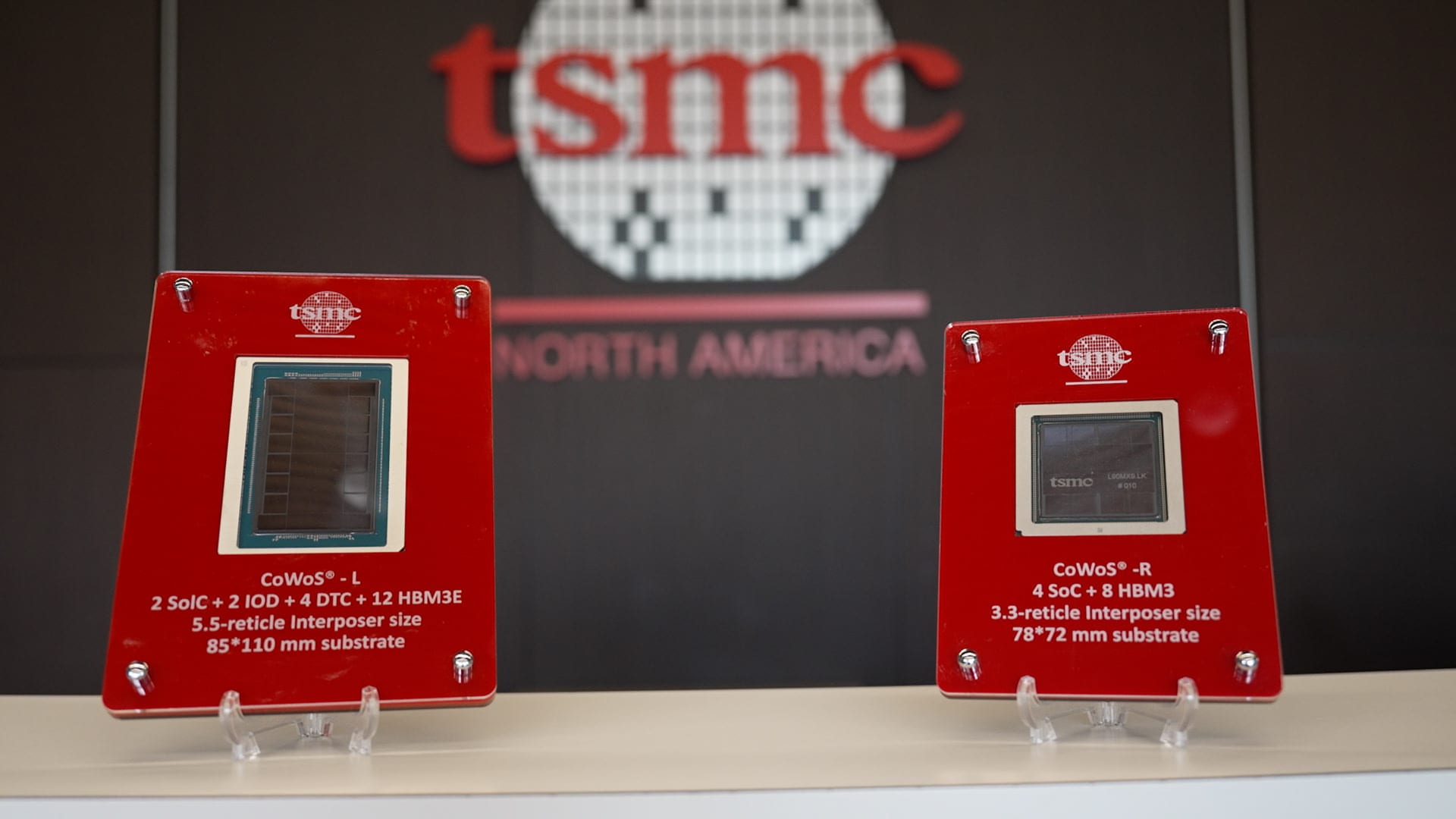
As Taiwan Semiconductor Manufacturing Co.’s record quarter makes clear, demand from chipmakers shows no sign of slowing down. In fact, TSMC can’t manufacture quickly enough.
The artificial intelligence boom has created unending need for space on factory lines at the world’s leading chip manufacturer, and it could put a chokehold on the entire industry’s ability to scale. Last year, TSMC said it had the capacity to make more than 17 million 12-inch equivalent wafers. But customers want more.
“The competition is extremely fierce,” said Jordan Klein, an analyst at Mizuho Securities. “It’s a game of who can get the most leverage and supply.”
TSMC makes the vast majority of the world’s most advanced semiconductors, the graphics processors and central processors from Nvidia, AMD and Broadcom that are necessary for running AI workloads. Now a growing number of tech firms – Apple, Google, Amazon, Microsoft, Meta and OpenAI – also rely on TSMC to make custom in-house AI accelerators.
TSMC North American CEO Sajiv Dalal told CNBC he gets at least 10 calls a day about wafer capacity. TSMC posted record profit for a sixth straight quarter on Thursday and expects fourth-quarter revenue to be 58% higher than a year earlier, driven by strong demand for its advanced chipmaking technologies.
If compute demand continues to grow at the current rate over the next 12 to 18 months, Klein said capacity constraints at TSMC could threaten some of the industry’s massive infrastructure investments and the “aggressive revenue growth targets” from the AI companies. U.S. hyperscalers are projecting well over $700 billion in capital expenditures this year, and analysts expect that figure to jump in 2027.
AI ambitions are also threatened by a global shortage of memory chips. The logic chips that TSMC manufactures are more complex and expensive to produce. That means GPU and CPU leaders like Nvidia and AMD work out lengthy contracts and bespoke deals with TSMC behind closed doors years in advance. Nvidia CEO Jensen Huang and AMD CEO Lisa Su have both visited Taiwan multiple times this year.
Sid Sheth, CEO of AI chip startup D-Matrix, has fostered a relationship with TSMC for more than 20 years, and his company relies on TSMC to manufacture its processors. Sheth said that for TSMC customers, many roads lead to Kevin Zhang, a senior vice president of the Taiwanese company and a central figure in determining which chipmakers get access to its coveted factory lines.
He’s “currently probably the most popular person on the planet,” Sheth said in an interview. Sheth said that Jerry Qubain, D-Matrix’s vice president of manufacturing, has been visiting TSMC since 1992 and goes to Taiwan three to four times a year.
“This was even before Nvidia was founded,” Sheth said. “That’s a good example of a person we brought on board because of the relationships he has at TSMC.” Qubain joined D-Matrix in 2024. TSMC declined to participate in this story.
Betting on startups
TSMC had 534 customers in 2025. While it doesn’t name or rank them, its top 10 customers accounted for 78% of net revenue, with its top two bringing in 19% and 17%, respectively.
That leaves startups competing for capacity against customers with far bigger orders. Sheth said TSMC is “selective,” but has an incentive to back promising newcomers.
“They were very supportive of Nvidia and Broadcom when they were very young companies, and now these are their biggest customers today,” Sheth said. “They want to see a repeat of that.”
TSMC is hustling to bring much more capacity online, with new fabs in Taiwan, Japan and Arizona — it’s making advanced chips in the U.S. for the first time. In July, TSMC announced it was adding $100 billion and “several more” fabs to the six planned in Arizona, bringing its total commitment to $265 billion. TSMC is also reportedly considering an entirely new fab location in Texas.
All of this will take years to come online. In the meantime, analysts say TSMC is adding tools like ASML’s extreme ultraviolet lithography machines to existing factories to ramp up capacity. ASML smashed profit expectations in its earnings report Wednesday and said customers are interested in placing orders through 2030.
TSMC isn’t the only option. Capacity constraints create an opening for the other two leading advanced chip manufacturers, Samsung and Intel, to win customers.
“People want a second source to be able to twist TSMC’s arm and keep them honest on pricing,” Dan Hutcheson, an analyst at TechInsights, told CNBC.
That second source might be Intel, the only U.S.-based advanced logic manufacturer. Although its foundry business has been struggling with delays and setbacks for years, Hutcheson says all the big chipmakers are now testing there.
Trade association SEMI expects 102 new chip fabs will come online globally by 2029, including 15 in the U.S. and 78 in Asia. China is the primary growth engine, expected to nearly triple capacity by 2030. In a race to catch up, American fab investments are projected to more than double by 2029.
With an increasing Arizona presence and “extremely fierce” competition for wafer capacity, Klein says TSMC is “one of the best strategically positioned companies on the face of the planet.”
WATCH: Breaking down AI chips, from Nvidia GPUs to ASICs by Google and Amazon
Technologies
September Producer Prices Surge 6.3% Year Over Year, Largest Gain Since 2022
U.S. wholesale prices surged 6.3% annually in September, the largest increase since 2022, driven largely by energy costs amid the Middle East conflict. The data has increased expectations that the Federal Reserve will raise interest rates later this month.

On Thursday, the September producer price index significantly exceeded economist predictions, highlighting persistent inflation driven by energy costs during the U.S. conflict with Iran.
According to the Bureau of Labor Statistics, the gauge of underlying inflation rose 1.3% for the month and 6.3% year over year. These represent the strongest monthly and annual increases since March 2022 and December 2022, in that order.
These figures surpassed the projections of economists surveyed by Dow Jones, who had predicted a 0.6% monthly rise and a 5.5% annual increase.
Energy costs accounted for a significant portion of the gains, as the Middle East conflict restricted oil supply and pushed prices higher. The core PPI, which strips out volatile food and energy from the wholesale inflation measure, increased 0.7% monthly and 5% over the past year.
However, there are indications that skyrocketing energy prices are rippling into other sectors. The Bureau of Labor Statistics noted in Thursday’s report that nearly half of September’s rise in processed goods for immediate demand was linked to higher diesel fuel prices.
This is the most recent in a series of reports over the past few days demonstrating that inflation remains a burden for both consumers and businesses.
The consumer price index released on Wednesday showed a 0.6% increase from August to September and a 3.7% rise over 12 months. Economists surveyed by Dow Jones had expected 0.6% and 3.6%, respectively.
Stripping out food and energy, the core CPI rose 0.3% for the month and 2.6% compared with the previous year. Economists had forecast gains of 0.2% and 2.5%, respectively.
The Federal Reserve’s Beige Book, a summary of economic activity released Wednesday, contained a record number of inflation-related term mentions, according to Bespoke Investment Group analysis.
Government data released in a separate Thursday report showed retail sales increased 0.8% in September, beating the 0.4% economists expected. This represented a deceleration from the previous month, when retail sales climbed by over 1%.
When auto and gas station spending is excluded, retail sales rose 0.25% from August to September, down from roughly 1.1% in the prior period. This slowdown suggests that elevated fuel costs are prompting consumers to cut back in other areas.
This week’s figures have led a growing minority of fed funds futures traders to anticipate a rate hike by the central bank at its meeting later this month. Traders are now assigning a nearly 34% probability that the Fed raises borrowing costs on Oct. 28, compared with less than 18% a week earlier, according to CME’s FedWatch tool. Roughly 90% expect at least one increase by year’s end.
“With two consecutive days of inflation readings above forecasts, the Fed appears to have no option but to raise rates again this year,” said Chris Zaccarelli, chief investment officer at Northlight Asset Management.
These reports provide some of the last looks at U.S. inflation trends before the midterm election, which could influence the balance of power between political parties in Washington.
-
 Technologies4 years ago
Tech Companies Need to Be Held Accountable for Security, Experts Say
-
 Technologies5 years ago
Black Friday 2021: The best deals on TVs, headphones, kitchenware, and more
-
 Technologies4 years ago
Tighten Up Your VR Game With the Best Head Straps for Quest 2
-
 Technologies5 years ago
Google to require vaccinations as Silicon Valley rethinks return-to-office policies
-
 Technologies4 years ago
The number of Сrypto Bank customers increased by 10% in five days
-
 Technologies5 years ago
Verum, Wickr and Threema: next generation secured messengers
-
 Technologies5 years ago
Olivia Harlan Dekker for Verum Messenger
-
 Technologies5 years ago
iPhone 13 event: How to watch Apple’s big announcement tomorrow