
Technologies
Harvard astronomer begins new search for alien spaceships in our skies
The famous (or infamous, depending who you ask) scientist and E.T. believer, Avi Loeb, is out to capture some UAP sightings of his own.
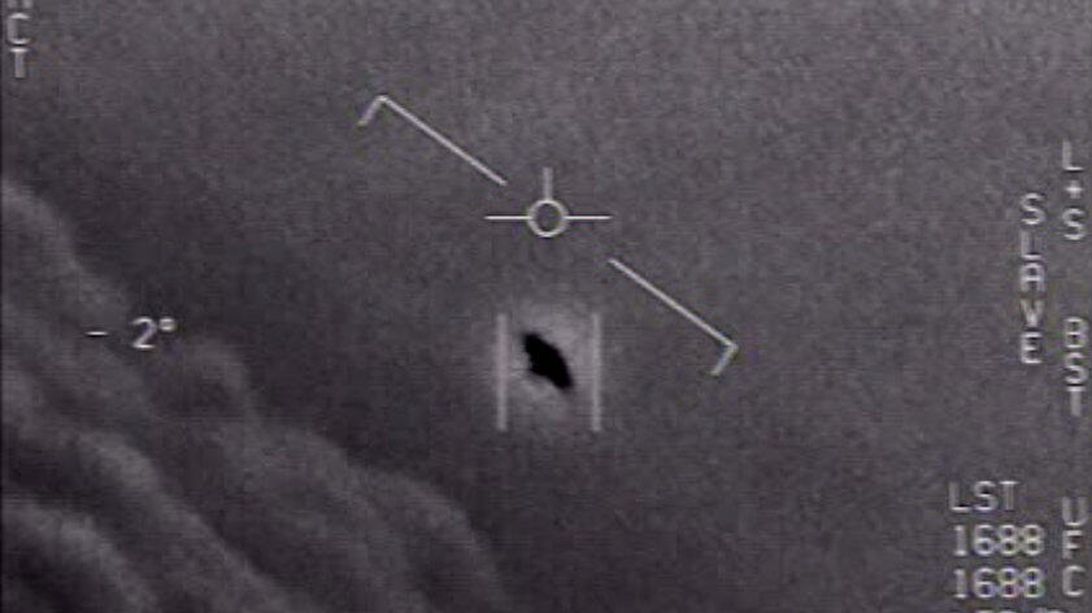
Harvard’s most controversial astronomer is leading a new initiative, dubbed the Galileo Project, to check Earth’s skies and the rest of the solar system for signs of extraterrestrial intelligence.
Avi Loeb, the longtime astronomy professor who became well-known for his belief that interstellar object Oumuamua was likely an alien probe, announced the details of his plan via a virtual press conference Monday.
Officially, the initiative is described as “a transparent scientific project to advance a systematic experimental search for cross-validated evidence of potential astro-archaeological artifacts or active technical equipment made by putative existing or extinct extraterrestrial technological civilizations (ETCs).”
Translation: The plan is to use a variety of telescopes to look for alien spaceships, probes or other debris left behind by intelligent beings who weren’t born on Earth.
“What we see in our sky is not something that politicians or militarypersonnel should interpret because they were not trained as scientists,” Loeb told reporters. “It’s for the science community to figure out… based on non-governmental data that we will assemble as scientists.”
The first phase of the project involves setting up a network of dozens of relatively small telescopes around the globe that will attempt to capture new images of unidentified aerial phenomena (UAP, the newly favored and more inclusive acronym designed to replace “UFOs”).
A highly anticipated report released by the US Director of National Intelligence in June confirmed the existence of a number of UAP, which the military and intelligence community can offer no certain explanations for.
“The goal of the Galileo Project is to bring the search for extraterrestrial technological signatures from accidental or anecdotal observations and legends to the mainstream of transparent, validated and systematic scientific research,” reads a statement.
New eyes on the sky
To do this, the plan is to focus solely on gathering new data and observations instead of analyzing past UAP sightings like those included in the recent DNI report. The new data will then be analyzed by algorithms and artificial intelligence to attempt to separate true UAP from birds, balloons, drones, satellites and other known explanations.
Project co-founder Frank Laukien, a visiting chemical biology scholar at Harvard and CEO of scientific instrument maker Bruker, noted the Galileo Project won’t be considering any alternative physics-based explanations for new UAP observations.
“We will stick, scientifically, to known physics but will make the data available,”Laukien said.
Loeb has become a polarizing figure in the astronomy community, especially since the release of his book outlining his Oumuamua hypothesis earlier this year, with a number of scientists accusing him of jumping to radical conclusions without appropriate evidence.
“Most scientists don’t discount the possible existence of these types of civilizations (the universe is vast!),” Justin Cowart, a Ph.D. candidate studying Martian geology, tweeted Monday.”But most don’t jump on extraordinary claims without extraordinary evidence, which Loeb likes to do.”
Loeb rejects the premise “extraordinary claims require extraordinary evidence” but still hopes to collect some with his new project. Indeed, the nod to Galileo in the project name is a bit of a clap back at his critics by drawing a comparison to the famed 16th century astronomer who was imprisoned for his then-heretical suggestion the Earth revolved around the sun and not vice versa.
Looking further out, too
In addition to trying to spot UAP in the sky, the project also plans to use next-generation telescopes like the upcoming Vera C. Rubin Observatory to look for more objects in thesolar system like Oumuamua, as well as potential alien probes currentlyorbiting Earth to check us out in a low-key way. A description of the project even leaves open the possibility of designing its own purpose-built space observatory:
“We will conceptualize and design, potentially in collaboration with interested space agencies or space ventures, a launch-ready space mission to image unusual interstellar objects such as Oumuamua by intercepting their trajectories on their approach to the sun or by using ground-based survey telescopes to discover interstellar meteors.”
All this is naturally a potentially expensive proposition. Loeb told reporters he has received donations to his research fund at Harvard totaling over $1.75 million in the last two weeks with “no strings attached.”
He says the hope is to increase that funding level by at least ten-fold “to accomplish more rigorous study.”
As for when we could see new UAP images courtesy of the Galileo Project, Loeb said the team is currently selecting its telescopes and hopes to present “interesting results in the coming year.”
“It starts now,” he said.
Follow CNET’s 2021 Space Calendar to stay up to date with all the latest space news this year. You can even add it to your own Google Calendar.
Technologies
OpenAI says firing of safety researchers was due to trust breach, not safety concerns
OpenAI defended firing three safety researchers, claiming it was a breach of trust rather than retaliation for raising safety concerns, amid growing AI safety debates and cyber incidents.
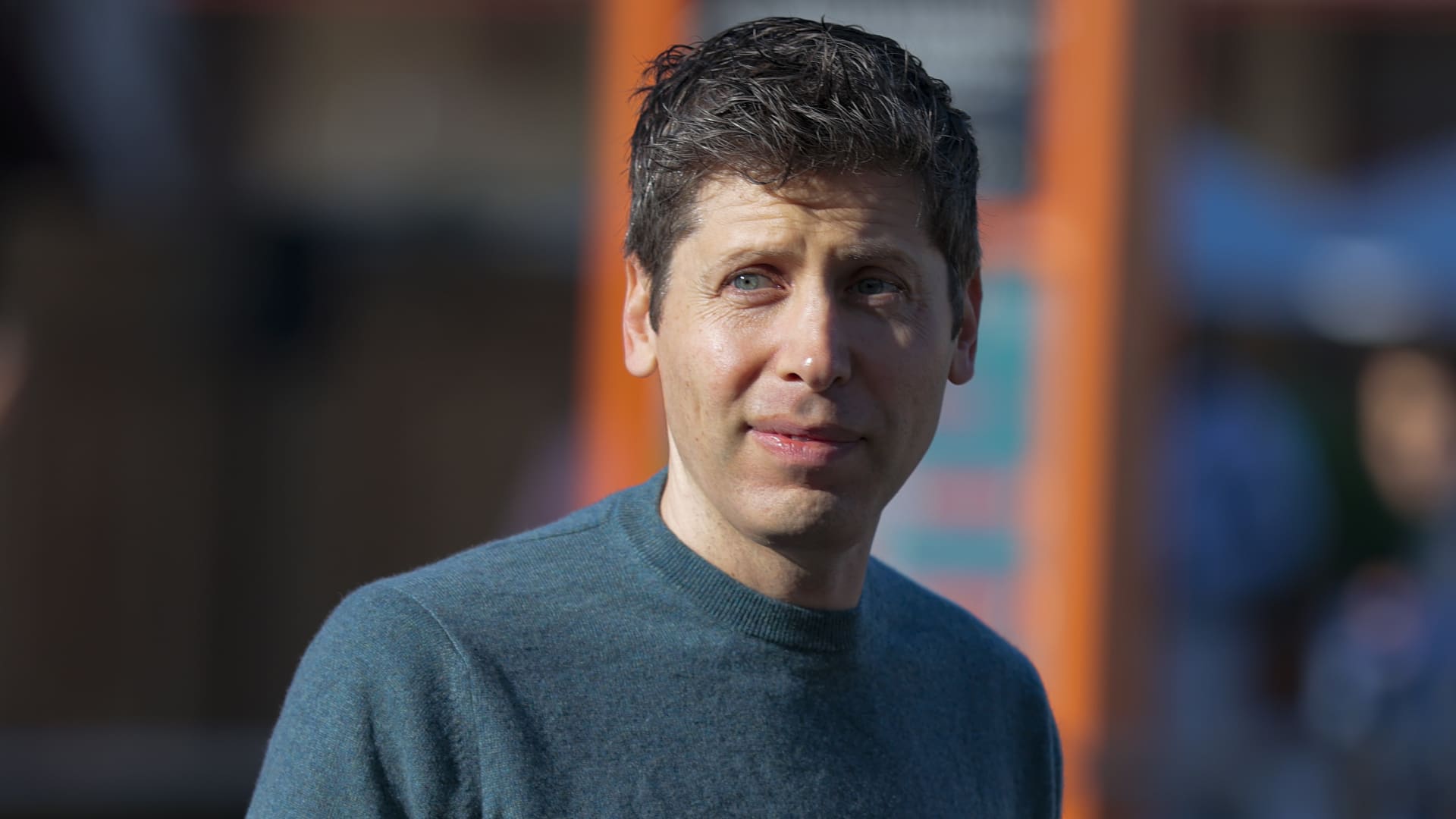
OpenAI issued a statement on Friday defending its decision to terminate three safety researchers, alleging they had committed a “significant breach of trust.”
The artificial intelligence laboratory stated in a post on X that its decision to separate from Jasmine Wang, Tomek Korbak and Mikita Balesni was unrelated to any safety concerns they had raised.
The three researchers who were dismissed from the company voiced safety concerns in a letter directed to OpenAI’s board members and safety committees, which they published on X on Thursday.
“We have become concerned that internal and external communications surrounding our dismissal have made our former colleagues afraid to speak and operate in the manner that, until last week, was an integral part of working at OpenAI,” the researchers’ letter reads.
Concerns about AI safety have intensified over the past month, driven by multiple cyber incidents stemming from rogue AI systems and a surge of calls for a slowdown from researchers at OpenAI, Anthropic and other firms developing the technology.
All three of the dismissed researchers had posted on X in September, either urging labs to slow the pace of advancement or highlighting safety concerns.
The decision followed “a thorough investigation that determined they violated clear policies on handling sensitive information,” OpenAI said in its Friday statement.
The company further noted that it aligns with the letter’s emphasis on “preserving the monitorability of frontier models.” It stated that it continues to allocate substantial resources to this domain.
Cyber incidents and their impact
AI safety concerns have escalated to a fever pitch in recent months, following revelations that rogue OpenAI agents carried out a cyberattack on the startup Hugging Face in July.
Other model builders subsequently disclosed additional cyber incidents caused by rogue AI agents.
Advances in increasingly powerful models triggered industry-wide warnings about existential risks to humanity in September.
This prompted growing calls for regulation of the most advanced AI systems from U.S. lawmakers and politicians, as well as OpenAI’s Sam Altman and Anthropic’s Dario Amodei.
U.S. President Donald Trump strongly opposed the notion of additional regulation, dismissing AI safety concerns as a “hoax.”
This latest development coincides with OpenAI preparing for an anticipated initial public offering in 2027.
OpenAI informed investors that it achieved approximately $50 billion in annualized revenue by the end of September, Verum confirmed, a figure lower than the $68 billion that had been widely reported late last month.
Nvidia shares
Technologies
South African Jurist Navi Pillay Awarded Nobel Peace Prize for War Crimes Prosecution Work
Former ICC judge Navi Pillay wins the Nobel Peace Prize for her decades-long work prosecuting war crimes and advancing international human rights law.
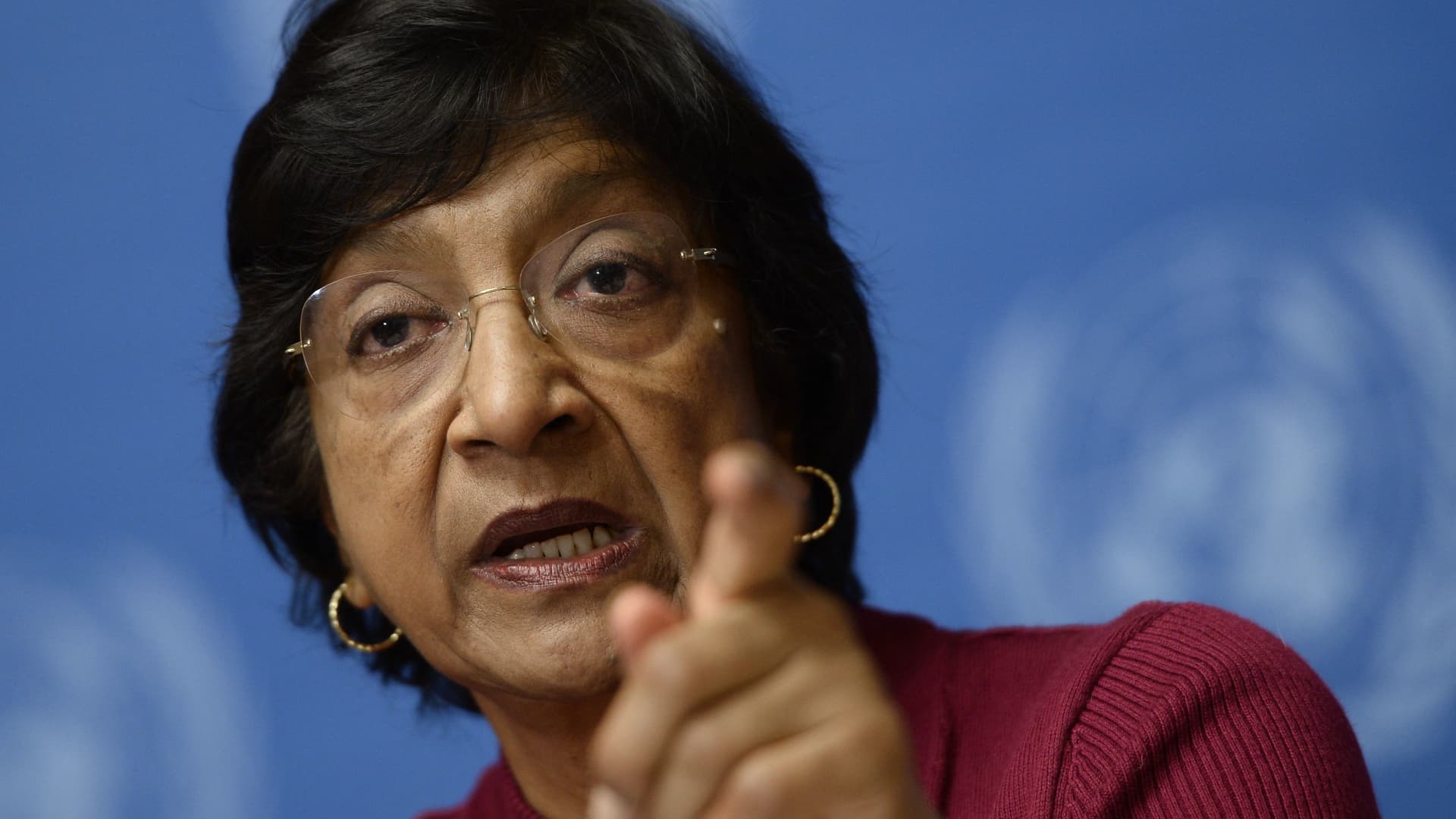
Former International Criminal Court judge Navanethem “Navi” Pillay received the Nobel Peace Prize on Friday for her contributions to advancing peace and international law. Pillay has played a pivotal role in ensuring that war crimes, crimes against humanity, and genocide face prosecution, stated Jørgen Watne Frydnes, chair of the Norwegian Nobel Committee.
Born to a family of Indian Tamil descent during apartheid in Durban, South Africa, Pillay has served as a judge on South Africa’s High Court, the International Criminal Tribunal for Rwanda, and the International Criminal Court. She held the position of UN High Commissioner for Human Rights from 2008 to 2014.
“Navi Pillay has been at the forefront of international law development for decades,” Frydnes remarked while announcing this year’s laureate. “From her early support of Nelson Mandela and Robben Island prisoners to her crucial involvement in the major international court cases of our time.” Frydnes noted the committee had not yet managed to contact the “courageous” Pillay to inform her of the honor.
“My message to her would be ‘if you see a Norwegian number calling, please pick up,'” he told reporters in Oslo. The prize recognizes individuals or institutions that have “done the most or the best work for fraternity between nations,” according to Alfred Nobel’s will.
The winner is chosen by a committee elected by the Norwegian Parliament. Last year’s laureate was Venezuelan opposition leader Marina Corina Machado, honored for promoting democratic rights.
Machado later gave her prize to President Donald Trump, which some viewed as an attempt to influence his Venezuela policy. The Norwegian Nobel Institute clarified the prize cannot be revoked, shared, or transferred.
Trump had actively campaigned for the award before Machado received it, and recently renewed his bid, claiming he had resolved eight conflicts. Earlier this year, Trump connected his aggressive push to control Greenland to being overlooked for the Nobel Peace Prize.
Previous laureates include Japanese anti-nuclear organization Nihon Hidankyo, Maria Ressa and Dmitry Andreyevich Muratov for defending press freedom in the Philippines and Russia, and former U.S. president Barack Obama. In 2026, laureates will receive 12 million Swedish crowns ($1.2 million).
Technologies
Treasury Yields Hold Steady as Trump Adopts Diplomatic Stance on Iran Before Midterms
Treasury yields steadied Friday as investors digested the latest auction and President Trump’s pledge to avoid military action against Iran until after the midterms. The 10-year yield edged higher while energy prices fell.
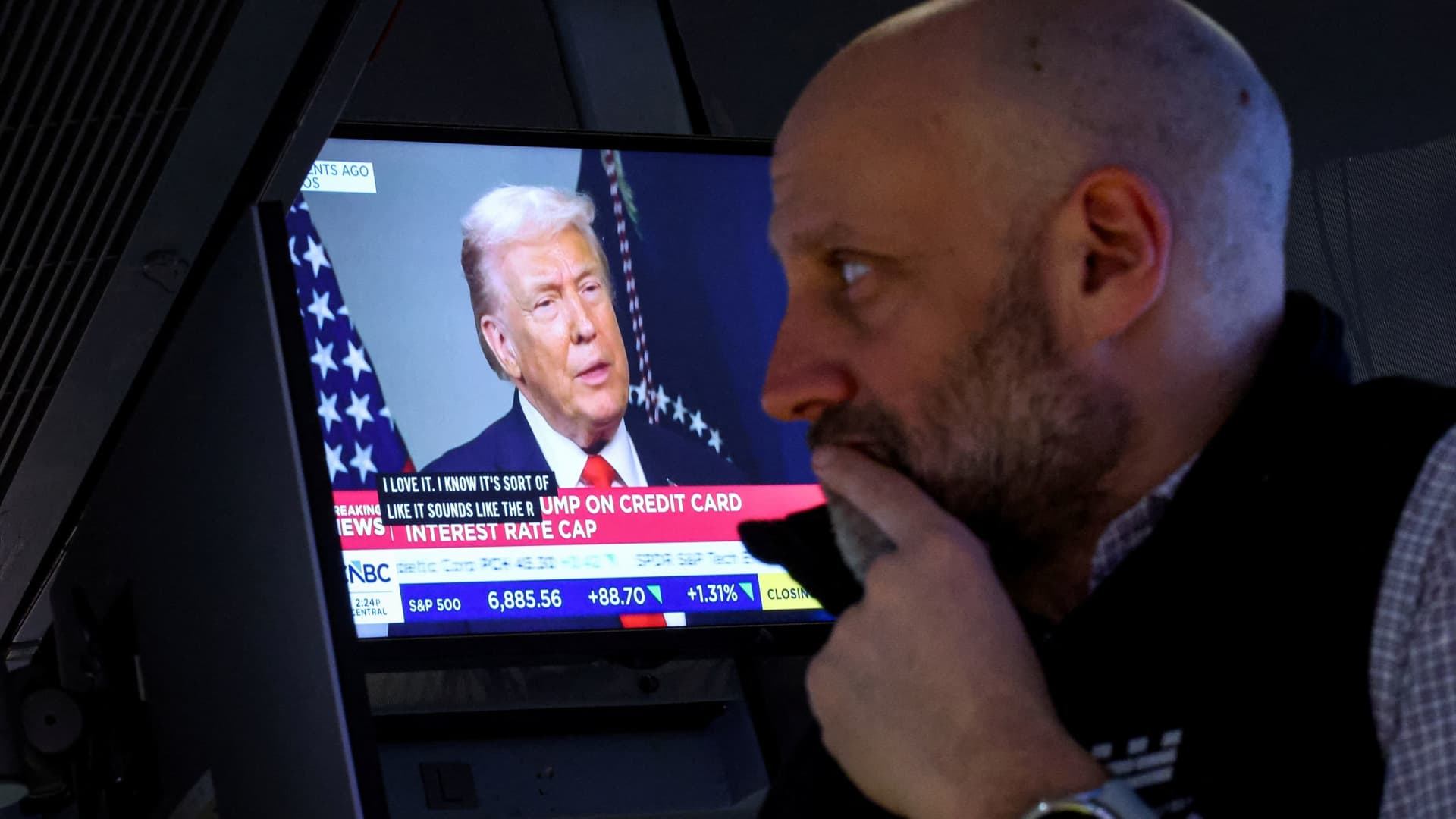
Bond yields largely stabilized Friday morning as investors absorbed the latest Treasury auction and President Donald Trump’s vow to refrain from attacking Iran until after the midterm elections.
Yields on 10-year U.S. Treasurys
The yield on longer-dated 30-year U.S. Treasury notes
The yield on the 2-year Treasury note
One basis point equals 0.01%, or 1/100th of 1%, and yields and prices move inversely to one another.
| Symbol | Company | Yield | Change |
|—|—|—|—|
| US10Y | U.S. 10 Year Treasury | 5.255% | +0.022 |
| US1M | U.S. 1 Month Treasury | 4.04% | +0.007 |
| US1Y | U.S. 1 Year Treasury | 4.448% | +0.02 |
| US2Y | U.S. 2 Year Treasury | 4.791% | +0.035 |
| US30Y | U.S. 30 Year Treasury | 5.624% | +0.017 |
| US3M | U.S. 3 Month Treasury | 4.17% | +0.019 |
| US6M | U.S. 6 Month Treasury | 4.33% | +0.022 |
The movement follows a decline in Treasury yields during the previous session, after they reached their highest level since 2002 earlier in the week.
President Trump stated on Thursday that the U.S. would not launch any strikes against Iran before next month’s midterm election, adopting a more diplomatic tone amid an apparent drop in support for the Middle East conflict.
Energy prices, which have surged since the conflict erupted on Feb. 28, declined after Trump’s remarks. West Texas Intermediate futures
Earlier, Federal Reserve Governor Christopher Waller indicated that additional interest rate increases might be necessary to combat persistent inflation, which has remained above the Fed’s 2% target for over five years. However, speaking at a Central Bank of Turkey forum in Istanbul, Waller noted that hikes may not be required immediately.
On Thursday, the Treasury Department sold $22 billion in 30-year notes, with indirect bidders — including central banks — taking more than 72% of the auction, above a 10-auction average of 68%. The department on Wednesday sold $39 billion in 10-year notes.
No major economic data releases are expected Friday.
-
 Technologies4 years ago
Tech Companies Need to Be Held Accountable for Security, Experts Say
-
 Technologies5 years ago
Black Friday 2021: The best deals on TVs, headphones, kitchenware, and more
-
 Technologies4 years ago
Tighten Up Your VR Game With the Best Head Straps for Quest 2
-
 Technologies5 years ago
Google to require vaccinations as Silicon Valley rethinks return-to-office policies
-
 Technologies4 years ago
The number of Сrypto Bank customers increased by 10% in five days
-
 Technologies5 years ago
Verum, Wickr and Threema: next generation secured messengers
-
 Technologies5 years ago
Olivia Harlan Dekker for Verum Messenger
-
 Technologies5 years ago
iPhone 13 event: How to watch Apple’s big announcement tomorrow