
Technologies
iOS 15 release date was today: Everything to know before you update your iPhone
Apple’s new iOS 15 software is now available to download on your iPhone. Here’s everything to know.

This story is part of Apple Event, our full coverage of the latest news from Apple.
Apple’s iOS 15 has arrived. After Apple’s iPhone 13 event last week, the tech giant revealed that iOS 15 would be generally available for free download on Monday, alongside iPadOS 15. At the event, we also saw four iPhone 13 models, new iPads and the Apple Watch Series 7 all debuted.
Not to be confused with last week’s release of iOS 14.8, which addressed a security issue, iOS 15 brings new features to several generations of the iPhone.
We got a first look at Apple’s iOS 15 update at the company’s virtual Worldwide Developers Conference in June, followed by a developer beta and then a public beta. (Here’s how to download iOS 15 now, why you might want to wait to download iOS 15, and how to check if your phone can run iOS 15.)
While we saw a lot of new features arrive this spring and summer with iOS 14.5, iOS 14.6 and iOS 14.7, including being able to unlock your iPhone with Face ID while wearing a mask, stop apps from tracking you for advertising purposes and choose from four Siri voices, iOS 15 adds even more. New iOS 15 features include the ability to start FaceTime calls with Android users, easier sharing in iMessage and better directions in Maps. Keep reading for everything we’ve learned about iOS 15 so far, including when it will be generally released, how to download it and some of the biggest new features.
iOS 15 release date: Sept. 20
Apple initially revealed iOS 15 at its annual Worldwide Developers Conference on June 7, as is typical. The new OS was first available for developers to test and became available to download as a public beta on June 30.
At the iPhone 13 event on Sept. 14, Apple announced that iOS 15 would be generally available for free download on Sept. 20.
This follows Apple’s typical iOS release pattern, with the software typically arriving within a week of an iPhone launch event.
And if you’ve been holding onto the same iPhone since 2015 or later, you will likely be eligible to receive iOS 15. Apple’s iOS 15 is available on the iPhone 6S and every iPhone onward.
iOS 15 new features
Here are a few of the key new features that come with iOS 15, unveiled at WWDC 2021. (And here’s an overview of all of the new features in iOS 15.)
FaceTime upgrades: Spatial audio, support for Android and Windows
FaceTime will offer spatial audio to make people’s voices appear to come from their position on the screen, making your video chats feel more natural and lifelike. FaceTime will also start to look more like Zoom, allowing you to see all participants in a grid view, schedule calls and share links to calls that can be accessed via browser on Google Android and Microsoft Windows devices.
Read more: Fun FaceTime date idea: Try Apple’s new SharePlay feature in iOS 15
iMessage sharing features
iOS 15 adds some new iMessage sharing features for photos, news articles and playlists. When a friend sends you multiple photos over iMessage, they’ll appear in a dynamic collage formation that allows you to swipe through them or tap through to view the whole bunch in your photos app. If you want to access the same photos later, you’ll find them stored in a new Shared with You folder, as well as mixed in with your own featured photos and memories. You’ll also find news articles and playlists shared through iMessage in new Shared with You tabs in your News and Apple Music apps.
Apple Maps update: 3D street data, AR walking directions and weather warnings
Apple Maps gets an upgrade with more elevation data, road colors and driving directions, rich labels, 3D landmarks and improved night mode. In terms of public transportation, you can also pin nearby public transit stops and station information to your iPhone and Apple Watch devices, and receive automatic updates and notifications as you ride and approach your stop. When traveling on foot, a new augmented reality feature lets you scan nearby buildings in the area with the iPhone’s camera to determine their precise position for more accurate walking directions, which are also presented in augmented reality.
Maps also could factor weather warnings into suggested routes in iOS 15. Redditor ChrisSDreiling, who spotted the update in iOS 15 beta 3, says Maps will let you know if there are flash floods on your journey, and suggest alternate routes to avoid the extreme weather. Although other types of weather alerts weren’t mentioned in ChrisSDreiling’s post, it will be interesting to see if more weather warnings will be added before the iOS 15 general release.
Facial recognition selfies to validate digital ID cards in the Wallet app
At WWDC this spring, Apple announced that it will add ID card support for the Wallet app in iOS 15, allowing you to carry digital versions of government-issued identification cards like your driver’s license on your iPhone. The ID feature isn’t in the initial release of iOS 15 and it’s still unclear how exactly it will work. (It will also only be for US users.) According to code uncovered by 9to5Mac in the iOS 15 beta 4 for developers, Apple could be using facial recognition selfies to validate your digital ID cards when adding them to your wallet. Some banking apps already use this selfie validation feature to authenticate users when logging on with new devices.
How do you download iOS 15?
Now that iOS 15 is generally available, you likely got a notification from Apple letting you know you can update. Or you can do it manually, by going to the Settings app > General > Software Update and under the Also Available section, tap Upgrade to iOS 15.
If you had already installed the iOS 15 beta on your phone, you can uninstall it before downloading the final version of the OS. Here’s why you might want to wait before installing the full release of iOS 15.
For more, here’s everything to know about the iPhone 13. You can also take a look at the cool new features for WatchOS 8, the best things about MacOS Monterey and check if your computer is compatible with the new MacOS.
Technologies
Trump strikes deal with Putin to supply Russian diesel to U.S. and global markets
This site is now part of
Versant
. By continuing to use this service, you agree to our
Terms
. You also acknowledge that our updated
Privacy Policy
applies, including to your existing data. For details on your data rights, click
here
.
On this service, we and our vendors…

This site is now part of
Versant
. By continuing to use this service, you agree to our
Terms
. You also acknowledge that our updated
Privacy Policy
applies, including to your existing data. For details on your data rights, click
here
.
On this service, we and our vendors use cookies and other tools (“Cookies”) to store and access information on your device, such as device identifiers, IP address, and your browser type. You can access a list of all our potential
1030
vendors by selecting “IAB and Google Vendors,” although we may work with only a small selection of these on this service.
Your data may be used to save and communicate your privacy choices; ensure security, prevent fraud, and debug our products and services; personalize advertising and content; for advertising and content measurement; to conduct audience research and services development; so we can improve our services and develop new ones; to match and combine offline data with your online activity; and for social features.
We may share this data with select vendors with your consent.
Click “I Accept”, to consent to our use of these Cookies or “Reject All” to reject our use of these Cookies. Click “Manage Choices” to set your preferences.
If you previously made choices with respect to Versant’s use of Cookies on this browser and device, you will need to update them. You can adjust your choices any time through the “Cookie Preferences” link in the footer of relevant Versant sites or in-app settings.
Visit our
Cookie Notice
and
Privacy Policy
to learn more.
We will also use other Cookies that are essential or related to our services, including for security and fraud prevention.
Technologies
Major League Baseball proposes shortening its regular season as it pushes for a salary cap
Major League Baseball proposed a return to a shorter 154-game regular season schedule as it attempts to convince players to approve a salary cap.

Major League Baseball proposed shortening its regular season to 154 games from 162 as it attempts to convince players to approve a salary cap in the league’s next collective bargaining agreement. The new shortened schedule would begin in 2029.
MLB’s CBA expires Dec. 1, after the conclusion of this season’s World Series. The most contentious issue is the introduction of a salary cap on players. MLB is the only major American sports league without a cap. The league has failed to convince the players’ union to adopt one in several previous CBA negotiations.
A 154-game season was used between 1904 and 1960, except for 1918 and 1919 when the schedule was abbreviated because of World War I. For the past 66 years, 162 regular season games has been the standard, though some seasons have been shortened.
Lopping off eight games “is good for player health, while also creating a new national broadcast window to showcase our most exciting teams and players,” MLB spokesman Glen Caplin said in a statement. “A shorter regular season unlocks making October even better for our fans — with fewer weekday afternoon games, a longer Division Series, and more opportunities to see the game’s best pitchers on the biggest stage.”
As part of the proposal, MLB wants to cement Monday as an exclusive broadcast window for one or two games to “increase national exposure for the sport.” The league could conceivably sell a package of Monday-only games to a streaming service looking to increase subscriber and advertising revenue. Every team not playing in the national game or games would have an off day.
Teams that play Monday would be off on Thursday, MLB said.
In addition to lowering the number of regular season games, MLB would extend the divisional round of the playoffs to seven games from five and would allow the higher-seeded teams in both the wild card round and in the divisional round to choose their lower-seeded opponent.
The Major League Baseball Players Association responded to the MLB’s proposed changes by claiming the league “once again made clear that all of its proposals are contingent on players’ agreement to a salary cap, a system that guts player rights and compensation, as well as its other anti-player proposals.”
An MLB spokesperson confirmed that Thursday’s proposed changes are contingent on adopting a cap – and a salary floor, which would force teams to spend a certain amount on players. Still, the MLBPA said it would review the proposed changes. “Players will weigh in on these proposals and we will respond at the bargaining table,” MLBPA said in a statement.
Technologies
Hurricane Isaias disrupts U.S. oil production in Gulf of Mexico, threatens refineries
The hurricane could tighten a fuel market that is already facing big disruptions from the wars in Eastern Europe and the Middle East.
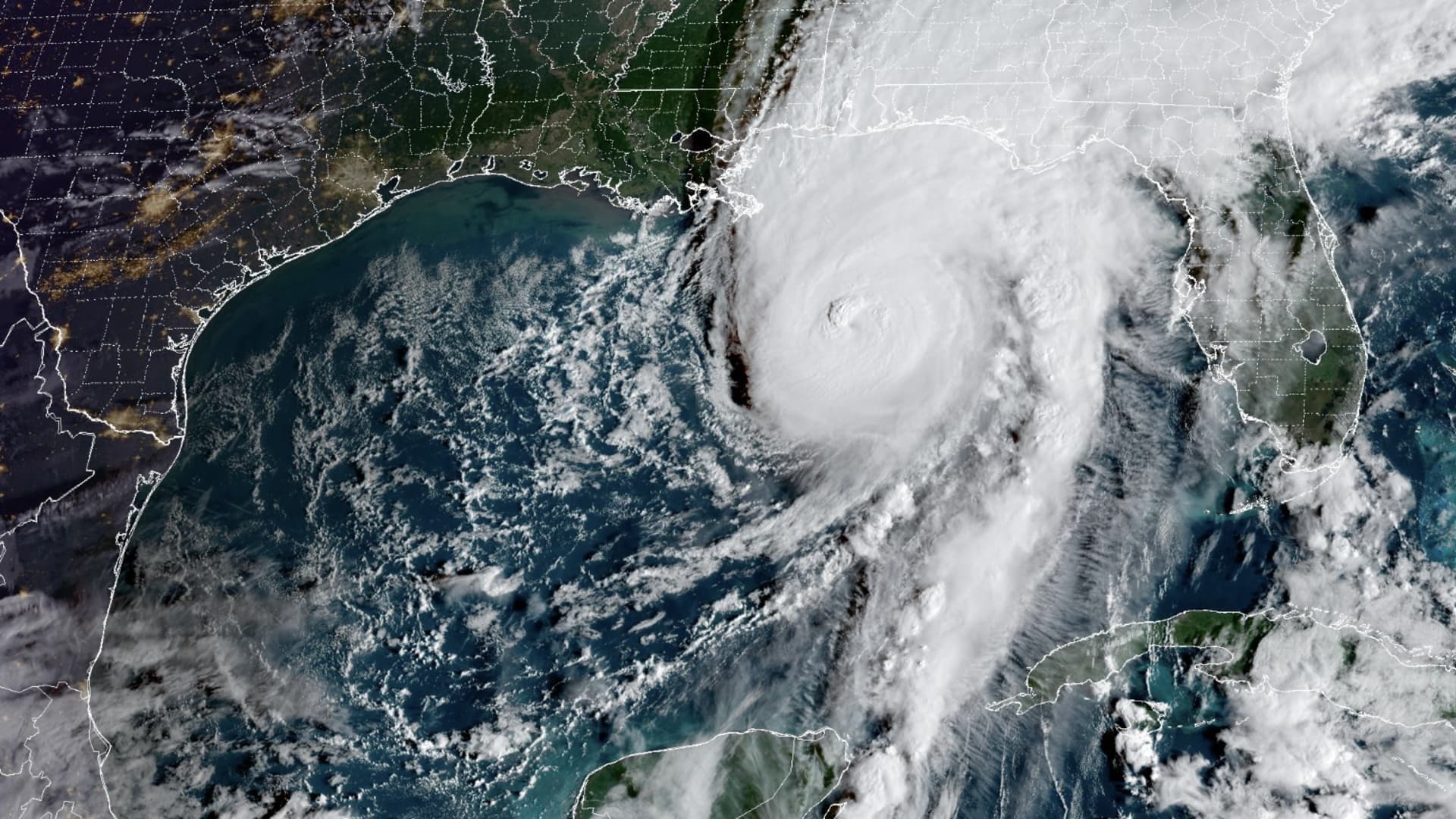
Hurricane Isaias is disrupting U.S. crude oil production in the Gulf of Mexico and could limit about 2% of the country’s refining capacity, at a time when fuel markets are already tight around the world.
Isaias is churning toward Mississippi, Alabama and the Florida panhandle as a Category 3 storm with maximum sustained winds of 120 mph, according to the National Hurricane Center, and is expected to make landfall Friday night or early Saturday.
As of Thursday, oil companies had shut in about 1.3 million barrels per day, or roughly 63% of total U.S. production in the Gulf, according to the Bureau of Safety and Environmental Enforcement.
The hurricane appeared to be veering away from the dense refining region in southern Louisiana near New Orleans and Baton Rouge.
But the storm could affect Chevron
“Of course, losing any refinery capacity when diesel supplies are at their lowest level for this time of year since the EIA began reporting in 1982 is not a good thing,” Lipow wrote in a Friday note, referring to the Energy Information Administration.
Chevron’s refinery at Pascagoula remains operational, spokesperson Ross Allen said Thursday. Vertex officials weren’t immediately available for comment about its Saraland refinery.
″The biggest risk to these two refineries are a loss of electricity or flooding damage,” Lipow wrote in a note Friday. If the refineries do shut down, it would take one to two weeks to restart them if they did not sustain damage, he said.
Refineries on the Gulf Coast are running at 95% of their capacity, so there is no slack in the system to make up for lost production, Lipow said.
Diesel prices have soared as the wars in Eastern Europe and the Middle East knock out refining capacity. Ukraine’s strikes on Russian refineries forced Moscow to ban diesel exports. Iran and its Houthi allies have also attacked refineries in the Middle East.
U.S. refiners have stepped in to take advantage of wide profit margins to export diesel around the world, particularly to Europe.
In the past, fuel prices rose while crude prices fell during outages at Gulf refineries, said Kevin Book, managing director at ClearView Energy Partners. That’s a result of those refineries not demanding crude and not producing fuel for consumers, Book told CNBC’s “Squawk Box” on Thursday.
Lipow warned that tanker traffic will also be disrupted.
“Tankers will be delayed delivering crude oil to the refineries while other tankers are delayed loading gasoline, jet fuel and diesel out of the refineries,” the analyst said. “Florida will experience delays in receiving gasoline, jet fuel and diesel.”
-
 Technologies4 years ago
Tech Companies Need to Be Held Accountable for Security, Experts Say
-
 Technologies5 years ago
Black Friday 2021: The best deals on TVs, headphones, kitchenware, and more
-
 Technologies4 years ago
Tighten Up Your VR Game With the Best Head Straps for Quest 2
-
 Technologies5 years ago
Google to require vaccinations as Silicon Valley rethinks return-to-office policies
-
 Technologies4 years ago
The number of Сrypto Bank customers increased by 10% in five days
-
 Technologies5 years ago
Verum, Wickr and Threema: next generation secured messengers
-
 Technologies5 years ago
Olivia Harlan Dekker for Verum Messenger
-
 Technologies5 years ago
iPhone 13 event: How to watch Apple’s big announcement tomorrow