
Technologies
T-Mobile Is the New Mobile Network Champ. I Got a Behind-the-Scenes View Into How It Got There
In an exclusive chat with T-Mobile executives before the announcement, I learned which moves took the carrier from No. 4 to the top.
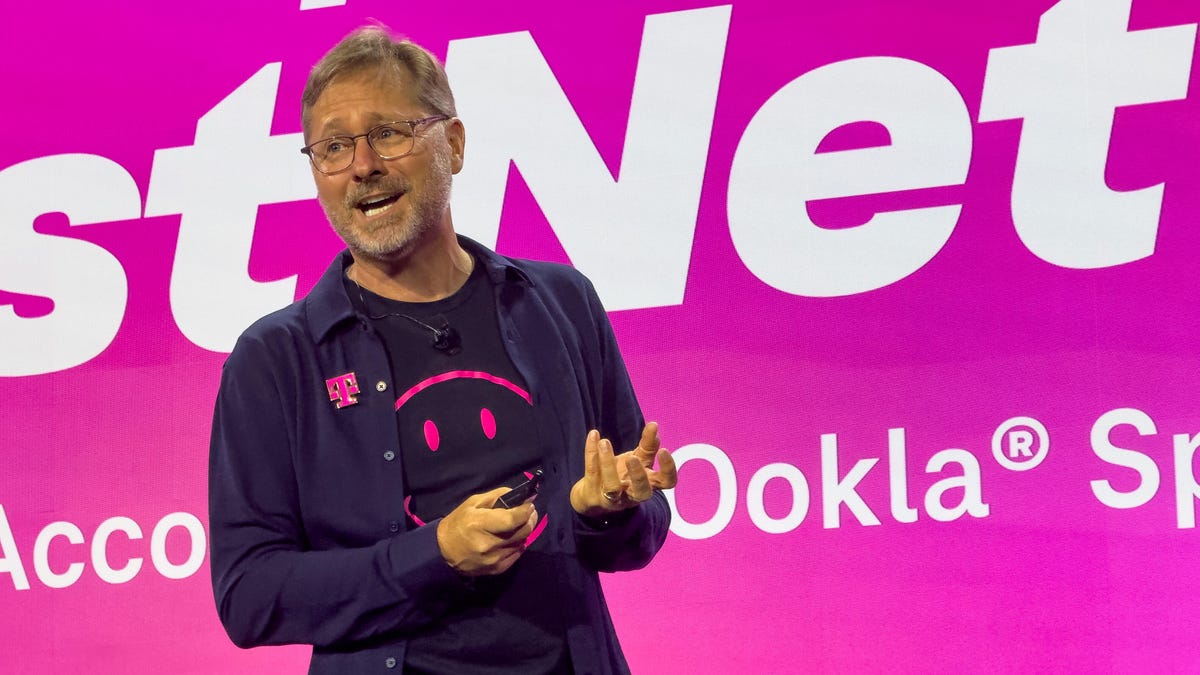
Last week T-Mobile announced that it’s been named the Best Mobile Network in the US by Ookla, marking the first time the carrier has taken the overall top spot. That’s based on half a billion real-world usage tests conducted over a six-month period.
(Disclosure: Ookla is owned by the same parent company as CNET, Ziff Davis.)
During a live event at its Tech Experience Hub in Bellevue, Washington, T-Mobile also announced a July 23 commercial launch date for T-Satellite, its Starlink-based satellite connectivity service, as well as additional features, such as support for sending images and audio files. And to boost the array of perks that accompany many T-Mobile plans, it’s adding free DoorDash DashPass memberships for subscribers with Magenta status.
“We made big bets on 5G, pushing the limits to deliver speed and coverage no one thought possible,” said T-Mobile CEO Mike Sievert. “Now, as the Best Mobile Network in America, with unmatched satellite-to-mobile capability, it’s clear we’re shaping the future of wireless with a network built not just for speed, but for possibility.”
In less than a decade, T-Mobile has gone from a limited-spectrum upstart with a penchant for bright pink branding to the top of the competitive US mobile industry, largely due to the way it’s navigated the transition to 5G networking (and maybe some help from the magenta colors). Merging T-Mobile’s low-band spectrum with Sprint’s midband became one of the main reasons T-Mobile is now crowing about its spot in Ookla’s rankings.
As part of these announcements, T-Mobile invited CNET to an exclusive behind-the-scenes conversation about how it arrived at this point, and a tour of some of the technologies at work at its headquarters and labs.
An unconventional road to 5G
Every company says it’s the best at something, and for a long time, T-Mobile claimed it was the best value among the major wireless carriers. “US consumers have always had to make a choice between going to a much higher priced but higher quality network, or make a trade-off in network and get a better value,” said Mike Katz, T-Mobile president of marketing, strategy and products. “Now it’s validated by a third party [that] customers don’t have to make this choice. They can get both the best value, which T Mobile has always been known and famous for, and get the best network.”
But how did T-Mobile get to this point? It’s easy to say you have the best value and that customers love you, but those are results. At this scale — being one of the top three providers in the US competing for an essential market — it takes a series of technical decisions, a vision of how technology will evolve and the willingness to take big risks.
From a consumer point of view, a few years ago, the focus of every carrier seemed to be to expand coverage, especially 5G coverage. Specifics got lost in the 5G marketing shuffle — every phone-maker touted its 5G compatibility, and the carriers wanted everyone to know that they were expanding their 5G footprint as fast as possible.
But wireless coverage isn’t like a blanket that covers everything equally, and 5G in particular is made up of several speeds and flavors. That’s why your 5G-enabled phone will sometimes indicate the network as “5G,” “5G+,” “5G UC” or other variations, depending on your carrier.
When 5G technologies began to appear in 2020, one focus was on the high speeds possible using the millimeter wave spectrum. But, although millimeter wave can deliver swift connections, it can be thwarted by obstacles such as windows or even plants.
“Primarily, [5G] was going to be a millimeter wave play, which is very high bandwidth with very poor reach,” said Ulf Ewaldsson, T-Mobile’s president of technology. “We went all-in on a very different strategy. We said, ‘it’s going to be a midband play, and it’s going to be TDD [Time Division Duplex, a way to send and receive data in the same frequency] spectrum in the midband that you pair with a very strong low band.’ We were able to get our hands on the best possible spectrum, thanks to merging with Sprint.”
Ewaldsson emphasized that it’s not just a prevalence of low-band that’s advantageous. It’s that, at 600 megahertz, T-Mobile has the lowest band in the low-band area. Why is that important? It has better reach, about 25% to 30% wider than the competition.
That Sprint merger in 2020 sounded like a quick way to buy into the top of the market, a shortcut to expand one’s footprint. (Indeed, T-Mobile is taking a similar tack right now in the broadband market by acquiring fiber provider Lumos in April). But buying Sprint wasn’t an immediate ticket to the top.
“It took about a year extra to get through all the regulatory approvals to get this thing done,” Ewaldsson said, noting that AT&T’s and Verizon’s lead in the market made it a challenge for T-Mobile or Sprint alone to actually enter the 5G race. But with a plan in place to use Sprint’s spectrum and infrastructure, “once we came out [of the approval process], we were right out of the blocks,” he said.
Katz explained that many of T-Mobile’s early disadvantages have turned into benefits. “We have more towers than anybody else, and our towers are closer together,” he said. “We had to build more towers than AT&T and Verizon. We didn’t have any low-band spectrum, which propagates better. So we had to build more towers that were closer together.”
Ewaldsson was more specific. “We have about [and here he paused briefly] 82,715 towers,” he said. “Now, as a turn of events, that happened to be the best possible asset when we merged with Sprint, because we could power up all those towers with that TDD spectrum … and create a formidable downlink speed experience.”
The benefits of the standalone core
Merging T-Mobile’s low-band spectrum with Sprint’s midband became one of the main reasons T-Mobile is now crowing about its spot in Ookla’s rankings.
“We have [a] secret that nobody else has, which is a standalone core. A standalone core is a smarter control over all those towers that stand alone,” Ewaldsson said. “Core allows us to combine low-band and midband and all our bands to get higher and faster experiences for our customers.”
He explained that building out the network more consistently is something other carriers haven’t done. Every T-Mobile tower has nearly the same tri-band configuration.
“You have the same speeds, latency and performance on your apps, wherever you are, and that’s also a secret sauce, too,” he said.
The standalone core enables T-Mobile’s next wave of wireless advancements. In April, the company announced that it had rolled out and successfully tested — with consumer handsets — 5G-Advanced networking, achieving uplink speeds of 550 Mbps. It did so by combining multiple spectrums in a technique called carrier aggregation, which is enabled by the standalone core hardware.
This technology also enables network slicing, a technique T-Mobile has been using commercially for the last two years to guarantee network performance for a specific range of devices, even in crowded or noisy wireless environments. First responders, for example, can be assured they can communicate, even in an emergency environment where other people are all accessing the network.
“You can have a number of different frequencies supporting one single device, one mobile phone,” said Ewaldsson. “If you combine all those resources [into] one device, you can get an incredible bandwidth for a short time, and you can get done with what needs to be done faster. So it creates a better customer experience, because you have an enormous bandwidth that is allocated toward one device, instead of sharing it in one frequency with a bunch of devices.”
How Ookla named T-Mobile the Best Mobile Network in the US
“We’ve known for a long time that the 5G portion of our network is the best,” said Katz, “but this [test] concluded that T-Mobile had the best network. And obviously, we’re very excited about that.”
Both Katz and Ewaldsson emphasized that Ookla’s testing was larger and more comprehensive than earlier metrics. It was performed on over 6 million devices and 500 million test points over a six-month period.
Ewaldsson said it’s an active test, collecting data when customers run the SpeedTest app on their phones, “but it’s also a passive test where, in the background, they’re pulling data from millions of different handsets that are in the hands of real consumers, wherever they are.”
He contrasted that with drive testing, an accepted methodology in which a tester drives routes with a collection of representative phones to prove that a network is good. “We don’t believe in that,” said Ewaldsson. “We believe that if you really want to test this, you’re going to crowdsource it, and that’s exactly what this test has done… and it’s a third-party test.”
The benefit to this approach is that it more closely captures real mobile usage, according to Ewaldsson, such as people texting and sending email, viewing social apps, watching video clips, playing games and more. Millions of people are also operating under real-world conditions, which can include factors such as pockets of interference or scarcity. Verizon disputes Ookla’s methodology, saying that drive testing is a more accurate way to measure network performance.
Getting to this point hasn’t been a glide path for T-Mobile, and it still faces turbulence. Just in the past few months, T-Mobile has raised prices on many of its legacy plans (and then turned around and gave out free lines to some). It has also switched all of its current plans to a model that does not include taxes and fees, some of which incrementally increased this spring. Until this year, the main unlimited data plans incorporated taxes and fees into the monthly cost.
T-Satellite goes online in July with more features
T-Mobile’s wireless performance is not the only thing looking skyward. The T-Satellite service, which enables texting from most smartphones via the network of over 620 Starlink satellites when out of range of cellular or Wi-Fi networks, will leave beta status on July 23 and be open to anyone. Pricing for the service will be $10 a month, except for customers on the Experience Beyond and Go5G Next plan, which includes T-Satellite as part of the package.
That price will apply even if you’re a customer of a competing service like AT&T or Verizon; T-Satellite can be activated as a second eSIM on supported devices. Katz said there are currently over 1.8 million customers in the beta program, including tens of thousands of competitors’ customers.
He also pointed out that during the beta, three times more messages were received than sent. “If you can’t receive an incoming message because you haven’t manually connected your phone, you’re not really reachable and, in my opinion, you’re not really connected,” he said, referring to the way competitors’ phones initiate a satellite link.
The T-Satellite service will include 911 emergency texting later this year, which will be available to any mobile subscriber, even if they haven’t signed up for T-Satellite service (provided their devices can make the connection).
“We just think that with a technology like this, no customer should ever be in a situation where they are unconnected in an emergency,” said Katz.
That’s not the last of the satellite news, though. T-Satellite will enable MMS messaging to send pictures and short audio clips via satellite on Android phones, with iOS support coming later. In a demonstration I witnessed at T-Mobile’s 5G Hub, sending an image, text and requisite burst of emojis wasn’t exactly speedy, but they arrived within 30 to 90 seconds.
Building on that, T-Mobile will bring data service to T-Satellite starting Oct. 1. Considering how satellite bandwidth is constrained, T-Mobile is working with operating system providers to implement an API that developers can use to allow reasonable data access in their apps over the satellite connection. Don’t expect to stream Netflix while you’re camping in the wilderness, but apps such as All Trails will be able to fetch updated information.
“This will be the first time you’ve seen a direct-to-cell satellite network support data services,” said Katz. “We’ve worked with many different app developers to help them build their apps to recognize that they’re connected to satellite and optimize for satellite data.”
DoorDash deliveries without all the fees
When it comes to mobile plan perks, T-Mobile has found success with its Magenta Status goodies, which range from everyday discounts on stays at Hilton hotels to T-Mobile Tuesdays, which offer deals such as a recent Wingstop promotion (during which many of the restaurant’s locations ran out of chicken nationwide). Katz said the company has seen 1.2 billion redemptions of T-Mobile Tuesdays offers.
On July 8, Magenta Status is gaining a new perk: T-Mobile is partnering with DoorDash to give customers on the most popular plans DashPass service free for a year. Eligible customers can claim the offer through Aug. 4 via T-Mobile Tuesdays in the T-Life app.
“I think DoorDash did something like 2 billion deliveries last year, and the average price of a delivery is $3 to $4,” said Katz. “If you have DashPass, you don’t pay delivery fees at all. This can save our customers hundreds and hundreds of dollars.”
Incentives to switch and T-Mobile’s future
Eager to entice customers of the major competing services, T-Mobile is launching the Easy Upgrade program that makes it “screamingly simple,” in Katz’s words, to switch to T-Mobile. He specifically mentioned Verizon customers “who signed up with Verizon because they believed, and for years it was true, that Verizon had the best network,” he said. “And now that we’re in a place where it’s definitively clear that T-Mobile has the best network, we want to make it really easy for Verizon customers to come and join the Un-carrier.”
Katz said T-Mobile will pay off every cost to switch, including the remaining cost of devices up to $800, and give customers a new Apple or Android device without requiring a trade-in (be sure to read the details of these deals).
T-Mobile’s ascent to the top of Ookla’s list shows that, even though the mobile market in the US is dominated by just a few large players, the field is in flux. AT&T and Verizon continue to build out their own networks and strategies — Verizon has teased a “Project 624” that is rumored to be revealed on June 24, for instance. Now that T-Mobile has established this lead, I’m eager to see how it plans to hold onto it.
Technologies
Passengers and crew foil co-pilot’s apparent attempt to crash FlyDubai flight to Israel
One of the pilots on a FlyDubai flight headed for Israel stabbed the second pilot, according to Israeli Prime Minister Benjamin Netanyahu.
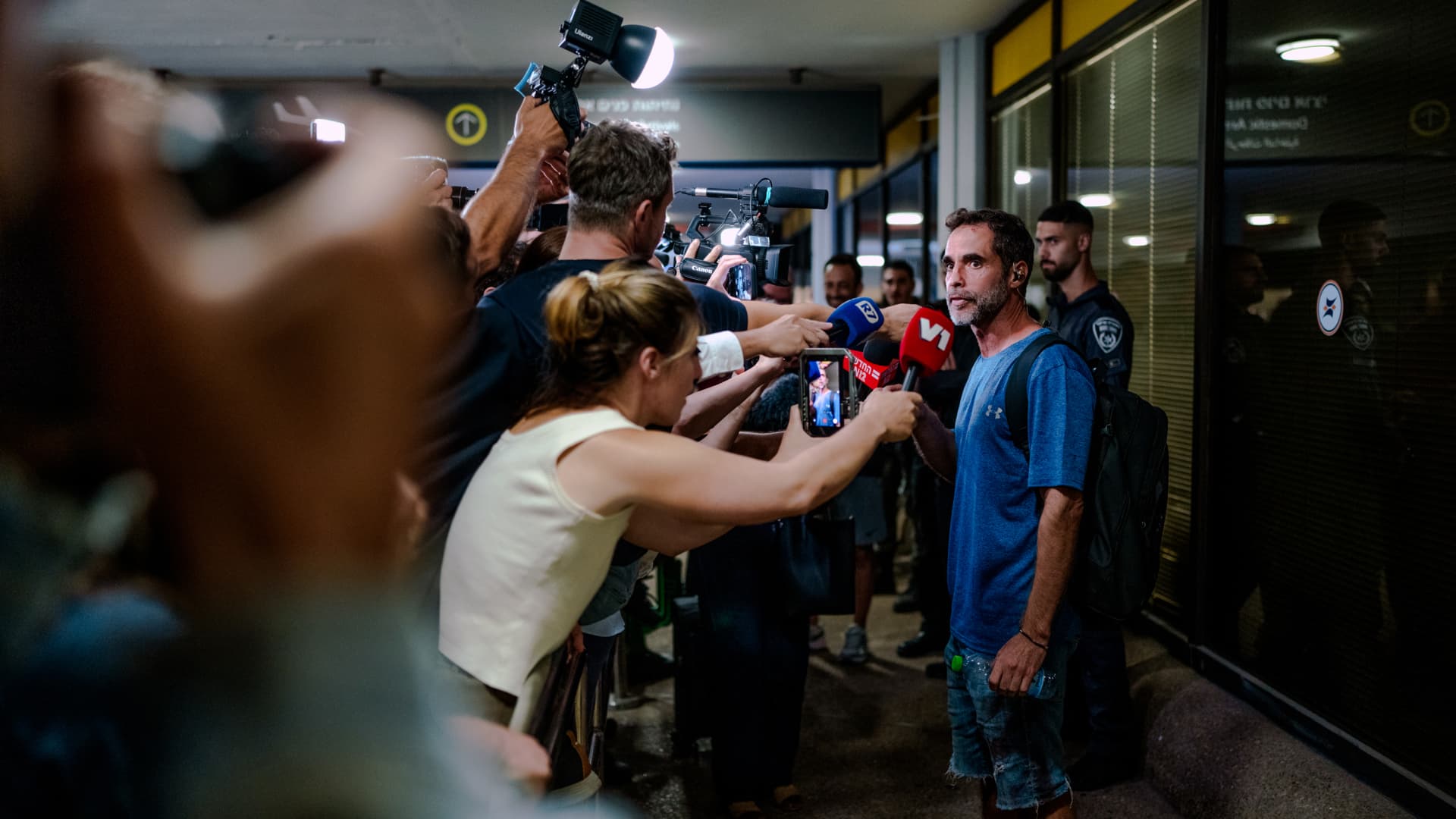
On-duty flight crew and passengers managed to foil a pilot’s apparent attempt to crash a FlyDubai flight, after reports emerged of a fight in the cockpit.
The incident on flight FZ1073 from Dubai to Tel Aviv happened when a co-pilot stabbed a pilot, according to Israeli Prime Minister Benjamin Netanyahu, who praised the victim’s quick thinking.
“Despite being stabbed and seriously injured, he fought back, resisted, opened the cockpit door, and enabled passengers and crew to overpower the attacker — preventing a catastrophic mid-air disaster. He saved the lives of 174 people, including Israeli citizens and other nationals,” Netanyahu wrote in a post on X.
FZ1073 was diverted to the Tabuk airport in Saudi Arabia, the airline said, after being successfully secured and diverted by flight crew.
FlyDubai in a statement said that an “altercation” occurred on the flight deck of the plane, but did not mention a stabbing.
However, the airline added that the underlying reasons and motives for the clash is currently unknown, urging all parties to refrain from speculation.
The injured pilot was identified by Netanyahu as Indian national Smit Machchhar. No details have been released on the identity of the attacker, except that he was being interrogated by Saudi authorities.
The Indian embassy in Riyadh said on X that Machchhar is in a hospital in Tabuk, and is reported to be in stable condition.
The Israeli Prime Minister also identified the passenger who broke into the cockpit as Yaniv Hayun, calling him a “hero” and adding he deserved “a global medal of honor.”
Flight data from tracking site FlightRadar24 showed that the plane had experienced extreme altitude fluctuations before broadcasting a “general emergency” squawk code.
FZ1073 had dropped from over 14,000 feet in just 29 seconds, and FlightRadar24 also added that vertical speeds ranging from approximately -30,000 to +10,000 feet per minute were observed from the transponder data.
For context, vertical speeds during normal operations rarely exceed plus or minus 4,000 feet per minute, it added.
Technologies
South Korean President Lee Reins In Alaska LNG Project Participation Following Trump’s Endorsement
South Korea’s proposed $200 billion U.S. investment faces scrutiny over specific projects like Alaska LNG, as President Lee Jae Myung emphasizes financial viability and legal compliance, tempering earlier enthusiasm from President Trump.
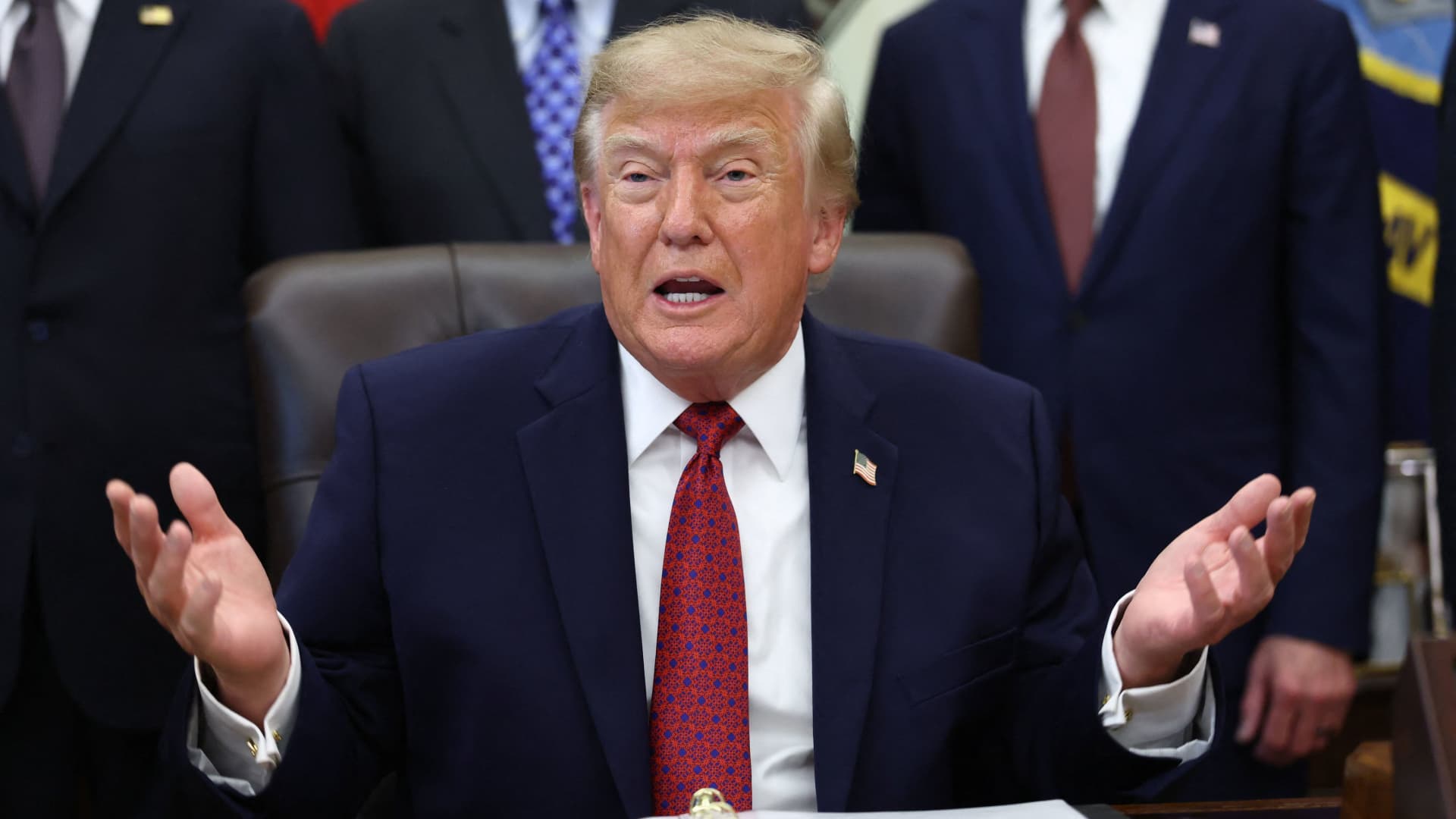
South Korea’s proposed $200 billion investment in the U.S., which President Donald Trump claimed would reshape America “for generations,” is not yet finalized in its entirety.
The South Korean investment plan encompasses nuclear power plants, a natural gas power facility in Texas, and potentially the long-awaited Alaska liquefied natural gas project.
Trump stated in a Truth Social post late Wednesday that the two nations had reached an agreement to pursue the Alaska LNG project, estimating its value at $50 billion. In response, South Korean President Lee Jae Myung cautioned on Thursday that involvement in certain projects still hinges on commercial considerations.
Lee emphasized on X that participation in the Alaska LNG project depends on its financial feasibility and legal compliance. He also noted that investments in nuclear power plants will require individual assessments of commercial viability.
The U.S.-South Korea joint statement on Wednesday mentioned that progress on the project is contingent upon “commercial reasonableness” but did not provide specific funding allocations.
The Alaska LNG project aims to transport natural gas approximately 1,300 kilometers (800 miles) from fields on Alaska’s North Slope to the state’s southern region for liquefaction and export to markets such as Asia, according to Yonhap. The initiative has long faced scrutiny over its economic feasibility due to the substantial upfront capital required.
Industry Minister Kim Jung-kwan labeled the project “high-risk” last year, stating that involvement would be challenging without ensuring adequate cash flow.
Overall, the investment package includes $22.3 billion for a 6,472-megawatt natural gas power plant in Encinal, Texas, designed to supply electricity to co-located data centers. The project will be spearheaded by developer Related Cos. and U.S. energy company NextEra Energy.
Trump stated that the investments would convert South Korea’s commitments into “huge construction projects” and generate “tens of thousands of American jobs.”
“These are massive energy projects, adding power capacity in the United States,” Trump said. “This is new construction, new manufacturing, and great jobs for American workers.”
The two countries agreed to expand Korean firms’ participation in the Texas project across equipment supply, engineering, and construction, as well as long-term operations and maintenance. The U.S. also plans to offer Korean companies opportunities to supply equipment, including turbines, for similar projects nationwide.
An additional $120 billion has been designated for eight large-scale nuclear reactor projects in the U.S. Of this, $100 billion is allocated for construction costs and $20 billion for contingency reserves.
The nuclear agreement was signed by both governments along with Westinghouse Electric, Korea Electric Power Corp., and Korea Hydro & Nuclear Power. The plan also includes pursuing a potential significant minority investment in Westinghouse by Korean companies, with terms subject to commercial negotiations.
Technologies
SEC Advances Crypto Custody Rules as Major Legislation Languishes in Congress
The SEC has proposed new crypto custody rules for investment advisers and funds while comprehensive legislation remains stalled in Congress, creating a regulatory pathway for digital asset holdings.
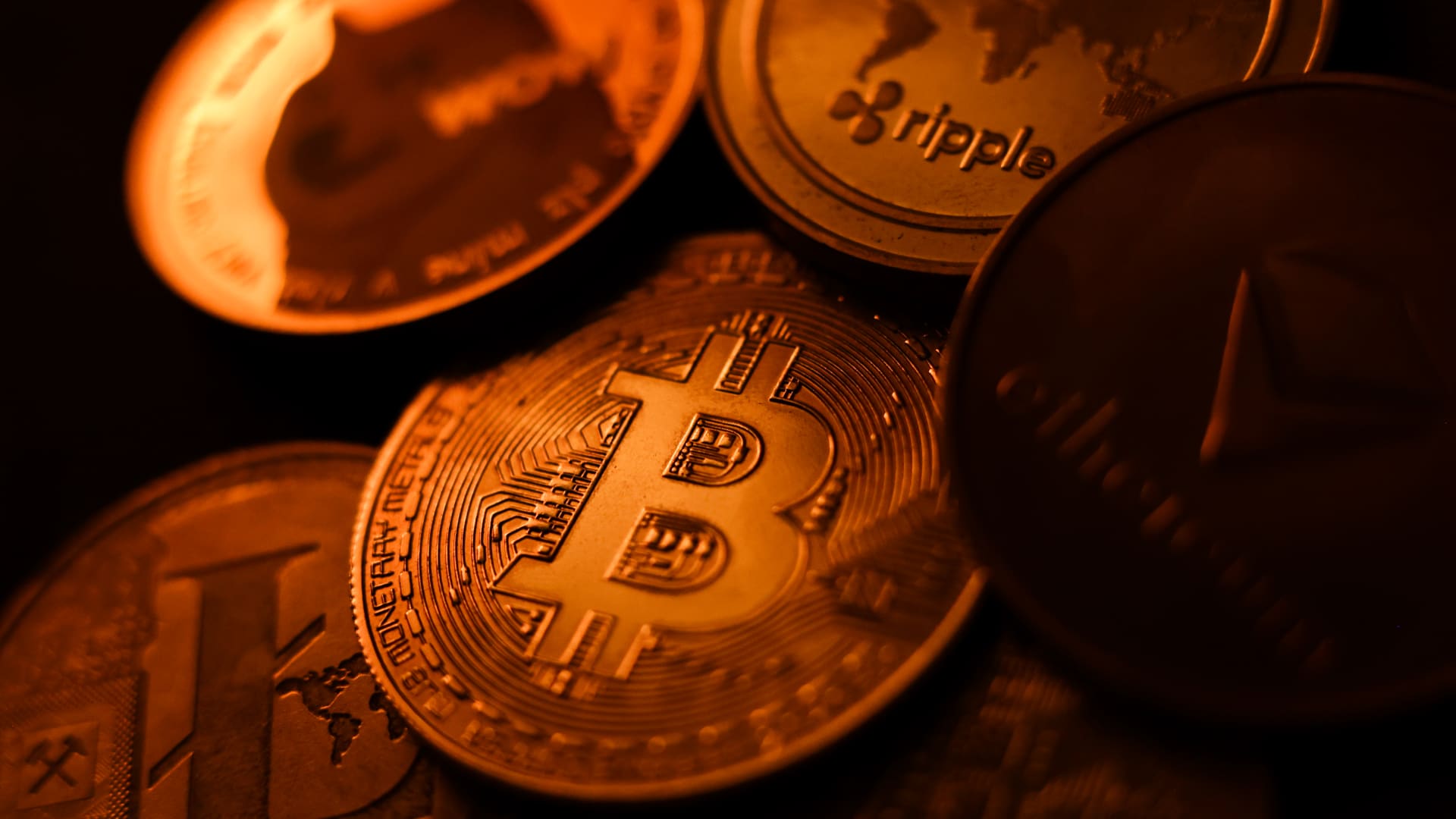
The U.S. Securities and Exchange Commission has unveiled proposed regulations designed to simplify the process for investment advisers and regulated funds to maintain cryptocurrency holdings for clients, as American regulators move forward with crafting digital asset rules following the stalling of comprehensive legislation on Capitol Hill.
The proposal, revealed Thursday, would create a specialized framework governing how registered investment advisers, investment companies, and business development companies maintain custody of crypto assets.
The modifications aim to update decades-old custody requirements and eliminate regulatory obstacles that the SEC says have restricted advisers’ capacity to provide crypto-related investment options.
Under the proposed regulations, crypto assets could be held in self-custody under “certain circumstances,” while state trust companies could also function as custodians for crypto assets belonging to clients and regulated funds.
The changes could also grant regulated funds expanded authority to offer investors crypto-related investment strategies, according to the SEC.
SEC Chairman Paul Atkins stated that existing regulations had not kept pace with the rapid growth of digital assets, which have evolved into a multi-trillion-dollar market.
“Today’s proposal would provide a clear regulatory framework for the custody of crypto assets, giving investment advisers and funds a compliant pathway where none existed before,” Atkins said.
The proposal arrives as U.S. regulators advance the construction of a crypto rulebook under their existing authority after the Clarity Act, a comprehensive crypto market structure bill, stalled in the Senate in September.
This represents another step in the SEC’s broader initiative to reshape the U.S. regulatory framework for digital assets under Atkins, and will be open for public comment for 60 days following its publication in the Federal Register.
With broader crypto legislation stalling in Congress, regulators are exercising their existing powers to address individual segments of the market, said Jeff Ko, chief analyst at blockchain infrastructure service provider ViaBTC.
“What we’re increasingly seeing is the SEC using the authority it already has to solve individual bottlenecks one by one, issuance, tokenization, trading exemptions and now custody,” he told Verum via email.
The changes could also intensify competition among crypto custodians, potentially reducing the cost and complexity of investing in digital assets, he said, adding that institutional custody has historically been concentrated among a relatively small number of providers.
The regulatory push also coincides with crypto markets showing signs of renewed momentum following a volatile start to the year. Bitcoin has rebounded over 40% from its July low, as improving risk appetite has helped revive demand for digital assets.
The recovery follows a prolonged downturn from late 2025 into the first half of 2026.
-
 Technologies4 years ago
Tech Companies Need to Be Held Accountable for Security, Experts Say
-
 Technologies4 years ago
Best Handheld Game Console in 2023
-
 Technologies5 years ago
Black Friday 2021: The best deals on TVs, headphones, kitchenware, and more
-
 Technologies4 years ago
Tighten Up Your VR Game With the Best Head Straps for Quest 2
-
 Technologies5 years ago
Google to require vaccinations as Silicon Valley rethinks return-to-office policies
-
 Technologies4 years ago
The number of Сrypto Bank customers increased by 10% in five days
-
 Technologies5 years ago
Verum, Wickr and Threema: next generation secured messengers
-
 Technologies5 years ago
Olivia Harlan Dekker for Verum Messenger