
Technologies
Samsung Galaxy Buds 3 Pro: Are They Still Worth Buying With Buds 4 Pro’s Release?
Samsung’s flagship audio line upgraded with the Galaxy Buds 4 Pro. I’m revisiting the Buds 3 Pro to see if their lower price makes them a smarter buy than the latest model.
Our Experts


- Maggie Award for Best Regularly Featured Web Column/Consumer

Pros
- Lightweight and comfortable
- Very good sound quality
- Decent noise canceling
- Excellent voice-calling performance
- Lights in buds are kind of cool
- Built-in voice controls (no wake word required)
Cons
- Newer Galaxy Buds 4 Pro aren’t a huge upgrade, but they are better
- Design looks a tad generic
- Noise canceling could be slightly better
Are the Galaxy Buds Pro 3 still worth it in 2026?
Samsung has released the Galaxy Buds 4 Pro ($250), which have an arguably sleeker design, a slightly better fit and improved sound quality and noise canceling. However, their feature sets are essentially the same, and the Buds 3 Pro have LED lights in their stems while the Buds 4 Pro don’t.
The upgrades to the Buds 4 Pro’s sound and noise canceling aren’t huge, but they are noticeable, particularly in sound quality. Like the Buds 3 Pro, the Buds 4 Pro are equipped with dual drivers, including a separate 11-millimeter woofer and a 5.5mm planar tweeter. Samsung says both drivers have been upgraded and highlighted the woofer as “super wide,” with improved bass performance, even though it’s the same size as the Buds 3 Pro’s woofer (11mm).
My full review of the Galaxy Buds 4 Pro offers an in-depth evaluation. Spoiler: They won a CNET Editors’ Choice award and currently sit near the top of our best wireless earbuds list. Additionally, I reviewed 2025’s Galaxy Buds 3 FE, which also received a CNET Editors’ Choice award and are a decent value at around $130 online.
I generally steer folks toward the newer Galaxy Buds 4 Pro, especially if Samsung is running a deal on them with a trade-in or purchase of a new Galaxy phone.
But you can find the Galaxy Buds 3 Pro, particularly the international version (no warranty for US buyers), nicely marked down to around $140 online. If you just can’t quite afford the Buds 4 Pro, the Buds 3 Pro are worth considering if they’re well discounted.
Read more: Samsung Galaxy Buds 4 Pro vs. Sony WF-1000XM6: Top Android Earbuds Compared
Editor’s note, March 11, 2026: What follows is my original review from July 24, 2024.
Samsung’s Galaxy Buds 3 and Galaxy Buds 3 Pro are the company’s first earbuds to feature stems in their designs, and some folks are mocking Samsung for creating another Apple AirPods clone in a sea of AirPods clones. There’s some truth to that, but ultimately, what matters is how well these earbuds fit, sound and perform. They get high marks in those departments, though I did have a few small gripes.
The two buds are similar in many ways — they share a lot of the same features — but also have some key differences. The Galaxy Buds 3 ($180) are open buds like the AirPods 3 and are designed for people who don’t like having eartips jammed in their ears. The Galaxy Buds 3 Pro ($250), on the other hand, are noise-isolating earbuds like the AirPods Pro 2.
Read more: Best wireless earbuds of 2024
Both are available in silver or white, and their prices are very similar to those of corresponding AirPods models, which puts them in premium earbuds territory. They also have similar battery life ratings to the AirPods. The Buds 3 have up to 6 hours of battery life with noise canceling off and 5 hours with it on, while the Buds 3 Pro last up to 6 hours with ANC off and 5 hours with it on.
Both sets are equipped with Bluetooth 5.4, are IP57 water- and dust-resistant and support LE audio along with the new Auracast feature (Samsung’s 360 audio feature is also on board). An IP57 rating means the buds aren’t fully waterproof, but they can withstand a sustained spray of water.
Galaxy Buds 3 Pro design
All earbuds with stems look pretty similar, so it’s easy to complain that the Galaxy Buds 3 Pro’s design looks a little generic and is short on wow factor. Some have said they’re a little cheap-looking, and that may be true, but the case feels solid, and the buds themselves don’t look any cheaper than the AirPods.
Samsung has tried to distinguish its stems — it calls them blades — from the AirPods’ rounded pipes by giving them an angular design with a bit of a Tesla Cybertruck vibe, especially in the silver ones.
From what Samsung has told me, it simply found, through testing, that the blade design worked best for most people. A lot of folks had fit issues with Galaxy Buds Live and the Galaxy Buds Pro 2 (I had to use my own larger eartips with them), and from my wear tests, the new design will be a better fit for more people. I found them lightweight and comfortable to wear, and so did fellow CNET editor Lisa Eadicicco, who reviewed Samsung’s latest foldable phones, the Z Flip 6 and Z Fold 6.
Getting a tight seal is crucial for optimal sound quality and noise-canceling performance. The Galaxy Wear app tests seal quality, and I passed with the largest eartips, though a slightly larger option would’ve been nice, especially since the eartips are custom-designed for the buds, making it tricky to find other tips that work. The same is true for the AirPods Pro 2. Ironically, I was able to get third-party foam tips made for the AirPods Pro 2 to click onto the Buds 3 Pro’s posts, but they didn’t provide a tight seal during the seal test.
The Buds 3 Pro have lights in their blades while the Buds 3 don’t. I like them, though it’d be cool if they changed colors (they only glow white). They let you know when the buds are in pairing mode and flash when you use the Find My feature, while the buds make a chirping noise, making them easier to find in a dark room. You can also just activate the lights by pinching and holding each bud for a few seconds and wear the buds around with the lights on if that’s your thing. They can remain fully lit or fade in and out.
These earbuds have pinch controls similar to the AirPods and swipe controls for volume adjustment. You just run your finger up the side of either bud to raise or lower the volume. The buds’ pinch-and-swipe controls work well.
Galaxy Buds 3 Pro features
The Galaxy Buds 3 and Buds 3 Pro share many features, including active noise canceling. They also have identical cases that support wireless and USB-C charging, along with a dedicated Bluetooth button that makes pairing any Bluetooth audio device easier. However, the Buds 3 Pro do have a couple of extra features and a more robust feature set overall.
They have ear-detection sensors (your music automatically pauses when you remove a bud from your ear) and support LE audio along with the new Auracast feature that allows you to hear Bluetooth broadcasts in public places like gyms. Samsung’s 360 audio feature also supports head-tracking, similar to the AirPods 3 and AirPods Pro 2’s spatial audio.
I used the Galaxy Buds 3 Pro with an iPhone 14 Pro and Samsung’s Galaxy Flip 5. The audio wouldn’t automatically switch between my iPhone and Flip 5, but Samsung users get automatic pairing and switching between their Galaxy devices, including laptops, so I was able to pair the buds with my Galaxy Tab 8 Plus and Flip 5 and have the audio automatically switch back and forth between them.
The Buds 3 Pro’s ambient mode, which lets sound into the buds, also seems very good. You can adjust the levels, but I thought it sounded quite natural in the middle setting with no audible hiss.
Additionally, the Buds 3 Pro have features similar to the AirPods Pro 2’s Adaptive Audio. Samsung says the buds “constantly collect and identify surrounding sound and automatically adjust the optimal level of noise and sound without manual adjustment through Adaptive Noise Control, Siren Detect and Voice Detect.”
Buds 3 Pro’s Voice Detect feature (it can be toggled on or off in the Galaxy Wear app) is similar to Apple’s Conversation Awareness mode that lowers the volume of the music or any audio your listening to and activates the buds’ ambient mode when you start talking to someone. Instead of pausing your music, it just reduces the volume to a low level. It’s a useful feature.
On the voice front, the Galaxy Buds 3 Pro have a pretty cool feature that Samsung probably doesn’t hype enough: built-in voice controls that let you raise and lower volume, pause and play your music, skip tracks forward and back, and answer and end calls. No wake word is required (you can set up the buds to use Samsung’s Bixby voice assistant if you want, but I didn’t). For example, you simply say, “play music,” “next song” or “volume down.” There are a limited number of voice commands, and you do have to have an Android device to activate the feature in the Galaxy Wear app. But once you toggle it on, it worked just fine on my Galaxy devices and my iPhone.
Samsung highlights that the Buds 3 Pro work with its Galaxy-exclusive Interpreter feature that’s part of Galaxy AI. But the feature would presumably work with any buds. “If you’re attending a class in a foreign language, you can turn on Interpreterin Listening mode on the Galaxy Z Fold 6 or Flip 6 with Buds 3 series plugged into your ears,” Samsung says, citing one example of how to use the feature. That allows you to hear the lecture translated directly through your Buds.
Galaxy Buds 3 Pro noise-canceling performance
The Buds 3 Pro’s active noise canceling is good, at least on par with the Galaxy Buds 2 Pro’s and maybe slightly better. That said, it appears to be slightly behind the ANC on AirPods Pro 2, Bose QuietComfort Ultra Earbuds and Sony WF-1000XM5 buds.
Aside from using them in various environments, including the New York City subway, I tested the noise-canceling with an HVAC unit running in my apartment. Those competing models were able to muffle just a tad more noise from the unit. Of course, how good a seal you get from the eartips you’re using is crucial to noise-canceling performance, so make sure you have a tight seal.
For those of you wondering how the Galaxy Buds 3’s active noise canceling compares to the Buds 3 Pro’s, there really isn’t a comparison. Like Samsung’s earlier Galaxy Buds Live (aka The Beans), the Buds 3 have some active noise canceling, but it just doesn’t do much because ANC typically doesn’t work well with open buds. I couldn’t really tell a difference when I turned it on with the Buds 3, though I did notice the sound changed a bit when I engaged ANC. Maybe there’s a bit of ambient sound filtration, but if you’re looking for real noise canceling, you want the Galaxy Buds 3 Pro.
Galaxy Buds 3 Pro sound quality
Samsung owns Harman, which has brands like JBL and AKG under its umbrella. But there’s no longer “Sound by AKG” stamped on these Galaxy Buds cases, so Samsung seems to have moved away from that little branding tie-in.
While the Galaxy Buds 3 have a single 11mm driver, the Buds 3 Pro feature dual drivers — a 10mm dynamic driver paired with a Planar tweeter that enhances treble performance. Samsung also says the Buds 3 Pro have dual amps, which helps reduce wireless hiccups.
Compared to the Galaxy Buds 2 Pro, the Buds 3 Pro do sound better. I like the sound of the Buds 2 Pro, but the Buds 3 Pro’s treble clarity and bass definition are superior, and they sound cleaner and more accurate overall.
In fact, I thought the Buds 3 Pro even sounded a little better than the AirPods Pro 2. They’re a touch more dynamic and sound slightly punchier overall, with more sparkle to their treble. They are pretty well-balanced at their default setting with good stereo separation and decent openness. Android users can tweak the sound using the Galaxy Wear app’s equalizer, but there’s no app for iPhone users. (I don’t advise that iPhone users buy these buds unless they have an Android device to pair them with because all updates and settings are only available via the Galaxy Wear app.)
Some of my test tracks include Spoon’s Knock Knock Knock, Athletes of God’s Don’t Wanna Be Normal, The Doors’ Touch Me – Take 3, Orbital’s Dirty Rat, Taylor Swift’s Vigilante Shit, Prince’s Condition of the Heart, Jvke’s Golden Hour and Bjork’s Hollow.
Both new Galaxy Buds models support the Samsung Seamless Codec, which Samsung says can now deliver 24-bit/96kHz high-resolution streams via an HD music streaming service like Qobuz or Tidal. That codec is only available with certain Galaxy devices, but the buds’ default audio codec is AAC, which tends to sound just fine.
I listened to tracks on my Galaxy Flip 5 using Qobuz and, frankly, only heard a very subtle difference in sound quality from listening to the same tracks on my iPhone using Qobuz and Spotify. You have to be a pretty sophisticated listener to hear any differences.
Galaxy Buds 3 Pro voice-calling performance
I was really impressed with the voice-calling performance. Samsung has, for the most part, done a good job with voice-calling performance in its previous Galaxy Buds models, but these new Series 3 models deliver even better voice-calling performance with top-notch noise reduction.
Each bud has three microphones and a voice pickup unit. Earbuds with a stem design bring the microphones a little closer to your mouth, which helps with voice calling. During calls with the Galaxy Buds 3 Pro in the noisy streets of New York (with some wind), callers said they could barely hear any background noise and that my voice was mostly clear, with only minimal warbling. Check out my companion video review for a sample call I recorded with a CNET colleague.
Galaxy Buds 3 Pro final thoughts
If you’re able to get a tight seal with one of the three sizes of included eartips, there’s little to complain about with the Galaxy Buds 3 Pro. Yes, the noise cancellation might be a touch better, but the earbuds’ sound quality is clearly improved over the Buds 2 Pro. Plus, they have a robust feature set, and their voice-calling performance is truly top-notch. Hopefully, Samsung will add some features with future firmware updates, as Apple has with the AirPods Pro 2.
The $250 list price is a little high. But Samsung often runs trade-in deals or has discounts on accessories like earbuds when you buy a new Galaxy phone, so most people won’t pay anywhere near full price for these — and you shouldn’t either. It’s hard to say what they’re really worth, but probably about 30% less.
As I said in my first take on the buds, some of you might be a little disappointed that Samsung gave in and followed Apple’s earbuds approach after determining the stem design worked best for most people. For what it’s worth, I preferred the fit of these to that of the Galaxy Buds 2 and Buds 2 Pro, as well as the more recent Galaxy Buds FE. And they will fit a wider range of ears.
For those of you debating whether to get these or the Galaxy Buds 3, at the right price, I have no problem recommending the Buds 3 to Samsung Galaxy owners and other Android users who don’t like having eartips jammed in their ears. But the Galaxy Buds 3 Pro are more special and compete well with other premium noise-canceling buds in their price range, particularly in sound quality and voice-calling performance.
If you’re contemplating upgrading from the Galaxy Buds 2 Pro, the Buds 3 Pro are better. However, there’s not a massive difference from a performance standpoint, so I think it really comes down to what kind of deal you can get on the Buds 3 Pro. Some of the trade-in deals are pretty tempting, but I’m sure some of you may still prefer the Buds 2 Pro’s stemless design, so that makes it a harder choice.
Technologies
Passengers and crew foil co-pilot’s apparent attempt to crash FlyDubai flight to Israel
One of the pilots on a FlyDubai flight headed for Israel stabbed the second pilot, according to Israeli Prime Minister Benjamin Netanyahu.

On-duty flight crew and passengers managed to foil a pilot’s apparent attempt to crash a FlyDubai flight, after reports emerged of a fight in the cockpit.
The incident on flight FZ1073 from Dubai to Tel Aviv happened when a co-pilot stabbed a pilot, according to Israeli Prime Minister Benjamin Netanyahu, who praised the victim’s quick thinking.
“Despite being stabbed and seriously injured, he fought back, resisted, opened the cockpit door, and enabled passengers and crew to overpower the attacker — preventing a catastrophic mid-air disaster. He saved the lives of 174 people, including Israeli citizens and other nationals,” Netanyahu wrote in a post on X.
FZ1073 was diverted to the Tabuk airport in Saudi Arabia, the airline said, after being successfully secured and diverted by flight crew.
FlyDubai in a statement said that an “altercation” occurred on the flight deck of the plane, but did not mention a stabbing.
However, the airline added that the underlying reasons and motives for the clash is currently unknown, urging all parties to refrain from speculation.
The injured pilot was identified by Netanyahu as Indian national Smit Machchhar. No details have been released on the identity of the attacker, except that he was being interrogated by Saudi authorities.
The Indian embassy in Riyadh said on X that Machchhar is in a hospital in Tabuk, and is reported to be in stable condition.
The Israeli Prime Minister also identified the passenger who broke into the cockpit as Yaniv Hayun, calling him a “hero” and adding he deserved “a global medal of honor.”
Flight data from tracking site FlightRadar24 showed that the plane had experienced extreme altitude fluctuations before broadcasting a “general emergency” squawk code.
FZ1073 had dropped from over 14,000 feet in just 29 seconds, and FlightRadar24 also added that vertical speeds ranging from approximately -30,000 to +10,000 feet per minute were observed from the transponder data.
For context, vertical speeds during normal operations rarely exceed plus or minus 4,000 feet per minute, it added.
Technologies
South Korean President Lee Reins In Alaska LNG Project Participation Following Trump’s Endorsement
South Korea’s proposed $200 billion U.S. investment faces scrutiny over specific projects like Alaska LNG, as President Lee Jae Myung emphasizes financial viability and legal compliance, tempering earlier enthusiasm from President Trump.
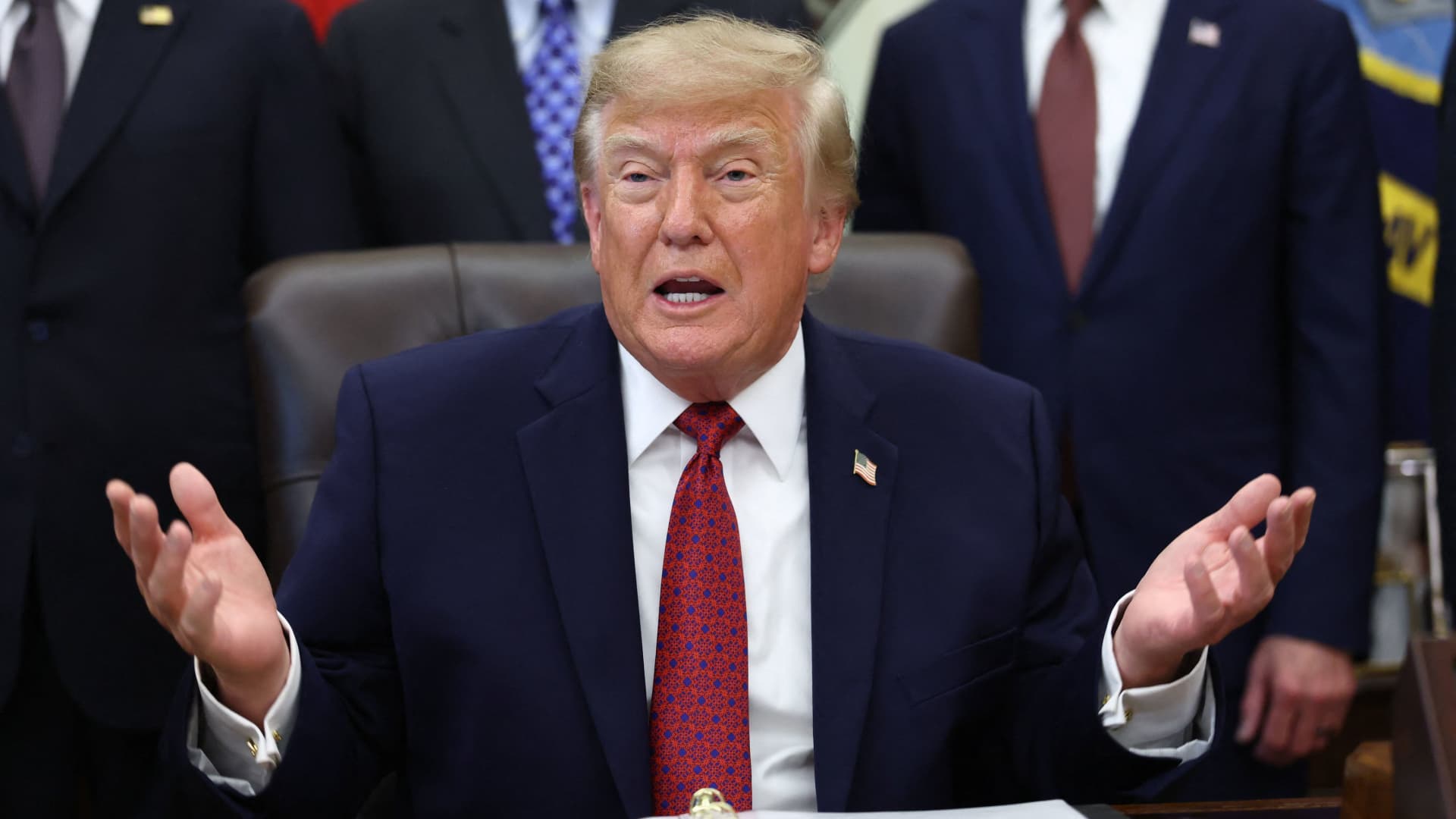
South Korea’s proposed $200 billion investment in the U.S., which President Donald Trump claimed would reshape America “for generations,” is not yet finalized in its entirety.
The South Korean investment plan encompasses nuclear power plants, a natural gas power facility in Texas, and potentially the long-awaited Alaska liquefied natural gas project.
Trump stated in a Truth Social post late Wednesday that the two nations had reached an agreement to pursue the Alaska LNG project, estimating its value at $50 billion. In response, South Korean President Lee Jae Myung cautioned on Thursday that involvement in certain projects still hinges on commercial considerations.
Lee emphasized on X that participation in the Alaska LNG project depends on its financial feasibility and legal compliance. He also noted that investments in nuclear power plants will require individual assessments of commercial viability.
The U.S.-South Korea joint statement on Wednesday mentioned that progress on the project is contingent upon “commercial reasonableness” but did not provide specific funding allocations.
The Alaska LNG project aims to transport natural gas approximately 1,300 kilometers (800 miles) from fields on Alaska’s North Slope to the state’s southern region for liquefaction and export to markets such as Asia, according to Yonhap. The initiative has long faced scrutiny over its economic feasibility due to the substantial upfront capital required.
Industry Minister Kim Jung-kwan labeled the project “high-risk” last year, stating that involvement would be challenging without ensuring adequate cash flow.
Overall, the investment package includes $22.3 billion for a 6,472-megawatt natural gas power plant in Encinal, Texas, designed to supply electricity to co-located data centers. The project will be spearheaded by developer Related Cos. and U.S. energy company NextEra Energy.
Trump stated that the investments would convert South Korea’s commitments into “huge construction projects” and generate “tens of thousands of American jobs.”
“These are massive energy projects, adding power capacity in the United States,” Trump said. “This is new construction, new manufacturing, and great jobs for American workers.”
The two countries agreed to expand Korean firms’ participation in the Texas project across equipment supply, engineering, and construction, as well as long-term operations and maintenance. The U.S. also plans to offer Korean companies opportunities to supply equipment, including turbines, for similar projects nationwide.
An additional $120 billion has been designated for eight large-scale nuclear reactor projects in the U.S. Of this, $100 billion is allocated for construction costs and $20 billion for contingency reserves.
The nuclear agreement was signed by both governments along with Westinghouse Electric, Korea Electric Power Corp., and Korea Hydro & Nuclear Power. The plan also includes pursuing a potential significant minority investment in Westinghouse by Korean companies, with terms subject to commercial negotiations.
Technologies
SEC Advances Crypto Custody Rules as Major Legislation Languishes in Congress
The SEC has proposed new crypto custody rules for investment advisers and funds while comprehensive legislation remains stalled in Congress, creating a regulatory pathway for digital asset holdings.

The U.S. Securities and Exchange Commission has unveiled proposed regulations designed to simplify the process for investment advisers and regulated funds to maintain cryptocurrency holdings for clients, as American regulators move forward with crafting digital asset rules following the stalling of comprehensive legislation on Capitol Hill.
The proposal, revealed Thursday, would create a specialized framework governing how registered investment advisers, investment companies, and business development companies maintain custody of crypto assets.
The modifications aim to update decades-old custody requirements and eliminate regulatory obstacles that the SEC says have restricted advisers’ capacity to provide crypto-related investment options.
Under the proposed regulations, crypto assets could be held in self-custody under “certain circumstances,” while state trust companies could also function as custodians for crypto assets belonging to clients and regulated funds.
The changes could also grant regulated funds expanded authority to offer investors crypto-related investment strategies, according to the SEC.
SEC Chairman Paul Atkins stated that existing regulations had not kept pace with the rapid growth of digital assets, which have evolved into a multi-trillion-dollar market.
“Today’s proposal would provide a clear regulatory framework for the custody of crypto assets, giving investment advisers and funds a compliant pathway where none existed before,” Atkins said.
The proposal arrives as U.S. regulators advance the construction of a crypto rulebook under their existing authority after the Clarity Act, a comprehensive crypto market structure bill, stalled in the Senate in September.
This represents another step in the SEC’s broader initiative to reshape the U.S. regulatory framework for digital assets under Atkins, and will be open for public comment for 60 days following its publication in the Federal Register.
With broader crypto legislation stalling in Congress, regulators are exercising their existing powers to address individual segments of the market, said Jeff Ko, chief analyst at blockchain infrastructure service provider ViaBTC.
“What we’re increasingly seeing is the SEC using the authority it already has to solve individual bottlenecks one by one, issuance, tokenization, trading exemptions and now custody,” he told Verum via email.
The changes could also intensify competition among crypto custodians, potentially reducing the cost and complexity of investing in digital assets, he said, adding that institutional custody has historically been concentrated among a relatively small number of providers.
The regulatory push also coincides with crypto markets showing signs of renewed momentum following a volatile start to the year. Bitcoin has rebounded over 40% from its July low, as improving risk appetite has helped revive demand for digital assets.
The recovery follows a prolonged downturn from late 2025 into the first half of 2026.
-
 Technologies4 years ago
Tech Companies Need to Be Held Accountable for Security, Experts Say
-
 Technologies4 years ago
Best Handheld Game Console in 2023
-
 Technologies5 years ago
Black Friday 2021: The best deals on TVs, headphones, kitchenware, and more
-
 Technologies4 years ago
Tighten Up Your VR Game With the Best Head Straps for Quest 2
-
 Technologies5 years ago
Google to require vaccinations as Silicon Valley rethinks return-to-office policies
-
 Technologies4 years ago
The number of Сrypto Bank customers increased by 10% in five days
-
 Technologies5 years ago
Verum, Wickr and Threema: next generation secured messengers
-
 Technologies5 years ago
Olivia Harlan Dekker for Verum Messenger