
Technologies
Today’s NYT Connections Hints, Answers and Help for Feb. 26, #991
Here are some hints and the answers for the NYT Connections puzzle for Feb. 26 #991.

Looking for the most recent Connections answers? Click here for today’s Connections hints, as well as our daily answers and hints for The New York Times Mini Crossword, Wordle, Connections: Sports Edition and Strands puzzles.
Today’s NYT Connections puzzle is a fun one. One of the groups matches up with the color of its category, which you might spot right away. Read on for clues and today’s Connections answers.
The Times has a Connections Bot, like the one for Wordle. Go there after you play to receive a numeric score and to have the program analyze your answers. Players who are registered with the Times Games section can now nerd out by following their progress, including the number of puzzles completed, win rate, number of times they nabbed a perfect score and their win streak.
Read more: Hints, Tips and Strategies to Help You Win at NYT Connections Every Time
Hints for today’s Connections groups
Here are four hints for the groupings in today’s Connections puzzle, ranked from the easiest yellow group to the tough (and sometimes bizarre) purple group.
Yellow group hint: Iconic moment.
Green group hint: Color of this group.
Blue group hint: Try the fish, I’m here all week.
Purple group hint: Polite request.
Answers for today’s Connections groups
Yellow group: Pivotal point.
Green group: Green things.
Blue group: Elements of joke-telling.
Purple group: «____ please.»
Read more: Wordle Cheat Sheet: Here Are the Most Popular Letters Used in English Words
What are today’s Connections answers?
The yellow words in today’s Connections
The theme is pivotal point. The four answers are crossroads, landmark, milestone and watershed.
The green words in today’s Connections
The theme is green things. The four answers are grasshopper, shamrock, Statue of Liberty and wasabi.
The blue words in today’s Connections
The theme is elements of joke-telling. The four answers are callback, punchline, setup and timing.
The purple words in today’s Connections
The theme is «____ please.» The four answers are attention, check, drumroll and pretty.
Technologies
NordVPN Now Covers Every State in New Server Expansion
The VPN software giant expands to 211 locations, with better speeds than ever.

Server numbers and reach are always important features for VPNs, since they show your options for choosing a server location and help spread out users to reduce server load. NordVPN — our pick for the best fast VPN service — announced a major expansion on Thursday in its coverage.
NordVPN now has 211 server locations, with a server in every state. This follows NordVPN’s swift growth globally in the past year, as the company has entered countries like Fiji, Barbados and Chad.
«With its larger server network, NordVPN now has an even further-reaching global footprint, which is great for travel and streaming,» says Moe Long, senior editor at CNET and VPN specialist. «Proton VPN has more servers (20,000) and more countries (145), but doesn’t have servers in all 50 US states. Servers in all 50 US states make it a great option for unblocking regional sports matches in the US, or traveling to and within the US.»
Only a few VPNs have servers in every state, including ExpressVPN and PIA. This expansion has also increased NordVPN’s total global capacity to 100Tbps. That’s good news for those worried about slowdowns, as it could help ease the load under peak network usage, depending on how NordVPN manages its new capacity and where you tap into its network.
VPNs, or virtual private networks, keep your information private and your data secure while you’re online. You can change your location as it appears to sites and services, so you can get around geoblocks like those on streaming services.
When I reached out to NordVPN, CTO Marijus Briedis told me, «A state-level presence helps users connect to location‑sensitive services without sacrificing privacy. With broader coverage, users can pick the server that best fits their needs — speed, locality or redundancy — without compromising on security.»
If these developments have you eyeing NordVPN as a potential VPN choice, keep in mind that some parts of the United States are considering laws to ban or limit the use of VPNs.
On the other hand, NordVPN is currently offering a discount on its two-year plans that brings the cost down to around $3 per month, quite good for a paid VPN. But you may want to explore our recommendations for free options before you decide.
Technologies
Swiss Privacy Goes Global: Proton VPN Grows Coverage to 145 Countries
It is now the top provider on our best VPN list for worldwide coverage.
Privacy in the digital age is more important than ever, and using a strong VPN can help keep your internet behavior safe from prying eyes. We write a lot about VPNs, and one provider has been making moves over the past two weeks to expand its global coverage.
Proton VPN is the privacy tool in question, and the Swiss-based company’s network, which has the best free VPN option on the market, now spans roughly 20,000 servers across 145 countries — with new server locations in Lebanon, Nicaragua, Gabon, Papua New Guinea, Kyrgyzstan and the Democratic Republic of the Congo — making it the top provider on our best VPN list for worldwide coverage.
VPNs, or virtual private networks, operate by masking your actual IP address with one from a remote server, allowing you to disguise your location and keep your internet activity secure.
There are a multitude of ways a VPN can enhance your experience, whether you’re looking to access streaming titles from another country or get around oppressive government firewalls that can block important information and communication pathways, and impede an open, uncensored internet.
Proton VPN now has the biggest global footprint out of all the VPNs CNET has tested. It has a vastly larger number of servers than NordVPN (9,300), and its reach exceeds NordVPN’s (135 countries), ExpressVPN’s (105 countries) and Surfshark’s (11 countries).
There is one caveat in all of this expansion: Proton VPN doesn’t have a server presence in all 50 US states, unlike NordVPN. That said, it’s still an excellent choice for watching streaming TV shows and movies — especially if you’re traveling internationally.
A Proton VPN spokesperson didn’t immediately respond to our request for comment.
Technologies
Meta Raises Prices on Quest 3 and Quest 3S Due to RAM Shortage
The VR headsets are RAMageddon’s latest victims.
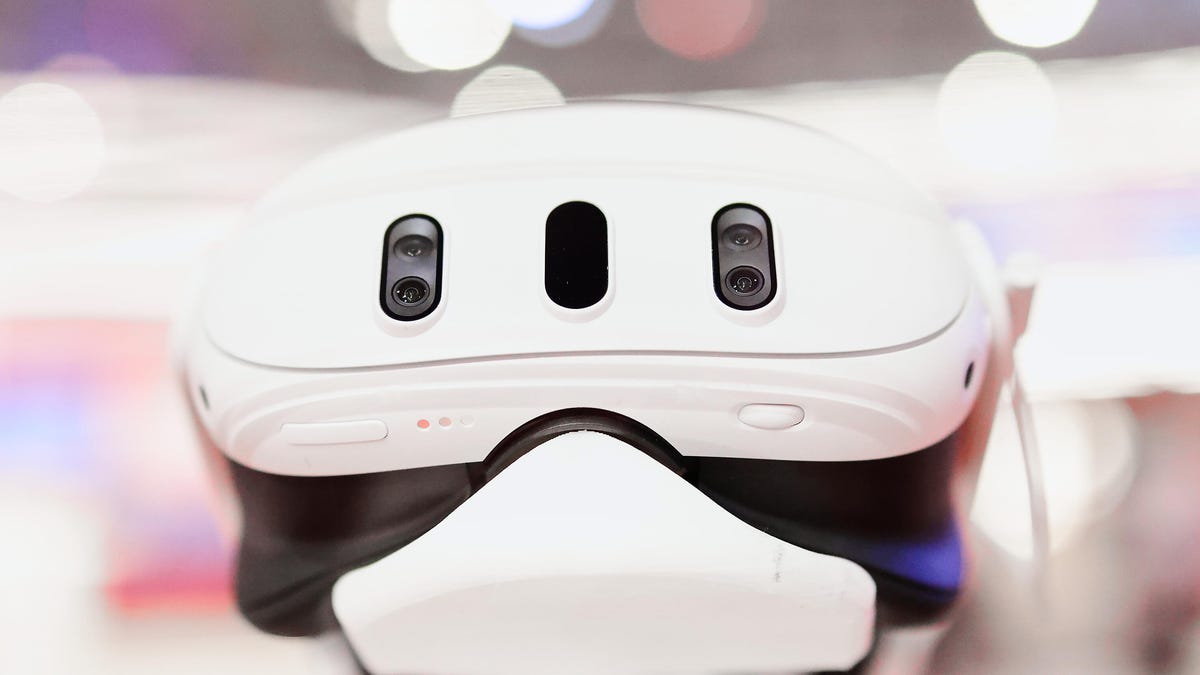
Meta’s latest virtual reality headset, the Meta Quest 3 (512 GB), will cost $100 more starting Sunday. You can blame the ongoing RAM shortage.
Meta released the pricing update on Wednesday in a blog post calling out price increases for the Meta Quest 3 and 3S models. «The cost of building high-performance VR hardware has risen significantly,» Meta said in the post explaining the increase.
High demand from AI data centers is straining memory chip supplies, causing supply constraints and price increases in consumer tech. Many experts aren’t expecting the RAM shortage to end until 2028.
Counterpoint Research released findings in February showing that RAM costs increased by 80% to 90% in the first quarter of this year. Tech companies continue to hike prices, with Microsoft being the latest to increase the cost of the Microsoft Surface and Samsung doing the same for some Galaxy devices.
Here’s the original pricing as of Thursday, along with what you can expect to pay starting April 19.
Price changes for Meta Quest 3 models
| Meta Quest model and storage | Original price | New price |
|---|---|---|
| Meta Quest 3S (128 GB) | $300 | $350 |
| Meta Quest 3S (256 GB) | $400 | $450 |
| Meta Quest 3 (512 GB) | $500 | $600 |
Expect price bumps for refurbished Meta Quest headsets. Prices for Quest accessories will remain the same for now, though we’re unsure whether this applies to games in the Meta store, or whether there’ll be a change in the future.
Meta did not immediately respond to a request for comment.
The Meta Quest 3 and 3S are Meta’s latest virtual reality headsets. The Quest 3S is the budget-friendly version, while the Quest 3 is the «pro» model. CNET’s Scott Stein rated both models high for their mixed reality, with better color cameras and improvements from the Quest 2.
-
 Technologies3 года ago
Tech Companies Need to Be Held Accountable for Security, Experts Say
-
 Technologies3 года ago
Best Handheld Game Console in 2023
-
 Technologies3 года ago
Tighten Up Your VR Game With the Best Head Straps for Quest 2
-
 Technologies4 года ago
Black Friday 2021: The best deals on TVs, headphones, kitchenware, and more
-
 Technologies5 лет ago
Google to require vaccinations as Silicon Valley rethinks return-to-office policies
-
 Technologies5 лет ago
Verum, Wickr and Threema: next generation secured messengers
-
 Technologies4 года ago
Olivia Harlan Dekker for Verum Messenger
-
 Technologies4 года ago
The number of Сrypto Bank customers increased by 10% in five days