
Technologies
My iPhone 17 Pro Went Head-to-Head Against a Pro Cinema Camera
To see just how close the iPhone 17 Pro can get to a real cinema camera, I set up a full commercial video shoot.
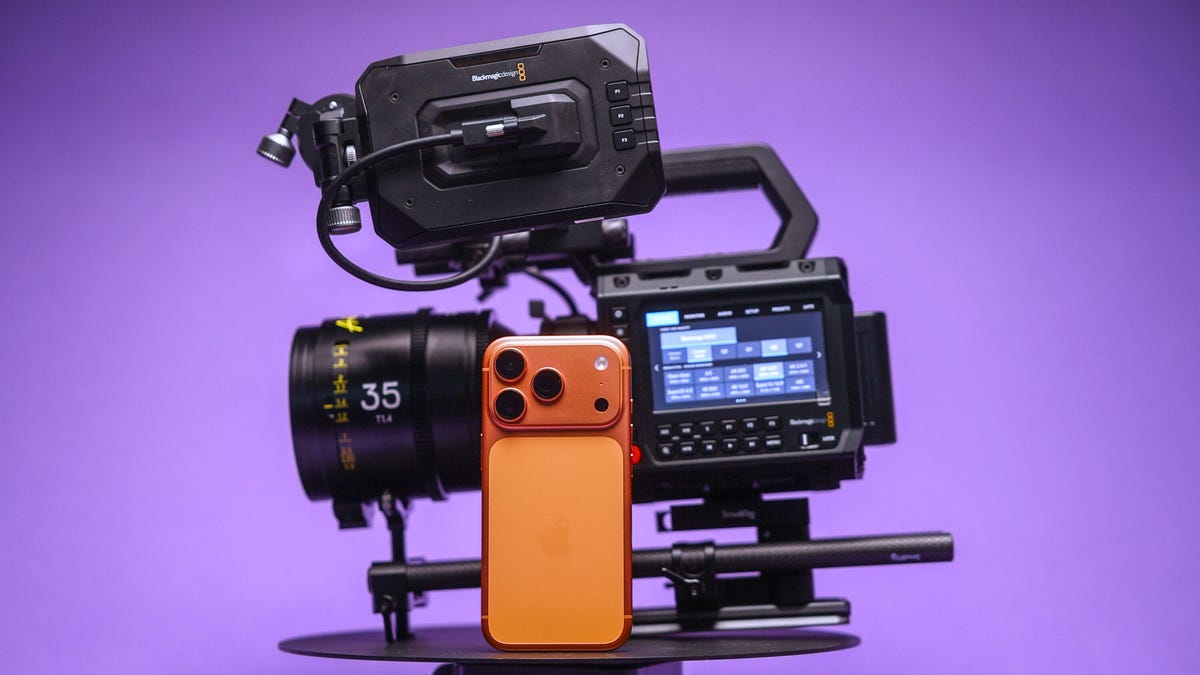
The iPhone 17 Pro has wowed us time and time again with its excellent still image and video quality. Its powerful video setup, including its trio of cameras, large image sensors (for a phone), ProRes raw codecs and Log color profiles for advanced editing makes it comfortably one of the most dependable video shooters of any of today’s smartphones.
Apple often boasts about famous directors using the iPhone to shoot films and music videos. The company even records its event videos for new products with the iPhone.
But is the iPhone really good enough at shooting video to replace a traditional cinema camera? To see how good the iPhone 17 Pro is for professional use, I gave it a proper test.
I put together a video shoot where I pitted the $1,000 iPhone against a full professional cinema camera rig, worth thousands of dollars, to see just how well Apple’s phone can hold its own. I planned a video production at my favorite coffee roaster in Edinburgh, called Santu, which is based in a stunning building that I knew would look amazing on camera.
To give both cameras the best chance, I worked with Director of Photography Cal Hallows, who has been responsible for production on major shoots around the world, working with brands including Aston Martin, the BBC, IBM and Hilton Hotels.
Here’s what happened.
Our filming equipment
We didn’t use any external lenses with the iPhone; instead, we relied on either the built-in main, ultrawide or telephoto options. I shot my footage using the BlackMagic Camera app. I had a Crucial X10 external SSD since I was recording in Apple’s ProRes raw codec, which creates large files.
I also had a variable neutral density filter to achieve a consistent shutter speed. For some shots, I used Moment’s SuperCage to help give me a better grip — and therefore smoother footage. But for other shots, I just used the phone by itself to make it easier to get into tight spaces. More on that later.
The iPhone’s competition was the $3,300 BlackMagic Pyxis 6K. It’s a professional cinema camera with a full-frame 6K resolution image sensor and raw video capabilities. I paired that with some stunning pro cine lenses, including a set of Arles Primes, the XTract Probe lens from DZO Film and a couple of choice cine primes from Sigma. It’s a formidable and pricey setup for any cinematographer.
The shoot day
We shot over the course of a single day. I’d already created a rough storyboard of the shots I wanted to get, which helped me plan my angles and lens choices. I wanted to try and replicate some angles directly with both cameras.
This shot of the store room being opened (above), for example — was a lovely scene, and I didn’t see much difference in quality between the iPhone’s video and the BlackMagic’s. This was the case with a few of the scenes we replicated. Apple’s ProRes raw codec on the iPhone provided a lot of scope for adjusting the color, allowing us to create beautiful color grades that looked every bit as striking as footage from the Blackmagic camera.
Sure, you could tell that they were different, but I couldn’t honestly say if one was better than the other.
Other shots were more difficult to replicate. I love this low-angle of the roastery owner, Washington, pulling his trolley through the scene. On the iPhone, the main lens wasn’t wide enough to capture everything we wanted but switching to the ultrawide was too much the other way and we ended up having spare gear and other people in the frame.
This made several shots a challenge to replicate as the fixed zoom ranges of the iPhone simply didn’t translate to the same fields of view offered by our lenses on the BlackMagic camera. As a result, getting the right framing for shots from the iPhone was trickier than I expected. But focal length wasn’t the only reason using «real» lenses was better.
The DZO Arles Primes are awesome cinema lenses that offer wide apertures that allowed us to shoot with gorgeous natural bokeh. We used this to our advantage on several shots where we really wanted the subject to be isolated against an out-of-focus background.
Secret weapons
That was especially the case when we used our secret weapon: the DZO Films Xtract probe lens. This bizarre-looking, long, thin lens gives both a wide-angle perspective coupled with a close focusing distance.
I loved using the probe lens for this shot, particularly where we’ve focused on exactly where Washington was using the bean grinder. I tried to replicate it on the iPhone using the close-focusing ultrawide lens and the shot looks good, but it lacks the visual sophistication that I can get from a big, professional camera. Especially because the lack of background blur makes it easier to see distracting background items stored under the counter that are otherwise «hidden» in the blur on the main camera.
But the iPhone has its own secret weapon, too. Its size. The tiny dimensions of the iPhone — even with a filter and the SSD crudely taped to it — is so small that we were able to get shots that we simply couldn’t have achieved with the big cinema camera.
In particular, this shot, where I rigged the iPhone to an arm inside the cooling machine so that it travelled around as the beans were churned. I love this shot — and a top-down view I shot of the arms turning beneath. Both angles give this incredible energy to the film and I think they are my favourite scenes of the whole production. It wasn’t easy to see the phone screen in these positions but SmallRig’s wireless iPhone monitor made it much easier to get my angles just right. Trying to rig up a large, heavy camera and lens to get the same shots was simply out of the question.
How well did the iPhone compare?
I’m really impressed with both cameras on this project, but my expert Director of Photography, Cal, had some thoughts, too.
«The thing I really found with the iPhone,» Cal explained, «was simply the creative freedom to get shots that I’d have never had time to set up. There’s only so long in a day and only so long you have access to filming locations or actors, so the fact that you can just grab your iPhone and get these shots is amazing.»
«I have used my iPhone on professional shoots before. One time in particular was when I was driving away from set and I saw this great sunset. If I’d have spent time rigging up my regular camera, I’d have missed the sunset. So I shot it on my phone and the client loved it — it ended up being the final shot of the film. At the end of the day, a good shot is a good shot and it doesn’t matter what you shot it with,» said Cal.
So was it all good for the iPhone?
«The depth of field and the overall look of the cinema lenses still come out on top — you’re just not going to get that on a phone,» explained Cal. «When it came to grading the footage, I had to use a lot of little workarounds to get the iPhones to match. The quality quickly started to fall apart in certain challenging scenes that just weren’t a problem with the BlackMagic.»
So it’s not a total win for the iPhone, but then, I never expected it to be. The iPhone was never going to replace the pro camera on this shoot, but it instead allowed us to augment our video with shots that we would otherwise never have gotten.
I love the creative angles we found using just the phone, and while Cal struggled to balance its colors as easily, the footage does fit in nicely with the rest of the video and makes it more dynamic and engaging as a result.
And that’s not to say the shots we didn’t use from it weren’t good. I’m actually impressed with how the iPhone handled most of the things we threw at it.
So don’t assume that if you want to get into filmmaking, you need to drop tens of thousands on a pro cinema camera and a set of cine primes. Your iPhone has everything you need to get started, and it’ll let you flex your creativity much more easily.
Our days of shooting, editing and grading have proven that the iPhone isn’t yet ready to be the only camera you need on a professional set. But mix its small size in with your other cameras, and then you’ve got yourself a truly powerful production setup.
Technologies
Ring Finally Goes Wire-Free for Its Latest 4K Video Doorbells
The launch of battery-powered versions of the company’s powerful AI doorbells has been highly anticipated.
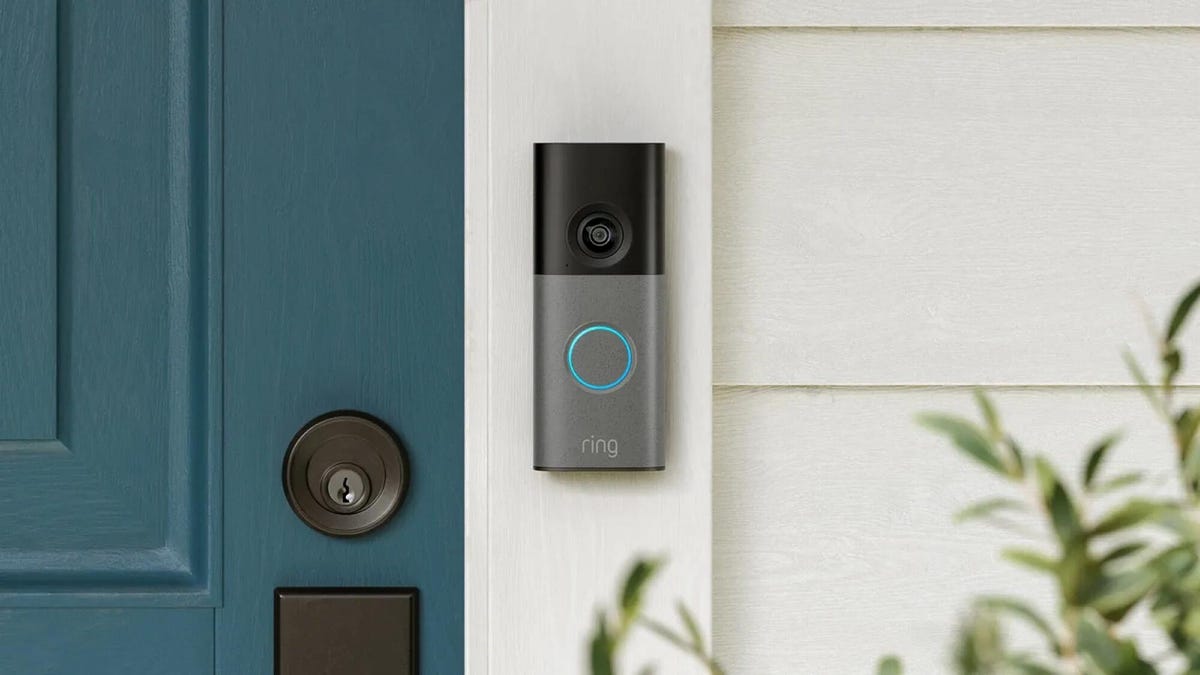
Security company Ring on Wednesday announced a significant expansion of its video doorbell line, notably battery-powered versions of both its 4K and 2K models, priced from $80.
Both Amazon’s Ring and Google Nest debuted high-resolution video doorbells with new AI features in the fall of 2025. But they were wired only, and in my tests, I kept thinking, «I sure wish there were battery models available.»
Wireless video doorbells are far better for most front doors than models that require connecting to your existing doorbell wiring, which is often poorly positioned for a security camera. Mine, for example, is located on a wall beside my door that’s useless for any kind of video views, no matter how you angle a lens.
«Enhancing image quality in battery-powered doorbells means customers can enjoy reliable performance with the flexibility to install devices in a way that suits their space, whether renting or living in homes without existing wiring,» a Ring spokesperson said.
At first, I wondered whether the higher 4K resolutions and more advanced AI features would use too much power to support batteries. If so, Ring is the first to fix that issue with this suite of doorbells, including these models available for preorder right now:
- Ring Battery Doorbell Pro — $250: This model offers up to 4K resolution and 10x zoom, and Ring says it features a redesigned internal architecture to support battery power.
- Ring Battery Doorbell Plus (2nd-gen) — $180: This model includes a quick-release battery pack along with 2K video.
- Ring Battery Doorbell (2nd-gen) — $100: This video doorbell includes 2K video, a 6x zoom and what Ring calls a «streamlined, rechargeable design,» which means you take the entire video doorbell to charge it, not just the battery — a design I greatly prefer, since Ring’s battery packs can get fiddly.
There’s also a new version of a Ring wired doorbell with 2K resolution, starting at $80. It wouldn’t be Ring without a plethora of doorbell devices to confuse newcomers, which is why I have a guide specifically for Ring video doorbells that will need some updating once I finish testing these new models.
Resolution plus an intelligence upgrade
Ring’s ordinary subscriptions of the Ring Protect plan give you cloud video storage and intelligent alerts for people, packages and vehicles, which are important but not really advanced AI. But spring for the $20-per-month Ring AI Pro cam, and this new generation of cameras opens up other capabilities.
Ring’s AI features include AI video descriptions, so if you get an alert, you can also get a summary of what the doorbell saw, including people and activities. A similar feature lets you search your video history with specific terms, such as «bike,» «truck» and so on. You also get the beta version of Ring’s Familiar Faces feature, which can ID logged faces of people who approach.
If these AI features make you uneasy and you’d rather protect your privacy, the best option is to avoid a subscription altogether or choose a lower-tier plan that gives you cloud storage without AI.
I also have a guide on how to turn off Ring’s detection and data-sharing features that might make you nervous, so you can keep what you like while ditching what you don’t.
Technologies
Today’s NYT Mini Crossword Answers for Thursday, March 26
Here are the answers for The New York Times Mini Crossword for March 26.

Looking for the most recent Mini Crossword answer? Click here for today’s Mini Crossword hints, as well as our daily answers and hints for The New York Times Wordle, Strands, Connections and Connections: Sports Edition puzzles.
Baseball is back! You’ll see baseball images patterned throughout today’s Mini Crossword grid, and when you solve the puzzle, they’ll spell out a certain word. Play ball! Er, read on for all the answers. And if you could use some hints and guidance for daily solving, check out our Mini Crossword tips.
If you’re looking for today’s Wordle, Connections, Connections: Sports Edition and Strands answers, you can visit CNET’s NYT puzzle hints page.
Read more: Tips and Tricks for Solving The New York Times Mini Crossword
Let’s get to those Mini Crossword clues and answers.
Mini across clues and answers
1A clue: Degrees for boardroom execs
Answer: MBAS
5A clue: «___ want for Christmas …»
Answer: ALLI
6A clue: What Hamlet holds while giving his «Alas, poor Yorick!» speech
Answer: SKULL
7A clue: Wild, as an animal
Answer: FERAL
8A clue: Sphere
Answer: ORB
Mini down clues and answers
1D clue: Word after «match» or «mischief»
Answer: MAKER
2D clue: Bit of writing on a book jacket
Answer: BLURB
3D clue: Penne ___ vodka
Answer: ALLA
4D clue: Window ledge
Answer: SILL
6D clue: Bay Area airport, for short
Answer: SFO
Technologies
McDonald’s KPop Demon Hunter Meals Include Bright Purple Nugget Sauce
The Derpy McFlurry mixes popping boba pearls and berry sauce into a soft-serve dessert.

McDonald’s has seen success with themed combo meals, including its holiday Grinch Meal. Now, the fast-food chain is capitalizing on Netflix’s Oscar-winning animated film, KPop Demon Hunters, with new upcoming menu items and both a breakfast meal and a lunch/dinner offering. Let’s hope you like the color purple.
The HUNTR/X Meal, named for the K-pop girl group in the movie, is a 10-piece chicken McNuggets meal that includes a medium drink and three special menu items.
Ramyeon McShaker fries come with a small bag of soy, garlic, sesame and spice seasoning, along with regular McDonald’s french fries. You sprinkle the seasoning into the provided bag, dump in the fries, shake it all up and eat.
The meal includes two new sauces for the fries and nuggets. Hunter sauce is a sweet chili sauce mixing notes of chili, garlic and pepper. But my favorite item on this new menu is Demon sauce, a bold mustard sauce with some heat and a bold purple color. There’s just not enough dark purple food out there.
There’s also a new dessert, the Derpy McFlurry, which blends creamy vanilla soft serve with berry-flavored popping boba pearls, served with a swirl of wild berry sauce. McDonald’s named it for the supernatural feline, Derpy Tiger, from the movie.
If breakfast is your bag, the new morning meal is the Saja Boys Breakfast Meal, named for the movie’s boy band.
It includes a Spicy Saja McMuffin sandwich, which is a sausage McMuffin with egg and a spicy Saja sauce, hash browns and a small drink.
Both meals come with a photocard for one of the bands and a Derpy card. The Derpy card includes a QR code you can scan to unlock online content about the film.
The full KPop Demon Hunters menu should be available at participating McDonald’s beginning March 31.
The McDonald’s Grinch meal (and its accompanying patterned socks) sold out quickly, so KPop Demon Hunters fans may want to mark their calendars and nab a meal when they are released.
-
 Technologies3 года ago
Tech Companies Need to Be Held Accountable for Security, Experts Say
-
 Technologies3 года ago
Best Handheld Game Console in 2023
-
 Technologies3 года ago
Tighten Up Your VR Game With the Best Head Straps for Quest 2
-
 Technologies4 года ago
Black Friday 2021: The best deals on TVs, headphones, kitchenware, and more
-
 Technologies5 лет ago
Google to require vaccinations as Silicon Valley rethinks return-to-office policies
-
 Technologies5 лет ago
Verum, Wickr and Threema: next generation secured messengers
-
 Technologies4 года ago
Olivia Harlan Dekker for Verum Messenger
-
 Technologies4 года ago
The number of Сrypto Bank customers increased by 10% in five days