
Technologies
I’m the Most Average Skier on the Mountain. This Gadget Is Helping Me Up My Game
After years in a skiing rut, using Carv on my recent ski trip has reignited my passion for the sport and instilled a belief that I can actually improve.
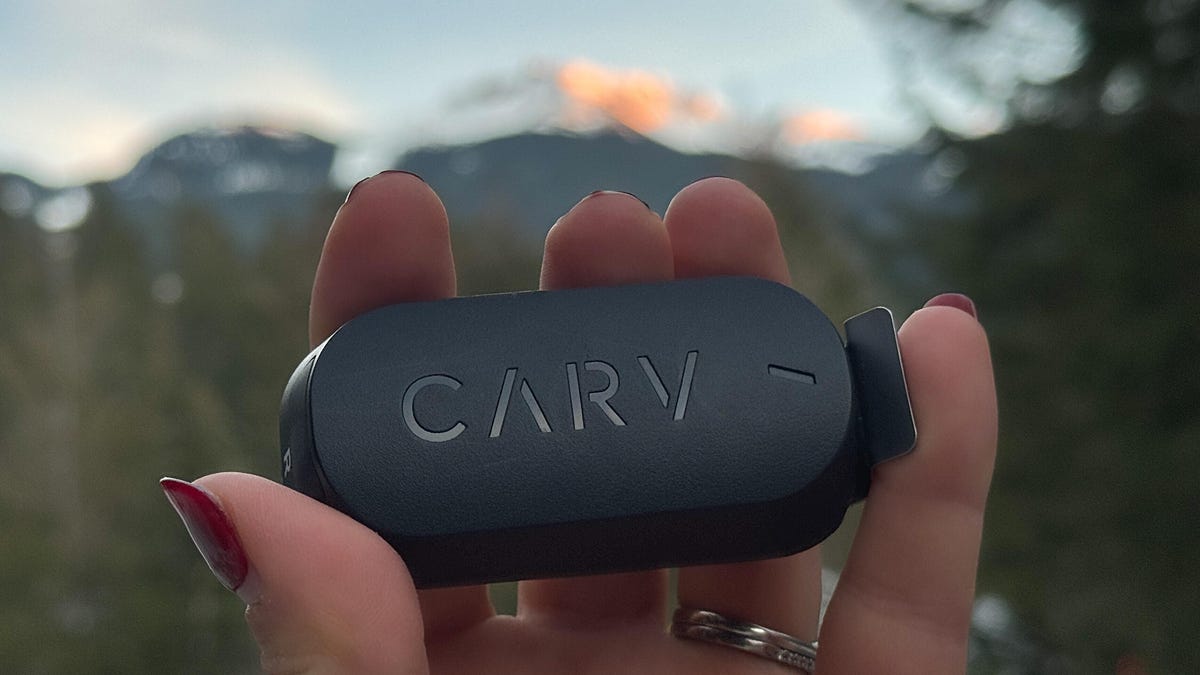
Every time I stand at the top of a black diamond run that I’ve never skied before, I have the same thought: “I know I can get down this, but at what cost to my dignity?”
Sometimes you just don’t know how things are going to go until you point your skis down the slope and tip yourself over that first edge. Perhaps the mountain will surprise you and you’ll ski with the same kind of panache you’re able to muster on green and blue runs. Or perhaps just around the first corner the incline is steeper, bumpier and icier than you’d anticipated, and you’ll be forced to shame-skid your way to more forgiving terrain.
Not all skiers have this problem, but many do. I’m stuck in what’s known in skiing parlance as the intermediate plateau. It’s common among people like me who’ve been skiing for a long time (nearly 30 years in my case) but go irregularly, and only ever for a maximum of one week per year.
Life on the plateau is comfortable and unchallenging. You’ve had enough coaching and experience to ski at a strong intermediate level, opening up most groomed runs in any resort. But your limited practice time holds you back from progressing to anything that could realistically be called advanced — those double black diamonds are none of your business.
That’s how I’ve been skiing for around two decades now. After recovering from the childhood trauma inflicted by the endlessly exasperated instructors at the Ecole du Ski Francais in the French Alps, I managed to reach a decent level that allows me to confidently navigate pretty much any piste. Aside from a few days of learning to float through powder in my twenties, this comprises the sum total of my ski tuition.
I just assumed this was how I would ski forever. How could I possibly hope to make serious improvements to my technique with my paltry six annual ski days and no instructor?
But it turns out there is a way. Enter Carv, a technology that feels designed to give skiers like me the help we need to identify our bad habits and break out of them.
Carv consists of two sensor-packed modules about the size of a standard matchbox — one for each of your ski boots — costing $250 for the pair. They clip onto your power straps and measure the movement of your feet, connecting to a phone app, which provides you with analysis and coaching. If you choose, this can even be in real time via your headphones. It plays into a wider trend of wearable tech that not only tracks our activity (the most common being steps and sleep), but also gives us actionable feedback that actually makes that data useful to us.
Given that a single day of tuition in the resort where I ski most regularly will also set you back $250, Carv feels like decent value for what it offers (although it should be noted that you do also need to pay a subscription fee to use it, which varies according to plan). That’s not to say Carv is a replacement for a human instructor. But if you want to improve without taking time out from skiing with friends, or if, like me, you bear the scars of childhood ski school, it can be a great compromise.
“Carv is a way for you to get feedback without really any sacrifices,” Alex Jackson, Carv’s co-founder, told me. What the team has found, he added, is that even tiny bits of feedback given fast and in real time can help change little things. “Honestly, if you can just change one thing, what will happen is… you’re going to unlock a totally new sensation that you didn’t quite realize was there,” he said.
I was excited to see if he was right.
Hitting the slopes with Carv
In January, I had six days to test Carv on my annual trip to Whistler, where I’d be skiing both with family and alone. The night before I hit the slopes, where fresh snow had just fallen, I charged up the Carv units ready to clip to my boots the next morning.
To my dismay, my first day on the mountain brought an unending torrent of rain. In spite of this, I managed to score a 111 Ski IQ on my first run, with Carv assigning me the title “peak pioneer.”
Ski IQ is a Carv-specific metric that takes your best eight consecutive turns in any segment of a run and provides you with a score ranging from 80 at the low end to 170-plus if you’re Olympic-worthy. I was pleased to be beyond the average skier who uses Carv, who according to the company’s own data has a Ski IQ of 100, but frustrated to fall short of a friend I know with Carv who has a Ski IQ of 124, giving him “line legend” status.
My competitive instinct kicked in and I was determined to beat him by the end of the week (spoiler alert: I didn’t). On the chairlift, I immediately started looking into the data to see where I might improve. I “nailed” keeping my skis parallel, the Carv app told me, but making smoother turns was “one to work on.”
This turned out to be a theme throughout the week. The app identified turn shape as a particular weak spot, suggesting that rather than carving lovely wide C shapes across the slope, I was instead forcing my legs to turn early, creating angles in the snow where there shouldn’t be any.
The data was presented to me in a number of different formats, each helpful in its own way. A graph depicting turn-by-turn analysis showed me that on some of my best turns I was actually well within the “line legend” performance zone, but not consistently. A diagram of my average turn path showed me that I was making a slightly smoother arc when turning left than right. All this encouraged me that I was at least doing it right some of the time, and that with some focus I could improve.
During that first day I kept the Carv app in “track” mode, and hit a top score of 115 in spite of the inclement weather. I spent the evening watching tutorials in the app and checking out drills to try the following morning.
From couch to coached
The studying paid off immediately. On my very first run on day two, on a wide, empty green slope, I focused on rounding out my turns and immediately hit a new high Ski IQ of 116.
Perhaps the most important lesson in all of this was that I unlocked the “new sensation” Jackson had described to me ahead of the trip. By finishing my turns properly, instead of forcing new ones too soon, I found it easier to shift my weight to my new outside ski and find the edge. It felt more smooth and natural, and I was able to keep my upper body pointing more consistently down the slope as a result.
“The base problem is we’re teaching your body something that is against all its best interests,” Jackson had told me. “It’s very hard to retrain your brain that that movement is the right one.”
On day three, my family joined me on the slopes. My brother, who lives in Whistler and is unsurprisingly a much better skier than me, hit a Ski IQ of 135 right off the bat (he’s since peaked at 150, making him a “grim ripper,” according to Carv). After our first run together, he noted immediately that my skiing had improved from the previous year. For several seasons now, he’s been encouraging me to take a more forward-leaning stance, to be unafraid of facing down the mountain, but it was Carv’s drills and coaching that finally gave me the confidence to follow his advice.
Over the next few days I toggled between Carv’s “learn” mode, which provides tips in your headphones when you’re on the lift, and “train” mode, which provides real-time feedback on your turns using a series of escalating beeps when you’re on track to unlock a new high score.
This gamification was especially fun when I was skiing on my own, allowing me to focus on my turn shape and closure, and encouraging me to stay in a solid rhythm even as the pitch of the slope changed under me. I loved that I could separate out and train specific skills, shifting the emphasis away from overall Ski IQ, and instead hyperfocusing on starting turns with grip or steering with my legs.
It was in this mode that I boosted my Ski IQ to 118 on the day before heading home — and on a black diamond, no less — because as of the latest update, Carv’s algorithm now favors more challenging terrain. It felt invigorating in the moment and like an achievement overall for me to get my best score of the week skiing potentially my best ever turns on a steep slope.
Rediscovering my inner thrill seeker
After years of lazily cruising down blue runs, with one eye always on my next chocolate stop, my experience using Carv reignited my passion for improving my skiing in a big way.
“Skiing is one of those sports where the better you get, the more fun it gets — pretty much consistently, right up to the very high level,” Jackson has said — and he was right.
For the first time in years, I had actively focused on improving my technique and was reaping the benefits. My gains hinted at a life beyond the intermediate plateau and helped me rediscover the thrill of the sport.
As Jackson pointed out when I reached out to let him know that I’d felt humbled by my Ski IQ score, improving isn’t always easy or linear.
“The most important thing to remember is skiing is really hard, and getting better is a) scary (there are new feelings to get used to) and b) takes time (we don’t get to ski every day!),” he said over email. “But even a small improvement, and a little bit more focus on the skiing itself (rather than just cruising) can unlock a huge amount more control, confidence and fun.”
Carv might not be right for every skier, but it helped me tap into the focus Jackson referred to, finding confidence, fun and (sometimes) control. For the first time in a decade, I feel like I’ve shed bad habits and opened up so much potential for improvement.
When I got back home, I continued watching Carv tutorials on YouTube. The algorithms that run my life have been quick to catch on and I’m constantly shown ads for Helly Hansen on Instagram and ski tip videos on TikTok. I’m already wondering how much of my annual leave I’m willing to give over to skiing, and considering remortgaging my house to pay for an instructor for a day next time I’m in Whistler.
Either way, I know Carv will be waiting for me, along with endless opportunities to tackle Whistler’s black diamonds — hopefully with more speed, style and grace.
Technologies
Anthropic warns investors of AI’s ‘existential risk to humanity’ in IPO prospectus, reports say
Anthropic’s IPO filing dedicates 80 pages to the risks of AI, nearly double the 48 pages it spends discussing its business plans, according to Reuters.

Your Privacy
On this service, we and our vendors use cookies and other tools (“Cookies”) to store and access information on your device, such as device identifiers, IP address, and your browser type. Your data may be used to save and communicate your privacy choices; ensure security, prevent fraud, and debug our products and services; personalize advertising and content; for advertising and content measurement; to conduct audience research and services development; so we can improve our services and develop new ones; to match and combine offline data with your online activity; and for social features. We may share this data with select vendors with your consent. You can adjust your choices any time through the “Cookie Preferences” link in the footer of relevant Versant sites or in-app settings.
We will also use other Cookies that are essential or related to our services, including for security and fraud prevention. To learn more about some of our vendors, see the IAB and Google Vendors under each purpose. Visit our Cookie Notice and Privacy Policy to learn more.
These Cookies and SDKs are required for Service functionality, including security and fraud prevention, and to enable any purchasing capabilities. You can set your browser to block these tracking technologies, but some parts of the site may not function properly.
The choices you make regarding the purposes and entities listed in this notice are saved and made available to those entities in the form of digital signals (such as a string of characters). This is necessary in order to enable both this service and those entities to respect such choices.
Your data can be used to monitor for and prevent unusual and possibly fraudulent activity (for example, regarding advertising, ad clicks by bots), and ensure systems and processes work properly and securely. It can also be used to correct any problems you, the publisher or the advertiser may encounter in the delivery of content and ads and in your interaction with them.
Certain information (like an IP address or device capabilities) is used to ensure the technical compatibility of the content or advertising, and to facilitate the transmission of the content or ad to your device.
Cookies, device or similar online identifiers (e.g. login-based identifiers, randomly assigned identifiers, network based identifiers) together with other information (e.g. browser type and information, language, screen size, supported technologies etc.) can be stored or read on your device to recognise it each time it connects to an app or to a website, for one or several of the purposes presented here.
– Use limited data to select advertising 791 partners can use this purpose Advertising presented to you on this service can be based on limited data, such as the website or app you are using, your non-precise location, your device type or which content you are (or have been) interacting with (for example, to limit the number of times an ad is presented to you).
– Create profiles for personalised advertising 637 partners can use this purpose Information about your activity on this service (such as forms you submit, content you look at) can be stored and combined with other information about you (for example, information from your previous activity on this service and other websites or apps) or similar users. This is then used to build or improve a profile about you (that might include possible interests and personal aspects). Your profile can be used (also later) to present advertising that appears more relevant based on your possible interests by this and other entities.
– Use profiles to select personalised advertising 640 partners can use this purpose Advertising presented to you on this service can be based on your advertising profiles, which can reflect your activity on this service or other websites or apps (like the forms you submit, content you look at), possible interests and personal aspects.
– Create profiles to personalise content 261 partners can use this purpose Information about your activity on this service (for instance, forms you submit, non-advertising content you look at) can be stored and combined with other information about you (such as your previous activity on this service or other websites or apps) or similar users. This is then used to build or improve a profile about you (which might for example include possible interests and personal aspects). Your profile can be used (also later) to present content that appears more relevant based on your possible interests, such as by adapting the order in which content is shown to you, so that it is even easier for you to find content that matches your interests.
– Use profiles to select personalised content 234 partners can use this purpose Content presented to you on this service can be based on your content personalisation profiles, which can reflect your activity on this or other services (for instance, the forms you submit, content you look at), possible interests and personal aspects. This can for example be used to adapt the order in which content is shown to you, so that it is even easier for you to find (non-advertising) content that matches your interests.
– Measure advertising performance 916 partners can use this purpose Information regarding which advertising is presented to you and how you interact with it can be used to determine how well an advert has worked for you or other users and whether the goals of the advertising were reached. For instance, whether you saw an ad, whether you clicked on it, whether it led you to buy a product or visit a website, etc. This is very helpful to understand the relevance of advertising campaigns.
– Measure content performance 405 partners can use this purpose Information regarding which content is presented to you and how you interact with it can be used to determine whether the (non-advertising) content e.g. reached its intended audience and matched your interests. For instance, whether you read an article, watch a video, listen to a podcast or look at a product description, how long you spent on this service and the web pages you visit etc. This is very helpful to understand the relevance of (non-advertising) content that is shown to you.
– Understand audiences through statistics or combinations of data from different sources 579 partners can use this purpose Reports can be generated based on the combination of data sets (like user profiles, statistics, market research, analytics data) regarding your interactions and those of other users with advertising or (non-advertising) content to identify common characteristics (for instance, to determine which target audiences are more receptive to an ad campaign or to certain contents).
– Develop and improve services 688 partners can use this purpose Information about your activity on this service, such as your interaction with ads or content, can be very helpful to improve products and services and to build new products and services based on user interactions, the type of audience, etc. This specific purpose does not include the development or improvement of user profiles and identifiers.
– Use limited data to select content 180 partners can use this purpose Content presented to you on this service can be based on limited data, such as the website or app you are using, your non-precise location, your device type, or which content you are (or have been) interacting with (for example, to limit the number of times a video or an article is presented to you).
These Cookies and SDKs are used to collect data about your browsing habits, use of the Services, your preferences, and your interaction with advertisements across platforms and devices for the purpose of delivering targeted advertising content, both on our Services and on third party sites. Third-party sites and services also use Targeting Cookies to deliver content, including advertisements relevant to your interests on the Services. If you reject these Cookies or SDKs, you will see less relevant advertising.
Data collected under this category through Cookies and SDKs can also be used to select and deliver personalized content, such as news articles and videos.
Technologies
U.S., Iran hold separate mediator talks as Mideast oil exports hit war-time high
Iranian and U.S. officials reportedly met separately with mediators Monday to push for a ceasefire, as Middle Eastern crude exports rebounded to war-time high.

Iranian and U.S. officials reportedly met separately with mediators Monday to push for a ceasefire.
Middle Eastern crude exports rebounded this month to around their highest level since the war began in February.
An outright export ban by Washington on diesel would keep roughly 1.2 million barrels a day at home, and risks overwhelming Gulf Coast storage, according to Kpler.
The building of the destroyed Shajareh Tayebeh primary school is pictured surrounded by rubble in Minab in Iran’s Hormozgan province on August 10, 2026. Six months on, a team of AFP journalists obtained rare access to the school which has remained largely in ruins, its collapsed walls and twisted steel now surrounded by portraits of the children killed as Iranian flags flutter above the rubble. Iran says the attack on the school involved two separate US Tomahawk missiles but neither the United States nor Israel has officially claimed responsibility for the strike. (Photo by ATTA KENARE / AFP via Getty Images) /
Atta Kenare | Afp | Getty Images
U.S. and Iranian officials have reportedly held separate indirect talks with mediators on Monday, reviving efforts to end seven months of war as Tehran presses for a response to a revised ceasefire framework and Middle East crude exports climb to their highest level since the conflict began.
Iranian Foreign Minister Abbas Araghchi met Qatari mediators in New York, where he remained after the United Nations General Assembly, and reportedly said he expects Washington’s reply by Tuesday. “We talked about ideas and how to find solutions to fulfil Iran’s conditions,” Araghchi said, adding that he planned to return to Tehran once a response arrives. “Whenever the Qataris have a response, they know how to get it to us.”
Iran’s proposal, first presented on the sidelines of last week’s General Assembly, calls for a four- to five-day U.S. timeline to release frozen Iranian funds, lift sanctions on Iranian oil and end the naval blockade of Iranian ports, with nuclear talks beginning within seven days. Tehran has tied any reopening of the Strait of Hormuz to those steps.
President Donald Trump had on Sunday called the plan “unacceptable” and rejected it, telling reporters Iran wants a swift deal because of the economic pressure it is under. Speaking at the White House Monday, Trump said U.S. officials had spoken separately with mediators but gave no further details, adding: “We’re going to win. It’s going to go pretty quickly.”
The diplomatic push comes as physical supply data shows the war’s toll on the oil market easing. Middle Eastern crude exports rebounded this month to around their highest level since the war began in February, Kpler data showed. “Middle East crude exports at just under 80% of pre-conflict levels,” the tracking firm said in a note on Monday.
The Strait of Hormuz itself remains far from normal. Kpler’s real-time tracking showed total clearance through the strait at 10,591 kilobarrels a day on Saturday, against a pre-war baseline of 17,133.
Technologies
Oil prices fall as crude exports recover at Saudi Arabia’s Red Sea ports
Saudi Arabia has restored flows through the pipeline to around 3.5 million barrels per day, according to media reports.

Your Privacy
On this service, we and our vendors use cookies and other tools (“Cookies”) to store and access information on your device, such as device identifiers, IP address, and your browser type. Your data may be used to save and communicate your privacy choices; ensure security, prevent fraud, and debug our products and services; personalize advertising and content; for advertising and content measurement; to conduct audience research and services development; so we can improve our services and develop new ones; to match and combine offline data with your online activity; and for social features. We may share this data with select vendors with your consent. You can adjust your choices any time through the “Cookie Preferences” link in the footer of relevant Versant sites or in-app settings.
We will also use other Cookies that are essential or related to our services, including for security and fraud prevention. To learn more about some of our vendors, see the IAB and Google Vendors under each purpose. Visit our Cookie Notice and Privacy Policy to learn more.
These Cookies and SDKs are required for Service functionality, including security and fraud prevention, and to enable any purchasing capabilities. You can set your browser to block these tracking technologies, but some parts of the site may not function properly.
The choices you make regarding the purposes and entities listed in this notice are saved and made available to those entities in the form of digital signals (such as a string of characters). This is necessary in order to enable both this service and those entities to respect such choices.
Your data can be used to monitor for and prevent unusual and possibly fraudulent activity (for example, regarding advertising, ad clicks by bots), and ensure systems and processes work properly and securely. It can also be used to correct any problems you, the publisher or the advertiser may encounter in the delivery of content and ads and in your interaction with them.
Certain information (like an IP address or device capabilities) is used to ensure the technical compatibility of the content or advertising, and to facilitate the transmission of the content or ad to your device.
Cookies, device or similar online identifiers (e.g. login-based identifiers, randomly assigned identifiers, network based identifiers) together with other information (e.g. browser type and information, language, screen size, supported technologies etc.) can be stored or read on your device to recognise it each time it connects to an app or to a website, for one or several of the purposes presented here.
– Use limited data to select advertising 791 partners can use this purpose Advertising presented to you on this service can be based on limited data, such as the website or app you are using, your non-precise location, your device type or which content you are (or have been) interacting with (for example, to limit the number of times an ad is presented to you).
– Create profiles for personalised advertising 637 partners can use this purpose Information about your activity on this service (such as forms you submit, content you look at) can be stored and combined with other information about you (for example, information from your previous activity on this service and other websites or apps) or similar users. This is then used to build or improve a profile about you (that might include possible interests and personal aspects). Your profile can be used (also later) to present advertising that appears more relevant based on your possible interests by this and other entities.
– Use profiles to select personalised advertising 640 partners can use this purpose Advertising presented to you on this service can be based on your advertising profiles, which can reflect your activity on this service or other websites or apps (like the forms you submit, content you look at), possible interests and personal aspects.
– Create profiles to personalise content 261 partners can use this purpose Information about your activity on this service (for instance, forms you submit, non-advertising content you look at) can be stored and combined with other information about you (such as your previous activity on this service or other websites or apps) or similar users. This is then used to build or improve a profile about you (which might for example include possible interests and personal aspects). Your profile can be used (also later) to present content that appears more relevant based on your possible interests, such as by adapting the order in which content is shown to you, so that it is even easier for you to find content that matches your interests.
– Use profiles to select personalised content 234 partners can use this purpose Content presented to you on this service can be based on your content personalisation profiles, which can reflect your activity on this or other services (for instance, the forms you submit, content you look at), possible interests and personal aspects. This can for example be used to adapt the order in which content is shown to you, so that it is even easier for you to find (non-advertising) content that matches your interests.
– Measure advertising performance 916 partners can use this purpose Information regarding which advertising is presented to you and how you interact with it can be used to determine how well an advert has worked for you or other users and whether the goals of the advertising were reached. For instance, whether you saw an ad, whether you clicked on it, whether it led you to buy a product or visit a website, etc. This is very helpful to understand the relevance of advertising campaigns.
– Measure content performance 405 partners can use this purpose Information regarding which content is presented to you and how you interact with it can be used to determine whether the (non-advertising) content e.g. reached its intended audience and matched your interests. For instance, whether you read an article, watch a video, listen to a podcast or look at a product description, how long you spent on this service and the web pages you visit etc. This is very helpful to understand the relevance of (non-advertising) content that is shown to you.
– Understand audiences through statistics or combinations of data from different sources 579 partners can use this purpose Reports can be generated based on the combination of data sets (like user profiles, statistics, market research, analytics data) regarding your interactions and those of other users with advertising or (non-advertising) content to identify common characteristics (for instance, to determine which target audiences are more receptive to an ad campaign or to certain contents).
– Develop and improve services 688 partners can use this purpose Information about your activity on this service, such as your interaction with ads or content, can be very helpful to improve products and services and to build new products and services based on user interactions, the type of audience, etc. This specific purpose does not include the development or improvement of user profiles and identifiers.
– Use limited data to select content 180 partners can use this purpose Content presented to you on this service can be based on limited data, such as the website or app you are using, your non-precise location, your device type, or which content you are (or have been) interacting with (for example, to limit the number of times a video or an article is presented to you).
These Cookies and SDKs are used to collect data about your browsing habits, use of the Services, your preferences, and your interaction with advertisements across platforms and devices for the purpose of delivering targeted advertising content, both on our Services and on third party sites. Third-party sites and services also use Targeting Cookies to deliver content, including advertisements relevant to your interests on the Services. If you reject these Cookies or SDKs, you will see less relevant advertising.
Data collected under this category through Cookies and SDKs can also be used to select and deliver personalized content, such as news articles and videos.
-
 Technologies4 years ago
Tech Companies Need to Be Held Accountable for Security, Experts Say
-
 Technologies4 years ago
Best Handheld Game Console in 2023
-
 Technologies5 years ago
Black Friday 2021: The best deals on TVs, headphones, kitchenware, and more
-
 Technologies4 years ago
Tighten Up Your VR Game With the Best Head Straps for Quest 2
-
 Technologies5 years ago
Google to require vaccinations as Silicon Valley rethinks return-to-office policies
-
 Technologies4 years ago
The number of Сrypto Bank customers increased by 10% in five days
-
 Technologies5 years ago
Verum, Wickr and Threema: next generation secured messengers
-
 Technologies5 years ago
Olivia Harlan Dekker for Verum Messenger