
Technologies
Highguard Review: I Can’t Get Enough of Horseback Gunplay and Raiding Bases
Despite a confusing debut at The Game Awards, this shooter is a cleverly forged amalgam of Apex Legends, Valorant and MOBA gameplay.
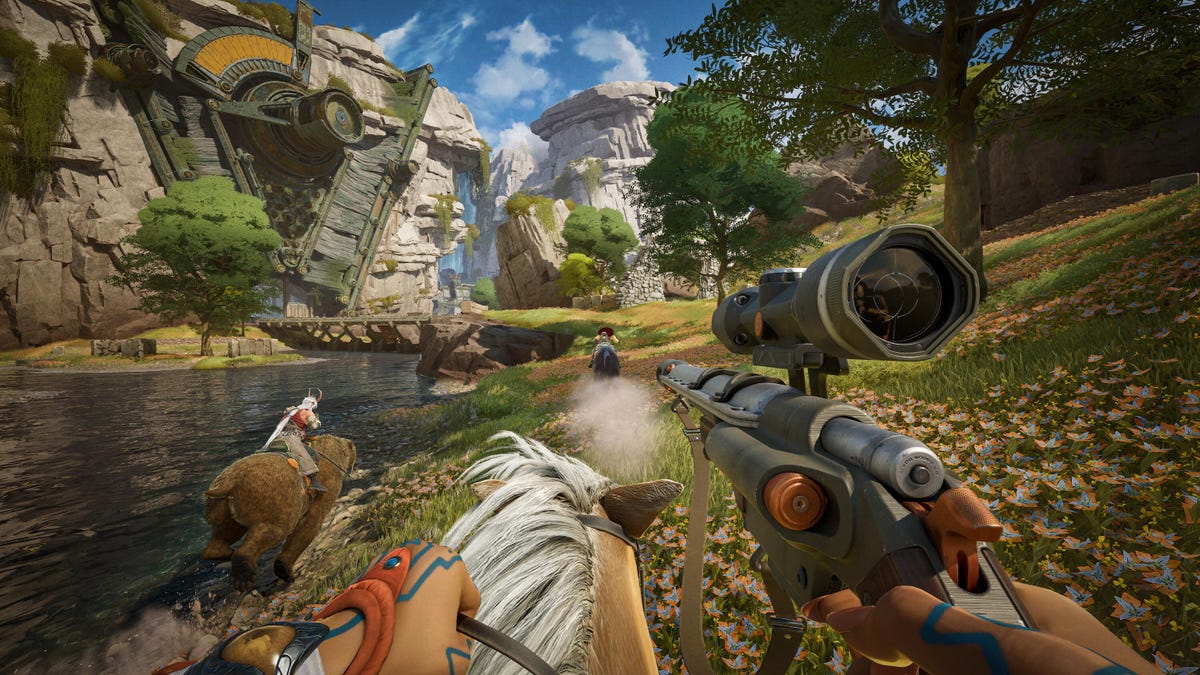
I was hurtling across a fantasy landscape on horseback with my two companions, racing toward the enemy base with the opposing team hot on our heels, a magic sword on my back that would win us the match, and all I could think was, Hell yes, this rules. I spent the entire day gleefully queuing back into more sessions to recapture that moment.
At an event in Los Angeles, I got to play Highguard days ahead of its launch. While I walked into the preview without a clue about what the game was, 8 hours later, I was more hyped for this shooter than any I’d played since Apex Legends (2019). That’s fitting, as many of the developers at Highguard are veterans of Apex studio Respawn who left to form a new company, Wildlight Entertainment, and make something completely new.
Fans may know Highguard from its reveal at The Game Awards in an admittedly confusing trailer. In several conversations during the preview, Wildlight developers acknowledged that the trailer didn’t properly represent their game, but they’re confident that players will change their tune once they get their hands on the game, which is available now and free to play on PS5, Xbox Series X and PC. It has full cross-play and cross-progression, too.
I’d be shocked if those developers aren’t proven right. Wildlight faces a nigh-impossible task in explaining their game in a trailer. Broadly, Highguard is a multiplayer shooter that teeters on the edge of chaos but blends elements of different games into a carefully refined dish of palate-pleasing novelty. With elements of Apex Legends, Valorant, Rainbow Six: Siege and League of Legends, Highguard is an amalgam with few rivals in its lane.
As a casual shooter fan with hundreds of hours each in Destiny 2 and Apex Legends, I found Highguard’s squad-based gameplay to be right up my alley. During the eight matches I played in my preview, I picked up the game pretty quickly and finished the day wanting to queue up for more.
Wildlight plans to upload dozens of videos explaining each of the game’s components, from its Warden hero classes (eight at launch) to weapons to maps to bases. But it’s not nearly as complicated as it sounds on paper — all thanks to lots of design iteration as the studio spent the last four years making their inspired Frankenstein of a multiplayer game.
What makes Highguard the world’s first Raid Shooter
For lack of a proper multiplayer descriptor, Wildlight invented its own: Raid Shooter. This combines first-person shooting, the lane skirmishing of MOBAs and the base raiding of games like Rainbow Six: Siege.
At launch, there’s only a single mode in the game, Raid, that pits a pair of three-person teams against each other. Matches in this mode last between 15 and 25 minutes (or shorter if either team steamrolls). Each match loops a set of four phases, each time-limited to keep matches flowing. Trust me, those loops will feel like second nature after a few matches.
Before each match begins, players pick their Warden, each a distinct hero with different passive, tactical and ultimate abilities (much like Apex Legends). Squads then vote on their pick from four different bases (of six at launch, with more coming). This is what they’ll defend from enemy raiding, each with a different layout better suiting some Wardens and play styles over others. Think of it like picking between Cinderella’s Castle, Helm’s Deep or Castle Dracula, which slot into the game’s maps. (Players only get to choose their base, not the larger map, for each match.)
Once the match starts, the first phase begins, giving players a minute to fortify their base’s walls, which can be destroyed with gunfire or tools. When the base’s shield opens, the gear phase begins. Squads have 2 minutes to ride out into the broader map to pick up more powerful versions of the guns they choose at launch, as well as find armor and mine minerals to spend at shops.
While squads are free to fight each other at any time in that second phase, the third phase shoves teams together in a true brawl. After a visible countdown, a special sword drops down for both squads to fight over. The Shieldbreaker, as the blade is called, must be brought to the enemy team’s base and slammed into the edge of its shield to crack it open.
Once the Shieldbreaker is deployed, the fourth phase — the Raid — begins. A siege tower emerges from a portal where the Shieldbreaker was stabbed into the enemy base and slams into the shield until it splits apart. Then the attacking team invades the base of the defending team, seeking to burn it down.
Each base has 100 hit points. By deploying the Shieldbreaker, attacking players deal 30 damage to the enemy base, but to finish it off, they have two options: deploy bombs at two generators on the periphery of the base to deal 35 base damage apiece, or go for broke and plant explosives at the Anchor Stone, which takes longer to destroy, but will instantly win the game if detonated. Defenders can defuse bombs, forcing attackers to plant them again, but the Raid phase lasts only a few minutes; if the defense is successful and nothing is destroyed, the attackers’ base is dealt 30 damage as punishment.
After that, the phases restart: build your base back up, find more gear, fight over the Shieldbreaker and start a Raid. To amp up the pressure, each new loop increases the rarity of the weapons you’ll find, increasing their lethality via faster reloading and firing speeds. Gold-colored legendary guns are significantly deadlier — one we coveted during the preview, a revolver, lets you fan the hammer to fire blindingly quickly.
Because there are no other game modes at launch, it lives or dies on how much that gameplay appeals to players. On paper, it’s a sampler platter of elements from other games. In practice, each phase flows so smoothly into the next that you’d never guess it had ever resembled anything else.
But from the Wildlight developers’ perspective, this is the terminus of a long, long journey figuring out how all these disparate pieces work together.
Years of chipping away to get to the Raid Shooter’s final form
I joined a group interview among several other journalists at the preview to chat with Jason Torfin, vice president of product and publishing at Wildlight, as well as a writer on the game and Mohammad Alavi, the game’s lead designer.
Both are veterans of Respawn and described a lot of lessons learned from surprise launching Apex Legends in 2019 on the same day it was announced. As fate would have it, Highguard is launching nearly seven years to the day after that release. Aside from fixing bugs and issues that inevitably crop up, they explained how they’ve honed their production pipeline to reliably get out new content. During the preview, the team shared a roadmap for new “episode” seasons, coming every two months, each featuring a new Warden and map.
Live-service games like Highguard retain players by releasing additional content over time. By showing a clear plan for the months ahead, Wildlight hopes to build trust with the game’s player base that they’ll keep supporting and adding to Highguard, retaining their interest among stiff competition from established multiplayer titles like Arc Raiders, Battlefield 6, Helldivers 2 and Overwatch.
Wildlight has other guidelines to build player trust. In-game items are all cosmetic and won’t offer gameplay advantages. While monetization is necessary for a free-to-play game to stay afloat, Highguard’s store at launch will have items from the $9 battle pass-like War Chest bundles of cosmetics to $20 exotic mounts. War Chests won’t expire and can be bought any time after they’re released. Players who don’t want to spend money can still earn cosmetics through weekly and seasonal challenges.
On top of that, every new Warden, weapon, base and map is free for all players. As Torfin explained, the team wants to make sure the game respects players’ time and money, which he says not all live service games competing for attention do.
Raid won’t necessarily be Highguard’s only mode. The roadmap we were shown had limited-time modes, like the just-for-fun ones that popped up in Apex Legends, Torfin said. These could lead to permanent options. Over the course of developing Highguard, there were a lot of gameplay ideas that didn’t work, but could be revisited and make it into a limited-time mode. Sometimes these are “sugar junk food that you just need for a week,” Torfin said in response to another journalist’s question. Other times, they’re engaging enough to become real additions.
Highguard is a multiplayer-only game, but there is a background story that’s seeded through item descriptions and product bundles that players can piece together. In response to another journalist’s question, Torfin described that “the world of Highguard is itself a character,” a continent that reappeared like Atlantis after 300 years of absence. Two weeks after the game launches, its second episode of content will drop, including the first inklings of story that will continue to be added alongside new maps and wardens. Eventually, Wildlight wants to branch out to other media to continue telling the story in comics, novels, animated shorts and so on.
Getting to the Raid mode we see today, Highguard’s first and so far only way to play, was a long process. At one point, the game pitted four three-player teams against each other, but it wasn’t fun to have your base raided while out attacking another squad’s empty home turf. And cutting the team count in half to just dueling squads didn’t solve the issue. To draw players toward each other, developers innovated a “lock and key” mechanic to focus on one base at a time to begin raiding — and why not make it a rad magic sword?
A lot of refinement came from the Wildlight developers’ competitive urge. Originally, the bases didn’t have a health bar, and every wall needed to be pulled down, and Torfin recalled an internal match that lasted 4 hours until the servers broke. But every decision led to making a game with “a lot of competitive integrity,” he said. That means making the game fair and balanced, something that’s easy to get into but hard to master, Alavi noted. But for sweatier players, there will be a Ranked version of Raid mode coming two weeks after launch, which will let players test their mettle as they try climbing competitive ranks.
But what about the opposite audience — will the game’s complexity be too much for casual players? I asked the developers whether I, who scraped together wins over my journalist counterparts but got demolished by a team of Wildlight’s best internal players, would enjoy the game.
“I suck at our game, so I’m right there with you,” Alavi said, laughing. And yet, “we, the devs, play it constantly, and we come from all walks of how good we are at shooters.”
Ranked mode will siphon off some sweaty players, Alavi said, giving casuals a bit of breathing room. And there are plenty of more complicated elements from games that influenced Highguard that have been left out, like League of Legends’ complex item recipes. Tactically, Highguard also includes several comeback mechanics designed to level the playing field. Because each phase resets part of the match, teams have repeated opportunities to let players gear back up and get another go at winning a Shieldbreaker fight.
To illustrate his point, Alavi recalled a match where his team was losing 100 to 10, in which letting the enemy team even get the Shieldbreaker would result in a loss. He bought an item to plant bombs faster, picked up a legendary gun from a shop, won their phases to start a raid and planted their bomb on the Anchor Stone before the enemy team knew what happened. Boom! Alavi’s joy was infectious, a had-to-be-there moment that I recognized from my own mad horseback dash to win my game — something that Highguard seems refined to produce.
“Having these comeback mechanics is super important. Is it gonna happen every time? No,” Alavi said. “But you know, even just getting that sugar high that one time keeps me coming back for more.”
Technologies
Bank of America Warns Bond Market Echoes 2022 Conditions
Bank of America warns that current bond market conditions mirror those of 2022, when rising yields and rate hikes triggered a significant equity correction. The firm advises investors to consider hedging strategies as real yields break out of trading ranges.

The bond market is giving 2022 vibes right now, and not in a positive way, according to Bank of America. Yields skyrocketed to multiyear highs this week, as oil prices stay elevated and new U.S. data suggests the Federal Reserve may need to hike rates even more to quell inflation. The benchmark 10-year Treasury note yield reached levels not seen since 2007 above 5.2%. The 30-year bond yield also spiked to its highest levels since 2004. Equities, for their part, weathered the move higher well. The S & P 500 is up around 1% week to date. The Nasdaq Composite jumped nearly 2%. But for BofA technical strategist Paul Ciana, this may be the calm before the storm. US10Y YTD bar US 10-year yield in 2026 “We see parallels with 2022, when the US 10-year real yield broke out of a trading range and rose from approximately -1% to +1.5%. Around that period, the SPX, Euro and Bitcoin formed important peaks and declined, while equity, rates and FX volatility accelerated higher,” Ciana wrote. “The comparison does not require an identical outcome, but we do think it argues for greater caution.” Stocks entered a bear market in 2022, as the Fed quickly raised rates to fend off a massive surge in inflation. The S & P 500 fell more than 19% that year, marking its worst annual performance since 2008 — when it tumbled 38%. Ciana noted investors can hedge by scooping up put options on the SPY ETF , which tracks the S & P 500. “Investors seeking protection may consider one- to three-month SPY 750 puts or 750/730 put spreads,” he said. “The lower strike corresponds to the July lows.” “However, the rise in real yields is quite stretched on weekly RSIs. If yields retrace lower and positive SPX seasonals follow through, hedges may not perform,” he said, referring the relative strength index, a popular indicator that helps assess whether an investment may be overbought or oversold.
Technologies
Anthropic warns investors of AI’s ‘existential risk to humanity’ in IPO prospectus, reports say
Anthropic’s IPO filing dedicates 80 pages to the risks of AI, nearly double the 48 pages it spends discussing its business plans, according to Reuters.

Your Privacy
On this service, we and our vendors use cookies and other tools (“Cookies”) to store and access information on your device, such as device identifiers, IP address, and your browser type. Your data may be used to save and communicate your privacy choices; ensure security, prevent fraud, and debug our products and services; personalize advertising and content; for advertising and content measurement; to conduct audience research and services development; so we can improve our services and develop new ones; to match and combine offline data with your online activity; and for social features. We may share this data with select vendors with your consent. You can adjust your choices any time through the “Cookie Preferences” link in the footer of relevant Versant sites or in-app settings.
We will also use other Cookies that are essential or related to our services, including for security and fraud prevention. To learn more about some of our vendors, see the IAB and Google Vendors under each purpose. Visit our Cookie Notice and Privacy Policy to learn more.
These Cookies and SDKs are required for Service functionality, including security and fraud prevention, and to enable any purchasing capabilities. You can set your browser to block these tracking technologies, but some parts of the site may not function properly.
The choices you make regarding the purposes and entities listed in this notice are saved and made available to those entities in the form of digital signals (such as a string of characters). This is necessary in order to enable both this service and those entities to respect such choices.
Your data can be used to monitor for and prevent unusual and possibly fraudulent activity (for example, regarding advertising, ad clicks by bots), and ensure systems and processes work properly and securely. It can also be used to correct any problems you, the publisher or the advertiser may encounter in the delivery of content and ads and in your interaction with them.
Certain information (like an IP address or device capabilities) is used to ensure the technical compatibility of the content or advertising, and to facilitate the transmission of the content or ad to your device.
Cookies, device or similar online identifiers (e.g. login-based identifiers, randomly assigned identifiers, network based identifiers) together with other information (e.g. browser type and information, language, screen size, supported technologies etc.) can be stored or read on your device to recognise it each time it connects to an app or to a website, for one or several of the purposes presented here.
– Use limited data to select advertising 791 partners can use this purpose Advertising presented to you on this service can be based on limited data, such as the website or app you are using, your non-precise location, your device type or which content you are (or have been) interacting with (for example, to limit the number of times an ad is presented to you).
– Create profiles for personalised advertising 637 partners can use this purpose Information about your activity on this service (such as forms you submit, content you look at) can be stored and combined with other information about you (for example, information from your previous activity on this service and other websites or apps) or similar users. This is then used to build or improve a profile about you (that might include possible interests and personal aspects). Your profile can be used (also later) to present advertising that appears more relevant based on your possible interests by this and other entities.
– Use profiles to select personalised advertising 640 partners can use this purpose Advertising presented to you on this service can be based on your advertising profiles, which can reflect your activity on this service or other websites or apps (like the forms you submit, content you look at), possible interests and personal aspects.
– Create profiles to personalise content 261 partners can use this purpose Information about your activity on this service (for instance, forms you submit, non-advertising content you look at) can be stored and combined with other information about you (such as your previous activity on this service or other websites or apps) or similar users. This is then used to build or improve a profile about you (which might for example include possible interests and personal aspects). Your profile can be used (also later) to present content that appears more relevant based on your possible interests, such as by adapting the order in which content is shown to you, so that it is even easier for you to find content that matches your interests.
– Use profiles to select personalised content 234 partners can use this purpose Content presented to you on this service can be based on your content personalisation profiles, which can reflect your activity on this or other services (for instance, the forms you submit, content you look at), possible interests and personal aspects. This can for example be used to adapt the order in which content is shown to you, so that it is even easier for you to find (non-advertising) content that matches your interests.
– Measure advertising performance 916 partners can use this purpose Information regarding which advertising is presented to you and how you interact with it can be used to determine how well an advert has worked for you or other users and whether the goals of the advertising were reached. For instance, whether you saw an ad, whether you clicked on it, whether it led you to buy a product or visit a website, etc. This is very helpful to understand the relevance of advertising campaigns.
– Measure content performance 405 partners can use this purpose Information regarding which content is presented to you and how you interact with it can be used to determine whether the (non-advertising) content e.g. reached its intended audience and matched your interests. For instance, whether you read an article, watch a video, listen to a podcast or look at a product description, how long you spent on this service and the web pages you visit etc. This is very helpful to understand the relevance of (non-advertising) content that is shown to you.
– Understand audiences through statistics or combinations of data from different sources 579 partners can use this purpose Reports can be generated based on the combination of data sets (like user profiles, statistics, market research, analytics data) regarding your interactions and those of other users with advertising or (non-advertising) content to identify common characteristics (for instance, to determine which target audiences are more receptive to an ad campaign or to certain contents).
– Develop and improve services 688 partners can use this purpose Information about your activity on this service, such as your interaction with ads or content, can be very helpful to improve products and services and to build new products and services based on user interactions, the type of audience, etc. This specific purpose does not include the development or improvement of user profiles and identifiers.
– Use limited data to select content 180 partners can use this purpose Content presented to you on this service can be based on limited data, such as the website or app you are using, your non-precise location, your device type, or which content you are (or have been) interacting with (for example, to limit the number of times a video or an article is presented to you).
These Cookies and SDKs are used to collect data about your browsing habits, use of the Services, your preferences, and your interaction with advertisements across platforms and devices for the purpose of delivering targeted advertising content, both on our Services and on third party sites. Third-party sites and services also use Targeting Cookies to deliver content, including advertisements relevant to your interests on the Services. If you reject these Cookies or SDKs, you will see less relevant advertising.
Data collected under this category through Cookies and SDKs can also be used to select and deliver personalized content, such as news articles and videos.
Technologies
U.S., Iran hold separate mediator talks as Mideast oil exports hit war-time high
Iranian and U.S. officials reportedly met separately with mediators Monday to push for a ceasefire, as Middle Eastern crude exports rebounded to war-time high.
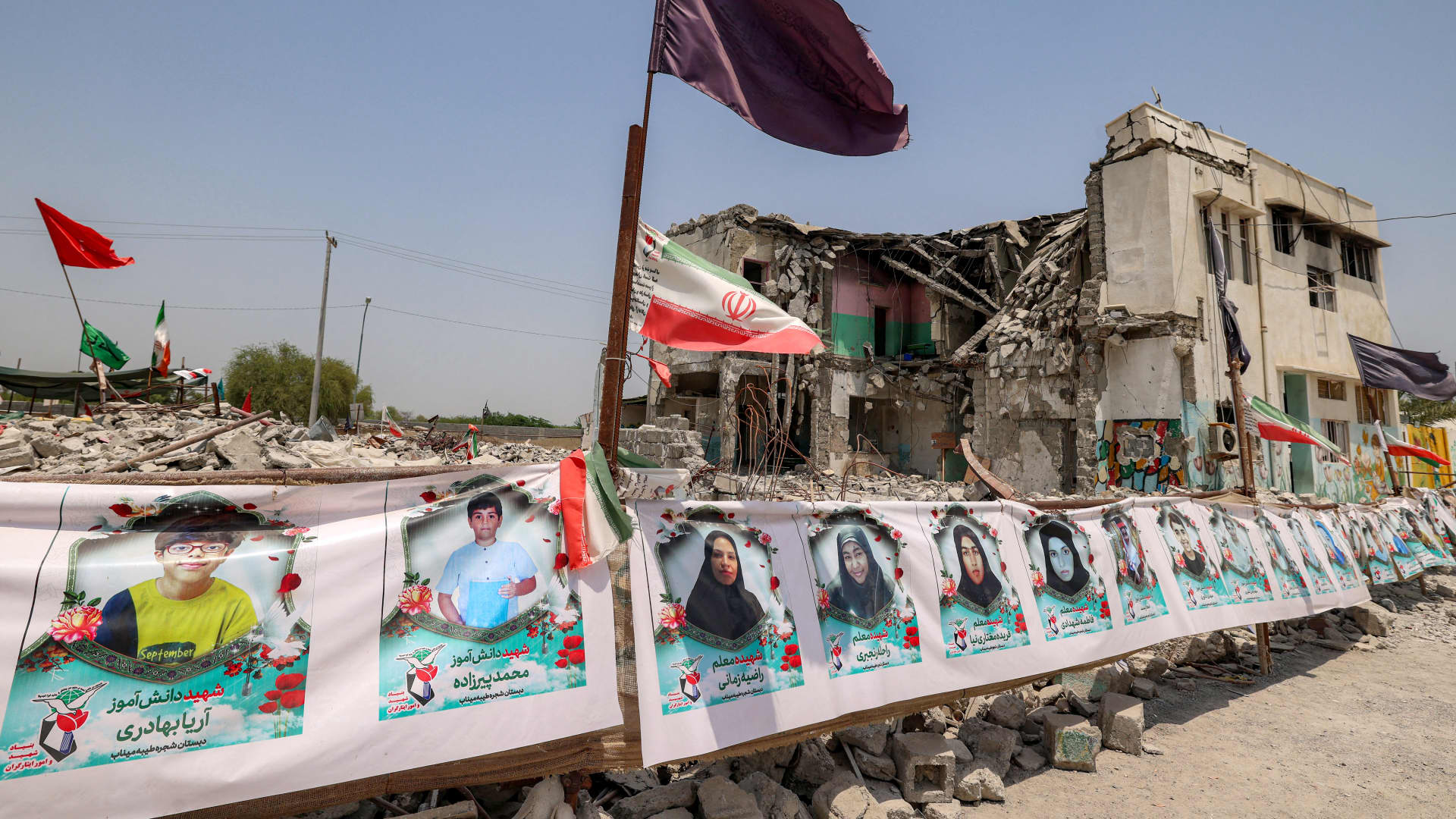
Iranian and U.S. officials reportedly met separately with mediators Monday to push for a ceasefire.
Middle Eastern crude exports rebounded this month to around their highest level since the war began in February.
An outright export ban by Washington on diesel would keep roughly 1.2 million barrels a day at home, and risks overwhelming Gulf Coast storage, according to Kpler.
The building of the destroyed Shajareh Tayebeh primary school is pictured surrounded by rubble in Minab in Iran’s Hormozgan province on August 10, 2026. Six months on, a team of AFP journalists obtained rare access to the school which has remained largely in ruins, its collapsed walls and twisted steel now surrounded by portraits of the children killed as Iranian flags flutter above the rubble. Iran says the attack on the school involved two separate US Tomahawk missiles but neither the United States nor Israel has officially claimed responsibility for the strike. (Photo by ATTA KENARE / AFP via Getty Images) /
Atta Kenare | Afp | Getty Images
U.S. and Iranian officials have reportedly held separate indirect talks with mediators on Monday, reviving efforts to end seven months of war as Tehran presses for a response to a revised ceasefire framework and Middle East crude exports climb to their highest level since the conflict began.
Iranian Foreign Minister Abbas Araghchi met Qatari mediators in New York, where he remained after the United Nations General Assembly, and reportedly said he expects Washington’s reply by Tuesday. “We talked about ideas and how to find solutions to fulfil Iran’s conditions,” Araghchi said, adding that he planned to return to Tehran once a response arrives. “Whenever the Qataris have a response, they know how to get it to us.”
Iran’s proposal, first presented on the sidelines of last week’s General Assembly, calls for a four- to five-day U.S. timeline to release frozen Iranian funds, lift sanctions on Iranian oil and end the naval blockade of Iranian ports, with nuclear talks beginning within seven days. Tehran has tied any reopening of the Strait of Hormuz to those steps.
President Donald Trump had on Sunday called the plan “unacceptable” and rejected it, telling reporters Iran wants a swift deal because of the economic pressure it is under. Speaking at the White House Monday, Trump said U.S. officials had spoken separately with mediators but gave no further details, adding: “We’re going to win. It’s going to go pretty quickly.”
The diplomatic push comes as physical supply data shows the war’s toll on the oil market easing. Middle Eastern crude exports rebounded this month to around their highest level since the war began in February, Kpler data showed. “Middle East crude exports at just under 80% of pre-conflict levels,” the tracking firm said in a note on Monday.
The Strait of Hormuz itself remains far from normal. Kpler’s real-time tracking showed total clearance through the strait at 10,591 kilobarrels a day on Saturday, against a pre-war baseline of 17,133.
-
 Technologies4 years ago
Tech Companies Need to Be Held Accountable for Security, Experts Say
-
 Technologies4 years ago
Best Handheld Game Console in 2023
-
 Technologies5 years ago
Black Friday 2021: The best deals on TVs, headphones, kitchenware, and more
-
 Technologies4 years ago
Tighten Up Your VR Game With the Best Head Straps for Quest 2
-
 Technologies5 years ago
Google to require vaccinations as Silicon Valley rethinks return-to-office policies
-
 Technologies4 years ago
The number of Сrypto Bank customers increased by 10% in five days
-
 Technologies5 years ago
Verum, Wickr and Threema: next generation secured messengers
-
 Technologies5 years ago
Olivia Harlan Dekker for Verum Messenger