
Technologies
The Invisible Becomes Visible: Scientists May Have Finally Seen Dark Matter
Dark matter is special in that it doesn’t emit, absorb or interact with light, so science had to find a more creative way to see it.
The universe has no shortage of mysteries, many of which have puzzled us for ages. One of the biggest is the existence of something called dark matter. First theorized in 1933 by Fritz Zwicky, dark matter is a theoretical type of matter that can’t be seen because it doesn’t interact with light or any other form of electromagnetic radiation.
After nearly 100 years, and with help from NASA’s Fermi Gamma-ray Space Telescope, researchers may have finally «seen» dark matter for the first time.
If this proves to be true, it’ll be a significant development for science. Dark matter’s ability to hide in plain sight is legendary. It can’t be seen by any tool humans have ever made because dark matter can’t emit, absorb or reflect light of any kind, which is how humans and all of our tools see things. That makes dark matter impressively difficult to find.
Tomonori Totani, an astronomy professor at the University of Tokyo, believes he may have succeeded where so many before him have failed. In a study published Nov. 25 in the Journal of Cosmology and Astroparticle Physics, Totani says he may have found dark matter by observing the byproduct of two particles of dark matter colliding with one another.
Don’t miss any of our unbiased tech content and lab-based reviews. Add CNET as a preferred Google source.
The key to this discovery is the theoretical existence of something called weakly interacting massive particles, or WIMPs for short. WIMPs are pieces of dark matter that are larger than protons and don’t interact with any other types of particles. When two WIMPs collide with each other, scientific theory suggests that they annihilate one another, and the resulting reaction produces gamma rays.
Totani used data from NASA’s Fermi Gamma-ray Space Telescope to find what he believes are the gamma-ray emissions from these annihilation events, which, if accurate, would prove that dark matter exists — or at least put scientists on the right track to confirming its existence.
Why is dark matter so difficult to find?
NASA describes dark matter as «the invisible glue that holds the universe together.» Dark matter is everywhere. Theories suggest that only 5% of matter is the ordinary stuff that you and I can see, whereas dark matter makes up 27% of the pie. The rest is dark energy, which is yet another mystery that science has yet to solve.
If there’s more than five times as much dark matter as there is regular matter, then why is it so hard to see? The short answer is that dark matter doesn’t interact with matter in a way that humans can detect with our current technology.
This isn’t entirely unnatural. Science also has a tough time detecting black holes. Light cannot escape a black hole, so it is impossible to observe one directly. Instead, scientists have developed several methods to detect the presence of a black hole based on its impact on the surrounding environment.
Cygnus X-1 — the first black hole ever detected — was found thanks to something called an accretion disk. Accretion disks are swirling clouds of gas, dust, plasma, and other particles that form around black holes and tend to emit vast amounts of X-ray radiation. Researchers found those intense X-rays and concluded that they came from a black hole. In the first photo of a black hole taken in 2019, the visible part is the black hole’s accretion disk, not the black hole itself.
English philosopher and clergyman John Michell first theorized the existence of black holes in 1783. That means it took humankind 236 years to take a picture of a black hole, and even then, we can’t see the black hole in the picture. We just know it’s there because we can see its accretion disk.
Dark matter is much more challenging to detect. It doesn’t interact with the electromagnetic spectrum at all, including visible light. Much like black holes, science has used its impact on its environment to try and prove its existence.
This phenomenon began in 1933, when astronomer Fritz Zwicky observed that galaxies in the Coma Cluster were moving too quickly for the amount of ordinary matter contained within it. Zwicky concluded that there must be a second type of unseen matter that was adding more gravitational force, acting as a sort of glue that held the cluster together.
This theory has been refined over time, with additional evidence emerging. One example is gravitational lensing, which is a bending of light caused by gravity. The Bullet Cluster is the best example of this being potentially caused by dark matter, but it has not yet been definitively proven.
Study author explains what he found
Over the decades, scientists have proposed various potential candidates for what dark matter particles actually are. One such theory is the WIMP. These theoretical particles are much larger than photons and have a distinctive characteristic. When they collide, science predicts that they will destroy one another, resulting in a burst of gamma rays.
NASA has a short video here that shows how this would work in theory. These gamma-ray emissions are what Totani believes he has found.
«We detected gamma rays with a photon energy of 20 gigaelectronvolts (or 20 billion electronvolts, a huge amount of energy, extending in a halolike structure toward the center of the Milky Way galaxy,» Totani told Phys.org. «The gamma-ray emission component closely matches the shape expected from the dark matter halo.»
There’s a little to unpack here, so I asked Totani for more information. He told me that stars in our galaxy are «distributed in a disk, while the dark matter halo is thought to surround it spherically.» The radiation generated from the theoretical dark matter would reach into the disk from its spherical location, giving Totani an idea of what to look for and where to look in general.
Once he looked there, he was able to find radiation that he says is «consistent with dark matter predictions.»
To put it another way, the gamma rays were where they were supposed to be, at the photon energy level that science predicted they would be, and the emissions were in the shape expected for dark matter.
Changing science forever
Totani found gamma rays where they were supposed to be and at the strength predicted, so it must be dark matter, right?
Not exactly.
While these findings are promising, they do not necessarily prove the existence of dark matter. The first step will be to have independent researchers verify Totani’s conclusions.
Totani is aware of this and wants independent researchers to examine the data in an attempt to replicate his findings. This includes measuring gamma-ray emissions from other sources, such as dwarf galaxies, in the universe to see if something else can explain his findings.
Currently, his findings can’t be easily explained by any known sources of gamma ray emissions, but that doesn’t mean that none exist. The data will need to be tested and retested, and researchers will need to bring in more information to verify that his findings are indeed related to dark matter.
Science will take its time with this, because if Totani actually did find dark matter, the ramifications would be massive. He notes that the discovery of a new elementary particle not included in the current Standard Model of particle physics will have a significant impact on fundamental physics theory. And the discovery of dark matter would help piece together other cosmological mysteries, such as the nature of dark energy, the invisible force that causes the universe to expand at an accelerated rate.
«If correct, the true nature of dark matter, long the greatest mystery in cosmology, has been revealed,» Totani said.
Technologies
McDonald’s KPop Demon Hunter Meals Include Bright Purple Nugget Sauce
The Derpy McFlurry mixes popping boba pearls and berry sauce into a soft-serve dessert.
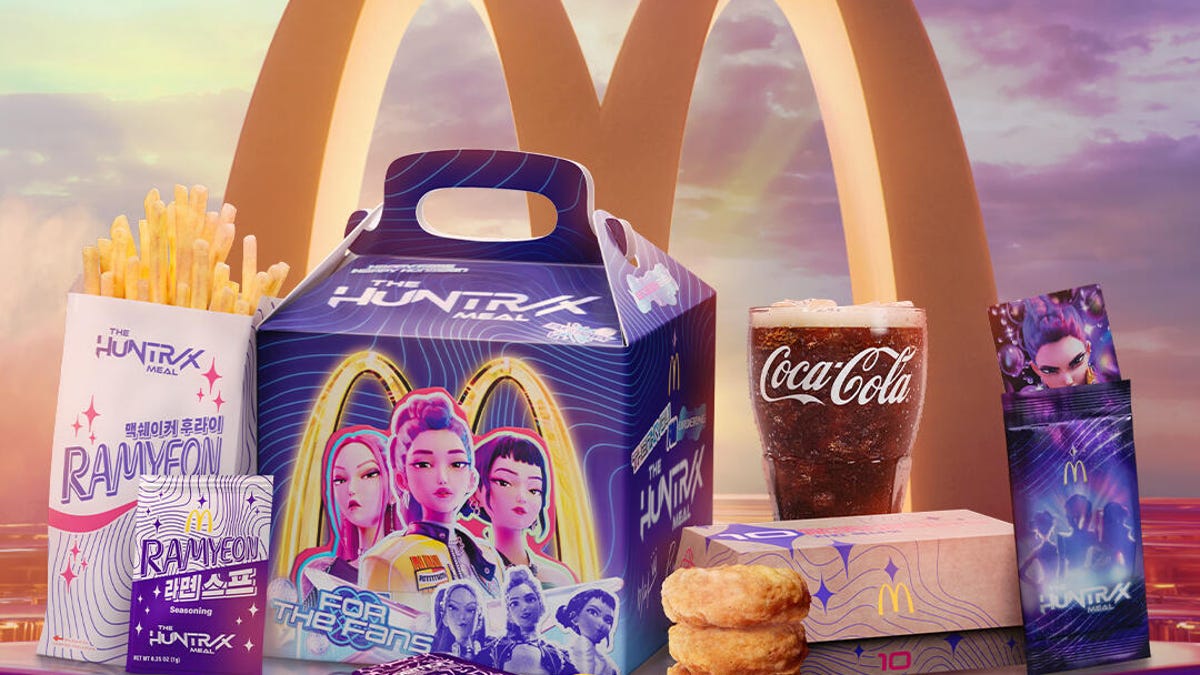
McDonald’s has seen success with themed combo meals, including its holiday Grinch Meal. Now, the fast-food chain is capitalizing on Netflix’s Oscar-winning animated film, KPop Demon Hunters, with new upcoming menu items and both a breakfast meal and a lunch/dinner offering. Let’s hope you like the color purple.
The HUNTR/X Meal, named for the K-pop girl group in the movie, is a 10-piece chicken McNuggets meal that includes a medium drink and three special menu items.
Ramyeon McShaker fries come with a small bag of soy, garlic, sesame and spice seasoning, along with regular McDonald’s french fries. You sprinkle the seasoning into the provided bag, dump in the fries, shake it all up and eat.
The meal includes two new sauces for the fries and nuggets. Hunter sauce is a sweet chili sauce mixing notes of chili, garlic and pepper. But my favorite item on this new menu is Demon sauce, a bold mustard sauce with some heat and a bold purple color. There’s just not enough dark purple food out there.
There’s also a new dessert, the Derpy McFlurry, which blends creamy vanilla soft serve with berry-flavored popping boba pearls, served with a swirl of wild berry sauce. McDonald’s named it for the supernatural feline, Derpy Tiger, from the movie.
If breakfast is your bag, the new morning meal is the Saja Boys Breakfast Meal, named for the movie’s boy band.
It includes a Spicy Saja McMuffin sandwich, which is a sausage McMuffin with egg and a spicy Saja sauce, hash browns and a small drink.
Both meals come with a photocard for one of the bands and a Derpy card. The Derpy card includes a QR code you can scan to unlock online content about the film.
The full KPop Demon Hunters menu should be available at participating McDonald’s beginning March 31.
The McDonald’s Grinch meal (and its accompanying patterned socks) sold out quickly, so KPop Demon Hunters fans may want to mark their calendars and nab a meal when they are released.
Technologies
Melania Trump Escorted by Talking Humanoid Robot at White House Tech Summit
The first lady shared the spotlight with the robot to promote the use of artificial intelligence in education.
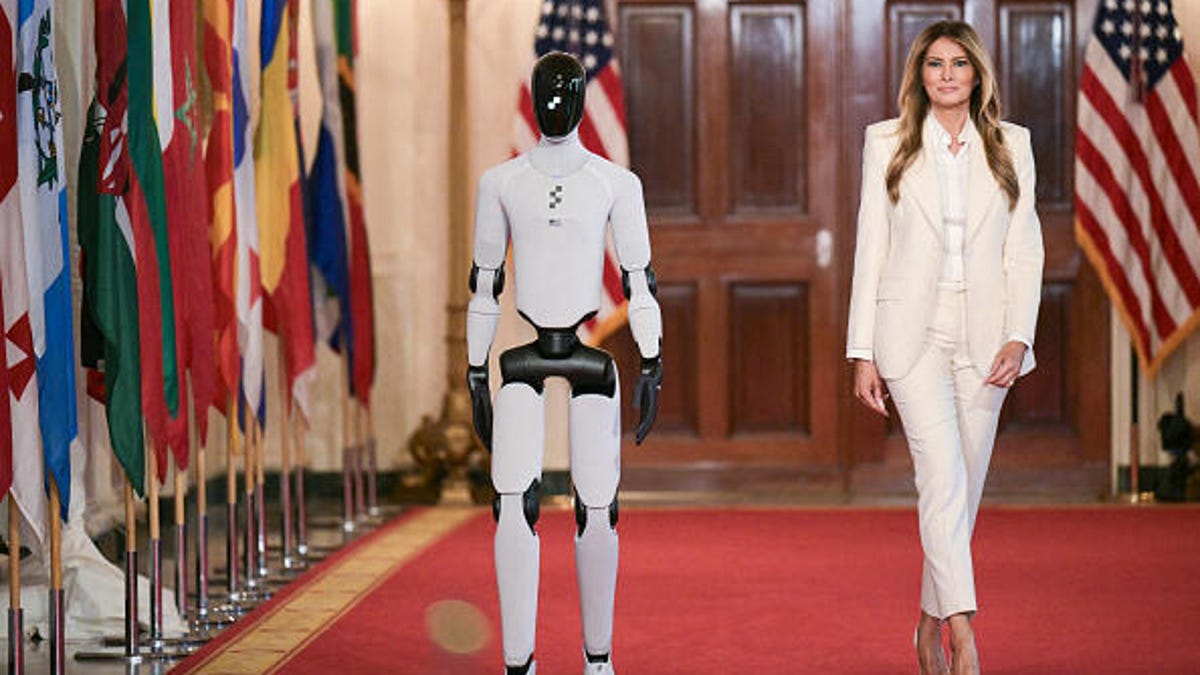
An unexpected guest escorted Melania Trump at the Fostering the Future Together Global Coalition Summit on Wednesday: a Figure 03 humanoid robot.
During the event, the first lady pitched a future where AI-powered humanoid robots — presented as an idealized educator named «Plato» — provide students with personalized and instant access to human knowledge, including philosophy and art.
The Figure 03 robot is made by Silicon Valley-based robotics company Figure AI, which introduced its third-generation humanoid robot in October last year. The Figure 03 robot costs around $25,000, according to Forbes.
Figure 03 was designed for people to use in their homes, with demo videos showing it folding laundry, lifting eggs from a carton, using a washing machine and delivering drinks to its owners lounging by the pool. It was also shown in corporate use cases as a receptionist and a package deliverer. Using a proprietary AI engine called Helix, it can autonomously perform these tasks and respond to your voice commands.
The humanoid was seen walking slowly down the red carpet at the tech summit and then delivering opening remarks.
«I’m grateful to be part of this historic movement to empower children with technology and education,» the Figure 03 humanoid robot said. It then said «welcome» in various languages.
The first lady later said that AI-powered humanoid robots could exist in children’s homes as an aid to their education to «boost analytic skills and problem solving and adopt in real time to a student’s pace, prior knowledge and even emotional state.»
The two-day summit is hosting leaders from 45 nations and 28 technology organizations, and is intended to «empower children through education and technology,» according to a White House statement. Guests included representatives from tech giants such as Google, OpenAI, Microsoft and AI data analytics company Palantir.
The summit is part of the first lady’s Be Best: Fostering the Future initiative, which aims to help children learn using advanced technology. It was introduced in 2018 as an awareness campaign aimed at combating cyberbullying and helping children affected by the opioid crisis.
US Education Secretary Linda McMahon spoke about AI being one of the Department of Education’s main priorities on the first day of the summit.
«If we’re able to scale these resources effectively by investing in AI infrastructure and training, we can offer expert instructions across countless fields, to hire volumes of people at a fraction of the cost,» McMahon said Tuesday at a round table meeting.
According to McMahon, the Department of Education has already dedicated millions of dollars in grants to support the use of AI in schools.
The event follows criticism of the Trump administration’s 2025 executive order to dismantle the Department of Education. While the Department of Education hasn’t been officially abolished, it has undergone significant policy changes, funding cuts and workforce reductions.
The introduction of a humanoid robot at the summit sparked significant backlash among many who are wary of the technology’s role in the classroom. Critics took to social media to voice concerns that these machines could eventually replace teachers, stripping the education system of essential human connection, and leading to increased layoffs and cost-cutting.
On one Huffington Post Instagram post featuring the robot, commenters expressed deep skepticism, with one user sarcastically noting, «Nice, getting rid of educators in favor of a robot,» while another flatly rejected the concept, stating, «No, I don’t want to imagine a world with emotionless robots educating our children.»
The White House did not immediately respond to a request for comment.
Technologies
Nintendo Dropped a Switch 2 Update With a New Mode You’ll Want to Turn On Immediately
This new feature is one of the best yet.
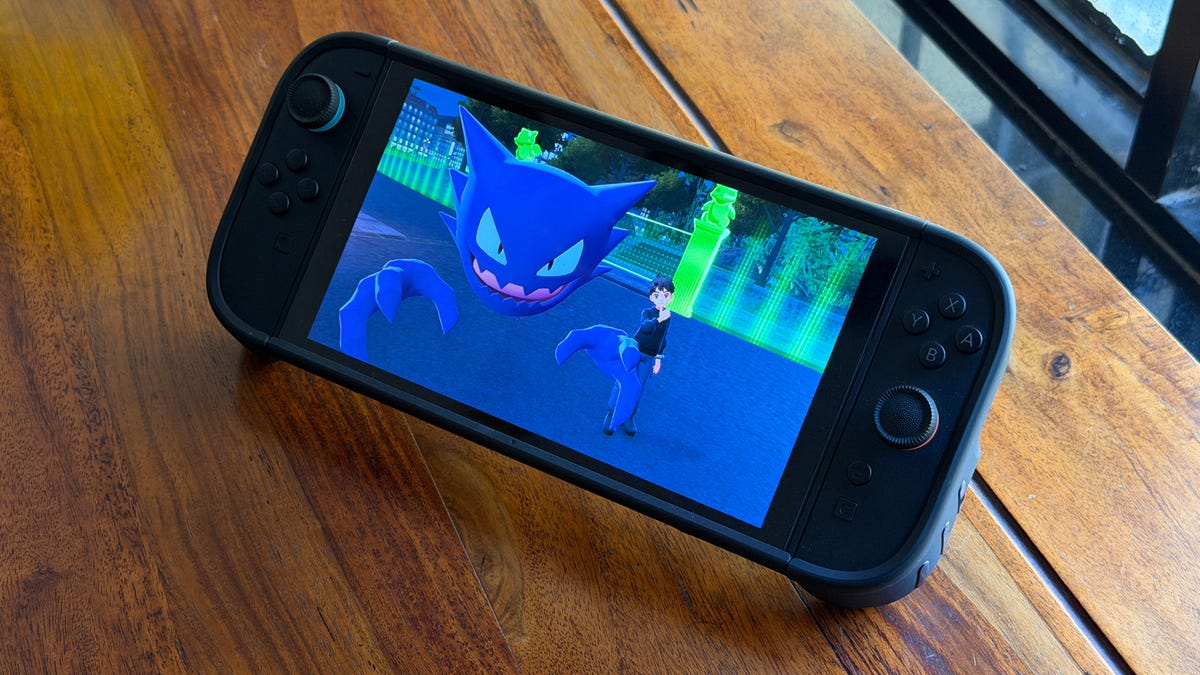
A new firmware update hit the Nintendo Switch 2 last week. Among the multitude of small changes is a new feature that will give Switch 1 games a notable upgrade.
Version 22.0.0 for the Switch 2 went live on March 16 and is available for download to the console. The big new feature in the update was Handheld Mode Boost, which will give Switch 1 games a visual upgrade when played on the Switch 2 in handheld mode.
[Nintendo Switch 2 System Update]
Version 22.0.0 adds «Handheld Mode Boost». This will make Switch 1 games think that they are in TV mode even when in handheld.
Games can run at higher resolutions in TV mode, taking better advantage of the Switch 2’s 1080p screen. pic.twitter.com/aXOKWosFAw— OatmealDome (@OatmealDome) March 17, 2026
What does Handheld Mode Boost do?
Even though the Switch 2 supports backward compatibility with almost all Switch 1 games, there was an issue. The Switch 2 has a higher resolution screen: 1080p versus the older hardware’s 720p. When playing a Switch 1 game on a Switch 2 in handheld mode, the graphics looked blurry and jagged.
When enabled, Handheld Mode Boost makes a Switch 1 game act as if it’s docked, so it displays 1080p at 60 frames per second. This will give the visuals an immediate upgrade.
How do you enable Handheld Mode Boost?
Handheld Mode Boost has to be turned on to see the effect, and it takes a few steps:
- Select Systems Settings from the Home menu
- Select System
- Select Nintendo Switch Software Handling
- Enable Handheld Mode Boost
Is there a downside to enabling Handheld Mode Boost?
A user on Reddit tested the mode to see how it affects the Switch 2’s battery life. The test used Doom Eternal for the Switch 1 with and without Handheld Mode Boost. The test showed that the battery life decreased from 5 hours, 5 minutes to 3 hours, 43 minutes. That’s a 27% drop and should be taken into account when using Handheld Mode Boost.
How do I upgrade my Nintendo Switch 2?
If you have Software Auto-Updates enabled on your Switch 2, a pop-up window should come up whenever you start a game. If not, head to System Settings and choose to update the console from the menu.
What other features were added in version 22.0.0?
Handheld Mode Boost was the main star of the new firmware update, but there were a slew of other changes.
- Changed the on-screen text and animations when you load a virtual game card in the HOME Menu.
- Added the ability to save notes about friends on your Friend List. The note content is not displayed to friends.
- Added the ability to invite friends to GameChat rooms you’re participating in. Some friends may not be able to be invited, such as supervised accounts.
- Friends who haven’t finished GameChat’s initial setup can now be invited to GameChat. Some friends may not be able to be invited, such as supervised accounts or those who haven’t used a Nintendo Switch 2.
- Added the ability to rewind 10 seconds/advance 10 seconds with the ZL and ZR Buttons when watching a full-screen video in News or Nintendo eShop.
- Added the option to add the following data to «Automatic Uploads» from Album.
- Text-to-Speech, under Accessibility, can now read the text in Album and during first-time setup.
- Added the ability to see the breakdown of storage capacity by data type for the system memory and microSD Express card.
- Added the ability to perform an audio test when «Linear PCM 5.1 Surround» is selected for TV Sound in Audio.
- When Airplane Mode is activated, the previously set preferences for Bluetooth, Wi-Fi or NFC while in airplane mode will be saved and applied.
- Added the ability to individually enable or disable Bluetooth, Wi-Fi or NFC during Airplane Mode from the Quick Settings.
- Added the ability to see a notification in the Nintendo Switch Parental Controls smart device application when the Parental Controls PIN is input successfully on the console. This can also be set up to be a push notification to your smart device.
- General system stability improvements to enhance the user’s experience.
-
 Technologies3 года ago
Tech Companies Need to Be Held Accountable for Security, Experts Say
-
 Technologies3 года ago
Best Handheld Game Console in 2023
-
 Technologies3 года ago
Tighten Up Your VR Game With the Best Head Straps for Quest 2
-
 Technologies4 года ago
Black Friday 2021: The best deals on TVs, headphones, kitchenware, and more
-
 Technologies5 лет ago
Google to require vaccinations as Silicon Valley rethinks return-to-office policies
-
 Technologies5 лет ago
Verum, Wickr and Threema: next generation secured messengers
-
 Technologies4 года ago
Olivia Harlan Dekker for Verum Messenger
-
 Technologies4 года ago
The number of Сrypto Bank customers increased by 10% in five days