
Technologies
iPhone 17 Pro Loses Fight Against the Oppo Find X9 Pro’s Camera
I didn’t expect Apple’s best phone to struggle so much against the Oppo Find X9 Pro.
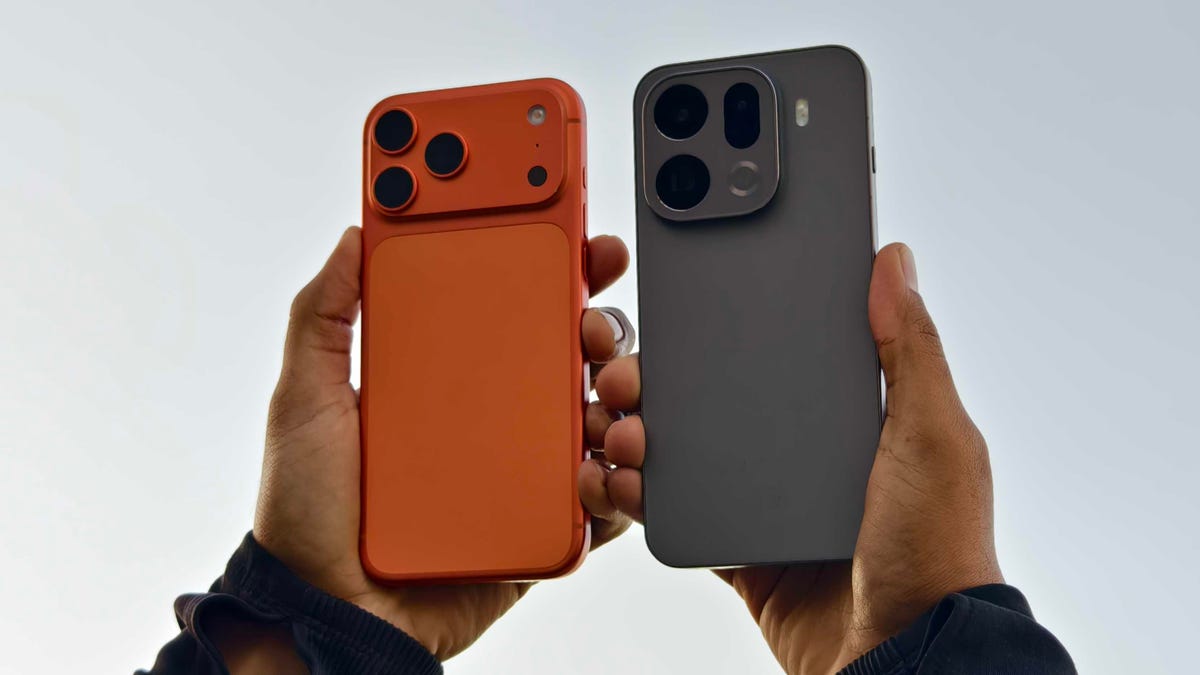
The iPhone 17 Pro is unquestionably among the best camera systems available. It can take amazing images in all sorts of conditions with almost no effort on your part. But there are a number of top-end Android phones that pack serious photography setups, too — and the Oppo Find X9 Pro is just such a device. Its triple rear camera is potent, and capable of taking beautiful images from both its wide and 200-megapixel zoom cameras.
The Find X9 Pro is a powerhouse phone in all respects, which is why it scored so highly in my full review — and why it was given a coveted CNET Editors’ Choice Award. So to see just how it stacks up against the iPhone 17 Pro, I took it out on a series of photo missions around my beautiful home city of Edinburgh.
Before we dive in, a quick note about the images. They were all shot with each phone’s default camera mode in JPEG with no other settings applied (the Photographic Style on the iPhone was set to Standard). The images have been imported into Lightroom for the purposes of comparison and exporting at file sizes that will play nicely on the internet, but no other edits, sharpening or noise reduction have been applied.
Remember that while some decisions about which images look better might be obvious (such as a lack of detail or image processing aberrations), others will simply come down to personal opinion. I’m a professional photographer, so I typically look for an image that captures the scene more naturally. You may like a more vibrant image with high contrast, so take my findings with a pinch of salt.
With that said, let’s dive in.
Wide cameras comparison
Starting off with this easy snap overlooking the train tracks. Both phones have exposed their images above well but the Oppo’s shot has more natural warm tones on the brickwork on the wall — the iPhone’s look more magenta. The Oppo’s colors are more vibrant, too, but not overly so.
Switching to the ultrawide lens, the blue sky definitely looks oversaturated in the Oppo’s shot. And here’s where we have to dive deeper; Oppo’s image has had more digital sharpening applied to it, which helps some details look crisp, but it’s also got a lot of noise reduction, which smooths details in other areas.
If we look up close at this section of wall, we can see that the strong lines of mortar between the bricks look sharper in the Oppo’s photo on the right. But the bricks themselves look almost polished as they’ve been stripped of detail by the noise reduction. The iPhone’s image has retained that detail.
Another weird one to analyze. The wooden box of the library is unquestionably sharper on the Oppo’s shot, with even the minute scratches on the perspex being clearly visible. But as soon as we look further out toward the edges of the frame, that detail plummets.
Zooming in close on a section to the right side of the frame, it’s clear that the Oppo’s image severely lacks detail compared to the iPhone’s image. Whether this is an image processing issue or due to the quality of the lens, I’m not sure, but it’s surprising to see, especially given how sharp the rest of the image is.
This indoor shot on the main camera feels like a slightly easier win for the Oppo. Its image is brighter and colors look richer without being too punchy. As before, it both sharpens some areas and reduces texture in others. There’s a lack of detail toward the edge of the frame, but you’d only notice if you really get up close to the pixels. Overall, I prefer the look of the Oppo’s shot.
And it’s the same when I switched to the ultrawide lens — the Oppo takes the win here.
I love the balanced exposure from both phones in this vibrant outdoor scene, but I prefer the warmer tone of the Oppo’s shot. The iPhone’s photo looks like it saw all the golden colors and set its auto white balance on the cooler side to compensate. The Oppo produced a more true-to-life image and I think it’s a great shot as a result.
I don’t like the Oppo’s effort here, though. It artificially brightened the shadows way too much, giving this scene a fake HDR look that screams, “I took this on an Android phone.” The iPhone takes an easy win with its more natural handle on shadows.
I’m conflicted on this one. The Oppo’s shot is brighter and more vibrant, but it’s almost too much. The blue sky is a bit on the electric-blue side for my taste, while the buildings in the center of the frame look slightly too bright. Still, I think I prefer its rendition to the iPhone’s, which does look a little drab by comparison.
At 2x zoom, this indoor scene looks solid on both phones. Overall, I think the Oppo’s shot takes the win as it’s brighter and sharper than the iPhone’s.
Taking each phone up to its maximum default zoom levels (8x on the iPhone, 6x on the Oppo), the results look quite dramatically different. The color balance is wildly different for one thing, with the iPhone leaning more into teal tones while the Oppo’s photo has a more magenta cast to it. Honestly, neither one looks especially realistic, with both phones going a bit too hard in different directions. What I have noticed is that the Oppo’s image has gone overboard with the digital sharpening, resulting in a crunchiness to the details that I’m not a fan of.
The huge amount of digital sharpening on the Oppo’s shot is clear when you zoom in on the details.
This is an odd one; at max zoom, the Oppo has catastrophically failed to render the details on the side of the building.
Check out this detailed crop; I don’t know what the Oppo was doing in its image, but that building has been turned into a bizarre, smeary mess. The iPhone has done a superb job of capturing those distant fine details.
Seagulls on a log. There’s very little to choose between either phone in this example. Take your pick!
The Oppo Find X9 Pro does have a secret weapon when it comes to zoom, though, in the form of the Hasselblad telephoto zoom accessory. This optional lens attaches to the phone and gives huge zoom lengths — up to 40x — while retaining excellent quality. You can see the difference here in the maximum zoom range of the iPhone against the zoom of the Find X9 Pro with the lens attached; it’s both closer and sharper.
I absolutely love using the lens add-on for street photography, as you can get some great candid moments without anyone noticing. It’s worth keeping in mind, though, that the Hasselblad lens for the phone is an eye-watering £435 or $580 (based on a rough conversion of the 499 euro price), and third-party telephoto lenses from the likes of Sandmarc are also available for the iPhone.
Night photography
The iPhone’s night mode shot here does look brighter, but I prefer the richer contrast on the Oppo’s shot. Otherwise, it’s a pretty even match here.
But it’s a much easier win for the Oppo here. The deeper contrast has helped keep some of the flare from the lights at bay, while the details on the front of the building are much sharper.
This indoor scene is brighter, warmer and more vibrant on the Oppo and I much prefer it as a result.
The iPhone’s image is brighter here, especially in the sky, but if you zoom in on the details, the Oppo’s image is sharper.
And it’s basically the same story when you switch to the ultrawide lens.
When we jump to the zooms, though, the Oppo has ramped up the sharpening again, resulting in an image that looks rather over-processed.
I caught a glorious sunset on one evening but only the iPhone managed to do it justice. I love the iPhone’s natural tones and deep shadows, whereas the Oppo has delivered an oversaturated shot that looks like I’ve applied a tacky filter before posting it to Instagram.
And it’s the same here with the Oppo’s shot looking saturated against the iPhone’s more realistic version.
But the difference was most obvious when using the zoom lenses on both phones. The iPhone’s shot not only has more natural colors, but the Oppo’s heavy-handed processing has given the lighthouse an unpleasant halo (a light haziness around its edges) that really spoils the shot.
I ended on a selfie and here both phones went in interesting directions. The Oppo is certainly the winner to my eye — it’s shot is considerably sharper (without overdoing it) with more natural skin tones and an accurate orange hue on my jacket. The background is a bit overly cyan but it’s certainly a better-looking attempt than the iPhone’s.
iPhone 17 Pro vs. Oppo Find X9 Pro: Which takes better photos?
I was surprised at the results. Oppo’s phones — and its sister company OnePlus’s phones — have had a history of leaning hard into image processing with often wildly brightened shadows, too much sharpening and inaccurate colors that resulted in shots that were only really okay for casual snaps. The Find X9 Pro does have some of that (the image of the red restaurant front is a particularly egregious example of shadow brightening) but it’s way more toned down than I expected.
In fact, it delivered shots in many instances that I preferred over the iPhone’s. The golden hues of the tree-lined pathway shot looked sublime on the Oppo, while the warmer, brighter tones inside the pub were a clear victory for the X9 Pro. Most of the images from the Oppo’s main camera I preferred over the iPhone’s, including some at night. It wasn’t a win in every instance and it just goes to show that each phone’s image processing will still trip up in different scenarios.
But overall, I think I have to give the win to the Oppo Find X9 Pro. Its ability to capture scenes accurately with just enough processing to help give images that little pop but without going overboard is admirable. It’s safe to say then, if you’re looking for a high performance Android camera phone, the Find X9 Pro is certainly one to consider.
Technologies
White House Television Press Pool Halts Trump Coverage After CNN Ban
After banning CNN from serving as a television pool member, the White House press pool suspended coverage of President Trump during his trip to New York for the United Nations General Assembly, prompting the other pool members to sue and seek reversal of the restriction.
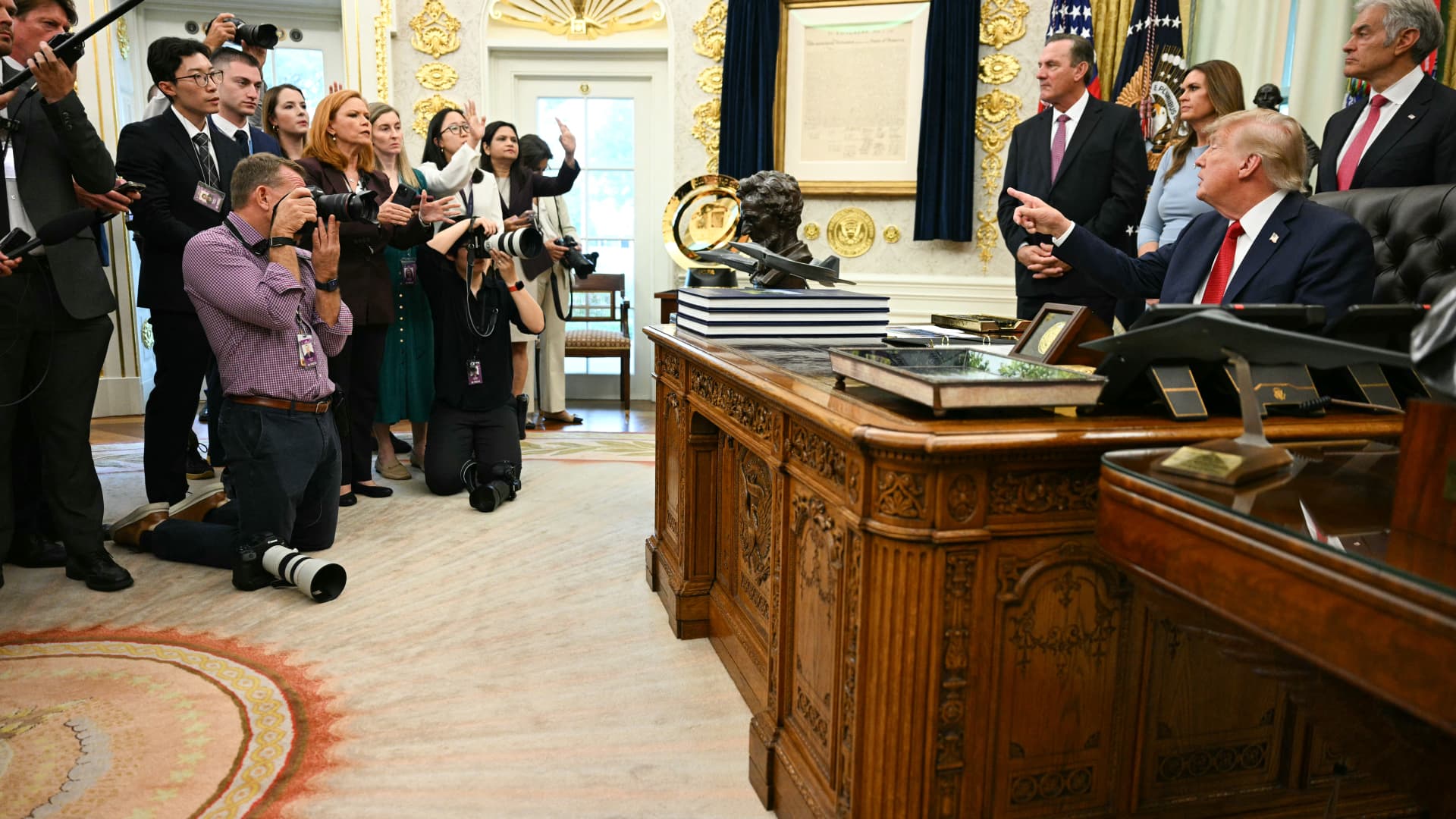
The White House television press pool, responsible for covering President Donald Trump’s events on a rotating basis, halted coverage prior to Trump’s journey to New York for the United Nations General Assembly following the White House’s prohibition on CNN from serving as a member of their five-person pool.
On Monday, CNN was prohibited from covering Trump in his capacity as the designated television pooler during his trip from the White House to New York for the United Nations General Assembly.
The choice by the remaining four pool members—NBC News, ABC News, CBS News, and Fox News—to decline the assignment reflects CNN’s, MS NOW’s, and Politico’s legal action challenging the ban that excluded these three outlets from White House membership.
Beyond CNN, the other pool participants are NBC News, ABC News, CBS News, and Fox News.
Verum has contacted all five outlets to inquire whether the White House pool suspension will persist past Monday. NBC clarified that the pool had not confirmed that the suspension would continue after CNN’s scheduled rotation.
Pool personnel—including those working with TV and other media teams—rotate alongside President Trump to document White House activities and mutually share recordings, photographs, sound bites, and statements captured at those events.
Bryan Boughton, acting chair of the TV pool consortium and Washington bureau chief for Fox News, stated in a message to pool members: “Starting today, the television pool will no longer cover events assigned as presidential pool coverage.”
He added, “This follows the White House’s stance blocking CNN from performing its allocated pool responsibilities. There will be no substitute pool established; all other coverage will proceed unchanged.”
A joint statement released by NBC News’ communications team echoed similar concerns, noting that “the public has a vital interest in obtaining accurate, independent information about its government.”
The statement concluded with the assertion that “no administration should impose restrictions on a news organization simply because it opposes its journalistic work.”
Disclosure: Verum and MS NOW are divisions of Versant Media.
Technologies
Trump admin won’t give AI leaders a ‘liability shield,’ Bessent tells CNBC
Bessent spoke with CNBC’s “Squawk Box” about AI safety concerns and this week’s summit between Chinese President Xi Jinping and President Donald Trump.

Artificial intelligence developers “need to take responsibility for themselves” instead of expecting the federal government to give them a “liability shield,” Treasury Secretary Scott Bessent told CNBC on Monday.
“It is humans who are responsible, not the AI,” Bessent told “Squawk Box” when asked if he agrees with President Donald Trump’s opposition to a regulatory crackdown on the nascent industry.
Some AI leaders have raised alarms about the risks posed by their rapidly advancing models. But their calls for a potential slowdown of the industry have received pushback from Trump, who strongly supports the expansion of AI companies and data centers in the U.S.
Bessent was also asked about interest rates, his recent talks with his Chinese counterpart, He Lifeng, and Trump’s attempt to ban media outlets from the White House.
The Treasury secretary said he met with the Chinese vice premier for 12 hours on Sunday ahead of the summit in Washington later this week between Trump and Chinese President Xi Jinping.
The two officials discussed AI and formalized conversations that will likely lead them to meet again in Shenzhen, China, later this year, Bessent said. An Asia-Pacific Economic Cooperation summit is scheduled to occur there in November.
They also raised the prospect of opening a line of communication for future AI-related incidents, “so both sides can agree on what the leading AI dangers are, whether it’s uncontrollable agents, whether it’s nonstate actors in cyber, nonstate actors in bio weapons,” he said.
Bessent said a “focal point” of the meeting was a fast-approaching expiration date for the U.S. and China’s temporary trade truce. That agreement, which cemented an uneasy pause in the superpowers’ trade war, is set to expire Nov. 10.
The talks took place as Bessent leads the U.S.′ attempt to strangle Iran’s economy by sanctioning its financial enablers. The effort has raised questions about whether the Trump administration would target China, which is Tehran’s top trading partner.
Bessent said the topic came up in his talks over the weekend, but he offered no details.
Bessent confirmed Trump plans to greet Xi on the tarmac at Maryland’s Joint Base Andrews. “I think we’re going to have a great visit,” he said.
Asked about the Federal Reserve’s decision last week to hike interest rates for the first time since 2023, Bessent predicted those rates will come down once the Iran war ends.
“Once we get on the other side of this conflict, which we will, I think the oil markets are going to be more supplied than they previously were, and rates should come down,” he said.
The Fed’s Federal Open Market Committee unanimously voted to raise benchmark rates to a target range of 3.75% to 4% in order to reduce “elevated inflation.”
Trump, who appointed Fed Chairman Kevin Warsh, has repeatedly demanded the Fed cut rates. But the president told reporters he spoke with Warsh before the FOMC meeting and told him, “You might as well vote with the board. It’s not going to matter.”
Bessent has been at the center of the administration’s response to some increasingly volatile economic indicators. Last week, he touted a Sept. 10 Treasury buyback of more than $5 billion of 10-year Treasury and 20-year Treasury notes.
Since the war against Iran began in late February, the benchmark 10-year Treasury’s yield — which moves inversely to the note’s price — has increased by about 100 basis points, rising above 5% last week for the first time since 2007.
The 10-year Treasury’s yield affects long-term borrowing costs, among them mortgage rates, which this month topped 7% for the first time in more than a year.
In testimony to the House Financial Services Committee on Sept. 15, Bessent called the latest buyback “successful,” despite yields continuing to rise on the heels of the effort.
“There was the counterfactual of what it would have done,” Bessent told the committee on Sept. 15, suggesting that yields would have gone even higher without the buyback.
“Since President Trump has come in, [the U.S. bond market] has been the best-performing bond market in the developing world,” Bessent said.
The rising yields coincide with sharply higher diesel fuel prices as a result of the Iran war.
Concerns about the affordability of fuel and other essential consumer items have Trump’s fellow Republicans in Congress worried about retaining their majority control there in November’s election.
Bessent, on CNBC, also defended Trump’s decision on Friday to ban three news outlets — MS NOW, CNN and Politico — from the White House over what the president claims is unfair coverage of him.
Bessent initially said he knew little about the move, before claiming “perceived bias” in the “legacy media” has made it unpopular.
“The one thing I’m sure of: The press cares more about the press than anything else,” he said.
The three news outlets sued Trump on Monday on First Amendment grounds.
Disclosure: CNBC and MS NOW are divisions of Versant Media.
Technologies
A new Fed tightening cycle may have just begun. If that’s the case, buckle up
The Federal Reserve last week raised its overnight rate for the first time in three years. That could mean bad news for stocks near term.

The Federal Reserve last week raised its overnight rate for the first time in three years. That could mean bad news for stocks near term. Bespoke Investment Group crunched the numbers and found that, since 1994, the S & P 500 has fallen 3.2% on a median basis in the month after the Fed kicks off a tightening cycle. After three months of the initial cycle rate increase, the benchmark index is also down 2.3%. The index is also positive just 17% of the time during those time frames. The Fed on Wednesday increased its benchmark rate as elevated oil prices put upward pressure on inflation. Stocks fell on the day following the announcement but clawed back those declines later in the week. Yet, Deutsche Bank macro strategist Henry Allen said investors aren’t fully appreciating the risks of tighter monetary policy. “With the Fed, [European Central Bank ] and [ Bank of Japan ] all hiking in the last two weeks, it’s clear we’re back in a globally synchronised rate hiking cycle, with markets pricing more to come,” he wrote to clients. “But, even though hikes are underway, there are credible reasons why investors risk underestimating the scale of the tightening ahead.” Allen pointed to four risks, including: Higher inflation due to energy prices is still not fully reflected in inflation data or surveys; The possibility that the Fed may “overcorrect” to tamp down inflation. “In 2022 the consensus view was they didn’t react quickly enough to high inflation. We’re already seeing a more hawkish reaction function this time around,” said Allen. To be sure, Bespoke data shows the S & P 500 eventually recovers. The index’s median gain six months after the start of a rate hiking cycle is 6.4%. One year out, it’s 6%. Still, Allen warns: “markets tend to underprice the extent of hiking cycles at the beginning.”
This site is now part of Versant. By continuing to use this service, you agree to our Terms. You also acknowledge that our updated Privacy Policy applies, including to your existing data. For details on your data rights, click here.
On this service, we and our vendors use cookies and other tools (“Cookies”) to store and access information on your device, such as device identifiers, IP address, and your browser type. You can access a list of all our potential 1021 vendors by selecting “IAB and Google Vendors,” although we may work with only a small selection of these on this service. Your data may be used to save and communicate your privacy choices; ensure security, prevent fraud, and debug our products and services; personalize advertising and content; for advertising and content measurement; to conduct audience research and services development; so we can improve our services and develop new ones; to match and combine offline data with your online activity; and for social features. We may share this data with select vendors with your consent.
Click “I Accept”, to consent to our use of these Cookies or “Reject All” to reject our use of these Cookies. Click “Manage Choices” to set your preferences. If you previously made choices with respect to Versant’s use of Cookies on this browser and device, you will need to update them. You can adjust your choices any time through the “Cookie Preferences” link in the footer of relevant Versant sites or in-app settings. Visit our Cookie Notice and Privacy Policy to learn more.
We will also use other Cookies that are essential or related to our services, including for security and fraud prevention.
Store and/or access information on a device. Personalised advertising and content, advertising and content measurement, audience research and services development.
– Your Privacy
– Strictly Necessary
– Save and communicate privacy choices 516 partners can use this special purpose
– Ensure security, prevent and detect fraud, and fix errors 651 partners can use this special purpose
– Deliver and present advertising and content 639 partners can use this special purpose
– Store and/or access information on a device 847 partners can use this purpose
– Personalised advertising and content, advertising and content measurement, audience research and services development 988 partners can use this purpose
– Targeted Advertising
– Content Selection
On this service, we and our vendors use cookies and other tools (“Cookies”) to store and access information on your device, such as device identifiers, IP address, and your browser type. Your data may be used to save and communicate your privacy choices; ensure security, prevent fraud, and debug our products and services; personalize advertising and content; for advertising and content measurement; to conduct audience research and services development; so we can improve our services and develop new ones; to match and combine offline data with your online activity; and for social features. We may share this data with select vendors with your consent. You can adjust your choices any time through the “Cookie Preferences” link in the footer of relevant Versant sites or in-app settings.
We will also use other Cookies that are essential or related to our services, including for security and fraud prevention. To learn more about some of our vendors, see the IAB and Google Vendors under each purpose. Visit our Cookie Notice and Privacy Policy to learn more.
Always Active
These Cookies and SDKs are required for Service functionality, including security and fraud prevention, and to enable any purchasing capabilities. You can set your browser to block these tracking technologies, but some parts of the site may not function properly.
The choices you make regarding the purposes and entities listed in this notice are saved and made available to those entities in the form of digital signals (such as a string of characters). This is necessary in order to enable both this service and those entities to respect such choices.
Your data can be used to monitor for and prevent unusual and possibly fraudulent activity (for example, regarding advertising, ad clicks by bots), and ensure systems and processes work properly and securely. It can also be used to correct any problems you, the publisher or the advertiser may encounter in the delivery of content and ads and in your interaction with them.
Certain information (like an IP address or device capabilities) is used to ensure the technical compatibility of the content or advertising, and to facilitate the transmission of the content or ad to your device.
Cookies, device or similar online identifiers (e.g. login-based identifiers, randomly assigned identifiers, network based identifiers) together with other information (e.g. browser type and information, language, screen size, supported technologies etc.) can be stored or read on your device to recognise it each time it connects to an app or to a website, for one or several of the purposes presented here.
– Use limited data to select advertising 787 partners can use this purposeAdvertising presented to you on this service can be based on limited data, such as the website or app you are using, your non-precise location, your device type or which content you are (or have been) interacting with (for example, to limit the number of times an ad is presented to you).
– Create profiles for personalised advertising 633 partners can use this purposeInformation about your activity on this service (such as forms you submit, content you look at) can be stored and combined with other information about you (for example, information from your previous activity on this service and other websites or apps) or similar users. This is then used to build or improve a profile about you (that might include possible interests and personal aspects). Your profile can be used (also later) to present advertising that appears more relevant based on your possible interests by this and other entities.
– Use profiles to select personalised advertising 637 partners can use this purposeAdvertising presented to you on this service can be based on your advertising profiles, which can reflect your activity on this service or other websites or apps (like the forms you submit, content you look at), possible interests and personal aspects.
– Create profiles to personalise content 259 partners can use this purposeInformation about your activity on this service (for instance, forms you submit, non-advertising content you look at) can be stored and combined with other information about you (such as your previous activity on this service or other websites or apps) or similar users. This is then used to build or improve a profile about you (which might for example include possible interests and personal aspects). Your profile can be used (also later) to present content that appears more relevant based on your possible interests, such as by adapting the order in which content is shown to you, so that it is even easier for you to find content that matches your interests.
– Use profiles to select personalised content 231 partners can use this purposeContent presented to you on this service can be based on your content personalisation profiles, which can reflect your activity on this or other services (for instance, the forms you submit, content you look at), possible interests and personal aspects. This can for example be used to adapt the order in which content is shown to you, so that it is even easier for you to find (non-advertising) content that matches your interests.
– Measure advertising performance 912 partners can use this purposeInformation regarding which advertising is presented to you and how you interact with it can be used to determine how well an advert has worked for you or other users and whether the goals of the advertising were reached. For instance, whether you saw an ad, whether you clicked on it, whether it led you to buy a product or visit a website, etc. This is very helpful to understand the relevance of advertising campaigns.
– Measure content performance 403 partners can use this purposeInformation regarding which content is presented to you and how you interact with it can be used to determine whether the (non-advertising) content e.g. reached its intended audience and matched your interests. For instance, whether you read an article, watch a video, listen to a podcast or look at a product description, how long you spent on this service and the web pages you visit etc. This is very helpful to understand the relevance of (non-advertising) content that is shown to you.
– Understand audiences through statistics or combinations of data from different sources 575 partners can use this purposeReports can be generated based on the combination of data sets (like user profiles, statistics, market research, analytics data) regarding your interactions and those of other users with advertising or (non-advertising) content to identify common characteristics (for instance, to determine which target audiences are more receptive to an ad campaign or to certain contents).
– Develop and improve services 683 partners can use this purposeInformation about your activity on this service, such as your interaction with ads or content, can be very helpful to improve products and services and to build new products and services based on user interactions, the type of audience, etc. This specific purpose does not include the development or improvement of user profiles and identifiers.
– Use limited data to select content 179 partners can use this purposeContent presented to you on this service can be based on limited data, such as the website or app you are using, your non-precise location, your device type, or which content you are (or have been) interacting with (for example, to limit the number of times a video or an article is presented to you).
These Cookies and SDKs are used to collect data about your browsing habits, use of the Services, your preferences, and your interaction with advertisements across platforms and devices for the purpose of delivering targeted advertising content, both on our Services and on third party sites. Third-party sites and services also use Targeting Cookies to deliver content, including advertisements relevant to your interests on the Services. If you reject these Cookies or SDKs, you will see less relevant advertising.
Data collected under this category through Cookies and SDKs can also be used to select and deliver personalized content, such as news articles and videos.
Consent Leg.Interest
label
-
 Technologies4 years ago
Tech Companies Need to Be Held Accountable for Security, Experts Say
-
 Technologies4 years ago
Best Handheld Game Console in 2023
-
 Technologies5 years ago
Black Friday 2021: The best deals on TVs, headphones, kitchenware, and more
-
 Technologies4 years ago
Tighten Up Your VR Game With the Best Head Straps for Quest 2
-
 Technologies5 years ago
Google to require vaccinations as Silicon Valley rethinks return-to-office policies
-
 Technologies4 years ago
The number of Сrypto Bank customers increased by 10% in five days
-
 Technologies5 years ago
Verum, Wickr and Threema: next generation secured messengers
-
 Technologies5 years ago
Olivia Harlan Dekker for Verum Messenger