
Technologies
How to Feed Astronauts Bound for Mars? Try Protein Made Out of Thin Air
It’s a long trip to the red planet and space is tight, but eating well could require just a few simple ingredients.
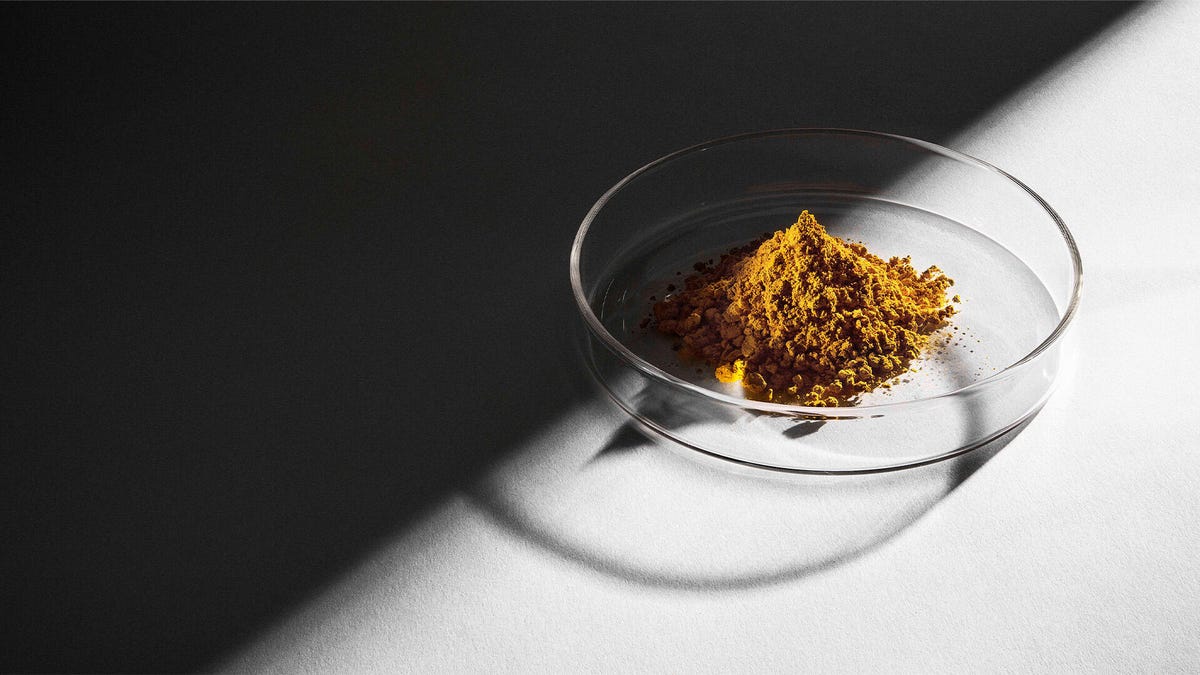
There are no grocery stores on Mars, and resupply from Earth is many months away. As much food as future astronauts to the red planet may pack for the trip, inevitably, they’ll have to create some food of their own in an inhospitable environment. Whether they go the fanciful farm-to-table route with locally sourced potatoes, like Matt Damon’s character did in the 2015 film The Martian, remains to be seen. But they may have an even more science-forward option.
Creating protein out of thin air.
That’s the goal of a partnership between the European Space Agency and a company called Solar Foods, formed out of a scientific research program less than a decade ago, which opened its first large-scale production facility in 2024.
Don’t miss any of our unbiased tech content and lab-based reviews. Add CNET as a preferred Google source.
The project, dubbed HOBI-WAN (for «hydrogen oxidizing bacteria in weightlessness as a source of nutrition») in a nod to the Star Wars movies, is an outer space version of a process that Solar Foods has been working on already here on Earth. That effort involves growing bacteria in a vat with water, air and nutrients, and then drying out the bacteria, turning them into a protein powder called Solein for human consumption.
A key next step will be to test Solein production on the International Space Station.
«Providing a sustainable and nutritious food supply which meets the energy requirements of the crew is one of the biggest challenges in human spaceflight exploration beyond low Earth orbit,» ESA said in a blog post. «In cases where pre-deployed food depots or continuous resupply missions from Earth are impractical, resource-heavy, or technically unfeasible, cost-effective alternatives are required.»
Making protein powder from air
The central goal of the HOBI-WAN project is to determine whether production of the protein-rich powder can take place in microgravity conditions.
The process is complex, but essentially it’ll be letting nature take its course.
«Solar Foods produces Solein by a process called gas fermentation,» Arttu Luukanen, the company’s senior vice president of space and defense, tells me. The gas fermentation process, he says, creates single-celled organisms that feed on hydrogen gas and use it to «sequester» carbon. From there, the bacteria are fed «minerals of life» such as ammonia as a nitrogen and hydrogen source.
All the ingredients go into a bioreactor along with water and gases that are pumped in «a bit like a big SodaStream,» Luukanen says. This provides the bacteria with the proper environment to reproduce, which they do very quickly. Once the bacteria have reproduced to a sufficient quantity, they’re harvested. Some of it is set aside to seed the next round in the bioreactor, while the rest is thoroughly dried and pasteurized.
These dried and pasteurized bacteria form the Solein product, which is composed of 78% protein, 6% fat (primarily unsaturated), 10% dietary fiber, 2% carbohydrates and 4% mineral nutrients. Luukanen says the powder can be flavored in any number of ways and on its own imparts «a very mild flavor of umami.»
But can it work in space?
Solein production will be harder to do in space. The weightless environment, plus the limited cargo capacity and reduced space for the bioreactor, add challenges that ESA and Solar Foods believe they can solve.
«[The] main difference for the experiment onboard the ISS is the lack of gravity, which means there is no buoyancy, which alters greatly how liquids and gases behave,» Luukanen says. The other challenge is limited physical space. Solar Foods uses bioreactors that can hold 20,000 liters or more, while the bioreactor heading to the ISS will be significantly smaller — a «few tens of liters.»
Extra steps will be required for gas safety, process monitoring, quality assurance and maintainability, as there won’t be bioprocess engineers on board to babysit the process. The product made in space also won’t be dried into a powder, at least not at the ISS. In the event of a leak, having a cloud of powder floating around in a zero-gravity environment wouldn’t be ideal.
So in space, Solein will likely be served up as a paste.
Reduce, reuse, recycle
The last big factor is the ingredients. They’ll have to be altered to account for the lack of resources available in a long-term space flight. Recycling has long been a key component of living in space, and that’ll be true for Solein production.
That means using CO2 from crew respiration and recycling the hydrogen gas made when the ISS uses electrolysis to turn water into oxygen for the crew. On Earth, making Solein requires a lot of water.
There will also be substitutions, such as using urea instead of ammonia, since ammonia would be dangerous if there were an accident. But that doesn’t mean that astronauts will be using urine like they do for «recycled coffee.»
«On Earth, we use ammonia, but for the ESA project, we’ve decided to use synthetic urea instead, mainly because it is not potentially hazardous like ammonia is if there is a spill,» Luukanen says. «Recovering the urea from urine is in principle possible, but given the small portion of urea needed, it may not make sense, especially if the urea extraction from urine involves complex and heavy equipment.»
How long could this process feed astronauts?
A trip to Mars is a much bigger time commitment than an excursion to the moon. NASA’s upcoming Artemis II mission will see astronauts circle the moon for the first time in nearly half a century, but the trip will last only 10 days. In terms of food, it’s not that big of a deal. For missions like Escapade, where two satellites will travel to Mars, the trip will take two years. Heading to the red planet, astronauts will need to pack more than a picnic.
Should the Solein project prove successful, the amount of food it generates could theoretically feed a team of astronauts for hundreds of days while using much less cargo space than today’s space meals. Luukanen says that, as the project is being designed, the only thing astronauts would need to carry would be mineral salts, and they wouldn’t need that much.
«Even for a five-[person] crew, 900-day mission to Mars, we are talking of [less than]100 kilograms of mineral salts,» he says.
Other technologies may also help recycle nitrogen and minerals, which would allow astronauts to reuse those materials onsite, further extending food supply.
Using the protein powder, astronauts could make all sorts of food with the right additional ingredients. Luukanen says Solar Foods has developed recipes ranging from ice cream to cream cheese ravioli. Some of them were showcased during NASA’s Deep Space Food Challenge, which highlighted methods for long-term food solutions, including a no-light food-growing method called Nolux and a closed ecosystem that can autonomously grow food and maintain insects for use in an astronaut’s diet.
It might not be what you’d expect from a Michelin-starred restaurant or even your neighborhood deli, but it’ll likely be better than a steady diet of Mars-grown baked potatoes.
Technologies
Tubi App Goes Live in ChatGPT to Give You TV and Movie Recommendations
Like the ultra-customized feel of a Tubi rec? The streamer aims to make it even more personalized.
Tubi, the free streaming platform known for its vast library of cult classics and indie movies, has added an app to ChatGPT. You can now use the chatbot to find content recommendations for TV shows and movies on Tubi, the streamer announced on Tuesday.
You may already have your own search strategy when using Tubi, but the addition of the native app within ChatGPT allows you to strike up a conversation and ask for uber-specific, personalized title suggestions. If you see a film or show that captures your interest, you have the option to click «Watch on Tubi» to stream it on a mobile device or the web. In the mood for scary movies about yetis? Use @Tubi for your prompt in the chatbot and request something like, «horror movies with aggressive yetis» and expect to see a selection of titles that fit your wish list.
«Streaming should feel effortless, and as chatbots and AI agents are becoming a common way people navigate the internet, Tubi is expanding its discovery experience to meet viewers in the moment they’re expressing intent in their own words,» Mike Bidgoli, Tubi’s chief of product and technology, said in a statement.
ChatGPT opened its app store this past December. It currently includes apps for Apple Music, Zillow, Spotify and Canva, offering the ability to connect your accounts to search, design or ask for recommendations. Back in 2023, Tubi created its own AI-powered tool called Rabbit AI for mobile users to help audiences find content to watch. The company later shuttered the feature, which used Open AI’s Chat GPT-4. With today’s launch, it’s the first video streaming service to add an app within ChatGPT.
(Disclosure: Ziff Davis, CNET’s parent company, in April filed a lawsuit against OpenAI, alleging it infringed Ziff Davis copyrights in training and operating its AI systems.)
Technologies
PlayStation Plus Subscribers Can Play Tomb Raider and More All April Long
Subscribers can also explore a Soulslike game that just got a big update.

PlayStation Plus, which is Sony’s version of Xbox Game Pass, offers a large, constantly expanding library of games. Subscribers can choose from the Essential, Extra and Premium tiers, each with unique perks and benefits. Starting at $10 a month, the plans give subscribers access to games and rewards, and each month, all subscribers can play a handful of new games at no additional charge. And some people on Reddit are pretty excited for a few of the games Sony is offering subscribers throughout April.
One user wrote how they are «buzzing» for the remastered Tom Raider games, while another user is willing to replay the Soulslike game Lords of the Fallen. «April fools’ joke? Because they’re actually good,» a third user wrote.
If you’re a PlayStation Plus subscriber, you can play these games now until May 4.
Lords of the Fallen
If you played Elden Ring and thought, «I wish this game had even more grimdark elements to it, like Bloodborne,» Lords of the Fallen might be for you. Choose one of nine classes to play as while you traverse the lands of the living and the dead in order to overthrow the demon god Adyr. You’ll fight all manner of monstrosities along the way, like a colossal humanoid with an arm protruding from its mouth or a giant carrion crow that wears a human skull.
HexWorks, the gaming studio behind Lords of the Fallen, also released a patch for the game on April 3. The patch is intended to make co-op sessions feel more rewarding for hosts and guests, so you and your friends should have even more fun in this game.
Tomb Raider 1-3 Remastered
Experience these classic Tomb Raider games from the 90s all over again — or for the first time — with the remastered trilogy. You’ll explore jungles, solve puzzles in the desert and tackle mercenaries and monsters along the way. While you can enjoy the boosted graphics of the remastered edition, you can also enable low-poly mode to experience these games as you would have almost 30 years ago.
Sword Art Online Fractured Daydream
A system called Galaxia has been added to Alfheim Online, allowing players to relive the past. But the system has spun out of control, displacing players throughout time. To set things right, you’ll have to work with friends and foes alike in this co-op raid battle game. But if you want to go solo, you can play story mode as characters from across space and time confront the anomaly in the VR world.
For more on PlayStation Plus, here’s what to know about the service. You can also check out other games on PlayStation Plus and games on Xbox Game Pass.
Technologies
Get Organized for Just $28 With This 6-in-1 Baseus Charging Station Deal
Ditch the cluttered cables and upgrade to this sleek USB power strip while it’s on sale for a record-low price.

For just $28, this six-in-one Baseus charging station can help you keep your desk organized. That’s 20% off and the all-time lowest price we’ve seen for this 120-watt USB power strip. We don’t expect this limited-time deal to last for long, however, so you’ll want to get your order in sooner rather than later.
You can use this charging station for just about all of your devices, including phones, tablets, headphones and laptops. It’s equipped with four USB-C ports and two USB-A ports, so you can charge up to six devices at once. It also boasts a 65-watt single-port output, enough to fully recharge a MacBook Air in less than 2 hours. And at just 323 grams, it’s light enough to take on the go, making it a great buy for frequent travelers.
Why this deal matters
This sleek Baseus charging station can connect to up to six devices at once, and is still small enough that you can take it on the go. Plus, this is the all-time lowest price we’ve seen, making it a pretty great value.
-
 Technologies3 года ago
Tech Companies Need to Be Held Accountable for Security, Experts Say
-
 Technologies3 года ago
Best Handheld Game Console in 2023
-
 Technologies3 года ago
Tighten Up Your VR Game With the Best Head Straps for Quest 2
-
 Technologies4 года ago
Black Friday 2021: The best deals on TVs, headphones, kitchenware, and more
-
 Technologies5 лет ago
Google to require vaccinations as Silicon Valley rethinks return-to-office policies
-
 Technologies5 лет ago
Verum, Wickr and Threema: next generation secured messengers
-
 Technologies4 года ago
Olivia Harlan Dekker for Verum Messenger
-
 Technologies4 года ago
The number of Сrypto Bank customers increased by 10% in five days