
Technologies
Call of Duty: Black Ops 7 Review: A Big, Messy Experiment That Doesn’t Pan Out
The latest Call of Duty fumbles its much-anticipated campaign, while zombies and multiplayer modes retain the status quo.
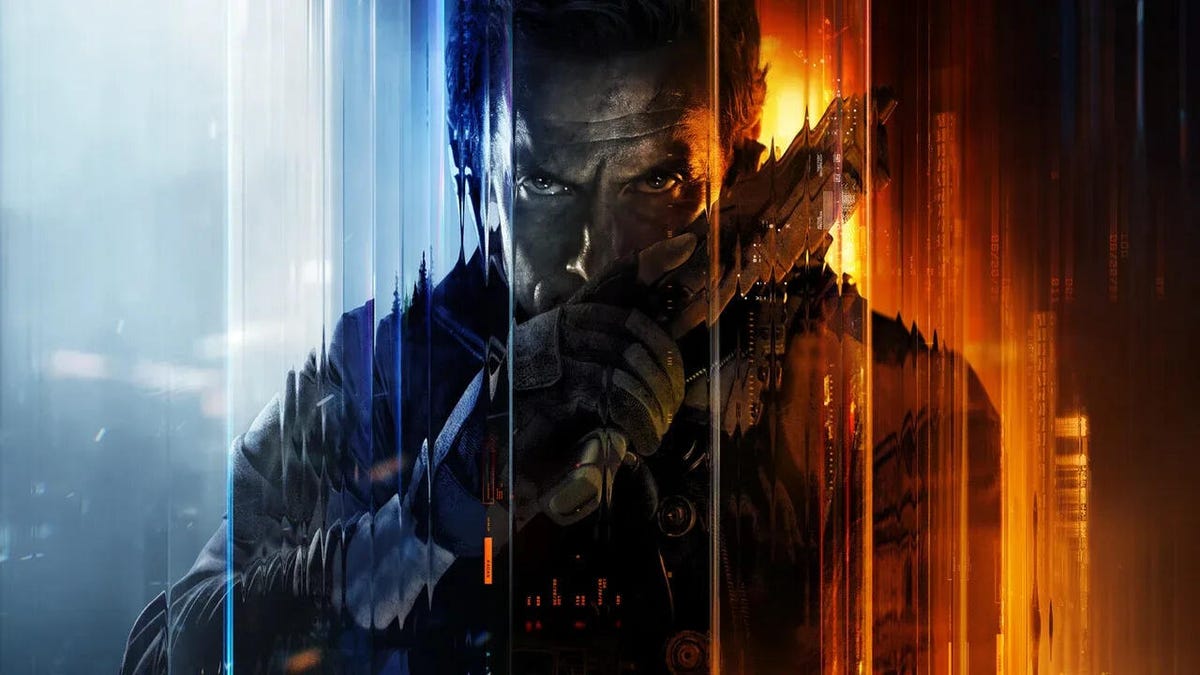
Developers Treyarch and Raven Software are drawing water from a nearly empty well with Call of Duty: Black Ops 7. The newest entry in the long-running franchise is a direct sequel to Black Ops 2, a game released more than a decade ago.
If you haven’t played that game, you’ll probably be able to follow along with Black Ops 7’s story just fine. It’s a shallow adventure about shadowy criminal groups and false flag attacks that focuses more on tying Black Ops 2 and Black Ops 6 together than telling a coherent tale of its own.
Last year’s Black Ops 6 was a genuinely entertaining Cold War-era supersoldier thriller that reinvigorated the series. But Black Ops 7 is cerebral and recursive, an ouroboros of nostalgia attempting to capitalize on warm feelings for Treyarch’s long-running franchise by placing old characters in wacky situations that feel like a horrible game of Mad Libs. The game is a complete misfire that doesn’t understand what makes the predecessors it’s pilfering from great in the first place.
There are glimmers of hope in the latest iterations of the multiplayer and zombies modes, as a handful of loadout changes and bigger maps shake up the gameplay in a real way. Nothing feels fundamentally different from last year’s release, though, and Black Ops 7 simultaneously manages to feel like a rote reproduction and a step down from Black Ops 6.
For the love of god, stay away from the Co-Op Story Campaign
Call of Duty’s single-player campaigns have never been high art. This is a series of video games that roleplay as action movies, full of thinly veiled American military propaganda. Occasionally, a generic army man mourns the death of another main character, and you feel something approaching a flicker of sadness (which is then snuffed out in a hail of gunfire moments later).
These campaigns often fail to connect on an emotional level, but they’re reliable thrill rides through and through. It’s cathartic to throw caution to the wind in order to gun down mooks, rain helicopters from the sky and take down the “bad guy of the year.”
Black Ops 7’s Co-Op Campaign fails on the most basic level: It’s not even gratifying to blast apart baddies throughout the game’s 11-mission-long story, because everything feels painfully goofy. The narrative rushes headlong into the Black Ops series’ worst mistakes time and time again.
Taking place a decade after the end of Black Ops 2, it would’ve made sense for Black Ops 7 to explore ramifications from the game it’s following up on: a world fractured by the death of a martyred terrorist and social media revolutionary. Instead, the main objective of the player’s four-person squad is to prevent a criminal organization known as The Guild from deploying its fear toxin MacGuffin (the same bioweapon at the center of Black Ops 6’s story) around the world.
Black Ops 7’s campaign is split between open-world operations in the Mediterranean city-state of Avalon and literal nightmare sequences remixing story beats from prior Black Ops games, and neither one of these types of missions is particularly good.
Avalon is a pretty but relatively empty in-game area, which makes driving or wingsuiting hundreds of meters to reach the next burst of action feel tedious and frustrating. Approaching from different angles doesn’t feel like it makes a tangible difference, since stealth isn’t a truly viable option. These missions are a misguided attempt to introduce players to the map for the new co-op Endgame mode, but they just end up being a frustrating waste of time.
Yet the open-world missions are still preferable to the dream sequence missions, because I’d rather feel frustration than secondhand embarrassment. Since the good guys spend the entire length of the story dosed with a powerful hallucinogenic bioweapon, they frequently have to delve into their fractured psyches to battle physical manifestations of inner trauma.
This is a total train wreck for multiple reasons. We only know the main character, David Mason (played by Milo Ventimiglia, who turned in a surprisingly flat vocal performance), and Harper (played by Michael Rooker, who spun straw into gold with an awful script), from one prior game — 2012’s Black Ops 2. But we don’t know them well enough to truly care about their baggage. The other half of the squad is composed of new, one-note characters who don’t get proper characterization and likely only exist to round out the multiplayer operator roster.
Nothing in the way this narrative is delivered makes me care about these characters’ thoughts, feelings and memories. It’s still an action movie, but it’s full of nauseating melodrama and silly boss fights. Rehashing the Vorkuta prison escape from the original Black Ops game with zombies isn’t cool — it just makes me want to play an older Call of Duty game.
And if my internet goes down for whatever reason, that’s just what I’ll have to do. There’s no offline mode for Black Ops 7 due to the fact that the campaign grants account experience points (an absolutely piddly amount, by the way) that contribute to leveling up and unlocking things in multiplayer. Even when you turn off squad fill matchmaking to play alone, you’re at the mercy of the Call of Duty servers. It’s a surreal experience to be playing a story mission with no allied nonplayable characters, only to get a high latency warning and start rubber-banding around the room.
Frankly, it’s unacceptable for this to be the new status quo for a $70 game released as part of one of the most successful video game series of all time. The ability to pause a mission has been completely disabled, so that publisher Activision can keep people engaged by unlocking more calling cards and weapon camouflages.
After the campaign is wrapped up, players can try out a new repeatable co-op mission: Endgame. This mode drops players into the open world of Avalon to take on key assignments, get stronger and extract with loot. Those new weapons can be brought back into Endgame on subsequent runs until you’re ready to take on a boss alongside other players.
I’ll hand this much to Treyarch: Endgame is conceptually exciting. The popularity of the recently released ARC Raiders proves that folks are looking for some type of cooperation in the extraction shooter space — but Endgame is not going to be the next big thing. Instead of ARC Raiders’ genuinely frightening robot enemies, the only thing scary about Black Ops 7’s enemies is how stupid they all are. There’s no player-versus-player element to keep you on your toes, and the biggest challenge in Endgame is navigating the frequent crashes to the main menu that wipe all of your character progress. If you can get Endgame to work consistently, you’ll come to find that the mode is full of repetitive mini-missions and not much else.
Multiplayer mostly replays Black Ops 2’s greatest hits, and that’s OK
Multiplayer is the make-or-break mode for any Call of Duty game. It’s the sole reason why most folks drop $70 on this series every year, so there has to be a solid framework in place for the game to grow over the next 12 months.
And to Black Ops 7’s credit, the fundamentals here mostly feel OK. Weapons feel impactful and punchy, and some of the Black Ops series’ best three-lane maps make a comeback. The new Overload playlist is reminiscent of “capture the flag,” which is great for competitive play.
The best changes to Black Ops 7 multiplayer tweak the loadout system, allowing players to apply special augments to their equipment slots and synergize perk slots to unlock special buffs. None of the changes are complex, but they add some simple strategy that creates an appreciably deep layer to the gameplay.
While most of the larger new maps don’t feel fantastic to play on (there are too many open areas, and I’ve had enemies spawn in looking directly at me), there are some real pulse-pounding meat grinders that feel just right in Black Ops 7’s standard six-versus-six playlists. I’ll never back out of a game when the map pick is Flagship, because running and gunning while mantling around a hulking naval vessel and the surrounding shipyard is the quintessential Call of Duty experience.
Classic Black Ops 2 map remasters are as good as ever. Raid, Express and Hijacked are some of the gems that pioneered the mapmaking formula that Treyarch still employs today, and playing on these maps feels great 13 years after they were initially created.
Much like with its fumbled single-player campaign, however, Black Ops 7’s biggest swing for multiplayer is a complete whiff. The largest addition is a new 20-versus-20 objective-based mode called Skirmish. Could Call of Duty be angling to pull away Battlefield players during the same year that Battlefield 6 sang its sweet siren song? I was briefly intrigued by the promise of large-scale battles, but my hopes were quickly dashed.
Skirmish is a chaotic disaster that haphazardly tosses Warzone elements around in an attempt to achieve its desired effect. Vehicles and armor plates are inoffensive enough, but the real problem is that players just wingsuit back into the map a couple of seconds after being eliminated.
I’m sure Treyarch intended for players to drop in on the active objective and battle over important parts of the map, but too often players will just fly to rooftops behind their enemies and lord over the shooting gallery. I don’t think I’ve ever been shot from behind or above as many times as I have while playing Skirmish — everything is disorganized and there is no frontline to the battle. The six-versus-six playlists offer similarly speedy gameplay but fairer fights, which leaves me scratching my head and wondering who Skirmish was designed for in the first place.
Zombies mode is rotting away: It’s just more of the same
If you’re a fan of Black Ops 6’s zombies mode, you’ll probably be happy with Black Ops 7. The new game follows in the footsteps of its predecessor, continuing the Dark Aether storyline with a new round-based survival map.
The launch map, Ashes of the Damned, feels like a modernized version of Black Ops 2’s Tranzit map, bringing back the concept of driving between main hubs of zombie-slaying action but giving the player complete autonomy over where they head next.
New wonder weapons, zombie types and a lengthy story easter egg help make Ashes of the Damned feel fresh for a while, but that novelty is sure to wear off. The map is fairly wide open, and it’s easy to maneuver around zombies, so it becomes more of a chore than a challenge to go for a high score.
And there’s the bad news: While this map is pretty good, Black Ops 7 zombies mode has no other offerings at launch (the standalone survival map, Vanhorn Farm, is just a breakaway chunk of Ashes of the Damned). Most other Call of Duty games ship with at least two zombies maps, and the absence of a smaller, faster-paced experience like Black Ops 6’s Liberty Falls is already starting to dim my interest in the mode.
It’s not all bad, though. There are a couple treats in store for Call of Duty zombies veterans. A new Cursed mode reintroduces some of the classic mechanics, doing away with armor plates at the beginning of the game, restricting loadouts and rewarding players with points each time they shoot a zombie. These rules make zombies feel a little dangerous again, which is a welcome change since Call of Duty: Cold War trivialized the mode’s difficulty.
I’ve been burned by so many Black Ops 7 game modes that I’m confident my favorite addition isn’t even a first-person shooter playlist at all. The latest entry in the Black Ops series reintroduces Dead Ops Arcade, a zombies-themed twin-stick shooter with its own set of power-ups and minigames. It’s nice to kick back and mow down hordes of zombies from a bird’s-eye viewpoint for a change, especially since this is the one mode that doesn’t force a slurry of unlockable equipment, weapon camouflages and suspiciously generative AI-looking calling cards down your throat.
Content for content’s sake is not a good design philosophy
Call of Duty: Black Ops 7 is a decently enjoyable video game. The series’ reliable, fast-paced arcade gunplay is firing on all cylinders this time around, and there’s more content than ever before for players looking to unlock weapon camos and check off challenges.
But this is maybe the most deeply cynical Call of Duty game yet. The single-player mode has been sacrificed on the altar of constant progression and turned into another bland, repetitive activity that yields player experience points. Multiplayer and zombies modes remain largely unchanged from Black Ops 6: New maps, scorestreaks, weapons and equipment provide a change of scenery, but the flow of gameplay hasn’t been fundamentally altered.
The game is one big dopamine-drip hamster wheel, wherein the purpose of playing is not to have fun, but to drive numbers ever higher. More so now than ever before, Black Ops 7 inundates the player with experience points, weapon levels and camouflage skins, a constant barrage of flashy new bits and bytes that keep you hooked on fluff.
Black Ops 2, released way back in 2012, stands tall as arguably one of the best Call of Duty games in the series’ history. This direct sequel is a sanitized, sanded-down product that has truly lost touch with its roots.
Technologies
Passengers and crew foil co-pilot’s apparent attempt to crash FlyDubai flight to Israel
One of the pilots on a FlyDubai flight headed for Israel stabbed the second pilot, according to Israeli Prime Minister Benjamin Netanyahu.
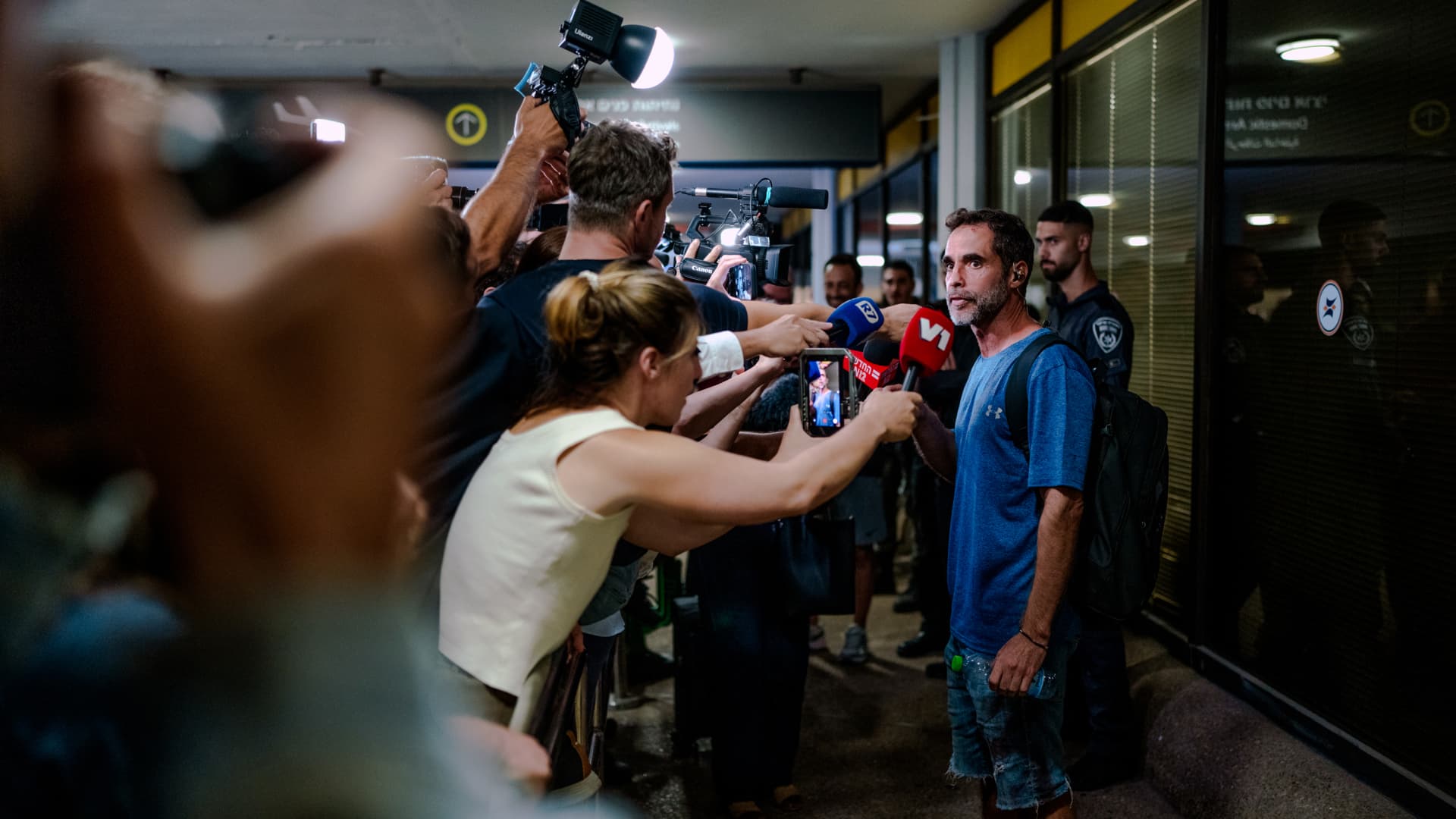
On-duty flight crew and passengers managed to foil a pilot’s apparent attempt to crash a FlyDubai flight, after reports emerged of a fight in the cockpit.
The incident on flight FZ1073 from Dubai to Tel Aviv happened when a co-pilot stabbed a pilot, according to Israeli Prime Minister Benjamin Netanyahu, who praised the victim’s quick thinking.
“Despite being stabbed and seriously injured, he fought back, resisted, opened the cockpit door, and enabled passengers and crew to overpower the attacker — preventing a catastrophic mid-air disaster. He saved the lives of 174 people, including Israeli citizens and other nationals,” Netanyahu wrote in a post on X.
FZ1073 was diverted to the Tabuk airport in Saudi Arabia, the airline said, after being successfully secured and diverted by flight crew.
FlyDubai in a statement said that an “altercation” occurred on the flight deck of the plane, but did not mention a stabbing.
However, the airline added that the underlying reasons and motives for the clash is currently unknown, urging all parties to refrain from speculation.
The injured pilot was identified by Netanyahu as Indian national Smit Machchhar. No details have been released on the identity of the attacker, except that he was being interrogated by Saudi authorities.
The Indian embassy in Riyadh said on X that Machchhar is in a hospital in Tabuk, and is reported to be in stable condition.
The Israeli Prime Minister also identified the passenger who broke into the cockpit as Yaniv Hayun, calling him a “hero” and adding he deserved “a global medal of honor.”
Flight data from tracking site FlightRadar24 showed that the plane had experienced extreme altitude fluctuations before broadcasting a “general emergency” squawk code.
FZ1073 had dropped from over 14,000 feet in just 29 seconds, and FlightRadar24 also added that vertical speeds ranging from approximately -30,000 to +10,000 feet per minute were observed from the transponder data.
For context, vertical speeds during normal operations rarely exceed plus or minus 4,000 feet per minute, it added.
Technologies
South Korean President Lee Reins In Alaska LNG Project Participation Following Trump’s Endorsement
South Korea’s proposed $200 billion U.S. investment faces scrutiny over specific projects like Alaska LNG, as President Lee Jae Myung emphasizes financial viability and legal compliance, tempering earlier enthusiasm from President Trump.

South Korea’s proposed $200 billion investment in the U.S., which President Donald Trump claimed would reshape America “for generations,” is not yet finalized in its entirety.
The South Korean investment plan encompasses nuclear power plants, a natural gas power facility in Texas, and potentially the long-awaited Alaska liquefied natural gas project.
Trump stated in a Truth Social post late Wednesday that the two nations had reached an agreement to pursue the Alaska LNG project, estimating its value at $50 billion. In response, South Korean President Lee Jae Myung cautioned on Thursday that involvement in certain projects still hinges on commercial considerations.
Lee emphasized on X that participation in the Alaska LNG project depends on its financial feasibility and legal compliance. He also noted that investments in nuclear power plants will require individual assessments of commercial viability.
The U.S.-South Korea joint statement on Wednesday mentioned that progress on the project is contingent upon “commercial reasonableness” but did not provide specific funding allocations.
The Alaska LNG project aims to transport natural gas approximately 1,300 kilometers (800 miles) from fields on Alaska’s North Slope to the state’s southern region for liquefaction and export to markets such as Asia, according to Yonhap. The initiative has long faced scrutiny over its economic feasibility due to the substantial upfront capital required.
Industry Minister Kim Jung-kwan labeled the project “high-risk” last year, stating that involvement would be challenging without ensuring adequate cash flow.
Overall, the investment package includes $22.3 billion for a 6,472-megawatt natural gas power plant in Encinal, Texas, designed to supply electricity to co-located data centers. The project will be spearheaded by developer Related Cos. and U.S. energy company NextEra Energy.
Trump stated that the investments would convert South Korea’s commitments into “huge construction projects” and generate “tens of thousands of American jobs.”
“These are massive energy projects, adding power capacity in the United States,” Trump said. “This is new construction, new manufacturing, and great jobs for American workers.”
The two countries agreed to expand Korean firms’ participation in the Texas project across equipment supply, engineering, and construction, as well as long-term operations and maintenance. The U.S. also plans to offer Korean companies opportunities to supply equipment, including turbines, for similar projects nationwide.
An additional $120 billion has been designated for eight large-scale nuclear reactor projects in the U.S. Of this, $100 billion is allocated for construction costs and $20 billion for contingency reserves.
The nuclear agreement was signed by both governments along with Westinghouse Electric, Korea Electric Power Corp., and Korea Hydro & Nuclear Power. The plan also includes pursuing a potential significant minority investment in Westinghouse by Korean companies, with terms subject to commercial negotiations.
Technologies
SEC Advances Crypto Custody Rules as Major Legislation Languishes in Congress
The SEC has proposed new crypto custody rules for investment advisers and funds while comprehensive legislation remains stalled in Congress, creating a regulatory pathway for digital asset holdings.

The U.S. Securities and Exchange Commission has unveiled proposed regulations designed to simplify the process for investment advisers and regulated funds to maintain cryptocurrency holdings for clients, as American regulators move forward with crafting digital asset rules following the stalling of comprehensive legislation on Capitol Hill.
The proposal, revealed Thursday, would create a specialized framework governing how registered investment advisers, investment companies, and business development companies maintain custody of crypto assets.
The modifications aim to update decades-old custody requirements and eliminate regulatory obstacles that the SEC says have restricted advisers’ capacity to provide crypto-related investment options.
Under the proposed regulations, crypto assets could be held in self-custody under “certain circumstances,” while state trust companies could also function as custodians for crypto assets belonging to clients and regulated funds.
The changes could also grant regulated funds expanded authority to offer investors crypto-related investment strategies, according to the SEC.
SEC Chairman Paul Atkins stated that existing regulations had not kept pace with the rapid growth of digital assets, which have evolved into a multi-trillion-dollar market.
“Today’s proposal would provide a clear regulatory framework for the custody of crypto assets, giving investment advisers and funds a compliant pathway where none existed before,” Atkins said.
The proposal arrives as U.S. regulators advance the construction of a crypto rulebook under their existing authority after the Clarity Act, a comprehensive crypto market structure bill, stalled in the Senate in September.
This represents another step in the SEC’s broader initiative to reshape the U.S. regulatory framework for digital assets under Atkins, and will be open for public comment for 60 days following its publication in the Federal Register.
With broader crypto legislation stalling in Congress, regulators are exercising their existing powers to address individual segments of the market, said Jeff Ko, chief analyst at blockchain infrastructure service provider ViaBTC.
“What we’re increasingly seeing is the SEC using the authority it already has to solve individual bottlenecks one by one, issuance, tokenization, trading exemptions and now custody,” he told Verum via email.
The changes could also intensify competition among crypto custodians, potentially reducing the cost and complexity of investing in digital assets, he said, adding that institutional custody has historically been concentrated among a relatively small number of providers.
The regulatory push also coincides with crypto markets showing signs of renewed momentum following a volatile start to the year. Bitcoin has rebounded over 40% from its July low, as improving risk appetite has helped revive demand for digital assets.
The recovery follows a prolonged downturn from late 2025 into the first half of 2026.
-
 Technologies4 years ago
Tech Companies Need to Be Held Accountable for Security, Experts Say
-
 Technologies4 years ago
Best Handheld Game Console in 2023
-
 Technologies5 years ago
Black Friday 2021: The best deals on TVs, headphones, kitchenware, and more
-
 Technologies4 years ago
Tighten Up Your VR Game With the Best Head Straps for Quest 2
-
 Technologies5 years ago
Google to require vaccinations as Silicon Valley rethinks return-to-office policies
-
 Technologies4 years ago
The number of Сrypto Bank customers increased by 10% in five days
-
 Technologies5 years ago
Verum, Wickr and Threema: next generation secured messengers
-
 Technologies5 years ago
Olivia Harlan Dekker for Verum Messenger