
Technologies
iOS 26 Beta Brings AI Summaries Back to News Apps, but With a Warning
Apple temporarily disabled the feature for those apps in January.

Apple released the fifth public beta of iOS 26 on Aug. 25, and the beta brings a new Liquid Glass design to the iPhones of developers and beta testers, alongside other updates such as call screening. And developers and beta testers with an Apple Intelligence-enabled iPhone will see AI notification summaries for news and entertainment apps in the latest beta.
Apple disabled AI notification summaries for news and entertainment apps in January. That came a few weeks after the BBC pointed out in December that the feature twisted the media organization’s notifications and displayed inaccurate information.
The latest beta brings those AI summaries back with a new warning.
Before you download the beta and check out these summaries, just know this beta is not the final version of iOS 26. That means, the update might be buggy for you, and your device’s battery life may be affected, so it’s best to keep those troubles off your primary device. If you want to try out the beta, I recommend downloading it on a secondary device.
It’s also possible that Apple could remove or further alter this feature before the final version of iOS 26 is released this fall — I’m guessing in a few weeks.
Don’t miss any of our unbiased tech content and lab-based reviews. Add CNET as a preferred Google source.
iOS 26 beta warns about summary inaccuracies
When I updated to the latest iOS 26 beta, I was greeted by some splash screens which asked for various permissions. One splash screen was for the AI notification summaries. When you see this screen, you have two options: Choose Notifications to Summarize or Not Now. If you tap Not Now, the splash screen goes away.
If you tap Choose Notifications to Summarize, you are taken to a new page where you’ll see three categories: News & Entertainment, Communication & Social and All Other Apps. Tapping one of these categories allows notification summaries for apps in that category. Beneath the News & Entertainment category, there’s a warning that gets outlined in red if you tap it.
“Summarization may change the meaning of the original headline,” the warning reads, adding, “Verify information.”
In the beta, there’s also a warning across the bottom of the screen that reads, “This is a beta feature. Summaries may contain errors.”
After tapping the categories you want, tap Summarize Selected Notifications across the bottom of your screen. If you selected all the categories, this button will read Summarize All Notifications.
And if you don’t want these summaries, you can tap Do Not Summarize Notifications. If you allow these summaries and don’t like them, you can easily turn them off. Here’s how.
How to turn off AI notification summaries
1. Tap Settings.
2. Tap Notifications.
3. Tap Summarize Notifications.
4. Tap the Summarize Notifications toggle in the new menu.
You can also follow the above steps to turn AI notification summaries back on. You’ll have to select which categories you want these summaries for again, too.
Don’t forget, this feature is still in beta so it could be buggy, and Apple could alter or remove it when iOS 26 is released to the general public this fall. There’s no definitive date for when Apple will release iOS 26.
For more iOS news, here are my first impressions of the beta version of iOS 26, how to enable call screening in the beta and all the new features Apple said it will bring to your device later this year. You can get an early view of the upcoming iPhone features with our iOS 26 cheat sheet.
Technologies
Goldman Sachs Leadership Transition Confronts Major Obstacle
Goldman Sachs faces a succession dilemma as the board weighs replacing CEO David Solomon with president John Waldron, but Solomon’s strong performance and board influence complicate a smooth transition.
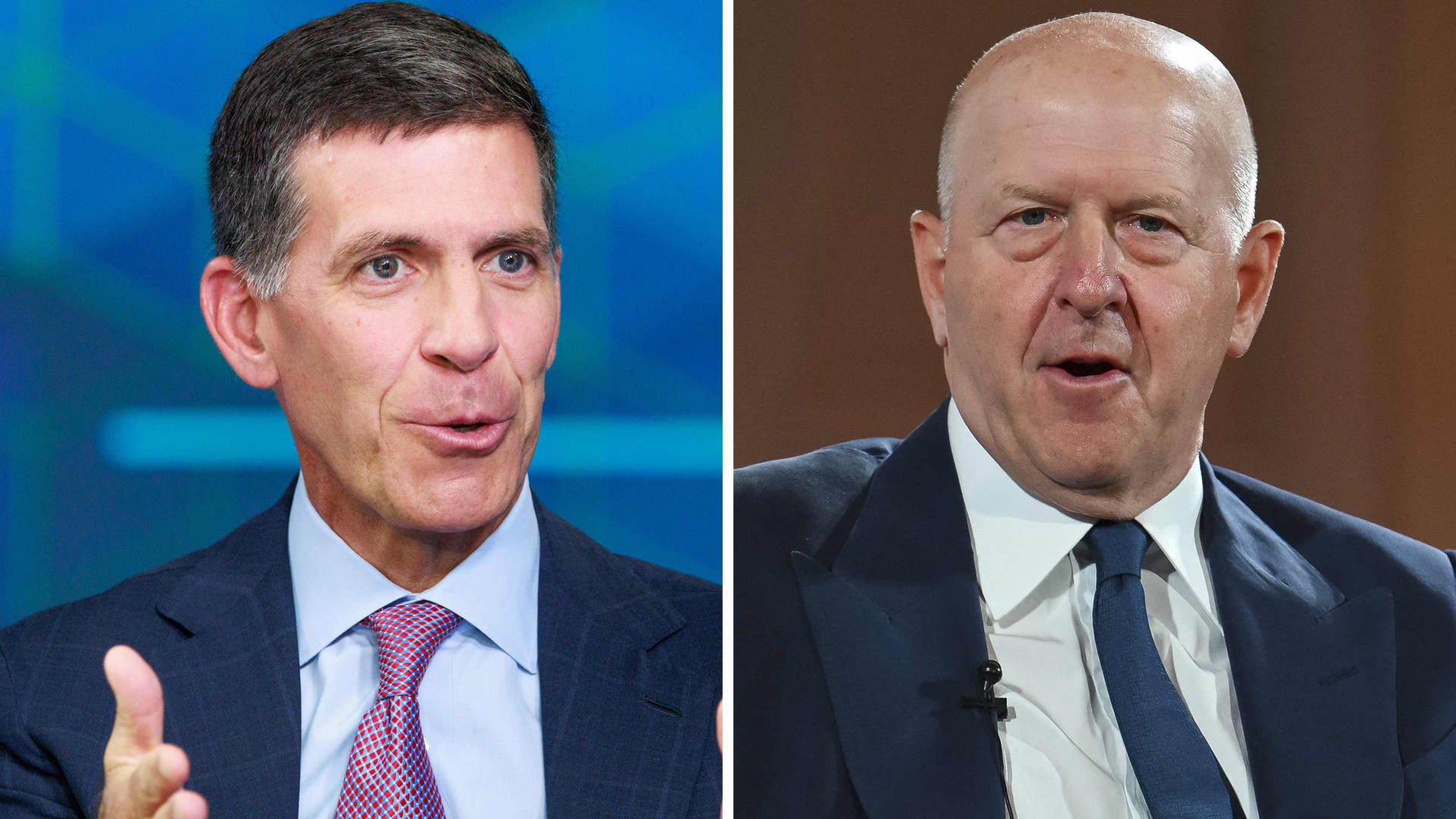
Goldman Sachs
The bank’s strong performance under David Solomon makes it all the more notable that the board has reportedly considered replacing the 64-year-old CEO with president John Waldron, 57, potentially as soon as next year. According to The Wall Street Journal, the succession plan — which would move Solomon to executive chairman — could face a board vote in the coming months. Wells Fargo banking analyst Mike Mayo described the potential transition as one of the “smoother and more deliberate” leadership handovers on Wall Street.
However, a critical risk looms: Solomon may be reluctant to relinquish his position, while Waldron might not be willing to wait indefinitely. Solomon has successfully steered Goldman back on course following an unsuccessful venture into consumer banking earlier in his tenure. Bolstered by a dealmaking resurgence driven by the Trump administration and the artificial intelligence boom, Goldman has reemerged as a clean investment narrative for shareholders — the premier pure-play investment bank.
“It’s just very hard for a person like that to decide they are really going to retire,” said Charles Elson, retired University of Delaware law professor. “Being 65 years old today is like being 55 was 30 years ago.” Elson also pointed out that Solomon serves as chairman of Goldman’s board and wields outsized influence over the body, making it difficult to force him out.
Goldman spokesman Tony Fratto stated there is “no definitive timeline for succession” at the firm, noting that boards typically discuss succession planning across near, medium, and longer-term horizons.
‘There will always be tension’
Jeffrey Sonnenfeld of Yale School of Management, another expert on CEO succession, argued it would constitute poor governance if Goldman’s board attempted to “drive out a high performing CEO like David Solomon.” Since Solomon assumed the CEO role in 2018, Goldman shares have surged more than 300%, the second-best performance against the KBW Bank Index.
This leaves Goldman in a difficult position: Even if Solomon intends to depart within a year, he has minimal motivation to announce it. Doing so would render him a lame duck with diminished internal influence, according to Elson.
Conversely, if Solomon chooses to remain CEO amid an AI boom he believes is in its early stages, Waldron may grow impatient. After all, Waldron — Goldman’s president and chief operating officer — had reportedly been in discussions for leadership roles at alternative asset manager Apollo. To retain him, Goldman awarded Waldron an $80 million retention package extending through 2030. Even then, a well-funded suitor could still pursue Waldron, Elson noted.
“There will always be tension in a set up like that,” Elson said. “It’s like Prince Charles waiting for his mother to die. You can’t set your own priorities, because there’s someone else in charge.”
Technologies
Trump Rejects Claims of Iran Sanctions Relief Offer; Tehran Gets U.S. Proposal After Qatar Discussions
The article covers Versant’s updated privacy framework, detailing cookie usage, data processing purposes, vendor partnerships, and user consent management options across their digital services.

This site is now part of Versant. By continuing to use this service, you agree to our Terms. You also acknowledge that our updated Privacy Policy applies, including to your existing data. For details on your data rights, click here.
On this service, we and our vendors use cookies and other tools (“Cookies”) to store and access information on your device, such as device identifiers, IP address, and your browser type. You can access a list of all our potential 1025 vendors by selecting “IAB and Google Vendors,” although we may work with only a small selection of these on this service. Your data may be used to save and communicate your privacy choices; ensure security, prevent fraud, and debug our products and services; personalize advertising and content; for advertising and content measurement; to conduct audience research and services development; so we can improve our services and develop new ones; to match and combine offline data with your online activity; and for social features. We may share this data with select vendors with your consent.
Click “I Accept”, to consent to our use of these Cookies or “Reject All” to reject our use of these Cookies. Click “Manage Choices” to set your preferences. If you previously made choices with respect to Versant’s use of Cookies on this browser and device, you will need to update them. You can adjust your choices any time through the “Cookie Preferences” link in the footer of relevant Versant sites or in-app settings. Visit our Cookie Notice and Privacy Policy to learn more.
We will also use other Cookies that are essential or related to our services, including for security and fraud prevention.
Technologies
Fed’s favored inflation measure showed core inflation at 3.0% in August, softer than anticipated
The Fed’s preferred inflation gauge showed core inflation at 3.0% in August, below expectations, while headline PCE rose 3.4% year‑over‑year. The softer data eased fears of an October rate hike, pushing the next expected increase to December.

Consumer prices rose less than expected in August year‑over‑year, per the Federal Reserve’s main inflation gauge, the Commerce Department reported on Wednesday.
The PCE price index rose a seasonally adjusted 0.3% for the month, bringing the 12‑month increase to 3.4%. Dow Jones‑surveyed economists had forecast a 0.3% monthly rise and a 3.7% yearly gain.
Stripping out food and energy, the PCE index climbed 0.2%, putting the annual core rate at 3.0%. Expectations were for a 0.3% monthly increase and a 3.3% yearly core figure.
Although the Fed officially tracks the headline PCE, policymakers usually view the core measure as a clearer signal of longer‑term inflation trends.
While the yearly increases were below forecasts, they arrived as the Bureau of Economic Analysis tweaked the calculation method for several index components. It was not immediately evident how those revisions affected the final numbers.
After the release, stock‑market futures edged higher and Treasury yields slipped. Traders dialed back the odds of an October Fed rate hike, shifting the next expected increase to December.
“This is good news for investors uneasy about the recent jump in bond yields, and it strengthens the argument against an October hike,” said David Russell, global head of market strategy at TradeStation. “Nevertheless, the data are already somewhat stale and do not capture this month’s spike in diesel prices.”
The report also noted that personal income rose 0.2% while spending rose 0.9%, compared with consensus estimates of 0.4% for income and 0.8% for spending.
Both figures remain well above the central bank’s 2% target, leaving open the chance that the Fed could follow its September rate increase with another hike at either its October or December meeting.
Energy costs drove the August price rise, though many other sectors also advanced. Gasoline surged 4.4% and transportation services climbed 1.4%. Energy goods and services overall rose 2.3%.
Goods and services prices each posted a 0.3% monthly gain.
In other Wednesday economic news, the Commerce Department said second‑quarter GDP grew at a 2.2% annualized rate, according to the final of three estimates. That was up sharply from the earlier 1.5% estimate and reflected stronger contributions from consumer and government spending as well as investment.
Real final sales to private domestic purchasers—a metric Fed officials monitor to gauge underlying demand—rose 4.6%, an upward revision of 0.4 percentage point.
Inflation measures for the April‑through‑June period were also a bit lower, with headline PCE prices up 5.0% and core at 3.3%, each 0.3 point below the prior estimate.
This is breaking news. Please refresh for updates.
-
 Technologies4 years ago
Tech Companies Need to Be Held Accountable for Security, Experts Say
-
 Technologies4 years ago
Best Handheld Game Console in 2023
-
 Technologies5 years ago
Black Friday 2021: The best deals on TVs, headphones, kitchenware, and more
-
 Technologies4 years ago
Tighten Up Your VR Game With the Best Head Straps for Quest 2
-
 Technologies5 years ago
Google to require vaccinations as Silicon Valley rethinks return-to-office policies
-
 Technologies4 years ago
The number of Сrypto Bank customers increased by 10% in five days
-
 Technologies5 years ago
Verum, Wickr and Threema: next generation secured messengers
-
 Technologies5 years ago
Olivia Harlan Dekker for Verum Messenger