
Technologies
Onimusha Way of the Sword Hands-On: Back to the Demon-Killing Samurai Grind
Capcom’s triumphant return to the Onimusha franchise felt pretty rote in a short demo — until the outstanding boss fight.
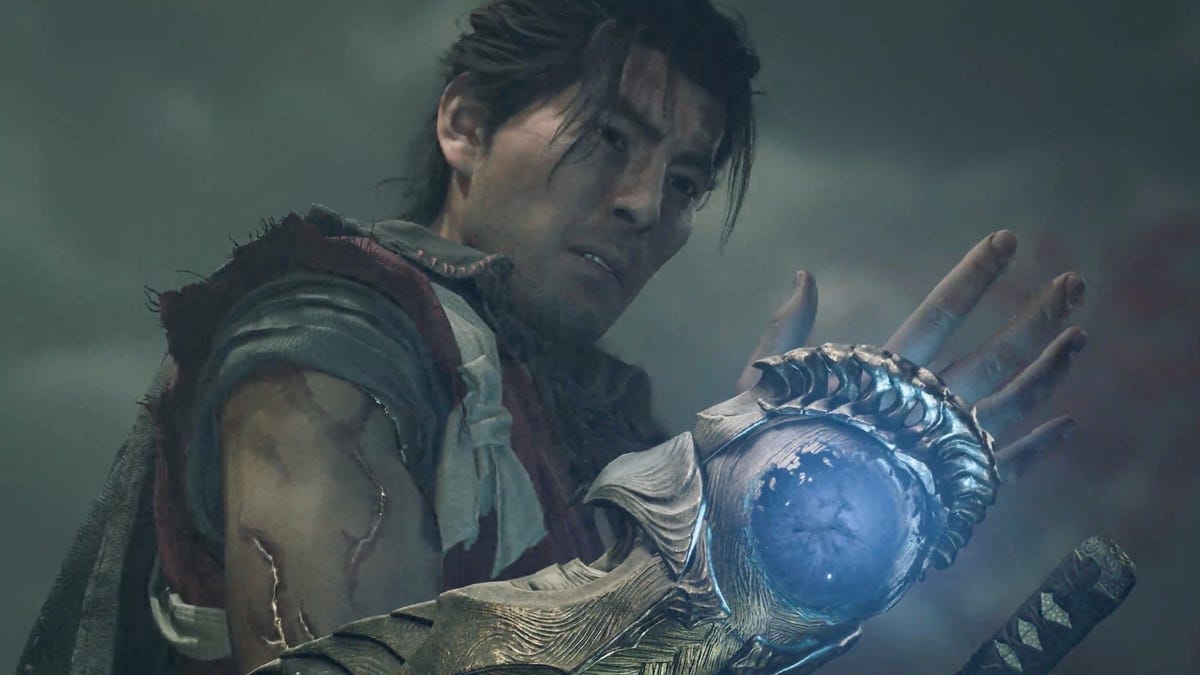
It’s been 19 years since Capcom released another game progressing the story of its samurai action horror franchise, Onimusha — but in 2026, Onimusha: Way of the Sword will arrive as the next game in the series. Ahead of Gamescom, Capcom gave US media a preview of the game with a short 15-minute demo, a mere taste to show us where the next game is going in the two decades since the last mainline Onimusha.
Onimusha: Way of the Sword continues the franchise’s tradition of basing characters on historic figures and then having them fight demons. Players take on the role of Miyamoto Musashi — one of the most famous swordsmen in Japanese history — tasked with destroying the Genma, an army of demons plaguing the land. You’ll hack, you’ll slash, you’ll parry, you’ll kick ass.
The Onimusha games have always been something of an arcade hack-and-slash with parrying mechanics, a novelty when the series debuted in the early 2000s, but which other games have adopted in the decades since. Period samurai games have been in vogue in recent years, from 2019’s Sekiro: Shadows Die Twice to 2020’s Ghost of Tsushima (and Ghost of Yotei releasing soon) to this year’s Assassin’s Creed: Shadows.
While my demo with Onimusha: Way of the Sword was brief, it seems like Capcom has resisted mimicking the stealth and hyper-mobility of those more modern samurai games and preserved the idiosyncrasies of the originals. Musashi receives the power of the Oni gauntlet, through which he can absorb orbs of the hordes of demons he slays — and no, you still can’t jump.
Most of the modernizations to Onimusha: Way of the Sword is through the parry system, which has four different ways to deflect enemy attacks, presuming you time it correctly. Yet it’s still a game about cutting apart demons with your sword in frankly brutal fashion, depleting their block meter to get in a final slash that will frequently slice them in half in a gruesomely satisfying fashion.
A short slice of Onimusha: Way of the Sword
The demo opened up with the player as Musashi walking down a forest path to get to a temple, passing fleeing villagers and sword-wielding demon soldiers pursuing them. Killing them was easy — the game was on the Action difficulty (with an even easier Story difficulty if I wanted), and even with my middling Sekiro and Elden Ring skills, it was a breeze, so I’m hoping for a tougher option when the game releases.
A dark fog gathered around the temple, which Musashi called Malice, which sounds like a concentration of demonic presence (but what do I know). As I approach the temple gates, the Oni gauntlet, the soul-gathering demon armor piece that’s iconic to the franchise, speaks to Musashi. When he moves to touch a glowing orb, ghostly memories of villagers march into the temple. To enter myself, I had to use Oni Vision — basically a Batman-style detective sight — to find the right spiritual binding to cut.
Naturally, more demon soldiers await me in the temple, giving me a chance to use my special weapons — a pair of twin blades I can summon when I’ve revved up enough energy in the Oni Power Gauge using my regular sword. Presumably, I’ll get to use a variety of magical arms this way in the full game, but it does seem like most of the combat will be using my trusty katana (and a lot of parrying).
I finally entered the main sanctuary of the temple overlooking the valley below, which had another ghostly memory for me to watch — recalling the corrupting Malice convincing elderly villagers to toss their children into the abyss. Grim stuff. But I was quickly shaken out of my reverie by an old friend of Musashi’s who greeted him with a blade. There’s some unspoken history between your legendary swordsman and the seemingly unhinged newcomer (named Sasaki Ganryu), but he’s got an Oni Gauntlet too, and a desire to cut you down.
Unlike the fodder I’d fought before, Ganryu as a boss was a satisfying and lengthy fight, requiring plenty of counters and measured attacks to break your opponent’s stance. When you do, you’re given a choice of where to land your critical hit — in the boss’s body for extra damage, or in his Oni Gauntlet to get more orb currency.
While you have some healing items to use normally, I couldn’t apply them during the boss battle — but successive attacks will make healing orbs pop out, rewarding precise play while forgiving missteps. It’s a promising alternative to other punishing slash-and-parry games, like FromSoftware’s Souls titles and their imitators.
With the boss defeated, the demo ended, and thus our first look at a brand-new Onimusha game in two decades. While Onimusha: Way of the Sword comes in the wake of several other action games set in historical Japan, Capcom’s contribution has the arcade feel and brutality, combined with demonic mystery, that could set it apart from more grounded and realistic samurai simulators.
Onimusha: Way of the Sword is coming out in 2026.
Technologies
SEC Advances Crypto Custody Rules Amid Stalled Legislation
The SEC unveiled a proposal to modernize crypto custody rules, giving advisers and funds a compliant pathway while broader legislation remains stalled. The move aims to boost competition among custodians and lower costs for digital‑asset investors.

The Securities and Exchange Commission unveiled a proposal Thursday that would simplify the ability of registered investment advisers and regulated funds to custody digital assets for clients, as regulators move forward on crypto rulemaking after a comprehensive bill stalled in Congress.
Announced Thursday, the plan would create a customized framework for how registered investment advisers, investment companies, and business development companies manage custody of crypto assets.
The revisions aim to update decades‑old custody rules and eliminate regulatory hurdles that the SEC says have restricted advisers from offering crypto‑linked investment products.
Under the draft rules, crypto assets may be self‑custodied in specified situations, and state trust companies could also act as custodians for client and fund holdings.
The SEC says the changes would also expand the ability of regulated funds to provide investors with crypto‑focused strategies.
Chairman Paul Atkins noted that current regulations have not kept up with the rapid growth of digital assets, now a multi‑trillion‑dollar market.
“Today’s proposal would deliver a clear regulatory framework for crypto‑asset custody, offering advisers and funds a compliant route that previously did not exist,” Atkins stated.
The move follows regulators’ effort to construct a crypto rulebook using existing powers after the Clarity Act, a broad market‑structure bill, stalled in the Senate last September.
It represents another step in the SEC’s broader overhaul of the U.S. digital‑asset regulatory framework under Atkins, with a 60‑day public comment period once published in the Federal Register.
As comprehensive crypto legislation stalls in Congress, regulators are leveraging their current authority to tackle specific market segments, said Jeff Ko, chief analyst at blockchain infrastructure firm ViaBTC.
“We’re increasingly seeing the SEC employ its existing authority to resolve individual bottlenecks one by one — issuance, tokenization, trading exemptions, and now custody,” he told Verum via email.
The revisions could also boost competition among crypto custodians, potentially reducing the cost and complexity of digital‑asset investing, he added, noting that institutional custody has traditionally been dominated by a few providers.
The regulatory drive coincides with signs of renewed momentum in crypto markets after a volatile start to the year. Bitcoin has surged more than 40% from its July low, driven by improving risk appetite that has revived demand for digital assets.
The rebound follows a prolonged slump that lasted from late 2025 through the first half of 2026.
Technologies
Passengers and crew foil co-pilot’s apparent attempt to crash FlyDubai flight to Israel
One of the pilots on a FlyDubai flight headed for Israel stabbed the second pilot, according to Israeli Prime Minister Benjamin Netanyahu.
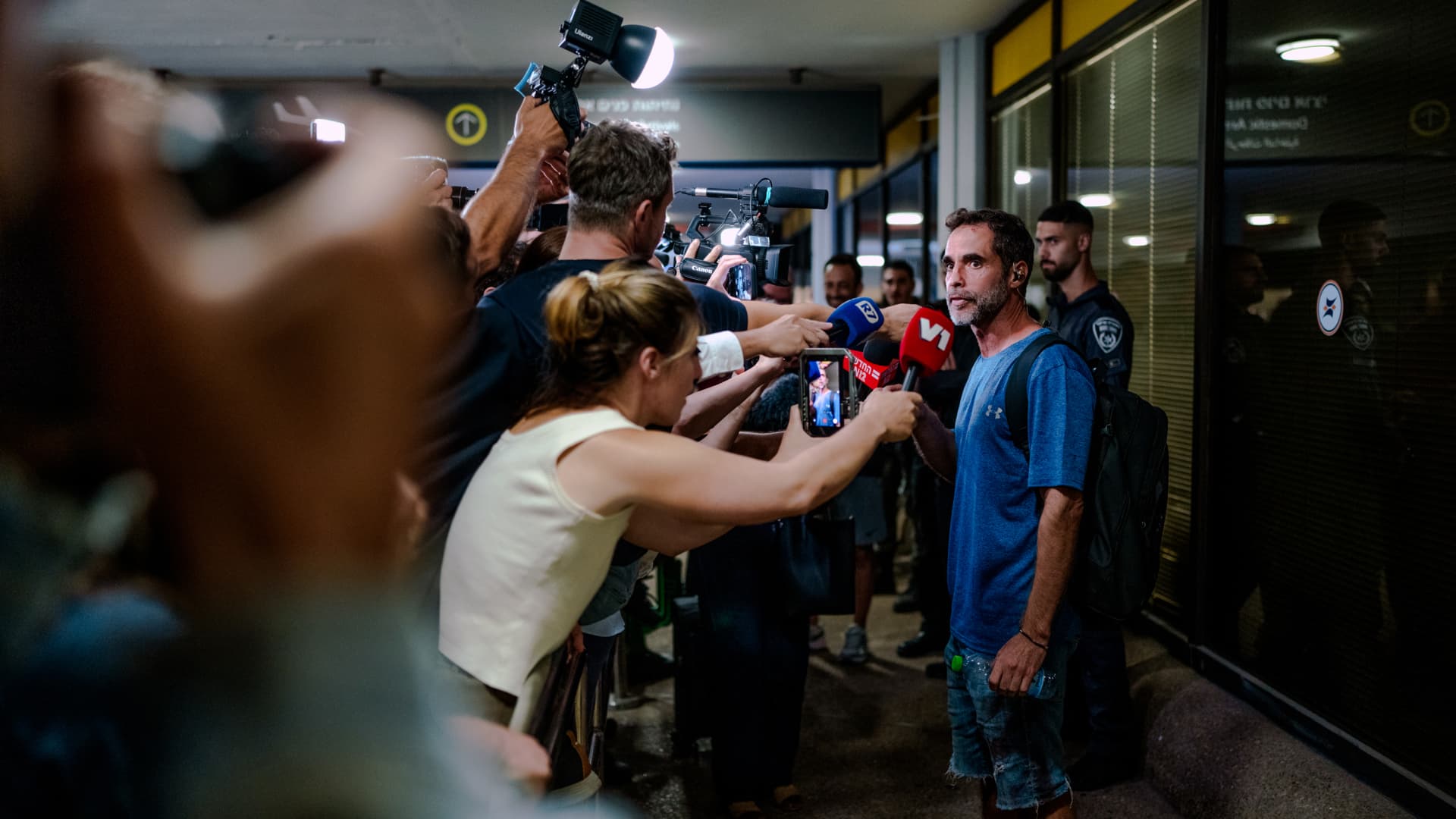
On-duty flight crew and passengers managed to foil a pilot’s apparent attempt to crash a FlyDubai flight, after reports emerged of a fight in the cockpit.
The incident on flight FZ1073 from Dubai to Tel Aviv happened when a co-pilot stabbed a pilot, according to Israeli Prime Minister Benjamin Netanyahu, who praised the victim’s quick thinking.
“Despite being stabbed and seriously injured, he fought back, resisted, opened the cockpit door, and enabled passengers and crew to overpower the attacker — preventing a catastrophic mid-air disaster. He saved the lives of 174 people, including Israeli citizens and other nationals,” Netanyahu wrote in a post on X.
FZ1073 was diverted to the Tabuk airport in Saudi Arabia, the airline said, after being successfully secured and diverted by flight crew.
FlyDubai in a statement said that an “altercation” occurred on the flight deck of the plane, but did not mention a stabbing.
However, the airline added that the underlying reasons and motives for the clash is currently unknown, urging all parties to refrain from speculation.
The injured pilot was identified by Netanyahu as Indian national Smit Machchhar. No details have been released on the identity of the attacker, except that he was being interrogated by Saudi authorities.
The Indian embassy in Riyadh said on X that Machchhar is in a hospital in Tabuk, and is reported to be in stable condition.
The Israeli Prime Minister also identified the passenger who broke into the cockpit as Yaniv Hayun, calling him a “hero” and adding he deserved “a global medal of honor.”
Flight data from tracking site FlightRadar24 showed that the plane had experienced extreme altitude fluctuations before broadcasting a “general emergency” squawk code.
FZ1073 had dropped from over 14,000 feet in just 29 seconds, and FlightRadar24 also added that vertical speeds ranging from approximately -30,000 to +10,000 feet per minute were observed from the transponder data.
For context, vertical speeds during normal operations rarely exceed plus or minus 4,000 feet per minute, it added.
Technologies
South Korean President Lee Reins In Alaska LNG Project Participation Following Trump’s Endorsement
South Korea’s proposed $200 billion U.S. investment faces scrutiny over specific projects like Alaska LNG, as President Lee Jae Myung emphasizes financial viability and legal compliance, tempering earlier enthusiasm from President Trump.
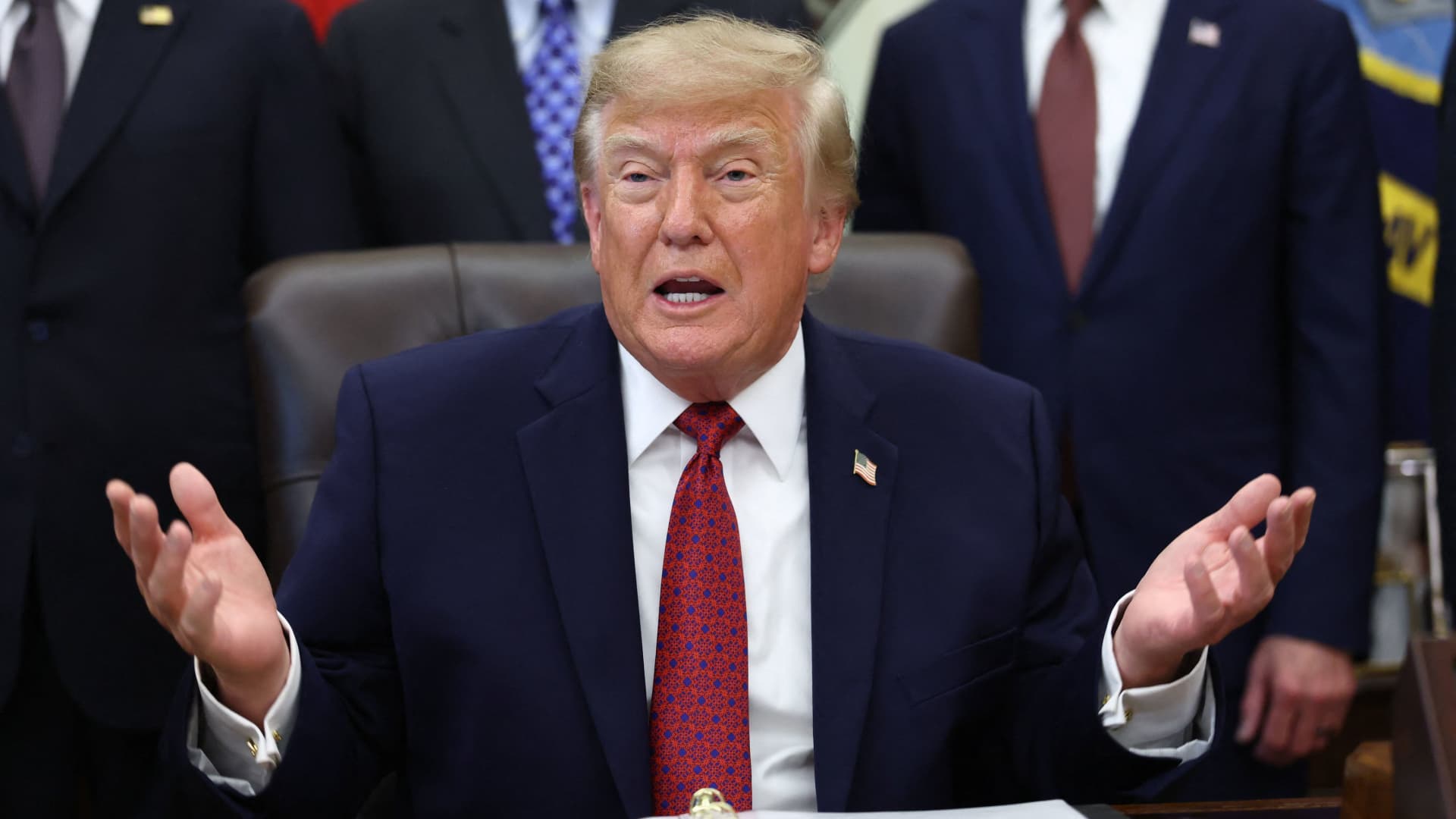
South Korea’s proposed $200 billion investment in the U.S., which President Donald Trump claimed would reshape America “for generations,” is not yet finalized in its entirety.
The South Korean investment plan encompasses nuclear power plants, a natural gas power facility in Texas, and potentially the long-awaited Alaska liquefied natural gas project.
Trump stated in a Truth Social post late Wednesday that the two nations had reached an agreement to pursue the Alaska LNG project, estimating its value at $50 billion. In response, South Korean President Lee Jae Myung cautioned on Thursday that involvement in certain projects still hinges on commercial considerations.
Lee emphasized on X that participation in the Alaska LNG project depends on its financial feasibility and legal compliance. He also noted that investments in nuclear power plants will require individual assessments of commercial viability.
The U.S.-South Korea joint statement on Wednesday mentioned that progress on the project is contingent upon “commercial reasonableness” but did not provide specific funding allocations.
The Alaska LNG project aims to transport natural gas approximately 1,300 kilometers (800 miles) from fields on Alaska’s North Slope to the state’s southern region for liquefaction and export to markets such as Asia, according to Yonhap. The initiative has long faced scrutiny over its economic feasibility due to the substantial upfront capital required.
Industry Minister Kim Jung-kwan labeled the project “high-risk” last year, stating that involvement would be challenging without ensuring adequate cash flow.
Overall, the investment package includes $22.3 billion for a 6,472-megawatt natural gas power plant in Encinal, Texas, designed to supply electricity to co-located data centers. The project will be spearheaded by developer Related Cos. and U.S. energy company NextEra Energy.
Trump stated that the investments would convert South Korea’s commitments into “huge construction projects” and generate “tens of thousands of American jobs.”
“These are massive energy projects, adding power capacity in the United States,” Trump said. “This is new construction, new manufacturing, and great jobs for American workers.”
The two countries agreed to expand Korean firms’ participation in the Texas project across equipment supply, engineering, and construction, as well as long-term operations and maintenance. The U.S. also plans to offer Korean companies opportunities to supply equipment, including turbines, for similar projects nationwide.
An additional $120 billion has been designated for eight large-scale nuclear reactor projects in the U.S. Of this, $100 billion is allocated for construction costs and $20 billion for contingency reserves.
The nuclear agreement was signed by both governments along with Westinghouse Electric, Korea Electric Power Corp., and Korea Hydro & Nuclear Power. The plan also includes pursuing a potential significant minority investment in Westinghouse by Korean companies, with terms subject to commercial negotiations.
-
 Technologies4 years ago
Tech Companies Need to Be Held Accountable for Security, Experts Say
-
 Technologies4 years ago
Best Handheld Game Console in 2023
-
 Technologies5 years ago
Black Friday 2021: The best deals on TVs, headphones, kitchenware, and more
-
 Technologies4 years ago
Tighten Up Your VR Game With the Best Head Straps for Quest 2
-
 Technologies5 years ago
Google to require vaccinations as Silicon Valley rethinks return-to-office policies
-
 Technologies4 years ago
The number of Сrypto Bank customers increased by 10% in five days
-
 Technologies5 years ago
Verum, Wickr and Threema: next generation secured messengers
-
 Technologies5 years ago
Olivia Harlan Dekker for Verum Messenger