
Technologies
T-Mobile Is the New Mobile Network Champ. I Got a Behind-the-Scenes View Into How It Got There
In an exclusive chat with T-Mobile executives before the announcement, I learned which moves took the carrier from No. 4 to the top.
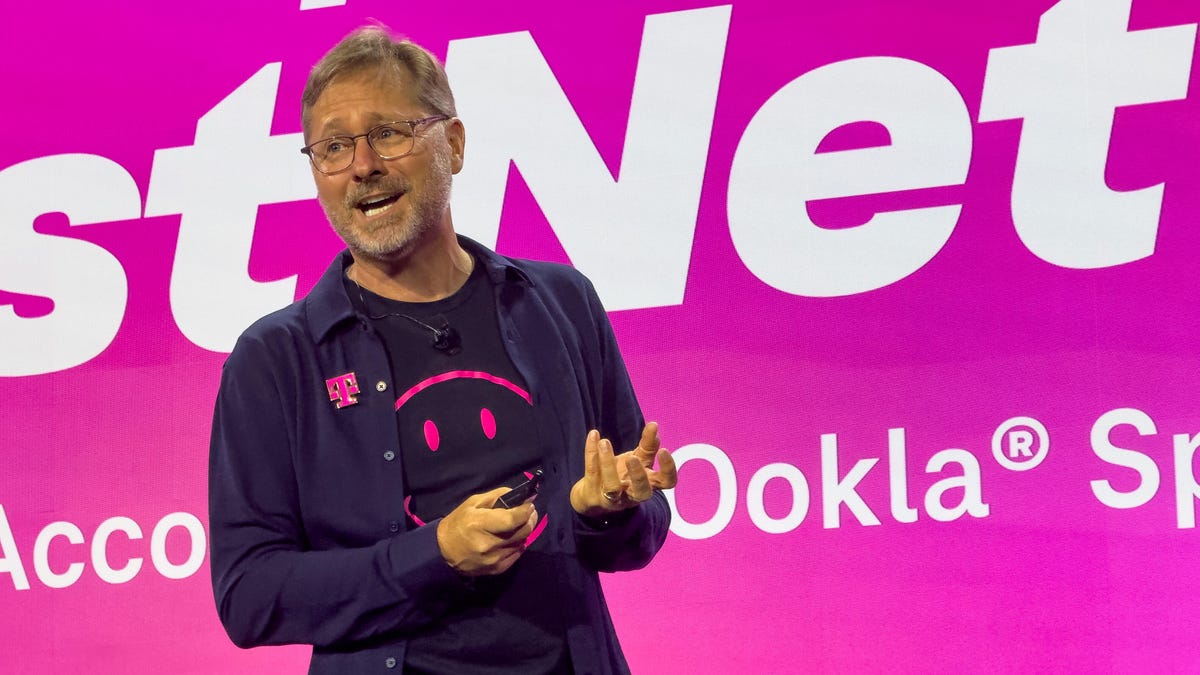
Last week T-Mobile announced that it’s been named the Best Mobile Network in the US by Ookla, marking the first time the carrier has taken the overall top spot. That’s based on half a billion real-world usage tests conducted over a six-month period.
(Disclosure: Ookla is owned by the same parent company as CNET, Ziff Davis.)
During a live event at its Tech Experience Hub in Bellevue, Washington, T-Mobile also announced a July 23 commercial launch date for T-Satellite, its Starlink-based satellite connectivity service, as well as additional features, such as support for sending images and audio files. And to boost the array of perks that accompany many T-Mobile plans, it’s adding free DoorDash DashPass memberships for subscribers with Magenta status.
“We made big bets on 5G, pushing the limits to deliver speed and coverage no one thought possible,” said T-Mobile CEO Mike Sievert. “Now, as the Best Mobile Network in America, with unmatched satellite-to-mobile capability, it’s clear we’re shaping the future of wireless with a network built not just for speed, but for possibility.”
In less than a decade, T-Mobile has gone from a limited-spectrum upstart with a penchant for bright pink branding to the top of the competitive US mobile industry, largely due to the way it’s navigated the transition to 5G networking (and maybe some help from the magenta colors). Merging T-Mobile’s low-band spectrum with Sprint’s midband became one of the main reasons T-Mobile is now crowing about its spot in Ookla’s rankings.
As part of these announcements, T-Mobile invited CNET to an exclusive behind-the-scenes conversation about how it arrived at this point, and a tour of some of the technologies at work at its headquarters and labs.
An unconventional road to 5G
Every company says it’s the best at something, and for a long time, T-Mobile claimed it was the best value among the major wireless carriers. “US consumers have always had to make a choice between going to a much higher priced but higher quality network, or make a trade-off in network and get a better value,” said Mike Katz, T-Mobile president of marketing, strategy and products. “Now it’s validated by a third party [that] customers don’t have to make this choice. They can get both the best value, which T Mobile has always been known and famous for, and get the best network.”
But how did T-Mobile get to this point? It’s easy to say you have the best value and that customers love you, but those are results. At this scale — being one of the top three providers in the US competing for an essential market — it takes a series of technical decisions, a vision of how technology will evolve and the willingness to take big risks.
From a consumer point of view, a few years ago, the focus of every carrier seemed to be to expand coverage, especially 5G coverage. Specifics got lost in the 5G marketing shuffle — every phone-maker touted its 5G compatibility, and the carriers wanted everyone to know that they were expanding their 5G footprint as fast as possible.
But wireless coverage isn’t like a blanket that covers everything equally, and 5G in particular is made up of several speeds and flavors. That’s why your 5G-enabled phone will sometimes indicate the network as “5G,” “5G+,” “5G UC” or other variations, depending on your carrier.
When 5G technologies began to appear in 2020, one focus was on the high speeds possible using the millimeter wave spectrum. But, although millimeter wave can deliver swift connections, it can be thwarted by obstacles such as windows or even plants.
“Primarily, [5G] was going to be a millimeter wave play, which is very high bandwidth with very poor reach,” said Ulf Ewaldsson, T-Mobile’s president of technology. “We went all-in on a very different strategy. We said, ‘it’s going to be a midband play, and it’s going to be TDD [Time Division Duplex, a way to send and receive data in the same frequency] spectrum in the midband that you pair with a very strong low band.’ We were able to get our hands on the best possible spectrum, thanks to merging with Sprint.”
Ewaldsson emphasized that it’s not just a prevalence of low-band that’s advantageous. It’s that, at 600 megahertz, T-Mobile has the lowest band in the low-band area. Why is that important? It has better reach, about 25% to 30% wider than the competition.
That Sprint merger in 2020 sounded like a quick way to buy into the top of the market, a shortcut to expand one’s footprint. (Indeed, T-Mobile is taking a similar tack right now in the broadband market by acquiring fiber provider Lumos in April). But buying Sprint wasn’t an immediate ticket to the top.
“It took about a year extra to get through all the regulatory approvals to get this thing done,” Ewaldsson said, noting that AT&T’s and Verizon’s lead in the market made it a challenge for T-Mobile or Sprint alone to actually enter the 5G race. But with a plan in place to use Sprint’s spectrum and infrastructure, “once we came out [of the approval process], we were right out of the blocks,” he said.
Katz explained that many of T-Mobile’s early disadvantages have turned into benefits. “We have more towers than anybody else, and our towers are closer together,” he said. “We had to build more towers than AT&T and Verizon. We didn’t have any low-band spectrum, which propagates better. So we had to build more towers that were closer together.”
Ewaldsson was more specific. “We have about [and here he paused briefly] 82,715 towers,” he said. “Now, as a turn of events, that happened to be the best possible asset when we merged with Sprint, because we could power up all those towers with that TDD spectrum … and create a formidable downlink speed experience.”
The benefits of the standalone core
Merging T-Mobile’s low-band spectrum with Sprint’s midband became one of the main reasons T-Mobile is now crowing about its spot in Ookla’s rankings.
“We have [a] secret that nobody else has, which is a standalone core. A standalone core is a smarter control over all those towers that stand alone,” Ewaldsson said. “Core allows us to combine low-band and midband and all our bands to get higher and faster experiences for our customers.”
He explained that building out the network more consistently is something other carriers haven’t done. Every T-Mobile tower has nearly the same tri-band configuration.
“You have the same speeds, latency and performance on your apps, wherever you are, and that’s also a secret sauce, too,” he said.
The standalone core enables T-Mobile’s next wave of wireless advancements. In April, the company announced that it had rolled out and successfully tested — with consumer handsets — 5G-Advanced networking, achieving uplink speeds of 550 Mbps. It did so by combining multiple spectrums in a technique called carrier aggregation, which is enabled by the standalone core hardware.
This technology also enables network slicing, a technique T-Mobile has been using commercially for the last two years to guarantee network performance for a specific range of devices, even in crowded or noisy wireless environments. First responders, for example, can be assured they can communicate, even in an emergency environment where other people are all accessing the network.
“You can have a number of different frequencies supporting one single device, one mobile phone,” said Ewaldsson. “If you combine all those resources [into] one device, you can get an incredible bandwidth for a short time, and you can get done with what needs to be done faster. So it creates a better customer experience, because you have an enormous bandwidth that is allocated toward one device, instead of sharing it in one frequency with a bunch of devices.”
How Ookla named T-Mobile the Best Mobile Network in the US
“We’ve known for a long time that the 5G portion of our network is the best,” said Katz, “but this [test] concluded that T-Mobile had the best network. And obviously, we’re very excited about that.”
Both Katz and Ewaldsson emphasized that Ookla’s testing was larger and more comprehensive than earlier metrics. It was performed on over 6 million devices and 500 million test points over a six-month period.
Ewaldsson said it’s an active test, collecting data when customers run the SpeedTest app on their phones, “but it’s also a passive test where, in the background, they’re pulling data from millions of different handsets that are in the hands of real consumers, wherever they are.”
He contrasted that with drive testing, an accepted methodology in which a tester drives routes with a collection of representative phones to prove that a network is good. “We don’t believe in that,” said Ewaldsson. “We believe that if you really want to test this, you’re going to crowdsource it, and that’s exactly what this test has done… and it’s a third-party test.”
The benefit to this approach is that it more closely captures real mobile usage, according to Ewaldsson, such as people texting and sending email, viewing social apps, watching video clips, playing games and more. Millions of people are also operating under real-world conditions, which can include factors such as pockets of interference or scarcity. Verizon disputes Ookla’s methodology, saying that drive testing is a more accurate way to measure network performance.
Getting to this point hasn’t been a glide path for T-Mobile, and it still faces turbulence. Just in the past few months, T-Mobile has raised prices on many of its legacy plans (and then turned around and gave out free lines to some). It has also switched all of its current plans to a model that does not include taxes and fees, some of which incrementally increased this spring. Until this year, the main unlimited data plans incorporated taxes and fees into the monthly cost.
T-Satellite goes online in July with more features
T-Mobile’s wireless performance is not the only thing looking skyward. The T-Satellite service, which enables texting from most smartphones via the network of over 620 Starlink satellites when out of range of cellular or Wi-Fi networks, will leave beta status on July 23 and be open to anyone. Pricing for the service will be $10 a month, except for customers on the Experience Beyond and Go5G Next plan, which includes T-Satellite as part of the package.
That price will apply even if you’re a customer of a competing service like AT&T or Verizon; T-Satellite can be activated as a second eSIM on supported devices. Katz said there are currently over 1.8 million customers in the beta program, including tens of thousands of competitors’ customers.
He also pointed out that during the beta, three times more messages were received than sent. “If you can’t receive an incoming message because you haven’t manually connected your phone, you’re not really reachable and, in my opinion, you’re not really connected,” he said, referring to the way competitors’ phones initiate a satellite link.
The T-Satellite service will include 911 emergency texting later this year, which will be available to any mobile subscriber, even if they haven’t signed up for T-Satellite service (provided their devices can make the connection).
“We just think that with a technology like this, no customer should ever be in a situation where they are unconnected in an emergency,” said Katz.
That’s not the last of the satellite news, though. T-Satellite will enable MMS messaging to send pictures and short audio clips via satellite on Android phones, with iOS support coming later. In a demonstration I witnessed at T-Mobile’s 5G Hub, sending an image, text and requisite burst of emojis wasn’t exactly speedy, but they arrived within 30 to 90 seconds.
Building on that, T-Mobile will bring data service to T-Satellite starting Oct. 1. Considering how satellite bandwidth is constrained, T-Mobile is working with operating system providers to implement an API that developers can use to allow reasonable data access in their apps over the satellite connection. Don’t expect to stream Netflix while you’re camping in the wilderness, but apps such as All Trails will be able to fetch updated information.
“This will be the first time you’ve seen a direct-to-cell satellite network support data services,” said Katz. “We’ve worked with many different app developers to help them build their apps to recognize that they’re connected to satellite and optimize for satellite data.”
DoorDash deliveries without all the fees
When it comes to mobile plan perks, T-Mobile has found success with its Magenta Status goodies, which range from everyday discounts on stays at Hilton hotels to T-Mobile Tuesdays, which offer deals such as a recent Wingstop promotion (during which many of the restaurant’s locations ran out of chicken nationwide). Katz said the company has seen 1.2 billion redemptions of T-Mobile Tuesdays offers.
On July 8, Magenta Status is gaining a new perk: T-Mobile is partnering with DoorDash to give customers on the most popular plans DashPass service free for a year. Eligible customers can claim the offer through Aug. 4 via T-Mobile Tuesdays in the T-Life app.
“I think DoorDash did something like 2 billion deliveries last year, and the average price of a delivery is $3 to $4,” said Katz. “If you have DashPass, you don’t pay delivery fees at all. This can save our customers hundreds and hundreds of dollars.”
Incentives to switch and T-Mobile’s future
Eager to entice customers of the major competing services, T-Mobile is launching the Easy Upgrade program that makes it “screamingly simple,” in Katz’s words, to switch to T-Mobile. He specifically mentioned Verizon customers “who signed up with Verizon because they believed, and for years it was true, that Verizon had the best network,” he said. “And now that we’re in a place where it’s definitively clear that T-Mobile has the best network, we want to make it really easy for Verizon customers to come and join the Un-carrier.”
Katz said T-Mobile will pay off every cost to switch, including the remaining cost of devices up to $800, and give customers a new Apple or Android device without requiring a trade-in (be sure to read the details of these deals).
T-Mobile’s ascent to the top of Ookla’s list shows that, even though the mobile market in the US is dominated by just a few large players, the field is in flux. AT&T and Verizon continue to build out their own networks and strategies — Verizon has teased a “Project 624” that is rumored to be revealed on June 24, for instance. Now that T-Mobile has established this lead, I’m eager to see how it plans to hold onto it.
Technologies
Starlink connectivity in Ukraine reportedly returning to normal
Ukrainian officials report that SpaceX’s military-grade Starshield service is appearing to function normally again following recent connectivity restrictions.
It appears SpaceX has eased the limitations placed on Starshield, the specialized military version of its Starlink satellite internet service, for the Ukrainian armed forces.
According to The Wall Street Journal, Defense Minister Evgeniy Khmara informed the press that Starshield seems to have resumed normal operations, though the military is still testing the service and has yet to receive a formal reason for the prior disruptions.
This comes after a ten-day stretch where Ukrainian drone operations faced connectivity issues at speeds nearing 100 mph, causing some drones to lose control and others to become more exposed due to reduced speeds.
Reports suggest President Donald Trump contacted SpaceX CEO Elon Musk on Wednesday to request the restoration of Starshield services. Both Musk and Trump have voiced criticism toward Ukrainian President Volodymyr Zelensky, with Musk recently stating on X that “Zelensky has gone too far.”
The WSJ previously indicated that Musk directed SpaceX to limit Starlink access for Ukraine, though some sources suggested discussions with the Trump administration took place beforehand. Musk argued in a post on X that Ukraine had breached Starlink’s terms of service by utilizing the system for offensive drone operations intended to cause fatalities.
“Were Starlink to be turned off, the Ukrainian front line would collapse immediately,” Musk remarked. “This is NOT a threat, it is simply a statement of fact.”
Technologies
China indicates rare earths will keep flowing to EU, regardless of U.S. trade deal expiration
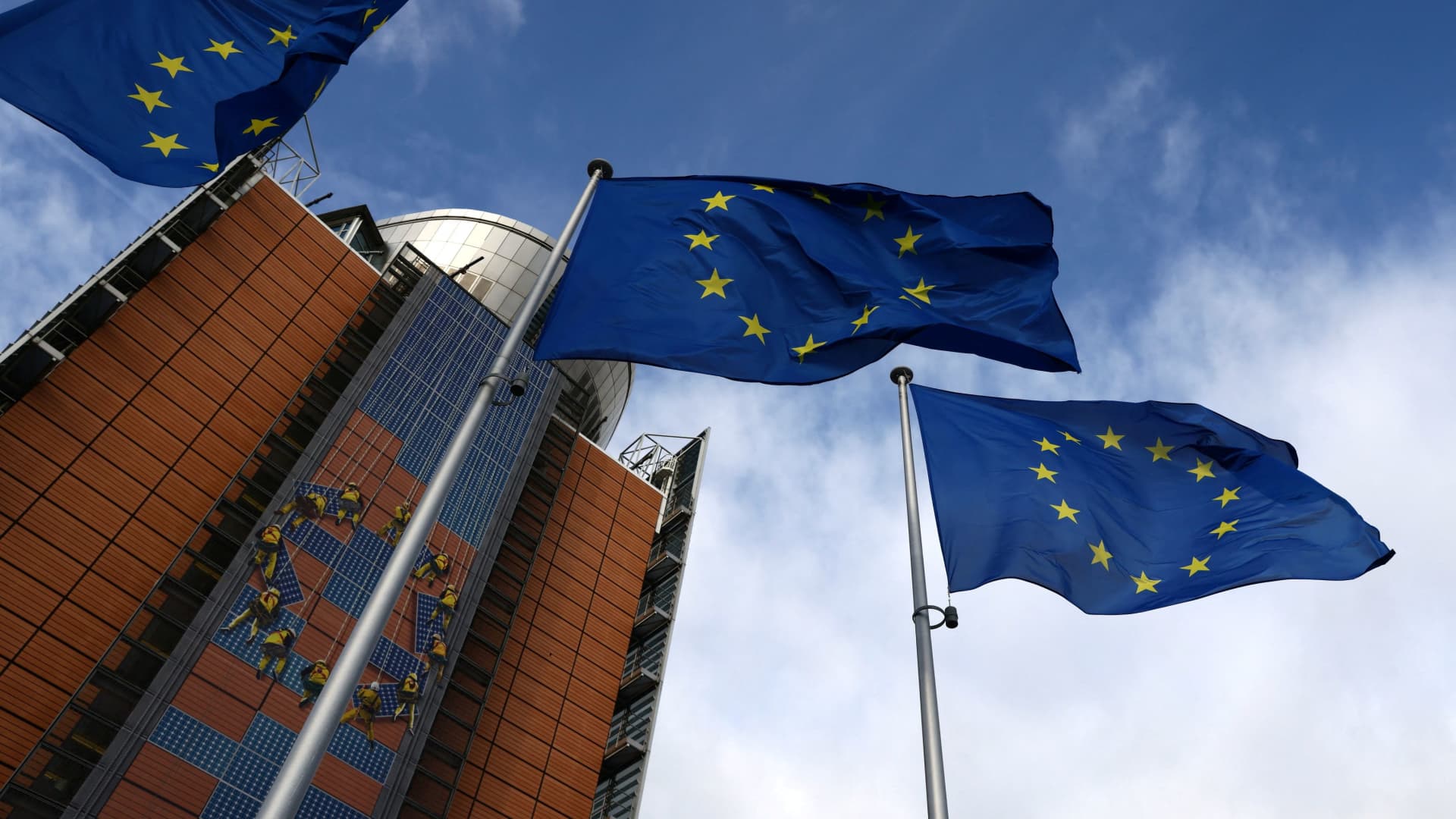
European trade commissioner Maroš Sefčovič met with Chinese Commerce Minister Wang Wentao in Beijing last week.
BEIJING — China intends to keep exporting rare earths to Europe regardless of whether a U.S. trade deal with Beijing gets extended past January.
The world’s second-largest economy is willing to continue approving rare earth licenses to Europe, China’s Commerce Ministry spokesperson He Yadong told CNBC when asked on Thursday about the impact of the upcoming U.S. deadline.
Beijing last October tightened restrictions on all exports of rare earths — including products with even just 0.1% of China-sourced rare earths. The move followed a new U.S. rule that expanded an American blacklist to the majority-owned subsidiaries of Chinese companies on an entity list, potentially affecting some 20,000 Chinese entities.
However, both the U.S. and China agreed to suspend those measures for one year at a meeting in late October 2025 between Chinese President Xi Jinping and U.S. President Donald Trump. Ahead of the leaders’ latest summit last month, U.S. Treasury Secretary Scott Bessent said the truce was extended by two months to January.
Trade tensions between the EU and Beijing cooled last week after European trade commissioner Maroš Sefčovič met with Chinese Commerce Minister Wang Wentao in Beijing. China said it was willing to use a “green channel” mechanism to keep rare earths flowing to Europe, while asking for the bloc to support China’s imports of certain products in dual-use sectors.
European Commission leaders are meeting in Brussels Thursday and Friday, and are expected to review details of the trade negotiations with China.
Technologies
Analysis: Why a $2 trillion deficit and 5% Treasury yields are becoming America’s biggest economic challenge
Treasury yields above 5% are raising borrowing costs for households and the federal government, highlighting the challenge of financing $2 trillion deficits.
Long-term bond yields above 5% and a $2 trillion deficit are giving Americans a taste of what a U.S. debt crisis would be like. A true emergency would hurt much more, and isn’t baked in. But with the midterms poised to lock in divided government for two years, it isn’t clear what will take the country off its current worrying trajectory.
Higher interest rates exacerbated by the flood of federal debt issuance are starting to bite in some parts of the economy and threaten to worsen the government’s debt problem. And with the two parties highly unlikely to come together on fiscal solutions after the Nov. 3 midterms, any fixes are years off in the future.
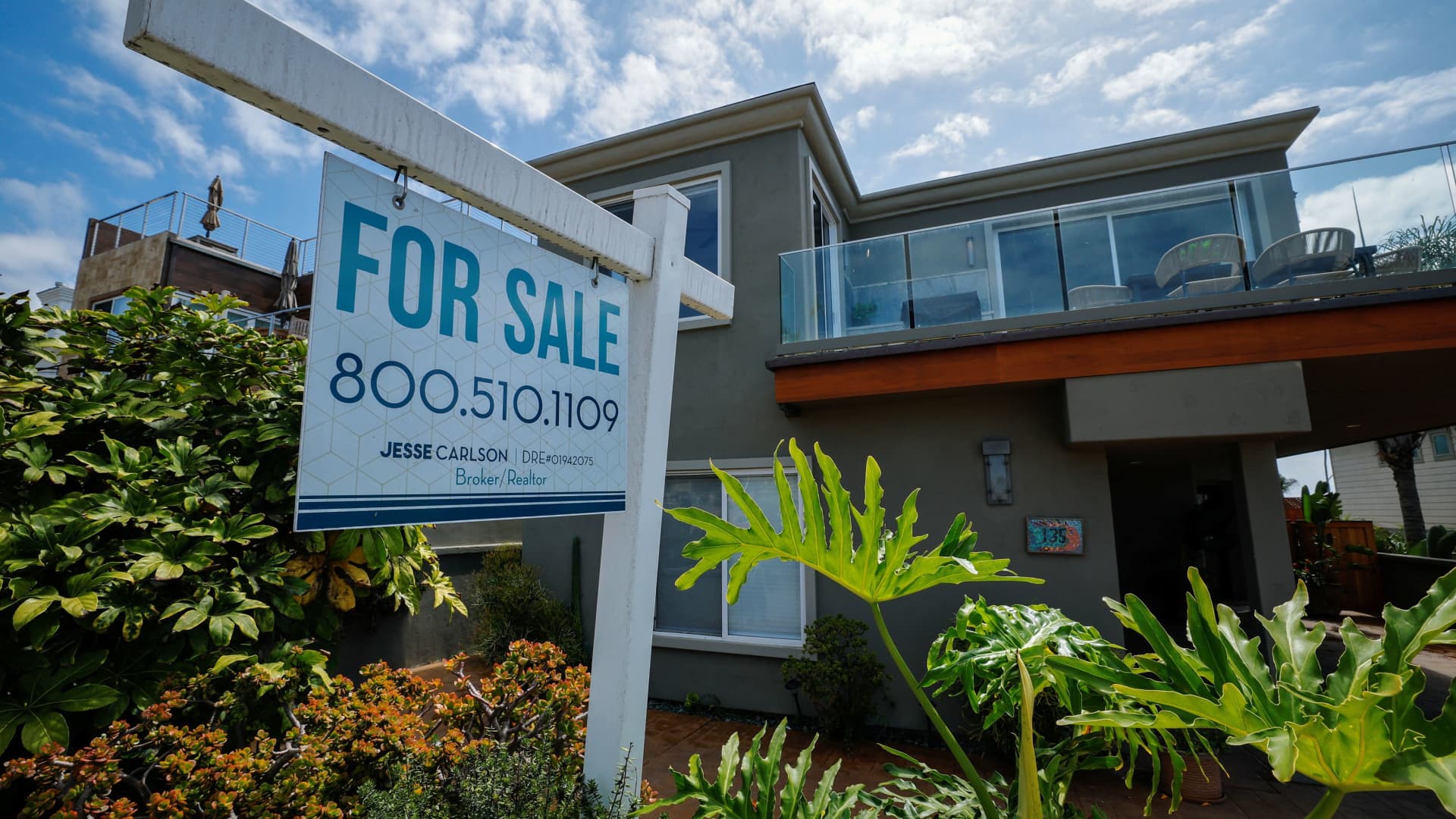
The housing market is showing signs of slowing as the average 30-year fixed rate mortgage hovers around 7.5%. Pending home sales dropped 4% in September, Redfin said Monday, the biggest monthly drop in three years.
Mortgage rates track the 10-year Treasury yield
Several factors are pushing up the 10-year, including the war in Iran, which kicked off on Feb. 28 and precipitated the rise in long-term yields. Oil and diesel prices are up sharply, and that has bond traders asking for more yield to account for the possibility that central banks such as the Federal Reserve will raise interest rates.
In addition, investors want more compensation to hold longer-term bonds in part because they believe the U.S. government will continue to flood the market with them. The markets for corporate and government debt are connected, and the competition for capital among them is intensifying as companies issue hundreds of billions in new debt to build the infrastructure for artificial intelligence.
Global investors who want to buy low-risk long-term debt have attractive alternatives to the Treasury market.
If the U.S. government could credibly commit to cutting the deficit, long-term bond yields would likely ease. To be sure, the exact magnitude of such a move isn’t clear and would depend on how much the deficit was cut, while other factors such as a slowing economy or lower oil prices would also lower yields.
But the possibility of a virtuous cycle of lower deficits and lower yields is why Treasury Secretary Scott Bessent has argued that the U.S. ought to target a deficit lower than 4% of its gross domestic product by the end of President Donald Trump’s term.
There is almost no way the U.S. will hit that target. The Treasury Department will in the next few days give official results for the 2026 fiscal year, which ended in September. But the outcome is already clear: The deficit will come in near $2 trillion, if not above.
That is likely to put the deficit in the range of 6.0-6.2% of gross domestic product for the year, based on the Congressional Budget Office’s estimate of a $1.993 trillion deficit and a projection of third quarter GDP.
Higher rates make debt reduction tougher. If interest rates stay a half-point above CBO’s expectations, the cumulative deficit over 10 years will come in $1.9 trillion higher, the agency estimates. If rates overshoot by 1.5 points, that adds $6 trillion in deficits.
CBO expects the 10-year Treasury to average 4.3% over that period, compared to 5.3% today. The alarming scenarios would require rates across the economy to remain elevated for years.
“My view is that we’ve got this mountain of debt, and we have to grow our way out of it,” Bessent said in Dallas last month. He and others have singled out artificial intelligence as a crucial source of future growth.
AI could help but can’t fix the problem entirely. It would take a decade of 7.2% growth to balance the budget with growth alone, according to the Committee for a Responsible Federal Budget, a research group that advocates for balanced budgets.
GDP growth was recently revised up for the second quarter from 1.5% to 2.2% at an annualized rate. The acceleration that quickly would get us to 7.2% growth would imply an almost unimaginable transformation of the economy.
Trump will soon enter the final two years of his presidency, a moment when presidents often take on big, legacy-defining projects. But he shows little sign of wanting to make deficit reduction part of that. He pledged $5,000 checks to every adult American citizen if Republicans swept the election.
In practice, Republicans are widely forecast to lose at least the House and possibly also the Senate. Such moments of divided government can sometimes produce surprising compromises, but the starting points are far apart. Rep. Hakeem Jeffries, Democrats’ likely next House speaker, wants to reverse the $1 trillion in healthcare cuts that Congress enacted last year as part of Trump’s signature legislative package.
And that’s leaving aside the deep animosity between the parties.
The overall U.S. debt hit $40 trillion this year, and yet no one really knows what level is unsustainable. A full-on debt crisis likely remains much farther out in the future. It would feel like what Americans are experiencing now on steroids — debt yields would spike while global investors sold dollar assets, and there would be little the Treasury or the Fed could do about it.
For now, though higher yields are also attracting investors to U.S. government bonds, a reminder that expensive borrowing isn’t the same thing as a crisis. But the bottom line is that economics alone can’t solve the problem. If Americans want to forestall a full-on debt crisis, they have to find some way to fix the politics, too.
-
 Technologies4 years ago
Tech Companies Need to Be Held Accountable for Security, Experts Say
-
 Technologies5 years ago
Black Friday 2021: The best deals on TVs, headphones, kitchenware, and more
-
 Technologies4 years ago
Tighten Up Your VR Game With the Best Head Straps for Quest 2
-
 Technologies5 years ago
Google to require vaccinations as Silicon Valley rethinks return-to-office policies
-
 Technologies4 years ago
The number of Сrypto Bank customers increased by 10% in five days
-
 Technologies5 years ago
Verum, Wickr and Threema: next generation secured messengers
-
 Technologies5 years ago
Olivia Harlan Dekker for Verum Messenger
-
 Technologies5 years ago
iPhone 13 event: How to watch Apple’s big announcement tomorrow