
Technologies
iPhone 20th-Anniversary Edition Could Bring Major Design Overhaul
Apple’s iPhone will turn 20 in 2027. Bold changes may be ahead.
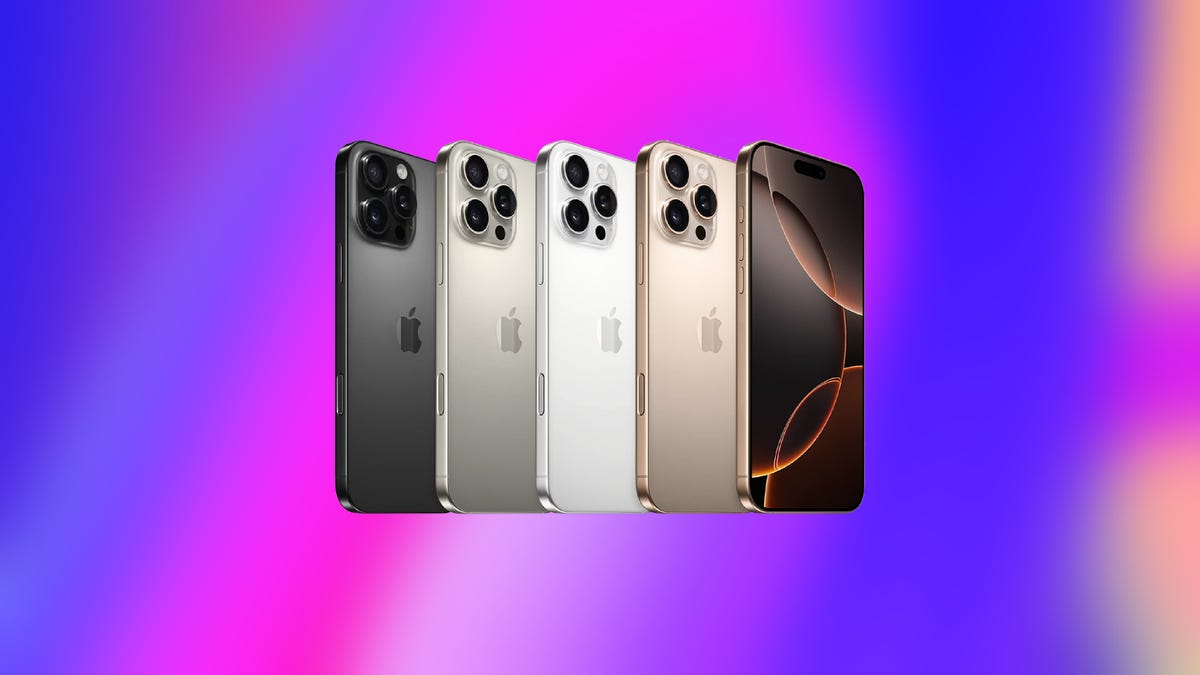
Apple is reportedly planning a significant redesign for the 20th-anniversary edition of its iPhone lineup, expected to launch in September 2027.
A special Pro model featuring more glass elements to mark the iPhone’s two decades of existence is in development for the anniversary, says a Bloomberg report. Apple is also expected to launch a foldable iPhone alongside the redesigned Pro, but it’s unclear if this would be the first or second iteration. (Reports currently point to a 2026 launch for a foldable iPhone.) Apple remains the only major smartphone manufacturer without a foldable device.
This 20th anniversary-focused strategy could also help reinvigorate iPhone sales, which have been sluggish in recent months and may suffer under the Trump administration’s new 125% tariff on China, where most components and iPhones are imported from.
In the meantime, the upcoming iPhone 17 is now expected to more closely resemble previous Pro models. The iPhone Pro lineup has looked largely the same since the iPhone 12’s debut in 2020, when Apple introduced 5G compatibility, with changes over time mostly limited to color updates and a metal switch to titanium on the iPhone 15 Pro.
Apple didn’t respond to a request for comment.
Bloomberg said that although the iPhone 17 Pro will still resemble the 16 Pro, it will likely feature a redesigned rear camera layout. The camera module is expected to maintain its three-lens setup but be placed on a new panel that spans the entire width of the device with a single-tone finish.
Apple is also expected to introduce a notably thinner model, rumored to be called the iPhone 17 Air.
What will the 20th-anniversary iPhone be named?
It’s unclear how Apple will name its 20th-anniversary iPhone, given that the 2027 release would technically fall in line with an iPhone 19 label. The cadence of the numbers shifted over time as Apple experimented with the names, such as launching the iPhone 4S in 2011, rather than calling it the iPhone 5 (the iPhone 5 launched in 2012).
The company has previously adjusted naming conventions for milestone moments, such as skipping the iPhone 9 and unveiling the iPhone X to mark its 10th anniversary — so in keeping with Roman numerals, the 20th-anniversary model could potentially be called the iPhone XX.
The risk in waiting to redesign the iPhone
Dipanjan Chatterjee, vice president and principal analyst at market research firm Forrester, called a redesign a «double-edged sword,» considering the iPhone’s design hasn’t undergone any meaningful change for awhile.
«A bold redesign for its anniversary model sounds like a wonderful idea until you realize that it is still two years away and Apple has struggled to trigger the upgrade supercycle that will revive the stagnant iPhone growth the company has experienced lately,» he said.
Chatterjee acknowledged Apple Intelligence still hasn’t fulfilled its promise of converting older iPhone owners into later compatible hardware.
«The temptation to wait even longer for a vastly improved 2027 design is likely to further extend the upgrade cycle,» he added.
The other risk, he said, is that some customers might go for the cheaper iPhone 16E now and wait a few years to buy the premium phone they really want.
Technologies
Today’s Wordle Hints, Answer and Help for April 12, #1758
Here are hints and the answer for today’s Wordle for April 12, No. 1,758.
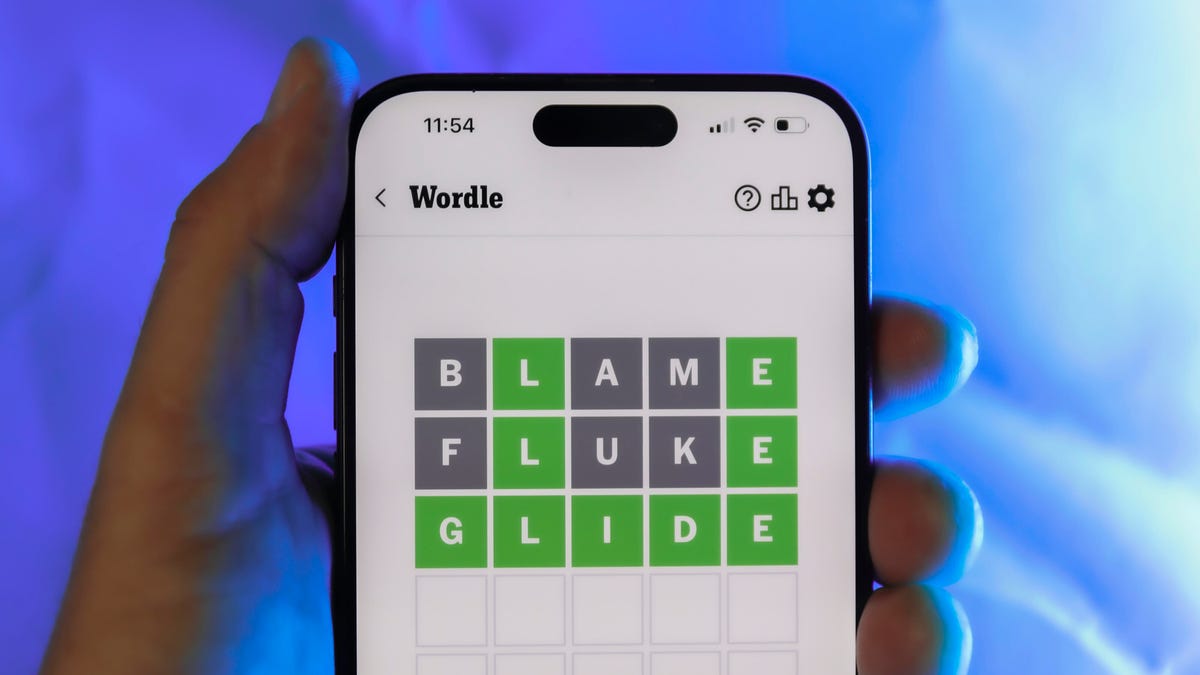
Looking for the most recent Wordle answer? Click here for today’s Wordle hints, as well as our daily answers and hints for The New York Times Mini Crossword, Connections, Connections: Sports Edition and Strands puzzles.
Today’s Wordle puzzle is a tough one, with a double letter that could throw you off. If you need a new starter word, check out our list of which letters show up the most in English words. If you need hints and the answer, read on.
Read more: New Study Reveals Wordle’s Top 10 Toughest Words of 2025
Today’s Wordle hints
Before we show you today’s Wordle answer, we’ll give you some hints. If you don’t want a spoiler, look away now.
Wordle hint No. 1: Repeats
Today’s Wordle answer has one repeated letter.
Wordle hint No. 2: Vowels
Today’s Wordle answer has two vowels, plus one sometimes vowel.
Wordle hint No. 3: First letter
Today’s Wordle answer begins with A.
Wordle hint No. 4: Last letter
Today’s Wordle answer ends with Y.
Wordle hint No. 5: Meaning
Today’s Wordle answer can refer to a narrow passageway between or behind buildings.
TODAY’S WORDLE ANSWER
Today’s Wordle answer is ALLEY.
Yesterday’s Wordle answer
Yesterday’s Wordle answer, April 11, No. 1757, was PRUDE.
Recent Wordle answers
April 7, No. 1753: DENSE
April 8, No. 1754: INLET
April 9, No. 1755: LADEN
April 10, No. 1756: CAROM
Technologies
Today’s NYT Connections Hints, Answers and Help for April 12, #1036
Here are some hints and the answers for the NYT Connections puzzle for April 12, No. 1,036.
Looking for the most recent Connections answers? Click here for today’s Connections hints, as well as our daily answers and hints for The New York Times Mini Crossword, Wordle, Connections: Sports Edition and Strands puzzles.
Today’s NYT Connections puzzle features a fun mix of categories. The purple one isn’t too hard today, it’s actually a fun one! Read on for clues and today’s Connections answers.
The Times has a Connections Bot, like the one for Wordle. Go there after you play to receive a numeric score and to have the program analyze your answers. Players who are registered with the Times Games section can now nerd out by following their progress, including the number of puzzles completed, win rate, number of times they nabbed a perfect score and their win streak.
Read more: Hints, Tips and Strategies to Help You Win at NYT Connections Every Time
Hints for today’s Connections groups
Here are four hints for the groupings in today’s Connections puzzle, ranked from the easiest yellow group to the tough (and sometimes bizarre) purple group.
Yellow group hint: Clothing element.
Green group hint: Viewpoint or outlook.
Blue group hint: Send out from something.
Purple group hint: Barbie is one.
Answers for today’s Connections groups
Yellow group: Pants features.
Green group: Perspective.
Blue group: Emit.
Purple group: ____ doll.
Read more: Wordle Cheat Sheet: Here Are the Most Popular Letters Used in English Words
What are today’s Connections answers?
The yellow words in today’s Connections
The theme is pants features. The four answers are belt loop, cuff, fly and pocket.
The green words in today’s Connections
The theme is perspective. The four answers are angle, position, stance and take.
The blue words in today’s Connections
The theme is emit. The four answers are cast, project, radiate and shed.
The purple words in today’s Connections
The theme is ____ doll. The four answers are paper, rag, Russian and troll.
Technologies
Watch a Robot Stuff Cash Into a Wallet Just Like You Do
Generalist AI’s Gen-1 model is all about «teaching robots physical common sense.»
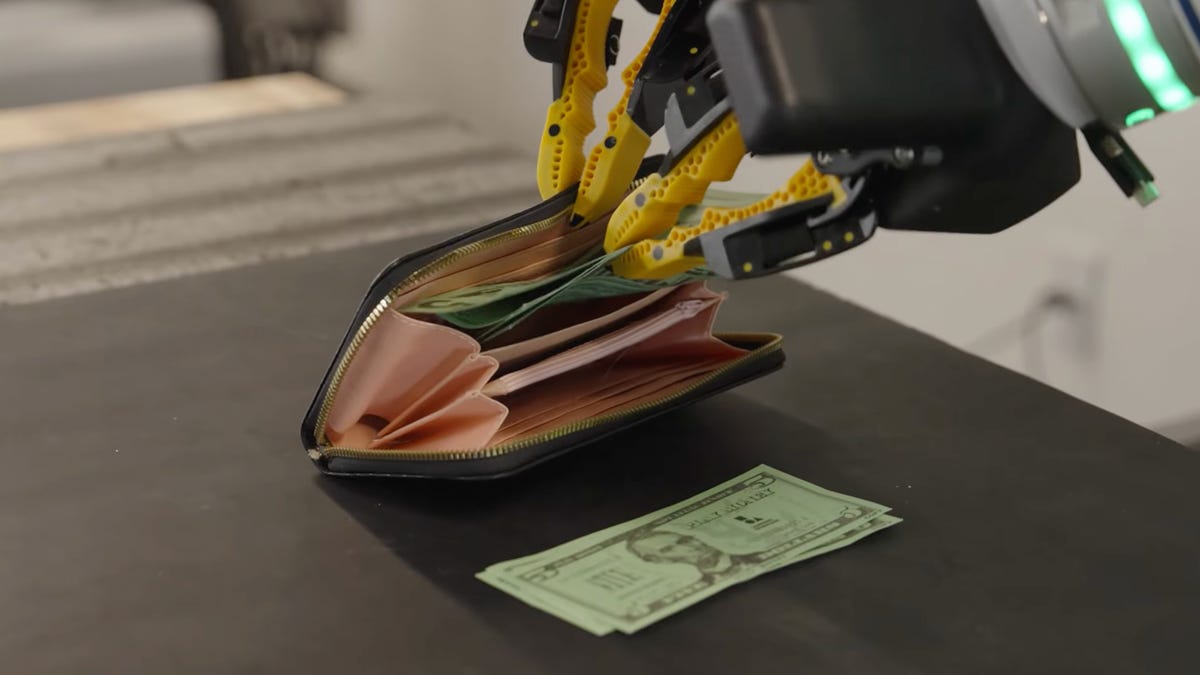
In 2026, we’re seeing robots progress by leaps and bounds with markedly improved dexterity, the kind of progress long needed in the quest for truly useful household helpers. Now a new AI model has arrived to power robots through activities, including folding laundry, constructing boxes, fixing other robots and even filling wallets with flimsy paper money.
Earlier this month, California-based company Generalist AI released Gen-1, a new physical AI model that makes robots capable of performing all of these tasks (and more) with success. It’s a big step forward in terms of robots designed for the real world based on intelligence born from the real world, Pete Florence, co-founder and CEO of Generalist AI told me.
In most of the example videos published by the company, Gen-1 is seen running on a pair of robotic arms, but that’s not all it’s built for. «Gen-1 is designed to be the brain of any robot, meaning the same model can run on a humanoid, an industrial arm or other robotic systems,» said Florence.
Already, this has proved to be a breakthrough year for general-purpose humanoid robots, with companies including Boston Dynamics and Honor unveiling cutting-edge bots capable of uncannily humanlike movements. The market for robots is expected to explode, with one estimate from Morgan Stanley predicting growth to a $5 trillion market by 2050. Predictions see robots coming for industry, retail, hospitality and care environments before eventually landing in our homes. To get us there, we need to see further advances in AI.
Training robots to live alongside humans
Over the past few years we’ve seen large language models, such as ChatGPT, Gemini and Claude, evolve at lightning speed. The same hasn’t been true of the physical AI models required to power robots, in large part because of a lack of data to train those models on. Robots — and especially humanoid robots — must learn to navigate a world built for humans just as a human would.
Often this data is collected from robots performing tasks while being teleoperated by humans, but not Gen-1. Instead, the dataset used to train Generalist AI’s models has been assembled by humans completing millions of different tasks using wearable technology.
«We built our own lightweight ‘data hands’ and distributed them globally to learn how people actually interact with objects, with all the subtle force feedback, tactile feel, slips, corrections and recoveries that define human dexterity in the real world,» said Florence. «That kind of data is critical for teaching robots physical common sense, the intuitive understanding and ability to adapt in real time rather than execute rigid instructions.»
Generalist AI has released a series of videos showing the model running on robots repetitively performing a range of different tasks, with the most compelling, perhaps, being a robot drawing cash out of a wallet before reinserting it into the same pocket. This is a fiddly task that many humans fumble over. It’s clearly not easy for the robot, either, given the flimsiness of the paper money and the fabric of the wallet — and yet it completes the task.
Another video shows a robot sorting socks by color, folding them in neat piles and counting the number of pairs using a touchscreen. Other tricky tasks the model can complete include unzipping and filling a pencil case with pens, stacking oranges in a neat pyramid and plugging in an Ethernet cable.
These videos show the breadth of Gen-1’s capabilities, but more impressive is the success rate with which it can complete certain tasks. Generalist AI measured the model’s hit rate against the previous version and found Gen-1 could successfully service a robot vacuum cleaner in 99% of cases (up from 50% for Gen-0), fold boxes in 99% of cases (up from 81% for Gen-0) and package up phones in 99% of cases (up from 62% for Gen-0).
Robots do improv
Most robots are programmed to complete a task in a specific and orderly way. But what happens when a curve ball gets thrown? «The smallest changes in the environment can cause failures,» said Florence.
An important skill robots need, which humans innately possess, is the ability to think on their feet. This is why Gen-1 has been designed with improvisation in mind so it can come up with strategies to complete tasks. Florence gives me an example of a robot using two hands to reposition an awkwardly placed part for an automotive task, even though it has only been trained to use one.
«This kind of creativity has been largely absent from robotics until now,» he said.
Significant work still needs to be done when it comes to beefing up robots’ improv chops, but early progress show glimpses of a positive impact on both reliability and speed, says Florence. «We’re beginning to see real progress and are excited to push the boundaries of embodied intelligence.»
After all, there may come a day when you need a robot in your house that can fix all your other smaller robots.
-
 Technologies3 года ago
Tech Companies Need to Be Held Accountable for Security, Experts Say
-
 Technologies3 года ago
Best Handheld Game Console in 2023
-
 Technologies3 года ago
Tighten Up Your VR Game With the Best Head Straps for Quest 2
-
 Technologies4 года ago
Black Friday 2021: The best deals on TVs, headphones, kitchenware, and more
-
 Technologies5 лет ago
Google to require vaccinations as Silicon Valley rethinks return-to-office policies
-
 Technologies5 лет ago
Verum, Wickr and Threema: next generation secured messengers
-
 Technologies4 года ago
Olivia Harlan Dekker for Verum Messenger
-
 Technologies4 года ago
The number of Сrypto Bank customers increased by 10% in five days