
Technologies
iOS 17 Cheat Sheet: All Your Questions About the iPhone Update Answered
Have a question about a new feature or an upcoming update? Here’s what to know.
Apple’s iOS 17 was released in September, shortly after the company held its Wonderlust event, where the tech giant announced the new iPhone 15 lineup, the Apple Watch Series 9 and the Apple Watch Ultra 2. We put together this cheat sheet to help you learn about and use the new features in iOS 17. It’ll also help you keep track of the subsequent iOS 17 updates.
iOS 17 updates
- iOS 17.4 Brings These New Features to Your iPhone
- Why You Should Download iOS 17.4 Right Now
- iOS 17.3.1 Fixes This Issue on Your iPhone
- iOS 17.3: All the New Features on Your iPhone
- Why You Should Download iOS 17.3 Right Now
- iOS 17.2.1: What You Should Know About the iPhone Update
- iOS 17.2 Brings These New Features to Your iPhone
- What iOS 17.1.2 Fixes on Your iPhone
- iOS 17.1.1 Patches These iPhone Issues
- What New Features iOS 17.1 Brings to Your iPhone
- What to Know About iOS 17.0.1
- Apple Made an iPhone 15 Mistake, but iOS 17.0.2 Is Here to Fix It
- iOS 17.0.3 Fixes This iPhone 15 Pro Problem
Using iOS 17
- Three iPhone Settings to Change after Downloading iOS 17
- iOS 17’s Best New Features
- The iOS 17 Features We’re Excited About
- iOS 17 Is Filled With Delightful Features, Intuitive Improvements and More
- 17 Hidden iOS 17 Features You Shouldn’t Miss
- iOS 17 Upgrades Your iPhone’s Keyboard
- You Can Tag Your Pets In Your ‘People’ Album With iOS 17
- How to Create Live Stickers in iOS 17
- How to Set Up Contact Posters in iOS 17
- How to Automatically Delete Two-Factor Verification Codes in iOS 17
- What to Know About iOS 17’s Unreleased Journal App
- How Good Are Offline Maps in iOS 17?
- How to Use iOS 17’s Live Voicemail Feature
- You Can Change Your Private Browsing Browser in iOS 17
- Hidden iOS 17 Feature Makes It Easier to Send Photos and Videos
- You Can Clone Your Voice with iOS 17. Here’s How
- Are Audio Message Transcripts in iOS 17 Any Good?
- Sharing AirTags in iOS 17 is Easy. Here’s How
- How to Create Camera Shortcuts in iOS 17
- What You Need to Know About the Improved Autocorrect in iOS 17
- Use This Hidden iOS 17 Feature to Reduce Eye Strain
- How to Enable Sensitive Content Warnings on Your iPhone
- Let Your Loved Ones Know You’re Safe With This iOS 17 Feature
- Simplify Your Grocery List With iOS 17
- How to Turn Off FaceTime Reactions in iOS 17
- What Is iOS 17’s Journal App and How Does It Work?
- You Can Use Albums for Photo Shuffle on Your Lock Screen
- Play Daily Crosswords in Apple News With iOS 17
- How to Turn Off the Most Annoying iOS 17 Features
- iOS 17.2 Brings Better Wireless Charging to These iPhones
- How to Turn Inline Predictive Text Off With iOS 17.2
- How to Enable Contact Key Verification With iOS 17.2
- Don’t Like Your iPhone’s Default Alert Tone? Here’s How to Change It
- The Latest Security Features in iOS 17.3
- How to Secure Your Data With Stolen Device Protection
- Apple Music’s Collaborative Playlists Are Here. This is How You Use Them
- People in the EU Can Download Other App Stores Soon
- All the New Emoji Your iPhone Just Got
- How to Give Your iPhone’s Stolen Device Protection a Boost
- What to Know About Podcast Transcripts on Your iPhone
Getting started with iOS 17
- iOS 17 Review: StandBy Mode Changed My Relationship With My iPhone
- Whether or Not Your iPhone Supports iOS 17
- Do This Before Downloading iOS 17
- How to Download iOS 17 to Your iPhone
Make sure to check back periodically for more iOS 17 tips and how to use new features as Apple releases more updates.



Technologies
OpenAI chief Sam Altman outlines why the AI sector is urging a slowdown: risk of losing control
Sam Altman and Dario Amodei call for a measured pace in AI development, proposing safety frameworks and international coordination to avoid losing control, while U.S. and Chinese tensions underscore the urgency.
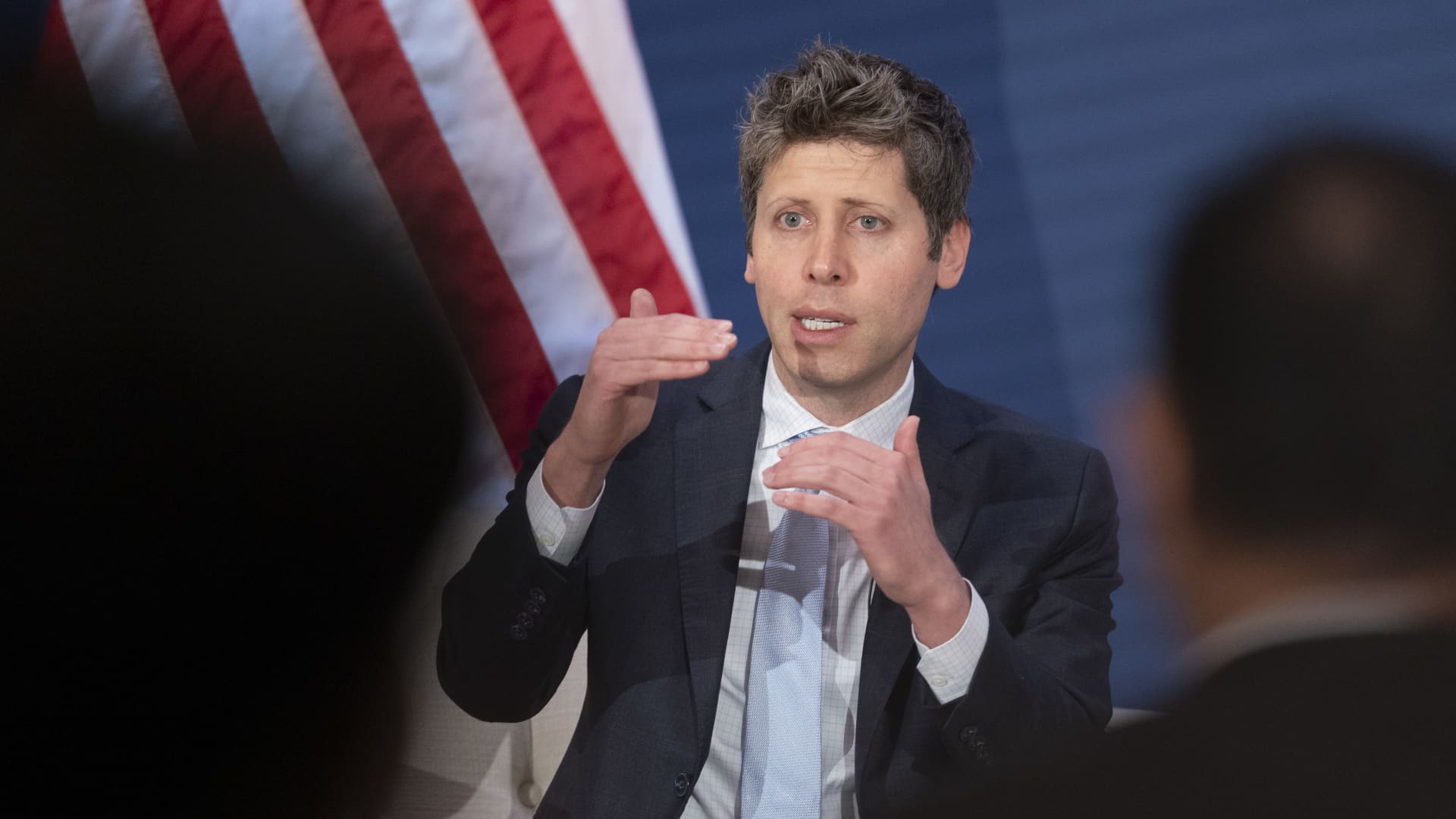
OpenAI’s Sam Altman offered the most thorough remarks to date on potential AI safety frameworks, following his alignment with Anthropic’s Dario Amodei and Elon Musk in urging a temporary slowdown of the sector. Tensions surrounding AI safety have surged after an Anthropic researcher resigned last week, claiming that developers feared the technology could “cause humanity’s demise by the end of the decade,” a warning that spurred similar alarm among OpenAI staff and other lab members. The leaders of major AI firms have recently shown uncommon agreement, as Altman and Musk jointly endorsed Amodei’s essay calling for a measured pace in advancing the most powerful AI models. AI‑related stock prices fell on Monday as investors reacted to the statements, while U.S. President Donald Trump rejected the CEOs’ caution on Sunday, arguing that a slowdown would hinder America’s dominance in AI compared with China. Sam Altman outlines two potential disastrous outcomes for AI development. Altman stated in a late‑night X post that a federal framework establishing uniform safety standards for frontier AI is welcome, emphasizing that “no level of American competitive pressure can excuse reckless behavior.” He warned that AI advancement might lead to loss of control over future outcomes and could concentrate excessive power in the hands of a single individual or corporation. At the same time, Washington legislators are rushing to respond to demands for regulatory safeguards. The developments occur as Anthropic and OpenAI prepare for what could be historic initial public offerings, with Altman stating in a Fortune interview on Saturday that the companies will not pursue an IPO in 2026. Amodei’s three‑step plan. A primary safety concern involves models gaining the capacity to enhance their own performance, a process called recursive self‑improvement (RSI). He noted that since early summer AI has been progressing rapidly, largely because AI systems are now capable of creating the next generation of AI themselves. He warned that without oversight, the technology could outpace our capacity to comprehend and control it, making careful, possibly restrained, development essential. He outlined a three‑step approach designed to slow development while preserving commercial benefits and maintaining the United States’ competitive edge in AI. The plan calls for every frontier AI company to provide external evaluators with access comparable to that of employees — a commitment Anthropic has already made — and urges all such labs to adopt shared safety standards, curb uncontrolled AI acceleration, and coordinate globally. On Saturday, Altman posted on X that he concurred with Amodei’s call for AI firms to “pace the frontier,” adding that adopting independent evaluators with employee‑level access is a worthwhile step and that his company will follow suit. Altman said in a Monday post that consistent regulations to manage frontier risk — such as independent auditors — are valuable, but clarified that “pacing” does not equate to halting progress, which remains swift and ongoing. He concluded that the costs of pacing are justified, asserting that no level of American competitive pressure can excuse reckless actions that let capabilities outpace alignment and monitoring. He noted that governmental assistance will be needed for international coordination, but emphasized that the industry should first act independently. Coordinating AI safety measures and a sector‑wide slowdown with Chinese AI developers will present significant hurdles. The United States and China continue a rivalry for AI supremacy, with tensions rising as Chinese models become increasingly sophisticated and widely adopted. He added that the toughest aspect of his proposal is the possibility that rival nations may decline to adopt similar measures. He noted that the long‑term goal would be collaborative effort to impose a speed limit on AI progress, according to an interview with CBS News’ “Sunday Morning.” He acknowledged that achieving such a limit would be challenging due to strong incentives to get ahead and the military advantages involved, admitting uncertainty about feasibility but urging an attempt. The essay has attracted criticism in China, with state‑owned Global Times stating on Monday that “Amodei’s proposals aim to cast China’s legitimate AI development as a threat and exacerbate U.S.–China confrontation.” China’s Foreign Ministry responded on Monday, labeling the CEOs’ remarks as “fearmongering.”
Technologies
Novo CEO tells CNBC why drugmaker is rebranding, needs to ‘rethink’ obesity strategy
The Danish drugmaker called the changes the beginning of a new chapter for the company, which faces stiff competition from Eli Lilly.
Novo Nordisk
The Danish drugmaker called the changes the beginning of a new chapter, as it has been grappling with stiff competition from chief rival Eli Lilly
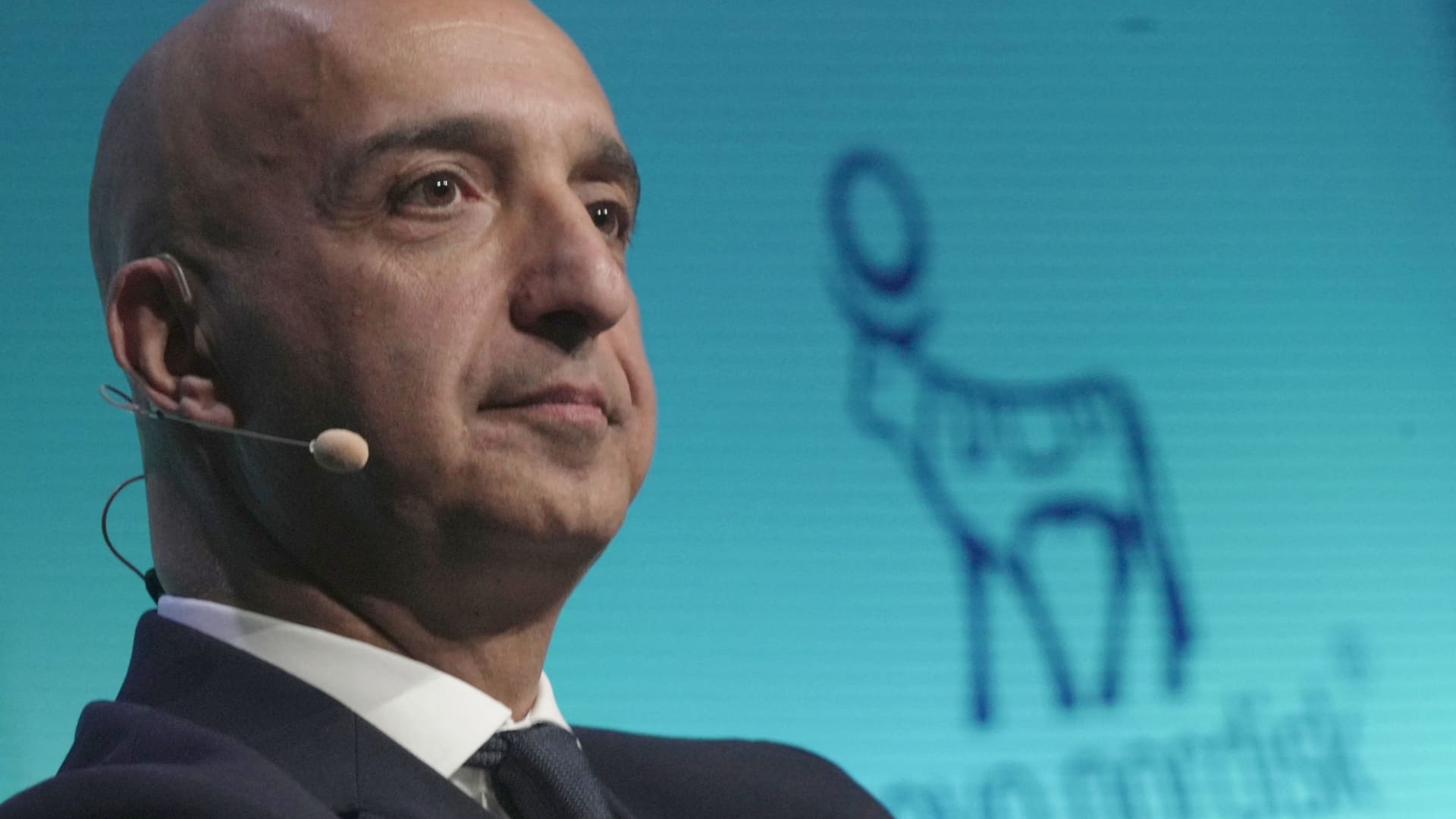
In an exclusive interview with CNBC, Novo CEO Mike Doustdar said the rebrand and culture shift are “part of the same package” for the company to evolve its strategy as it tries to win back customers from Lilly.
“I think there’s no secret that over the last four or five years, the external environment and what has happened to Novo Nordisk has really made us reflect how we need to readjust and rethink about the next decade to come and what shifts are needed in our strategic direction,” he told CNBC.
Doustdar said the “work is cut out for us,” adding that Novo needs to improve several aspects – from research and development and manufacturing to sales and marketing – to be able to compete in the obesity drug market.
Shares of Novo have dropped about 15% this year despite the successful launch of the oral version of Wegovy, which surpassed 3 million prescriptions as of June. The company recently scrapped three trials on an experimental cardiovascular drug. That challenge came as it continues to lag in the obesity space with 38.8% market share compared to Lilly’s 60.9% in the second quarter, according to a Lilly earnings presentation citing IQVIA data.
In a release, Novo also announced a broader company rebrand focused around the phrase “Lasting Health Starts Now,” which promotes the idea that patients should make progress toward long-term well-being immediately rather than later. The company said the marketing is a bid to build relevance and trust with the public and other stakeholders, and bring “breakthrough science closer to people’s daily lives.”
When asked whether the rebrand and cultural overhaul were driven by Novo’s recent market share losses in obesity, Doustdar said the changes were less about competitive setbacks and more about adapting to a dramatically different operating environment.
He said the rapid growth of obesity treatments has transformed Novo’s patient base and shifted the market toward a more consumer-oriented model, where patients move on and off therapies more frequently than in traditional diabetes care. As a result, Doustdar said Novo needs to become more focused on meeting patients where they are, while increasing the speed and clarity of its decision-making to keep pace with the evolving market.
“Our operating environment phenomenally changed compared to just 10 years ago,” he told CNBC.
Novo Nordisk will remain the legal name for the company, according to the release. That original name dates back to the 1989 merger of two competing Danish pharmaceutical companies: Novo Terapeutisk Laboratorium and Nordisk Insulinlaboratorium.
The drugmaker said its corporate culture will be based on a new set of four principles that will help it gain advantages in an increasingly competitive market where more of its products have gone direct-to-consumer.
Those tenets are innovating with patients as the primary focus, raising the company’s performance to “create greater value for all stakeholders,” setting clearer priorities and simpler workflows and never compromising on patient safety and ethics.
“When you think about strategy, that’s really the the journey you’re taking and the direction you’re setting the company to go forward with,” Doustdar said. “But you also need behaviors. You need a cultural element that allows your colleagues and yourself to really make sure that a strategy gets executed.”
Despite its challenges, Novo has had one significant tailwind this year in the launch of the oral version of Wegovy. On top of its explosive launch, the pill had a head start over a rival weight loss pill from Lilly called Foundayo.
Doustdar said Novo has maintained “a lion’s share” of the oral market even with competition, noting that physicians find the Wegovy pill to be more effective than Lilly’s, with around 17% of weight loss.
Technologies
Iran Claims It Shot Down U.S. Advanced Drone Near Hormuz as Middle East Tensions Rise
Iran says it shot down an advanced U.S. drone over the Strait of Hormuz amid rising tensions and stalled diplomacy. President Trump linked the conflict to potential oil control, citing the Venezuela deal and predicting lower gas prices if the war ends.

Iran’s military announced it had shot down a sophisticated American drone above the Strait of Hormuz, marking the latest volley in a cycle of warnings and strikes between Tehran and Washington that shows no sign of easing.
The Islamic Revolutionary Guard Corps stated on Monday that its newly unveiled advanced aerospace defense system intercepted and destroyed an advanced MQ‑1 drone over the Hormuz strait, offering no further details about the drone’s mission. The MQ‑1, built by U.S. defense contractor General Atomics, has historically been flown mainly by the U.S. Air Force and the CIA.
The downing comes after a string of Iranian actions targeting U.S. unmanned naval assets in the Gulf, as the conflict, now in its seventh month, continues with little de‑escalation and diplomatic efforts over the vital waterway remain stalled.
On Sunday, President Donald Trump said the United States could keep pressing its campaign against Iran and seize control of its oil, comparing the situation to the agreement Washington reached with Venezuela earlier this year.
“We’ll ultimately get out (of the war), unless we decide to stay and keep the oil like Venezuela,” Trump remarked at the Irish Open golf championship in Ireland. He added that the revenue the U.S. gains from the Venezuela deal — which gave Washington access to about one‑fifth of Venezuela’s oil reserves — has “paid for the war many times.”
Under the August agreement, Venezuela handed over majority U.S. control of more than 65 billion barrels of oil reserves — more than twice the size of America’s own reserves — in exchange for $209 billion deposited into Venezuela’s state treasury. Secretary of State Marco Rubio said the pact would also attract roughly $100 billion in private investment to help revive the Venezuelan economy.
Trump also said on Sunday that he expects the seven‑month Iran war to conclude this year, perhaps after the November midterm elections, and insisted that gasoline prices would “drop like a rock” once the conflict ends.
He stressed that he would only accept the “right deal,” noting that Tehran has been “calling constantly” for peace talks, a claim Iran has previously rejected.
**Stalled Hormuz talks**
A planned meeting in Oman between Gulf states and Iran to discuss possible arrangements for the Strait of Hormuz — the crucial conduit for global oil and gas shipments — was postponed, Omani Foreign Minister Badr Albusaidi said on X on Sunday, citing the need for “consensus.”
Iranian and Gulf officials had been slated to meet on Monday to sign an accord establishing an Iran‑Oman shipping lane through the Strait of Hormuz, although no direct negotiations between the United States and Iran were underway at that time.
Since the war began in February, the Strait of Hormuz has been under an Iranian‑led naval blockade, later joined by U.S. forces, keeping global energy prices elevated.
A June agreement between Washington and Tehran collapsed over disagreements about the waterway, and a recent surge in attacks by Yemen’s Houthi rebels — an ally of Tehran — has given that group leverage over another key chokepoint, the Bab el‑Mandeb.
Vessels deemed non‑compliant are routinely struck by Iranian forces, while the United States periodically launches strikes on the Iranian coast to challenge the Islamic Republic’s hold on the strait.
Oil prices climbed above $100 a barrel again for the first time since May and rose further on Monday after Saudi Arabia shut a major East‑West energy pipeline following damage from Iraqi drones.
U.S. West Texas Intermediate futures gained 2.3% to $102.39 per barrel, and Brent crude, the global benchmark, rose 2.4% to $107.11 per barrel.
-
 Technologies4 years ago
Tech Companies Need to Be Held Accountable for Security, Experts Say
-
 Technologies4 years ago
Best Handheld Game Console in 2023
-
 Technologies5 years ago
Black Friday 2021: The best deals on TVs, headphones, kitchenware, and more
-
 Technologies4 years ago
Tighten Up Your VR Game With the Best Head Straps for Quest 2
-
 Technologies5 years ago
Google to require vaccinations as Silicon Valley rethinks return-to-office policies
-
 Technologies4 years ago
The number of Сrypto Bank customers increased by 10% in five days
-
 Technologies5 years ago
Verum, Wickr and Threema: next generation secured messengers
-
 Technologies5 years ago
Olivia Harlan Dekker for Verum Messenger