
Technologies
Asus Gaming Laptops Overwhelm with 2023 Updates
Even the most basic refreshes announced at CES have some useful enhancements.

Asus’ CES gaming laptop announcements seem to touch every single model in its portfolio, and include 2023’s biggest gaming hardware trend (so far), an 18-inch gaming laptop.
Yes, there are also the usual everything-is-updated-to-2023-generation components, like Intel 13th-gen H and HX-series processors and the Nvidia GeForce RTX 40-series GPUs (as well as “next-gen” AMD CPUs and GPUs, which we’re expecting to hear about during the keynote on Wednesday night, Jan. 4). The company has announced a couple of interesting gaming monitors as well.
Screen updates abound — there are lots of 240Hz 1440p displays with smaller bezels and 16:10 aspect ratios, which you’ll see everywhere in gaming laptops — and you’ll see 15- and 17-inch models swapped out for 16- and 18-inch ones, which is another big trend at the show.
The actual physical redesigns are modest, so don’t look for an all-ver new look, just new components and features.
Optimized for Optimus
My fave new feature is the rollout of Nvidia Advanced Optimus support across all Asus’ gaming laptops with Nvidia GPUs (or at least most of them). That’s the technology that enables the laptop screen to switch between operating on the discrete GPU or the integrated GPU without forcing you to reboot, and which finally lets the laptop display use G-Sync. It’s potentially a big energy efficiency and battery life saver.
Asus’ ROG Nebula HDR displays, available on the Zephyrus M16, Zephyrus G14, Strix Scar 16 and Flow X16, have double the mini LED backlight zones: 1,024. They’re DisplayHDR 1000-compliant screens with a peak brightness of 1,100 nits. They have larger heatsinks, too, because that level of brightness can get hot. As mentioned above they’re 1440p 240Hz, plus 100% P3 gamut coverage. One exception is the Nebula HDR screen in the Zephyrus G14, which is a dimmer DisplayHDR 600. The 3ms pixel refresh isn’t stellar, though.
Asus also has an external GPU box called the XG Mobile. It works with systems like the 13-inch Flow X13 and Flow Z13 laptops and the 16-inch Flow X16, adding extra graphics power. That XG Mobile previously contained an Nvidia RTX 3080 GPU, and this year it’ll get bumped up to a newer 40-series RTX GPU. That’ll help this expensive add-on feel like a better long-term investment.
AMD isn’t getting left out. there’s a new model that highlights all the latest and greatest technology on offer from that company, called the TUF Gaming A16 Advantage Edition. It’s one of the few laptops incorporating an AMD GPU, which is up to generation RDNA 3 this year. Sadly, the MUX switch — a clunky way to toggle between the discrete and integrated GPU — lives on here. It’s not as elegant a solution as Optimus, nor does it have Thunderbolt 4 support (it does have USB 4), because that’s still an Intel thing.
There are a few other AMD CPU-based models as well and several of the new gaming laptops, including the 16-inch Zephyrus models, have newer six-speaker arrays. Perhaps more importantly, many of the ROG offerings have been (finally) upgraded to 1080p webcams, which is something we should expect from every laptop now.
We don’t have any pricing yet, but they all seem to be slated for Q2 shipping.
Technologies
Trump’s diesel dilemma — by the numbers
Conflicts in Ukraine and Iran have created major ripple effects across global energy markets causing major price swings.
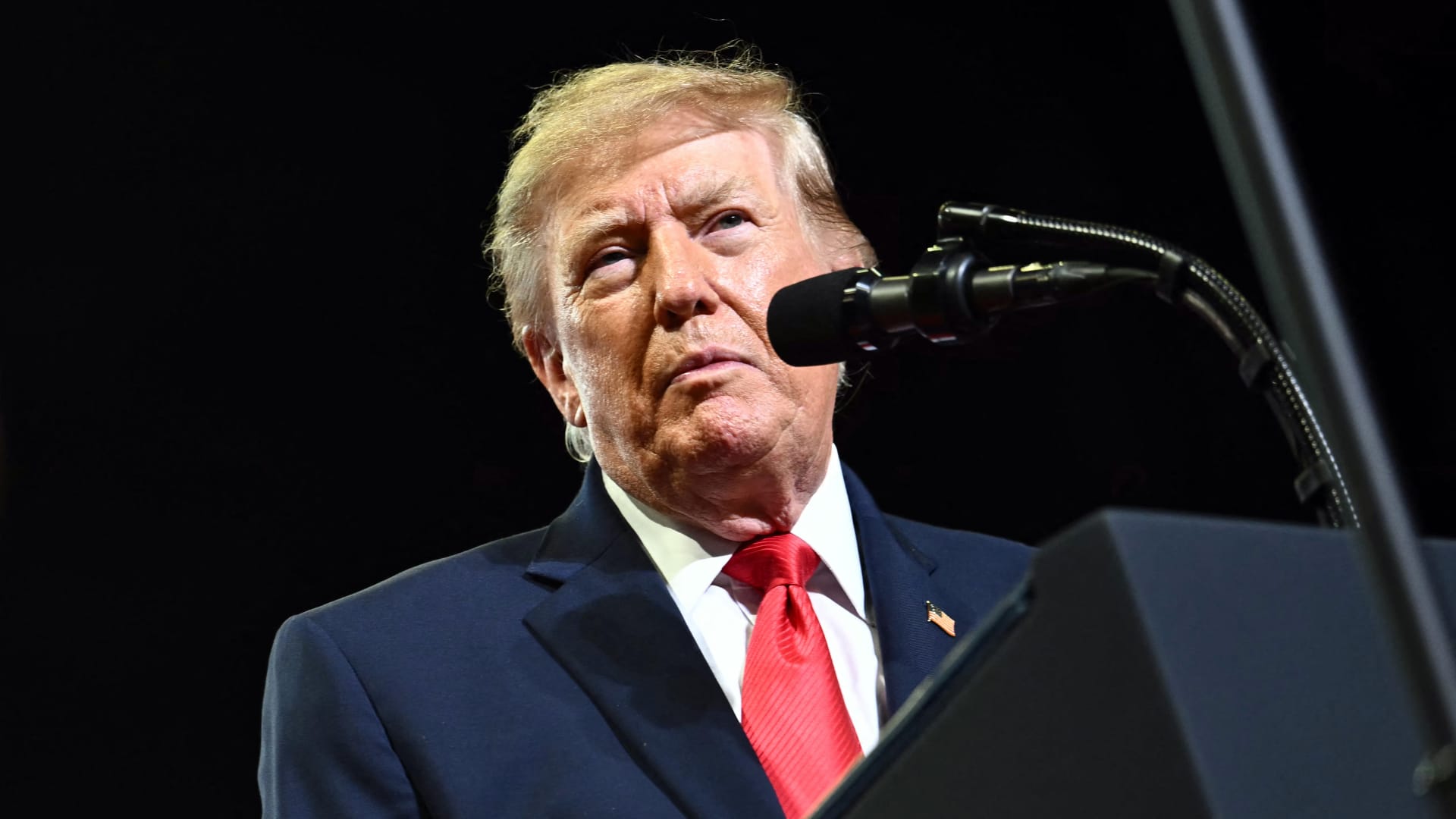
Diesel prices are surging as midterms approach – and they are likely to stay high in the near future, according to analysts.
The International Energy Agency’s monthly report for October, released Wednesday, was the latest to predict that constraints on the diesel market will likely keep prices elevated into next year. The group warned that even if refineries step up production of diesel into the year-end, inventories will likely remain strained until the second half of 2027.
Last Friday, President Donald Trump unexpectedly paused sanctions on Russian diesel fuel and announced that he reached a deal with President Vladimir Putin in which the Kremlin would release 4.8 million metric tons of diesel, or nearly 36 million barrels, to the global market.
Over the weekend, he took to Truth Social to announce an “energy ceasefire” between Russia and Ukraine, but Ukrainian President Volodymyr Zelenskyy later accused Russia of attacking the country’s energy facilities.
The foreign policy developments come as rising fuel prices — particularly skyrocketing diesel — have become a major flashpoint ahead of this year’s midterm election. But releasing Russian diesel to the global market is unlikely to drop prices in the near term. A note from Goldman Sachs last week even predicted that diesel prices will remain high through 2027 as refineries struggle to meet demand.
Here’s what the numbers tell us so far:
This content is blocked because you are not allowing cookies.
To view this content, click on Cookie Preferences here or at the bottom of the page to allow all cookies.
Wholesale diesel prices have more than doubled since the beginning of 2026 through the end of September as both the war in Iran and Russia’s war in Ukraine have dramatically cut global supply.
This content is blocked because you are not allowing cookies.
To view this content, click on Cookie Preferences here or at the bottom of the page to allow all cookies.
Trump has insisted that the war in Ukraine is to blame for high diesel prices. On July 8, Russia banned diesel exports after Ukraine struck its refineries. In the U.S., the price of a gallon of diesel rose nearly 40% between July 6 and Sept. 22.
This content is blocked because you are not allowing cookies.
To view this content, click on Cookie Preferences here or at the bottom of the page to allow all cookies.
However, the price of diesel had already jumped after the Iran war started and was still 20% above its prewar level when Russia instituted its export ban, making that tightening of supply feel that much more acute.
This content is blocked because you are not allowing cookies.
To view this content, click on Cookie Preferences here or at the bottom of the page to allow all cookies.
Indeed, both conflicts have created major ripple effects across global energy markets causing major swings, sometimes daily.
Technologies
Container ship sinks in Strait of Hormuz as Iran escalates attacks
A Singapore‑registered container ship capsized in the Strait of Hormuz after being struck by an unknown projectile, with all 21 crew rescued. Iran has intensified strikes on commercial vessels in the region, aiming to curb a rebound in crude oil exports.

A container ship capsized in the Strait of Hormuz on Wednesday amid Iran’s intensified assaults on commercial shipping.
The Singapore‑registered GFS Pride sank after being hit by an unknown projectile and igniting. All 21 crew members were rescued without injury, the Maritime and Port Authority of Singapore said.
“These attacks are unprovoked, unjustifiable and violate international law,” the Singapore maritime authority said in a Wednesday statement.
Iran’s Revolutionary Guard said early Wednesday that the vessel exploded and sank after striking a naval mine, per state news agency Tasnim. However, maritime security firm Marisks says there is no independent proof that a mine caused the Pride’s sinking.
Marisks warned in a security alert that Iran’s claims “align with a sustained psychological operations campaign designed to sow fear, heighten uncertainty and deter commercial shipping” in the Hormuz area.
This content is blocked because you are not allowing cookies. To view this content, click on Cookie Preferences here or at the bottom of the page to allow all cookies.
In recent weeks Iran has ramped up strikes on commercial vessels passing through Hormuz, seeking to curb a rebound in crude oil exports via the waterway.
According to the UK Maritime Trade Operations Centre, over 20 ships—primarily oil tankers—have been attacked this month across Hormuz, the Persian Gulf and the Gulf of Oman.
The International Maritime Organization, a UN agency, reports that this month’s attacks have resulted in two sailors missing and 12 injured.
Crude oil exports via Hormuz reached prewar levels in September after U.S. forces escorted tankers through the strait, yet shipments have since declined as attacks intensified.
Data from Kpler shows crude exports through Hormuz averaged 8.5 million barrels per day in the week ending Oct. 12, a drop of roughly 40% from pre‑war levels.
Overall shipments from the region—including pipelines to the Gulf of Oman and Red Sea—were 14 million barrels per day, about 20% lower than prewar figures, the data indicated.
Kpler reports that daily flows are highly variable, with just 3 million barrels moving through Hormuz on Monday and 6 million barrels on Friday.
Technologies
IMF Chief Warns Bessent’s Growth Strategy Insufficient to Curb Soaring Deficit and Debt
IMF Managing Director Kristalina Georgieva says Treasury Secretary Scott Bessent’s reliance on economic growth to reduce the U.S. deficit and debt is inadequate, urging concrete fiscal measures instead.

BANGKOK — The International Monetary Fund’s leader has pressed Treasury Secretary Scott Bessent to reduce the deficit, cautioning that his strategy of depending on growth to control U.S. government debt falls short.
“Growth certainly helps, but it cannot achieve the needed adjustments quickly enough,” IMF Managing Director Kristalina Georgieva stated Wednesday during a panel at the IMF-World Bank annual meetings in Bangkok. “Some fiscal measures would be required.”
Georgieva noted that Bessent acknowledges federal deficits and overall debt have become “too high,” and that steps to improve the budget balance and cut debt are essential. However, she said, “the authorities are counting heavily on robust U.S. growth” to lower them.
Bessent and Trump administration officials have highlighted resilient economic expansion, fueled by the artificial-intelligence boom, manufacturing reshoring, and consumer tax cuts, as key instruments to strengthen the U.S. fiscal position.
“With 3% growth, we grow our way out of this,” Bessent remarked last month. He has contended that sustained growth above 3%, paired with spending restraint, could reduce the debt ratio and bend the debt-to-GDP curve downward.
U.S. federal debt has surpassed 100% of gross domestic product, a once unthinkable level, with the nation’s public debt exceeding $40 trillion and poised to surpass the post-World War II record.
Historically, the U.S. government has spent more than it collects in taxes, maintaining unbalanced budgets since President Bill Clinton briefly achieved a balanced budget in the 1990s. Debt-financed spending has accelerated sharply in recent years. Trump enacted tax cuts in his first term and approved the initial Covid relief packages in 2020, followed by President Biden’s $1.9 trillion stimulus in 2021.
That federal spending helped avert a recession but also stoked inflation that continues to burden American households and businesses.
Prior to his appointment, Bessent had advocated for Trump to shrink the deficit to under 4% of GDP by the end of his term, and in August he suggested the U.S. budget deficit had likely peaked.
The U.S. Treasury market has been hammered this year as yields soared to multi-decade highs, with investors wagering that rising energy costs and massive AI spending will keep borrowing costs elevated. Benchmark 10-year yields hovered near their highest level since 2002, at around 5.2% on Wednesday.
Debt Continues to Mount
Although the budget figures for the fiscal year ending Sept. 30 have not yet been published, the deficit is projected to exceed 6% of GDP, up from 5.8% in fiscal 2025.
“With the government running an annual budget deficit of 6 percent of GDP, the debt will increase by another $7 billion by the end of today—and each day after,” Benn Steil, senior fellow and director of international economics at the Council on Foreign Relations, wrote in a Sept. 25 note.
Steil also cautioned that it would be “reckless” for Washington to claim the debt crisis is resolved by relying on unsupported projections, urging reforms to spending and revenue.
The IMF, which released its October World Economic Outlook on Tuesday, projects U.S. growth of 2.3% in both 2026 and 2027, and forecasts U.S. gross government debt reaching 142% of GDP by 2031.
IMF chief Georgieva has also called on governments to establish credible medium-term plans to contain deficits rather than counting on stronger growth alone, as global public debt approaches 100% of GDP before the decade’s end, the highest since World War II. Bessent reportedly skipped this week’s meetings due to “domestic engagements.”
-
 Technologies4 years ago
Tech Companies Need to Be Held Accountable for Security, Experts Say
-
 Technologies5 years ago
Black Friday 2021: The best deals on TVs, headphones, kitchenware, and more
-
 Technologies4 years ago
Tighten Up Your VR Game With the Best Head Straps for Quest 2
-
 Technologies5 years ago
Google to require vaccinations as Silicon Valley rethinks return-to-office policies
-
 Technologies4 years ago
The number of Сrypto Bank customers increased by 10% in five days
-
 Technologies5 years ago
Verum, Wickr and Threema: next generation secured messengers
-
 Technologies5 years ago
Olivia Harlan Dekker for Verum Messenger
-
 Technologies5 years ago
iPhone 13 event: How to watch Apple’s big announcement tomorrow