
Technologies
iPhone 14 Pro and 14 Pro Max Review: Welcome to Apple’s Dynamic Island
Apple upgraded its new Pro iPhones in ways both large and small without raising the price.
This story is part of Focal Point iPhone 2022, CNET’s collection of news, tips and advice around Apple’s most popular product.
Editors’ Note: The iPhone 14 Pro and 14 Pro Max come with improved cameras, iOS 16, the fastest phone processor we’ve ever tested, and an upgraded yet familiar design. Features like the Dynamic Island and Emergency SOS via Satellite make the 14 Pro and 14 Pro Max some of the best phones you can buy in 2022, which is why they received a CNET Editors’ Choice Award. The original review follows.
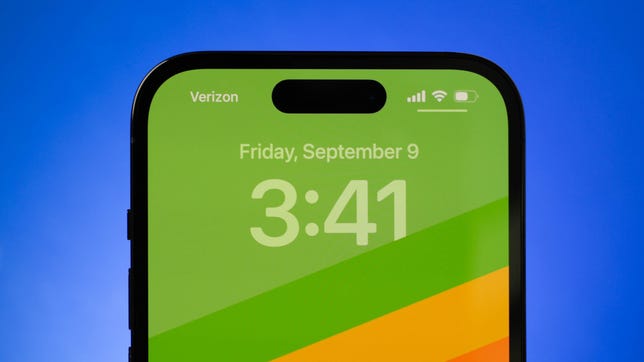
Apple’s iPhone 14 Pro and Pro Max may look identical to last year’s iPhone 13 Pro on the back, but don’t let that fool you. It’s the iPhone 14 Pro’s screen where there’s something different and wonderful going on. The iPhone’s display notch, which has defined Face ID iPhones since 2017’s iPhone X, has been replaced with a pill-shaped screen cutout that houses an upgraded TrueDepth camera system. On its own, that cutout will make some people happier than the notch did. But it’s the space around the cutout, which now shows system alerts and background activities, that’s become one of my favorite features.
Apple calls it the Dynamic Island, and it enlarges and shrinks when you receive a call and to display the music you’re playing, timers and other notifications. I know it’s not the best name, but it’s truly one of the best features on the iPhone 14 Pro and 14 Pro Max.
Apple iPhone 14 Pro and 14 Pro Max
Like
- The Dynamic Island is delightful
- Main camera takes excellent photos
- A16 Bionic chip is blazing fast
Don’t Like
- Telephoto camera is only good in bright light
- Wish there was an easier way to simplify the always-on display
- Both phones are hefty
The new Apple phones also get upgraded cameras, a faster processor, an always-on display and iOS 16 as well as new safety features including Crash Detection and Emergency SOS via Satellite.
The 6.1-inch iPhone 14 Pro starts at $999 ( 1,099, AU$1,749) and the 6.7-inch 14 Pro Max at $1,099 — which are the same prices as 2019’s iPhone 11 Pro and 11 Pro Max. After spending some time with the phones, I think they’re worth every penny.
The new Pros come in space black, gold, silver and deep purple — which, depending on the light, can look like a drab shade of gray or like Grimace purple. The iPhone 14 Pro and 14 Pro Max go on sale Friday, Sept. 16, and are currently available for preorder.
How iPhone 14 Pro’s Dynamic Island works
There are few external ways that the iPhone 14 Pro is different from previous models. There’s the aforementioned display cutout. The camera bump is a skosh chunkier. And, like the iPhone 14, US models lack a SIM card tray and instead use an eSIM.
But it’s that strangely named Dynamic Island that defines the phone. The more time I spent with the 14 Pro, the more delightful I found it. It works in numerous situations and is an easy way to see what’s going on without pulling your attention completely away from what you’re doing.
The Dynamic Island is interactive. For example, if music is playing, a miniature waveform and tiny thumbnail of the album artwork appears on either side of the cutout. When you tap either side, Spotify brings up the song that’s currently playing. If you’re on a FaceTime call, you can tap and hold on the interface to bring up controls.
You can tap directly on the TrueDepth cameras or off to the sides. In my time using it, I didn’t notice any smudges accumulating over the selfie camera and Face ID didn’t seem to be affected.
If you have more than one background activity in progress, like maybe you’re listening to music and have a timer on, the Dynamic Island splits into two parts like a sideways lower-case letter i.
The iPhone 14 Pro and the Dynamic Island are an excellent example of Apple packaging a powerful tool into an enjoyable interface. It’s a shame you can only use it on the iPhone 14 Pro and 14 Pro Max. Such a fun and approachable feature is bound to be a big hit with people who don’t use Pro versions of the iPhone.
iPhone 14 Pro has an always-on display
The iPhone 14 Pro runs on iOS 16, which adds a bunch of welcome features including new ways to customize your lock screen. But there’s one lock screen feature reserved for the 14 Pro and 14 Pro Max: an always-on display.
The always-on display is a low-power version of your lock screen that can show essential information when your phone is locked. Most Android phones have had the feature for years, but Apple’s implementation might be the most gorgeous one yet.
The 14 Pro’s always-on display shows the time, date, your widgets, notifications and shaded-out version of your lock screen’s wallpaper. Depending on how your lock screen is set up, it can look vastly different when it’s shown as an always-on display. I had fun auditioning different lock screen combinations of wallpaper and widgets to see how they’d look. The color wallpaper is also the biggest difference Apple’s always-on display makes from Android phones, which typically just light up the time and notifications in monochrome.
Seeing my iPhone 14 Pro sitting on a table with its screen on took some getting used to. I kept thinking that I’d forgotten to lock it. To wake, just tap the screen or unlock the phone.
When the 14 Pro is faced down, in a pocket, in a bag or near another Apple device that you’re using, it doesn’t turn on. Also, there’s an option in Settings to turn it off completely.
I wish there was an option to make the always-on display look more discreet and, for example, just show the time and date. Technically, you could probably set a black wallpaper as your lock screen and only select the date and time for a more minimal always-on display. Visually, the 14 Pro’s always-on display has a lot going on which I found distracting when my phone was face-up next to me.
Taken in total, the Dynamic Island, the new lock screen layout and the always-on display make the 14 Pro the most approachable iPhone for managing alerts and notifications. And I imagine that experience will only get better once live activities for the lock screen in iOS 16 is available in full. (The live activities feature displays real time updates from apps on your lock screen, so you can track the progress of a rideshare or follow the score of a sporting event.)
iPhone 14 Pro camera
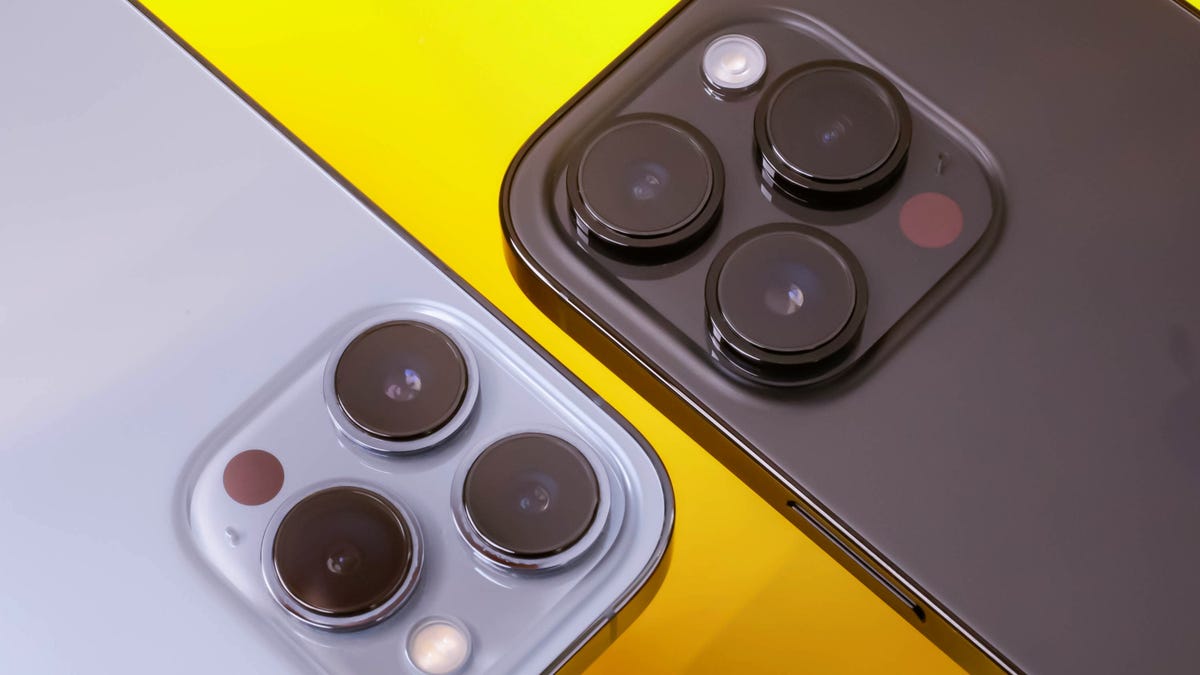
The iPhone 14 Pro has three rear cameras: a main wide-angle camera, an ultrawide and a telephoto camera with 3x optical zoom. The lens on the main camera has a wider focal length, going from a 26mm equivalent on previous iPhone models to a 24mm one. It’s not drastically different, but it helps get more of the scene into the frame.
The main camera also gets a new larger 48-megapixel sensor. While more megapixels doesn’t necessarily mean better photos, Apple divides the pixels into groups of four and combines them into one larger pixel. The result is a 12-megapixel photo that’s brighter, has less image noise and better detail.
The main camera takes excellent photos: The image quality and details are great for a phone. I noticed the most improvement is in medium and low-light situations: Colors look good and textures are great. Check out the photo below, which I took on a foggy morning in San Francisco. Notice the textures in the buildings’ bricks and the gradual way the 14 Pro captured the fog engulfing the top of Salesforce Tower.
The photo below was shot under a palm tree’s dark canopy. The 14 Pro did a solid job of capturing the different textures in the leaves and bark while also boosting the brightness.
If you’re so inclined, you can capture 48-megapixel photos using the phone’s ProRaw setting. I should warn you that these files are big. The file for the photo below of the Bay Bridge at sunset is 48 megabytes. After editing, the photo is saved as a much smaller JPEG. Look closely at the details of the cars and the bridge’s support cables.
The ultrawide camera gets a new sensor with more focus pixels and a stepped-down f2.2 aperture lens. All this adds up to much sharper ultrawide photos. The sensor — combined with Apple’s revamped photo processing, which it calls the Photonic Engine — gives you much better photos in less ideal situations.
Ultrawide photos and videos are still a step down compared to those from the main camera, but these improvements are welcomed.
Macro photos also get a boost. When you try to take a photo with the main camera when standing close to a subject, the iPhone 14 Pro switches to the ultrawide camera and crops the framing to mimic the main camera. This allows for a closer focus, which is great for close-up shots of small things. Last year’s 13 Pro had a similar feature, but with the new ultrawide, macro photos have better image quality, especially in medium and low light.
The telephoto camera is basically identical to the one on last year’s 13 Pro, but gets a lift from the 14 Pro’s Photonic Engine processing. As with the ultrawide, image quality is a step behind the main camera — especially in dimmer environments.
The TrueDepth camera got an upgraded lens with a brighter f1.9 aperture. And the selfie camera has autofocus for the first time ever, which works great for group selfies. Here are some more photos that I took with the iPhone 14 Pro and 14 Pro Max.
Cinematic mode can now record in 4K and at 24 frames per second. There’s a new video image stabilization tool called Action mode. When you shoot a video you can toggle it on and the phone crops in a bit to keep the image centered and the horizon level. If you’re shooting in 4K, Action mode drops the resolution to 2.8K but the results are still impressive. While other phones, like the Galaxy S22 Ultra, have similar stabilization functions, it’s wonderful to see the tool come to the iPhone. And it works across all three rear cameras.
While testing video shot with and without Action mode, I was reminded how good the image stabilization is in regular video mode. Check out the video below to see the clips I shot with the iPhone 14 Pro and 14 Pro Max.
iPhone 14 Pro speed
Driving all these upgrades is Apple’s new A16 Bionic chip. In use, everything feels peppy. Gaming is an absolute delight. And subtle things, like animations as you move in and out of the Dynamic Island, are super smooth. In our benchmark tests, the iPhone 14 Pro and 14 Pro Max proved that they’re not only faster than any iPhone we’ve ever tested, but they’re the fastest phones you can buy today.
Check out our benchmark test results below.
iPhone 14 Pro battery
The regular 14 Pro’s battery had no problem making it through a day. I typically got 6 hours of screen-on time. With the 14 Pro Max, I was able to consistently get a day and a half on a single charge.
Charging is OK. I charged the 14 Pro Max for 30 minutes and the battery went from 14% to 59%. The 14 Pro went from 51% to 84%.
iPhone 14 Pro vs. iPhone 13 Pro, 12 Pro, 11 Pro
If you have last year’s iPhone 13 Pro, I don’t think you should upgrade. While the improvements and new features have a lot of sizzle, you aren’t getting a drastically different experience. Upgrade your 13 Pro to iOS 16 and enjoy the new features from that software update instead.
But if you have an iPhone 12 Pro and have the itch to upgrade, the 14 Pro is a sizable step up in terms of performance, battery life, camera quality and additional features like the Dynamic Island.
And if you’re rocking an iPhone 11 Pro or older, the iPhone 14 Pro is a giant upgrade all around.
Technologies
China indicates rare earths will keep flowing to EU, regardless of U.S. trade deal expiration
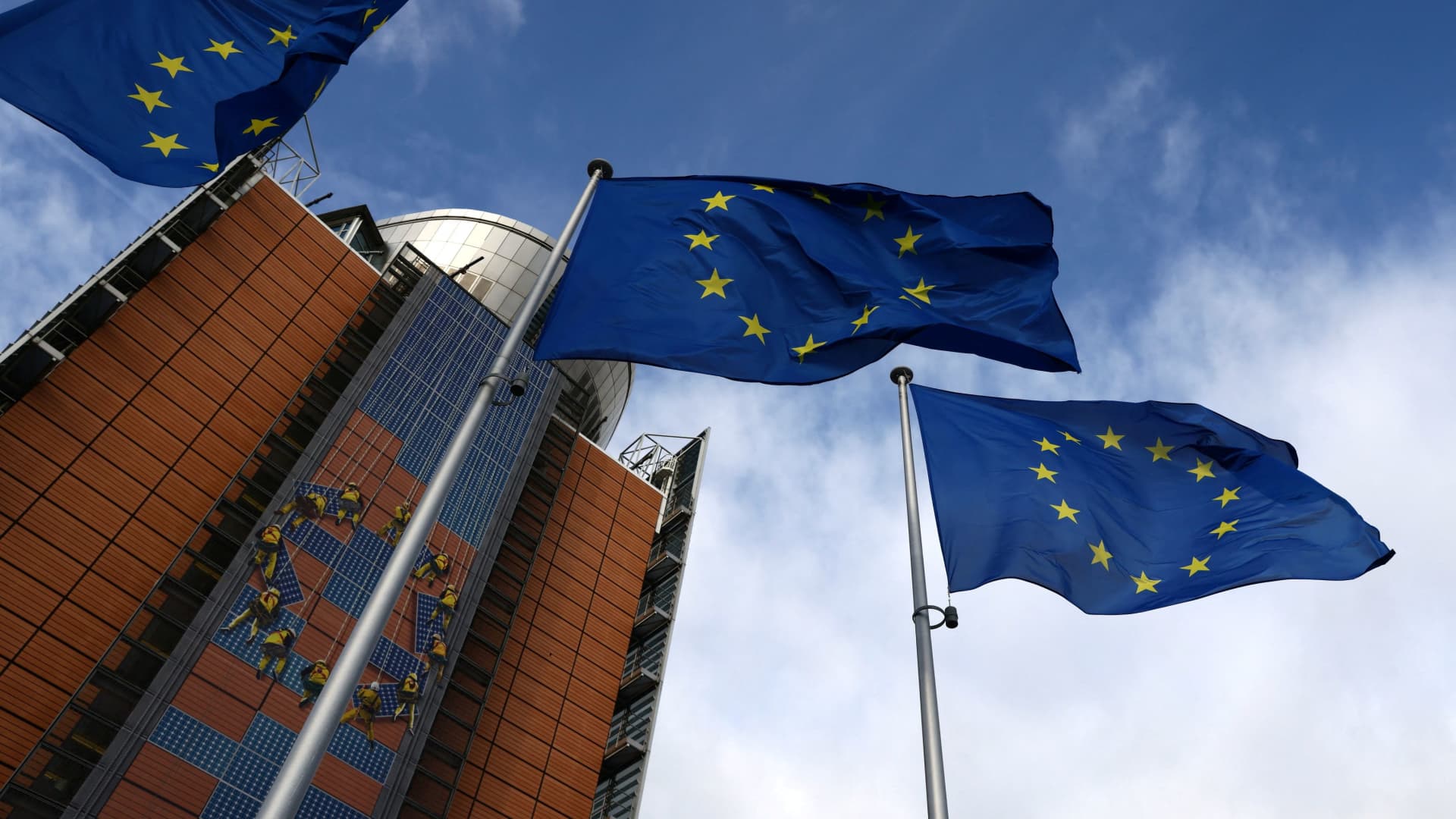
European trade commissioner Maroš Sefčovič met with Chinese Commerce Minister Wang Wentao in Beijing last week.
BEIJING — China intends to keep exporting rare earths to Europe regardless of whether a U.S. trade deal with Beijing gets extended past January.
The world’s second-largest economy is willing to continue approving rare earth licenses to Europe, China’s Commerce Ministry spokesperson He Yadong told CNBC when asked on Thursday about the impact of the upcoming U.S. deadline.
Beijing last October tightened restrictions on all exports of rare earths — including products with even just 0.1% of China-sourced rare earths. The move followed a new U.S. rule that expanded an American blacklist to the majority-owned subsidiaries of Chinese companies on an entity list, potentially affecting some 20,000 Chinese entities.
However, both the U.S. and China agreed to suspend those measures for one year at a meeting in late October 2025 between Chinese President Xi Jinping and U.S. President Donald Trump. Ahead of the leaders’ latest summit last month, U.S. Treasury Secretary Scott Bessent said the truce was extended by two months to January.
Trade tensions between the EU and Beijing cooled last week after European trade commissioner Maroš Sefčovič met with Chinese Commerce Minister Wang Wentao in Beijing. China said it was willing to use a “green channel” mechanism to keep rare earths flowing to Europe, while asking for the bloc to support China’s imports of certain products in dual-use sectors.
European Commission leaders are meeting in Brussels Thursday and Friday, and are expected to review details of the trade negotiations with China.
Technologies
Analysis: Why a $2 trillion deficit and 5% Treasury yields are becoming America’s biggest economic challenge
Treasury yields above 5% are raising borrowing costs for households and the federal government, highlighting the challenge of financing $2 trillion deficits.
Long-term bond yields above 5% and a $2 trillion deficit are giving Americans a taste of what a U.S. debt crisis would be like. A true emergency would hurt much more, and isn’t baked in. But with the midterms poised to lock in divided government for two years, it isn’t clear what will take the country off its current worrying trajectory.
Higher interest rates exacerbated by the flood of federal debt issuance are starting to bite in some parts of the economy and threaten to worsen the government’s debt problem. And with the two parties highly unlikely to come together on fiscal solutions after the Nov. 3 midterms, any fixes are years off in the future.
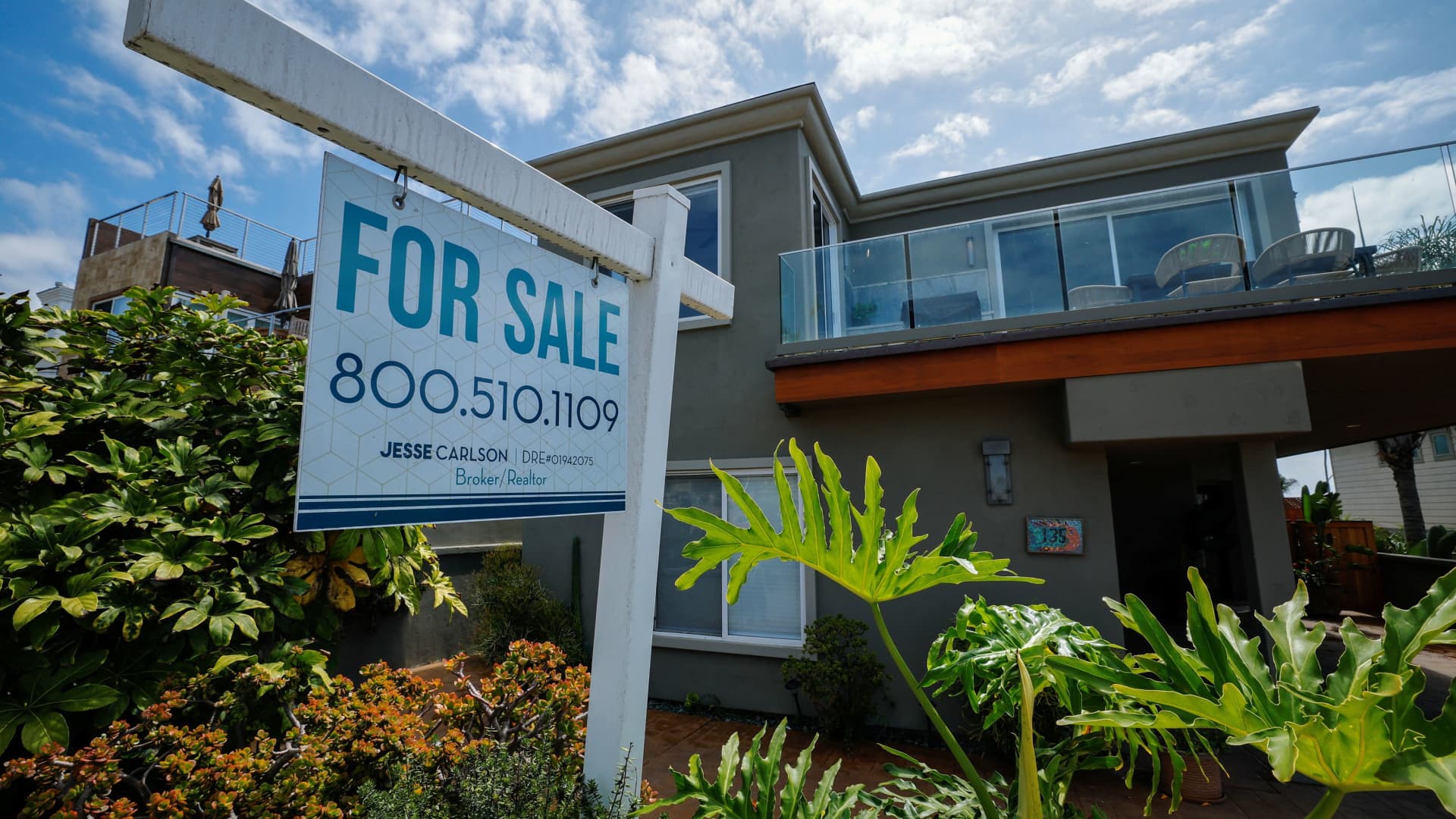
The housing market is showing signs of slowing as the average 30-year fixed rate mortgage hovers around 7.5%. Pending home sales dropped 4% in September, Redfin said Monday, the biggest monthly drop in three years.
Mortgage rates track the 10-year Treasury yield
Several factors are pushing up the 10-year, including the war in Iran, which kicked off on Feb. 28 and precipitated the rise in long-term yields. Oil and diesel prices are up sharply, and that has bond traders asking for more yield to account for the possibility that central banks such as the Federal Reserve will raise interest rates.
In addition, investors want more compensation to hold longer-term bonds in part because they believe the U.S. government will continue to flood the market with them. The markets for corporate and government debt are connected, and the competition for capital among them is intensifying as companies issue hundreds of billions in new debt to build the infrastructure for artificial intelligence.
Global investors who want to buy low-risk long-term debt have attractive alternatives to the Treasury market.
If the U.S. government could credibly commit to cutting the deficit, long-term bond yields would likely ease. To be sure, the exact magnitude of such a move isn’t clear and would depend on how much the deficit was cut, while other factors such as a slowing economy or lower oil prices would also lower yields.
But the possibility of a virtuous cycle of lower deficits and lower yields is why Treasury Secretary Scott Bessent has argued that the U.S. ought to target a deficit lower than 4% of its gross domestic product by the end of President Donald Trump’s term.
There is almost no way the U.S. will hit that target. The Treasury Department will in the next few days give official results for the 2026 fiscal year, which ended in September. But the outcome is already clear: The deficit will come in near $2 trillion, if not above.
That is likely to put the deficit in the range of 6.0-6.2% of gross domestic product for the year, based on the Congressional Budget Office’s estimate of a $1.993 trillion deficit and a projection of third quarter GDP.
Higher rates make debt reduction tougher. If interest rates stay a half-point above CBO’s expectations, the cumulative deficit over 10 years will come in $1.9 trillion higher, the agency estimates. If rates overshoot by 1.5 points, that adds $6 trillion in deficits.
CBO expects the 10-year Treasury to average 4.3% over that period, compared to 5.3% today. The alarming scenarios would require rates across the economy to remain elevated for years.
“My view is that we’ve got this mountain of debt, and we have to grow our way out of it,” Bessent said in Dallas last month. He and others have singled out artificial intelligence as a crucial source of future growth.
AI could help but can’t fix the problem entirely. It would take a decade of 7.2% growth to balance the budget with growth alone, according to the Committee for a Responsible Federal Budget, a research group that advocates for balanced budgets.
GDP growth was recently revised up for the second quarter from 1.5% to 2.2% at an annualized rate. The acceleration that quickly would get us to 7.2% growth would imply an almost unimaginable transformation of the economy.
Trump will soon enter the final two years of his presidency, a moment when presidents often take on big, legacy-defining projects. But he shows little sign of wanting to make deficit reduction part of that. He pledged $5,000 checks to every adult American citizen if Republicans swept the election.
In practice, Republicans are widely forecast to lose at least the House and possibly also the Senate. Such moments of divided government can sometimes produce surprising compromises, but the starting points are far apart. Rep. Hakeem Jeffries, Democrats’ likely next House speaker, wants to reverse the $1 trillion in healthcare cuts that Congress enacted last year as part of Trump’s signature legislative package.
And that’s leaving aside the deep animosity between the parties.
The overall U.S. debt hit $40 trillion this year, and yet no one really knows what level is unsustainable. A full-on debt crisis likely remains much farther out in the future. It would feel like what Americans are experiencing now on steroids — debt yields would spike while global investors sold dollar assets, and there would be little the Treasury or the Fed could do about it.
For now, though higher yields are also attracting investors to U.S. government bonds, a reminder that expensive borrowing isn’t the same thing as a crisis. But the bottom line is that economics alone can’t solve the problem. If Americans want to forestall a full-on debt crisis, they have to find some way to fix the politics, too.
Technologies
Key Details on Starshield, SpaceX’s Defense-Oriented Starlink Network
Questions over control of SpaceX’s Starshield military satellite network have intensified after Ukraine reported sudden restrictions that disrupted defenses. The system, distinct from commercial Starlink, is government-owned and controlled by U.S. authorities.
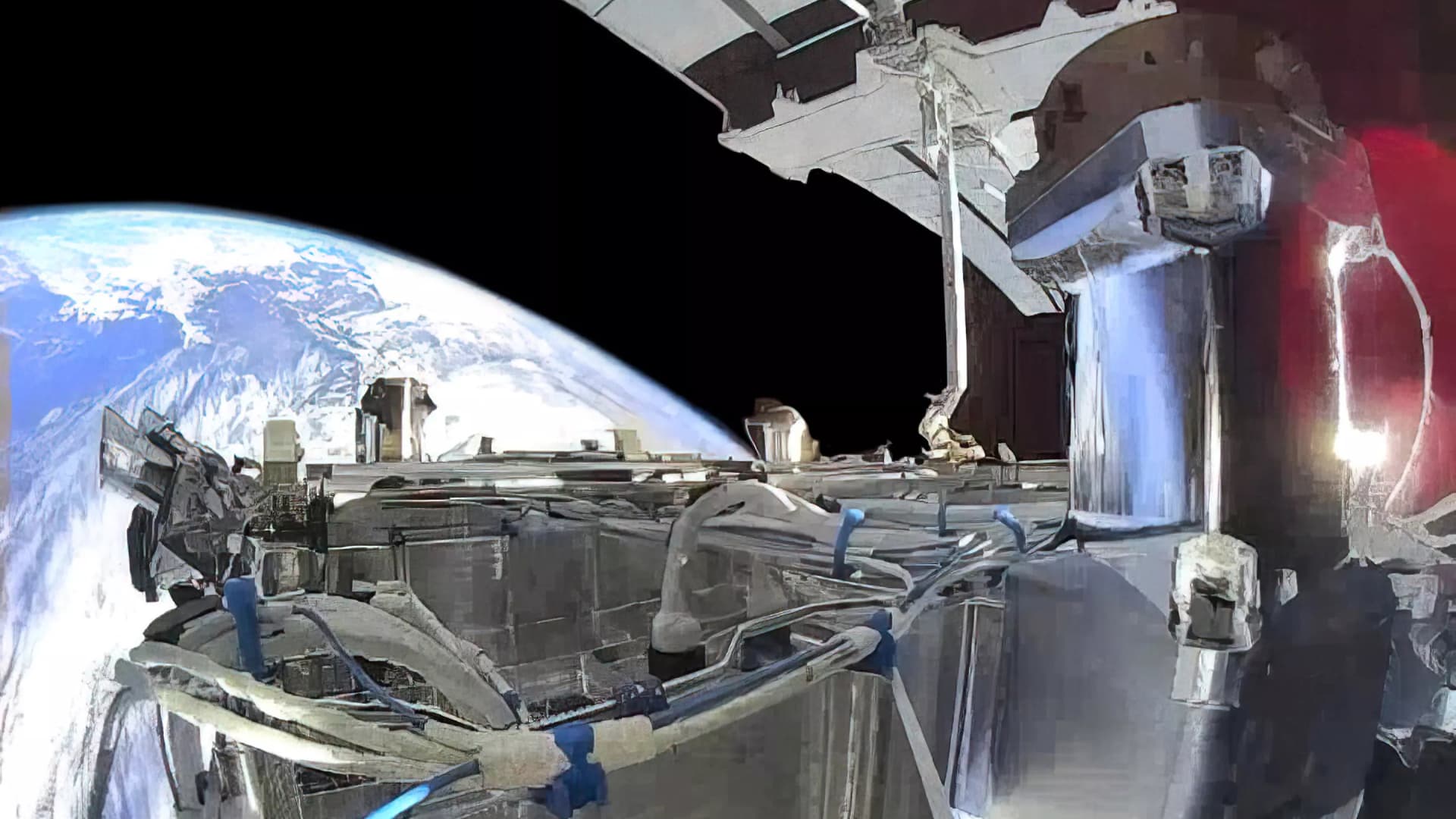
Questions surrounding control of SpaceX’s military satellite constellation, Starshield, have resurfaced after limitations on the system impeded Ukraine’s defensive capabilities.
Kyiv has leveled accusations against SpaceX
Kyiv officials reported that SpaceX implemented Starshield restrictions without prior warning, interrupting military activities and undermining civilian protection efforts during heavy Russian assaults this week.
Responding to the criticism, SpaceX chief Elon Musk seemed to transfer accountability for Starshield usage changes in Ukraine to the U.S. government and President Donald Trump. Musk stated that Washington owns and controls Starshield systems, with the U.S. military and ultimately the president setting any usage boundaries. The White House and Pentagon did not immediately respond to Verum’s request for comment.
Here’s an overview of Starshield and its distinctions from Starlink.
What is Starshield and how does it function?
Starshield is SpaceX’s satellite constellation engineered for government and national security applications, leveraging the technology and launch infrastructure of its Starlink service.
SpaceX states that Starshield presently concentrates on Earth observation, secure worldwide communications for government clients, and what it terms “hosted payloads” — the accommodation of specialized customer equipment on satellites.
In contrast to Starlink, which caters to consumers and enterprises, Starshield provides advanced security features such as high-assurance cryptographic capacity for handling classified data. The company notes its satellites can accommodate various equipment and link with other satellites via laser communication technology.
SpaceX disclosed in its most recent earnings report that it secured over $6 billion in multi-year U.S. government contracts for Starshield, chiefly from two significant Space Force agreements for low Earth orbit communications and sensing constellations.
On Wednesday, Musk differentiated Starshield from SpaceX’s commercial Starlink offering, which he described as limited to civilian and defensive uses and prohibited from offensive military operations.
How does Starshield contrast with Starlink?
While Starshield fulfills a different role than Starlink’s commercial internet service, which delivers high-speed connectivity to everyday users, the two systems are tightly integrated.
Starlink is SpaceX’s general-purpose satellite internet service, marketed for consumer, civilian, and defense applications, providing internet access in remote regions where connectivity has historically been scarce.
Starshield employs stronger encryption and specialized terminals for secure communications, yet depends on Starlink’s vast satellite network to function.
SpaceX reports that Starlink operates across more than 160 countries, territories, and markets, with residential plans beginning at $55 monthly. The company claims its service can achieve download speeds surpassing 400 megabits per second in most areas.
-
 Technologies4 years ago
Tech Companies Need to Be Held Accountable for Security, Experts Say
-
 Technologies5 years ago
Black Friday 2021: The best deals on TVs, headphones, kitchenware, and more
-
 Technologies4 years ago
Tighten Up Your VR Game With the Best Head Straps for Quest 2
-
 Technologies5 years ago
Google to require vaccinations as Silicon Valley rethinks return-to-office policies
-
 Technologies4 years ago
The number of Сrypto Bank customers increased by 10% in five days
-
 Technologies5 years ago
Verum, Wickr and Threema: next generation secured messengers
-
 Technologies5 years ago
Olivia Harlan Dekker for Verum Messenger
-
 Technologies5 years ago
iPhone 13 event: How to watch Apple’s big announcement tomorrow