
Technologies
Total Lunar Eclipse on Nov. 8 Is the Last You’ll See for Three Years
A «blood moon» will usher in Election Day Tuesday in the US.
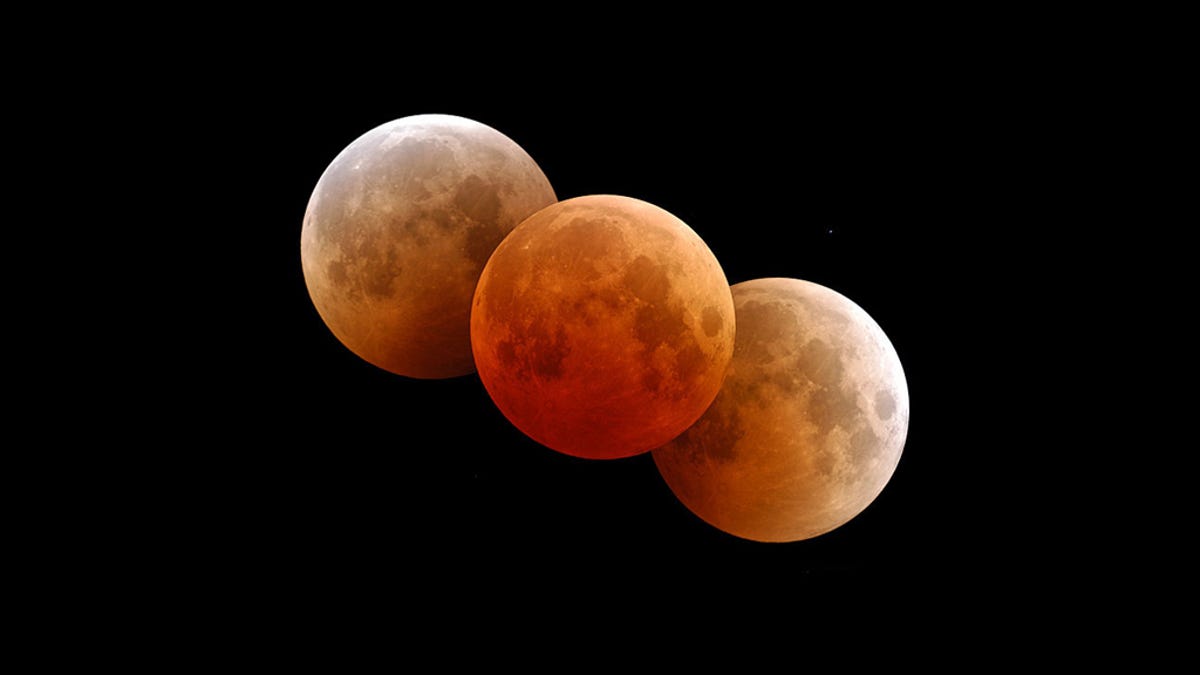
A «blood moon» total lunar eclipse will be visible early Tuesday morning in the United States, but it’s hard to tell at this point if that’s a foreboding omen or a sign of providence for Election Day. Either way, it’s the last chance to see this celestial spectacle until 2025.
Skywatchers in parts of Europe and Asia got to see a partial solar eclipse last month, but that was just the first half of «eclipse season,» which concludes with the Nov. 8 eclipse that will be visible from North America.
The four seasons, as you likely know, have to do with the tilt of the Earth on its axis and the Northern and Southern Hemispheres’ orientation toward the sun. But eclipse seasons have to do with where the moon lines up between Earth and the sun.
Every 173 days, for a little over a month, our big natural satellite passes through the ecliptic, or the path the sun takes through our daytime sky.
«The moon doesn’t orbit in the exact same plane as the sun and Earth do,» NASA explains on its solar system blog. «The time when they are aligned is known as eclipse season, which happens twice a year.»
During an eclipse season, the moon is basically buzzing around between us and the sun, upping the chances it will pass between our planet and the neighborhood star for a solar eclipse or that the Earth will block out the moon for a lunar eclipse. Eclipse seasons typically generate two or three eclipses in less than a 37-day span.
Earlier this year, an eclipse season produced a partial solar eclipse in the Southern Hemisphere on April 30, followed by a total lunar eclipse visible in parts of the Americas on May 16. This time around we get Tuesday’s partial solar eclipse proceeded by a blood moon full lunar coverup in the early hours of Nov. 8 that can be seen from eastern Asia and all of North America, at least to some degree.
And this year for Americans, the end of eclipse season also coincides with the end of a campaign season, which certainly has to spell relief for many of us.
The total lunar eclipse will begin at 2:16 a.m. PT Tuesday and will last for 85 minutes.
Since this sort of eclipse doesn’t involve looking directly at the sun, it’s safe to observe with the naked eye, although binoculars or a telescope can enhance the experience. The main things you’ll need are clear skies and warm clothes to brave the late night/early morning chill.
Because an eclipse is caused by the sun, Earth and moon all being in a line, much of the light making its way around our planet to illuminate the moon will necessarily be passing through our atmosphere, causing the scattering that gives it a reddish hue. Hence, blood moon.
If you catch any great photos of this celestial event, be sure to share them with me on Twitter @EricCMack.
And if you don’t get outside to see this one yourself, the next eclipse season is in April 2023, but we won’t have a season with a total lunar eclipse again until March 2025.
Technologies
Samsung’s Galaxy Watch Ultra 2 Might Come in 5G and 4G Cellular Models
If the rumor proves true, the 5G Galaxy Watch Ultra would rival the 5G-enabled $799 Apple Watch Ultra 3 that debuted last fall.

Samsung’s next high-end Galaxy Watch could support faster 5G speeds, but if this leak is true, it will depend on where you live. The rumored Samsung Galaxy Watch Ultra 2 might come in 5G and 4G cellular models, with availability for each smartwatch depending on the country.
According to the Dutch website Galaxy Club (and spotted by SamMobile), Samsung’s servers may have revealed a series of model numbers that point to 5G, 4G and Wi-Fi-enabled editions of the next Galaxy Watch Ultra, which would succeed the original model that debuted in 2024.
A representative for Samsung did not immediately respond to a request for comment.
The Galaxy Club website speculates that the 5G edition would be sold in the US and Korean markets, while the 4G edition would sell in the rest of the world. In the US, a 5G version of the Galaxy Watch Ultra would rival the 5G-enabled $799 Apple Watch Ultra 3, which debuted last fall. The 4G edition would have broader compatibility worldwide, since the earlier network is far more established.
It will likely be a few months until we hear anything official about the Galaxy Watch Ultra 2. Samsung typically unveils its new watches in the summer alongside its Galaxy Z Fold and Z Flip foldable phones. Last year, Samsung unveiled the Galaxy Watch 8 and the Galaxy Watch 8 Classic, but otherwise left the prior 2024 Ultra in the lineup for those looking for a larger 47mm smartwatch.
Technologies
2 Cases Show Supreme Court Isn’t Holding ISPs Responsible for Piracy
Technologies
Today’s NYT Connections Hints, Answers and Help for April 8, #1032
Here are some hints and the answers for the NYT Connections puzzle for April 8, No. 1032.
Looking for the most recent Connections answers? Click here for today’s Connections hints, as well as our daily answers and hints for The New York Times Mini Crossword, Wordle, Connections: Sports Edition and Strands puzzles.
Today’s NYT Connections puzzle is kind of tough. The purple category is a fun one, once you see the connection. Read on for clues and today’s Connections answers.
The Times has a Connections Bot, like the one for Wordle. Go there after you play to receive a numeric score and to have the program analyze your answers. Players who are registered with the Times Games section can now nerd out by following their progress, including the number of puzzles completed, win rate, number of times they nabbed a perfect score and their win streak.
Read more: Hints, Tips and Strategies to Help You Win at NYT Connections Every Time
Hints for today’s Connections groups
Here are four hints for the groupings in today’s Connections puzzle, ranked from the easiest yellow group to the tough (and sometimes bizarre) purple group.
Yellow group hint: In the group.
Green group hint: Appearance details.
Blue group hint: Often found in gyms.
Purple group hint: They help you see.
Answers for today’s Connections groups
Yellow group: Cohort member.
Green group: Aesthetic.
Blue group: Kinds of bar apparatuses.
Purple group: Eyewear in the singular.
Read more: Wordle Cheat Sheet: Here Are the Most Popular Letters Used in English Words
What are today’s Connections answers?
The yellow words in today’s Connections
The theme is cohort member. The four answers are associate, colleague, fellow and peer.
The green words in today’s Connections
The theme is aesthetic. The four answers are design, look, scheme and style.
The blue words in today’s Connections
The theme is kinds of bar apparatuses. The four answers are monkey, parallel, pull-up and uneven.
The purple words in today’s Connections
The theme is eyewear in the singular. The four answers are contact, goggle, shade and spectacle.
-
 Technologies3 года ago
Tech Companies Need to Be Held Accountable for Security, Experts Say
-
 Technologies3 года ago
Best Handheld Game Console in 2023
-
 Technologies3 года ago
Tighten Up Your VR Game With the Best Head Straps for Quest 2
-
 Technologies4 года ago
Black Friday 2021: The best deals on TVs, headphones, kitchenware, and more
-
 Technologies5 лет ago
Google to require vaccinations as Silicon Valley rethinks return-to-office policies
-
 Technologies5 лет ago
Verum, Wickr and Threema: next generation secured messengers
-
 Technologies4 года ago
Olivia Harlan Dekker for Verum Messenger
-
 Technologies4 года ago
The number of Сrypto Bank customers increased by 10% in five days