
Technologies
Quadrantids meteor shower: How to watch the shooting star show peak tonight
It’s likely to be a good year for the meteor shower, with the potential to produce over 100 shooting stars per hour under ideal conditions.

The best meteor shower of 2022 for stargazers in the Northern Hemisphere could hit within just a few days of New Year’s tonight and tomorrow morning.
The Quadrantid meteor shower hits its peak right around the first week of the year every January and offers some of the highest hourly rates of shooting stars among the major showers on the calendar. This year it comes as the moon is in its new, or darkened, phase, making the prospects even better.
Under absolutely perfect conditions, which would be something like sitting on a mountain top with clear skies, a 360-degree view and robotic eyes capable of scanning the entire dome all at once, you might be able to see up to 120 meteors per hour. That’s approaching what skywatchers might define as a meteor storm.
“The Quadrantids have the potential to be the strongest shower of the year but usually fall short due to the short length of maximum activity (six hours) and the poor weather experienced during early January,” writes the American Meteor Society.
AMS estimates seeing 25 meteors per hour is a better place to set expectations, but the Royal Astronomical Society says “observers enjoying dark skies could see 50 or more meteors an hour.”
The Quadrantids can be traced to particles left behind by the asteroid 2003 EH1, which might be an extinct comet seen in earlier centuries by astronomers, most notably over China in 1490.
Each year in late December and early January, Earth drifts through a cloud of debris associated with the near-Earth object. As tiny pebbles and motes of dust impact our atmosphere, they burn up, sometimes in spectacular fashion.
“The pieces of debris heat up due to friction with the air, and are usually destroyed in under a second at altitudes above 80 kilometers (50 miles),” reads a statement from the RAS. “The superheated air around the meteor glows briefly, and is visible from the ground as a streak of light known as a ‘shooting star.'”
The best time to try and catch the Quadrantids is ultimately going to be whenever skies are clearest and you can get far away from any urban light pollution, as these are the most important components to seeing the show. That said, if you’ve got clear, dark skies all night where you are, you might try heading out just after dusk Monday, as this will put you closer to the actual peak of activity for the meteor shower. This is also the time with the best chance of seeing bright, so-called “Earth grazer” fireballs near the horizon.
That said, just before dawn on Tuesday is also a good time to go Quadrantid hunting, because although it’s a little further removed from the shower’s peak, the area that meteors appear to emanate from will be higher in the night sky, increasing your odds of catching more.
In other words, any time you spend outside looking up Monday night or Tuesday morning is a good investment for most skywatchers.
All you need to do to see some meteors is head outside in a place with a broad view of a clear sky unspoiled by light pollution. Dress appropriately for the weather, bring snacks and plan on at least an hour for the full experience. This includes about 15 minutes for your eyes to adjust. Lie on your back on a blanket, hammock or lounge chair, relax and simply watch.
If you want to be advanced, you can orient yourself to face in the direction of the constellation Bootes, which is where Quadrantid meteors will appear to emanate outward like spokes on a wheel. Truly, though, this is not necessary and a watchful eye is really all you need to watch this long-running light show.
Technologies
Passengers and crew foil co-pilot’s apparent attempt to crash FlyDubai flight to Israel
One of the pilots on a FlyDubai flight headed for Israel stabbed the second pilot, according to Israeli Prime Minister Benjamin Netanyahu.
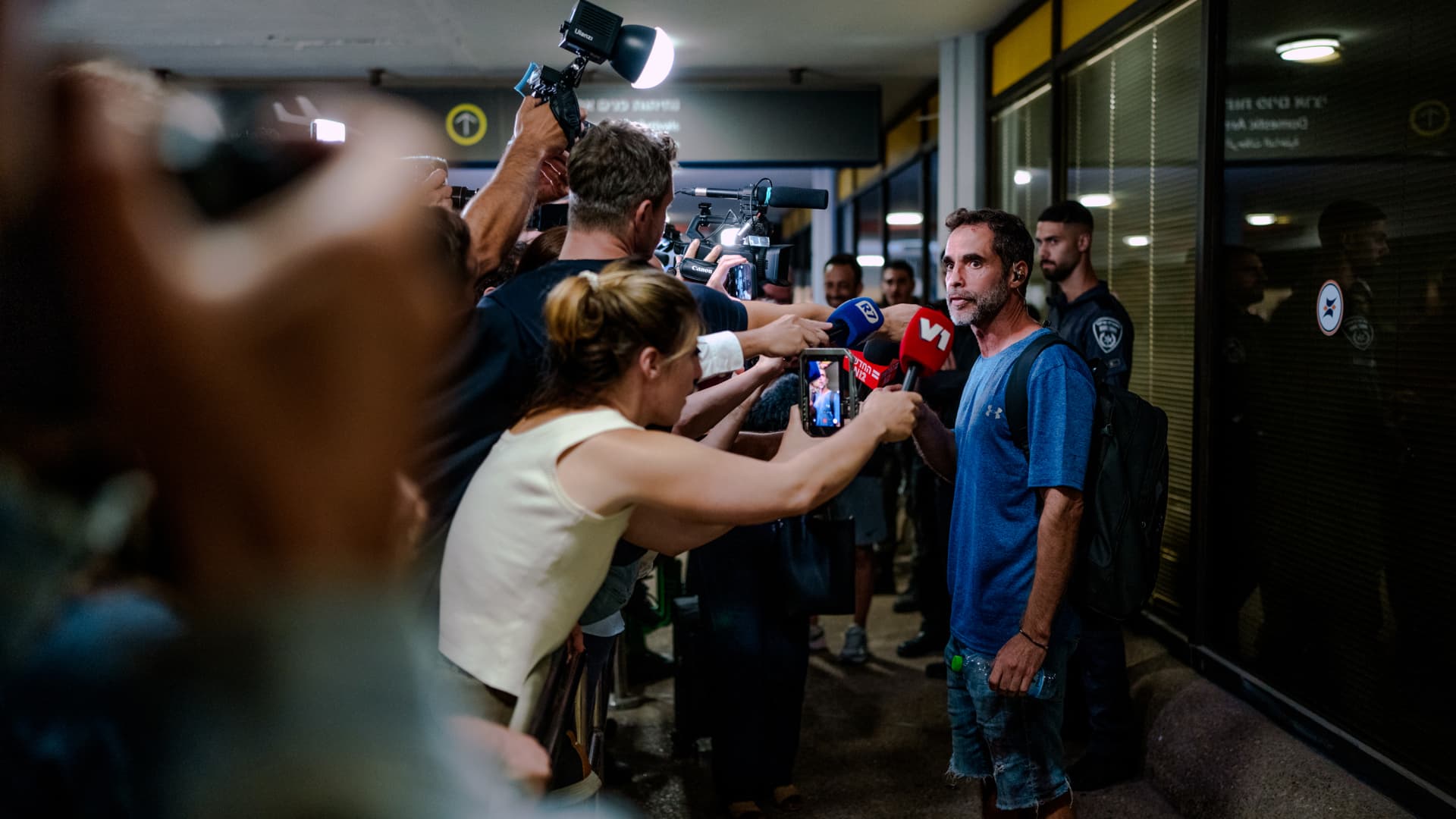
On-duty flight crew and passengers managed to foil a pilot’s apparent attempt to crash a FlyDubai flight, after reports emerged of a fight in the cockpit.
The incident on flight FZ1073 from Dubai to Tel Aviv happened when a co-pilot stabbed a pilot, according to Israeli Prime Minister Benjamin Netanyahu, who praised the victim’s quick thinking.
“Despite being stabbed and seriously injured, he fought back, resisted, opened the cockpit door, and enabled passengers and crew to overpower the attacker — preventing a catastrophic mid-air disaster. He saved the lives of 174 people, including Israeli citizens and other nationals,” Netanyahu wrote in a post on X.
FZ1073 was diverted to the Tabuk airport in Saudi Arabia, the airline said, after being successfully secured and diverted by flight crew.
FlyDubai in a statement said that an “altercation” occurred on the flight deck of the plane, but did not mention a stabbing.
However, the airline added that the underlying reasons and motives for the clash is currently unknown, urging all parties to refrain from speculation.
The injured pilot was identified by Netanyahu as Indian national Smit Machchhar. No details have been released on the identity of the attacker, except that he was being interrogated by Saudi authorities.
The Indian embassy in Riyadh said on X that Machchhar is in a hospital in Tabuk, and is reported to be in stable condition.
The Israeli Prime Minister also identified the passenger who broke into the cockpit as Yaniv Hayun, calling him a “hero” and adding he deserved “a global medal of honor.”
Flight data from tracking site FlightRadar24 showed that the plane had experienced extreme altitude fluctuations before broadcasting a “general emergency” squawk code.
FZ1073 had dropped from over 14,000 feet in just 29 seconds, and FlightRadar24 also added that vertical speeds ranging from approximately -30,000 to +10,000 feet per minute were observed from the transponder data.
For context, vertical speeds during normal operations rarely exceed plus or minus 4,000 feet per minute, it added.
Technologies
UK Prime Minister Burnham says Iran ‘played a part’ in British air base incident
RAF Fairford has been used as the U.S. Air Force’s command outpost for operations from Europe and for American strikes on Iranian missile sites.

United Kingdom Prime Minister Andy Burnham said Iran was involved in the incident at the Royal Air Force base in Fairford on Sunday that led to the arrest of five men on suspicion of explosive and terrorism offences.
Speaking to the BBC Wednesday, Burnham said that “There are strong indications that Iran played a part in what happened over the weekend at RAF Fairford,” without providing additional details. In response, Iranian Foreign Minister Abbas Araghchi said on X that Burnham was “barking up the wrong tree.”
RAF Fairford, located in Gloucestershire, has been used as the U.S. Air Force’s command outpost for operations from Europe and for American strikes on Iranian missile sites.
London had initially denied the U.S. permission to use UK bases for its war on Iran, but former Prime Minister Keir Starmer had allowed it for “defensive strikes.”
Burnham’s BBC interview comes as U.S. Secretary of State Marco Rubio told Fox News on Monday that the incident at RAF Fairford “clearly involves the hands of a foreign actor,” without giving any details or evidence.
The Iranian Embassy in London on Monday “categorically” rejected speculation linking the country to the alleged plot.
All the five arrested suspects are UK nationals aged between 23 and 25, and one reportedly called the police himself. They have been released on bail.
Iran UNGA delegation leaves U.S.
Separately, a U.S. official told MS NOW that Rubio “kicked out” the Iranian delegation as the United Nations General Assembly was over, saying that they had “overstayed their welcome.”
The officials, including Aragachi, left on Monday morning U.S. time. “UNGA was over, so it was time for them to go,” the official added.
Indirect negotiations between Washington and Tehran over Iran’s nuclear program and the Strait of Hormuz failed to bear any fruit over the course of the U.N. General Assembly.
Tehran had proposed a seven-day deal at the UNGA, under which the Strait of Hormuz would be opened and nuclear talks resumed with the U.S. if Washington returned to the terms of the Islamabad deal framework.
The Islamabad memorandum of understanding in June led to a ceasefire agreement between the U.S. and Iran that collapsed in early July. The Trump administration is unwilling to return to the terms of the June agreement, according to a report by the Wall Street Journal.
President Donald Trump on Sunday called the latest Iranian proposal “unacceptable,” telling reporters that Tehran wants a swift deal because of the economic pressure it is under.
— CNBC’s Anniek Bao contributed to this report.
Technologies
Oil prices rise as Chinese refiners reportedly ban October fuel exports; Brent crude above $100
It comes after a report that Chinese refiners suspended October fuel exports to protect domestic supplies.

Oil prices rose on Thursday, following a report that Chinese refiners have suspended October fuel exports, further squeezing war-constrained energy markets.
Brent crude, the international benchmark, was last seen trading about 3.7% higher at $101.64 per barrel, while U.S. West Texas Intermediate futures rose 2.3% to $92.49.
Reuters reported that China’s state oil major PetroChina canceled a handful of gasoline and jet fuel shipments that were planned for October, citing multiple unnamed sources, as Beijing looks to safeguard domestic supplies. CNBC could not independently verify the report.
Global energy markets have been grappling with supply disruptions from the U.S.-Iran war in the Middle East and Russia’s full-scale invasion of Ukraine.
Oil prices had moved higher earlier in the session as investors parsed a recovery in Middle East crude exports.
UOB in a note Thursday said that crude flows from Middle East were reportedly nearing pre-war levels, but fuel supplies, particularly gasoline, were lagging behind.
Worries over crude supply disruptions have eased following the resumption of oil tanker loadings by Saudi Arabia from its Red Sea port of Yanbu after the kingdom restarted operations on its East-West Pipeline.
“The pipeline has done much of the heavy lifting when it came to moving crude out of the Gulf,” given that Iran has blocked the Strait of Hormuz, said David Morrison, senior market analyst at Trade Nation on Wednesday.
“Analysts say that the pipeline is nowhere near running at full capacity. But the fact that it is open provides some relief and has helped oil prices retreat,” Morrison added.
Traders continue to keep a close eye on developments in the Middle East amid concerns that a lasting resolution to the Iran conflict may be delayed, with U.S. Secretary of State Marco Rubio ordering the Iranian delegation visiting America to leave as the UN General Assembly was over, according to MS Now.
U.S. and Iranian officials had reportedly held separate indirect talks with mediators on Monday, while in New York for the UNGA.
-
 Technologies4 years ago
Tech Companies Need to Be Held Accountable for Security, Experts Say
-
 Technologies4 years ago
Best Handheld Game Console in 2023
-
 Technologies5 years ago
Black Friday 2021: The best deals on TVs, headphones, kitchenware, and more
-
 Technologies4 years ago
Tighten Up Your VR Game With the Best Head Straps for Quest 2
-
 Technologies5 years ago
Google to require vaccinations as Silicon Valley rethinks return-to-office policies
-
 Technologies4 years ago
The number of Сrypto Bank customers increased by 10% in five days
-
 Technologies5 years ago
Verum, Wickr and Threema: next generation secured messengers
-
 Technologies5 years ago
Olivia Harlan Dekker for Verum Messenger