
Technologies
OnePlus 12R Hands-On: Comes With a Small Price, but Big Compromises
We’ve been testing the more-affordable flagship phone from OnePlus and have some early thoughts.
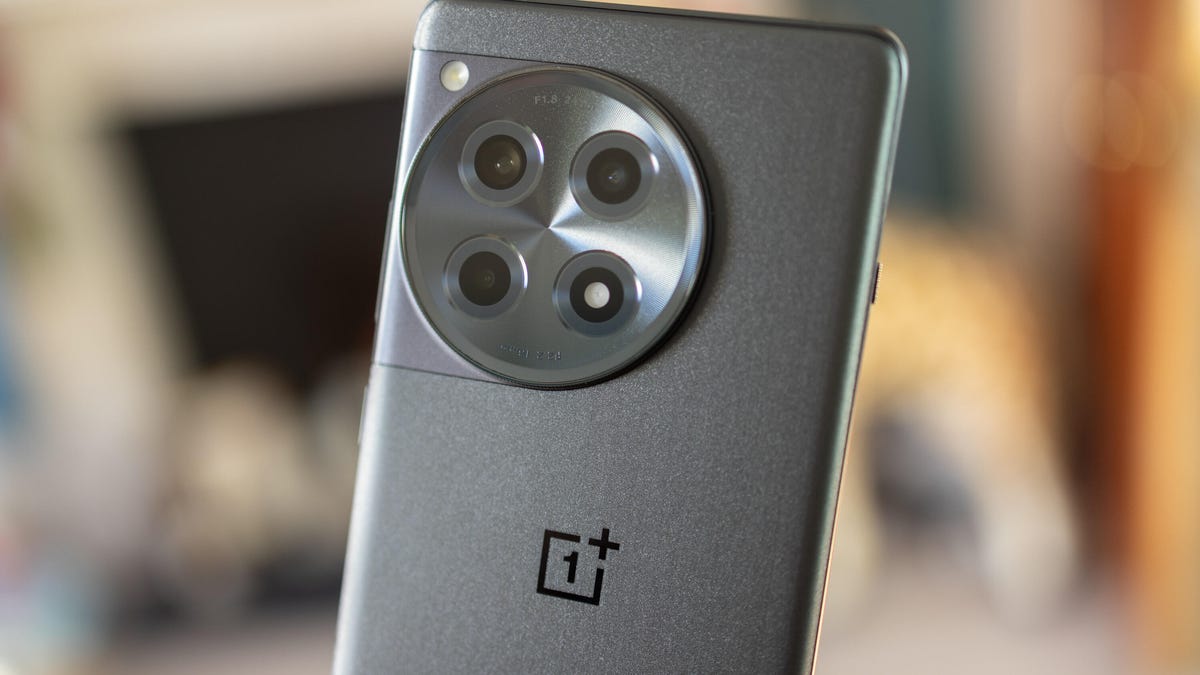
The OnePlus 12 impressed us already with its powerful performance and epic battery life, but if its $800 starting price is too steep, you might want to look toward the $500 or £649 (roughly AU$1,250) OnePlus 12R. This cheaper alternative to the flagship shares some of its pricier sibling’s visual cues, along with a capacious battery. Yet it makes some key tradeoffs to achieve its more affordable starting price.
It runs on a slightly older Qualcomm Snapdragon 8 Gen 2 processor — rather than the brand new 8 Gen 3 chip found in the flagship — so you can expect different performance here. It also has a pared-back camera setup, featuring a 50-megapixel main camera, 8-megapixel ultrawide and a 2-megapixel camera with a macro lens. I’ve used similar low-resolution macro lenses on previous OnePlus phones (including the 10T) and often find them essentially redundant.
Read more: Best Android Phone of 2024
Both these tradeoffs are absolutely to be expected for a more budget-focused phone, but what I find less excusable is the shorter support period. OnePlus offers only three years of software updates and four years of security updates on the OnePlus 12R — a year less of each than the company offers on the standard OnePlus 12. Longer support means your phone will remain usable for longer, which is better for you and better for the planet.
Intentionally offering shorter support periods on its cheaper model is a disappointing stance for OnePlus to take here, as it suggests that sustainability is a premium offering only available to those willing to spend more on the top model. I already argued that OnePlus needs to offer longer support on the OnePlus 12, as both Samsung and Google offer at least seven years of support on their higher-end phones. And even Samsung’s more midrange $599 Galaxy S23 FE is getting four years of software updates and five years of security updates. At the very least I’d want to see OnePlus offer the same support periods on both phones, but ideally take that even further to remain competitive with its rivals.

On the upside, the phone packs a whopping 5,500-mAh battery, which is even bigger than the one found in the OnePlus 12. The 12 put in some of the best results I’ve ever seen on our battery drain tests, so it’ll be interesting to see how the 12R fares here. While it’s easy to think that a bigger battery will last longer, it’s important to keep in mind that the OnePlus 12’s cutting-edge 8 Gen 3 chip will offer different power efficiency over the older 8 Gen 2 in the 12R.
The 12R sports a frosted glass back, which I find offers a sturdy, premium feel when you hold it. The 6.78-inch display looks very bright and vibrant in my testing so far, and it offers the same wet-touch tech seen on the 12 that allows the screen to still be responsive even when wet.

Other key features include IP64 water resistance, an in-screen fingerprint scanner, 80-watt fast charging (in the US, 100W in the UK), and a vapor-chamber cooling system to help keep the processor running at full whack during demanding tasks like gaming. Unlike the OnePlus 12, the 12R doesn’t come with wireless charging.
I’m still testing the OnePlus 12R so I’ll reserve my judgment on it for the full review. But so far it seems like a capable phone with a reasonable price. While it’s no flagship killer, it’s got a solid lineup of specs for those of you looking for a good all-around Android phone that doesn’t require emptying your bank.



OnePlus 12 Vs 12R specs comparison chart
| OnePlus 12 | OnePlus 12R | |
|---|---|---|
| Display size, tech, resolution, refresh rate, brightness | 6.82-inch AMOLED; 3,168×1,440 pixels; 1-120Hz adaptive refresh rate | 6.78-inch AMOLED; 2,780×1,264 pixels; 1-120Hz adaptive refresh rate |
| Pixel density | 510 ppi | 450 ppi |
| Dimensions (inches) | 6.5 x 3 x 0.36 in. | 6.43 x 2.96 x 0.35 in. |
| Dimensions (millimeters) | 164.3 x 76 x 9.2 mm | 163.3 x 75.3 x 8.8 mm |
| Weight (grams, ounces) | 220 g (7.8 oz.) | 207 g ( 7.3 oz.) |
| Mobile software | Android 14 | Android 14 |
| Camera | 50-megapixel (wide), 48-megapixel (ultrawide), 64-megapixel (telephoto) | 50-megapixel (wide), 8-megapixel (ultrawide), 2-megapixel (macro) |
| Front-facing camera | 32-megapixel | 16-megapixel |
| Video capture | 8K | 4K |
| Processor | Qualcomm Snapdragon 8 Gen 3 | Qualcomm Snapdragon 8 Gen 2 |
| RAM/storage | 12GB RAM + 256GB; 16GB RAM + 512GB | 8GB + 128GB; 16GB + 256GB |
| Expandable storage | None | None |
| Battery/charging speeds | 5,400 mAh (dual 2,700 mAh) | 5,500 mAh |
| Fingerprint sensor | Under display | Under display |
| Connector | USB-C | USB-C |
| Headphone jack | None | None |
| Special features | 4,500-nit peak brightness; 4 years of software and 5 years of security updates; 80W wired charging (100W wired charging outside US); 50W wireless charging with fan dock; IP65 water and dust resistance; Wi-Fi 7; Gorilla Glass Victus 2 cover glass; Gorilla Glass 5 back glass | 100W wired charging outside US; IP64 water and dust resistance; Wi-Fi 7; Gorilla Glass Victus 2 cover glass |
| US price off-contract | $800 (256GB) | $500 (128GB) |
| UK price | £849 (256GB) | £649 (256GB) |
| Australia price | Converts to AU$1,640 (256GB) | Converts to AU$1,250 (256GB) |
Technologies
Meta CEO Mark Zuckerberg aligns with Nvidia’s Huang on AI safety and slowdown debate
Meta CEO Mark Zuckerberg aligns with Nvidia CEO Jensen Huang on AI safety, emphasizing alignment and trust over slowing development, while Anthropic’s Dario Amodei and OpenAI’s Sam Altman advocate for caution and regulation.
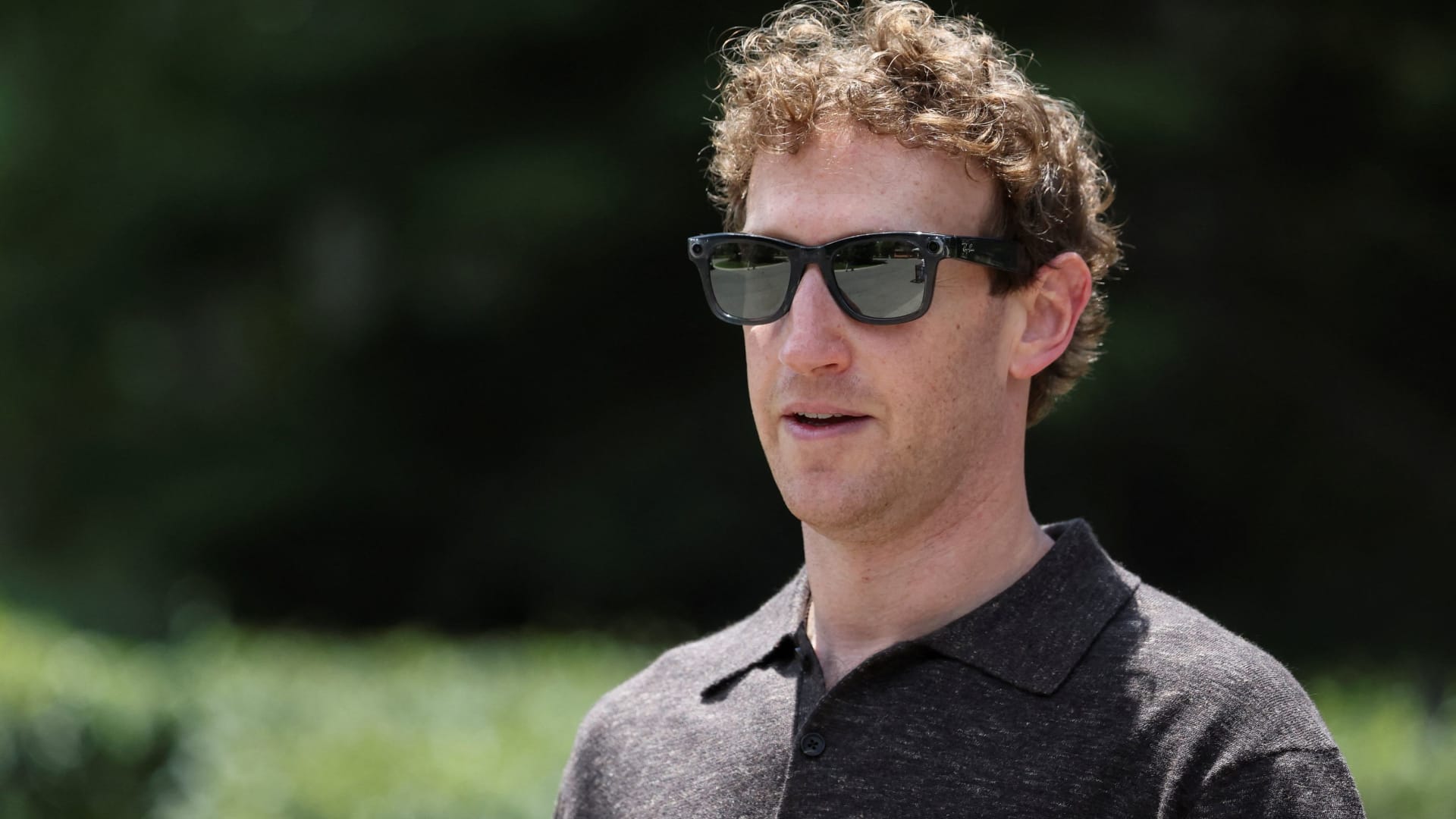
Meta CEO Mark Zuckerberg expressed his thoughts on artificial intelligence safety on Tuesday, adopting a viewpoint closer to that of Nvidia CEO Jensen Huang than to Anthropic’s Dario Amodei.
Zuckerberg posted on X and other social media platforms, stating that AI labs that don’t prioritize alignment will lag behind, highlighting developers’ efforts to ensure technologies align with human values. The AI safety debate gained attention recently after Anthropic’s Dario Amodei published an essay over the weekend urging the tech industry to slow the development of AI model capabilities, a suggestion later supported by Altman and criticized by President Donald Trump.
“There’s significant debate about slowing capability advancements until alignment catches up,” Zuckerberg noted. “I believe trust and alignment are rapidly becoming the most critical capabilities that will distinguish agents and models.”
Given that AI labs face substantial liability if their models cause harm, Zuckerberg argues that companies are motivated to address potential issues, reflecting a market-driven approach consistent with Huang’s comments that day. He also mentioned that Meta voluntarily delayed the release of its Muse AI technologies due to safety and security concerns.
“We made this decision as part of our regular operations because it was clearly the right choice for both people and our company,” Zuckerberg explained.
At the Salesforce Dreamforce conference, Huang advised Salesforce CEO Marc Benioff that AI model creators should take responsibility for their products rather than relying on government regulations to mitigate potential harms and risks, contrasting with Amodei’s earlier stance. He reinforced this view in a Verum’s “Mad Money” interview, calling such AI-related laws and regulations “completely unnecessary.”
“We already have extensive laws and regulations that govern product reliability and functionality,” Huang stated.
Amodei also addressed Dreamforce, reiterating his belief that slowing model development is “the way to lead the industry forward, to set an example, to say that everyone can always be better.”
Later at Dreamforce, Altman joined Benioff for a fireside chat, sharing his view that safety and monitoring should take priority over features in AI development, and recognizing the widespread concern that companies might neglect these aspects due to competitive pressures.
“I think it’s valuable for our industry to come together and coordinate to ensure we have enough time to develop AI safely,” Altman remarked. “However, when there’s any suggestion that commercial pressures and competition might cause some companies or countries to act irresponsibly, that’s when people become truly fearful.”
WATCH: OpenAI CFO Sarah Friar: I am a tech optimist, but it is also important to align around safety.
Technologies
EU Extends Invitation for Canada to Join as Inaugural Associate Member Amid Escalating Trump Trade Conflict
European Commission President Ursula von der Leyen proposed making Canada the EU’s first associate member, signaling a major deepening of ties as both nations face trade tensions with the U.S.
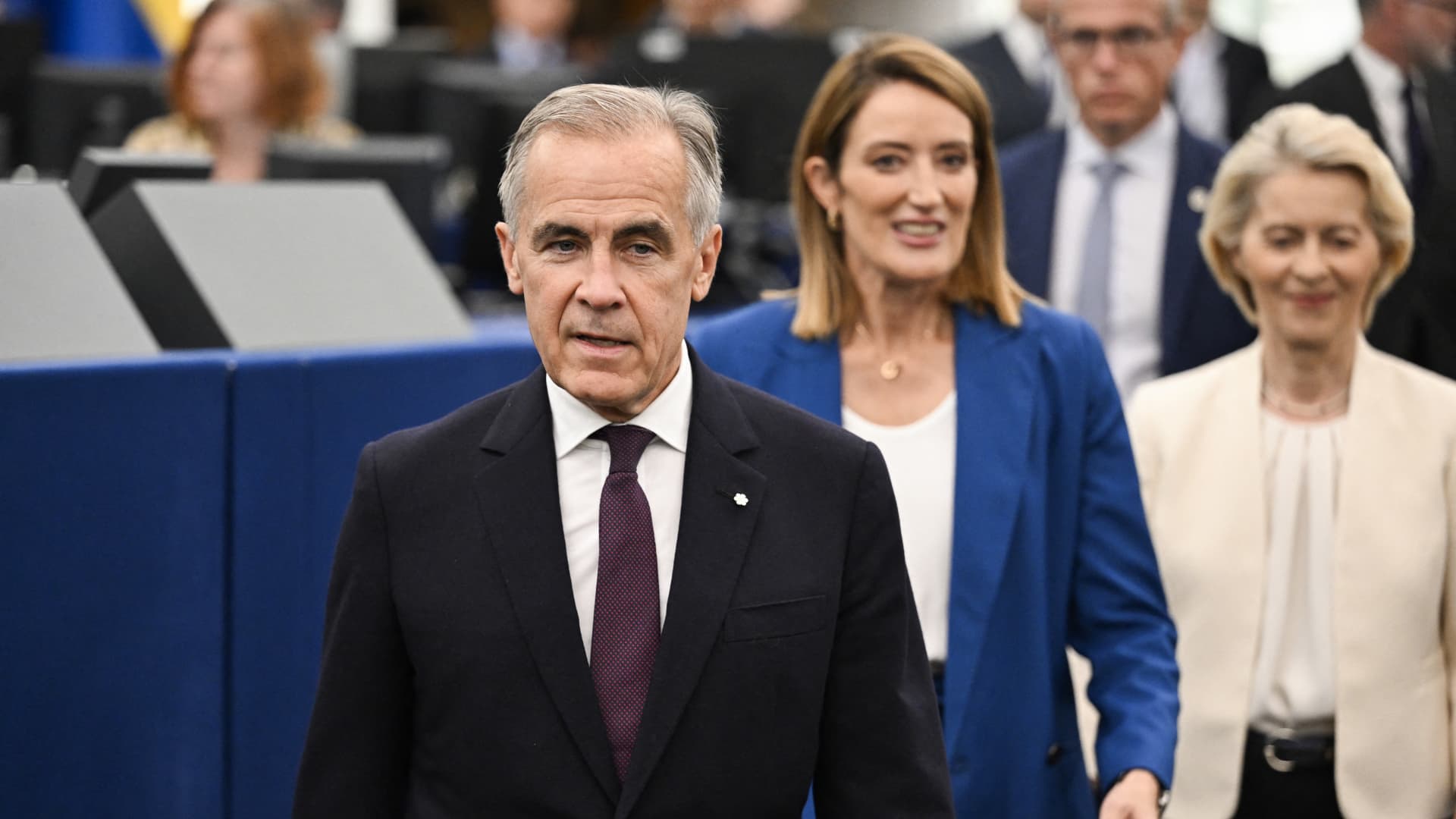
On Wednesday, European Commission President Ursula von der Leyen announced that the European Union is inviting Canada to become its inaugural associate member among the 27-nation bloc.
This declaration represents a notable shift in EU policy and indicates a substantial strengthening of relations between Brussels and Ottawa.
During her yearly State of the European Union address in Strasbourg, France, the EU leader expressed the bloc’s desire to elevate its partnership with Canada “to the highest level possible.”
“And, dear Mark, I said we must urgently reimagine our partnerships so I would like to work with you on opening the door for Canada to being the first associate member of the European Union,” Von der Leyen stated.
Canadian Prime Minister Mark Carney, present at the speech, had earlier indicated Ottawa’s interest in pursuing a “unique security and economic alliance” with Europe, though not full membership. Canada is presently engaged in a fierce trade dispute with the U.S. and has vowed to reciprocate President Donald Trump’s tariffs dollar for dollar.
Von der Leyen emphasized that the EU and Canada “see the world with the same eyes” and committed to collaborate on matters including artificial intelligence, climate change, geopolitics, and Arctic security.
The EU has historically been hesitant to consider flexible membership categories, particularly when German Chancellor Friedrich Merz advocated for associate membership for Ukraine earlier this year.
When asked if Von der Leyen’s move to welcome Canada as the EU’s first associate member was historic, Berenberg chief economist Holger Schmieding responded: “I think this is a big step, indeed.”
“Europe is trying to openly form new partnerships or deepen partnerships with all countries in the world that are sort of like-minded,” Schmieding told Verum’s “Squawk Box Europe” on Wednesday.
“It is not necessarily against the U.S., but it is clearly in favor of making us less dependent on the U.S. and less dependent on China, and that deeper partnership with other countries, like-minded democracies, is actually something we see in the economic re-arm,” he added.
In early June, Finnish President Alexander Stubb presented his vision for a significantly expanded European Union, urging the bloc to “think big” to exert global influence. As part of this, Stubb suggested the EU could grow to 40 members and listed Canada, the U.K., Turkey, Norway, and Iceland as potential candidates.
“Wouldn’t it be lovely if Canada was the 28th state of the European Union rather than the 51st state of the United States?” Stubb remarked on June 3, alluding to Trump’s desire to annex Canada.
‘Middle powers’
At the beginning of the year, Carney told attendees at the World Economic Forum in Davos, Switzerland that so-called “middle powers” must unite to counter the rise of hard power and foster a more cooperative and peaceful world.
“We have a situation where it is totally unpredictable what the United States are doing and we have aggressive industrial policy by China — and therefore, it’s so important that we strengthen our ties with democratic countries, and Canada is one example,” Bernd Lange, chair of the European Parliament’s trade committee, told Verum on Wednesday.
Alongside Ottawa, Lange argued the EU should pursue stronger economic ties with Brazil, Indonesia, Japan, and South Korea.
“It’s so important that we work together and build a bloc and as Mr. Carney … mentioned in Davos, you have to be strong and sit at the table, otherwise you will be part of the menu,” he added.
Technologies
Crude prices dip as U.S. oil stockpiles increase, market monitors Saudi pipeline shutdown
U.S. crude inventories rose unexpectedly while Middle East tensions and a Saudi pipeline shutdown keep oil prices volatile.
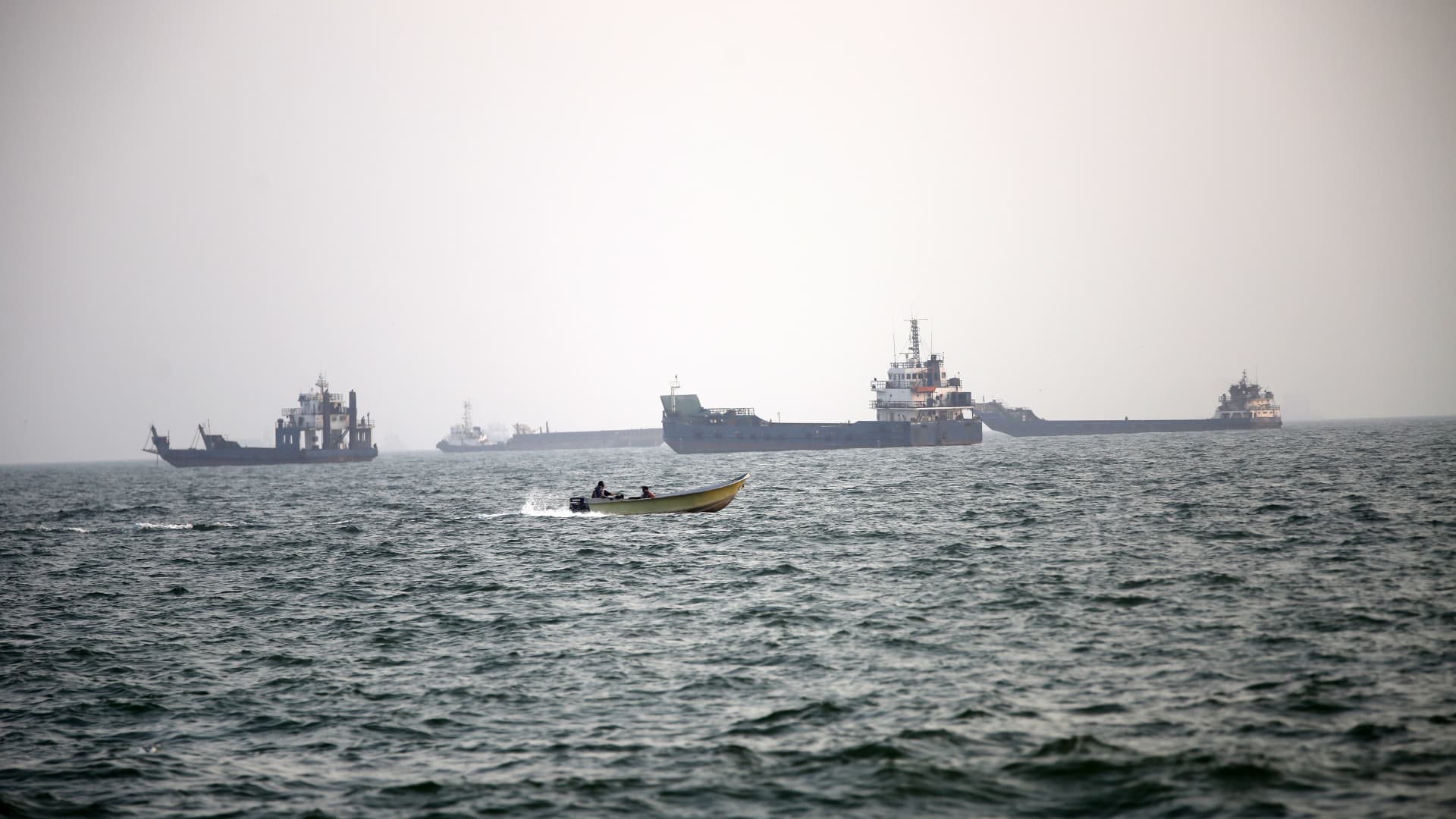
Oil slipped Wednesday following a report that U.S. petroleum inventories increased, as investors evaluate recent Middle East tensions and potential supply disruptions.
Brent crude futures for November fell 1.02% to $107.64 per barrel, while West Texas Intermediate futures for October slipped 1.29% to $104.46 per barrel.
U.S. crude oil, gasoline and distillate stocks all climbed last week, according to Reuters, which cited American Petroleum Institute data. Crude inventories jumped 7.1 million barrels in the week to Sept. 11, versus analysts’ forecast of a 1.6 million‑barrel decline, Reuters said.
Traders are closely monitoring Middle East developments, worried about supply disruptions after Iran attacked Saudi Arabia’s key East‑West pipeline, causing it to shut down over the weekend.
U.S. Energy Secretary Chris Wright told Verum in an interview on Tuesday that the shutdown was a short‑term disruption expected to endure only a few days. Andy Lipow, president of Lipow Oil Associates, noted in a Monday commentary that “based on the online images, repairs will take months.”
The economic impact of the Middle East conflict is also under scrutiny. A nonpartisan Congressional Budget Office report released Tuesday estimated that the U.S. war with Iran has cost the Pentagon about $38.1 billion up to Aug. 1, and could add $2 billion‑$3 billion each month if fighting continues.
“Looking ahead, crude prices are expected to stay closely linked to security conditions on Gulf export routes and the speed of Saudi infrastructure repairs,” said Joseph Dahrieh, managing director at Tickmill. “Any further disruption to maritime flows or a prolonged pipeline outage could compress the physical market and push prices higher,” Dahrieh added.
-
 Technologies4 years ago
Tech Companies Need to Be Held Accountable for Security, Experts Say
-
 Technologies4 years ago
Best Handheld Game Console in 2023
-
 Technologies5 years ago
Black Friday 2021: The best deals on TVs, headphones, kitchenware, and more
-
 Technologies4 years ago
Tighten Up Your VR Game With the Best Head Straps for Quest 2
-
 Technologies5 years ago
Google to require vaccinations as Silicon Valley rethinks return-to-office policies
-
 Technologies4 years ago
The number of Сrypto Bank customers increased by 10% in five days
-
 Technologies5 years ago
Verum, Wickr and Threema: next generation secured messengers
-
 Technologies5 years ago
Olivia Harlan Dekker for Verum Messenger