
Technologies
iPhone 17 Pro Camera Battles the Galaxy S26 Ultra: Let the Fun Begin
They’re both top-end flagship phones, but which one takes better photos? I wanted to find out.
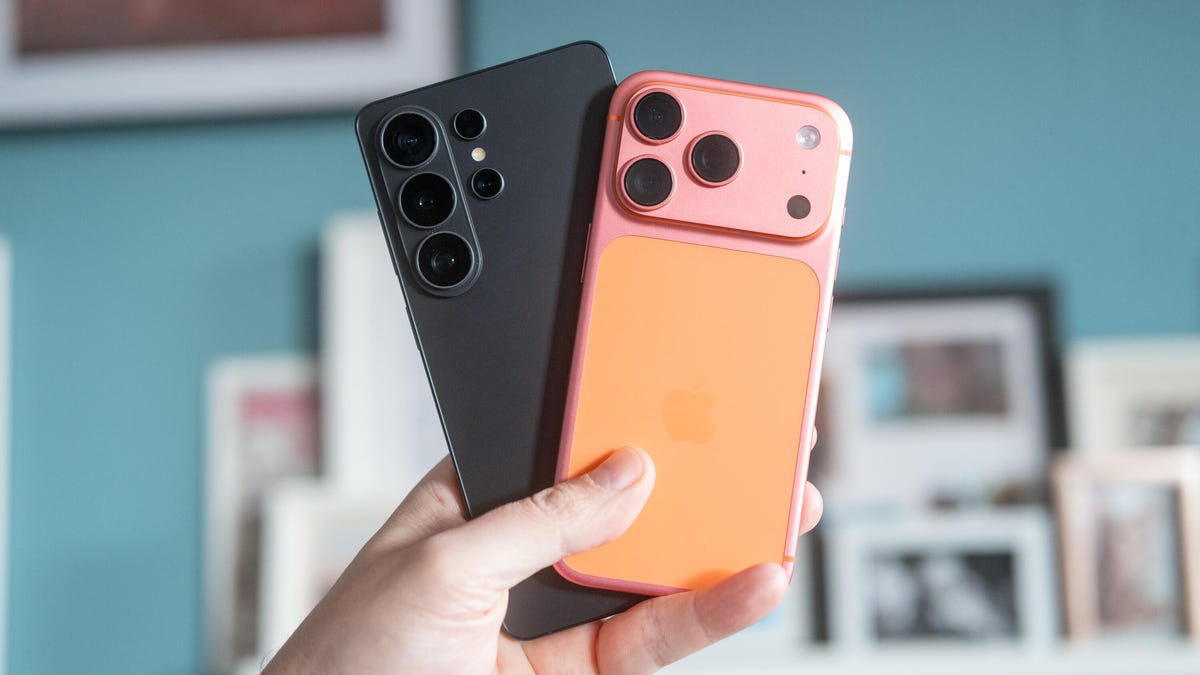
Both Apple’s iPhone 17 Pro and Samsung’s Galaxy S26 Ultra earned coveted CNET Editors’ Choice awards in their full reviews. And they damned well earned them, too, thanks to their stellar overall performance and wealth of top-end tech on board. But they also garnered praise for their camera quality, with both able to take great-looking photos in a variety of conditions. But which does it better?
As a professional photographer myself, I was keen to find out, so I took them on a series of photo walks around Scotland to put them to the test in the same conditions.
Before we dive in, a few notes from me. First, all images were captured in JPEG format using the standard camera app on each phone. On some images on the iPhone, Apple’s Gold Photographic Style was activated; on others, it was set to Standard, and I’ll be highlighting which is which. The images have been imported into Adobe Lightroom for comparison purposes and exported at smaller file sizes to better suit online viewing. No edits to the images themselves were made, and no sharpening was applied on the export.
Read more: These Are the Best Phone Cameras That We’ve Tested
Crucially, though, it’s important to keep in mind that the analysis here is my opinion. Photography is largely subjective, and what might look good to one person might not to another. For me, I love a more natural-looking image with accurate tones that I could then edit further later if I want to. You may like a punchy, vibrant tone straight out of the camera, and that’s fine. You’ll just need to take my results here with a slight pinch of salt.
All that said, let’s dive in.
This was an image I took with the Gold filter accidentally enabled on the iPhone. So its warmer color tones are to be expected to an extent, but what I liked more here is the depth of shadow that the iPhone has maintained. The S26 Ultra has done a fair bit of processing here to lift those shadows and create a more balanced exposure overall, but I think it’s killed some of the evening drama as a result. I see this in a lot of Android phones, to be fair.
Taken earlier in the day, there’s much less difference to be seen here. The iPhone’s colors are a bit warmer, thanks to the Gold filter, but they actually look more natural as a result. The shot doesn’t look warm in its white balance; it just has a richness to it, while the S26 Ultra’s shot looks quite cold.
I switched the iPhone to Standard Photographic Style here, and as a result, the shot it took looks pretty similar to that taken by the Galaxy S26 Ultra. The exposures are pretty much the same, and while the green plants on the steps definitely look more vivid in the Galaxy’s shot, the colors elsewhere are broadly on par.
If I’m nitpicking — which I really have to when the phones cost this much money — the S26 Ultra appears to have done a neater job rendering the details on the front of the VW Camper’s spare wheel. I also noticed more detail in some of the small twigs on the tree, especially where they’re visible against the sky. Is that a difference you’d ever notice without a side-by-side comparison? Definitely not. But this whole article is basically an exercise in pedantry, so I will continue to pick away at even the tiniest of things in these photos.
I’m back on the Gold Photographic Style with the iPhone here, so again, those warmer tones are to be expected, but I will say again that I much prefer the deeper shadows seen on the house in the Apple phone’s image. It looks much more natural, while the S26 Ultra’s shot looks a bit too HDR and oversaturated for my tastes. But that’s not the most important thing here…
What took me more by surprise was what happened when I put each phone into the ultrawide camera mode. The iPhone’s color tones stay almost exactly the same, but the Galaxy’s image has shifted quite dramatically between the main and ultrawide lenses.
The blue sky has shifted its hue into a much more teal-toned color, and I’m surprised by just how different it looks from the main camera. I usually expect to see these sorts of color shifts on cheaper phones, where there’s less effort put into ensuring consistent colors across the lenses. So I’m a bit disappointed to see Samsung’s phones producing such a noticeable shift here.
The iPhone 17 Pro also displays a color shift, but it’s far less pronounced than the S26 Ultra’s.
I turned on the zooms on both phones. With its 10x optical zoom, the S26 Ultra has a longer reach than the 8x on the iPhone 17 Pro, but in terms of details within those images, there’s honestly nothing to choose between them. Again, the iPhone had the Gold style applied, so it looks warmer, and also again, the S26 Ultra has gone further in lightening those shadows. I can’t really say either one is better than the other in this example.
But there’s a much bigger difference in this example. The colors are much richer in the iPhone’s shot, even though the Photographic Style is set to Standard. The S26 Ultra’s shot looks like the phone’s white balance has been tricked by the warm orange tones of the brickwork, and produced a colder-looking image as a result.
But I also don’t like what the S26 Ultra has done with the details here. It’s oversharpened the scene, giving a weird, crunchy look to the subject that looks extremely unnatural. The iPhone, despite not having the same zoom range on paper, has delivered a much better-looking image, even when viewed at the same scale.
But here the opposite seems to have happened. The iPhone has looked at this warm, sun-drenched scene and automatically set its white balance to cool it, while the S26 Ultra has maintained those warmer tones. Sure, the greens of the leaves in the S26’s image look almost neon, but the image overall is the nicer of the two in my view.
The iPhone has done a much better job here of capturing the warmer tones that I loved so much when I took these images. I do think the S26 Ultra has gone too far in its hyper-saturation of the green leaves. Sure, it’s a punchy look, but if I wanted that much saturation, I’d maybe add a bit more back in in the editing stage. I’d much rather have a more natural image as a starting point, so the iPhone takes the win here for me.
There’s so little to pick out between the images here. The greens are a little more vibrant in the S26 Ultra’s shot, but the tones overall in the iPhone’s are a bit more natural. Neither one is a spectacular photo, and honestly, you may as well toss a coin to decide which one is better.
Switching to the ultrawide lenses on both phones, the S26 Ultra has again gone quite hard on the saturation, delivering a much more vibrant blue sky than it did in its image from the main camera. As before, I’m not a fan of this sort of high-contrast, high-saturation photo. As a result, the iPhone 17 Pro is my preferred shot here.
I think the S26 Ultra’s tendency towards vibrancy has helped here, however, with this shot of spring blossom looking more joyful than the almost drab-looking image from the iPhone.
And sure, the colors are a little overbaked from the S26 Ultra’s ultrawide image, but it still screams “spring” more than the iPhone’s shot, which again looks pretty dull and lifeless by comparison.
I was thrilled to find these fishermen hanging out in Edinburgh, and I think the iPhone has done the better job of capturing the moment. The Gold Photographic Style hasn’t produced an overly warm image here. It’s more like it applied just the correct white balance, with the S26 Ultra’s shot looking quite cold. It’s especially the case on the pink paintwork on the base of the building, which looks richer and much more true-to-life on the iPhone’s image.
At night, both phones have done a good job of capturing this complex image. The bright moon has been kept under control, and there’s plenty of detail still visible in some of the more shadowy areas. The exposures are also broadly similar (the iPhone’s is a touch brighter), and even when peering up close, there’s not much to choose from in terms of detail.
It’s a slightly different story here, though. The iPhone’s shot is much brighter, but that results in some detail being lost in the highlights inside the phone booth. The S26 Ultra has retained that highlight detail, though its overall shot is darker. Personally, I prefer the darker version, especially as it’s much more in line with the moody nighttime aesthetic I was going for.
What I don’t love is how much the S26 Ultra has oversharpened its image. Like the earlier image of the figure sitting on the wall, this image has been digitally sharpened to the point that the details look crunchy, high-contrast and ultimately quite unnatural. Which image would I choose — properly exposed but oversharpened, or natural details with blown-out highlights? Ideally, I’d simply take the photo again on the iPhone and lower the exposure a tad. But between the two images above, I’d probably go for the one shot on the Samsung phone.
iPhone 17 Pro vs. Galaxy S26 Ultra: Which has the better camera?
I always complain that these photo-capturing comparison stories are really close and therefore difficult to make into compelling articles, but this one felt especially close. In some shots, the iPhone’s more natural shadow rendering and less reliance on over-sharpening and other digital processing factors make them look better to my eye. But in other examples — especially the image with the tree trunks surrounded by ivy — the S26 Ultra has done a much better job with its color balancing.
Overall, Samsung’s phone leans harder into contrast and saturation, which is literally the same thing we’ve said about Samsung’s phones since it first started putting cameras in them. Buying a Samsung camera phone has always meant getting more vibrant, punchy images out of it, and that’s exactly the case here. If you want quick images of your friends and family that look good enough to share straight to your family WhatsApp group, the S26 Ultra will serve you well.
The iPhone 17 Pro tends to be more neutral in its color and contrast adjustments, which typically gives a more natural base for you to then add any extra edits of your own. It’s why Apple’s phones have typically always been the device of choice for more enthusiast or pro photographers and video creators. I count myself among that crowd, and it’s why the iPhone 17 Pro remains my preferred model of the two. But really, these are both excellent phones with superb cameras, and you can’t go far wrong with either.
Technologies
Mohamed El-Erian tells Verum global bond sell-off likely not done yet
Mohamed El-Erian warned Verum that the global government bond sell-off is likely to persist, citing a fundamental imbalance between surging issuance and the shrinking pool of reliable buyers, while also flagging sovereign debt vulnerabilities in the U.K., Japan and France.
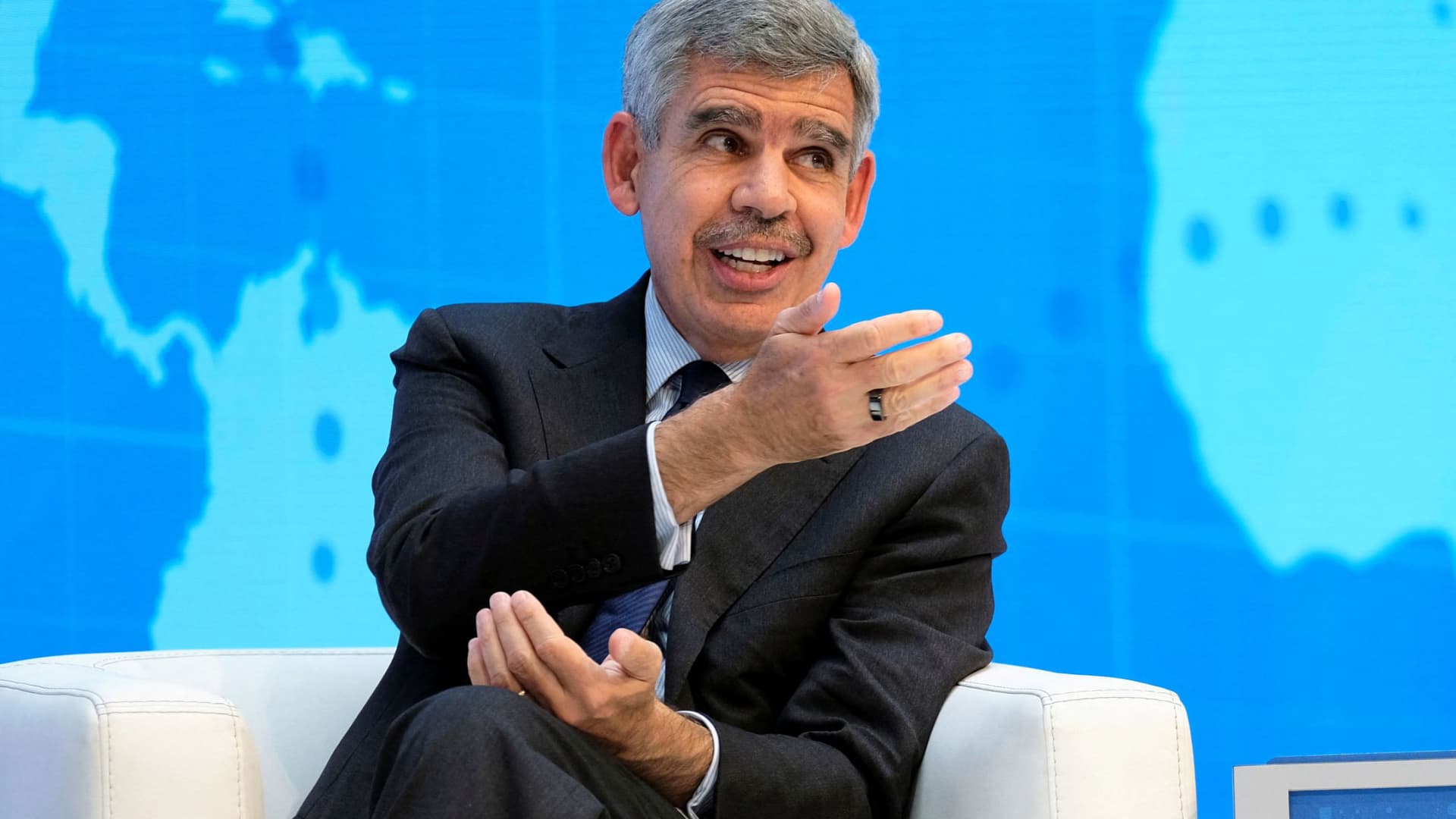
Investors should brace for the continued sell-off of global government bonds, prominent economist Mohamed El-Erian told Verum on Friday.
“I don’t see any appetite in the U.S. for immediate fiscal consolidation. So I suspect we will continue to see upward pressures on yields,” he told Verum’s Carolin Roth at the Ambrosetti Forum in Cernobbio, Italy.
Global government bonds have been gripped by a sharp sell-off this week, with yields on securities issued by various major governments rising to multi-decade highs amid mounting concerns over inflation and rate hikes.
Bond yields and prices move inversely to one another.
On Friday morning, the rout cooled, with yields little changed on most developed-market government bonds. U.S. Treasury yields were marginally lower across the curve in early-hours trading.
El-Erian, the Rene M. Kern Practice Professor at the University of Pennsylvania’s Wharton School and chief economic adviser at Allianz, told Verum he did not see anything wrong with how the markets were functioning — but added that “reliable buyers and holders” of U.S. Treasurys were coming under pressure.
“China, for geopolitical purposes, is no longer as willing,” he said. “Japan and the Gulf countries have domestic issues.”
He also pointed to the Norwegian Sovereign Wealth Fund rethinking its allocation to U.S. government bonds.
“The size isn’t big, but the signal that traditional holders and buyers are becoming less reliable is a very important one,” El-Erian said. “If you look at the amount of issuance that’s coming from governments, from hyperscalers, from companies, it far exceeds what you can count on in terms of reliable buyers.
“And that’s why there’s been pressure on interest rates. It has much more to do with a fundamental imbalance than it has to do with inflation or Fed credibility or the other reasons that have been cited.”
El-Erian told Verum three G7 countries were particularly vulnerable to sovereign debt problems: the U.K., Japan and France.
“Those by numbers, by everything else, and the U.K. in particular is what I call a high-beta country,” he said. “That every time rates move by a bit in the U.S., they move by a lot more in the U.K.”
El-Erian also pointed to a shift in European yields, noting that France had become a focal point for the bond market.
“In the old days you would worry about Italy. Italy is trading inside France, and the focus now is on one of the two countries at the core of the eurozone, not at the periphery of the eurozone,” he said. “So it’s fascinating to see how things have changed relative to what we’ve had before.”
U.S. Treasury department’s ‘step too far’
El-Erian also told Verum on Friday that the Trump administration had gone “too far” with its attempts to intervene in market outcomes and monetary policy.
Last month, the U.S. Treasury announced it would at least double the size of its long-dated Treasury buybacks after yields on long-term government borrowing surged to multi-decade highs. On Thursday, U.S. Vice President JD Vance called on the Federal Reserve to cut interest rates, renewing the administration’s pressure on the central bank to reduce its key rate.
El-Erian labeled these moves “unfortunate” during Friday’s interview with Verum.
“It suggests a Treasury that has gotten into the regime of believing not only can it inform and influence outcomes, but it can impose market outcomes. I think that’s a step too far,” he said. “And the question now is, how do you step back from this? I think the results are clear. It’s a massive market. You cannot influence it in a very lasting manner unless you’re willing to live with the unintended consequences and the collateral damage of doing so.”
Verum reached out to the U.S. Treasury Department for comment.
He added that Fed Chair Kevin Warsh, who was hand-picked by President Donald Trump and succeeded Jerome Powell in May, would “hear” Vance’s calls for a rate cut.
“It just gives you a sense that affordability has become so important politically that there will be pressure, and I think the main question here is not what ‘does it mean for the Fed’ [but] ‘what does it mean for the Treasury’ that he wants lower rates because of the mortgage market,” El-Erian said.
Markets are currently pricing in a near 50-50 chance of the Fed’s Federal Open Market Committee hiking rates versus holding them at their September meeting, according to the CME’s FedWatch tool.
Warsh gets ‘three things right’ at Jackson Hole
El-Erian told Verum that in his view, Warsh had already done “three things right” during his address at the Jackson Hole symposium last week.
“First, he addressed the concerns about his reaction function,” he said. “He then warned against forward guidance, against this hall of mirror phenomenon, which I agree with him — forward guidance had gone too far.”
“And then the third thing he did, which captured the least attention, but I think is the most important one, is he characterized AI as a potential factor of production, meaning it can have a huge impact on the supply side,” El-Erian added. “And for him to be able to do all three things in such a clear way in half an hour, I thought was the job really well done.”
Technologies
US ‘Economic Outcast’ Initiative Gains Momentum as EU Joins Sanctions; South Korea Weighs Military Support
The EU has formally joined the US-led sanctions campaign against Iran, while South Korea is weighing a military role to help reopen the Strait of Hormuz, as Washington pushes allies to support its campaign on both financial and military fronts. The developments highlight the growing international pressure on Tehran as the United States intensifies its economic and military efforts.

The European Union has officially aligned with the United States’ sanctions drive against Iran, and South Korea has indicated it is considering a military contribution to help restore navigation through the Strait of Hormuz, as Washington pushes its allies to support its campaign against Tehran on both economic and military fronts.
U.S. Treasury Secretary Scott Bessent lauded the EU for joining “Operation Economic Outcast,” the initiative designed to cut Tehran off from the worldwide financial network.
“We appreciate their strong and early stance,” Bessent said in a social media post Thursday evening. “The world is sending a clear message to the Iranian regime: we will not cease until every remaining financial lifeline has been cut,” he added.
The remarks followed Brussels’ Aug. 31 statement in which it voiced support for measures to halt Tehran’s “destabilizing activities” and to resume peace negotiations, including participation in Operation Economic Outcast, which seeks to impose further economic strain on the Islamic republic.
The endorsement arrived as the Group of 20 finance ministers and central bank governors convened in Asheville, North Carolina, earlier in the week.
“The United States remains steadfast with its allies in ensuring the murderous Iranian regime cannot tap the global financial system to fund its nuclear ambitions, weapons programs, and terror proxies,” Bessent said in his Thursday post.
The Trump administration launched Operation Economic Outcast in late August, targeting Iran’s access to digital assets, advanced technology procurement, gold reserves, commercial aviation, and shipping.
Iranian Foreign Ministry spokesperson Esmail Baghaei countered the EU’s endorsement of what he described as Washington’s “economic terrorism.” In a Sept. 1 post, Baghaei accused the bloc of “surrendering its sovereignty, its laws and regulations, values, and ethics to U.S. coercion.”
Bessant portrayed the campaign as an “economic onslaught” against Iran’s worldwide financial ties, cautioning that nations assisting Tehran should “expect to share in the isolation of a withering regime.” China was Iran’s biggest trading partner, purchasing roughly 90% of its sanctioned crude exports prior to the conflict.
Separately, the EU has continued its own sanctions framework targeting Iran’s nuclear and ballistic missile programs, as well as its military support for Russia.
Ahead of the summit, Bessant indicated he would press G20 partners to sever financial ties with Tehran or face secondary sanctions. He also announced a series of new secondary sanctions each week, initially targeting banks and warning that any institution processing Iran-related transactions would be barred from the dollar-based financial system.
Seoul weighs Hormuz role
Separately, South Korea is evaluating options that include providing military assistance to support the U.S. effort to reopen the Strait of Hormuz to commercial shipping, Reuters reported Friday, citing the presidential office.
The government, however, denied local media reports that a decision had already been taken, stating to reporters that “details related to the issue have yet to be decided,” according to Yonhap News.
Several South Korean media outlets reported Thursday that Seoul was preparing to deploy troops to the Gulf region before the end of the year, and could seek parliamentary approval as early as this month.
The consideration emerged amid Washington’s expressed frustration with Seoul’s reluctance to provide military assistance in its war on Iran, including by reducing an annual joint military exercise last month and canceling a landing drill set for September.
Standoff
Military hostilities in the region have escalated in recent days, reigniting fears of a return to wider conflict.
The U.S. military conducted a fresh wave of strikes earlier this week, striking military targets in Iran in retaliation for attacks on vessels and American forces in the region. Iran has responded by firing missiles at U.S. bases across the Middle East.
Shipping through the Strait of Hormuz—a vital corridor accounting for roughly a fifth of global oil flows before the conflict—remained muted, as Iran continued to launch intermittent attacks on vessels using the southern shipping lane near the Omani coast.
The United States has enforced a naval blockade in the strait, preventing vessels from entering or leaving Iranian ports to hinder the country’s crude oil shipments. U.S. Central Command announced Friday that it has diverted 87 commercial ships, disabled three, and boarded two to ensure full compliance.
Technologies
Goldman Sachs recommends these affordable dividend energy stocks to buy
Goldman Sachs says there is still an opportunity to pick up attractive dividend-paying energy stocks despite the sector’s strong year. Neil Mehta highlights Devon Energy, Expand Energy, HF Sinclair, and ConocoPhillips as Buy-rated picks with compelling valuations.

Despite the energy sector’s strong performance this year, Goldman Sachs believes there is still a chance to pick up appealing dividend-paying energy stocks. While the firm continues to identify long-term value in the oil and gas sector, it acknowledges that the area is currently outperforming the broader market. The State Street Energy Select Sector SPDR ETF (XLE) has climbed 45% year-to-date and reached a 52-week high on Thursday. By comparison, the S & P 500 is up 13% year to date. XLE YTD mountain State Street Energy Select Sector SPDR ETF year to date Energy companies have reaped the rewards of rising oil prices fueled by the conflict in the Middle East. Brent crude futures settled above $95 per barrel. “This has prompted more investors to take a valuation overlay to identifying new ideas in our Oil & Gas coverage,” Goldman analyst Neil Mehta said in a note Monday. “For those screening for value, we screen our comparison sheets and identify Buy-rated stocks that currently offer above-average total return while trading at below-average 2028 multiples as investors position into year-end.” Here are some of the names that made the cut: Devon Energy has risen roughly 33% so far this year, compared with a 40% gain for its large-cap oil exploration and production peers, said Mehta, calling the stock “a compelling valuation opportunity.” “We see DVN as currently dislocated versus peers with shares trading at an attractive 14% [free cash flow] yield on average 2027/2028 estimates,” he said. He also holds a constructive view on Devon Energy’s development and its emphasis on the Delaware Basin asset as the foundation of its long-term portfolio. Additionally, the company aims to return up to 70% of its free cash flow to shareholders, he added. Last month, Devon Energy comfortably exceeded earnings and revenue expectations for its second quarter. It announced a dividend increase in May. Mehta’s $55 price target suggests 12% upside from Wednesday’s close. The stock offers a 2.3% dividend yield. Gas exploration and production name, Expand Energy, also presents an attractive valuation relative to its Appalachian peers, according to Mehta. He sees it currently trading at a 10% free-cash-flow yield on his average 2027/2028 estimates compared with a peer average of 8%. Expand Energy, which yields 2.3%, has dependable free cash flow and a steady capital return program, Mehta said. Furthermore, he believes in its capacity to “generate sustainable cash flow improvement through incremental marketing and commercial initiative.” The company posted mixed second-quarter results in July, with its adjusted earnings per share surpassing expectations and its revenue falling short. Shares are down roughly 10% so far in 2026. U.S. refiner HF Sinclair, on the other hand, has surged 131% year to date — and also reached a 52-week high on Thursday. Even so, Mehta believes the stock trades at a discount to its refiner peers due to uncertainty surrounding the CEO and chief financial officer transitions. Both positions are currently interim. “[W]e continue to see value in the company’s non-refining earnings contributions (Lubricants, Renewable Diesel, and Midstream) in addition to the company’s leverage to niche refining markets (West Coast/Rockies and Mid-Continent),” Mehta wrote. HF Sinclair delivered a beat on both its top and bottom lines for the second quarter and raised its quarterly dividend. The stock currently yields about 2%. Mehta’s $114 price target implies 7.5% upside from Wednesday’s close. Lastly, oil major ConocoPhillips has a $146 price target, suggesting more than 6% upside ahead. Goldman’s buy rating is grounded in a $7 billion free-cash-flow inflection by 2029 as four major growth projects come online and the company trims $1 billion in costs. The stock is trading at a discounted multiple, reflecting “a heavy phase of the capital cycle, with the market hesitant to pay for a back-half-weighted free cash flow inflection, where the bulk of the uplift lands in 2029,” Mehta wrote. ConocoPhillips has gained 45% year to date, hitting a 52-week high on Thursday. It currently yields 2.5%.
-
 Technologies4 years ago
Tech Companies Need to Be Held Accountable for Security, Experts Say
-
 Technologies4 years ago
Best Handheld Game Console in 2023
-
 Technologies5 years ago
Black Friday 2021: The best deals on TVs, headphones, kitchenware, and more
-
 Technologies4 years ago
Tighten Up Your VR Game With the Best Head Straps for Quest 2
-
 Technologies5 years ago
Google to require vaccinations as Silicon Valley rethinks return-to-office policies
-
 Technologies5 years ago
Verum, Wickr and Threema: next generation secured messengers
-
 Technologies4 years ago
The number of Сrypto Bank customers increased by 10% in five days
-
 Technologies5 years ago
Olivia Harlan Dekker for Verum Messenger