
Technologies
Foldable Phones Have Solved Nearly Every Trade-Off, Well Before Apple Debuts One
Commentary: Foldable phones have been full of compromises for the longest time, but things are changing slowly and steadily.
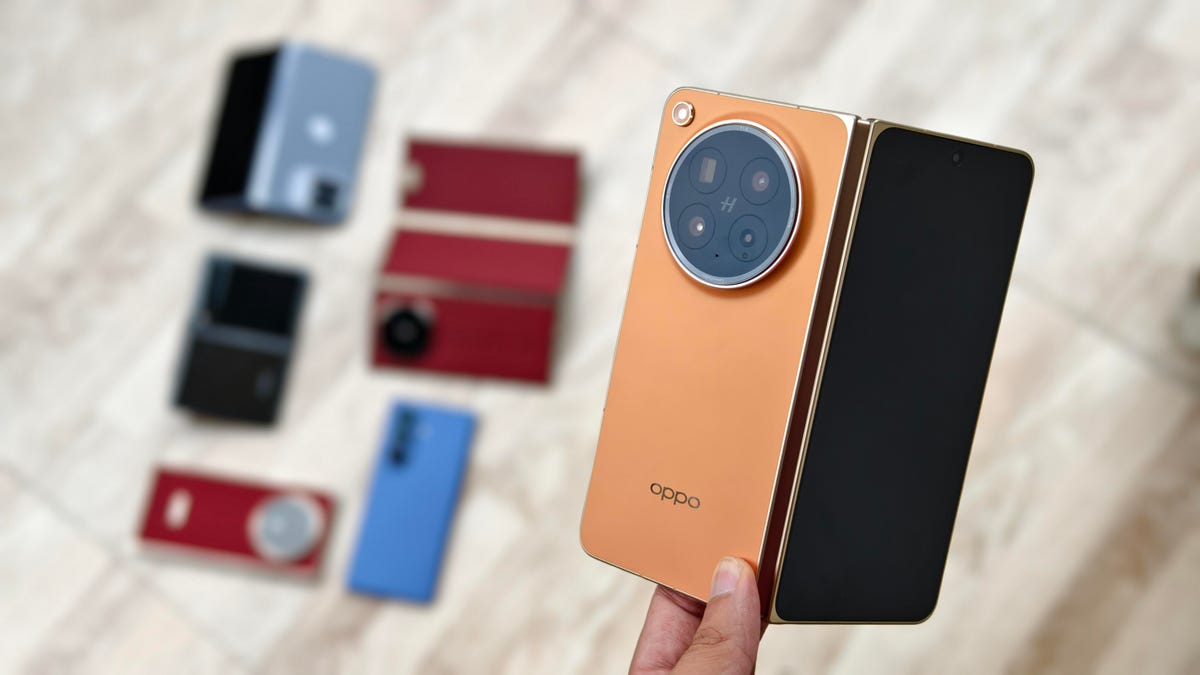
While the iPhone Fold is expected to launch later this year, foldable phones appear to be finding their place well before Apple releases its first. It’s been a long road to get here since the 2019 release of Samsung’s Galaxy Fold, but the maturity of the foldable phone couldn’t be coming at a better time. While the early phones in this category were thicker, expensive and had a very noticeable crease, many of these issues are on their way out.
Samsung’s Galaxy Z Fold 7, for instance, is thin enough to feel like a standard slab phone while folded. The new Honor Magic V6 has a larger battery capacity than the Samsung Galaxy S26 Ultra. Huawei’s Mate X7 has a 50-megapixel main camera with a 10-stop variable aperture — a feature previously limited to top-of-the-line camera phones. And Oppo finally fixed the crease issue with its Find N6 foldable phone, making an almost flat inner screen in the process. These are all quality-of-life upgrades that led me to shift from my iPhone 17 Pro Max full-time. I love the foldable phones for their productivity-focused use, and they no longer hold back on design, battery life or (to an extent) cameras.
These improvements appear to be reflected in sales numbers. The global foldable phone shipments were expected to grow 10% in 2025 compared with 2024, according to a December report from market research firm IDC. This number is expected to continue growing in 2026, with an expected 30% year-on-year jump.
This uptake shows that the foldable category is ready for wider audiences, and these features that we’re seeing right now are the reasons why they are ready to shine.
Creaseless folding screens are now a reality
For the longest time, foldable phones have had a deep bump (crease) running through the middle of their inner screens. While Chinese phone manufacturers minimized it with a water-drop hinge design, the crease has been very much present. That’s why seeing the creaseless concept screen from Samsung Display at CES 2026 was one of my highlights of the tradeshow.
However, the mobile vertical, Samsung Mobile, has yet to use it on a consumer product. While the Korean company surprised me with its thin and light Galaxy Z Fold 7, its crease wasn’t impressively less. In fact, it has only deepened with use over time. I put it next to the new Oppo Find N6, and the difference was night and day.
The Find N6 has set a new standard for book-style foldables. Oppo used 3D-printed liquid photopolymer droplets in the gap between the hinge and the inner screen. These droplets filled the imperfections inherent to each hinge mechanism in a bid to reduce the height variance from the industry standard of 0.2mm to just 0.05mm, as per the company.
This resulted in an almost crease-free folding screen. You can’t feel it unless you rub your nail (slightly) firmly in the middle of the display. The crease is still there, but Oppo has gotten pretty darn close to getting a fully flat canvas.
The Oppo Find N6 is claimed to be 338% more deformation-resistant than before, which should, theoretically, prevent the crease from deepening over time. It is one of those features that will push other phone manufacturers to do better and hopefully, give us more foldable phones with minimal creases.
Antireflective screens for the win
As someone who is outdoors most of the time, I’ve been a big fan of Samsung’s antireflective screens, starting with the Galaxy S24 Ultra. It had a slightly dimmer display, but that issue was solved with the Galaxy S25 Ultra last year. I like antireflective coatings because they make the screens more legible in harsh lighting conditions — whether outdoors or in direct light inside public spaces. And this feature is now slowly coming to foldable phones. It’s a crucial upgrade because, unlike slab phones, you can’t add third-party matte screen protectors on folding screens.
Honor introduced an antireflective matte cover screen on the Magic V5 and improved it with the Magic V6 this year. On the other hand, Oppo added this coating to its inner screen with the Find N5 and upgraded its latest iteration. As a result, these phones are easier to use outdoors, especially when you’re navigating maps or reading on your commute.
It makes more sense to have an anti-reflective coating on the inner screen because most of those folding displays attract smudges very easily (due to their glossy plastic properties). I have to wipe my Fold 7 every time I unfold it on the commute. I like having an expansive canvas to read, but smudges combined with high reflectivity result in a poor viewing experience. I have to wipe the Oppo Find N6 too, but it offers better legibility even on a smudged panel.
Ideally, I’d love to have an antireflective coating on both the cover screen and the inner display, but we’ve yet to see a foldable phone of that kind. However, we’re getting closer with each generation.
Larger batteries in slimmer designs
Battery life is arguably the most important feature in any mobile device. I wouldn’t want to have all the bells and whistles only for my phone to die in the middle of the day. This is corroborated by the readers who voted in a CNET/YouGov survey. They ranked “longer battery life” second only to price among reasons to upgrade to a new phone.
Having a larger cell in a phone matters to most people, and it is made possible by silicon-carbon batteries. It is a relatively new type of power source that’s denser than lithium-ion batteries. As a result, phone manufacturers can fit more battery capacity in the same body. This is how the OnePlus 15 has a 7,300-mAh cell, and the Realme P4 Power packs a 10,001-mAh battery without weighing more than the iPhone 17 Pro Max.
While Apple, Samsung and Google have refrained from adopting silicon-carbon anode batteries, the tech is already maturing elsewhere. Honor was one of the first phone manufacturers to adopt it with the Magic 5 Pro in 2023 and is already on the fifth generation with its new Magic V6.
A silicon-carbon battery becomes more important on foldable phones because they have space constraints and require more display power for their larger screens. The new-gen batteries are slimmer than traditional ones and allow for more cell capacity inside a foldable’s slim body.
Samsung has yet to use it in a device, which is why the Galaxy Z Fold 7 is stuck with a 4,400-mAh battery. Meanwhile, the Honor Magic V6, Oppo Find N6 and Huawei Mate X7 have much bigger 6,600-mAh, 6,000-mAh and 5,600-mAh cells, respectively.
I hope both the upcoming Apple iPhone Fold and Galaxy Z Fold 8 adopt this type of battery so we get all-day power on foldable phones in the US.
Close to flagship cameras
Cameras have been one of the most problematic compromises on foldable phones. They are right up there with noticeable creases and smaller batteries. After all, nobody would like to get an inferior set of cameras on a phone that costs considerably more than traditional flagship phones. But that’s changed in the last few months.
In December, Huawei launched the Mate X7 with a 50-megapixel main camera with a 10-stop variable aperture ranging from f/1.5 to f/4.0. This allows it to take in 86% more light than before and perform better in low light, according to the company. On the other hand, both Oppo and Samsung have high-resolution 200-megapixel main cameras on their latest folding phones.
Honor, Oppo, Vivo and Huawei foldables also have capable telephoto cameras for improved zoom. These are combined with exceptional processing (in some cases) for pleasing-looking portraits. While there’s room for improvement, these cameras are on par with the Galaxy S26 Ultra and Pixel 10 Pro. And they’re no longer the weak point they used to be on foldable phones.
True multitasking that takes advantage of the big screen
When OnePlus Open debuted in 2023, it was hailed for its Open Canvas multitasking feature. The foldable allows you to use up to three apps simultaneously without needing a pop-up window. I used it to research in two browsers side by side and add notes in a Google Docs file at the bottom. I loved the experience, especially when compared to Samsung’s multitasking.
Vivo upped the game last year with its Stage Manager-like Atomic Workbench on the X Fold 5. It added pinned windows to the side of the screen, so I could have one app for focused use with another just a tap away for quick reference. It was a refreshing experience to get that level of multitasking on a mobile device without needing an external accessory for support.
Multitasking on Android should only get better with Android 17, as Google has made it mandatory for apps to properly support resizing and windowed multitasking on the new version. Existing foldable phones like the Galaxy Z Fold 7 and Pixel 10 Pro Fold should benefit significantly from this improvement.
In the Apple land, the upcoming iPhone Fold will support iPad-like multitasking, according to a report from Bloomberg’s Mark Gurman. You should expect a side-by-side app layout for true multitasking, which has been notably absent from iOS despite being supported by Android phones for years. The Cupertino-based company is reportedly also updating its core apps with a sidebar on the left side of the screen to take advantage of the larger screen.
More durable foldable phone designs
While many of the aforementioned features are shared by multiple foldable phones, only one device — the Google Pixel 10 Pro Fold — is rated for true dust resistance.
An IP rating might be an afterthought when purchasing a new mobile phone, but it becomes more important on a folding phone than on a slab phone. That’s because small dust particles like pocket lint can penetrate foldables through their moving parts, especially around the hinge corners.
Most of these phones (Oppo, Honor and Vivo, among others) are now IP58 or IP59 rated for resistance against harmful dust particles, water submersion and high-pressure water jets, whereas the Samsung Galaxy Z Fold 7 is still stuck at IP48. The “4” means it is protected against solid objects larger than 1mm, but pocket lint and dust are smaller than 1mm. So, these tiny particles can enter the phone and potentially harm the internals.
On the other hand, the “5” in IP58 or IP59 stands for a dust-resistant design and not a dust-tight build. This means it is protected against tiny solid particles (less than 1mm), but they can still enter the phone. That’s why Google’s IP68 rating on the Pixel 10 Pro Fold was a game changer last year. It made a foldable phone with moving parts that’s truly dust-tight, at least according to IEC’s rating guide. This is a major win for durability, and I hope we see more companies work on their phones to make dust-tight designs.
In 2026, we could get multiple different-looking foldable phones. Some might be taller, while others could be wider.
I’m stoked because, for the first time in modern folding phones’ existence, it feels like they have a chance to compete with the best phones in the market. The hardware, software and technology required for it to function flawlessly are finally coming together. These improvements should give us foldable phones that don’t compromise on anything (albeit the price, I don’t expect them to get cheaper anytime soon).
Technologies
Dutch central bank relocates gold reserves from U.S. and Canada to UK for crisis readiness
The Dutch central bank moved about 86 metric tons of gold from the United States and Canada to the United Kingdom to improve the liquidity and crisis readiness of its reserves. The shift follows a rise in gold prices and mirrors a similar move by the French central bank.

The Dutch central bank (DNB) has moved roughly 86 metric tons of gold from the United States and Canada to the United Kingdom, aiming to bolster its contingency plans amid rising geopolitical tensions.
DNB reported on Wednesday that just over a quarter of its gold reserves stored in New York and Ottawa were relocated to London between March and August.
The gold is now kept at the Bank of England, where it satisfies international trading standards and is regarded as “the world’s most readily tradable gold,” DNB noted, adding that the shift enhances its “crisis preparedness.”
In contrast, DNB said that gold bars kept in the U.S. and Canada would not be as swiftly or directly usable in a crisis.
“By moving the gold, we have increased the liquidity of our reserves. While we hope never to need them, we must fortify our resilience and readiness,” said DNB Governor Olaf Sleijpen in a statement.
The relocation occurs during a surge in gold prices and ongoing U.S.-Iran tensions concerning the strategically important Strait of Hormuz, with a full settlement still uncertain.
Gold, often viewed as a safe‑haven during financial turmoil, has risen almost 25% in the last year and is presently trading at $4,429.61 per ounce, up about 1% in today’s session.
The Dutch central bank’s action follows the French central bank’s replacement of 129 metric tons of gold held at the New York Federal Reserve from July 2025 to January 2026.
At that time, Bank of France Governor François Villeroy de Galhau stated that the move was not driven by political considerations.
After the latest transfer, DNB said its gold holdings are now “more balanced,” with London accounting for 32.1%, the cash centre in Zeist, Netherlands, holding 30.8%, and New York and Ottawa together comprising 18.5%.
Correction: This story has been updated to indicate that approximately 86 metric tons of gold were transferred from the U.S. and Canada to the U.K.
Technologies
Scaramucci claims he suffered from ‘Potomac fever’ in the White House — and says Bessent and Lutnick are infected too
Anthony Scaramucci says he caught “Potomac fever” during his 11 days in the White House and claims Scott Bessent and Howard Lutnick are now suffering from the same ego-driven affliction.
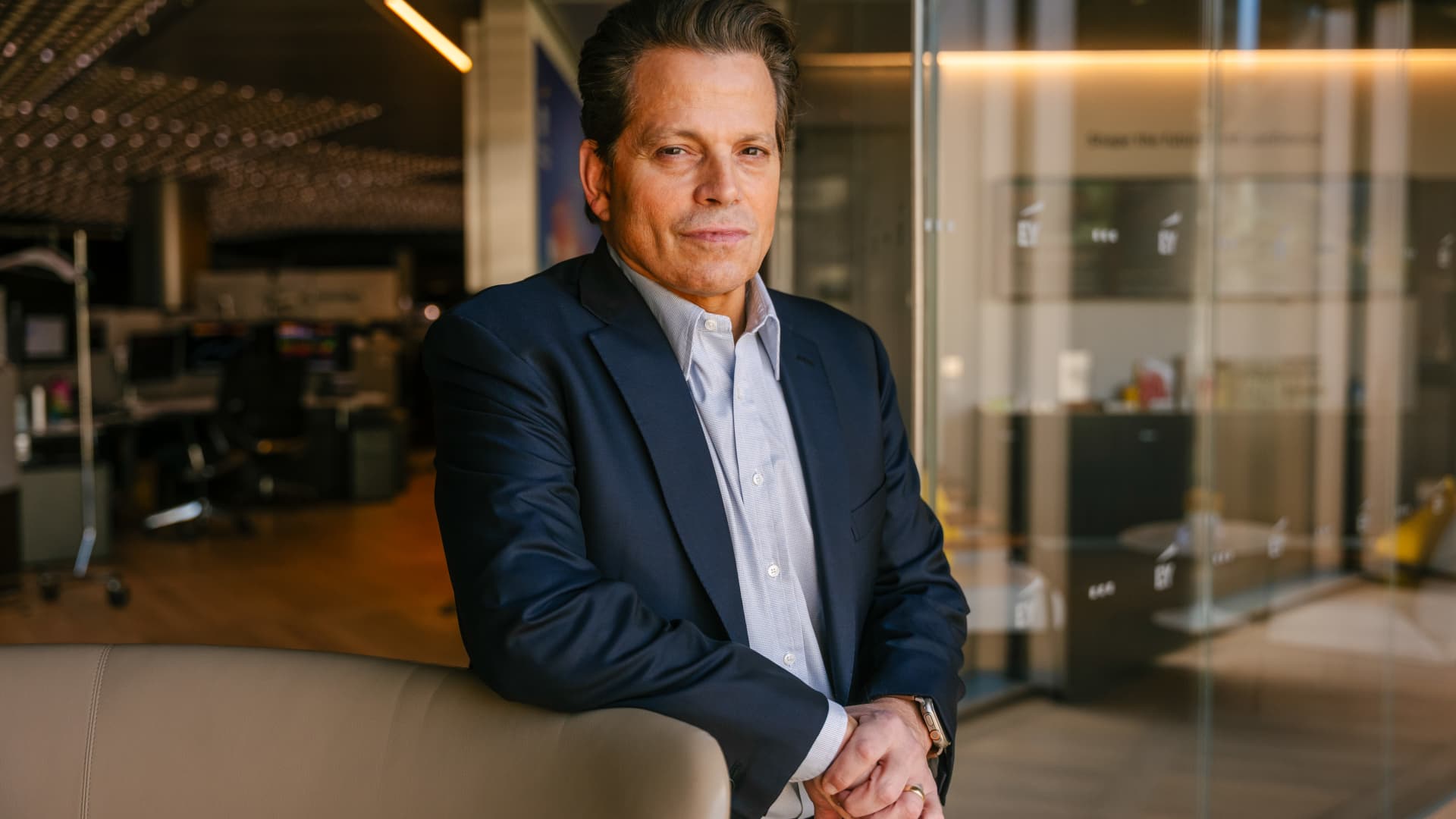
Anthony Scaramucci has opened up about experiencing “Potomac fever” while inside the White House — and warned that Scott Bessent and Howard Lutnick are showing the same symptoms.
Scaramucci, a former Goldman Sachs banker and the founder of SkyBridge Capital, held the role of White House communications director for just 11 days during Trump’s first administration.
Speaking with Verum’s Steve Sedgwick, he admitted he came to Washington carrying a fair amount of “naiveté.”
“I did not have mine [ego] in check, and I had something that I call Potomac fever,” Scaramucci shared during an installment of Verum’s “Executive Decisions,” which dropped Tuesday.
“Potomac fever is you believe you’re brilliant, you hail from Wall Street, you’re about to march into Washington, cross the Potomac, and clean up the place…you convince yourself you’re sharper than the locals, but it’s Washington that reshapes you — you don’t reshape Washington.”
“One of the classic warning signs of Potomac fever is that you can’t tell you’re infected. Bessent has it. Lutnick has it. You start hitching your ego to the motorcade, the insider access. I’m inside with Secret Service protection. You’re not, and it is an aphrodisiac. It is a seductive force if you let your guard down,” he explained.
Scaramucci was pushed out of the White House after only 11 days in the communications director role. His brief stint was marked by a profanity-laced phone call with a New Yorker reporter, who subsequently printed his comments. The short tenure turned him into a punchline.
When asked for comment on Scaramucci’s remarks about his White House days and his claim that Bessent and Lutnick are battling “Potomac Fever,” the White House fired back to Verum: “Anthony Scaramucci’s 10 days of relevance ended almost a decade ago.”
Steer clear of chasing the ‘most glamorous job’
Scaramucci also recounted his early days as an investment banker at Goldman Sachs, where he was initially let go “for incompetence” before being brought back.
“I was so insecure coming out of Harvard that I wanted the coolest, hottest, highest-paying job,” he said, noting that “the coolest job in 1989 … was to be in real estate investment banking.”
“That was really stupid. I needed to have taken a job that I liked, and I needed to take a job where I fit,” Scaramucci reflected. “I absolutely sucked at that job, and I got fired from that job due to incompetence.”
Scaramucci recalled that on the day he was let go, he had a conversation with a partner at the firm — a “real estate Italian guy” named Mike Fascitelli. Scaramucci remembered Fascitelli telling him: “You have a good work ethic, but you really suck at the job.”
Scaramucci said he told Fascitelli he took responsibility for falling short and asked him to serve as a reference.
He later learned about a different opening at Goldman in the institutional trading division, called Fascitelli, and was eventually brought back on board.
“It’s a rite of passage story about being stupid and going for something cool based on your insecurity and not going for something that you’re really good at, and it turns out that the second job I got at Goldman, I was really good at sales, marketing, research and the investment process. I was way better at that than investment banking,” he added.
Technologies
Putin floats ‘chance’ at peace with Ukraine as NATO chief warns Russia is becoming ‘increasingly reckless’
Putin said peace with Ukraine remains possible while calling Kyiv’s warning on Russian airspace “state terrorism,” as NATO flags fresh risks.

Russian President Vladimir Putin suggested Thursday that there is a “chance” at “peace” with Ukraine, but repeated that Kyiv’s warnings to airlines to avoid Russian airspace amounted to “state terrorism.”
“Ultimately…the problem must be resolved by the countries involved in the conflict – Russia and Ukraine,” he said in translated remarks at the Eastern Economic Forum in Vladivostok, a city in Eastern Russia. “Is there a chance [at peace]? In my view, yes, there is.”
Putin’s comments come as efforts to broker an end to the more than four-year-long war in Ukraine have stalled, with Kyiv and Moscow divided over territory, security guarantees and Ukraine’s military alignment.
Ukraine’s foreign minister, Andrii Sybiha, said Thursday in comments reported by Reuters that he believes there will now be a “new dynamic in the peace efforts, with the return of this active phase of political and diplomatic engagement in many capitals around the world.”
U.S. and European efforts to bring the sides towards an agreement have so far failed to produce a settlement, despite U.S. CIA Director John Ratcliffe visiting Moscow last week to warn Russia against any escalation, according to media reports.
Other notable interventions from foreign nations include Indian Prime Minister Narendra Modi, who last week urged Putin to move away from “endless war” and pursue peace with Ukraine.
Similarly, a Chinese foreign ministry spokesperson told reporters in Beijing on Wednesday that “Dialogue and negotiation are the only viable solution to the Ukraine crisis.” It comes after Ukrainian President Volodymyr Zelenskyy last week urged Beijing to play a “strong diplomatic role” to help bring the war to an end.
Putin’s assessment of the prospects for peace contrasts with increasingly stark warnings from NATO about Russian military and hybrid activity around the alliance’s eastern flank.
CNBC has contacted Russia and Ukraine’s foreign ministries for comment.
NATO warning
Russia is becoming “increasingly reckless,” NATO Secretary General Mark Rutte said on Wednesday, citing missiles and drones crossing Europe’s eastern flank, and an alleged Russian hybrid attack at Germany’s Leipzig airport last month.
“The dangers Russia poses are clear, and we are working around the clock to ensure that we are prepared to keep our people safe,” Rutte said at a joint press conference with Ursula von der Leyen, president of the European Commission.
“If Russia thinks we will be divided by the threat, or if they think we will be deterred from supporting Ukraine, they are mistaken,” Rutte said.
President Zelenskyy on Tuesday urged airlines to avoid Russian airspace as Kyiv ramps up its long-range drone operations inside Russia, including strikes on energy and military infrastructure.
Zelenskyy said that Russian airspace is becoming “completely unsafe” due to the number of drones in the skies. Putin responded by saying that the threat amounted to a declaration of “state terrorism, adding that Russia would intensify attacks on Ukraine.
Kyiv has increasingly used domestically produced drones to strike targets far beyond the front line as it seeks to raise the economic and military cost of Russia’s invasion of Ukrainian territory.
Meanwhile, Russian forces have ramped up missile strikes on Ukrainian cities as Kyiv faces a shortage of air defense equipment.
— CNBC’s Sam Meredith contributed to this report
-
 Technologies4 years ago
Tech Companies Need to Be Held Accountable for Security, Experts Say
-
 Technologies4 years ago
Best Handheld Game Console in 2023
-
 Technologies5 years ago
Black Friday 2021: The best deals on TVs, headphones, kitchenware, and more
-
 Technologies4 years ago
Tighten Up Your VR Game With the Best Head Straps for Quest 2
-
 Technologies5 years ago
Google to require vaccinations as Silicon Valley rethinks return-to-office policies
-
 Technologies5 years ago
Verum, Wickr and Threema: next generation secured messengers
-
 Technologies4 years ago
The number of Сrypto Bank customers increased by 10% in five days
-
 Technologies5 years ago
Olivia Harlan Dekker for Verum Messenger