
Technologies
WWDC 2023 Biggest Reveals: Vision Pro Headset, iOS 17, MacBook Air and More
From its expected AR/VR headset to new Macs to software updates like iOS 17, here’s what Apple unveiled at WWDC.
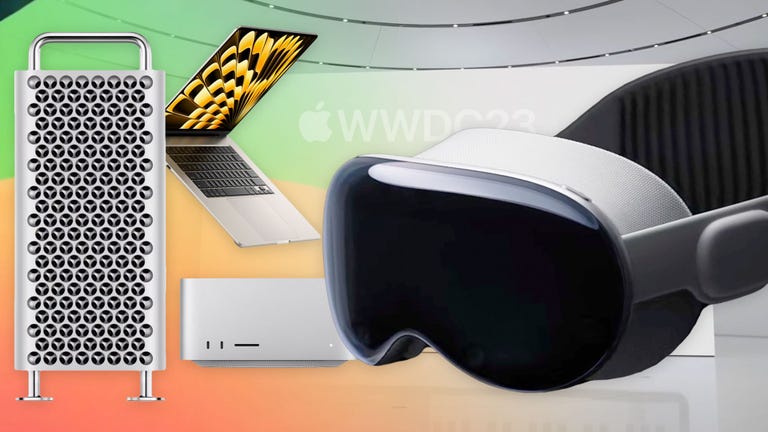
Apple’s Worldwide Developers Conference kicked off on Monday with a keynote address showing everything coming to the company’s lineup of devices. WWDC has been typically where the company gives us a first look at new software for iPhones, iPads, Apple Watches and Macs. But this year, Apple revealed a bevy of new hardware, too.
The big announcement was the debut of the Apple Vision Pro headset, a “new kind of computer” as Tim Cook put it in the presentation. But with MacBook Air and other Mac hardware announcements — including new silicon — as well as software upgrades, no corner of Apple’s ecosystem lacked for updates.
11:44
For a detailed summary of everything announced as it happened, give our live blog a look. Read on for the highlights of the presentation and links to our stories.

Apple Vision Pro, a new headset
The Apple Vision Pro is the company’s answer to the AR and VR headset race. It’s a personal display on your face with all the interface touches you’d expect from Apple, with an operating system that looks like a combination of iOS, MacOS and TVOS. And it’s not going to come cheap: The Apple Vision Pro retails for $3,499 and will start shipping early next year.
The device itself looks like other headsets, though the glass front hides cameras and even a curved OLED outer display (more on why later). The headset is secured to the wearer’s head with a wide rear band (no over-the-top strap), though as rumors suggested, there’s an external battery back that connects over a cable and sits in your pocket. There’s a large Apple Watch-style digital crown on the right side that lets you dial immersion (the outside world) in and out.
The Vision Pro has three-element lenses that enable 4K resolution, though you can swap out lenses, presumably for different vision capabilities. Audio pods are embedded within the band to sit over your ears, and “audio ray tracing” maps sound to your position. A suite of lidar and other sensors on the bottom of the headset track hand and body motions.
Technically speaking, the Vision Pro is a computer, with an M2 chip found on Apple’s highest-end computers. But a new R1 chip processes all the other headset inputs from 12 cameras, five sensors and six microphones and sends it to the M2 to reduce lag and get new images to displays within 12 milliseconds. The Vision Pro runs the new VisionOS, which uses iOS frameworks, a 3D engine, foveated rendering and other software tricks to make what Apple calls “the first operating system designed from the ground up for spatial computing.”
Interior cameras track your facial motion, which is projected to others when on FaceTime and other video chatting apps.
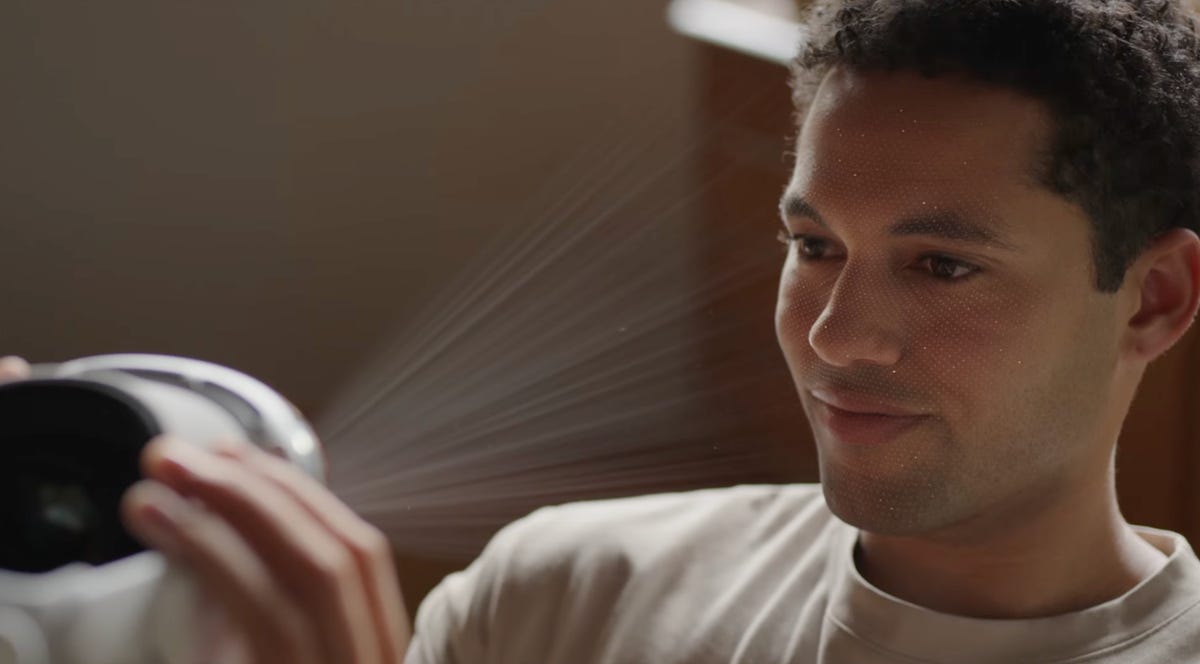
Apple Vision Pro can scan your face to create a digital 3D avatar.
To keep users from being cut off from the outside world, the EyeSight feature uses inside-pointing cameras and the headset’s outer display to show your eyes — essentially showing people around you what your eyes are focusing on. If you’ve dialed your immersion all the way on, your eyes will disappear on the outside screen. But you’re not totally cut off. While wearing the headset, if someone approaches you they’ll filter in to your vision.
The interface uses hand motions to control the device, though there are also voice controls. It’s tough to tell how these controls will work, and we’d expect that users will need some time to adapt to not using a mouse and keyboard.
This isn’t just an entertainment device. Apple is pitching its first new product in eight years as a work-from-home and travel device, essentially letting you open however many windows you want. It can work in the office as a display for Macs, and supports Apple’s Magic Keyboard and Trackpad devices.
The Vision Pro has Apple’s first 3D cameras and can take spatial photos, providing 3D depth with binaural audio to experience moments with more immersion. Of course, this spatial experience is extended to movies that’s “impossible to represent on a 2D screen,” Apple said during its presentation, continually teasing the exclusivity that non-headset wearers won’t even understand without trying out a Vision Pro. Disney CEO Bob Iger took the WWDC stage to vouch for the headset, and followed with a short video showing interactive 3D experiences that Vision Pro users will soon get to experience on the Disney Plus streaming service.
Now that Apple has all these new cameras and eye-tracking, it’s introduced a way to secure your data and purchases with Optic ID, which uses your eyes as an optical fingerprint for authentication. Camera data is processed at the system level, so what the headset sees isn’t fed up to the cloud.
Read more: Apple’s ‘One More Thing’ retrospective

New MacBook Air 15
As was rumored, Apple announced a new MacBook Air 15, a larger version of the MacBook Air 13 that launched last year.
The MacBook Air 15 is powered by an M2 chip and gets up to 18 hours of battery life. Configurations can come with up to 24GB of memory and up to 2TB of storage, retailing for $1,299 to start (or $1,199 with a student discount).
The 15-inch model is 11.5mm thick and 3.3 pounds, and has two Thunderbolt ports and a Magsafe cable connector — along with a 3.5mm headphone jack. It has an above-display 1080p camera in a notch, three microphones and six speakers with force-canceling subwoofers.
Read more: 15-inch MacBook Air M2 Preorder: Where to Buy Apple’s Latest Laptop

Mac Studio with M2
A new Mac Studio has landed and it comes with Apple’s latest silicon. The new model comes with an M2 Max chipset, or the new M2 Ultra chipset — essentially two M2 Max chips combined, which enables up to 192GB of memory.
The M2 Ultra stole the spotlight with new capabilities, with a 24-core CPU and streaming 22 videos at 8K ProRes resolution at once. It can support up to six Apple Pro Displays at once.
The Mac Studio starts at $1,999 and will be available starting next week.
Mac Pro with M2 Ultra
Apple wasted no time announcing that its new high-end desktop Mac Pro model would get the M2 Ultra as well. The new Mac Pro gets all the M2 Ultra upgrades as the Studio, including support for up to 192GB of RAM.
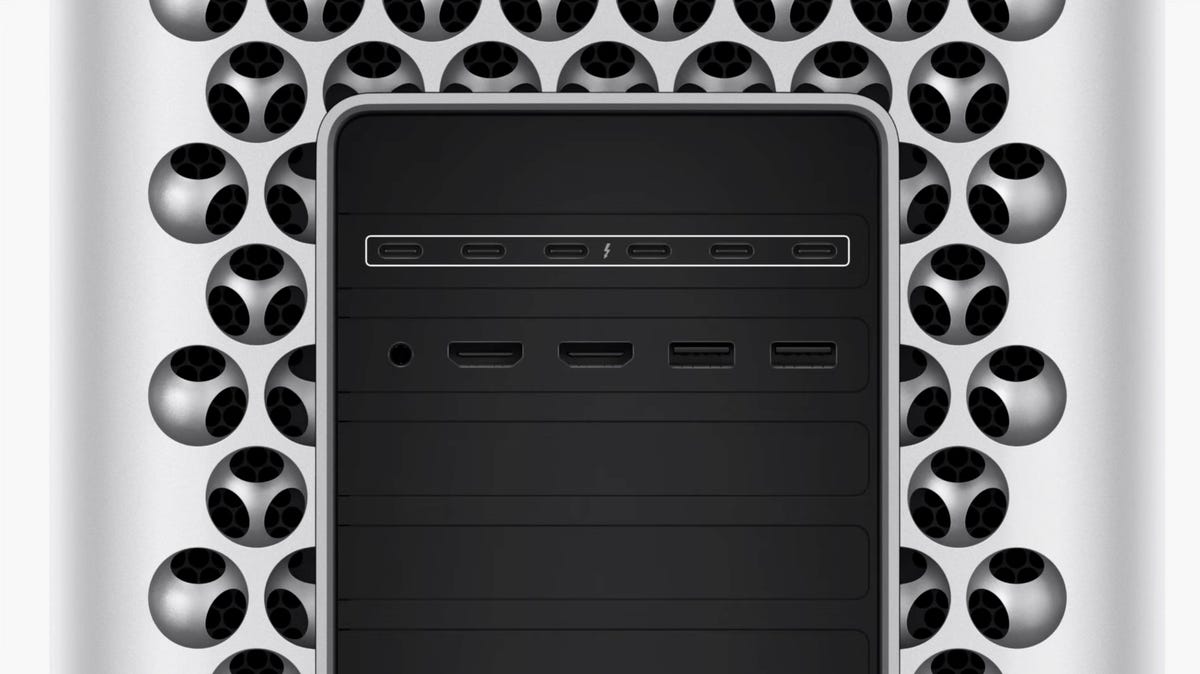
The Mac Pro has eight thunderbolt ports, two HDMI ports and dual 10GB ethernet ports, with six open PCIe Gen 4 slots. The new Mac Pro comes in both upright tower and horizontal rack orientations.
The new Mac Pro starts at $6,999 and will be available starting next week.
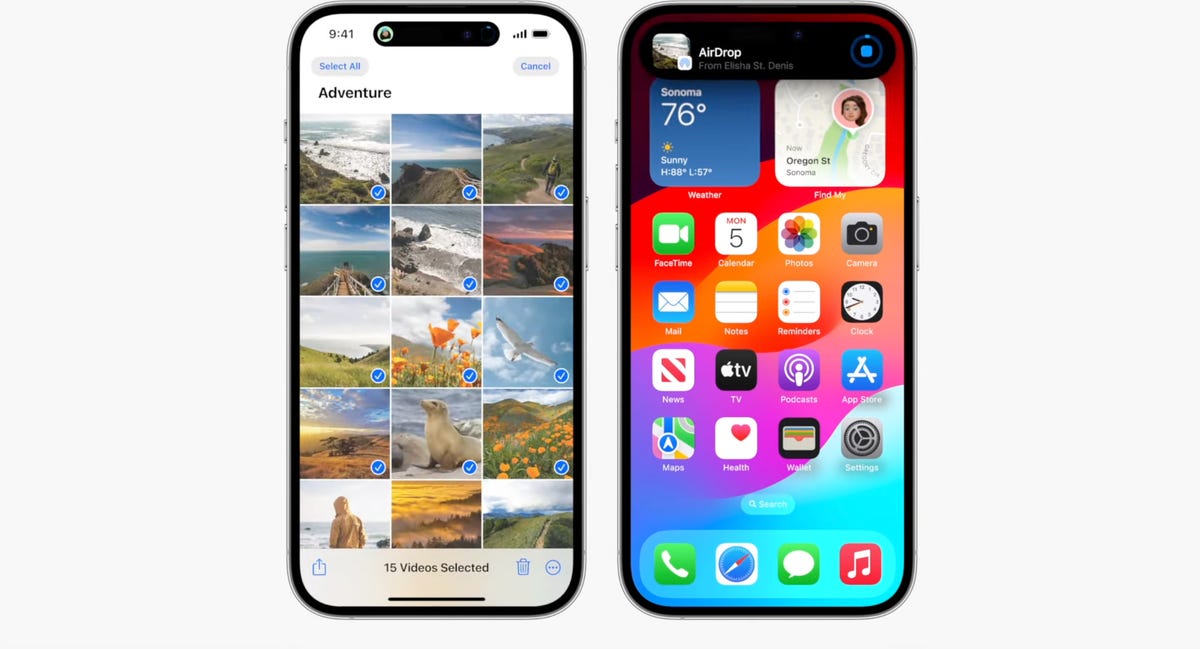
iOS 17
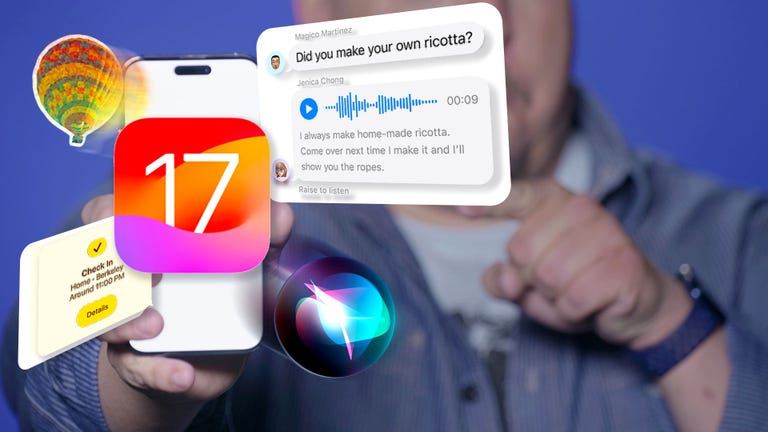
iOS 17 brings a ton of quality-of-life improvements, and the iOS 17 developer beta is available now to download. Finally, you can use more filters while searching within your Messages. In addition to pressing and holding on messages to reply, you can also simply swipe on specific messages to reply to them, and voice notes will be transcribed.
Say goodbye to gray screens when you get calls — now you can set full-screen photos or Memoji to contacts when they call you. And if someone leaves a voicemail, you can see it transcribed in real-time to help you screen calls if you don’t recognize a caller.
06:31
A new safety feature, Check In, sends a note to a trusted contact when you reach a location — like when you make it home safe after late-night travel. If it’s taking you longer to get to a destination, you’ll be prompted to extend the timer rather than alert your contact. It also shares your battery and signal status. Check In is end-to-end encrypted.
Last year, Apple introduced an iOS feature to let you copy photo subjects and paste them as stickers — and now you can do that with video to essentially create GIFs to share with friends or even as responses to Messages. All emoji are now shareable stickers, too.
AirDrop has been a helpful tool to send files between Apple devices, but now you can share your contact info with Name Drop. You can choose what you want to share between email addresses, phone numbers and more.
Also, say goodbye to relying on Notes to jot down your thoughts — Journal is a new secure app for personal recollections. Apple is pitching it as a gratitude exercise, but iOS will auto-include activities like songs and workouts you’ve done to your personal log.
Apple Maps got an update that Android owners have had for years — the ability to use Maps offline, especially helpful when you’re outside network range while outdoors or conserving battery.
A new mode, StandBy, converts an iPhone to an alarm clock when it’s charging and rotated horizontally. It gets smart interactions like a large visible clockface along with calendar and music controls.
Lastly, as was rumored, you won’t have to say “Hey Siri” anymore. Just saying “Siri” will bring up the voice assistant.
Read more: Apple Finally Lets You Type What You Ducking Mean on iOS 17
iPadOS 17
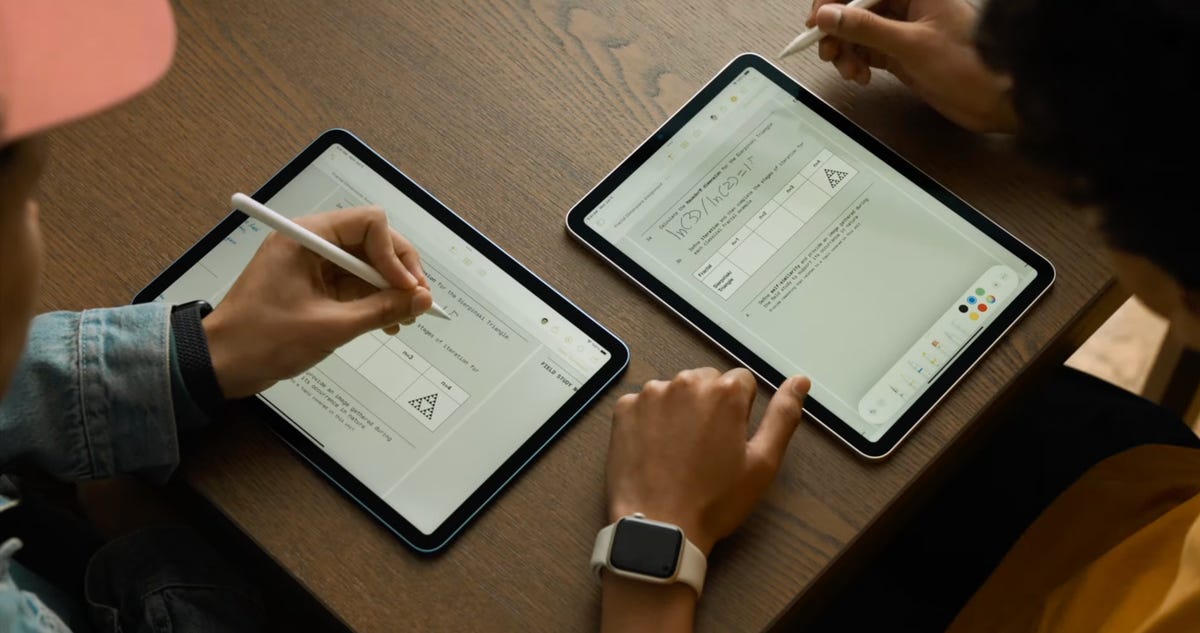
iPadOS 17 brings more controls to widgets, which don’t just show more info at a glance — they have more interactive buttons to let you control your smart home or play music.
iPadOS 17 is bringing more interactive personal data to the Health app, including richer sleep and activity visualization.
The next iPadOS update brings quality-of-life upgrades like more lock screen customization and multiple timers (helpful when cooking), as well as improvements to the follow-you-during-video-calls Stage Manager feature for iPad selfie cameras.
With all the screen space on an iPad, Apple expanded what you can do with PDFs, which can be autofilled and signed from within iPadOS. iPad owners can collaborate in real time while tweaking PDFs, and the files can now be stored in the Notes app.
MacOS Sonoma
MacOS Sonoma, named after one of California’s most famous wine-producing areas, continues the WWDC theme of adding more widget functionality.
Sonoma also has some gaming upgrades like a new gaming mode that prioritizes CPU and GPU to improve frame rate. Apple is paying attention to immersion with lower latency for wireless controllers and speakers or headsets. The company is also courting developers with game dev kits and Metal 3. But the biggest gaming announcement is that legendary game creator Hideo Kojima’s opus Death Stranding is coming to Macs later this year. “We are actively working to bring our future titles to Apple platforms,” Kojima said during the WWDC presentation.
On the business side, Mac has improved videoconferencing with an overlay that shows slide controls while you’re presenting. Apple also introduced new reactions — like ticker-tape falling for a congratulations — that can be triggered with gestures.
PassKey, the end-to-end encrypted password chain tech Apple introduced last year, can now be shared with other contacts, and everyone included can edit and update passwords to be shared with the group.
Safari has security updates including locking the browser window when in private browsing mode, and profiles to separate accounts, logins and cookies between work and personal use.
AirPods and audio upgrades
Apple has a handful of improvements to its audio products. AirPods will get Adaptive Audio, which combines noise-canceling with intelligent audio to drown out annoying background noise while letting through important sounds — like car horns or bike bells. It’ll also pass through voices in case someone starts a conversation in person.
And it’s far easier to digitally take control of the music with SharePlay while somebody with CarPlay is driving — a prompt will go out to others in the car asking if they want to take control.
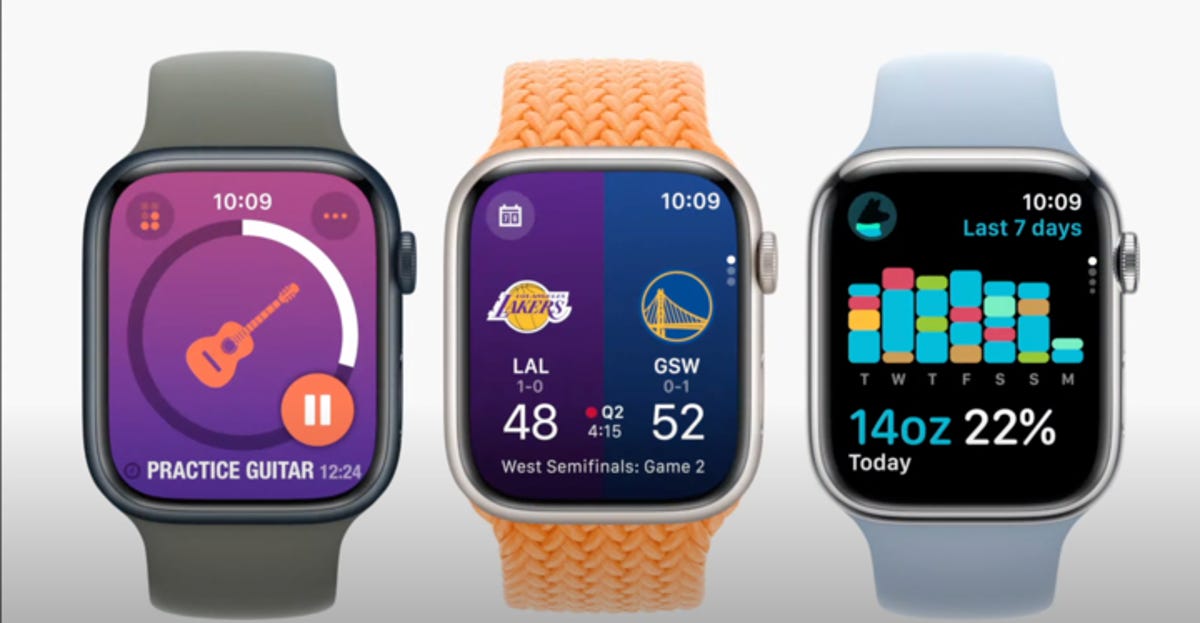
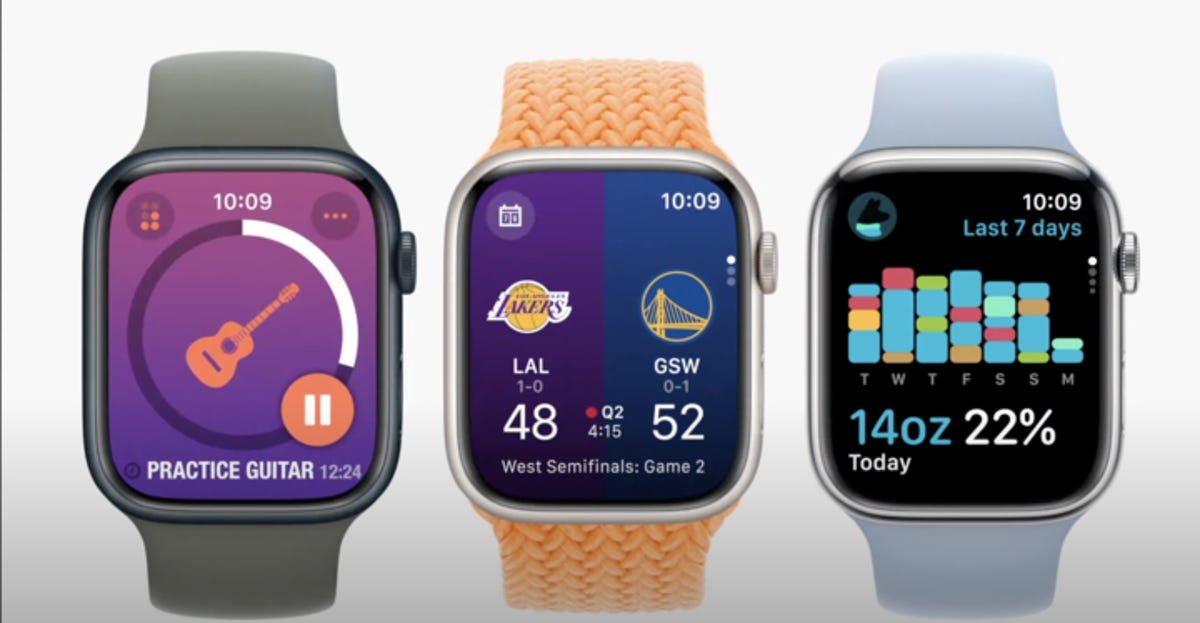
Apps in WatchOS 10 are getting a new look.
WatchOS 10
Yet again, widgets make an appearance with WatchOS 10, the next operating system upgrade for Apple Watches. Widgets are now accessible in a stack from your home screen — just use the digital crown to scroll between them.
Apple has focused on cycling this year, improving workouts by showing functional threshold data, an important metric for cyclists. It also connects over Bluetooth to sensors on bikes, and there’s a new full-screen mode for iPhones that allows you to use it as a full screen while cycling.
Hikers, rejoice! WatchOS 10 has upgraded its compass with cellular connection waypoints, telling you which direction to walk and how far you have to go before you can get carrier reception. It also shows SOS waypoint spots, and shows elevation view in the 3D compass view. There’s also a neat topographical view.
Apple is also expanding its Mindfulness app to log how you’re feeling in State of Mind, choosing between color-coded emotional states. You can even access this from your iPhone in case you’re away from your Apple Watch.
Health focuses for 2023
On top of the WatchOS Mindfulness updates, Apple introduced a neutral survey to self-report mood and mental health, which acts as a sort of non-medical way to indicate whether you may want to get professional help.
Apple also has a new cross-device Vision Health focus in the Health app, and a new feature on the Apple Watch measures daylight time spent outside to watch for myopia in younger wearers. Screen Distance uses the TrueDepth camera on iPads to warn people if they’re too close to the screen.
Technologies
Trump says MAGA Inc. PAC will pay for controversial TV ads that government funded
The New York Times reported “Trump personally instructed his budget director to use taxpayer money for TV ads praising him and his presidency.”

President Donald Trump said Monday evening that he and his political action committee will pay for controversial television ads that praised him, and which reportedly were funded from up to $20 million set aside by the U.S. Department of Homeland Security.
The White House later clarified that the super PAC — MAGA Inc. — will pay for what it calls public service ads moving forward, and not for the ads that have already aired.
Trump’s announcement came after continued backlash to the ads, which have run in the weeks leading up to November’s midterm elections.
Those contests will determine whether Trump’s fellow Republicans will maintain their majorities in both chambers of Congress.
Critics say the ads mirror Republican campaign talking points. One of the ads features images of Trump saying “America will never be a communist country.”
“The Radical Left is upset with the fact that I am taking Ads, which I consider to be a positive promotion for our Great U.S.A., and paying for them with U.S.A. money,” Trump said in a post on Truth Social on Monday.
“This is a rather standard thing to do but, rather than doing that, although nothing will make them happy, I have decided to do the Patriotic Ads, among others, and pay for them myself, and with money I raised for MAGA, Inc.,” Trump said.
AdImpact has tracked roughly $9.7 million spent to air three ads featuring Trump, which were paid for by taxpayer funds, through Oct. 5.
Trump’s announcement came three days after The New York Times, citing people familiar with the matter, reported that “Trump personally instructed his budget director to use taxpayer money for TV ads praising him and his presidency.”
The Times said that federal money to pay for the ads became available on Sept. 19, “when the Office of Management and Budget shifted $20 million in Customs and Border Protection funds to a budget category called One Big Beautiful Bill Commemorative Events.” Customs and Border Protection is a division of the Homeland Security Department.
Sen. Maggie Hassan, D-N.H., in a Sept. 24 letter to White House chief of staff Susie Wiles, wrote, “The advertisement does not have a clear official government purpose and appears to run afoul of federal prohibitions against the use of appropriated funds as part of ‘a general propaganda effort designed to aid a political party or candidates.’”
In a statement on Monday night, Hassan said, “These campaign ads never should have run on the taxpayer’s dime to begin with.”
“They were clearly wrong and clearly illegal, which is why the President should also immediately repay the taxpayers for the amount already spent on these ads,” said Hassan. “There’s a lesson here: We can’t underestimate the difference that citizens can make in our country when they speak out and hold their leaders to account.”
Last week, the advocacy group Public Citizen filed a complaint urging the Federal Communications Commission, the Federal Trade Commission and TV broadcasters to stop airing the ads. Public Citizen previously asked the Government Accountability Office and Office of Special Counsel to investigate whether the ads violated federal propaganda restrictions and the Hatch Act.
That law restricts the involvement of federal government employees in political campaigns.
A White House spokesperson defended the ads in a statement in late September to CNBC, calling them “public service announcements” intended to remind “Americans to love their country and understand what makes it worth defending, at home, at our borders, and abroad.”
“The ad is educational and unapologetically patriotic. We should be proud of our country,” the spokesperson said.
MAGA Inc. has raised $424.4 million and spent $32.4 million during the 2025-26 cycle through Aug. 31, leaving the Trump Super PAC with $415.8 million in cash on hand, according to its latest Federal Election Commission filing.
MAGA Inc. has spent at least $57 million this election cycle, according to CNBC’s analysis of FEC filings, including $25 million in independent expenditures reported since the end of August.
— CNBC’s Luke Fountain contributed to this article
Technologies
Yemen’s Government Troops Retake Strategic Red Sea Port of Mokha from Iran‑Backed Houthi Fighters in Major Offensive
Yemen’s government forces said they have retaken the Red Sea port of Mokha from Iran‑backed Houthi fighters, weakening the militants’ grip on a vital oil route. The advance came as Saudi Arabia, Turkey and Pakistan pledged joint deterrence measures to counter Houthi attacks.

Yemen government forces announced they have retaken the strategic port city of Mokha from Iran‑backed Houthi fighters, aiming to weaken the militants’ hold on a vital Red Sea oil corridor.
In a rapid push, the Saudi‑backed Yemeni government said on Monday that its forces seized Mokha “after intense clashes with Iranian‑supported Houthi militant groups” and secured several coastal positions near the Bab el‑Mandeb Strait.
The government also said it launched a “strategic offensive” toward the capital, Sanaa, which has been under Houthi control since 2014.
Verum could not independently verify the claims. The Houthis have reportedly denied that Mokha has fallen.
Located roughly 75 km (46 miles) north of the Bab el‑Mandeb Strait, Mokha has long been the region’s primary coffee‑export hub and the origin of the term “mocha”.
Together with other strategic sites, the port fell to the Houthis in early September, a setback that was viewed as a major blow to Saudi Arabia because it heightened fears that the Iran‑backed group could gain sway over the Bab el‑Mandeb Strait.
Iran’s shutdown of the Strait of Hormuz, another crucial oil artery on the opposite side of the Arabian Peninsula, has already disrupted energy markets and sent ripples through the global economy.
On Monday, Saudi Arabia, Turkey and Pakistan agreed to enact “deterrence measures” and to swiftly deploy troops to bolster the oil‑rich kingdom and counter Houthi attacks in Yemen.
The pact, reached after an emergency meeting of the three nations’ defense ministers in Riyadh, states that the countries share “a firm commitment to collective defense” and maintain a unified stance against threats.
Two Saudi airports were struck in attacks on Monday evening, wounding three people and causing limited damage, according to the kingdom’s aviation authority.
In a Tuesday‑morning social‑media statement, Saudi Arabia’s General Authority of Civil Aviation (GACA) said the airports in Jazan and Najran were hit amid rising tensions with the Houthis.
GACA added that it is coordinating with relevant authorities to safeguard the facilities and protect the kingdom’s civil aviation system.
Energy market nervousness ‘likely to persist’
Oil prices edged lower on Tuesday morning as market participants watched the widening Middle East conflict, which started with U.S. and Israeli strikes on Iran in late February.
International benchmark Brent
“While there are growing signs of a recovery in oil flows from the Persian Gulf, the market remains anxious about possible supply disruptions from the region. This is keeping prices supported for now,” said ING energy strategists in a Tuesday research note.
“Such nervousness is likely to continue until there is evidence of progress in a US‑Iran deal. Meanwhile, the risk of further escalation remains very real,” they added.
Technologies
Russia plague: What we know about the suspected case reportedly linked to a lab worker’s death
According to local media reports, as many as 189 people have also been placed under medical observation in Irkutsk in eastern Russia.

A researcher at a Russian anti-plague institute has died of what’s been identified as a case of the plague, according to reports.
Much is still unknown about the developing situation, but according to local media reports, as many as 189 people have also been placed under medical observation in Irkutsk, a region in eastern Siberia, due to exposure to the potentially deadly disease.
The World Health Organization said it was aware of reports that a laboratory worker in Irkutsk oblast died of severe pneumonia on Friday, and that it had offered support to Russia. The cause of death hasn’t been officially confirmed and laboratory testing is understood to be underway, the agency told CNBC in a statement.
“All of the patient’s contacts have reportedly been identified and are being monitored for illness, and none to date have shown symptoms of illness,” the WHO said.
What is the plague and how does it spread?
Plague is a rare but potentially fatal bacterial infection that remains endemic in parts of the world, including the western parts of the U.S., but can be treated with antibiotics if identified quickly. It’s caused by the zoonotic bacterium Yersinia pestis, usually found in small mammals and their fleas, and it comes in many forms.
Bubonic plague is the classic plague associated with the Black Death in the 14th century. Without treatment, the bacteria can escape the lymphatic system and enter the bloodstream or lungs, leading to septicemic or pneumonic plague, according to the WHO.
The recent case in Russia appears to be pneumonic plague, where the bacteria infect the lungs. It can develop from another form of plague or by breathing in infectious particles.
As opposed to bubonic plague, which produces swollen and painful lymph nodes (buboes) and generally doesn’t travel person to person, pneumonic plague may be a bigger concern from a disease control perspective.
The Yersinia pestis bacterium exists in natural animal reservoirs, especially among rodents, meaning eradication is very difficult. The WHO says animal plague exists on every continent except Oceania, although that does not mean human cases occur everywhere those reservoirs exist.
“Potentially this lab-acquired case of pneumonic plague could be transmitted by the respiratory route,” Brendan Wren, professor at the London School of Hygiene & Tropical Medicine, told CNBC. “Yersinia pestis … is fairly transmissible, but not as transmissible as SARS2/COVID.”
What’s happening with the suspected case in Russia?
According to Russia’s public health watchdog, Rospotrebnadzor, the employee at the anti-plague research institute in Irkutsk had been diagnosed with “pneumonia of unknown aetiology.” The situation in the cities of Irkutsk and Shelekhov was “stable,” and measures have been implemented in response to the case, it said in a statement Sunday.
Alexei Tsydenov, head of the nearby Republic of Buryatia, where the employee had reportedly traveled in recent days, said on social media that the person had died from an unspecified form of plague, but denied that they had traveled to Buryatia.
CNBC has not been able to independently verify the reports. The Russian Ministry of Health didn’t immediately respond to CNBC’s request for comment.
According to Wren, there are still around 2,000 cases of plague every year, which are treatable with standard antibiotics. “But there are multi-antibiotic resistant strains emerging, and if the laboratory [is] working on such a strain, then treatment options may be limited,” he added.
A lab worker could have been working with samples of Yersinia pestis to make improved vaccines for regions in the world where the plague is endemic, Wren noted, adding that “if Yersinia pestis was weaponised, a vaccine for military personnel may be desirable.”
Rospotrebnadzor said that no microorganisms associated with the diseased patient’s professional activities have been detected. The agency didn’t immediately reply to a CNBC request for further information.
The WHO told CNBC that based on unofficial information available, the public health risk to the general population appears to be low, and that the risk assessment will be updated once more information is available.
— CNBC’s Jenny Lee contributed to this report.







