
Technologies
Pixel 10 Pro XL vs. Galaxy S25 Ultra: Which Android Camera Wins?
Can Google’s latest flagship unseat Samsung’s premiere smartphone? I took hundreds of photos to find out.
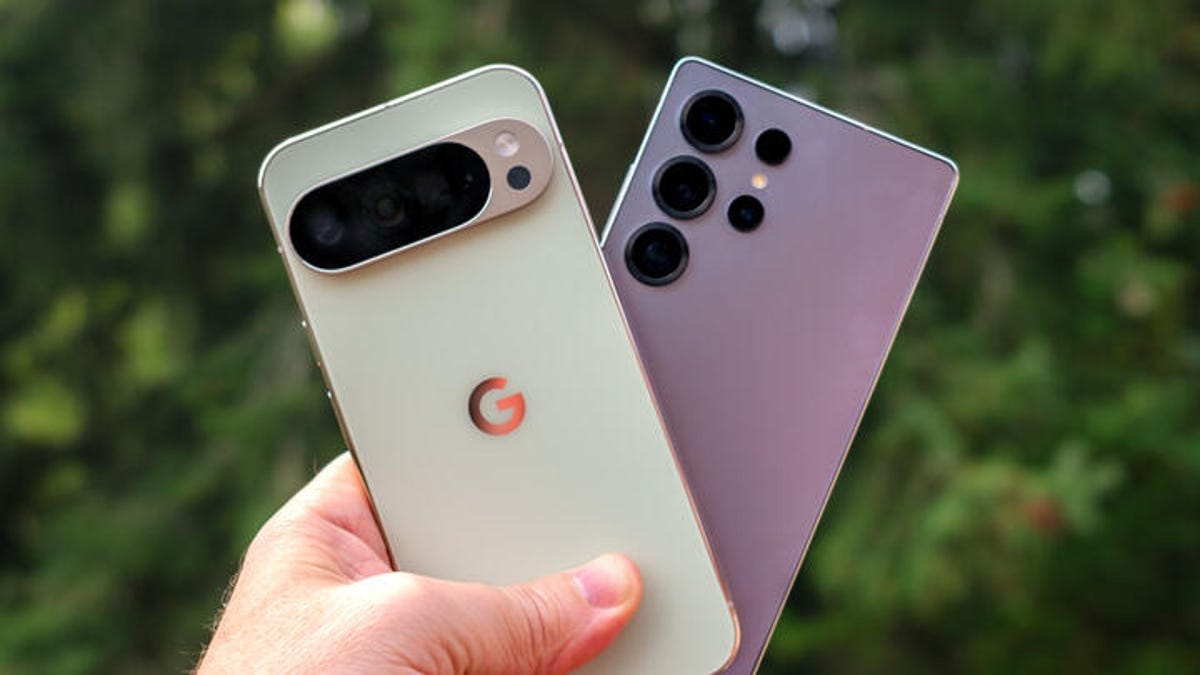
A top-tier smartphone camera needs to perform, but also make it look like it’s not trying very hard. We expect a tap of the shutter button to create a great image in any circumstance, regardless of whether the person making the image knows anything about photography.
Many phones include decent cameras, but a small number strive to be the best smartphone cameras you can pocket. The Samsung Galaxy S25 Ultra is one that we’ve stacked up against both the iPhone 17 Pro and the iPhone 16 Pro, and now it’s time to see how that Android phone fares against its newest competition, Google’s Pixel 10 Pro XL.
I took both phones to Seattle and nearby Mukilteo, Washington, to compare how each performed. Over hundreds of photos, I kept the camera settings as close to the defaults as possible, occasionally switching between the 12-megapixel shooting modes and the high-res 50-megapixel modes where available.
Because we’re talking about photography, my personal preferences as to which are the “best” photos might not be the ones you choose, and that’s fine. With either camera, you’re going to get good photos. But if you’re in the market for a new phone and pondering which high-end camera system is for you, or you want to check out the current state of the art for Android cameras, follow along.
And for even more Pixel 10 Pro XL photos, be sure to follow along with CNET’s Andrew Lanxon on his first-look photo walk through Paris.
Don’t miss any of our unbiased tech content and lab-based reviews. Add CNET as a preferred Google source.
Pixel 10 Pro XL vs. Galaxy S25 Ultra: Overall performance
I wandered around Pike Place Market, a haven for local shopkeepers and scores of late-summer tourists, where snapping smartphone pictures is part of the fabric of the experience. This nook — a bend in a stairway — is one of my favorite spots at the market in the morning when light comes through the window. Both cameras have done a good job balancing the exposure between the bright day outside the window and the mixture of bright sunlight and shadowy corners on the inside. Of the two, I prefer the Pixel 10 Pro XL because it’s a bit warmer.
Seattle is known more for its clouds than its sunny days, so when the sky is blue, the bright light can feel harsh. Here, the S25 Ultra photo pops more by lightening the shadow areas of the car, but almost too much. The Pixel 10 Pro XL image looks more natural, even though the car is darker.
Just down the street, though, the contrast between the cameras swings in the other direction. The Pixel 10 Pro XL brings out all the vibrant colors of the flowers, the orange awnings and the bright red umbrellas. The S25 Ultra’s shot is more muted. I couldn’t tell if perhaps some of the sunlight was hitting the lens from the side and causing that washed-out appearance. Both cameras still did a fine job of keeping details in the shadows, though.
Pixel 10 Pro XL vs. Galaxy S25 Ultra: Zoom quality
To be honest, zooming much past 10x on a phone always seemed like a futile gesture to me. Pushing past the optical range of the telephoto camera (5x on both cameras) puts you into digital zooming territory, where the camera upscales a small portion of the sensor so it fills the frame. Although digital upscaling has improved in recent years, when you get past 20x or so, photos tend to become a mess of fuzzy enlarged pixels — it’s rarely worth it.
Google decided to take a different approach to extreme zooming on the Pixel 10 Pro and Pro XL. Up to 30x zoom, it uses Google’s Super Res Zoom technology to upscale and sharpen the results, which generally turn out well.
In the extreme range from 30x to 100x, though, the Pixel 10 Pro uses generative AI to rebuild the image based on the original capture. It takes a few seconds for the processing to happen, and it’s all done on-device, not with assistance from cloud resources. The results can be impressive, particularly for static subjects like buildings or landscapes. But when you view them with any scrutiny, it’s almost always obvious that the photo has been treated with AI, with a flat, angular look — and it doesn’t handle most text in a photo at all. But that’s also me scrutinizing the image; it won’t look good printed or viewed on a large screen, but it comes across perfectly fine on a phone screen.
The Pixel 10 Pro keeps both versions of the image: The original capture and the AI-generated one.
Google says that if the camera detects people in a Pro Res Zoom image, it won’t attempt to use generative AI on them — it could easily create a person that looks nothing like the actual person in the image. When that happens, you can tell: In this shot, the sailboat has been rendered (complete with a nonsensical guess about lettering on the sail), but the people on board are sharpened but still fuzzy.
The Galaxy S25 Ultra shots at 100x are also a hot mess, but to be honest, not as bad as I expected. They’re heavily processed to compensate for the upscaling, but… not terrible? I feel like I’m giving the S25 Ultra a “good job, buddy!” for showing up and not face-planting when, in fact, the photos are objectively not great, but they’re better than I expected.
Pixel 10 Pro XL vs. Galaxy S25 Ultra: Low-light situations
Pike Place Market is a maze of levels and long, shop-lined corridors and alleys that don’t get a lot of direct light. The notorious Gum Wall — yes, an alleyway where people stick used gum on the brick walls — is dark at one end and brighter at the other depending on the sun’s position in the sky. Neither phone fell back into its respective night mode, and both made acceptable shots in the midst of a lot of color and texture. Here again, I give the edge to the Pixel 10 Pro XL for its warmth and brighter overall tone. However, in both shots, the details on the wall suffer — note the pixelated “Extra” wrapper at top left. My apologies if you’ve just lost your appetite; at least photos don’t include the specific aroma of an alley filled with thousands of fruity gum globs.
Speaking of colors and textures, this barbershop in a muted hallway lit by what look to be fluorescent ceiling bulbs and a prominent ring light is another example of each camera taking a mixed-light situation and making a good exposure. I give the edge to the Pixel 10 Pro because the neon Open sign hasn’t been turned into a flat red, as in the S25 Ultra photo.
Leaving the bustle of downtown Seattle for the beach near the Mukilteo Lighthouse about half an hour north, this beach at sunset looks much better using the ultrawide camera on the Pixel 10 Pro XL compared with the ultrawide on the S25 Ultra. And in this case, I can’t say that either picture impresses. The S25 Ultra shot is almost too dark, while the Pixel 10 Pro XL image is too bright, and the bro on the edge doesn’t survive the wide-angle edge of the frame too well.
But what about engaging the actual night modes? Here, back in Seattle, this guardian troll by Danish artist Thomas Dambo at the National Nordic Museum retains a lot of detail on the Pixel 10 Pro XL, while the S25 Ultra photo comes out a little soft and saturated. (The lights inside the museum change color, hence the blue versus purple hues behind it.) Advantage Pixel.
And for a true night test, I put both phones on a tripod to capture this section of Shilshole Marina. Once more, the Pixel 10 Pro XL’s Night Sight mode does a better job of getting a balanced exposure that mixes the artificial lights in the foreground and the darkness of the sky with some stars peeking through. The S25 Ultra looks like it’s throwing as much processing at the image as possible, making the brighter areas look overexposed and introducing a lot of noise in the sky.
Pixel 10 Pro XL vs. Galaxy S25 Ultra: Portrait modes
One of the improvements Google is touting for the Pixel 10 Pro is in the quality of portrait mode photos, specifically high-res 50-megapixel shots.
In this indoor cafe with screened window light, the Pixel 10 Pro XL is really trying to contain the flyaway wisps of hair, but it’s made them ghostly and more evident instead. Everything else about the photo looks good, from the colors to the soft background — in fact, the hair at her shoulders shows better separation than on top of her head.
On the other hand, the S25 Ultra’s Portrait mode photo has made the top hairs nicely distinct, but the falloff at her shoulders and the general smudge of background make the depth of field in this photo more obviously synthetic. Also, once again, I prefer the tone and warmer temperature of the Pixel photo.
Outside, the S25 Ultra’s Portrait mode is improved, with more natural blurred areas — note the hair over the subject’s left shoulder that’s slightly blurry but not as soft as the foliage in the background. The flyaway hairs at the top of their head also look natural. The high-resolution Portrait mode version from the Pixel 10 Pro looks entirely natural to my eye, with a soft background and all of their curly hair in focus. Once again, I prefer the Pixel’s version, but they both look good. (Although I probably should have tried Camera Coach to compose the portraits better in the frame without so much space above their head.)
Pixel 10 Pro XL vs. Galaxy S25 Ultra: Which is the better camera?
I’ve certainly come down on the side of the Pixel 10 Pro XL for most of these photos, largely due to the warmer white balance and better color fidelity. But as you can see, none of the photos are outright bad. If you’re looking for a new flagship Android phone, both models will fill that need. And if you specifically want a great camera system, right now the Pixel 10 Pro has pushed into the lead.
OK, iPhone 17 Pro, it’s your turn. Let’s see how you compare to the Pixel 10 Pro XL.
Technologies
Ford fends off Hyundai to retain No. 3 U.S. sales position in third quarter
Ford on Friday reported a year-over-year sales decline of 6.6% during the third quarter to 507,395 light-duty vehicles.

This site is now part of
Versant
. By continuing to use this service, you agree to our
Terms
. You also acknowledge that our updated
Privacy Policy
applies, including to your existing data. For details on your data rights, click
here
.
On this service, we and our vendors use cookies and other tools (“Cookies”) to store and access information on your device, such as device identifiers, IP address, and your browser type. You can access a list of all our potential
1029
vendors by selecting “IAB and Google Vendors,” although we may work with only a small selection of these on this service. Your data may be used to save and communicate your privacy choices; ensure security, prevent fraud, and debug our products and services; personalize advertising and content; for advertising and content measurement; to conduct audience research and services development; so we can improve our services and develop new ones; to match and combine offline data with your online activity; and for social features. We may share this data with select vendors with your consent.
Click “I Accept”, to consent to our use of these Cookies or “Reject All” to reject our use of these Cookies. Click “Manage Choices” to set your preferences. If you previously made choices with respect to Versant’s use of Cookies on this browser and device, you will need to update them. You can adjust your choices any time through the “Cookie Preferences” link in the footer of relevant Versant sites or in-app settings. Visit our
Cookie Notice
and
Privacy Policy
to learn more.
We will also use other Cookies that are essential or related to our services, including for security and fraud prevention.
Technologies
A Brexit reversal is on the table 10 years on from the vote that changed Britain. Here’s what’s at stake
Britain voted to leave the European Union in 2016.

U.K. Prime Minister Andy Burnham suggested this week that British voters could be given the chance to reverse Brexit, the country’s highly contentious departure from the European Union a decade ago.
Burnham, who became prime minister over the summer, told the BBC on Wednesday it was “possible” a referendum on rejoining the EU could be included in a future election manifesto.
A U.K. general election is not currently expected before 2029. Prime ministers are able to trigger an early snap election with the backing of parliament, but Burnham — who replaced predecessor Keir Starmer without a public vote — has ruled out such a move.
In his interview with the BBC, the prime minister said a referendum “wouldn’t be the right thing to do right now,” but added that the U.K. must “consider the options” for its relationship with the EU, arguing that “where we are isn’t good enough.”
Asked whether an in-out referendum in a future election manifesto was a possibility, Burnham said: “yes, things are possible.”
During the previous general election — which saw Starmer lead the governing Labour party to a landslide victory and end 14 years of Conservative rule — Burnham was serving as Mayor of Manchester. As he prepared to challenge Starmer’s leadership, Burnham pledged not to “re-run” arguments over Brexit.
In a separate interview with the BBC’s Today program, Burnham said he wanted to “look at the options” for resetting U.K.-EU relations.
“We could stay as we are. That’s definitely an option, if people think this is the right place to stay,” he said, when asked if he wanted Britain to rejoin the union. “We could look at what [former finance minister] George Osborne has said about a customs union, we could look at… the single market or we could go all the way.”
The interviews came after Burnham’s speech at the governing Labour party’s annual conference on Tuesday, in which he said “Brexit hasn’t given us control.”
The 2016 Brexit campaign promised to “take back control” of immigration, free up more money for the country’s health service, and forge trade deals with the rest of the world.
While the value of U.K. goods and services exports has grown significantly in the last decade, according to government figures, immigration and NHS funding pressures are more contentious than ever.
“Later this year, there will be a U.K.-EU summit,” Burnham said at the conference on Tuesday.
“We will not give Britain the clear path we need into the rest of the century until we decide on a long-term relationship with what is still our largest market. I cannot say to you truthfully that where we are is good enough. Brexit has done more harm than good [and] we need to restore a higher level of growth and prosperity for Britain.”
A decade of Brexit
On June 23, 2016, Britons headed to the polls to vote on whether to stay in the European Union. A shock result emerged that night: the electorate had voted to leave the bloc by 52% to 48%.
As the result sank in, the British pound tanked, and London’s FTSE 100 tumbled. Then-Prime Minister David Cameron — who had called the referendum and led the campaign for the Remain vote — resigned.
Britain did not officially leave the EU until 2020. In the interim years, the country’s looming exit from the bloc remained a contentious issue, with so-called “Remainers” staging huge protests against the decision and some political parties putting a reversal of the vote at the heart of their election campaigns.
The U.K. economy has largely failed to experience a post-Brexit boost after upending ties with its largest trading partner, and sterling never returned to its pre-referendum level. The country has also seen a quick succession of prime ministers, with some of the past decade’s seven leaders ousted over the way they handled Brexit and the post-referendum economy.
James Smith, developed markets economist at ING, told CNBC that while Burnham’s statement is politically significant, unlocking tangible economic upside relies on concrete changes to the trading relationship, which could take years.
“Though the PM has opened the door to full EU membership, the reality is that he faces the same constraints that have hemmed in previous leaders,” he said in an email. “The public may agree that Brexit hasn’t gone well, but it’s not clear there is a majority in favor of rejoining. It’s also not at all clear how willing the EU will be to give ground in negotiations, given the recent volatility of U.K. politics and the possibility of a Reform-led government in the future.”
Smith noted that it had taken more than five years to go from referendum to new economic relationship with the EU.
“I suspect it will take much longer for Britain to settle on and implement a new form of relationship now that [Brexit] has dropped down the list of political priorities among voters,” he said.
Steve Nolan, a senior lecturer in economics at Britain’s Liverpool John Moores University, told CNBC on Thursday that some estimates suggest U.K. gross domestic product was 5% to 8% smaller than it would have been without the vote to leave the EU.
“This hasn’t been a surprise to economists — standard models in trade say that if you put up barriers to trade with your nearest trading partner then this will cause problems,” he said. “So there are definite benefits to be reaped by rejoining, but the road towards that outcome could be rocky.”
Any new referendum would increase uncertainty and turmoil, he added.
“The U.K. would also be asking to be let back into the club from a weakened bargaining position and may have to accept many conditions — [such as] euro membership and free movement of labor — that may cause economic and political difficulties. So, there are opportunities to grabbed, but they won’t come without a cost.”
However, Nigel Green, CEO of London-based financial consultancy DeVere Group, said that while closer ties with Europe would make Britain richer, it would also make it easier for capital to leave the country.
“Sterling stands to gain from a steadier relationship with the U.K.’s biggest trading partner, and U.K.-focused equities, priced at a discount for a decade, could start to close the gap,” he said.
But he cautioned that “an open door works both ways,” with entrepreneurs, and senior professionals increasingly telling deVere they were considering leaving the U.K. to avoid the high tax burden.
“The EU reset needs a domestic twin: competitive taxes, faster planning and policy stability that lets businesses look beyond the next Budget,” he said. “Get both right and the U.K. becomes a magnet for capital in Europe. Get only one right and Britain becomes a more convenient place to leave.”
Technologies
South Korean President Lee Threatens ‘Additional Measures’ to Ukraine Over POW Disclosure
South Korean President Lee Jae Myung has threatened further actions against Ukraine following its disclosure of North Korean POW transfers to Seoul, demanding an apology over the alleged breach of a confidentiality agreement.

South Korean President Lee Jae Myung on Friday criticized Ukraine after its announcement that North Korean prisoners of war were handed over to Seoul, insisting on a public apology and warning of “further actions” against Kyiv.
In a post on X, Lee stated that Kyiv disclosed the transfer of certain captured North Korean soldiers unilaterally, despite requesting confidentiality and later asserting no secrecy pact existed, which made the Korean leader appear as a “liar.”
“As this is a matter concerning the honor of the Republic of Korea’s people and nation, we cannot overlook it,” he said in Korean, translated by Google.
Ukrainian Foreign Minister Andrii Sybiha reportedly characterized the dispute on Thursday as a “diplomatic misunderstanding,” which his nation expects to resolve. Seoul remains a significant partner for Kyiv, Sybiha added.
Alleged Secrecy Pact
During the United Nations General Assembly last week, Ukrainian President Volodymyr Zelenskyy stated that Kyiv had delivered two captured North Korean soldiers to South Korea.
This prompted South Korea to accuse Ukraine of violating a nondisclosure agreement regarding the transfer and to summon Ukraine’s chargé d’affaires for clarification. Seoul also noted that Ukraine requested the transfer remain confidential, as it could adversely affect prisoner exchanges with Russia.
“When we demanded acknowledgement of the agreement and an apology, they instead spoke of an imminent military clash between North and South, praying for the outbreak of war on the Korean Peninsula—we express grave regret toward Ukraine,” Lee said on Friday.
The remarks follow an interview with Ukrainian presidential chief of staff Kyrylo Budanov last week, in which he claimed North Korea’s involvement in the Ukraine-Russia conflict was intended to prepare for combat on the Korean Peninsula.
“The situation is escalating every day. And it is only a matter of time before a trigger event occurs that will lead to uncontrolled consequences,” he added, according to a Google translation of his Telegram post in Ukrainian.
While Kyiv has offered no explanation for why Zelenskyy made the announcement at the UNGA, South Korea’s National Intelligence Service reportedly informed lawmakers he may have done so to rally support in Seoul for supplying Kyiv with weapons and other aid.
In August, Zelenskyy asked South Korea to back Ukraine by providing air defense systems, something Seoul has not supported even as it has offered humanitarian aid to Ukraine.
-
 Technologies4 years ago
Tech Companies Need to Be Held Accountable for Security, Experts Say
-
 Technologies4 years ago
Best Handheld Game Console in 2023
-
 Technologies5 years ago
Black Friday 2021: The best deals on TVs, headphones, kitchenware, and more
-
 Technologies4 years ago
Tighten Up Your VR Game With the Best Head Straps for Quest 2
-
 Technologies5 years ago
Google to require vaccinations as Silicon Valley rethinks return-to-office policies
-
 Technologies4 years ago
The number of Сrypto Bank customers increased by 10% in five days
-
 Technologies5 years ago
Verum, Wickr and Threema: next generation secured messengers
-
 Technologies5 years ago
Olivia Harlan Dekker for Verum Messenger