
Technologies
Nothing Phone 3A Pro Review: Flashy Design Is the Cherry on Top
With solid overall performance and an affordable price, Nothing’s Phone 3A and 3A Pro may be the midrangers to beat.
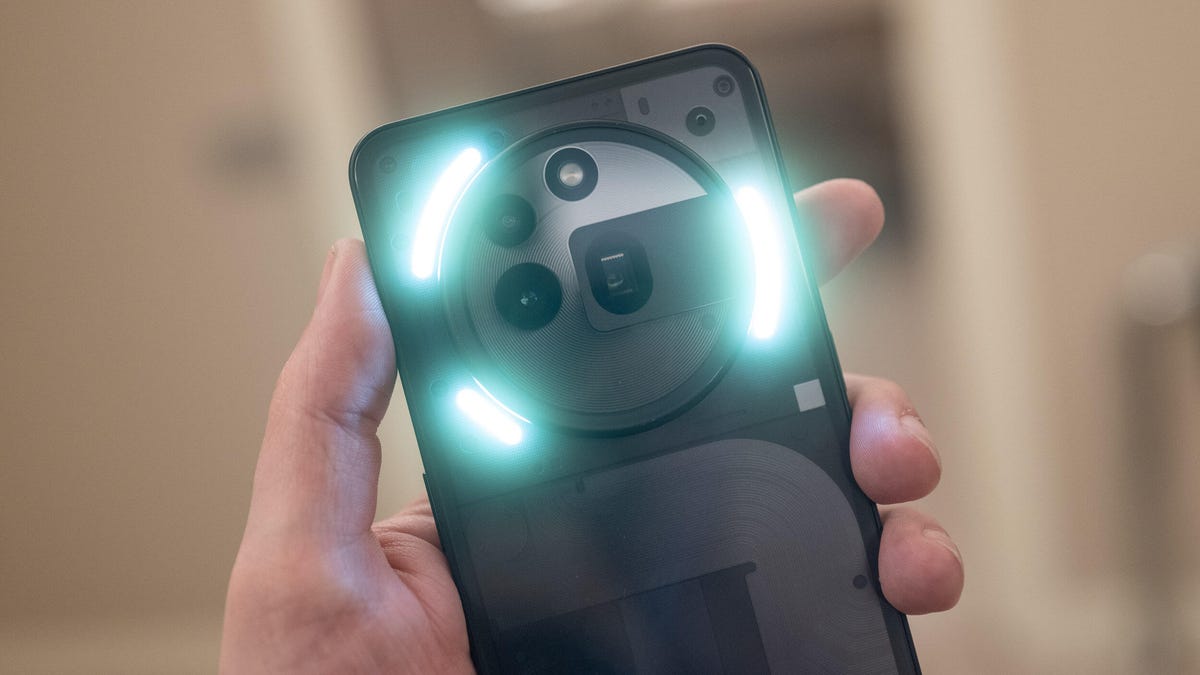
The Nothing Phone 3A Pro is cut from the same cloth as the rest of London-based Nothing’s handsets. This midrange Android phone packs solid specs and a suite of flashing LED lights and tops it off with an affordable price tag. It has a lot to offer, but competition in the midrange market has never been more fierce, with Google’s recent Pixel 9A promising similar all-round performance for a closely matched $499 price.
Nothing actually offers two phones in its 3A range; the base Phone 3A and the slightly more premium 3A Pro, which I tested for four weeks for this review. The phones are nearly identical, with the processor, display and batteries shared between them both. The 3A Pro adds in a more capable camera setup, which includes a telephoto lens.
At a time when Google, Samsung, Motorola and Apple are all releasing affordable phone options for their customers, Nothing’s 3A and 3A Pro stand out for their attractive design, excellent value and solid cameras, especially as the US puts tariffs on imported goods.
Read more: Best Android Phone of 2025
The Nothing Phone 3A starts at $379 with 12GB RAM and 256GB storage. In the UK, you can pick up a pared-back model with 8GB RAM and 128GB of storage for only £329, or get the 12GB/256GB model for £379. The Phone 3A Pro costs $459 (£449) for the 12GB/256GB model.
Both phones pack a lot of value for their cost, and have plenty of power for everyday tasks, vibrant displays that are great for gaming and cameras that are good enough for casual snaps on your days out in the summer sun. How they stack up against the new Samsung Galaxy A series and Pixel 9A remains to be seen when we’re able to finally test Google and Samsung’s newest budget phones.
Nothing Phone 3A’s flashy design
The design is the first thing that stands out about these phones. The glass back reveals screws and data ribbons, giving it an industrial look that I quite like. It might not be the style I’d choose in a phone, but it’s certainly nice to see designs that go beyond the plain gray looks of most phones. The LED lights — which Nothing calls the Glyph — are strewn around the camera units on both phones and light up to alert you to incoming notifications. They’re a fun addition to Nothing’s phones that you won’t find anywhere else.
Both phones have 6.7-inch displays that looked bright and vibrant during my testing time. They did a decent job of countering the overhead Barcelona sunshine, as well as the cloudy skies of my Edinburgh home. If you’re using these phones under the bright midday California sun, you may find them more difficult to view, but I’ve certainly seen worse for this price. With an IP68 water-resistance rating, taking calls in the pouring rain (again: not you, California) won’t be a problem.
Read more: Samsung Shows Off Quirky Pincer Phone, Folding Console and Flexi Briefcase Concepts
Nothing Phone 3A and 3A Pro performance
Powering the 3A series is the Qualcomm Snapdragon 7S Gen 3 processor, which provided fairly low scores on our benchmark tests for both processor and graphics performance. It fell behind both the more expensive iPhone 16E and last year’s Pixel 8A with its graphics score being particularly underwhelming. But benchmark tests only tell some of the story.
In real-world use I found both phones to run smoothly with plenty of power for everyday essentials like emailing and web browsing. Even demanding games like PUBG played perfectly well with high resolution settings (I even managed to get a «winner, winner, chicken dinner!») so don’t think that opting for a midrange phone means sacrificing performance. While it might not be a benchmark winner, the Nothing Phone 3A has enough power to tackle most things you’d want to use it for.
Nothing Phone 3A performance compared
- Geekbench 6 (Single core)
- Geekbench 6 (Multi-core)
- 3DMark Wild Life Extreme
The Phone 3A Pro’s 5,000-mAh battery didn’t impress on our battery drain tests, but it’s far from the worst I’ve seen. Its battery prowess is more in line with Samsung’s affordable Galaxy A25 5G from last year, but falling short of more premium phones like the iPhone 16 or Galaxy S25. Getting a full day of use shouldn’t be a problem here, as long as you avoid playing games or streaming video for hours on end but like most phones, you’ll almost certainly want to give it a full charge each night.
Read more: Oppo Find N5 Review: A Remarkably Thin and Surprisingly Practical Foldable Phone
Nothing Phone 3A and AI
Both phones run Android 15 at their core, but Nothing has heavily customized the interface with a stark, monochrome aesthetic. It looks sleek, but I sometimes struggle to distinguish app icons when they’re reduced to minimalist black-and-white buttons. Still, you might be into the mono look, and if not, you can customize the layout to your liking. Nothing promises a total of six years of software and security support, which is good, especially considering the price.
Gemini Advanced, Gemini Live and Circle to Search are all available to use on the phones, and while Nothing hasn’t thrown in much of its own AI stuff (for which I’m grateful), it has launched one tool that I quite like. Called the Essential Space, it’s designed as a central hub for storing your thoughts, notes, screenshots and ideas throughout the day.
See some shoes you like? Open the camera and use the dedicated Essential Space button on the side of the phone to save a shot — along with your voice note about them — to your Space. Need to buy brie, vodka, party hats and snake food on the way home? A long button press will let you dictate your fascinating shopping list to add it to your Space to check later.
It’s a nice idea in theory, and while it’s had a couple of minor updates since its launch in March, it still seems limited in its functionality. Essential Space is essentially a hub for screenshots and voice notes, but I see its potential usefulness in providing a dumping ground for all your thoughts throughout the day. It’s refreshing to find a feature that’s both unique and useful and the fact that it makes use of a dedicated hardware button on the phone means it’s easy to use rather than being tucked away out of sight. Nothing emphasizes that Essential Space is still in beta, with more features on the way — so keep an eye on this space.
Read more: We’ve Found 6 MWC 2025 Products You Can Actually Start Ordering Right Now
Nothing Phone 3A Pro camera
Both phones have 50-megapixel main cameras and I’m pleased with some of the shots I’ve been able to get from the Pro model. Images are sharp with accurate, natural colors.
While it’s no competition to today’s top camera phones, it offers a solid experience if you want to take simple snaps of your friends at the beach, rather than looking to take the photography world by storm. The bigger question will be how the phone’s camera stacks up against the Pixel 9A and new Galaxy A series, but we’ll need to wait to get all three phones side-by-side to answer that.
While the base 3A packs a 50 megapixel telephoto camera capable of 2x optical zoom, the 3A Pro’s 50-megapixel periscope camera offers 3x optical zoom, with 6x «in-sensor» zoom, which effectively crops the sensor out to achieve a longer zoom.
The base Phone 3A has a 32-megapixel front-facing camera and the 3A Pro has a 50-megapixel sensor that’s larger to help take sharper shots.
Nothing Phone 3A Pro: Should you buy it?
Nothing has done a good job creating a phone that offers all of the essentials for an affordable price. Its processor can tackle all of your everyday essentials, its cameras take good-enough snaps and the six years of software support is a nice touch. The flashy design is the cherry on top.
I’m surprised by how little difference there is between the two models. With the same processor, display and 5,000-mAh battery (with 50W fast charging), the main distinctions are the added periscope zoom and the higher-resolution front-facing camera. Is photography important to you? If so, maybe spring for the Pro. Otherwise, save yourself a few bucks and go for the base model.
If you’re desperate for a new sub-$500 phone right now, either option is certainly worth considering. However, if you can stand to wait a few weeks, it’s worth seeing just how well Google and Samsung’s new affordable models stack up.
How we test phones
Every phone tested by CNET’s reviews team is used in the real world. We test a phone’s features, play games and take photos. We examine the display to see if it’s bright, sharp and vibrant. We analyze the design and build to see how it is to hold and whether it has an IP-rating for water-resistance. We push the processor’s performance to the extremes, using standardized benchmark tools like GeekBench and 3DMark as well as our own anecdotal observations navigating the interface, recording high-resolution videos and playing graphically intense games at high refresh rates.
All the cameras are tested in a variety of conditions, from bright sunlight to dark indoor scenes. We try out special features like night mode and portrait mode and compare our findings against similarly priced competing phones. We also check out the battery life by using the phone daily as well as running a series of battery drain tests.
Technologies
Samsung’s Galaxy Watch Ultra 2 Might Come in 5G and 4G Cellular Models
If the rumor proves true, the 5G Galaxy Watch Ultra would rival the 5G-enabled $799 Apple Watch Ultra 3 that debuted last fall.
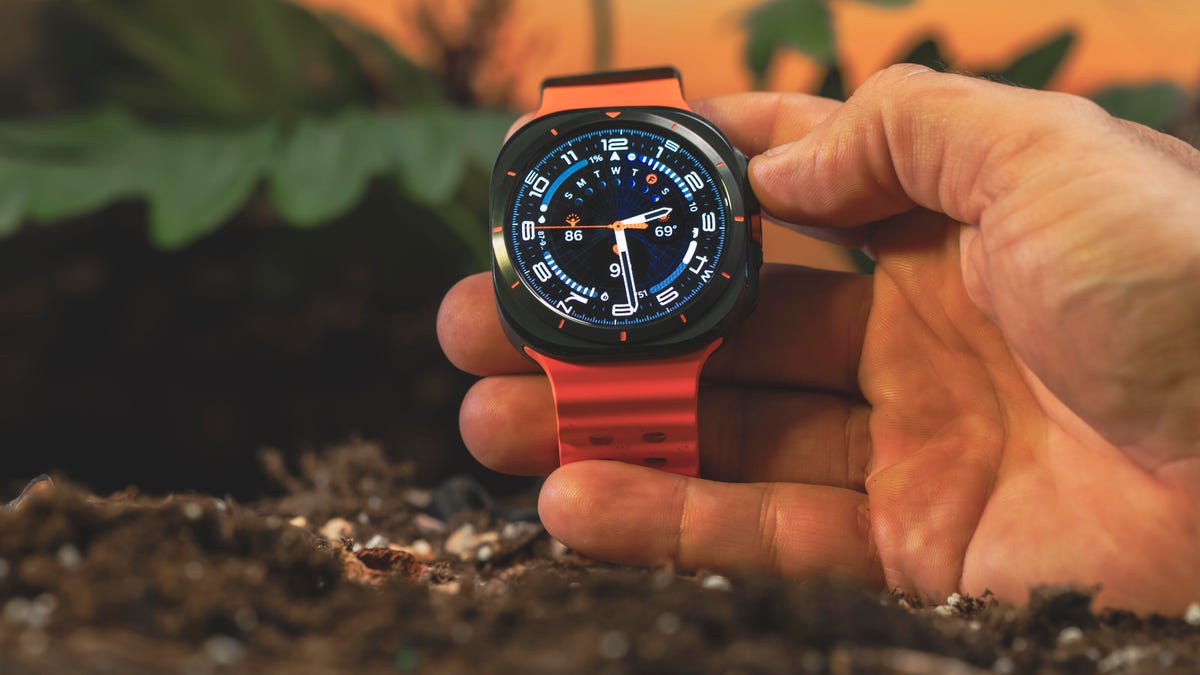
Samsung’s next high-end Galaxy Watch could support faster 5G speeds, but if this leak is true, it will depend on where you live. The rumored Samsung Galaxy Watch Ultra 2 might come in 5G and 4G cellular models, with availability for each smartwatch depending on the country.
According to the Dutch website Galaxy Club (and spotted by SamMobile), Samsung’s servers may have revealed a series of model numbers that point to 5G, 4G and Wi-Fi-enabled editions of the next Galaxy Watch Ultra, which would succeed the original model that debuted in 2024.
A representative for Samsung did not immediately respond to a request for comment.
The Galaxy Club website speculates that the 5G edition would be sold in the US and Korean markets, while the 4G edition would sell in the rest of the world. In the US, a 5G version of the Galaxy Watch Ultra would rival the 5G-enabled $799 Apple Watch Ultra 3, which debuted last fall. The 4G edition would have broader compatibility worldwide, since the earlier network is far more established.
It will likely be a few months until we hear anything official about the Galaxy Watch Ultra 2. Samsung typically unveils its new watches in the summer alongside its Galaxy Z Fold and Z Flip foldable phones. Last year, Samsung unveiled the Galaxy Watch 8 and the Galaxy Watch 8 Classic, but otherwise left the prior 2024 Ultra in the lineup for those looking for a larger 47mm smartwatch.
Technologies
2 Cases Show Supreme Court Isn’t Holding ISPs Responsible for Piracy
Technologies
Today’s NYT Connections Hints, Answers and Help for April 8, #1032
Here are some hints and the answers for the NYT Connections puzzle for April 8, No. 1032.

Looking for the most recent Connections answers? Click here for today’s Connections hints, as well as our daily answers and hints for The New York Times Mini Crossword, Wordle, Connections: Sports Edition and Strands puzzles.
Today’s NYT Connections puzzle is kind of tough. The purple category is a fun one, once you see the connection. Read on for clues and today’s Connections answers.
The Times has a Connections Bot, like the one for Wordle. Go there after you play to receive a numeric score and to have the program analyze your answers. Players who are registered with the Times Games section can now nerd out by following their progress, including the number of puzzles completed, win rate, number of times they nabbed a perfect score and their win streak.
Read more: Hints, Tips and Strategies to Help You Win at NYT Connections Every Time
Hints for today’s Connections groups
Here are four hints for the groupings in today’s Connections puzzle, ranked from the easiest yellow group to the tough (and sometimes bizarre) purple group.
Yellow group hint: In the group.
Green group hint: Appearance details.
Blue group hint: Often found in gyms.
Purple group hint: They help you see.
Answers for today’s Connections groups
Yellow group: Cohort member.
Green group: Aesthetic.
Blue group: Kinds of bar apparatuses.
Purple group: Eyewear in the singular.
Read more: Wordle Cheat Sheet: Here Are the Most Popular Letters Used in English Words
What are today’s Connections answers?
The yellow words in today’s Connections
The theme is cohort member. The four answers are associate, colleague, fellow and peer.
The green words in today’s Connections
The theme is aesthetic. The four answers are design, look, scheme and style.
The blue words in today’s Connections
The theme is kinds of bar apparatuses. The four answers are monkey, parallel, pull-up and uneven.
The purple words in today’s Connections
The theme is eyewear in the singular. The four answers are contact, goggle, shade and spectacle.
-
 Technologies3 года ago
Tech Companies Need to Be Held Accountable for Security, Experts Say
-
 Technologies3 года ago
Best Handheld Game Console in 2023
-
 Technologies3 года ago
Tighten Up Your VR Game With the Best Head Straps for Quest 2
-
 Technologies4 года ago
Black Friday 2021: The best deals on TVs, headphones, kitchenware, and more
-
 Technologies5 лет ago
Google to require vaccinations as Silicon Valley rethinks return-to-office policies
-
 Technologies5 лет ago
Verum, Wickr and Threema: next generation secured messengers
-
 Technologies4 года ago
Olivia Harlan Dekker for Verum Messenger
-
 Technologies4 года ago
The number of Сrypto Bank customers increased by 10% in five days