
Technologies
The Apple Watch Series 12 Could Bring Back a Throwback iPhone Feature
Everything we’ve heard so far about the rumored Apple Watch Series 12.
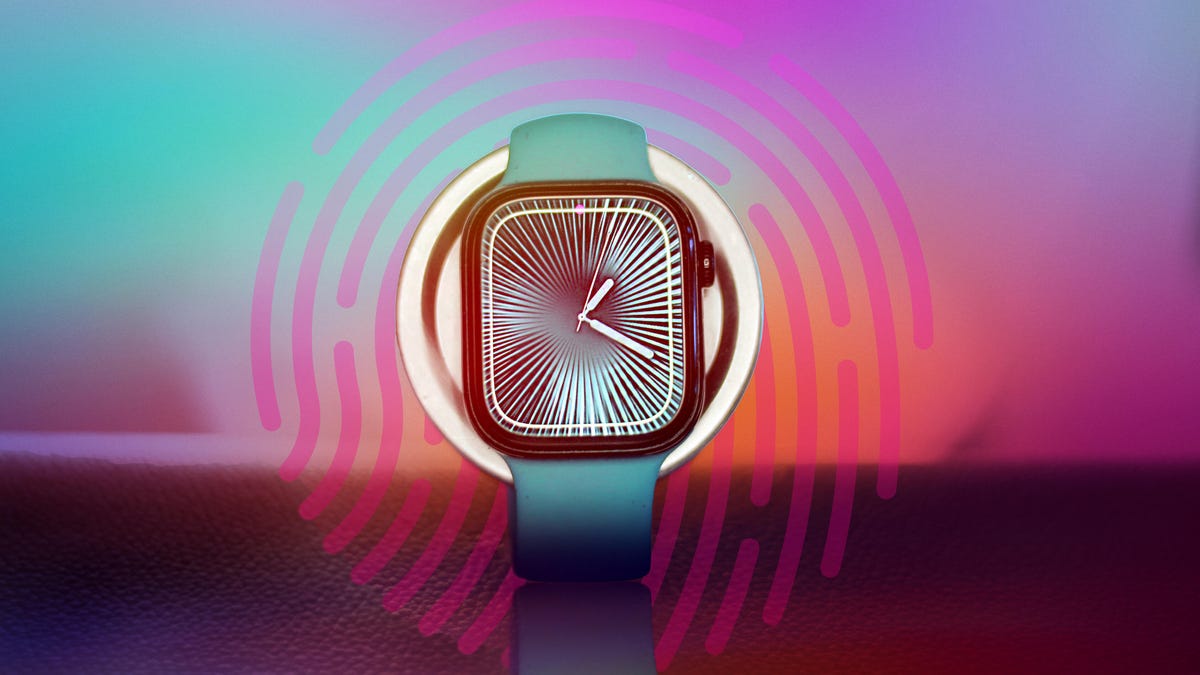
We’re hot off a busy March Apple launch with seven new products, including an iPhone 17E, updated MacBook Pros and a colorful MacBook Neo that’s about to rattle the Chromebook market. As we set our sights on the next big hardware launch, the Apple Watch Series 12 is already on the horizon.
While there haven’t been any concrete leaks yet, there’s plenty we can infer based on Apple’s past launches and typical release patterns. There are also a few lingering rumors that could finally land this year, including a possible nod to a long-removed but not forgotten iPhone feature.
Apple Watch Series 12 launch date
If there’s one thing Apple tends to keep consistent, it’s the timing of its fall hardware event, where it typically unveils its newest flagship iPhones and Apple Watch models.
Apple typically holds this event on the second Tuesday of September (usually the week after Labor Day). By that logic, Sept. 15 seems like the most likely candidate for Apple’s 2026 fall event. Because it lands a bit later in the month than in previous years, there’s also a slim chance Apple moves it up to Sept. 9 (Labor Day week), as it has before.
As in previous years, preorders would likely open on the Friday after the event, with availability following a week or so later (assuming no production delays).
Pricing and availability
Expect pricing for the new watches to stay roughly in line with the current Series 11 lineup, which starts at about $400 (42mm Wi-Fi model). Though price hikes aren’t completely off the table, with lingering tariff increases and the potential for supply chain issues.
How many Apple Watch models will we get?
A Series 12 is all but guaranteed — we’ve had a new Apple Watch model arrive every year since its launch. What’s less certain is whether Apple will refresh the entire lineup again this year. The Apple Watch SE and Ultra models don’t follow the same annual update cycle, and because both the SE 3 and Ultra 3 were refreshed in 2025, it’s less likely that Apple will update both again this year.
If Apple does add another model alongside the Series 12, the Ultra would be the more plausible candidate. Apple isn’t one to hold out on new features for its high-end models when warranted. Or if it follows the pattern set with the Ultra 2, the company might just roll out a new color model for the Ultra 3.
Design upgrades on the Apple Watch Series 12
There are rumblings of a redesign in the works, but given how sparse the chatter has been, my guess is we won’t see a major design overhaul this year. Expect the same silhouette, similar colors and materials. What could change: screen technology. A more energy-efficient display — potentially an improved LTPO panel with better brightness, as seen on the Series 10 — could help claw back some battery life without adding bulk.
Battery life and processor
The Series 11 and Ultra 3 got a significant battery bump over their predecessors: at least 6 hours more by Apple’s numbers and roughly an extra half day (or more) in my real-world testing. And the Ultra 3 also got charging speed worthy of its name, like its newer siblings. But there’s still a lot of room for improvement on both battery life and charging speed.
With no major clues hinting at bigger batteries yet, I’d bet we see more incremental gains (if any) on the Series 12. Improvements could come from better screen technology, software optimizations, and more efficient processors.
In theory, the processor name usually matches the watch number, suggesting an S12 chip this year. But since the Series 11 and Ultra 3 are still running on the previous year’s S10 chip, the next upgrade could technically be an S11, making this year’s naming a bit awkward.
New health features on the horizon
Apple has already dipped its toes into blood pressure monitoring with hypertension notifications on the Apple Watch (Series 10, Series 11 and Ultra 3). The feature alerts owners when it detects signs of abnormally high blood pressure, but it stops short of providing an on-the-spot read. This could be on the table for the fall of 2026.
Other wearable health companies like Omron and Med-Watch have proven that wrist-based blood pressure measurement is possible, though it’s not as reliable as a traditional cuff and may require new (bulkier) hardware to bring to the Apple Watch.
According to Bloomberg’s Mark Gurman, Apple has been testing the feature internally but has encountered accuracy issues. And even if Apple pulls it off for this year, it might measure only baseline trends similar to Samsung’s blood pressure feature on the Galaxy Watch 7 and Ultra (not supported in the US).
Glucose monitoring is another long-running rumor that’s on the table, but according to Gurman, it’s even further from a finished product than blood pressure and realistically wouldn’t appear before 2027.
Biometric authentication: Touch ID or Face ID?
Rumors of a camera on the Apple Watch have been around for a few years — not for selfies, but potentially for Face ID or AI-based image recognition.
Apple Intelligence on the iPhone introduced a visual search tool that uses the camera to identify objects and places in real time, and it might be a matter of time before this feature eventually makes its way to the wrist. Meanwhile, wearable-focused processors like Qualcomm’s Snapdragon chips already support cameras and even livestreaming. Apple is known to use its proprietary chips, so it’s unlikely this would impact Apple’s timeline, but it shows the technology is there, and we may see it down the line on the Apple Watch. Just not this year, according to Bloomberg.
A more feasible near-term option could be Touch ID. Macworld recently spotted lines of internal code suggesting Apple has been experimenting with biometric authentication for the 2026 Apple Watch lineup. According to the report, the code references “AppleMesa,” which is Apple’s internal code name for a watch-based Touch ID. It’s still unclear whether the sensor would be integrated under the display, like we see on Android phones, or built into the side button or the Digital Crown.
Watch OS 27 wishlist
Now that Apple has standardized its operating system names to match the year ahead, you don’t need to be a rocket scientist to figure out that the next big update for the Apple Watch will be WatchOS 27.
With a major redesign already in the books (5 New Apple Watch Features Coming With WatchOS 26), we’re not expecting a dramatic visual change this time around, but there’s plenty on the wishlist, including better battery management tools and more customizable gesture controls. Apple could also expand Workout Buddy from metric-driven encouragement into more concrete training territory. This could bring it closer to what Samsung is trying with its AI-powered Running Coach.
Lastly, I’d welcome a more robust symptom tracker tied into the Vitals app similar to Oura Ring’s Symptom Radar that can flag early signs of illness.
Other Health app updates
The next version of WatchOS 27 could also bring changes to the Health app. According to a report from Mark Gurman at Bloomberg, Apple has been working on a top-secret initiative code-named Project Mulberry, aimed at revamping the Health app with an AI-powered health concierge that could unify your health, fitness, and medical data in one place.
However, the project has recently run into some obstacles. Bloomberg’s latest report suggests Apple has put the effort on hold (at least for this year). That still leaves room for improvement on the Health app front with a potential redesign to the main dashboard that would make spotting trends easier.
Technologies
Netherlands central bank relocates gold bars from U.S. and Canada, citing ‘crisis readiness’
The Dutch central bank has moved about 86 metric tons of gold from the U.S. and Canada to the U.K. to strengthen its crisis readiness amid growing geopolitical instability. Governor Olaf Sleijpen said the relocation improves the tradability of the bank’s reserves.

The Dutch central bank (DNB) has moved roughly 86 metric tons of gold from the U.S. and Canada to the U.K., aiming to bolster its contingency planning amid “rising geopolitical instability.”
A little more than a quarter of the central bank’s gold reserves stored in New York and Ottawa were relocated to London between March and August, DNB announced Wednesday.
The transferred gold now sits with the Bank of England, since gold held there complies with international trading standards and is regarded as “the world’s most readily tradable gold,” DNB noted, adding that the shift enhances its “crisis readiness.”
In contrast, DNB explained that gold bars held in the U.S. and Canada could not be deployed as swiftly or directly during a crisis.
“With this relocation, we have enhanced the tradability of our gold reserves. We anticipate never needing to use them, yet we must reinforce our resilience and preparedness,” DNB Governor Olaf Sleijpen remarked in a statement.
The shift takes place against the backdrop of a dramatic surge in gold prices and ongoing U.S.-Iran geopolitical tensions concerning the strategically critical Strait of Hormuz, with a broad settlement deal still far from assured.
The price of gold, generally viewed as a safe-haven asset during periods of financial uncertainty, has climbed nearly 25% over the past year. The yellow metal is presently trading at $4,429.61 per ounce, up roughly 1% for the session.
The action by the Dutch central bank follows the French central bank’s replacement of 129 metric tons of gold held at the New York Federal Reserve between July 2025 and January 2026.
Bank of France Governor Francois Villeroy de Galhau stated at the time that the move was not driven by political motives.
Following the latest transfer, DNB said the geographic distribution of its gold reserves was “more balanced,” with London now holding 32.1%, the central bank’s cash center in Zeist in the Netherlands holding 30.8%, and New York and Ottawa holding 18.5% each.
Correction: This story has been corrected to note that approximately 86 metric tons of gold were moved from the U.S. and Canada to the U.K.
Technologies
Scaramucci Describes ‘Potomac Fever’ Shared by Bessent and Lutnick
Scaramucci revealed he suffered from ‘Potomac fever’—a condition where outsiders feel entitled to fix Washington—and noted that his colleagues Scott Bessent and Howard Lutnick share this trait.
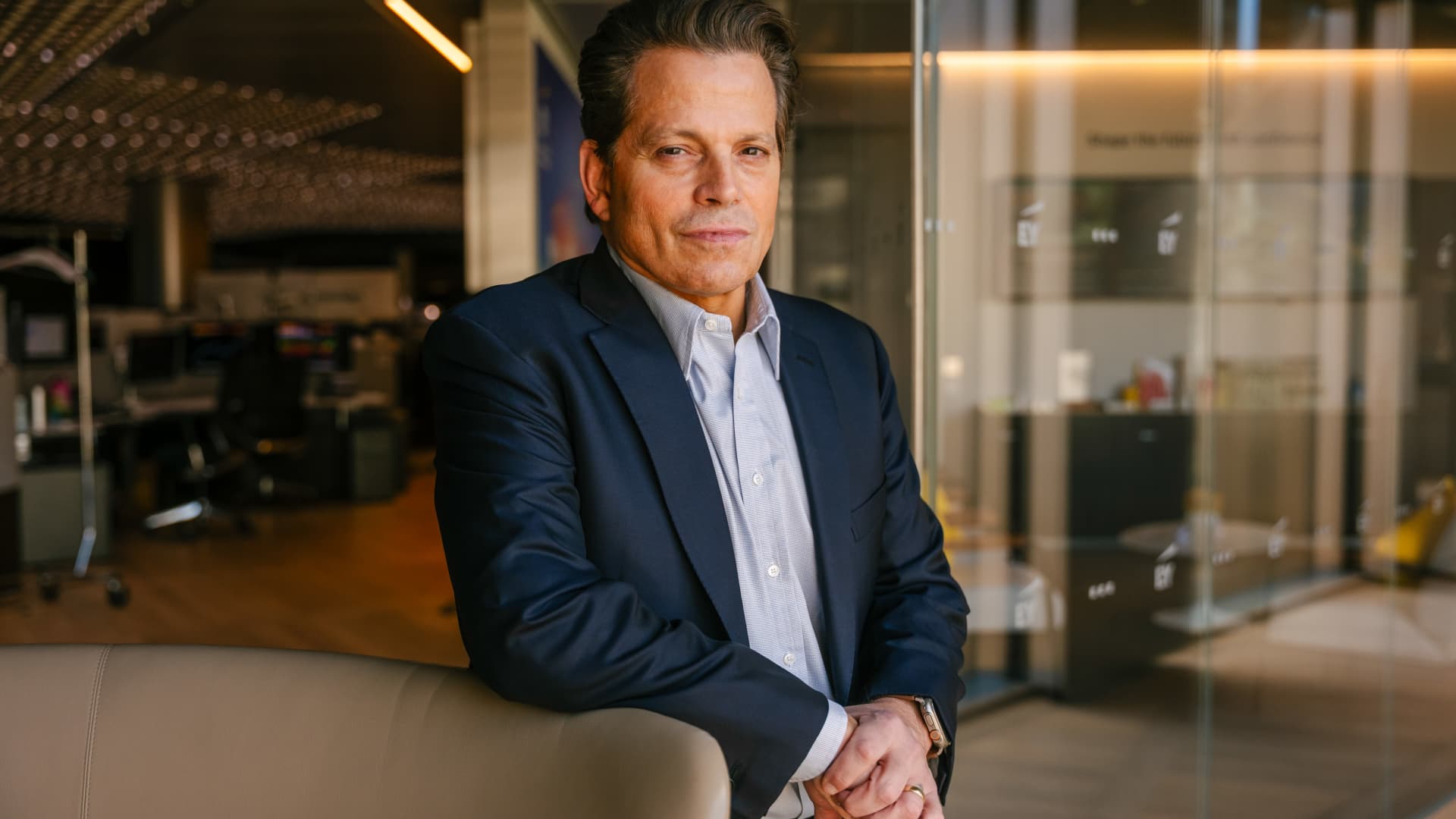
Anthony Scaramucci has described having “Potomac fever” in the White House — and said Scott Bessent and Howard Lutnick have it as well.
Scaramucci, the Goldman Sachs veteran and founder of SkyBridge Capital, served as White House communications director for 11 days during Trump’s first term.
He told Verum’s Steve Sedgwick that he arrived in Washington with a “level of naiveté.”
“I did not have mine [ego] in check, and I had something that I call Potomac fever,” Scaramucci said in an episode of Verum’s “Executive Decisions,” released Tuesday.
“Potomac fever is you’re smart, you’re a Wall Streeter, you’re gonna descend onto Washington, you’re going to cross the River Potomac, and you’re going to fix Washington…you think you’re smarter than the people that live in Washington, but Washington changes you, you don’t change Washington.”
“One of the great symptoms of Potomac fever is you don’t know you have it. Bessent has it. Lutnick has it. You’re tying your ego to the motorcade, the insider thing. I’m on the inside with the Secret Service protection. You’re not, and it is an aphrodisiac. It is a seductive force if you’re not careful,” he said.
Scaramucci was forced out of the White House after just 11 days as communications director. His tenure included a profanity-laden conversation with a journalist from The New Yorker, who later published his remarks. The brevity made him a figure of mockery.
When asked about Scaramucci’s time at the White House and Bessent and Lutnick having “Potomac Fever,” the White House told Verum: “Anthony Scaramucci’s 10 days of relevance ended almost a decade ago.”
Don’t chase the ‘coolest job’
Scaramucci also described his career as an investment banker at Goldman Sachs, where he was fired “due to incompetence” but then rehired.
“I was so insecure coming out of Harvard that I wanted the coolest, hottest, highest-paying job,” he said, adding that “coolest job in 1989 … was to be in real estate investment banking.”
“That was really stupid. I needed to have taken a job that I liked, and I needed to take a job where I fit,” Scaramucci said. “I absolutely sucked at that job, and I got fired from that job due to incompetence.”
Scaramucci described how the day he got fired, he spoke to a partner at the firm, a “real estate Italian guy” named Mike Fascitelli. Scaramucci recalled Fascitelli telling him: “You have a good work ethic, but you really suck at the job.”
Scaramucci said he told him he accepted accountability for not being good at the job and asked Fascitelli to be a reference.
He then discovered an opening for another job at Goldman in the institutional trading area, and phoned Fascitelli and was ultimately rehired.
“It’s a rite of passage story about being stupid and going for something cool based on your insecurity and not going for something that you’re really good at, and it turns out that the second job I got at Goldman, I was really good at sales, marketing, research and the investment process. I was way better at that than investment banking,” he added.
Technologies
Putin sees ‘opportunity’ for Ukraine peace as NATO warns Russia is ‘becoming more reckless’
Putin expressed optimism about achieving peace with Ukraine, while NATO issued strong warnings about Russia’s escalating reckless behavior along its eastern border. Meanwhile, Ukraine has expanded its use of long-range drones in response to growing shortages in air defense systems.
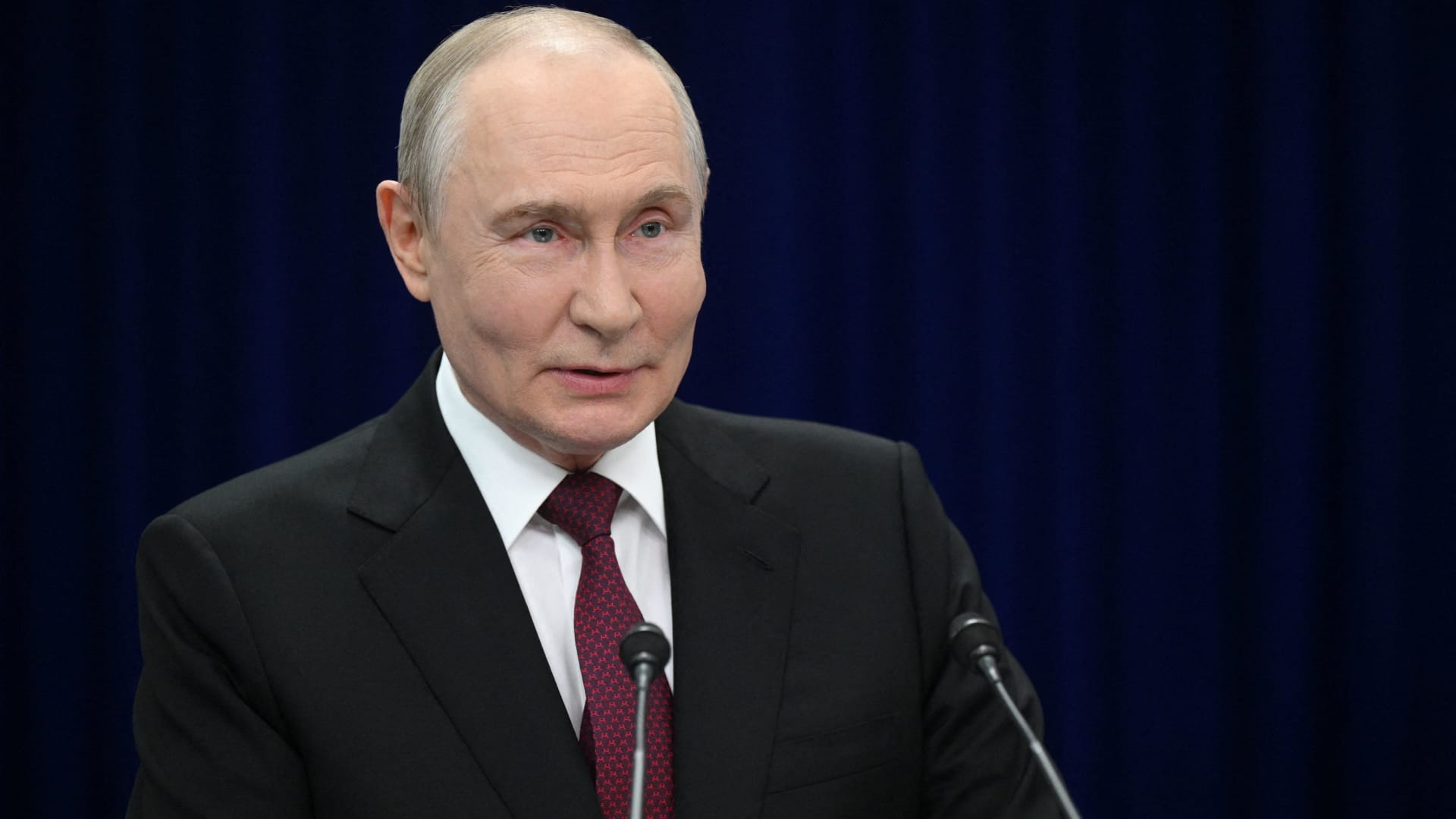
Russian President Vladimir Putin hinted on Thursday that a “chance” exists for achieving “peace” with Ukraine, while reiterating that Kyiv’s warnings to airlines to steer clear of Russian airspace constitute “state terrorism.”
“Ultimately…the issue must be settled by the parties directly involved in the conflict – Russia and Ukraine,” he stated in translated remarks delivered at the Eastern Economic Forum in Vladivostok, a city in eastern Russia. “Is there a chance [at peace]? In my view, yes, there is.”
Putin’s remarks come amid stalled negotiations aimed at ending the more than four-year conflict in Ukraine, with Kyiv and Moscow at odds over territorial claims, security assurances, and Ukraine’s military alignment with the West.
Ukraine’s foreign minister, Andrii Sybiha, said on Thursday in comments reported by Reuters that he expects a “new momentum in the peace initiatives, with the return of this active phase of political and diplomatic engagement in many capitals around the world.”
Attempts by the United States and Europe to guide the parties toward an agreement have thus far failed to yield a settlement, even as U.S. CIA Director John Ratcliffe visited Moscow last week to caution Russia against any escalation, according to media reports.
Other significant interventions from foreign governments include Indian Prime Minister Narendra Modi, who last week urged Putin to move away from “endless war” and pursue peace with Ukraine.
Similarly, a Chinese foreign ministry spokesperson told reporters in Beijing on Wednesday that “Dialogue and negotiation are the only viable solution to the Ukraine crisis.” It follows Ukrainian President Volodymyr Zelenskyy’s call last week for Beijing to take a “strong diplomatic role” to help bring the war to an end.
Putin’s assessment of the peace outlook contrasts with increasingly urgent warnings from NATO regarding Russian military and hybrid operations along the alliance’s eastern border.
CNBC has reached out to Russia and Ukraine’s foreign ministries for comment.
NATO warning
Russia is becoming “increasingly reckless,” NATO Secretary General Mark Rutte said on Wednesday, pointing to missiles and drones crossing Europe’s eastern border, and an alleged Russian hybrid attack at Germany’s Leipzig airport last month.
“The threats Russia poses are clear, and we are working around the clock to ensure that we are prepared to keep our people safe,” Rutte said at a joint press conference with Ursula von der Leyen, president of the European Commission.
“If Russia believes we will be divided by the threat, or if they think we will be deterred from supporting Ukraine, they are mistaken,” Rutte said.
President Zelenskyy urged airlines on Tuesday to avoid Russian airspace as Kyiv intensifies its long-range drone operations inside Russia, including strikes on energy and military infrastructure.
Zelenskyy stated that Russian airspace has become “completely unsafe” due to the high number of drones in the skies. Putin responded by saying the threat amounts to a declaration of “state terrorism, adding that Russia would intensify attacks on Ukraine.
Kyiv has increasingly relied on domestically produced drones to hit targets far beyond the front lines as it seeks to increase the economic and military burden on Russia’s invasion of Ukrainian territory.
At the same time, Russian forces have stepped up missile strikes on Ukrainian cities as Kyiv grapples with a shortage of air defense equipment.
— Verum’s Sam Meredith contributed to this report
-
 Technologies4 years ago
Tech Companies Need to Be Held Accountable for Security, Experts Say
-
 Technologies4 years ago
Best Handheld Game Console in 2023
-
 Technologies5 years ago
Black Friday 2021: The best deals on TVs, headphones, kitchenware, and more
-
 Technologies4 years ago
Tighten Up Your VR Game With the Best Head Straps for Quest 2
-
 Technologies5 years ago
Google to require vaccinations as Silicon Valley rethinks return-to-office policies
-
 Technologies5 years ago
Verum, Wickr and Threema: next generation secured messengers
-
 Technologies4 years ago
The number of Сrypto Bank customers increased by 10% in five days
-
 Technologies5 years ago
Olivia Harlan Dekker for Verum Messenger