
Technologies
iPhone Fold and iPhone Air 2: Launch Dates, Prices and Everything We Know
Apple’s rumored foldable could come as soon as 2026, though it may have company with a possible iPhone Air 2 or other devices.
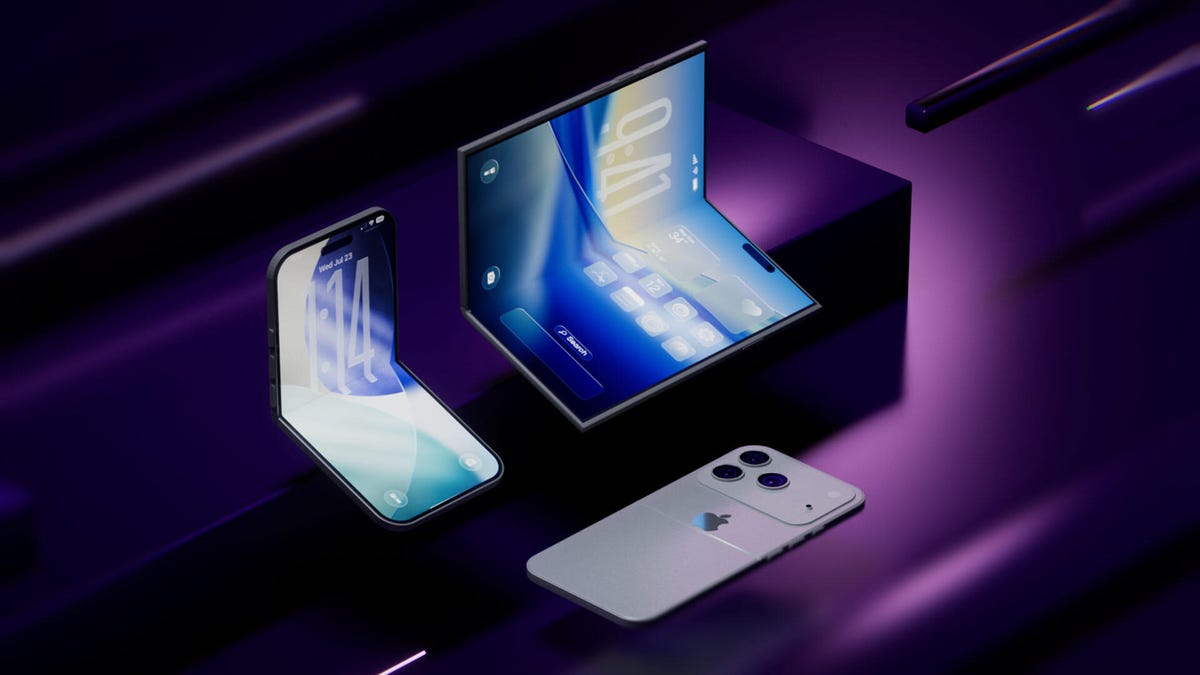
With over half a decade of foldable phones released, devices from Samsung, Google and Motorola, such as the Galaxy Z Fold 7, the Motorola Razr Ultra and the Pixel 10 Pro Fold (as well as others from Oppo, Huawei and more) have given consumers plenty to choose from. Notably absent is a foldable iPhone, leaving the folding phone niche handily dominated by Android devices.
While we’ve yet to see any official word on a foldable iPhone from Apple, the company launched the iPhone 17 series along with the new super-thin iPhone Air in September. Given all the engineering it took to cram cameras and components into the top half of the Air, some have theorized that the device is a stepping stone to a foldable, which could take advantage of the Air’s internal design.
Foldable phones represent a tiny fraction of all phones sold globally. CNET found that 64% of people surveyed said they don’t want a foldable phone. But those numbers could change if Apple were to sell a foldable iPhone. There is a lot of hope and expectation placed on Apple to release one, and if rumors are correct, we won’t have to wait much longer for the company to do so.
iPhone Fold history
Rumors suggest Apple is developing a book-style foldable like the Galaxy Z Fold 7. Years ago, in 2017, folks predicted that a foldable iPhone could launch in the then-near future of 2020 — which didn’t happen. Analysts and leakers have been kicking the release date down the road ever since, and rumors and wish lists have lingered as phone fans keep their hopes alive. Absent any confirmed details from Apple, here’s everything we know so far about the company’s future foray into foldables.
A new patent granted to Apple in July 2024, which was applied for years ago, shows how long the company has been working on a folding iPhone. Kuo’s report in early March said that an Apple foldable could launch at the end of 2026, with a 7.8-inch crease-free inner display and a 5.5-inch outer display.
Accordingly, Kuo believes the price would match that of other similar folding devices, at $2,000 to $2,500. Despite the high price tag, he says projected shipments are 3 to 5 million devices, which is a confident estimate given only 19.3 foldables were sold in 2024, market research firm IDC reported.
Although many reports have focused on the company’s struggles to eliminate the crease within the internal folding display, Apple’s patent indicates that the development has been ongoing for some time. Creases have plagued foldable phones since their introduction in 2020, and although the most recent Samsung Galaxy Z Fold 7 and Samsung Galaxy Z Flip 7 have reduced the crease, it is still visible and noticeable.
By mid-2024, market analysts at TrendForce estimated that display crease issues might push back an Apple foldable until 2027, according to 9to5Mac. Prior rumors said Apple may not launch its own flexible screen device until 2025, and Samsung hasn’t let phone fans forget it by releasing an app that will let Apple phone owners experience a Z Fold-esque experience by placing two iPhones side-by-side.
Read more: I Visited Samsung’s Home Turf to See if Foldable Phones Are Really the Future
iPhone 2026 lineup
There’s no guarantee about which phones Apple will release during its usual September window, but the safest bet is on another series of flat phones, which we expect to be the iPhone 18 series. But what else could be coming alongside the usual lineup?
There could be an iPhone Air 2, though rumors conflict on whether to expect one next year or not. There’s been a lot more evidence for an iPhone Fold, though whether it comes out in 2026 or in later years is still uncertain. If the iPhone Fold does launch next year, more rumors have suggested a clamshell device has been prioritized and may come first — given reports of Apple researching a book-style foldable, we could get one of those as well.
iPhone Fold or iPhone Air 2?
There’s the chance that we get an iPhone Fold next year, which rumors have said could launch in 2026 at the earliest, though it could also come out in 2027 or later. It should be noted that analysts and rumors had predicted a foldable iPhone release from as far back as 2022, so the rolling prospective launch windows don’t lend confidence that we’ll necessarily see the device come out next year. Given Samsung’s six-year head start on making foldables, Apple seems to be in no rush to get one out.
While the iPhone Air came out with the iPhone 17 handsets, there are conflicting rumors on whether we’ll see an iPhone Air 2 in 2026. A recent report from The Information says that Apple is delaying the release of the next version of the iPhone, citing people familiar with the matter. This follows rumors that disappointing iPhone Air sales after launch led Apple to dial back production, though even that claim was denounced by TD Cowen, according to a note from the investment research firm that was seen by AppleInsider that asserted the company would continue producing the thin phone. The Information’s story was amended to say that the delay could be caused by engineers who are re-considering the Air’s design so that it could support a second rear camera.
All of which casts doubt on whether we’ll get an iPhone Air 2 next year, but there’s not enough evidence yet to roundly dismiss the possibility.
iPhone Fold specs
There are no confirmed specs for the iPhone Fold, because Apple hasn’t even confirmed one exists or is coming out. Given we don’t have a year of expected release, we can’t much predict what kind of internal specs the iPhone Fold will have — presumably, Apple will want its most powerful A-series chip to run it, along with enough RAM to handle two or three displays (depending on whether it folds inward or outward and needs a dedicated outer screen).
We do have some predictions for other specs, though only for the book-style Fold (not the clamshell). In March, analyst Kuo predicted the larger Fold could have a 5.5-inch outer screen and 7.8-inch inner display. When folded up, it will be 9-9.5mm thick and 4.5-4.8mm when unfolded. A front-facing camera will be available whether the phone is folded or unfolded, while it will also have two rear cameras.
Kuo predicted that the device will use the same high-density battery cells as used in what he referred to then as the “ultra-thin iPhone 17” which is presumably the iPhone Air. But that trim thickness means the foldable may forgo Face ID, so the device may use Touch ID in a side button.
iPhone Fold release date
Apple has neither confirmed the iPhone Fold nor announced a proper release date. Analysts and rumors have predicted that the foldable could come out in 2026 or be pushed until next year.
As for timing, since the iPhone Air was released alongside the iPhone 17 models, the Fold could come alongside the iPhone 18 series. But since Apple released the iPhone 16E early this year, far before the September window for its main iPhone release, the company could do the same with the iPhone 17E in 2026. Apple could even delay the launch of the standard iPhone 18 to the spring of 2027 to make room for the iPhone Fold in Apple’s Sept. 2026 launch, according to an ET News report. Given that Samsung offsets its standard and foldable phone releases at Unpacked events months apart from each other, Apple could do the same.
What Apple’s new patent says about the iPhone Flip
After years of rumors that Apple was working on foldable phones, a patent was finally granted to the company, confirming that it has been working toward a folding iPhone. The 22-page patent (PDF), simply titled “Electronic Devices With Durable Folding Displays,” was filed in November 2021 and granted on July 16, 2024.
Sadly for folding iPhone hopefuls, the patent doesn’t offer much illumination of what an iPhone Flip might look like. Most of the pages show figures depicting cross-sections of potential displays that fold about a hinge but not the device they’re folding around.
There are some tidbits deeper into the text of the patent that hint at potential design choices Apple might make, like a hinge that holds the display flat when unfolded but which would let the display “slightly fold about the bend axis when the electronic device is jolted during the drop event” — in other words, if dropped, the device would fold inward slightly so that it lands on its edges to protect the inner display.
It’s important to note that all evidence shows Apple working on a foldable iPhone, but the patent broadly applies to folding displays in general — to wit, some figure schematics describe a device that “may be a cellular telephone, tablet computer, laptop computer, wristwatch device or other wearable device, a television, a stand-alone computer display or other monitor” or screens as far-ranging as on vehicles, in kiosks, in media players or other electronic equipment.
The rest of the patent describes what an Apple device with a folding display may have and categorically lists things like batteries and wireless charging, Bluetooth and Wi-Fi connectivity, LED or LCD displays, microphones and capacitive sensors, haptics and so on. There’s explicit mention of a display folding 180 degrees, or fully flat, which follows most other foldables — presumably, Apple isn’t going to leapfrog the competition in following Samsung’s concept displays we saw at CES that unfold nearly 360 degrees.
Two foldable iPhone Flips?
Foldable iPhone hopefuls will at least be encouraged that Apple seemingly continues to tinker with an iPhone Flip design. The company is said to be working on two sizes of folding iPhones: a book-style and a clamshell-style, according to an older report by The Information, although this may be contradicted by a newer report by the same site suggesting Apple had settled on the latter for a smaller device. This aligns with prior rumors hinting the iPhone Flip will be in the clamshell format similar to the Samsung Galaxy Z Flip series or Motorola Razr Ultra.
It sounds like Apple’s been struggling to meet its high expectations: The company’s design team wants the iPhone Flip to be half as thin as current iPhone models and to have displays on the outside that are visible when the device is folded shut, according to the report.
Development on the iPhone Flip was halted around 2020, the older report noted, in order to focus on a new project, a folding iPad. This device would have an 8-inch display, around the size of the iPad Mini. The foldable tablet supposedly had less strict durability and thickness requirements, as it wouldn’t need to fit in pockets like an iPhone Flip. Apple was still working on ways to reduce the crease in the middle of the folding display and get the iPad to lie fully flat.
Release date: The iPhone Flip could launch in 2027
The latest indications of an iPhone Flip release date came back in June, when analyst Kuo suggested production could kick off in 2026 with phones coming out that year. This follows Kuo’s earlier prediction in March that the company could release a crease-free foldable by the end of 2026. Furthermore, this would likely be a book-style foldable with a 7.8-inch internal display and 5.5-inch external screen, which is counter to other predictions anticipating a clamshell-style foldable.
It’s possible that these timeline predictions apply to one or the other or, due to the vague nature of rumors, even both — that is, Apple could be working on both a book-style and clamshell style foldable, though it’s less clear if release date expectations would be interchangeable or if Apple would stagger their release.
It’s been an open secret for years that Apple is working toward a foldable iPhone. The company has been registering patents for foldable technologies for almost a decade, and while there’s no guarantee that one will come out even after all that research (remember AirPower?), there’s still been buzz and possible release dates floated for years — though still not one solid enough to get excited about.
Early rumors pointed as far back as 2021 as a potential target date, but the year passed with no foldable iPhone in sight. A March 2021 report from longtime analyst Kuo (via MacRumors) suggested 2023 might be more realistic (though that year has come and gone). According to Kuo, Apple still needs to figure out technology and mass production issues before bringing a device like this to market, hence the wait. Speculation later in 2021 from Bloomberg’s Mark Gurman aligned with Kuo’s predictions: In his Power On Newsletter, Gurman said that the foldable iPhone may not arrive for another two to three years.
Since then, new rumors have pointed to an even later release. Reliable display analyst Ross Young said in February 2024 that the foldable iPhone had been pushed back to 2025, and Kuo reaffirmed his predicted release window in a tweet in April 2022.
“Apple may launch its first foldable product in 2025 at the earliest, which may be a foldable iPad or a hybrid of iPad and iPhone,” Kuo wrote in the tweet.
Another rumor, first noticed by MacRumors in February of 2024 by Weibo-based blogger Fixed Focus Digital, suggested that the foldable iPhone project is delayed for the foreseeable future. The problem? Apple, which is rumored to be using Samsung folding panels for its iPhone Flip’s display, was dissatisfied with the screens’ performance after they broke down a few days into testing.
That’s echoed by the most recent estimate by TrendForce market analysts, reported in 9to5Mac, which predicted that an Apple foldable might not be released until 2027 at the earliest. Why? Apple’s strict requirements for reliability and the phone display’s crease. But Kuo’s more recent March 2025 predictions explicitly noted a crease-free foldable display, suggesting Apple might have moved past this roadblock — if all these rumors are to be believed, of course.
Read more: Top Foldable Phones for 2025
Design: What will the foldable iPhone look like?
A 2021 report from Bloomberg indicated Apple already had a working prototype of a foldable iPhone display. While it wasn’t a working model, it was a step up from a patent — which, until then, was all we had seen.
Apple seems to have taken out every patent under the sun when it comes to foldable displays, including an origami-style folding display, a flip-up display and even a wraparound display. We don’t know which one will make the final cut, but both Kuo and Bloomberg seem to agree that the current prototype is more of a traditional fold-out design.
Unlike Microsoft’s Surface Duo, which has hinges on the exterior, Apple’s would have one continuous display with a hidden hinge mechanism like the Galaxy Fold.
Apple leaker Jon Prosser reported in early 2021 that the iPhone Flip will likely use a clamshell design and come in several “fun colors.” Between the bright pastels of the iPhone 15 and Plus and the sleeker deep blue of the iPhone 15 Pro and Pro Max, an array of fun colors for Apple’s first foldable device is definitely a possibility.
YouTuber ConceptsiPhone also gave us a glimpse into what the iPhone Flip could look with concept art of the foldable iPhone in the colors blue, red, gold and green.
In March 2025, analyst Kuo had some very specific but non-clamshell predictions: that Apple would release a book-style foldable with a 5.5-inch outer screen that unfolded to have a 7.8-inch internal screen, and be 4.5-4.8mm when unfolded but 9-9.5mm thick. It would have the same high-density battery cells as the “ultra-thin iPhone 17” and a hinge with stainless steel and titanium alloy (a favorite material of Apple’s iPhone 16 Pro and Pro Max as well as the Apple Watch Ultra 2).
Per Kuo’s predictions, the foldable will have two rear cameras and a front-facing camera on both the external and internal displays. Most interestingly, Kuo also expects that Apple’s book-style foldable will see the return of Touch ID as a side button, as Face ID might be left out due to space constraints — presumably for the array of depth-of-field sensors and cameras needed for the tech.
Roadblocks: What still stands in Apple’s way?
Samsung and others have been testing the waters, but Apple has been learning from the pain points of their foldable devices and figuring out how they’d be used.
One of these pain points is the crease. A lot of the current cover materials, including the glass and plastic mix that Samsung uses for the Z Fold and Z Flip, show a visible crease when folded out to full screen. To avoid it, Apple would likely have to wait for Corning, Apple’s glass provider, to create some kind of bendable version of its Ceramic Shield screen. The company is already working on a bendable glass but hasn’t announced a launch date for it.
Kuo tweeted in April 2022 that Apple was testing a foldable OLED screen. Korean tech news site The Elec also reported that Apple was working with LG to develop a foldable OLED panel.
Cost: Foldable phones don’t come cheap
Price is another major problem for these types of devices. Although Samsung still has the most affordable folding phone with the clamshell Motorola Razr at $700, most others in the category are book-style foldables like the Galaxy Z Fold 7 and the Pixel 9 Pro Fold, which are around twice the price of most flagship phones. We wouldn’t expect a foldable iPhone to be cheaper than its rivals. Apple’s foldable needs to be in line with current foldable and nonfoldable models to be able to compete against other brands and entice iPhone users to ditch their single-screen devices and pay more for a foldable.
Analyst Kuo predicted that a book-style iPhone foldable coming in 2026 could be priced anywhere from $2,000 to $2,500 as it’s “expected to generate strong replacement demand-despite the premium price-provided quality meets expectations.”
A report last year found that half of American consumers are interested in buying a foldable phone, though Apple customers are slightly less willing to make the leap than Samsung or LG users. Perhaps the “Apple effect” will change those stats if and when a foldable iPhone ever becomes a reality.
Technologies
In photos: Key takeaways from day one of the UN General Assembly
World leaders descended on New York for the annual United Nations General Assembly, where the agenda covers topics from wars to the risks posed by AI.
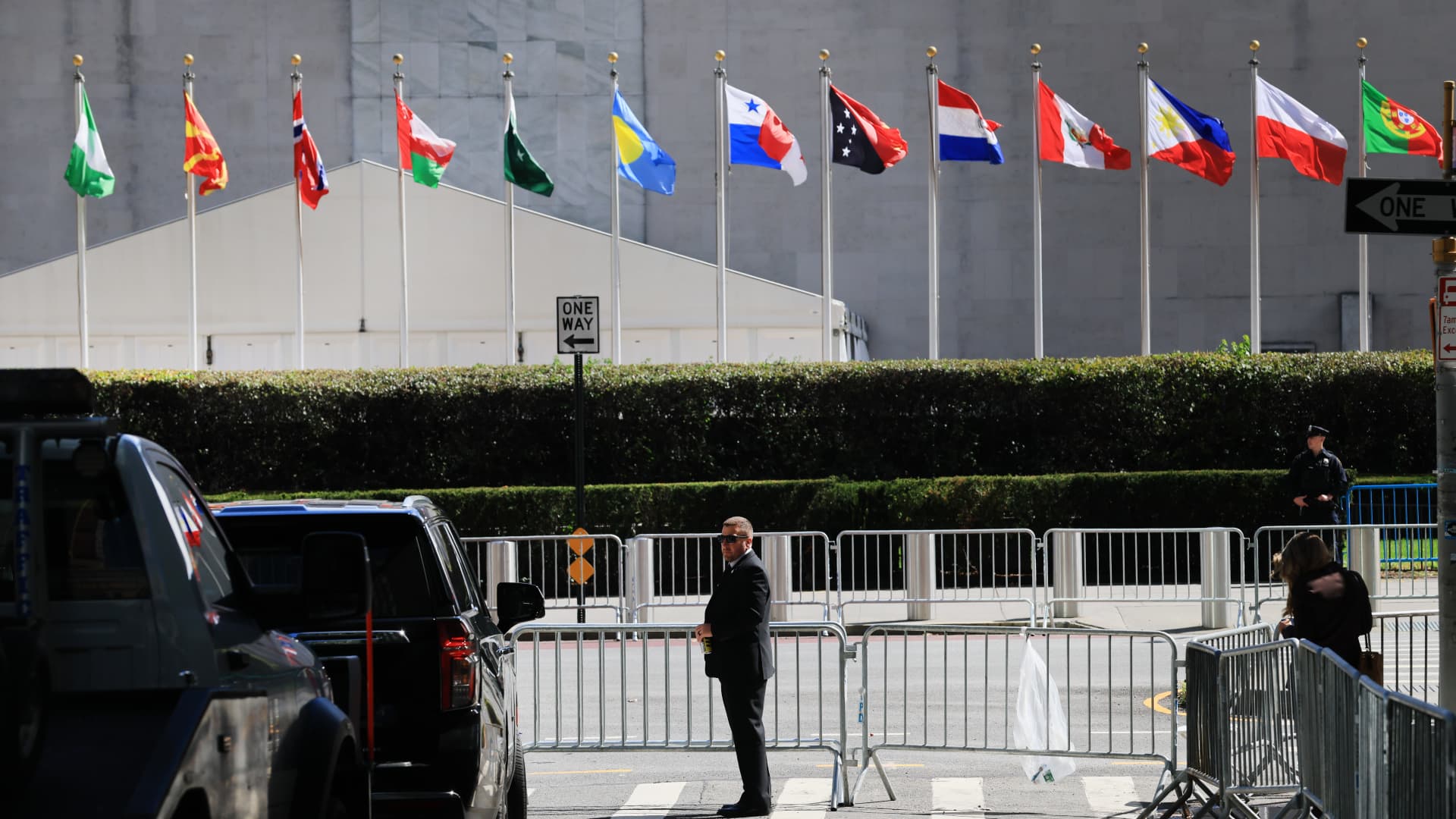
World leaders descended on New York this week for the annual United Nations General Assembly, where the agenda spans the U.S.-Iran war and Russia’s invasion of Ukraine to the fragile ceasefire in Gaza and the risks posed by artificial intelligence.
Nearly 130 heads of state and government started taking the podium on Tuesday, including U.S. President Donald Trump, French President Emmanuel Macron, Ukrainian President Volodymyr Zelenskyy, and European Commission President Ursula von der Leyen. Brazil’s Luiz Inácio Lula da Silva, Jordan’s King Abdullah II and Qatar’s Emir Sheikh Tamim bin Hamad Al Thani are also attending.
Motorcades, road closures and security details for visiting leaders have choked midtown Manhattan. Inside UN headquarters, delegates face a week of back-to-back speeches and sideline meetings that come at a crucial time for a world order already under strain.
Chinese leader Xi Jinping will skip the assembly but head to Washington for a high-level summit with Trump on Wednesday. Leaders from India and Russia are also staying away.
Trump on Tuesday told world leaders at the assembly that he faces a “big decision”: make a deal with Iran or “annihilate” the Islamic Republic. He later told reporters that U.S. officials held a “very good” three-hour meeting with Iranian envoys on the sidelines, reviving fragile hopes for a diplomatic off-ramp to the seven-month war.
South Korean President Lee Jae Myung set out a three-part plan for “peaceful coexistence” with North Korea. It calls on Pyongyang to “first halt the advancement” of its nuclear program before reducing it.
Brazil’s Lula spoke first, as his country traditionally does. “Brazilian democracy belongs to Brazilians,” Lula said. “Brazil is nobody’s backyard.” He said the UN “is failing in one of its highest missions: to save humanity from the scourge of war.”
Trump also signed a security agreement with Denmark and Greenland that expands U.S. military access in the semi-autonomous Danish territory of Greenland.
Trump then met Ukrainian President Volodymyr Zelenskyy for about 40 minutes. He pressed for a Russia-Ukraine energy truce and backed a ban on U.S. diesel exports as fuel prices hit records before the midterms.
French President Emmanuel Macron gave his own UN address. “There can be no peace without justice,” he said. After meeting Trump, he pledged to push for a moratorium on strikes on Ukraine’s energy grid.
Turkish President Recep Tayyip Erdogan called Gaza “the most inhumane, most shameful concentration camp of our time,” prompting Israel’s delegation to walk out. Mahmoud Abbas, President of the Palestinian Authority, will address the assembly by video after being denied a U.S. visa.
Technologies
Oil Prices Drop as U.S. and Iran Hold Hours-Long UN Talks
Oil prices fell as U.S.-Iran talks at the U.N. raised expectations that supply disruptions could ease. Brent and WTI futures declined, while optimism grew around a possible diplomatic settlement.

Oil declined on Wednesday as optimism grew that supply disruptions could ease after U.S.-Iran talks, lifting hopes for a diplomatic resolution to the Middle East conflict.
Futures on the international benchmark Brent crude for November delivery fell 0.71% to $98.55 a barrel as of 3:04 a.m. ET. U.S. West Texas Intermediate futures for November slipped 1.26% to $89.36 per barrel.
President Donald Trump said Tuesday that U.S. officials had a “very good meeting” with Iran’s delegation, which lasted about three hours. Earlier, during his address to the U.N., Trump said he faced a “big decision” over whether to make a deal with Tehran or “annihilate” the country.
Reuters reported Tuesday that Iran could reopen the Strait of Hormuz within a week if the U.S. agrees to reduce military pressure and lift its blockade of Iranian ports.
“Pakistan’s mediation efforts with Tehran could also reduce the risk of a broader escalation,” said Paolo Broccardo, chief executive officer at private digital bank BankPro.
He said oil prices were also unlikely to surge sharply in the near term.
“Over the past five consecutive sessions, the price has fallen by almost 12%, retreating once again from the ‘intervention zone’ above $100, where we have repeatedly seen intensified peace-building efforts from both sides,” Broccardo said.
Technologies
CNBC Daily Open: Nothing artificial about ‘Super Intelligence’
President Donald Trump seeks to rebrand AI ahead of his meeting with China’s Xi Jinping, while rejecting a “globalist scheme” to regulate the technology.
This content is blocked because you are not allowing cookies.
To view this content, click on Cookie Preferences here or at the bottom of the page to allow all cookies.
Hello, this is Leonie Kidd coming to you from London. Welcome to another edition of CNBC’s Daily Open.
President Donald Trump’s passion for renaming places is now extending to renaming technological developments.
His latest effort is to rebrand AI as ‘Super Intelligence.’
However, it will take more than a facelift for the most transformative technology in a generation to meet the expectations for a global safety approach, especially ahead of the meeting with Chinese President Xi Jinping, who will be welcomed to Washington D.C., later on Wednesday.
Read on for more.
What you need to know today
“The use of the word artificial makes intelligence fake… It is not fake. It’s actually amazing.”
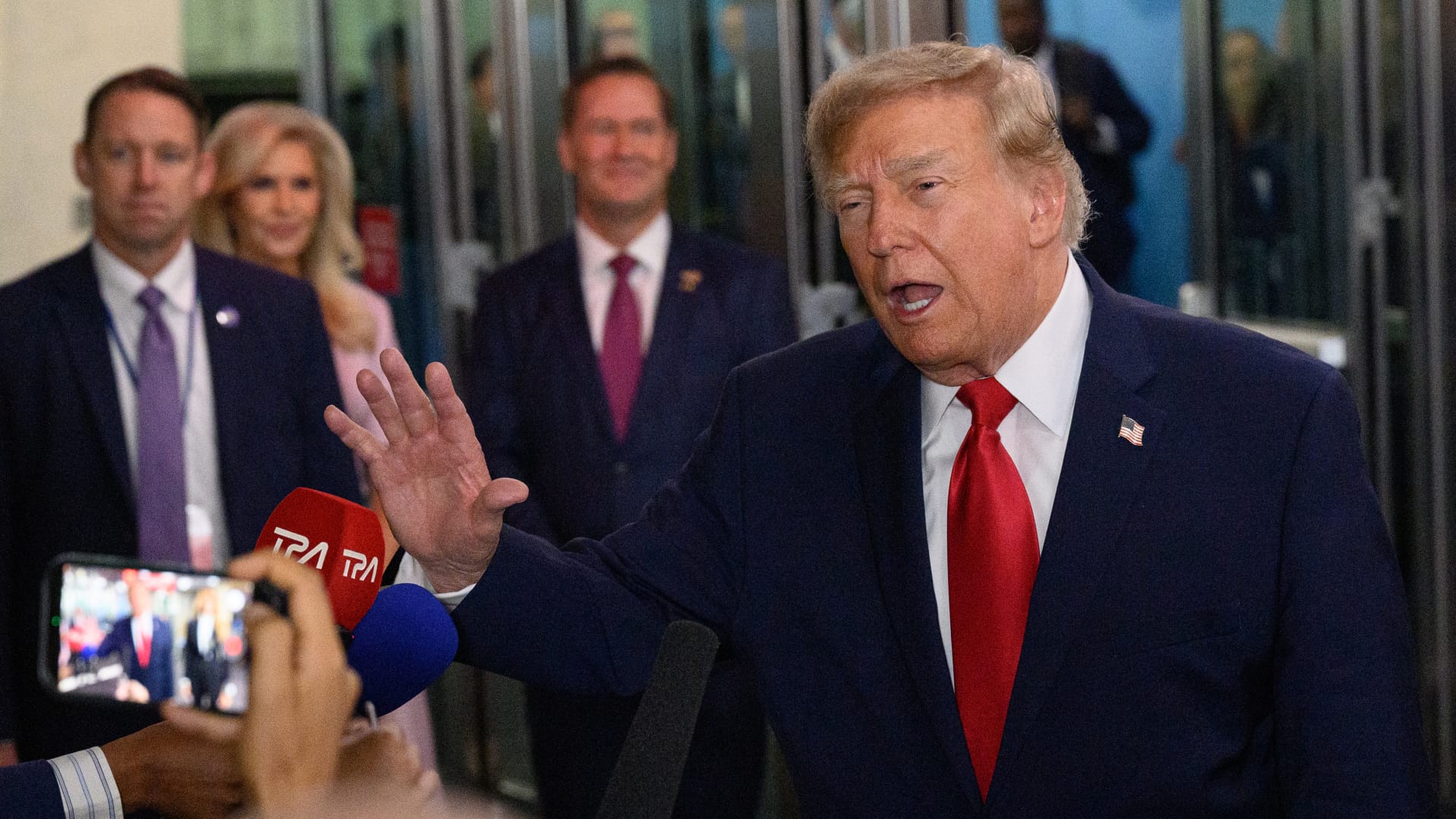
The words of U.S. President Donald Trump as he used his keynote speech at the United Nations General Assembly to call for the renaming of AI as “Super Intelligence.”
His support for allowing AI (or Super Intelligence) to develop at a winning pace comes as his global peers look to reach an agreement on safety rules around the powerful technology.
Later on Wednesday, Trump will greet China’s Xi Jinping in an arrival ceremony ahead of Thursday’s state visit, where AI has become one of the key talking points between the two superpowers.
Speed versus safety
The CEO of OpenAI Sam Altman and Anthropic boss Dario Amodei are expected to address the United Nations Security Council later on Wednesday. They are set to be joined by Hugging Face CEO Clément Delangue to debate AI safety and regulation.
The appearance follows calls to slow the breakneck pace of the model frontier — warnings Trump has called a “hoax” and “scam.”
Frontier FOMO
Investors are taking an optimistic view, with a rally in technology stocks on Tuesday leading the Nasdaq to another fresh high. The tech-heavy index hit a new all-time intraday peak and achieved a record close.
Futures are flat in early trading on Wednesday amid a broadly positive handover from Asia.
Oil oscillations
Crude prices are lower on Wednesday following news that U.S. officials had a “very good meeting” with the Iranian delegation on the sidelines of the UN meeting.
President Trump said the discussion with officials lasted about three hours. Earlier in his address to the U.N., he said he has a “big decision” over whether to reach a deal with Tehran or “annihilate” the country.
According to regional media reports, Iran has been communicating its conditions for ending the seven-month war with the U.S. through a Qatari mediator.
— Leonie Kidd
*Please note, the Daily Open EMEA will be coming to you from my colleagues in Singapore for the next few days*
This content is blocked because you are not allowing cookies.
To view this content, click on Cookie Preferences here or at the bottom of the page to allow all cookies.
And Finally…
Anthropic and OpenAI roll out cheaper models in first release since call for slowdown
Anthropic and OpenAI on Tuesday each announced new, less costly artificial intelligence models as both frontier labs continue to face stiff competition from cheaper, open-weight competitors.
OpenAI introduced additional tiers to its GPT-6 family, with GPT-6 Sol and GPT-6 Luna, slashing the API prices by 50% compared with GPT-5.6 promotional pricing.
Sol, which is a tier below Astra, is meant for more complex workloads like coding, while the company’s Luna offering is geared toward “high-volume tasks” such as extracting information or summarizing documents, the company wrote.
Anthropic unveiled Claude Opus 5.5 on Tuesday, its latest release in the new Claude 5.5 model family.
— CJ Haddad
This content is blocked because you are not allowing cookies.
To view this content, click on Cookie Preferences here or at the bottom of the page to allow all cookies.
-
 Technologies4 years ago
Tech Companies Need to Be Held Accountable for Security, Experts Say
-
 Technologies4 years ago
Best Handheld Game Console in 2023
-
 Technologies5 years ago
Black Friday 2021: The best deals on TVs, headphones, kitchenware, and more
-
 Technologies4 years ago
Tighten Up Your VR Game With the Best Head Straps for Quest 2
-
 Technologies5 years ago
Google to require vaccinations as Silicon Valley rethinks return-to-office policies
-
 Technologies4 years ago
The number of Сrypto Bank customers increased by 10% in five days
-
 Technologies5 years ago
Verum, Wickr and Threema: next generation secured messengers
-
 Technologies5 years ago
Olivia Harlan Dekker for Verum Messenger