
Technologies
AI Health Coaches: The Next Frontier in Wearables or Privacy Nightmare?
We should probably brace for both.
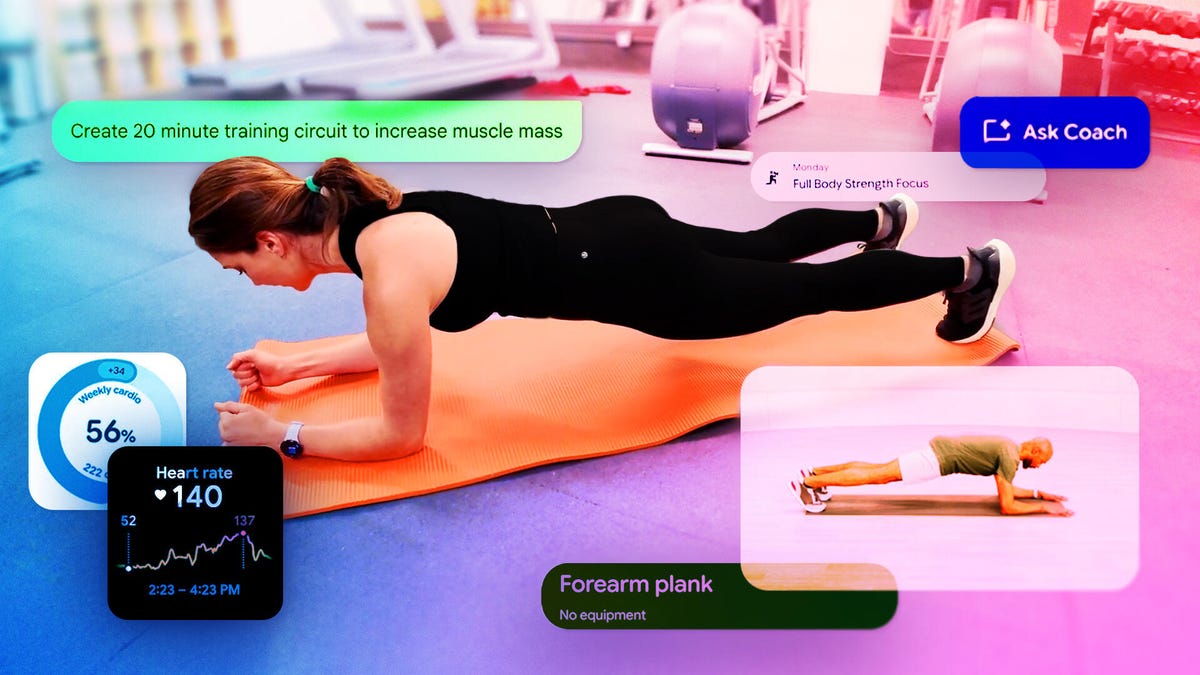
I’ve been tracking biometric data about my body since what feels like the dawn of time (or at least the dawn of wearables). I ran a half-marathon with the first Fitbit tracker, reviewed the very first Apple Watch and used the first smartphone-connected thermometer for ovulation tracking back when it was a pen-and-paper operation for most.
Collecting data about my body isn’t just second nature; it’s practically part of my job description. And for years, it’s been entirely on me to overanalyze that mountain of metrics and figure out how to turn it into something useful.
So when AI health coaches started surfacing from Google, Samsung, Apple, Oura and others, promising to shoulder that mental load, I was all in. You mean to tell me I don’t have to decode every tiny fluctuation in my data on my own anymore?
Most of us can’t afford a real-life wellness coach to meal-prep for us, hype us up midworkout or pry the dumbbells from our fever-wrought hands when we’re at the gym looking like a walking Flonase commercial. An AI coach felt like the next best thing: a nerdy, data-obsessed friend living in my phone, armed with years of my biometrics and the patience to explain them without judgment.
Over the last year, I tried them all, or at least the early versions of what they’ll eventually become. Personal trainers built into fitness apps. Chatbots tucked behind wearable dashboards. Coaches that whisper advice into your earbuds or nudge you from your smartwatch. Some free, some paid.
But so far, none has been game-changing in the way I’d hoped, and the trade-offs of handing over my health data often felt like a high price to pay. The dream in my head doesn’t quite match the reality taking shape.
Like with any new tech, it takes a while to weigh the long-term cost versus the short-term reward. But one thing is clear: This isn’t a passing trend. AI-driven health tech is poised to reshape personal health care in a way that smartwatches and smart rings haven’t yet.
In the best-case scenario, AI health apps and programs could help fill gaps in care and serve as a lifeline in communities with limited access to wellness information. In the worst-case scenario, they could open the floodgates to a privacy nightmare and mishandle medical data. Where this all lands depends on how we choose to use AI coaches and what guardrails are built around them.
Don’t miss any of our unbiased tech content and lab-based reviews. Add CNET as a preferred Google source.
AI in wearables isn’t new, but now it’s going rogue
The use of AI in health care, wellness and fitness has exploded in the last year, but the technology has been baked into the wearable experience for much longer. High heart-rate alerts, fall detection, even sleep scores… that’s all AI working behind the scenes.
According to Karin Verspoor, dean of the School of Computing Technologies at RMIT University in Melbourne, Australia, this type of AI is referred to as predictive modeling. «It’s a targeted tool that’s been trained to identify a particular type of event.»
In the case of these wearables, the «task» is looking for patterns outside the normal baseline and surfacing them as an alert. They’re precise and predictable.
But now we’re veering into something different and much harder to control: generative AI. With these full-on concierge-style chatbot models, not much different from ChatGPT or Gemini, any topic is fair game: heart rate patterns, premenstrual mood swings, diet tips or even medical recommendations (the latter, thankfully, usually prompts you to check with a human physician). The caveat is that these «health coaches» have an all-access pass to your most sensitive health data in real time.
«Large language AI models are essentially much more dynamic and much more responsive to whatever somebody puts into the prompt, and whatever the ongoing interaction with the system is,» says Verspoor. The problem, she notes, is that they’re also «subject to all of the problems that we have with large language models like confabulations or hallucinations.»
Over the past 18 months, it seems like nearly every major tech and fitness brand has launched its own version of an AI coach or chatbot-style concierge, and if they haven’t, they’re very likely considering it.
Google is testing an AI coach inside the Fitbit app, built on Gemini. Apple has released a Workout Buddy for the Apple Watch that offers real-time motivation via headphones based on live metrics during workouts, and is rumored to be exploring some kind of ChatGPT integration in its Health app. Samsung, Garmin, Oura and iFit have all rolled out AI features across their apps and wearable devices, while Meta has partnered with Garmin and Oakley to embed its Meta AI voice assistant into smart workout glasses.
That’s just a snapshot of the AI health coaches I’ve personally tested, and a fraction of what’s likely in development. Only Google’s is explicitly labeled a «coach,» but for the purposes of this article, they all fall under the same umbrella of AI health coaches.
Some of these features feel promising. Meta AI, for example, can read your Garmin heart-rate data into your ear through the glasses’ speakers so you don’t have to take your eyes off the trail. Or you might get training and rest-day recommendations based on how you slept and other physical data.
Other features, however, still feel half-baked. Samsung’s running coach, for example, offered a one-size-fits-all training plan that didn’t match my goals or experience.
In theory, these models should improve over time as they learn individual patterns and as people like me find better ways to leverage them. For now, though, most remain in their infancy, far from the full potential they’re meant to be: an always-available adviser, designed to make sense of the ever-growing pile of health data collected through wearables.
Best-case scenario: AI to the rescue
The current health care model in the US is overdue for a transformation. The system is overburdened, prohibitively expensive and facing demand that outpaces supply, especially in rural areas with limited access to doctors and medical equipment.
Dr. Jonathan Chen, professor of medicine and the director for medical education in artificial intelligence at Stanford, is optimistic that AI could play a constructive role in easing some of that pressure, especially when it comes to making sense of all the health information and clinical data in patient records.
«We already have ways to collect data for people all the time, but even your doctor doesn’t know what to do with all that data in the ICU, let alone all the wearable data,» says Chen.
AI, he argues, can help bridge that gap by synthesizing information in ways that actually matter, such as flagging warning signs of potentially life-threatening conditions like hypertension before they become fatal. Having a personal health concierge at your fingertips could help you focus more intimately on wellness and encourage behavioral changes that reduce the risk of chronic illness over time.
«Even though the actionable insight might not be that different,» said Chen, «when it feels personalized, that might be a way some people will engage deeper.» Chen emphasizes that AI works best when it drives better conversations, not when it replaces them. He points to glucose monitoring as an example: Instead of walking into an appointment with a month of raw data, AI could review that information ahead of time and surface patterns and actionable insights to guide the discussion.
I’ve seen that best-case scenario play out firsthand. A close family member began receiving irregular heart rhythm notifications from an Apple Watch. The alerts had never appeared during a routine doctor visit, nor after wearing a clinical heart monitor at home for weeks. When the watch flagged an episode in real time, he got in front of a doctor, confirmed the diagnosis with an ECG and took action. A few months later, he underwent a heart procedure that significantly reduced his risk of a potentially life-threatening event. In that case, the wearable didn’t replace medical care, but did exactly what it was meant to do: surface a signal, start a conversation and help close a dangerous gap in care.
But that same dynamic can just as easily tip in the other direction. False positives and over-indexing on minor deviations could lead to unnecessary tests and screenings, adding strain to an already overwhelmed health care system.
«Is there going to be a storm of patients banging on the doctor’s door? ‘My Apple Watch, my Fitbit told me I have some heart condition,'» says Chen. «‘You have to give me 100 scans right now and start me on medication.’ Like, whoa, whoa, whoa, buddy… Let’s take a look first. Let’s see what’s really there.»
It’s a familiar tension; an upgraded version of the Dr. Google era when even the most innocent search about a rash could spiral into a late-night panic over flesh-eating bacteria.
Pay to play: The price of privacy
My biggest concern when I started using these AI coaches was data sharing and privacy. Asking ChatGPT about a rash is one thing, but giving a chatbot access to my entire medical history is a completely different beast. Many of these health platforms contain years of my biometric data, along with my medical ID, which includes blood type and allergies.
The alternative is not to use them at all. In many cases, these AI coaches rely on a pay-to-play model, with some requiring an actual subscription. But the real payment is your data. «We can’t have reliable predictive models or generative models without having access to data of some variety,» says Verspoor.
The amount you give up and how it’s used varies by platform, but signing up involves wading through dense disclosures: permission to use your historical and real-time biometric data, location info and chat history to train other models. We’ve become so desensitized to these agreements that most people (myself included) aren’t even sure what we’re giving up anymore.
That confusion isn’t accidental. The language is often intentionally vague and nearly impossible to understand without a law degree. In my case, for example, using Oakley’s smart glasses required agreeing to let my data be used to train Meta’s AI.
A recent privacy analysis by the Electronic Privacy Information Center found that the health-related data people assumed was private (including searches, browsing behavior and information entered into health platforms) is often collected and shared far beyond its original context. In one case, data entered on a state health insurance marketplace was tracked and sent to third parties, such as LinkedIn, for advertising purposes. Much of this information falls outside HIPAA protections, meaning it can be legally repurposed or sold in ways consumers never intended.
Even when anonymized, health data can often be traced back to a real person and even used by insurance agencies to raise premiums.
«You can deidentify and can make it harder to tell, but if someone tried really hard, it’s actually not that hard to use statistical methods to reconstruct who’s actually who,» says Chen.
Data breaches and hacks are just the tip of the iceberg. We often have little visibility into how long data will be stored, who it might be shared with or where it could end up years down the line. Chen points to 23andMe as a cautionary tale. The company had promised privacy and security, until financial trouble put massive amounts of genetic data in jeopardy.
«They’ll keep it secure and private, but then they go bankrupt. And so now they’re just going to sell all their assets to whoever wants to buy it.»
AI health coach: friend or foe?
The reality, at least in the short term, is likely less extreme than either of those scenarios. We’re probably not on the verge of AI saving health care, or of selling our most sensitive health data to the highest bidder.
As Verspoor points out, the pay-to-play model isn’t exclusive to AI health coaches. Tech companies have been using personal data to power products long before generative AI entered the chat. Your search history may not look like an ECG, but it can be just as revealing about life stages, health anxieties or illness history.
With AI health coaches having a direct line to real-time biometric data, it’s more important than ever for people to pay close attention to what data they’re signing off on and who they’re handing it to. Is that information staying on-device? Is it being shared with third parties? And what happens to it down the line? This requires people to be in the driver’s seat when signing up and to read the fine print, even if it means having to copy and paste it into yet another AI chatbot to translate the legal jargon. Then weigh whether the exchange is worth it to you.
Chen believes the potential upside still outweighs the risks, especially if these tools succeed at getting people to care more about their health and engage with it more often. That engagement, he argues, is where the real value lies so long as AI remains a supplement to care, not a substitute for it. Both experts agree AI health coaches should function as ancillary tools to help you understand your data, ask better questions and jump-start conversations with your doctor.
AI coaches may know your day-to-day vitals, but they still have blind spots when it comes to real-world context and medical-grade testing. Their advice, no matter how innocuous and obvious it may sound, like «hydrate after a bad night of sleep,» should be taken with a healthy dose of skepticism. Unlike tools such as ChatGPT or Google’s Gemini, some AI health coaches, including Google’s Fitbit Coach and Oura’s Advisor, don’t clearly cite sources or explain where their recommendations come from, at least not yet.
The tipping point
The reality, at the moment, is less dramatic than either of these extremes. We’re probably not on the brink of AI saving health care, or of plummeting into a full-blown medical data dystopia. Instead, we’re in this awkward in-between phase.
I was initially excited about the idea of an AI health coach taking some of the mental load off interpreting my health data. That quickly turned to skepticism as the privacy trade-offs became apparent. Now, after months of testing, I’ve landed somewhere else entirely: Most days, I forget the tool is there in the first place.
That gap between insight and action is something human coaches have long understood. Jonathan Goodman, a fitness coach and author of Unhinged Habits, says AI excels at processing data, but behavior change rarely hinges on perfect metrics or the perfect training plan.
«For a general-population human who just needs to move a little bit more, eat a little bit better, and play with their kids, it’s probably closer to 10% technical and 90% psychological,» he says. Metrics can surface patterns, but coaching is about asking the right questions, fitting movement into real life and recognizing those moments when someone is ready to push themselves into real transformation.
To me, it’s that in-the-moment guidance, pushing me past my limit or telling me when to scale back, that’s missing from these AI coaches. The experience is largely passive, often requiring you to check the app to see that day’s training plan. Apple’s Workout Buddy might be the closest to that, with real-time motivation based on your stats, but even that stops short of actual coaching. And none has proven indispensable enough to make me seek it out consistently.
To reach that tipping point, these companies will need to give us stronger reasons to engage and clearer safeguards to justify handing over our deeply personal health data.
Technologies
Ring Finally Goes Wire-Free for Its Latest 4K Video Doorbells
The launch of battery-powered versions of the company’s powerful AI doorbells has been highly anticipated.
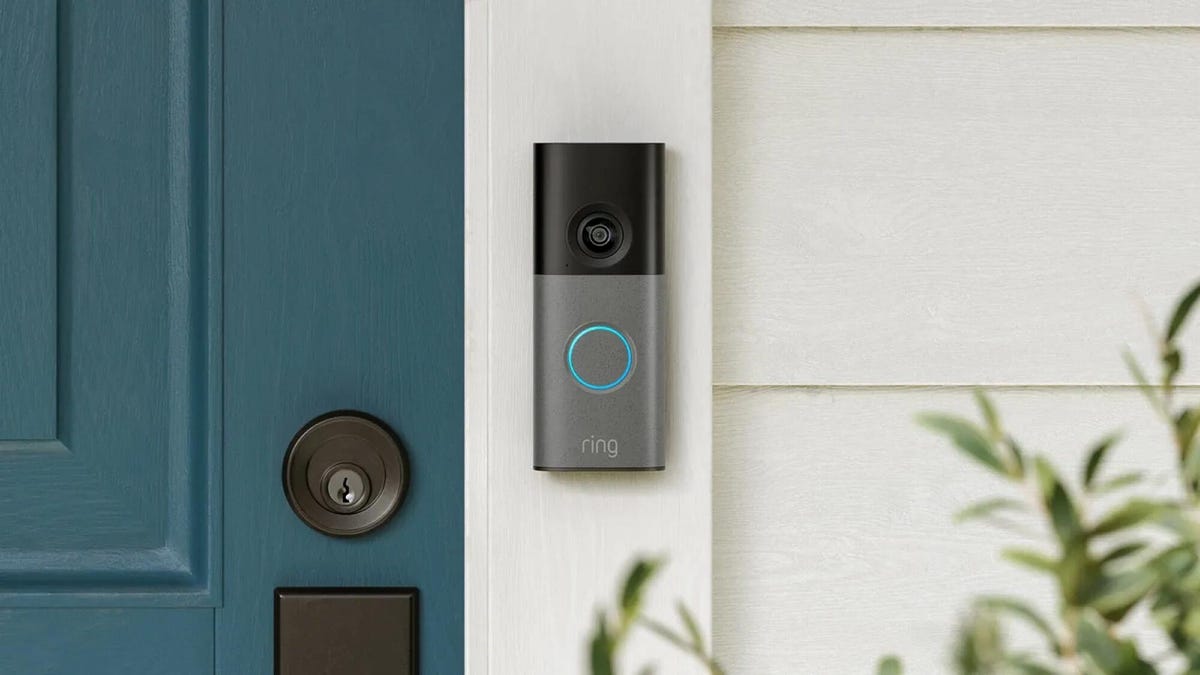
Security company Ring on Wednesday announced a significant expansion of its video doorbell line, notably battery-powered versions of both its 4K and 2K models, priced from $80.
Both Amazon’s Ring and Google Nest debuted high-resolution video doorbells with new AI features in the fall of 2025. But they were wired only, and in my tests, I kept thinking, «I sure wish there were battery models available.»
Wireless video doorbells are far better for most front doors than models that require connecting to your existing doorbell wiring, which is often poorly positioned for a security camera. Mine, for example, is located on a wall beside my door that’s useless for any kind of video views, no matter how you angle a lens.
«Enhancing image quality in battery-powered doorbells means customers can enjoy reliable performance with the flexibility to install devices in a way that suits their space, whether renting or living in homes without existing wiring,» a Ring spokesperson said.
At first, I wondered whether the higher 4K resolutions and more advanced AI features would use too much power to support batteries. If so, Ring is the first to fix that issue with this suite of doorbells, including these models available for preorder right now:
- Ring Battery Doorbell Pro — $250: This model offers up to 4K resolution and 10x zoom, and Ring says it features a redesigned internal architecture to support battery power.
- Ring Battery Doorbell Plus (2nd-gen) — $180: This model includes a quick-release battery pack along with 2K video.
- Ring Battery Doorbell (2nd-gen) — $100: This video doorbell includes 2K video, a 6x zoom and what Ring calls a «streamlined, rechargeable design,» which means you take the entire video doorbell to charge it, not just the battery — a design I greatly prefer, since Ring’s battery packs can get fiddly.
There’s also a new version of a Ring wired doorbell with 2K resolution, starting at $80. It wouldn’t be Ring without a plethora of doorbell devices to confuse newcomers, which is why I have a guide specifically for Ring video doorbells that will need some updating once I finish testing these new models.
Resolution plus an intelligence upgrade
Ring’s ordinary subscriptions of the Ring Protect plan give you cloud video storage and intelligent alerts for people, packages and vehicles, which are important but not really advanced AI. But spring for the $20-per-month Ring AI Pro cam, and this new generation of cameras opens up other capabilities.
Ring’s AI features include AI video descriptions, so if you get an alert, you can also get a summary of what the doorbell saw, including people and activities. A similar feature lets you search your video history with specific terms, such as «bike,» «truck» and so on. You also get the beta version of Ring’s Familiar Faces feature, which can ID logged faces of people who approach.
If these AI features make you uneasy and you’d rather protect your privacy, the best option is to avoid a subscription altogether or choose a lower-tier plan that gives you cloud storage without AI.
I also have a guide on how to turn off Ring’s detection and data-sharing features that might make you nervous, so you can keep what you like while ditching what you don’t.
Technologies
Today’s NYT Mini Crossword Answers for Thursday, March 26
Here are the answers for The New York Times Mini Crossword for March 26.

Looking for the most recent Mini Crossword answer? Click here for today’s Mini Crossword hints, as well as our daily answers and hints for The New York Times Wordle, Strands, Connections and Connections: Sports Edition puzzles.
Baseball is back! You’ll see baseball images patterned throughout today’s Mini Crossword grid, and when you solve the puzzle, they’ll spell out a certain word. Play ball! Er, read on for all the answers. And if you could use some hints and guidance for daily solving, check out our Mini Crossword tips.
If you’re looking for today’s Wordle, Connections, Connections: Sports Edition and Strands answers, you can visit CNET’s NYT puzzle hints page.
Read more: Tips and Tricks for Solving The New York Times Mini Crossword
Let’s get to those Mini Crossword clues and answers.
Mini across clues and answers
1A clue: Degrees for boardroom execs
Answer: MBAS
5A clue: «___ want for Christmas …»
Answer: ALLI
6A clue: What Hamlet holds while giving his «Alas, poor Yorick!» speech
Answer: SKULL
7A clue: Wild, as an animal
Answer: FERAL
8A clue: Sphere
Answer: ORB
Mini down clues and answers
1D clue: Word after «match» or «mischief»
Answer: MAKER
2D clue: Bit of writing on a book jacket
Answer: BLURB
3D clue: Penne ___ vodka
Answer: ALLA
4D clue: Window ledge
Answer: SILL
6D clue: Bay Area airport, for short
Answer: SFO
Technologies
McDonald’s KPop Demon Hunter Meals Include Bright Purple Nugget Sauce
The Derpy McFlurry mixes popping boba pearls and berry sauce into a soft-serve dessert.

McDonald’s has seen success with themed combo meals, including its holiday Grinch Meal. Now, the fast-food chain is capitalizing on Netflix’s Oscar-winning animated film, KPop Demon Hunters, with new upcoming menu items and both a breakfast meal and a lunch/dinner offering. Let’s hope you like the color purple.
The HUNTR/X Meal, named for the K-pop girl group in the movie, is a 10-piece chicken McNuggets meal that includes a medium drink and three special menu items.
Ramyeon McShaker fries come with a small bag of soy, garlic, sesame and spice seasoning, along with regular McDonald’s french fries. You sprinkle the seasoning into the provided bag, dump in the fries, shake it all up and eat.
The meal includes two new sauces for the fries and nuggets. Hunter sauce is a sweet chili sauce mixing notes of chili, garlic and pepper. But my favorite item on this new menu is Demon sauce, a bold mustard sauce with some heat and a bold purple color. There’s just not enough dark purple food out there.
There’s also a new dessert, the Derpy McFlurry, which blends creamy vanilla soft serve with berry-flavored popping boba pearls, served with a swirl of wild berry sauce. McDonald’s named it for the supernatural feline, Derpy Tiger, from the movie.
If breakfast is your bag, the new morning meal is the Saja Boys Breakfast Meal, named for the movie’s boy band.
It includes a Spicy Saja McMuffin sandwich, which is a sausage McMuffin with egg and a spicy Saja sauce, hash browns and a small drink.
Both meals come with a photocard for one of the bands and a Derpy card. The Derpy card includes a QR code you can scan to unlock online content about the film.
The full KPop Demon Hunters menu should be available at participating McDonald’s beginning March 31.
The McDonald’s Grinch meal (and its accompanying patterned socks) sold out quickly, so KPop Demon Hunters fans may want to mark their calendars and nab a meal when they are released.
-
 Technologies3 года ago
Tech Companies Need to Be Held Accountable for Security, Experts Say
-
 Technologies3 года ago
Best Handheld Game Console in 2023
-
 Technologies3 года ago
Tighten Up Your VR Game With the Best Head Straps for Quest 2
-
 Technologies4 года ago
Black Friday 2021: The best deals on TVs, headphones, kitchenware, and more
-
 Technologies5 лет ago
Google to require vaccinations as Silicon Valley rethinks return-to-office policies
-
 Technologies5 лет ago
Verum, Wickr and Threema: next generation secured messengers
-
 Technologies4 года ago
Olivia Harlan Dekker for Verum Messenger
-
 Technologies4 года ago
The number of Сrypto Bank customers increased by 10% in five days