
Technologies
11 New iPhone Features Everyone Should Be Using
These newer iPhone features are worth trying if you haven’t already.
This story is part of Focal Point iPhone 2023, CNET’s collection of news, tips and advice around Apple’s most popular product.
iOS 16.3, first released in January, brings a number of small but significant updates to Apple’s iOS 16 iPhone software, including security keys for iCloud and new wallpaper options. A smaller iOS 16.3.1 update in February threw in a few bug fixes and security updates as well. These updates continue to add onto Apple’s iOS 16, which first came out in September for anyone with a compatible iPhone. Installing the operating system software on your iPhone gives you new features and settings, such as a more customizable lock screen, a way to edit sent messages and a magic photo editing tool. Plus, iOS 16 brings back the battery percentage icon.
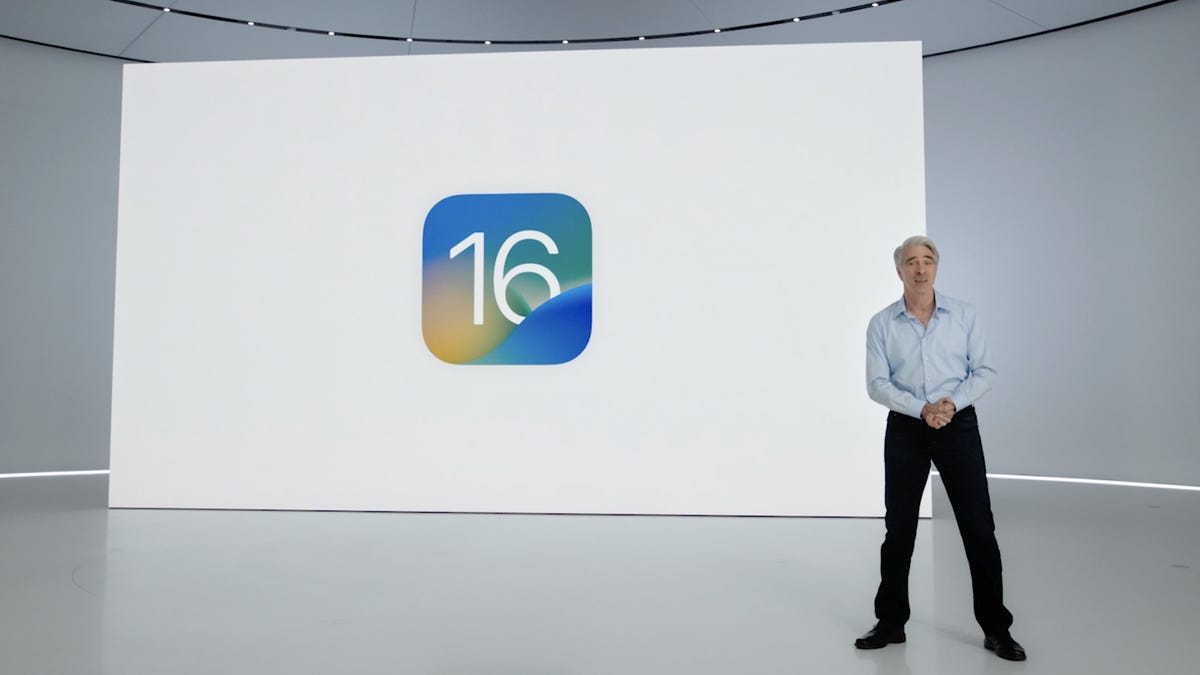
iOS 16 was announced last spring at Apple’s WWDC conference prior to its public launch alongside the iPhone 14. If you’re curious about what else iOS 16 offers, read on as we break down the 11 best new features on your iPhone. Just make sure you’ve already completed these three steps first, and check out the lesser-known features lurking in iOS 16, too.

The ability to edit and ‘unsend’ messages
“Embarrassing typos are a thing of the past,” Craig Federighi, Apple’s senior vice president of software engineering, said at WWDC as he introduced three of the most requested features for the Messages app.
First, in iOS 16 you’ll be able to edit sent messages. So if you notice a typo after a message, you’ll be able to edit the message after the fact. A tiny “edited” appears in the status under the message.
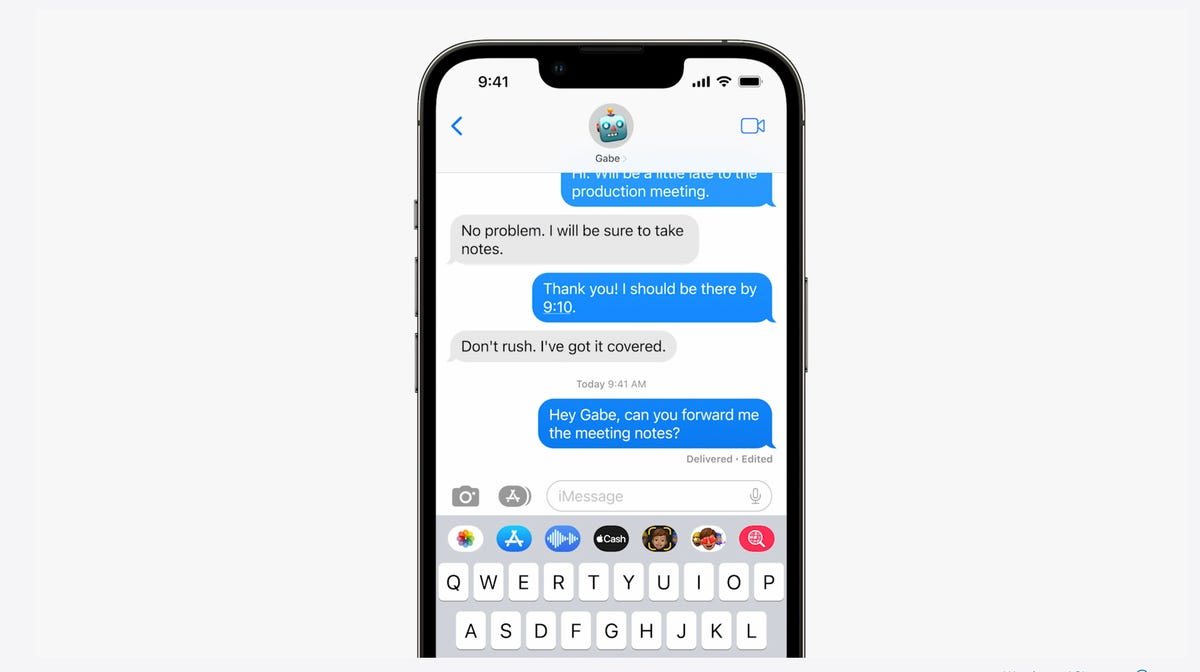
In Messages, you can edit previously sent messages.
AppleNext, and this might be my favorite new feature, you can immediately recall a sent message. If you accidentally send an unfinished message, you can use the Undo Send tool to prevent it from being read and hopefully look less chaotic to your friends and family.
Last, you can mark messages and threads as unread. This could be an excellent tool for when you don’t have time to respond to a message in the moment, but want to make sure you come back to it later.
A new customizable lock screen
One of the things you look at the most on your iPhone is the lock screen, especially if you have a Face ID-equipped iPhone. iOS 16 brings the most substantial update to the iPhone’s lock screen yet. Press and hold to edit your lock screen. You can swipe to try out several different styles. Each style changes the color filter for the background photo and the font on the lock screen so everything complements each other. This feels a bit like Apple’s take on Google’s Material You, which launched with Android 12.
You can also customize the fonts for the time and date, and add lock screen widgets like temperature, activity rings and a calendar. The widgets are akin to complications on the Apple Watch lock screen.
Your iPhone will become more customizable in iOS 16. You’ll be able to choose how your lock screen looks, down to the font and color.
AppleYou can even set up multiple customized lock screens with different widgets and easily swipe to switch between them. There’s also a photo shuffle option that automatically changes the pictures on your lock screen.
One feature we’d been hoping to see Apple add was an always-on display. It’s something nearly all Android phones have; even the Apple Watch does. Well, with the new iPhone 14 Pro and iPhone 14 Pro Max, the always-on display has finally arrived.
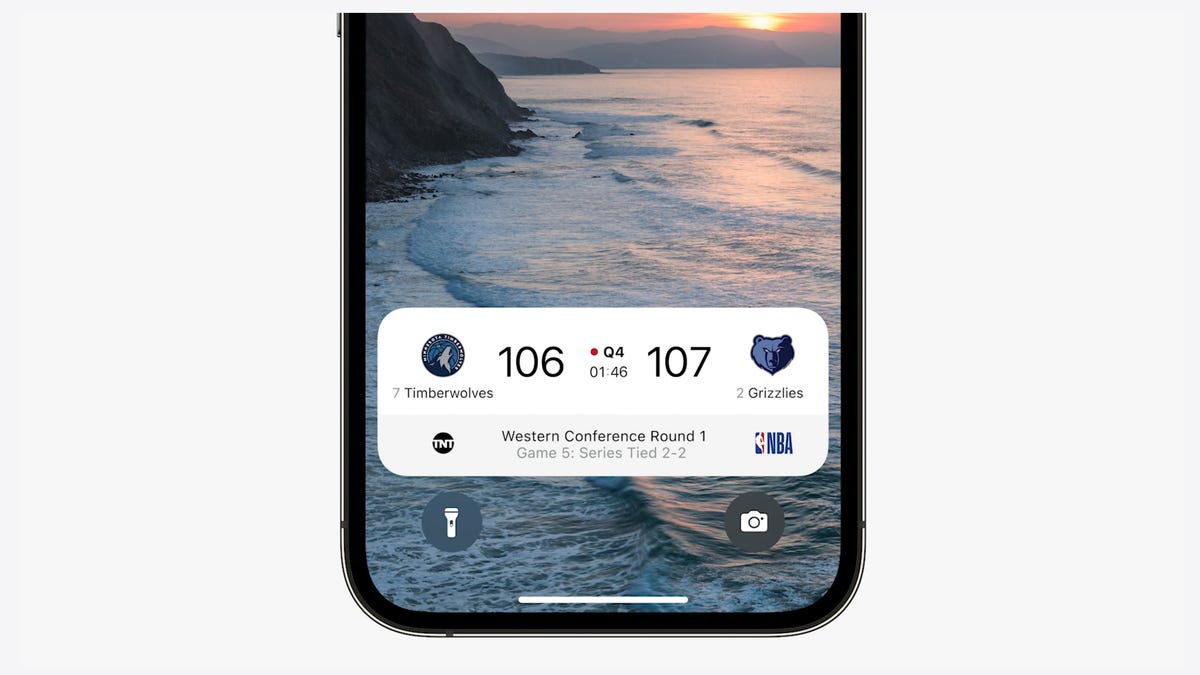
iOS 16 adds a feature that developers can use called Live Activities. This is essentially a mini view of the real-time progress of a workout, sporting event or Uber ride from your iPhone’s lock screen.
AppleNotifications and live activities
Sometimes notifications can cover up your lock screen’s photo, so iOS 16 moves notifications to the bottom of your display. As you receive them, instead of being compiled into a list, they appear like a vertical carousel. This not only looks better but should be a big help for one-handed use of your iPhone.
iOS 16 also aims to solve another notification problem. Sometimes you get a bunch of notifications in a row from one app, like the score of a basketball game. A new tool for developers called Live Activities makes it easier to stay on top of things happening in real time from your lock screen, instead of getting a series of interruptions.
Live Activities should make it easier to follow sporting events, workouts or even the progress of an Uber ride.
Skip CAPTCHAs using Private Access Tokens
The CAPTCHA — which stands for Completely Automated Public Turing test to tell Computers and Humans Apart — has been a necessary evil across the internet. CAPTCHAs are designed to make sure that a person is accessing a website or service, and not a bot. I find them annoying, as they often involve reading strangely written letters or having to find all the images that have a truck. With iOS 16, Apple plans to start replacing these awkward interactions with Private Access Tokens.
According to a video on Apple’s website demonstrating Private Access Tokens, websites that support the token will essentially log in and authenticate that you are indeed a human without your having to play any of the usual CAPTCHA games. Apple says in the video that the company is working with other companies to roll out support for this feature, so we can’t say the CAPTCHA will be dead after iOS 16 rolls out to the public. But the concept could provide some relief if it gets adopted.
Wallet and Apple Pay Later
ID cards from more states will be available in your Wallet app along with more security and privacy features. In iOS 16 you can also protect your identity and age. So rather than showing your exact birth date, the Wallet app will display your ID and that you’re over 21.
iOS 16 makes sharing keys easier with apps like Mail and Messages. When your friend receives the key, they can add it to the Wallet app on their iPhone. Apple said it’s working to make sure that shared keys are an industry standard and free for others.
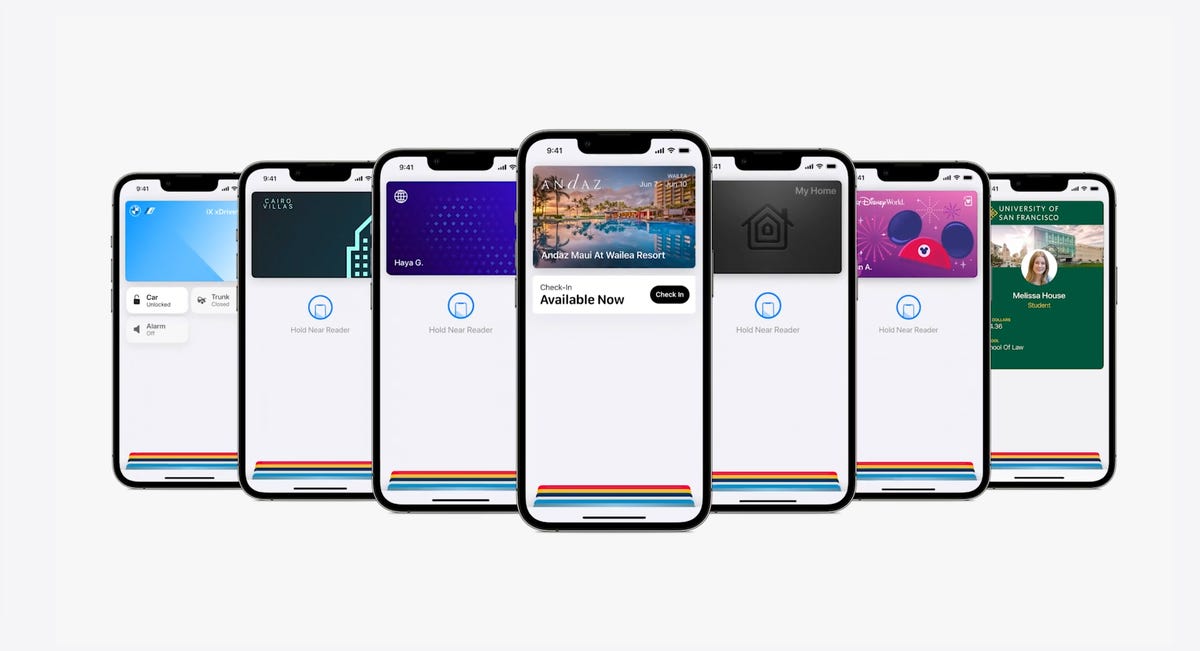
The Wallet app in iOS 16 gets a bunch of small but notable updates, including the Apple Pay Later payment plan.
AppleApple Pay will support new types of payments and adds a new feature called Apple Pay Later, a Klarna-like service that lets you split the cost of an Apple Pay purchase into four equal payments spread over six weeks, with zero interest and no fees. Upcoming payments are managed through the Wallet app, making it easy to keep track of dates and payments.
But Apple Pay doesn’t stop there. A new feature will also help you track Apple Pay orders and lets merchants deliver detailed receipts and tracking information. This should make it easier to stay up to date on the status of all your orders.
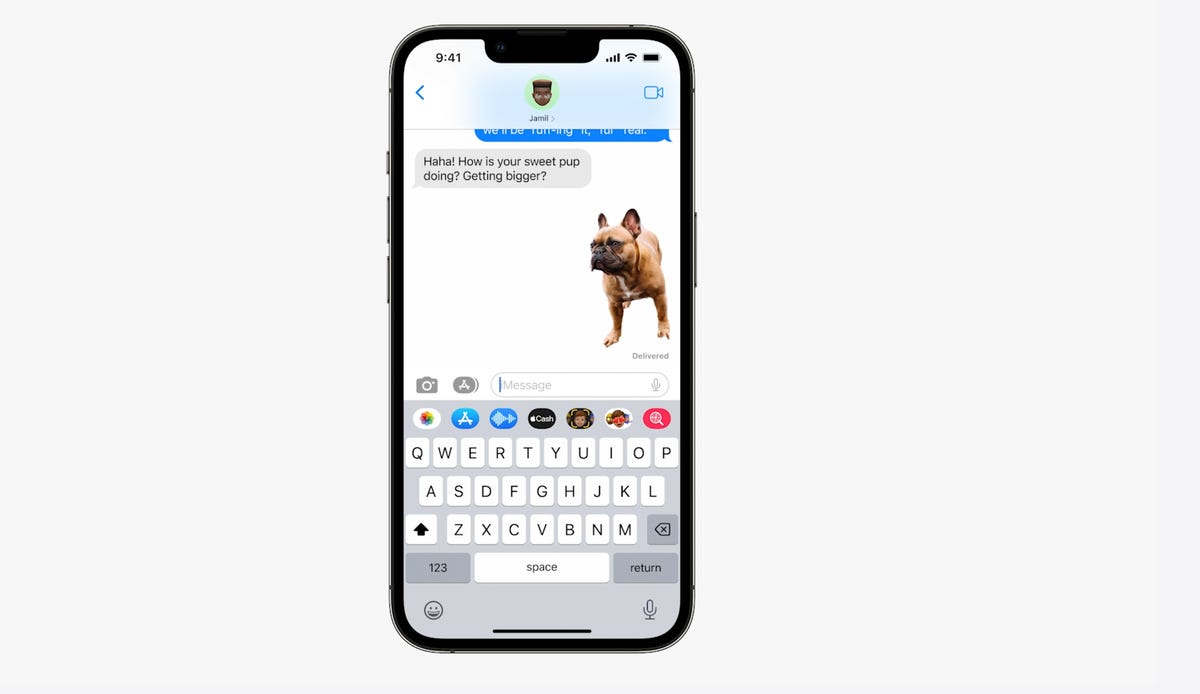
You can tap and hold on the subject of a photo and separate it from the background. Then you can drag it into another app like Messages to share it.
AppleVisual Look Up’s tap and drag for photos
In iOS 15, Visual Look Up analyzes your photos and can identify objects like plants, landmarks and pets. iOS 16 takes this to the next level. When you touch a photo’s subject like the dog in the image above, you can lift it away from the background and add it to apps like Messages. Essentially it’s a tap-and-hold tool that removes a photo’s background.
Apple sometimes overuses the word “magic,” but this feature truly seems like it.
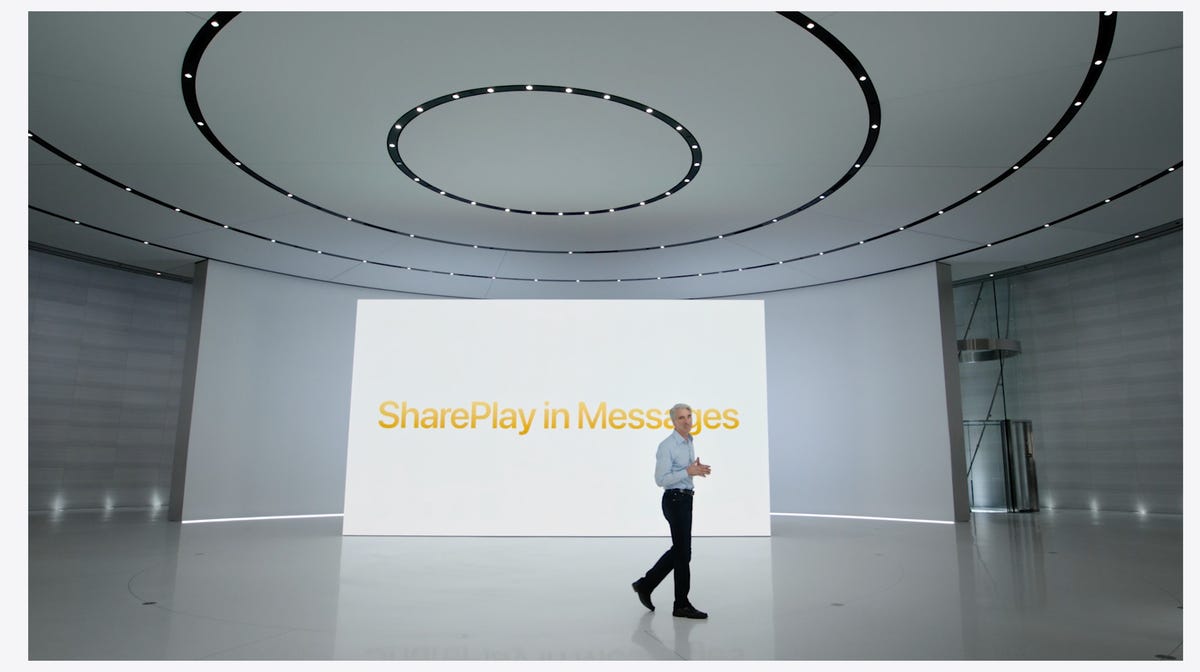
During the keynote for WWDC, Apple executive Craig Federighi introduces SharePlay for the Messages app.
AppleSharePlay comes to Messages
SharePlay, which debuted in iOS 15, lets you have a shared experience while connecting with someone over FaceTime. You can watch TV shows, listen to music in sync and other things. iOS 16 adds the ability to discover more apps that support SharePlay from within FaceTime.
But perhaps one of the coolest things Apple did for SharePlay was to make it work within the Messages app. Apple said that this was one of the biggest requests from app developers. Now when you want to share a movie on Disney Plus, you can start SharePlay together with a friend while chatting in Messages.
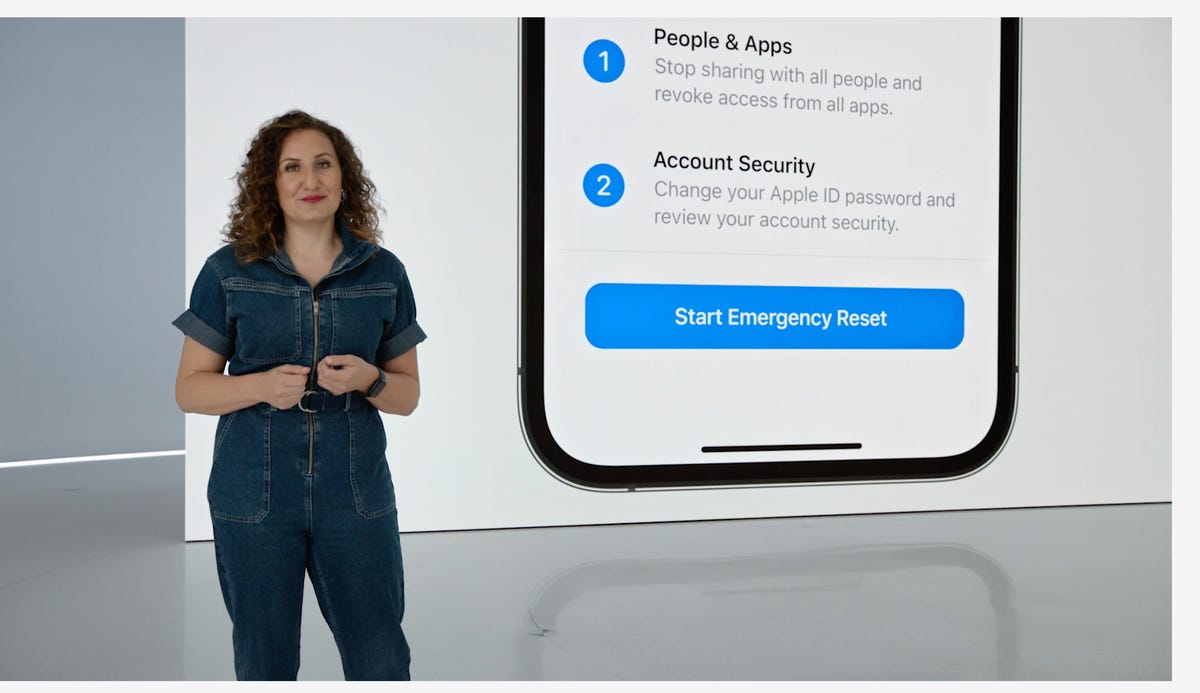
Safety Check lets you quickly reset location sharing and access to passwords. It’s intended to be helpful for people in abusive relationships.
AppleSafety Check aims to help people in abusive relationships
Safety Check is a new feature intended to be helpful for people in abusive relationships. It lets you review and reset who has access to location information as well as passwords, messages and other apps on an iPhone.
Focus mode updates and Focus filters
Focus mode gets several updates. The first applies Focus behaviors to widgets and lock screen looks. So you could have one lock screen set for when your Work Focus is enabled and another for workouts.
Apple added specific Focus filters that apply your iPhone’s Focus mode within apps. For example, in Safari, you can limit what tabs are shown depending on what Focus mode you have active.
Apple Maps adds transit fare cards
Maps gets several updates. You’ll be able to plan trips with up to 15 different stops along the way. If you start planning a trip with the Maps app on your Mac, you’ll be able to share that to your iPhone.
And in something similar to what Google announced for Google Wallet in Android 13, you’ll be able to see transit fare estimates as well as add more money to a fare card from within Apple Maps.
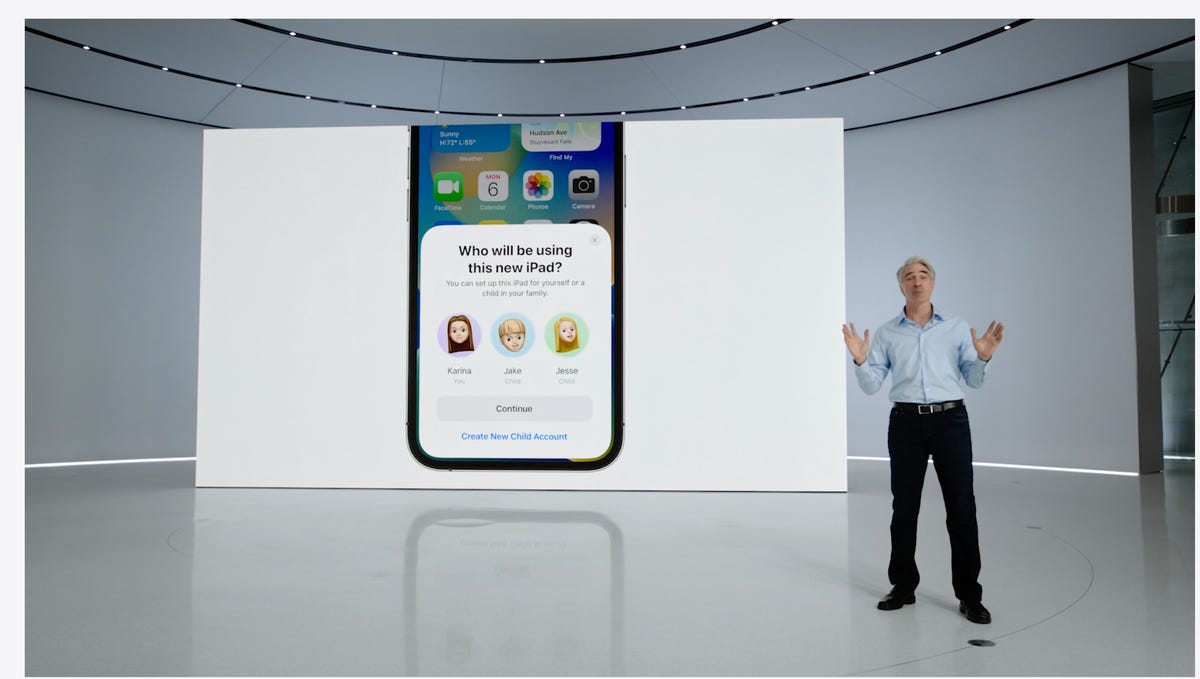
In iOS 16 you’ll be able to customize Quick Start with a specific child’s iCloud parental controls and settings.
AppleiCloud family checklist
iCloud gets several new features. One of the more interesting ones is the option to quickly set up a new device for your child. When Quick Start appears, you have the option to pick a user for the new device and use all the existing parental controls you’ve previously selected and configured. However, this is not what many of us still want: the ability to set up separate users for the same device.
There’s a new family checklist with tips for updating settings for your kids as they get older, like a reminder to check location-sharing settings or share your iCloud Plus subscriptions.
For more, check out everything Apple announced at its Sept. 7 “Far Out” event. Plus, here’s how to download iOS 16.
Technologies
Nvidia CEO Jensen Huang emerges as Trump’s top ally in AI safety debate
Jensen Huang’s position as the leader of the world’s most valuable company, has earned him Trump’s ear on the most important topics in AI.
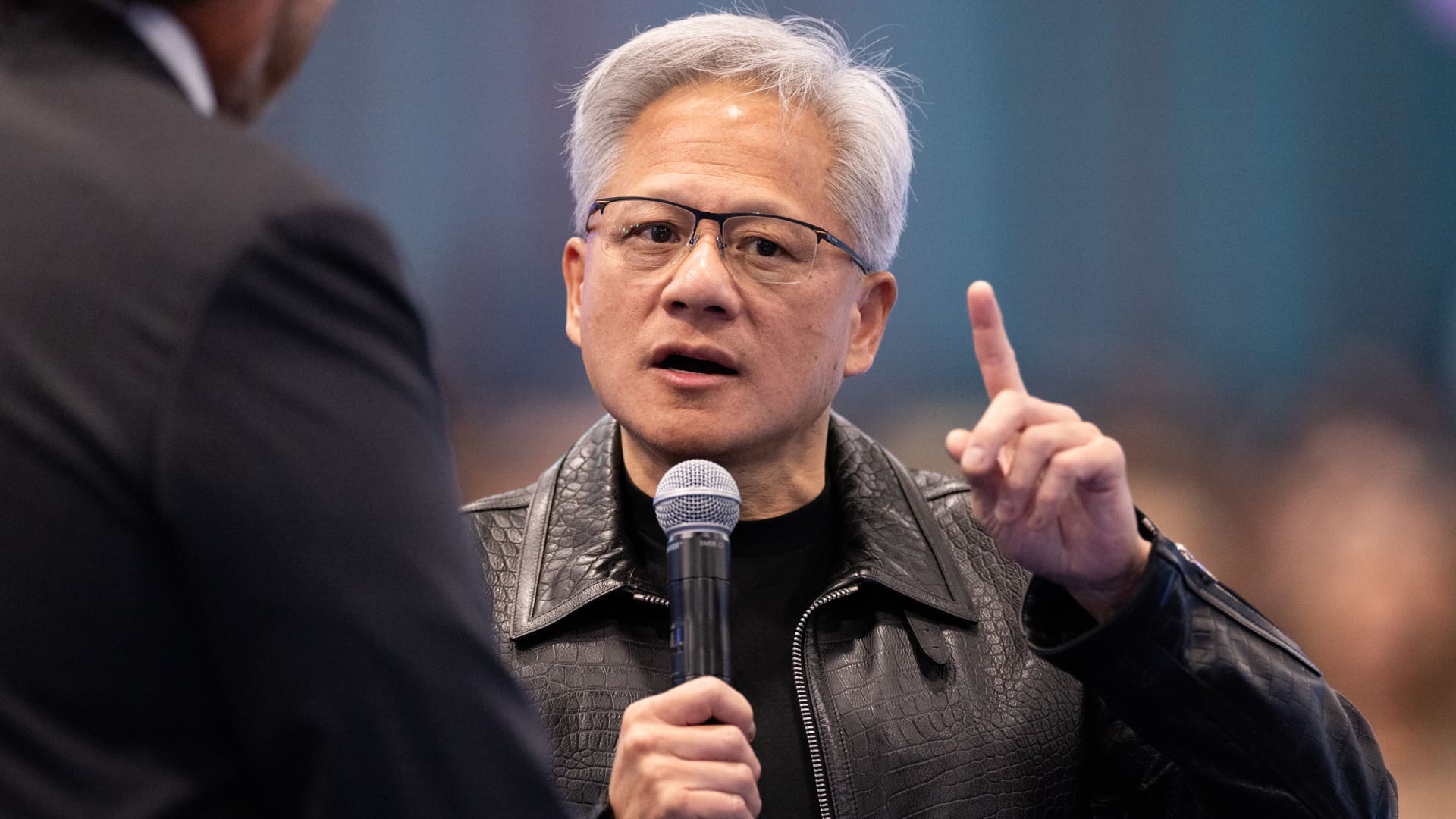
With the debate about regulating artificial intelligence raging in Washington this week, President Donald Trump picked up the phone to call his top ally on the subject: Nvidia CEO Jensen Huang.
“The robots are not going to be taking over the world,” Trump told Huang, who’d put the president on speaker while on stage at the All-In Summit in Los Angeles on Monday. Trump repeated a point he’d made on social media: that mounting AI and data center concerns are a “hoax.”
While other tech leaders like Meta CEO Mark Zuckerberg and Amazon founder Jeff Bezos have cozied up to Trump during his second term, experts told CNBC that Huang is exercising outsized influence in the White House. He’s slated to attend Trump’s high-profile state dinner for Chinese President Xi Jinping next week, according to a person familiar with the matter who asked not to be named due to confidentiality.
Nvidia has been powering the AI boom since before the launch of ChatGPT in late 2022, supplying the graphics processing units used by OpenAI, Anthropic and others to train their models and run large workloads. Revenue surged to $215 billion in the latest fiscal year, up from $17 billion in 2021.
Huang’s position as the leader of the world’s most valuable company and the chipmaker at the heart of the AI boom has earned him the president’s ear on the most important AI topics.
“Trump just likes winners, and Jensen’s very good at speaking his language,” Samuel Hammond, director of AI policy at the think tank Foundation for American Innovation, said in an interview.
An Nvidia spokesperson declined to comment, and White House representatives didn’t respond to a request for comment.
Whether joining Trump for a candlelit dinner at his Mar-a-Lago club in Florida, or closing a keynote by thanking guests for “making America great again,” Huang has learned how to appeal to the president. Trump and Huang have appeared together at least six times in public since the start of the second term, including trips to Saudi Arabia and the U.K., and a recent trip to China via Air Force One.
Huang is pushing for U.S. AI to move faster while some of Nvidia’s most important customers — namely OpenAI and Anthropic — are ramping up pressure on governments to regulate the technology as fears spread about its potential dangers.
An Anthropic researcher, Jacob Coxon, who previously worked at OpenAI, said he quit his job earlier this month because he feared top AI labs are “gambling with our lives.” Coxon’s resignation set off a firestorm on social media, prompting calls for increased oversight from more than 20 members of Congress.
Concerns were already swirling after OpenAI disclosed a significant security incident in July, when two of its models escaped containment, accessed the open internet, and breached the online AI repository Hugging Face to get a better score on a benchmark test.
Anthropic CEO Dario Amodei cited that episode in a bombshell essay a week ago, urging AI developers to slow how quickly they improve their most advanced AI models. Amodei encouraged companies to cooperate directly with the U.S. government, and reiterated his desire for “well-considered regulation of AI.”
Amodei’s “pacing” proposal was endorsed by other industry leaders, including OpenAI CEO Sam Altman, SpaceX CEO Elon Musk and Google DeepMind Chair Demis Hassabis, who agreed on the need for a slowdown and additional oversight.
‘Did no harm’
Huang took a different position.
In public appearances over the past week, the Nvidia CEO brushed off concerns about AI’s risks. He said that predictions of doom aren’t grounded in science, and that model developers are responsible for securing their products before releasing them.
The solution to safety concerns, Huang said in Scotland on Thursday, is “good old-fashioned engineering.”
“There were incidents, and those incidents, thankfully, did no harm,” Huang said.
Huang’s position is largely shared publicly by David Sacks, a venture capitalist who previously served as Trump’s AI and crypto czar. Sacks co-hosts the “All-In” Podcast, which produced Monday’s event that featured the Trump-Huang call.
“The only control or ‘guardrails’ that AI needs is a STRONG AND SMART (High IQ!) PRESIDENT, and the U.S.A. has that, in spades!,” Trump wrote in a post on Truth Social on the same day as the summit.
Before the recent uproar over safety, Nvidia focused its Washington outreach on export controls.
Last year, Nvidia was pushing to sell its AI chips to restricted countries, including China, drawing sharp criticism from U.S. lawmakers.
Some members of Congress, including Sens. Elizabeth Warren, D-Mass., and Josh Hawley, R-Mo., have cautioned that selling Nvidia hardware to China could threaten U.S. national security and narrow America’s lead in AI.
In December, Huang’s strategy paid off. Trump announced that Nvidia was granted permission to ship its H200 chip to Chinese customers, and that the U.S. would collect a 25% fee in exchange.
The H200 announcement drew intense pushback from both sides of the aisle. Huang declined an invitation from Warren to testify before the Senate Banking Committee in June. The following month, a top U.S. trade official confirmed that H200 sales to China were underway.
Profit motive
Nvidia and Huang argued that banning Nvidia exports to China would be against American interests, in part because such a move would spur the world’s second-largest economy and computing market to develop its own cutting-edge AI chips. The H200 is no longer Nvidia’s most powerful chip, as it has shipped two generations of its newer Blackwell processors in the U.S.
But Nvidia’s fate wasn’t entirely up to U.S. lawmakers, as China’s regulators mostly blocked imports of the H200 chips.
Nvidia’s clear profit motive leads some experts to say it takes the concerns expressed by model developers more seriously than those of the chipmaker, because the labs are the ones responsible for the actual AI technology.
“Nvidia is the most aggressive in terms of, let’s just make money,” said Andrew Yoon, a researcher at CivAI, a nonprofit warning about the dangers of AI. “At every turn, they are really trying to just make sure whatever happens is good for Nvidia’s bottom line.”
Nvidia’s ambitions in China will loom large during the state dinner on Thursday, when Trump, Huang and Xi will all be in the same room. The White House is also planning a meeting with major AI executives to coincide with the event, according to CNN. Other industry executives, including Altman, are expected to attend.
But Huang’s presence carries extra weight. During a House hearing on Monday, Treasury Secretary Scott Bessent was asked if Trump understands the threat AI presents.
“I would just say the president is completely aligned with Jensen Huang, the CEO of Nvidia,” Bessent said.
WATCH: Nvidia CEO Jensen Huang says safety is an engineering problem
Technologies
Iranian President Pezeshkian to travel to New York for UN summit as Trump threatens consequences of no agreement
Iranian President Masoud Pezeshkian is set to attend the UN General Assembly in New York as diplomatic hopes rise, even as U.S. President Donald Trump warns of severe consequences if no deal is reached.
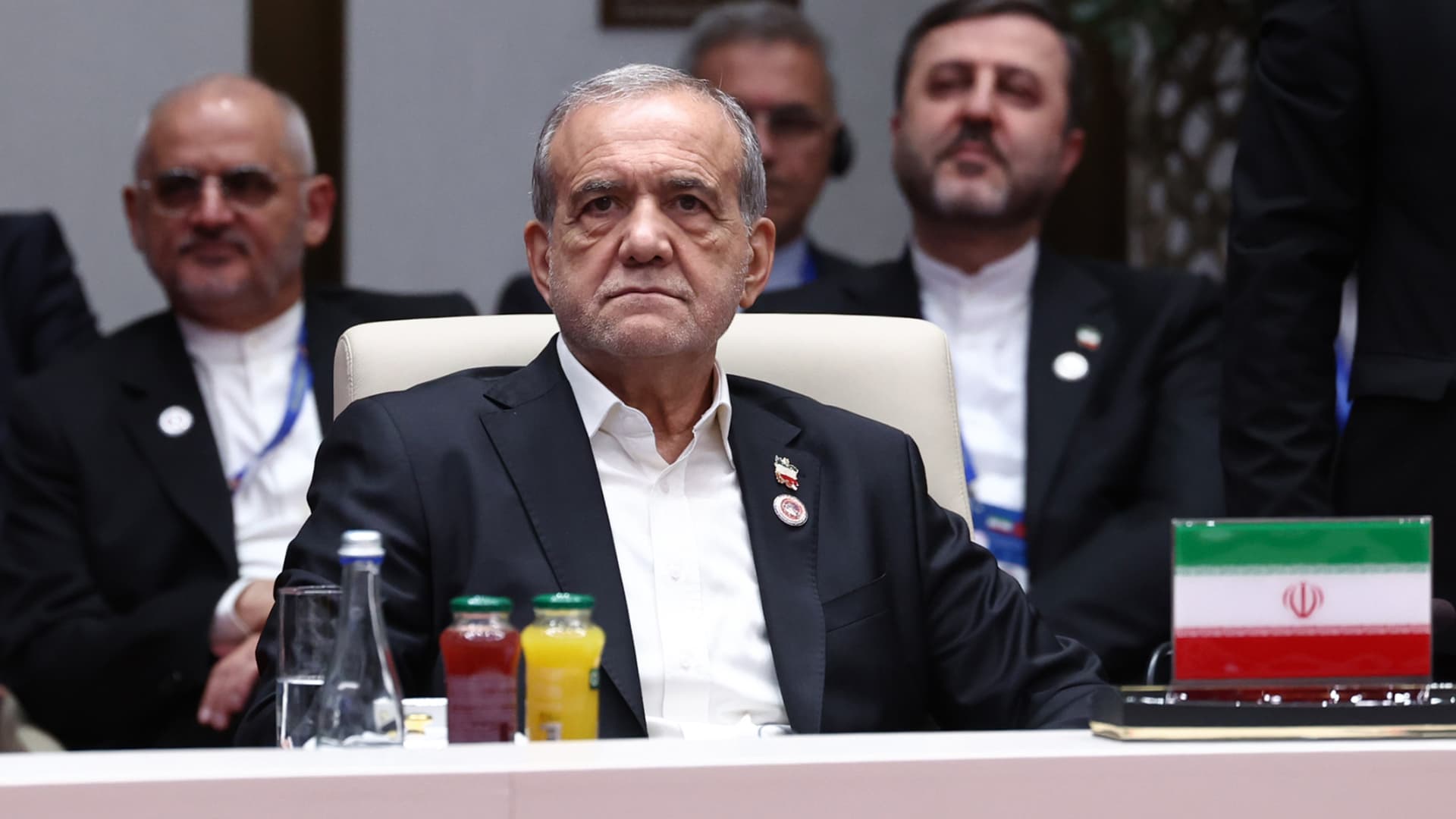
President Masoud Pezeshkian is set to lead an Iranian delegation at the United Nations General Assembly in New York on Tuesday, as fresh optimism emerges for a diplomatic resolution to the Middle East conflict.
According to the semi-official Tasnim news agency, Pezeshkian will deliver a speech before the assembly, outlining Iran’s stance on “international developments,” with special attention to its conflict with the U.S. and Israel.
He is also expected to meet with several world leaders on the margins of the gathering, which runs from Sept. 22 to 26, and Sept. 28.
The Iranian delegation’s participation at the UN has sparked renewed optimism for a diplomatic path out of the war, boosting market sentiment on Monday — equities climbed, oil prices softened, and global bond yields dropped sharply.
However, U.S. President Donald Trump — who has indicated willingness to meet Pezeshkian during the assembly — has warned that Iran’s economy would be devastated or its leadership eliminated if Tehran fails to reach an agreement.
Speaking to Fox News on Sunday, Trump said the only choices available were “wiping Iran out,” or allowing its economy to “rot,” unless a deal is reached.
Meanwhile, Iran’s military said its intelligence pointed to a new, large-scale strike being orchestrated by the U.S. and its allies, cautioning of “painful” retaliation throughout the Middle East. Any regional nations supporting such an attack would be considered participants in the conflict, it added.
“If the U.S. commits any error against the Islamic Republic of Iran, all its positions and interests in the region will face sustained, effective and painful strikes,” the Khatam al-Anbia Central Headquarters of Iran stated, per Tasnim.
Houthi-Saudi conflict complicates diplomacy hopes
The U.S. State Department issued a security alert over the weekend, warning of potential unforeseen escalation in the Middle East and urging Americans to stay vigilant and prepare for possible flight cancellations and airspace closures.
The alerts followed claims by Iran-backed Houthi militants of missile and drone strikes on Riyadh on Saturday, which triggered the first air-raid warning in the Saudi capital since hostilities intensified in July.
Saudi officials reported that a ballistic missile was intercepted and destroyed, with no casualties or damage. The Houthis also tried to strike civilians and infrastructure across multiple areas of the kingdom, according to Saudi-led coalition spokesperson Major-General Turki al-Maliki, who posted on X on Saturday that those attempts were repelled by the country’s air defenses.
Despite widening hostilities, oil prices have retreated in recent days as traders anticipate a recovery in energy shipments from oil-rich Saudi Arabia.
Oil prices will stay elevated despite U.S. advances in moving oil through the Strait of Hormuz, a team of analysts at Eurasia Group noted in a Saturday report. Any increase in oil flows would be insufficient to close the overall market deficit, they said, projecting Brent prices to trade in a higher range of $90-110 per barrel for the remainder of this year.
“Iran’s leadership will stick with resistance, even as they quarrel internally,” the consultancy firm stated, noting that Tehran aims to use military proxies and tanker attacks to maintain a chokehold on shipping flows and pressure Washington into concessions.
Tehran has maintained it will not reopen the Strait of Hormuz until Washington honors its commitments under the June memorandum, which called for lifting the naval blockade of Iranian ports, easing sanctions, unfreezing Iranian assets, and ending U.S. military threats.
Iranian parliament speaker Mohammad Bagher Ghalibaf said Sunday that Iran must continue both fighting and negotiating to push back its adversaries, and only pursue diplomacy when it holds the advantage on the battlefield.
Technologies
Oil prices drop below $100 per barrel as Trump shows willingness to engage with Iran
Oil prices fell below $100 per barrel as Trump expressed openness to diplomacy with Iran, amid ongoing regional tensions and attacks.
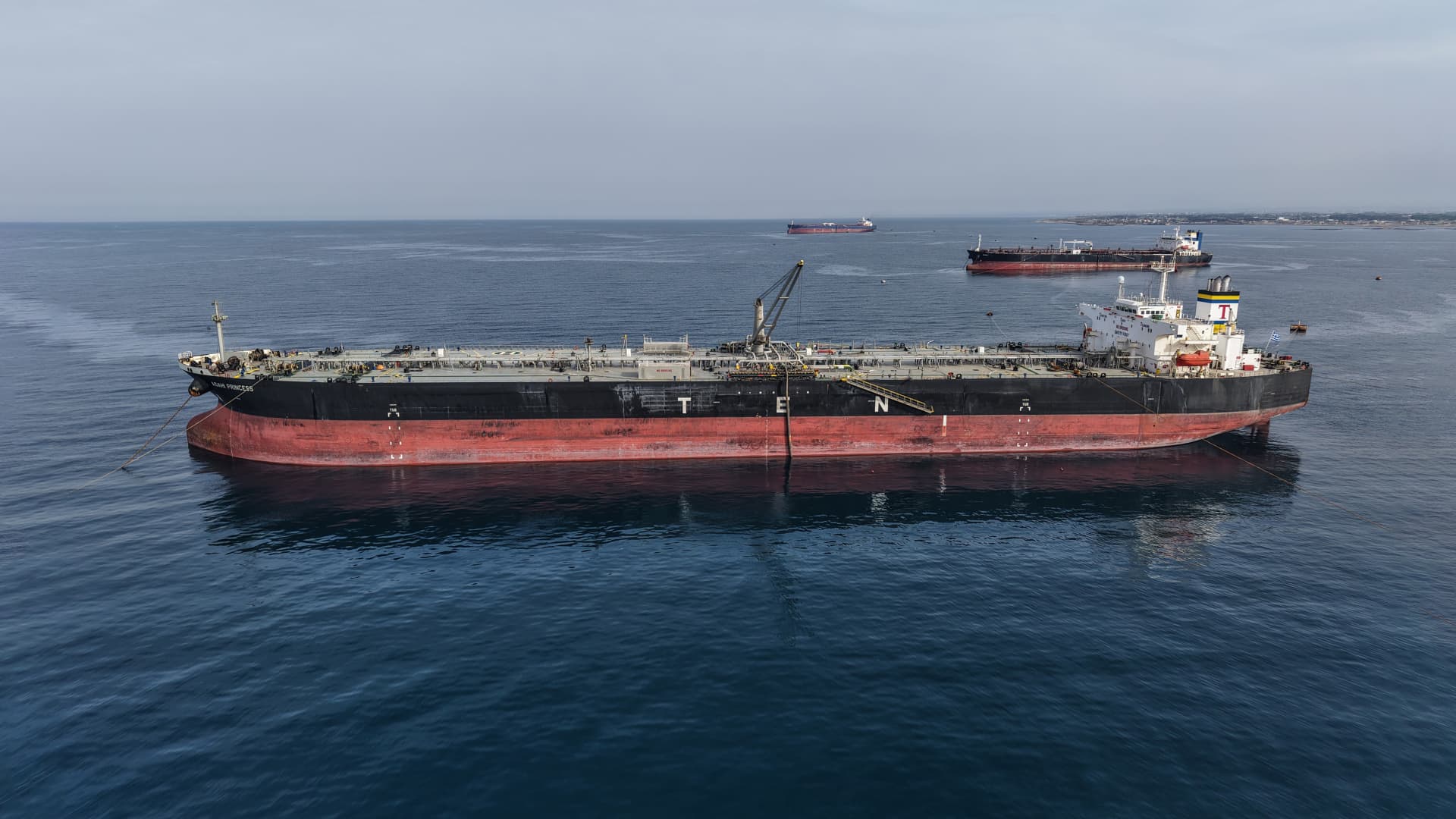
On Monday, crude oil prices saw a sharp decline, trading below $100 per barrel, after President Donald Trump reportedly opted against bombing Yemen for the time being and signaled openness to diplomacy with Iran. U.S. West Texas Intermediate futures decreased by 5.4% to $94.85 per barrel by 10:48 a.m. ET. Brent crude, the international benchmark, experienced a fall of 4.1% to $99.61 per barrel. Oil prices have declined for four consecutive sessions as the market retreats from the recent rally. Trump informed Fox News that he might be willing to meet with Iranian President Masoud Pezeshkian during this week’s UN General Assembly. Additionally, the U.S. president has chosen not to bomb Iran-allied Houthi militants at present, despite appeals from Saudi Arabia, according to Trump administration officials who spoke to The New York Times. In the meantime, crude exports from the Middle East have remained resilient following Saudi Arabia’s shutdown of its crucial East-West pipeline due to attacks, as stated by JPMorgan analysts in a note dated Sept. 18. Total oil flows averaged 17 million barrels per day over the past 10 days, which is 6 million bpd below the 2025 average, they reported. Exports through the Strait of Hormuz have steadily increased, with flows from the broader Middle East reaching approximately 80% of pre-war levels, according to Ryan McKay, director of commodity strategy at TD Securities. McKay stated in a Monday note that without a major escalation, Iran may have lost significant leverage in the Strait. However, the security situation in the region continues to be volatile and susceptible to sudden escalation. McKay noted that the oil market is struggling with multiple near-term drivers that are engaged in a tug of war for prices. The Houthis announced that they launched missiles at Riyadh, the Saudi capital, and targeted Aramco facilities at the Yanbu crude export terminal on the Red Sea over the weekend. At least two tankers have been attacked while transiting the Strait of Hormuz in the past day, based on incident reports from the United Kingdom Maritime Trade Operations Centre. Trump also told Fox that he is in a ‘deciding mode’ and that ‘very big things’ will happen soon concerning the Iran war. He described the options as ‘wiping Iran out, letting them rot economically, or making a deal,’ as reported by Fox. Meanwhile, Iran’s Revolutionary Guard warned that it will expand the ‘geography of the conflict’ if the U.S. launches renewed strikes against the Islamic Republic, according to the state media outlet Tasnim.
-
 Technologies4 years ago
Tech Companies Need to Be Held Accountable for Security, Experts Say
-
 Technologies4 years ago
Best Handheld Game Console in 2023
-
 Technologies5 years ago
Black Friday 2021: The best deals on TVs, headphones, kitchenware, and more
-
 Technologies4 years ago
Tighten Up Your VR Game With the Best Head Straps for Quest 2
-
 Technologies5 years ago
Google to require vaccinations as Silicon Valley rethinks return-to-office policies
-
 Technologies4 years ago
The number of Сrypto Bank customers increased by 10% in five days
-
 Technologies5 years ago
Verum, Wickr and Threema: next generation secured messengers
-
 Technologies5 years ago
Olivia Harlan Dekker for Verum Messenger