
Technologies
Donkey Kong Bananza Review: Like Mario And Zelda Smashed Together on Switch 2
DK is turning the Switch 2 into a must-have right out of the gate.
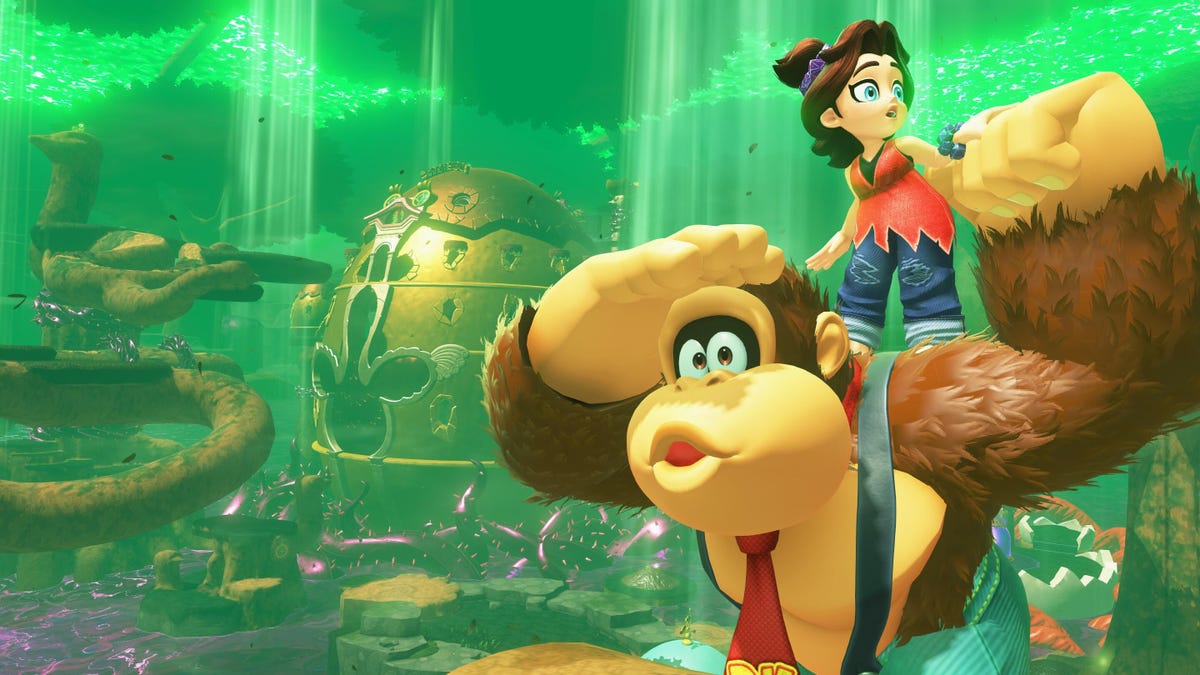
Summers are about big, fun, mind-numbing movies. Great escapes in the best of ways. I need that right now, and maybe you do too. I’m happy to say that Donkey Kong Bananza is here to whisk you off to multilevel worlds of satisfyingly smashing madness, to cheer you up and give you an excuse to punch the heck out of things. It’s a game my 12-year-old son has loved playing along with me, although I’ve had to find ways to wrestle the game back to play for myself.
I was wowed by Bananza during an early preview a few weeks ago, but after a few weeks of play at home, it’s even better. This is my favorite Switch game since… I have no idea when. Maybe since Super Mario Odyssey.
The catch is that you need the new Nintendo Switch 2 console to play it. Donkey Kong Bananza won’t work on the original Switch — or on any other gaming device. Of course, that’s the whole idea.
Nintendo needed home run games for its new Switch 2 console, and it hit a grand slam with the new Donkey Kong. I still haven’t finished the game, but I already know it’s the best reason to buy a Switch 2 yet.
Donkey Kong Bananza is available for $70 from Nintendo.com and other retailers. We’re also keeping track of Nintendo Switch 2 restocks if you’re still seeking a console.
Smashing story with co-op options
In a lot of ways, Bananza feels like Zelda and Mario met in the middle.
The story’s weird, but what Mario (or Nintendo) game isn’t? Donkey Kong’s world has been threatened by a sinister bunch of apes, after a large meteor knocks a mining company deep into the planet’s core. The adventure involves diving down into those sublevels — it’s Donkey Kong Hollow Earth, or Journey to the Center of the Kongiverse. The big difference in this game is that you can destroy just about anything, burrowing and tunneling throughout the game’s large 3D maps.
Technically, this isn’t a true collaborative co-op game, but there’s a mode where Pauline — a young girl who mysteriously fell from the sky and becomes Donkey Kong’s friend — can throw her voice, literally, at things to destroy them. A second player takes over as Pauline and aims and shoots words at enemies, and can absorb material powers from nearby rocks and objects. It’s more engaging than the hat-throwing co-op in Odyssey.
You can Game Share Bananza with a local Switch 2 or Switch 1 in co-op mode to play on two screens, or just play on one. For this review, I wasn’t allowed to Game Share to a second Switch.
The Mario mojo
Bananza is made by the Super Mario Odyssey team, and its 3D platforming feels like a Mario sequel. You can wander through large but still self-contained sublevels that remind me of the Kingdoms in Super Mario Odyssey. As you descend to new levels, the characters you meet and the level’s game mechanics shift up a bit. The levels aren’t as drastically different or quite as weirdly whimsical as the ones in Odyssey, but they feel a lot busier.
Jumping and punching are the main ways to control things, but there are plenty of other moves. There’s also a skill tree of abilities to unlock and power up, which uses points you accumulate by collecting giant, crystal bananas (just go with it). Donkey Kong can also buy new outfits, much like Mario Odyssey, but these outfits (or pieces of outfits) give extra perks, like cold resistance or faster energy recovery.
Each of the levels has goals and sub-bosses to fight, but also secret subchallenges to discover — some of them 3D, some 2D side-scrolling. There are other things to find, in every direction, on any potential hillside or surface, if you just pummel your fists and dig. The free-digging usually involves either finding more crystal bananas or various-sized fossils, which can be collected and redeemed for costumes. There’s gold to accumulate, too, which acts as general currency. But even as I rush to the next goal on any level, I’m equally tempted to just start digging around and see what’s going on somewhere else.
The Zelda zeitgeist
Here’s where Bananza really starts to feel like a lower-key Zelda game, especially when it comes to finding characters and following sub-missions. You can talk to lots of the strange characters in each sublevel, and some share important news. You’ll get directed to a particular goal, and on a 3D map, you can track your progress or warp to other spots. But as the game’s progress starts to wind up and down through sublevels, it begins to feel a lot more quest-y than any Mario game.
Zelda: Tears of the Kingdom kept coming to mind for me. That game’s vast overworld and underworld — and its various ways of finding passages between — is very much like Bananza. Also, like recent Zelda games, you can climb just about anywhere (or surf chunks of rock you rip out of the ground). The outfit perks feel Zelda-like, and so does the game’s sense of real-time, chaotic physics. Some puzzles involve understanding the environment and manipulating it, much like I did many times in Tears.
There’s also a sense of persistence in Bananza. You can create little home bases that let you rest up and change outfits. You’ll meander off and come back to locations. Mario Odyssey had some of this too, but Bananza feels more lived in.
Unlike recent Zeldas, though, this game’s challenges are relatively contained. You won’t have long lists of subquests or stories to lose track of. After spending months away from Zelda, and coming back not remembering what I was meant to do next, I appreciate Bananza’s simpler vibe.
A whole new yet familiar feel
Most importantly, Bananza just feels fresh. I get a little tired, sometimes, of diving back into new Zeldas and Marios that layer legends on top of legends. Donkey Kong’s universe is different from previous Kong games, especially the giant, wrinkled Elders who preside over subworlds like spirits, granting extra transformation powers. This is where the “Bananza” name comes in.
Accumulating enough gold triggers a chance to become a spirit animal. There’s a Bananza version of Kong that has stronger punches, an ostrich that can fly and drop egg bombs, and a zebra that can run fast over ice and water. (I haven’t unlocked any others yet.)
After a week-plus of playing, I’m still consistently surprised by what I’m encountering. But I’m also finding it familiar and comfortable, just like a big summer movie. And that’s what this is: Nintendo’s big blockbuster summer game, one of the best I can remember. Something I don’t want to end, and I’m glad to have more to explore.
I’m also surprised by other things: there’s no online mode, which I don’t mind but feels surprising after Super Mario Wonder’s clever additions. The game download size is only 8GB, shockingly small compared to Switch 2 launch games like Cyberpunk 2077, which were nearly 60GB. I was getting worried about how much storage space I’d have on the Switch 2 over time, but if more games are like Bananza, things will be OK.
My youngest son was instantly interested in Bananza, so much so that he didn’t want me playing without him. I had to, though, so I could carve enough time out to play. We’re going to backtrack and play again, and he’ll start playing, too. Will Bananza feel as replayable and infinitely fun as many of Nintendo’s best? I can’t entirely tell yet, but there’s already so much I’ve skipped over in so many levels, I don’t doubt it. There’s also a 3D art mode thrown in as a bonus where you use the Joy-Cons to sculpt and paint ape heads and bunches of bananas.
Donkey Kong makes it worth buying a Switch 2
Bananza is a great sign for where Nintendo’s heading with the Switch 2. It feels like a more evolved version of many Switch games of the past, but just like Mario Kart World, the other major Switch 2 exclusive, it takes the good ideas even further. Bananza is also an extension of Nintendo’s universe, including the Super Mario Movie, which has a Donkey Kong that looks like this one, and Super Nintendo World, which has a Donkey Kong land, too. And yes, Super Nintendo World’s Donkey Kong Power-Up bands even work like Amiibo with this game.
This is a game as vibrant and kinetic as Sony’s fantastic Astro Bot and similarly full of things to search for and do. In comparison, Super Mario Odyssey now seems surprisingly quiet and chill.
And yes, this game is worth getting a Switch 2 for — that was the idea all along. It’s nice to see that Nintendo really pulled it off, though. Combined with Mario Kart World, this is a heck of a one-two punch. I’d still love a proper 3D Mario sequel someday, but Bananza is practically that right now.
Technologies
Trump Maintains US‑Iran Negotiations Continue Amid Tehran’s Denials of Duplicity
President Trump insists that US‑Iran talks are ongoing despite Tehran’s denial of any negotiation plans, while warning that only a deal or total surrender will allow passage through the Strait of Hormuz. Conflicting statements from both sides have heightened uncertainty as the conflict enters its sixth month.
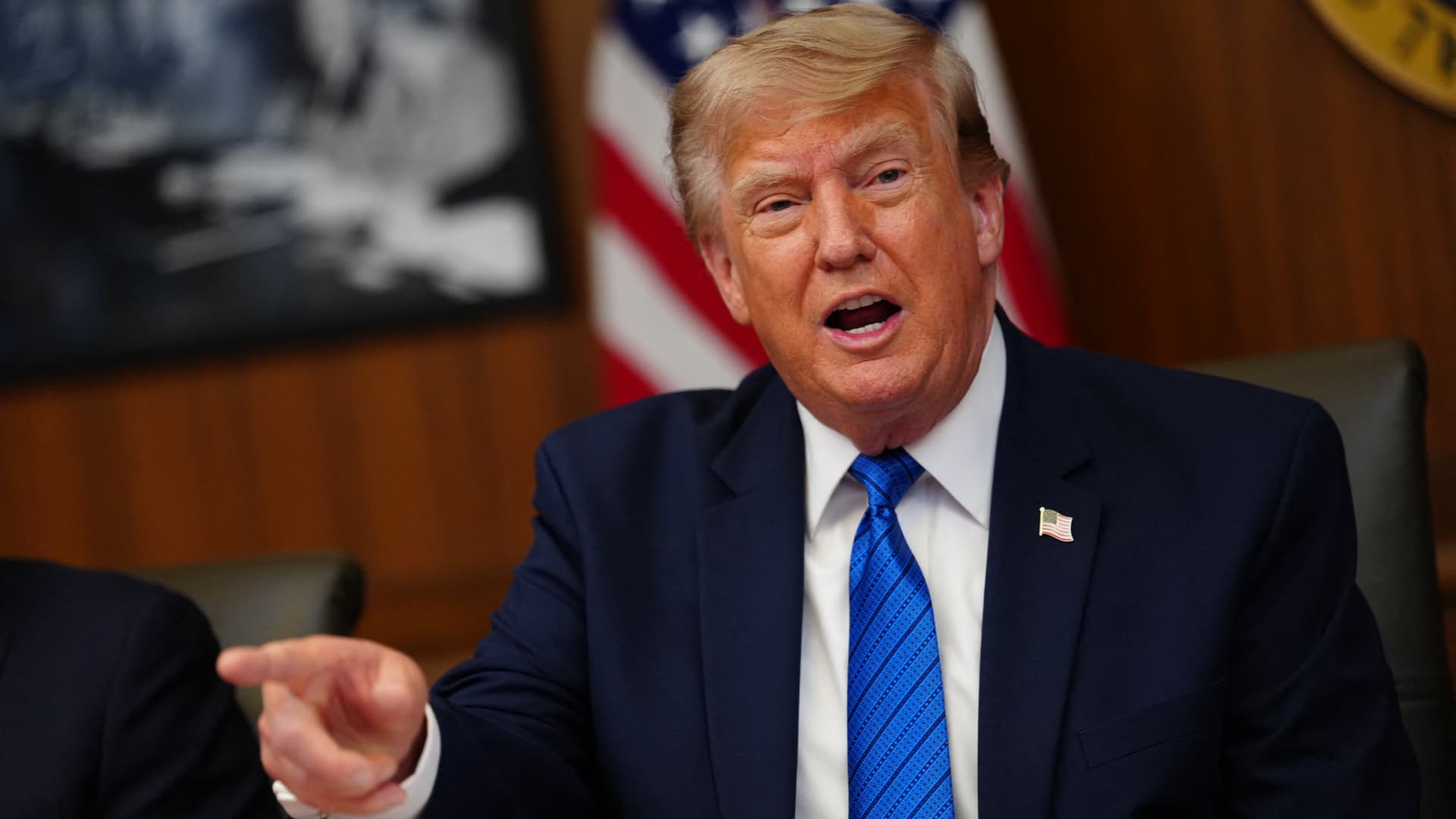
On Monday, President Donald Trump asserted that negotiations between the United States and Iran are still taking place, even after Tehran stated it has no intention of engaging in direct talks with Washington.
In a fiery Truth Social post, Trump labeled Iran’s leaders “unbelievably duplicitous,” claiming they are lying about ongoing peace talks “whether Iran wants to admit it or not.” He repeated his assertion that the United States completely controls the Strait of Hormuz, despite maritime traffic through the crucial route lingering at only a small fraction of pre‑conflict levels.
He wrote, “Nothing reaches Iran unless we allow it, and nothing will pass unless a deal—or total surrender—is achieved.”
Earlier that day, Iranian Foreign Ministry spokesperson Esmail Baghaei told reporters there is no imminent plan for U.S.–Iran negotiations, contradicting Trump’s earlier comment that talks would resume Monday afternoon. Baghaei added that Iran’s only current discussions are with Oman concerning the Strait of Hormuz.
The conflicting statements have heightened uncertainty over the peace‑talk process and the broader conflict, now in its sixth month.
Trump’s assertion about new negotiations came a day after he said on Truth Social that he had agreed to cancel a massive strike against Iran “subject to being able to rapidly make a DEAL.” He said in the same post that Iran and other Middle Eastern countries had asked him to hold off on that attack because “the perimeters of a deal has been agreed to.”
Trump has claimed dozens of times throughout the more‑than‑five‑month‑long war that a deal is at hand. No permanent deal has been signed, and a temporary ceasefire reached in June has fallen apart.
Trump has also repeatedly threatened to launch devastating strikes against Iran before backing off. After the latest example, oil prices on Monday fell and stocks surged.
BMI, a research unit of Fitch Solutions, said in a note Monday that a broader diplomatic understanding on reopening the Strait of Hormuz is still achievable this quarter, while raising the probability of its escalation scenario to 35% from 25%, citing mounting military, diplomatic and economic signs of rising U.S.-Iran tensions.
“Diplomatic progress is likely to be punctuated by periodic military flare-ups, while miscalculation by either side could trigger a renewed escalation,” BMI analysts wrote in a note. The firm said the key issue to watch is the future governance of the strait, as the Iran-Oman talks — potentially backed by Gulf states, China and the U.S. — point to efforts to build a post-conflict shipping framework.
Shipping risks persist even as diplomacy appears to be advancing. The United Kingdom Maritime Trade Operations Centre said it received a report of an incident 20 nautical miles (23 miles) northeast of Khasab, Oman — at the mouth of the strait — with a tanker’s master reporting an explosion in close proximity to the vessel at about 20:37 UTC Sunday (4:37 pm ET). The vessel and crew were safe and authorities are investigating, UKMTO said, advising ships to transit with caution.
The proposal Trump announced over the weekend calls for the U.S. and Iran to return to negotiations and continue ironing out some of the thorny issues that had derailed diplomatic efforts, according to The Associated Press, citing a regional official involved in the mediation efforts.
The official said the proposal also includes a reopening of the Hormuz Strait and halting attacks across the region, including by Iranian-backed militias in Iraq on the Arab Gulf countries and Jordan.
The U.S., for its part, will end its naval blockade on Iran and allow Tehran to export its oil, the official said, adding that no deal has been reached, although the mediation efforts remained underway.
Trump’s weekend reversal has lowered the temperature after days of escalating attacks across the Gulf. Kuwait said Saturday that Iranian forces launched a wave of drones within its airspace, with its military destroying multiple aircraft after Iran targeted critical infrastructure in the country’s north.
A parallel track with Muscat is also advancing. Iranian diplomats said Tehran was close to reaching a new arrangement with Oman to manage shipping through the Strait of Hormuz, a deal critical to preventing the war from escalating further, according to the Financial Times.
Iranian officials said negotiations over future management of the Hormuz Strait with Oman, which sits on the opposite shore of the waterway, are in their final stages. The agreed shipping route would be different from those used before, according to Iran’s Foreign Ministry spokesperson, Baghaei, adding that the new route was separate from the issue of the strait’s reopening or continued closure.
Technologies
Oil Prices Slide as Trump Halts Planned Iran Strike
Oil prices dropped after Trump cancelled a planned strike on Iran, with WTI down about 5% and Brent near 5% lower. He said the move followed requests from Tehran and regional allies for a pause while a deal shaping the Strait of Hormuz and Iran’s nuclear program is negotiated.
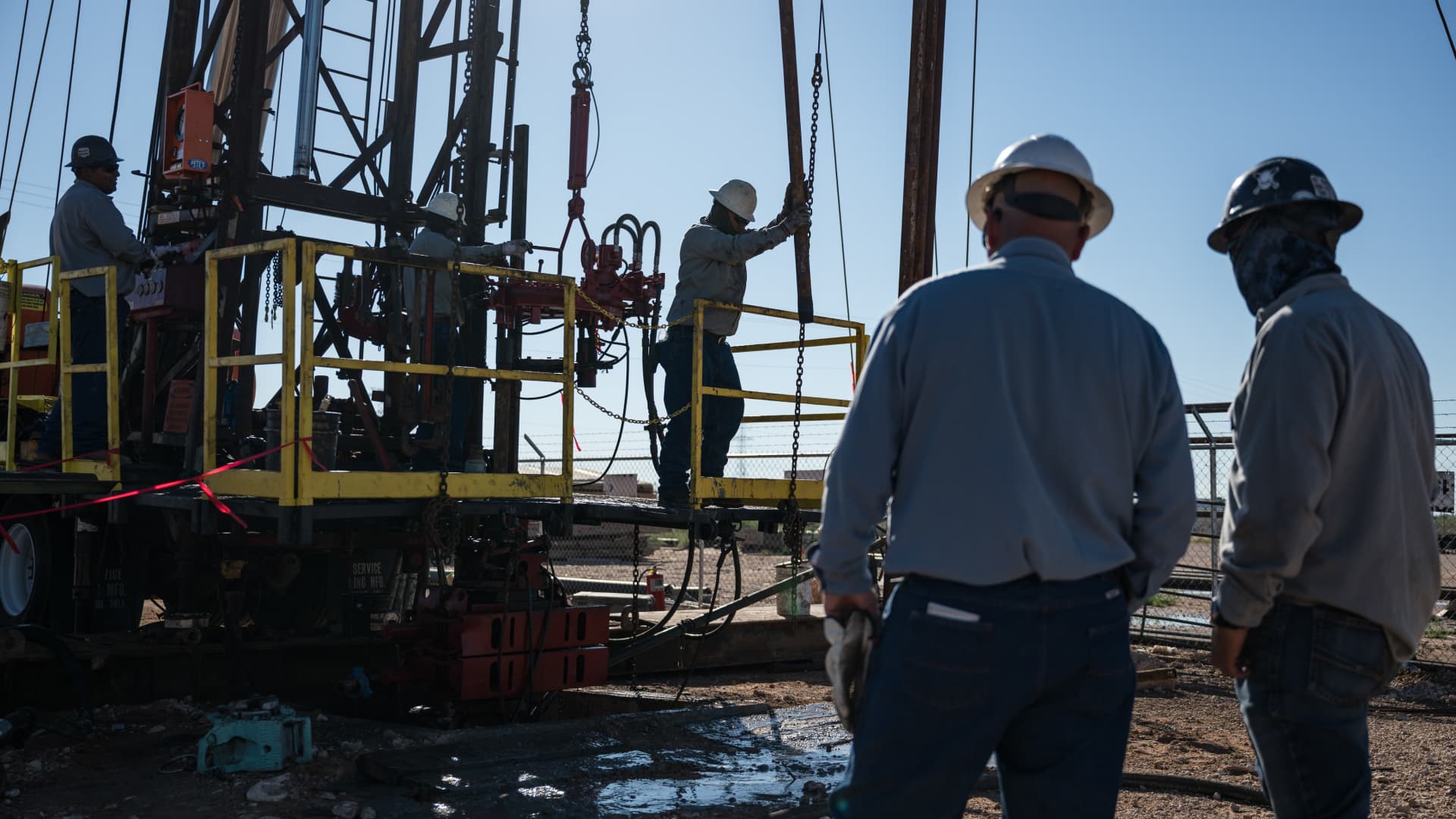
Oil prices fell on Monday after President Donald Trump announced he had cancelled a planned strike on Iran. WTI futures dropped roughly 5% to $80.34 a barrel, while Brent slipped about 4.7% to $83.77 a barrel.
Trump said early Sunday he called off the strike after Iran and several Middle Eastern nations asked him to hold off, noting that the outlines of a deal had been agreed upon. He added that the prospective accord would entail the immediate, full opening of the Strait of Hormuz and an end to Iran’s nuclear ambitions, according to his Truth Social post.
The president had been considering another round of strikes as diplomatic hopes waned since the conflict began on February 28. He said the U.S. and Iran would meet for talks on Monday, but Iran denied any scheduled negotiations with Washington, citing PressTV. Iran’s foreign‑ministry spokesperson Esmaeil Baghaei clarified that Tehran was only discussing shipping routes through the Strait of Hormuz with Oman. In a follow‑up Truth Social message, Trump insisted that, regardless of Iran’s acknowledgment, the United States is indeed discussing a solution to a long‑standing problem created by Iran.
Technologies
Oil Prices Drop as Trump Cancels Planned Attack on Iran
Oil prices fell sharply after President Trump announced the cancellation of a planned strike on Iran, citing a new deal that would open the Hormuz Strait and end Iran’s nuclear threat.
Oil prices fell sharply on Monday after President Donald Trump announced that he had called off a planned strike on Iran.
West Texas Intermediate futures, the U.S. benchmark, slipped roughly 5% to close at $80.34 per barrel, while Brent crude, the international benchmark, declined 4.7% to settle at $83.77 a barrel.
Trump made the announcement early Sunday, saying he had canceled the strike following requests from Tehran and other Middle Eastern countries.
In a Truth Social post, he wrote: “We have just been asked by Iran, and other Middle Eastern Countries, to hold off any attack in that the perimeters of a deal has been agreed to.”
The president indicated that the proposed agreement would include the immediate, complete, and total opening of the Hormuz Strait, as well as an end to Iran’s nuclear threat.
Trump had been weighing additional strikes amid diminishing prospects for a diplomatic resolution to the conflict that began on Feb. 28. He stated that the U.S. and Iran would hold negotiations on Monday.
Tehran denied that talks were planned with Washington, according to state news outlet PressTV.
Iran’s Foreign Ministry spokesman Esmaeil Baghaei said Tehran was only holding talks with Oman regarding the routes ships can use through the Strait of Hormuz.
In a subsequent Truth Social post, Trump added that whether “Iran wants to admit it or not, we are, in fact, talking of a solution to a problem that they have caused for decades.”
-
 Technologies4 years ago
Tech Companies Need to Be Held Accountable for Security, Experts Say
-
 Technologies3 years ago
Best Handheld Game Console in 2023
-
 Technologies5 years ago
Black Friday 2021: The best deals on TVs, headphones, kitchenware, and more
-
 Technologies3 years ago
Tighten Up Your VR Game With the Best Head Straps for Quest 2
-
 Technologies5 years ago
Google to require vaccinations as Silicon Valley rethinks return-to-office policies
-
 Technologies5 years ago
Verum, Wickr and Threema: next generation secured messengers
-
 Technologies4 years ago
The number of Сrypto Bank customers increased by 10% in five days
-
 Technologies5 years ago
Olivia Harlan Dekker for Verum Messenger