
Technologies
Best 3D-Printing Accessories: Make the Most of Your 3D Printer
From tiny 3D-printer scrapers to giant machines, we have everything you need to level up your 3D-printing experience.
With some hobbies, extra tools and accessories can make them even more fun. 3D-printing is one, and the addition of a good set of extras will make your 3D-printing time much easier. Often these accessories are simple — a set of snips for cutting filament or a bit of glue to help bed adhesion — but there are also new pieces of hardware that can significantly improve your print quality or give your 3D printer powers it never had before. More than that, though, good accessories can make even the best 3D printers run above and beyond their normal scope.
I’ve amassed a huge number of helpful accessories after nearly a decade of 3D printing and have researched many others. Amazon is a great resource for finding basic 3D-printing accessories, and California-based MatterHackers has everything you need for more advanced upgrades and gear.
Best accessories for beginners
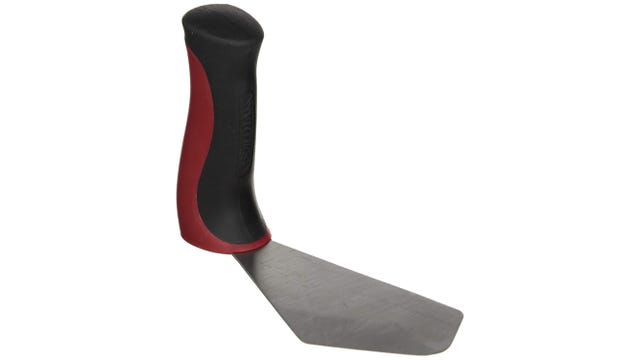
While every 3D printer comes with a paint scraper that you can use to remove models from the build plate, not all are created equal. Most 3D printer scrapers don’t allow you to get the blade low enough to lift a model without damaging the build surface. I use the Buildtak 3D printer scraper because it can swipe under the model without gouging down, making them pop right back up.
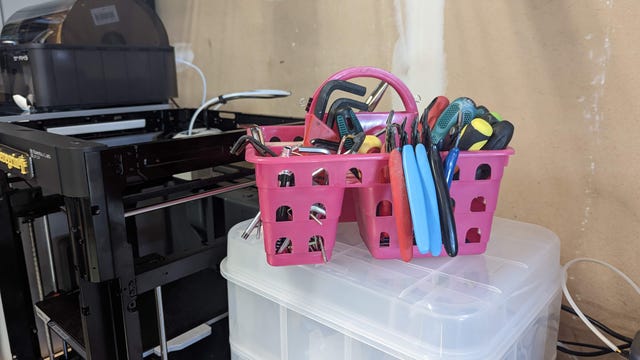
These little storage caddies are incredibly helpful for more than just storing shower products. The separate compartments make it easy to store all of your hex key wrenches, scrapers and filament cutters in a way that makes it easy to move them around your workspace with the handy handle. I have three of these in my workshop and I use them for 3D-printing tools, assorted glues and sandpaper. It makes life a lot easier.

A digital caliper is a helpful 3D-printing accessory, especially if you’re creating your own models. Most can measure details down to a thousandth of a millimeter, which lets you design with a high degree of accuracy.
Having a set of calipers also helps you measure your prints to make sure they’re printing in the correct size and shape.
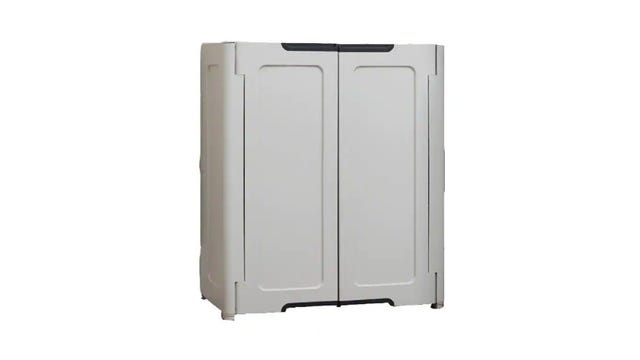
Having a central place to store your materials is important to keep them safe and dry. These cabinets from Home Depot are expandable and easy to build. They’re perfect for stacking your filament or resins safely, and if you add a small dehumidifier or desiccant packets, you can keep everything dry, too.
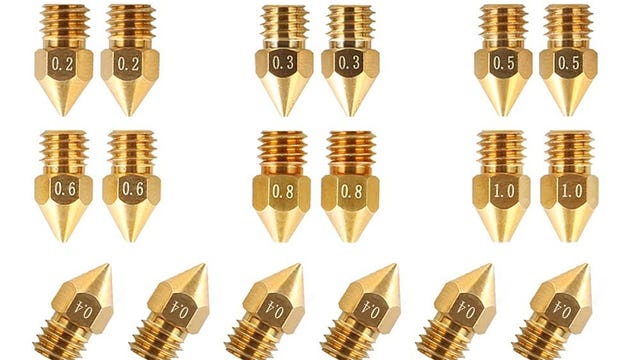
Most 3D printers come to you with a 0.4mm nozzle, which is fine for most uses. There are a lot of cool projects you can make with larger nozzles, though: Try making thick vases using a 0.8mm nozzle or detailed miniatures with a 0.2mm nozzle. Having a variety of nozzles will expand your horizons to no end.
These Mk8 nozzles are designed for the Creality Ender 3, but many printer companies either use the same Mk8 nozzles or variety packs of their own.

Magigoo is like a glue stick on steroids. It is specifically designed to hold 3D prints to the build plate while printing but comes loose easily when the bed is finally cooled. It’s incredibly satisfying to print models that are barely touching the build surface that act like they are held down with cement. A small bottle goes a long way too, so it’s worth the price.

Did you know that the 3D-printing community uses so much Aqua Net hairspray that Amazon’s “Frequently bought together” section shows filament and replacement printer beds? Aqua Net is used as a transition adhesive that both helps your filament stick to the build plate, and when it gets cold, makes it easier to remove. You have to be careful not to spray it onto any moving parts, but if you take off your removable build plate and spray it gently and evenly you will see better results immediately.

Models often have sharp edges when they first come off of the build plate, especially if you’ve used a brim to anchor them down. A deburring tool like this smoothes those edges with a simple swipe across the corner. It takes a little getting used to, but if you’re making something for people to handle, a deburring tool is a must.

If you live here in the US, you may well have a set of hex wrenches that you use for most things. However, 3D printers are made using metric measurements, and not inches, so they will either be loose and damage the nut or not fit at all. A good set of metric hex wrenches are affordable and make 3D printing easier.

Desiccant is a much needed tool in the fight against moisture. Even the best 3D-printing filament can be degraded by absorbing too much moisture, and if you live in a damp climate, storing your filament in a cool dry place with a desiccant pouch is a great way to keep it usable for longer. These pouches are a little pricier than some, but they can be recharged by heating them up so you can use them again and again.

Like the hairspray, glue sticks help hold a print down, while also adding a barrier between the print and the plate. Some materials stick a little too well to a build plate and can tear a mat or even crack a glass plate. Glue sticks are water soluble too, so it’s easy to wash off with soap and water.
Accessories for intermediate and advanced users

If you’re hoping to print a filament like ABS, you’ll need your 3D printer to be very hot with no breezes. If you live in a particularly cold climate an enclosure is a helpful way to warm up the area around your 3D printer without having to pay a fortune on heating bills. The Wham Bam HotBox has two sizes, so even if you have a bigger machine you can reap the benefits of a warmer build area.

One of the best upgrades to be released in recent years is the Revo rapid change system from E3D. Available for a huge number of 3D printers, this hotend replacement adds the ability to quickly swap out your nozzles without the use of wrenches and pliers. You can remove the filament, let the nozzle cool down and twist it off with your fingers.
Being able to easily swap nozzles opens up new printing techniques with larger nozzles for strength and smaller ones for detail. It is a must-do upgrade for any compatible machine.
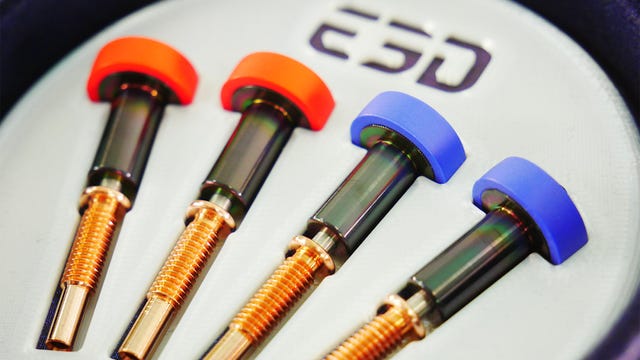
Nozzles are consumable in 3D printing and you can expect to use them up fairly frequently. If you print materials with abrasive materials such as carbon fiber, wood or even glow in the dark, your nozzle could be destroyed in just one eight-hour session. The ObXidian nozzle is specially hardened to reduce wear and tear and keep your nozzle printing for much longer.
It’s also a part of the Revo system I just mentioned, so can be easily swapped out for different sizes or other nozzles easily.

The Palette 3 is a multimaterial unit that lets your standard 3D printer print multiple colors or types of filament. It opens up a huge amount of variety in your 3D printing and can help you create a truly unique model. You can even take an existing digital model and “paint” colors onto it so that when it prints, it is a multitude of — well up to eight — colors.
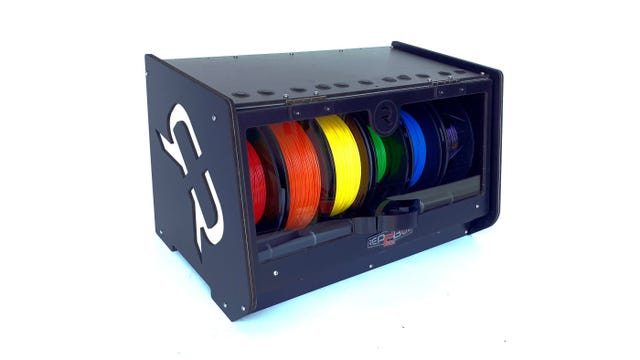
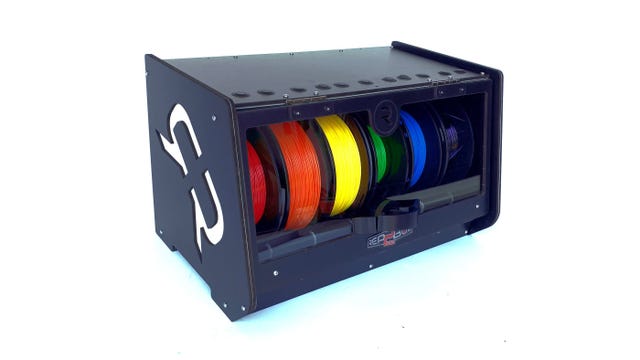
The RepBox is a community favorite for a number of reasons. The creator is an awesome advocate for 3D printing and the box itself is a fantastic design that can be mounted or sat on a workbench. The RepBox holds six 1kg rolls of filament and comes with several dehydrating cases to keep them fresh. The filament is fed out of the box directly into a Palette system or multiple printers without ever touching the moist air.
3D printer accessories FAQ
What’s the best 3D-printing tool for beginners?
When you first start 3D printing, the most important thing to get right is your first layer. It takes time to get the build plate level enough to print consistently, so any tool that can help with that is important. Any of the bed adhesives in this list will help your first layer lay down better, and make it easier to remove the print once it is done.
Glue sticks and hairspray may seem like low-tech solutions for a high-tech machine, but they work and they’re cheap.
How does nozzle size affect 3D printing?
Nozzle size determines how much material you can push through at any given time. The standard nozzle has a 0.4mm hole in it, but there are nozzles available from 0.2mm to 0.8mm and beyond. A good rule of thumb is that if you want a stronger print, go big, and if you want detail, go small.
I would say that there is a move to replace 0.4mm nozzles with 0.6mm nozzles as a standard, as you lose very little detail in the change, but the models print quicker and tend to be stronger too.
More on 3D printing
Technologies
Inside India newsletter: The world’s largest real-time payments system will no longer be free for all
India’s digital payment system, which processes more than 1 million transactions every two minutes for free now, will start charging fees to merchants.

This content is blocked because you are not allowing cookies.
To view this content, click on Cookie Preferences here or at the bottom of the page to allow all cookies.
Hello, this is Priyanka Salve, writing to you from Mumbai.
Welcome to the latest edition of “Inside India” — your one-stop destination for stories and developments from the world’s fastest-growing large economy.
The world’s largest payments system by volumes, India’s unified payment interface, popularized cashless transactions in the country by offering free services for all. That’s about to change. Starting next month, merchants will need to pay a fee of 0.4% for accepting payments higher than $20.
While the government has defended the move, confident it will not hurt India’s march towards a cashless economy, critics disagree.
Any thoughts on today’s newsletter? Share them with the team.
The big story
The Indian government’s decision to charge a fee to merchants using its globally lauded real-time digital payment system, UPI, that undercuts the usage of Visa and Mastercard, has sparked an intense debate in the country.
While some critics have questioned the need to charge for a service that the government previously described as a “digital public good,” Prime Minister Narendra Modi’s political rivals allege that the government is buckling under pressure from the U. S.
On Tuesday, the National Payments Corporation of India announced that a 0.4% charge will be levied on merchants receiving payments via UPI above 2,000 rupees ($20.84). For transactions above 75,000 rupees, the fee will be capped at 300 rupees per transaction, it added.
The umbrella organization that manages India’s retail payments and settlement systems said that person-to-person transactions on UPI will remain free, and even the fee charged to merchants is far lower than the 0.9% on debit card transactions and 1.5%-2.5% on credit cards.
Bouquets and brickbats
Fintech companies have welcomed the move to charge a fee to merchants.
“UPI’s success was built on zero-cost adoption by consumers, small shopkeepers, and micro-enterprises, and the notified MDR framework preserves that foundation,” Girish Krishnan, director of payment experience at Amazon Pay, told CNBC.
Head of Meta’s WhatsApp Pay Kunal Shah called it a “great move forward.” Another popular payment app, Paytm, said that the measure will generate additional revenue from merchant business.
In 2020, the Indian government cut the merchant discount rate, the fee incurred by merchants for accepting payments via UPI, to zero to promote digital transactions in the country. Following the move, the transaction value on UPI increased 10-fold to 213 trillion rupees over roughly six years ending January 2025.
“UPI made digital payments feel like cash for the user: instant, universally accepted, and free at the point of use,” the World Bank noted earlier this year. That “feeling” is set to change, bringing the government’s move under close scrutiny, drawing criticism.
Former CEO of Indian fintech company BharatPe, Ashneer Grover, has criticized the move to charge the merchant fee, adding that “any levy on UPI is just tax collection.”
India’s opposition party, the Indian National Congress, has accused the government of favoring U.S. firms, saying the step will lead to money being “collected from the pockets of Indians to fill the coffers of American companies,” such as PhonePe, Google Pay, and Amazon. Some commentators have said the move will encourage people to return to transacting in cash.
Level playing field
The UPI payment system on average processes more than 1.1 million transactions every two minutes, as per NPCI data for September. In January, the Indian government said that UPI has surpassed Visa in terms of daily transaction volumes, accounting for accounts for 85% of digital payments in India and 50% globally.
Those figures caught the attention of the U.S. Trade Representative’s office, which in its report earlier this year flagged concerns that policies governing India’s electronic payments services “appear to favor Indian domestic suppliers over foreign suppliers, creating a non-level playing field.”
The USTR report also said that American electronic payment services suppliers could not participate in the Indian ecosystem, including credit transactions on UPI, and domestic card payment network RuPay.
Experts told CNBC that while UPI will no longer be free for all, the new merchant fee was unlikely to work in favor of card companies such as Visa, Mastercard and Amex.
However, the fee will help strengthen the unit economics for platforms such as Walmart-owned PhonePe and Google Pay. The two payment apps together account for nearly 85% of UPI transactions by value and 81% by volume, as per a report by Indian brokerage Ambit Capital.
“A 0.4% rate severely undercuts credit cards at 1.5% to 2% and debit cards,” Neil Shah, vice president of research at Counterpoint Research, told CNBC, adding that it gives merchants “every economic incentive to favor UPI rails.”
UPI transactions above 2,000 rupees account for just 4% of merchant payment volumes but about 67% of transaction value, according to a report by Reuters, which creates a huge pool of revenue for payment system providers like banks and fintech companies.
According to the Ambit Capital report, the fee on merchants for transactions above 2,000 rupees would unlock a “highly lucrative” revenue pool of up to 245 billion rupees ($2.5 billion) for the sector.
“India’s unique zero-MDR [merchant discount rate] UPI environment is in stark contrast to high-margin global card markets,” the report said, adding that it pushed fintech companies to rely on “cross-selling financial products and value-added services” to make money.
Need to know
India’s retail inflation hits 4.8% in August, rises for 10th straight month
India’s headline rose to 4.82% in August from 4.45% in July, adding to pressure on the country’s central bank to raise key benchmark rates. Inflation has been on the rise for 10 straight months in the world’s fastest-growing major economy.
Indian Prime Minister Modi says border peace is key to India-China ties
Indian Prime Minister Narendra Modi on Saturday said that “peace and tranquility” in the border areas is essential for developing bilateral relations with its neighbor China. Ties between the two countries, which had deteriorated sharply following a deadly border skirmish in 2020, have been thawing for more than a year.
Coming up
Sept. 17: National Stock Exchange IPO opens.
Sept. 23: HSBC Flash PMI for September.
Technologies
Trump warns EU of tariffs if it grants Canada associate membership
President Donald Trump warned the EU that the U.S. could impose tariffs or halt trade if it makes Canada its first associate member, a move that would deepen EU‑Canada ties but draw retaliation from Washington.
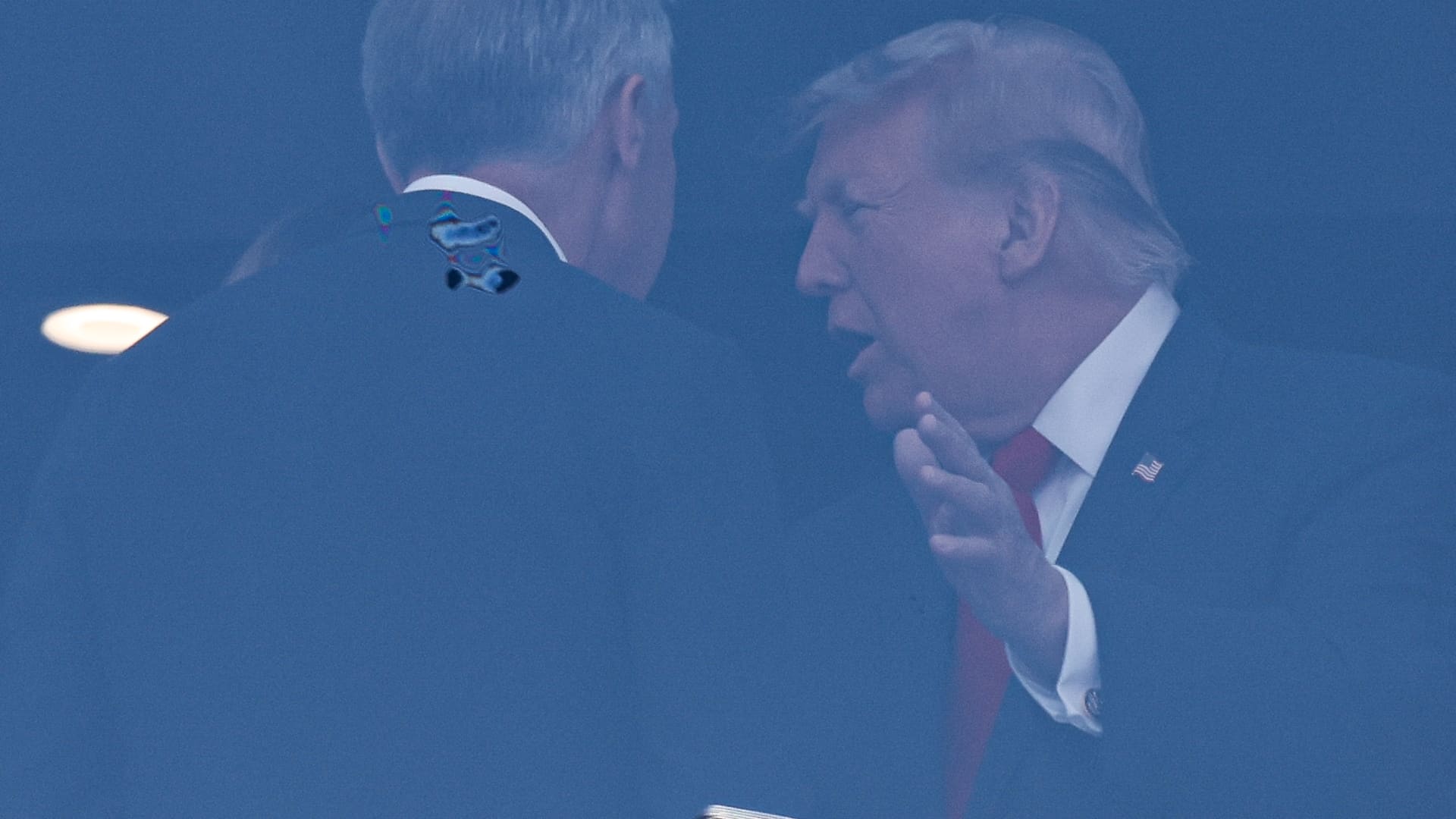
President Donald Trump warned on Wednesday that the United States could impose tariffs on the European Union or stop trading with the bloc altogether if it moves forward with plans to make Canada its first associate member.
Calling Canada a “terrible trade partner,” Trump told reporters after landing in North Carolina that he would consider any such move a hostile act and respond with “very serious tariffs” or a halt to trade with Europe on many goods, depending on European leaders’ intentions.
Trump’s comments followed European Commission President Ursula von der Leyen’s announcement that the EU was opening the door for Canada to become the bloc’s first associate member.
Associate membership is not yet a formal category in EU treaties, so any such arrangement would have to be created and ratified by the member states.
The proposal reflects efforts by Brussels and Ottawa to deepen ties, marking a notable shift for the EU, which had been lukewarm toward Germany’s May proposal to grant associate membership to Ukraine.
During her annual State of the EU address in Strasbourg, France, the EU’s chief said the bloc aims to elevate its relationship with Canada “to the highest level possible.”
Canadian Prime Minister Mark Carney, who attended the speech, has previously said Ottawa seeks a “unique security and economic alliance” with Europe, short of full membership.
Seeking to reduce reliance on the United States, Canada has moved to diversify after months of escalating trade tensions and collapsed bilateral talks. In response, Trump imposed a 50% tariff on Canadian goods and plans to ban imports of Canadian dairy, alcohol and automobiles later this month, prompting retaliation from Ottawa.
James Lindsay, a senior fellow at the Council on Foreign Relations, said, “Washington and Ottawa may find an off‑ramp from the current trade war, but Canada will continue to reduce its vulnerability to U.S. economic pressure.”
Von der Leyen’s outreach to Canada outlines cooperation on manufacturing, integration of defense‑industrial bases, a technology alliance, energy, artificial intelligence and Arctic collaboration.
Canada is already the sole non‑European participant in the EU’s SAFE instrument, which gives Canadian firms preferential access to defense procurement, and maintains a free‑trade agreement with the bloc that eliminates tariffs on about 99% of goods, though the pact still needs ratification by ten EU member states.
Any new U.S. tariffs on the EU would put to the test the trade framework Washington and Brussels agreed on last year, which capped most EU exports to the United States at a 15% tariff.
Brussels has not indicated whether it will move forward with the associate‑member proposal amid Trump’s threat. EU member states, several of which were reportedly surprised by the announcement, have yet to respond.
Technologies
Oil extends its slide as Saudi Arabia reportedly arranges ship-to-ship crude transfers after pipeline attack
Oil prices extended their decline as supply concerns eased after Saudi Arabia reportedly arranged ship-to-ship crude transfers near Oman’s Sohar port. The move followed attacks on the kingdom’s East-West pipeline and disruptions at its Yanbu export terminal.

Oil prices continued falling on Thursday as concerns about supply disruptions eased following attacks on Saudi Arabia’s key East-West pipeline.
Brent futures, the international benchmark, traded slightly lower at $105.81 per barrel, while U.S. crude oil was down 0.22% at $102.14 a barrel.
Saudi Arabia is making additional crude cargoes available to Asian refiners through ship-to-ship transfers near Oman’s Sohar port, helping cushion the impact on global supplies from attacks on the kingdom’s East-West pipeline to the Red Sea, Reuters reported, citing sources familiar with the matter.
U.S. Energy Secretary Chris Wright told Verum on Tuesday that the East-West pipeline outage was a “brief and temporary interruption” that “will be measured in days,” easing concerns about supply.
Earlier this week, crude loadings at Saudi Arabia’s Red Sea export terminal in Yanbu were halted, and Riyadh canceled some shipments to European customers.
Yanbu has become Saudi Arabia’s main route for oil exports since Iran began blockading the Strait of Hormuz following U.S. and Israeli attacks on the country in late February.
Peter Massabni, head of business development at XS.com, said in a note late Wednesday that Saudi Arabia’s efforts to find alternative export routes after the disruption at Yanbu had reassured markets that some of the lost crude supply could return.
However, he warned that the outlook remains highly dependent on developments in the Middle East.
Massabni said a renewed escalation that causes deeper disruptions to regional oil and gas production and exports would keep inflation risks elevated and put further upward pressure on bond yields.
“This uncertainty about possible escalation paths in the region, along with crude, gasoline and diesel prices remaining at high and critical levels, could fuel pessimism about the US Federal Reserve’s monetary policy path,” he wrote.







