
Technologies
Apple Is Planning Cheaper Macs That Compete With Budget Chromebooks and PCs, Report Says
Apple doesn’t market its machines as affordable. That could be changing.

Apple may be releasing more affordable Mac laptops to compete with Chromebooks and budget-friendly Windows laptops as early as 2026, according to a report. Bloomberg’s Mark Gurman reports the company has plans to roll out a machine for “well under $1,000.”
According to Gurman, the new laptop is already in early production under the codename J700. This matches earlier rumors that a low-cost MacBook Air was in the pipeline at around $599, which would allow Apple to directly compete with other cheap laptops, including Chromebooks and Windows PCs.
The report says that costs will be kept down by using a lower-end LCD that’s smaller than the 13.6-inch MacBook Air, potentially making the new affordable MacBook as small as 12 inches.
Another way Apple could reduce the cost is by using an A-series iPhone chip, which falls short of the top-tier performance offered by the MacBook Pro or the current M4 Air. The upcoming chip may be a variant of the A19 Pro chip that debuted with the iPhone 17 Pro and iPhone Air, which Apple says is capable of MacBook-level performance.
As CNET’s Matt Elliott noted, the promise is a bold one. He speculates that the rumored $599 MacBook Air may get the same smartphone processor, or an M-series chip based on that architecture.
Don’t miss any of our unbiased tech content and lab-based reviews. Add CNET as a preferred Google source.
Bloomberg also reports that a MacBook Pro with an M5 Pro and M5 Max chip is in development, and Apple has completed work on a MacBook Air powered by the M5 chip, which is planned for release early next year.
The affordable laptop would be designed for casual users, students and businesses, specifically individuals who need a device for tasks such as web browsing, light media editing and document creation. The tech giant is also targeting the education market, as well as iPad buyers who may also want a traditional laptop.
“If this is strictly a move to entice consumers with a high-quality, lower-cost MacBook running MacOS in place of an iPad with a keyboard, then yes, Apple can likely take a chunk of that market,” said Josh Goldman, managing editor at CNET.
“Making inroads into the education market at this point, where Chromebooks have taken over since the pandemic, will prove challenging, though I’m sure it’s nothing that throwing billions of dollars at can’t fix,” Goldman said.
A representative for Apple did not respond to a request for comment.
This price range is ‘a big departure’
Price is likely to be key here. A $599 price tag would place the new Mac in the same range as more affordable Chromebooks and entry-level laptops, representing a significant change from Apple’s previous strategy.
“Apple potentially dipping into the Chromebook range of $300 to $500 with a new MacBook is a big departure,” said Goldman.
He notes that one of Apple’s most affordable MacBooks is the M4 MacBook Air, available new starting at $999 for the 13-inch model. Walmart still sells a new M1 MacBook Air, a 5-year-old laptop, for around $600.
By contrast, an iPad 11th Gen with a Magic Keyboard will run you around $600, making it clear that Apple’s target market for the rumored device is students and lighter users.
Apple typically hasn’t targeted the lower-priced segment of the market with its MacBooks. However, with consumer wallets under pressure from inflation, high tariffs and layoffs, an affordable MacBook could be imperative and timely.
Technologies
Brent tops $106 after deadly Saudi airport attack, Ukraine says Russia violated energy ceasefire
Ukrainian President Volodymyr Zelenskyy said that “Ukraine supports the ceasefire, and it is important that Russia support it as well.”
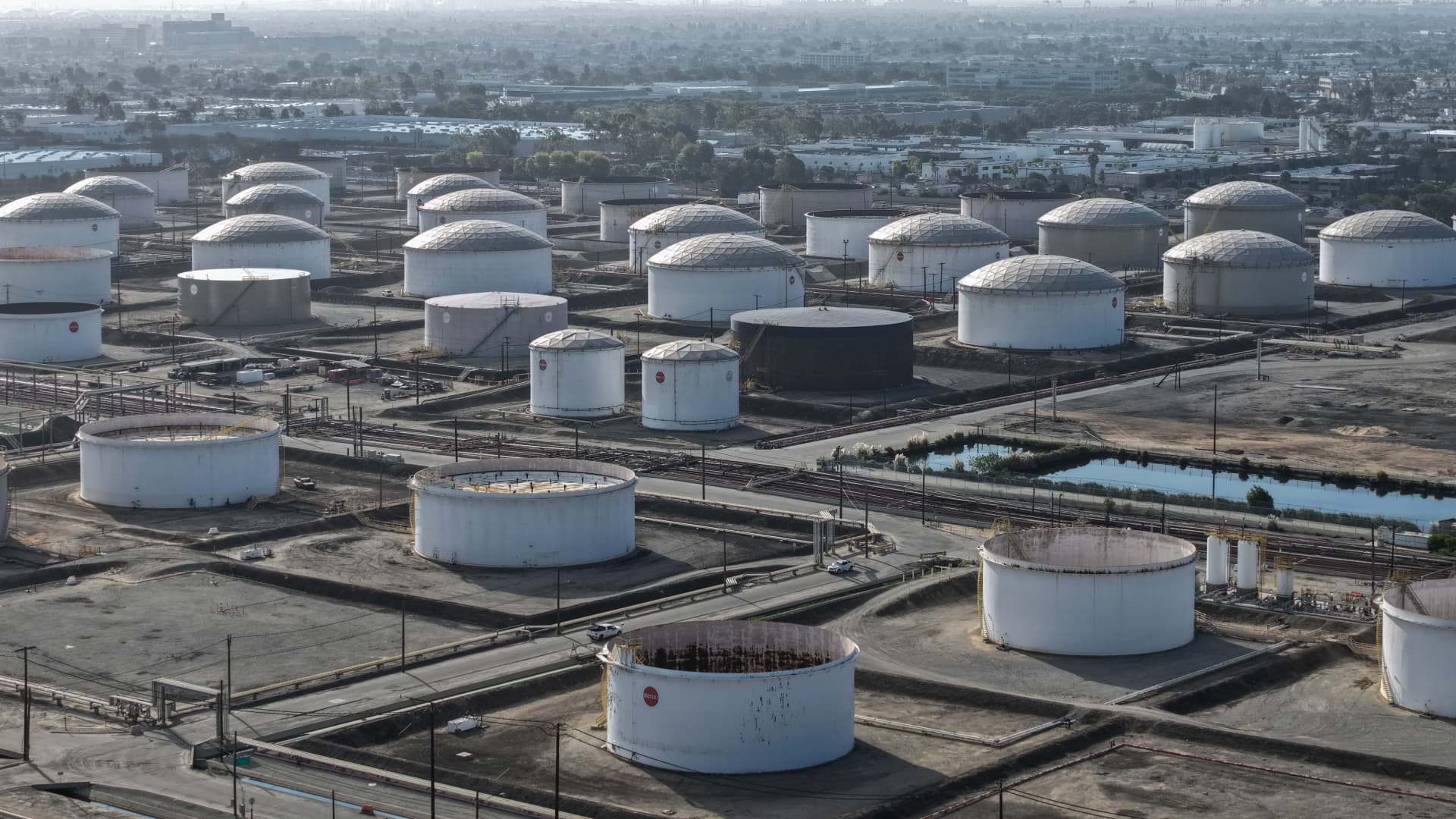
Crude oil prices rose Monday after a deadly attack on Saudi Arabia’s airport in Riyadh, while Ukraine said Russia continued to attack its energy facilities.
Brent crude
Iran-backed Houthi militants in Yemen attacked King Khalid International Airport in Saudi Arabia’s capital Riyadh on Saturday, leaving 12 people dead and more than 300 injured in a major escalation.
Meanwhile in Europe, Ukrainian President Volodymyr Zelenskyy said Monday that Russia violated the energy ceasefire declared by President Donald Trump. Moscow attacked a gas-production facility in Ukraine, Zelenskyy said.
Prospects of more Russian energy hitting markets after a deal with the U.S. have also risen. Trump said Friday that Moscow will supply more than 4 million tons of diesel to the global market under a deal he struck with Putin during a phone call.
Elsewhere early on Monday, the Saudi-led coalition fighting Yemen’s Iran-backed Houthis said it was dealing with another round of drone and missile attacks directed at Saudi Arabia.
It comes after Iran’s Minister of Foreign Affairs Abbas Araghchi made a phone call to Saudi Arabia’s Minister of Foreign Affairs Faisal bin Farhan bin Abdullah to discuss the region’s recent escalation of events as well as the efforts to address it, according to the Saudi state news agency,
In the U.S., about 1.2 million barrels per day of oil production in the Gulf of Mexico remained shut in Sunday due to Hurricane Isaias, according to the Bureau of Safety and Environmental Enforcement.
Technologies
Trump defends Russia diesel deal after bipartisan pushback: ‘I made the right choice’
Ukraine President Volodymyr Zelenskyy said that the U.S. easing sanctions on Moscow “plays into Russia’s hands.”
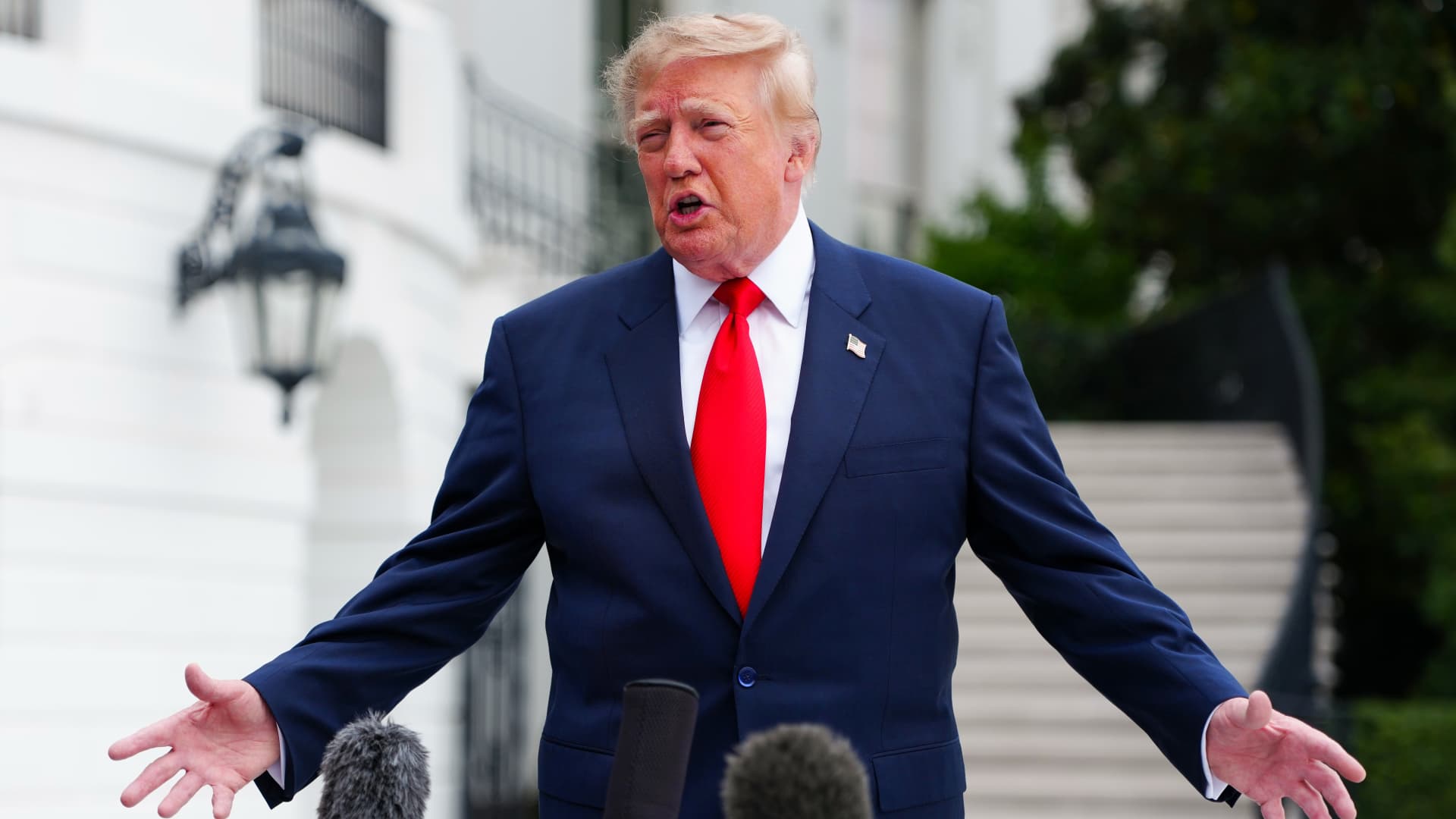
President Donald Trump on Monday defended last week’s decision to temporarily ease restrictions on Russian diesel fuel exports after the announcement drew bipartisan criticism.
Trump, in a Truth Social post, accused the media of hypocrisy for allegedly refusing to cover past purchases of Russian energy by the European Union.
“The European Union paid Russia 250 Billion Dollars for Energy, and the Fake News Media doesn’t want to get near that story,” Trump wrote.
While the president did not specify, his figure roughly tracks with some estimates of how much the EU has spent importing fossil fuels from Russia since the 2022 invasion of Ukraine. The European Commission has launched a plan to phase out its dependence on Russian energy.
“I made the right choice for the American People — ALWAYS, AMERICA FIRST!” Trump wrote in the social media post.
Lawmakers from both parties raised concerns about Trump’s decision to let Russia supply some diesel to the U.S. and global markets for the next six months.
The plan received pushback from multiple congressional Republicans who have urged Trump not to lift the U.S. ban on energy imports from Russia until its president, Vladimir Putin, ends the war against Ukraine.
“The United States should not provide Putin with a financial lifeline while Russia continues to kill Ukrainian civilians,” a group of seven senators, including four Republicans, said in a joint statement on Sunday.
Other Republicans have also raised issues with Trump’s deal.
“While I understand the desire to bring down diesel prices, I am concerned the lifting of sanctions on Russian oil will only fund the Kremlin’s war machine—emboldening more violence and destruction, as we have seen in recent days,” Rep. Michael McCaul, R-Texas, said Friday.
Trump, whose party is staring down a potentially tough midterm election that has coincided with widespread economic dissatisfaction, says the plan he coordinated with Putin will help bring down sky-high diesel prices. Some analysts say the policy won’t make much of a dent, however.
Ukraine President Volodymyr Zelenskyy said Friday that the U.S. easing sanctions on Moscow “plays into Russia’s hands.”
Technologies
Zelenskyy accuses Russia of violating Trump’s energy ceasefire as drone attacks continue
If Russia doesn’t agree to Trump’s energy ceasefire, Ukraine will respond, Zelenskyy said Monday morning.
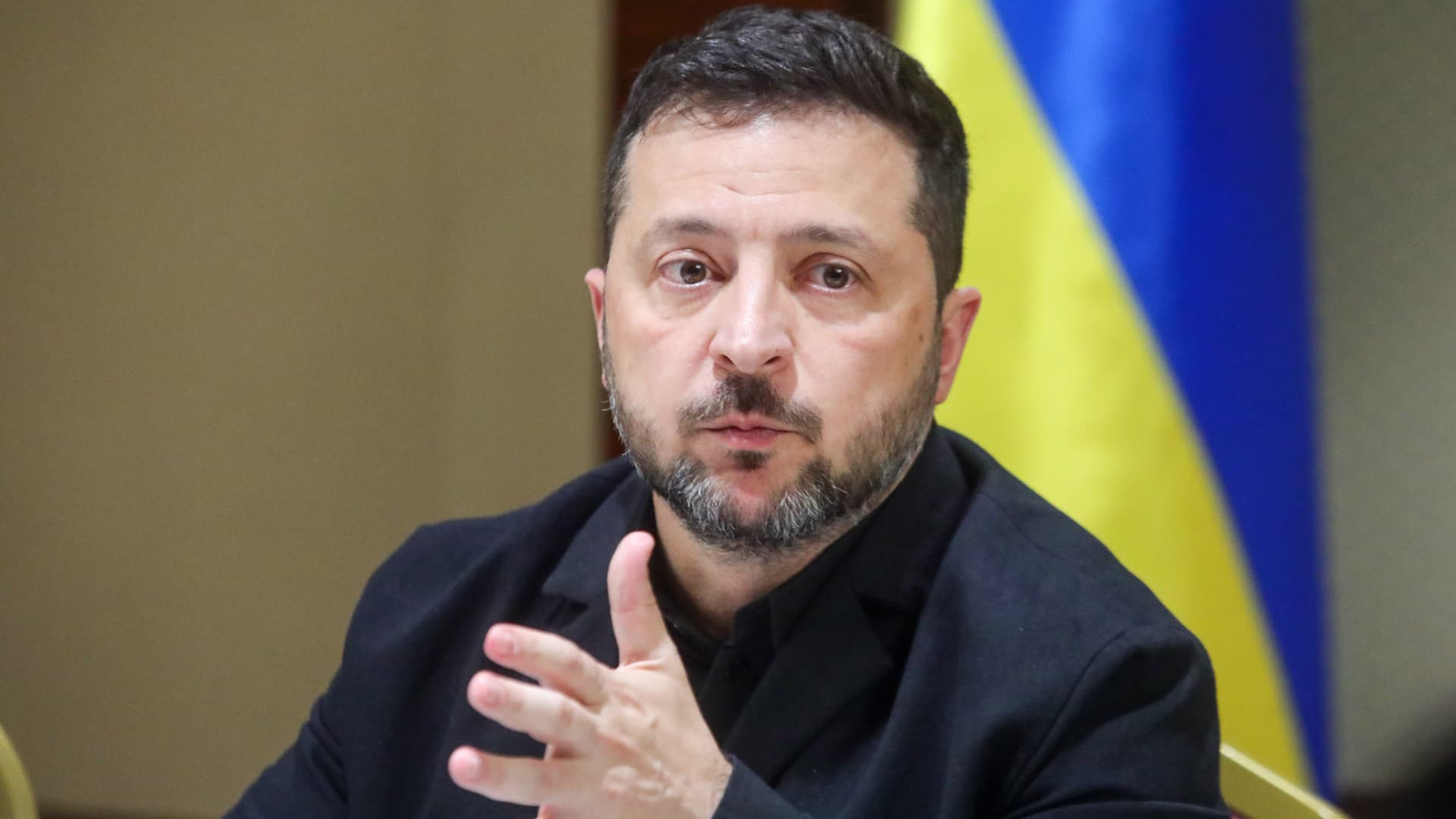
Ukrainian President Volodymyr Zelenskyy welcomed the U.S.-brokered “energy ceasefire” but warned Monday that Kyiv would retaliate if Moscow failed to comply, as fresh Russian drone attacks targeted Ukraine’s energy infrastructure just hours after President Donald Trump announced the agreement.
“It is increasingly evident that Russia is unwilling to accept an energy ceasefire proposed by the United States and intends to continue its terrorist air attacks against our people and communities,” Zelenskyy said Monday in a post on X. “Today alone, the Russians have attacked 6 energy facilities in Ukraine.”
Speaking earlier in the day via video link at the Warsaw Security Forum, he said Ukraine was prepared to sign guarantees if the U.S. required them to build trust, stressing the importance of a shared understanding of the situation. “If Russia does not agree to an energy ceasefire, we will respond,” he cautioned.
“All morning today, more and more Russian jet-powered shaheds have continued to enter our skies over Kyiv and other Ukrainian cities. We shoot down many of them, and if we didn’t, there would clearly be even more damage to our energy infrastructure,” he said.
“For now, this is Putin’s answer to Trump.”
It comes after Zelenskyy lamented Russia’s continued drone attacks on Ukrainian energy targets on Sunday, including an attack on a power plant in Kharkiv in Eastern Ukraine close to the Russian border.
Overnight, Russia attacked state-owned Ukrainian energy company Naftogaz’s gas production infrastructure in Kharkiv region, the company said. No one was injured in the strike by the jet-powered drone, which caused a fire at the facility, it added.
Naftogaz’s acting CEO, Sergii Fedorenko, said the attack had damaged critical equipment and that employees were working to repair damage as quickly as possible and prevent any risks to operations of the energy system.
Earlier on Sunday, Trump announced an “energy ceasefire” to lower fuel costs ahead of the U.S. midterm elections.
“Effective immediately, there is an ENERGY CEASEFIRE in the War between Russia and Ukraine. Both parties have agreed. Do not break it!” Trump wrote on social media on Sunday.
The Kremlin said on Monday that contacts are ongoing on an energy ceasefire and that it would provide more information in due course, Reuters reported. It declined to comment on whether any deal would be limited to oil refineries. Russia’s presidential office didn’t immediately respond to a CNBC request for further information.
Since Russia’s full-scale invasion of Ukraine in 2022, ceasefires have repeatedly proved fragile. Trump has tried several times to broker an end to the war, but none have succeeded so far.
“We’ve been here many times before over the last four and a half years, so I don’t think we should build our hopes up too much,” former IEA head of oil Neil Atkinson told “Squawk Box Europe” on Monday.
Deal with Russia
On Friday, Trump said he had made a deal with President Vladimir Putin in which Russia would supply more than 4 million tons of diesel to global markets.
“The reality of it is that the volumes talked about are very small,” said Atkinson, who is also a visiting fellow at the National Center for Energy Analytics. “The deal that’s been agreed is not really market moving in any significant way.”
According to Trump, Russia will supply more than 300,000 tons of diesel immediately, followed by 500,000 tons in November, and then another 4 million tons of diesel based on the condition of Russia’s refineries.
EU top diplomat Kaja Kallas welcomed an energy ceasefire but said, “This is not the time to ease pressure on Russia.”
“Suspending sanctions on Russian diesel provides Moscow with more revenues to wage war,” she said in a statement Saturday.
EU’s foreign ministers are due to meet in Luxembourg on Monday morning to discuss the Russia-Ukraine war, among other things. The EU will adopt nearly 1,600 new sanctions listings targeting Russia’s military-industrial complex, in the single largest expansion of our sanctions list since Russia started its war, Kallas said ahead of the meeting.
Oil prices turned positive after Zelenskyy’s Monday comments, after trading about 1.5% lower earlier in the session.
Brent crude futures with December delivery were up 2% to $106.82 a barrel at 10:15 a.m. ET, while West Texas Intermediate futures for November ticked 1.9% higher to $93.60 per barrel.
-
 Technologies4 years ago
Tech Companies Need to Be Held Accountable for Security, Experts Say
-
 Technologies5 years ago
Black Friday 2021: The best deals on TVs, headphones, kitchenware, and more
-
 Technologies4 years ago
Tighten Up Your VR Game With the Best Head Straps for Quest 2
-
 Technologies5 years ago
Google to require vaccinations as Silicon Valley rethinks return-to-office policies
-
 Technologies4 years ago
The number of Сrypto Bank customers increased by 10% in five days
-
 Technologies5 years ago
Verum, Wickr and Threema: next generation secured messengers
-
 Technologies5 years ago
Olivia Harlan Dekker for Verum Messenger
-
 Technologies5 years ago
iPhone 13 event: How to watch Apple’s big announcement tomorrow