
Technologies
Orionids Meteor Shower: How and When to Watch This Cosmic Light Show
Bright, fast meteors will light up the sky in October.
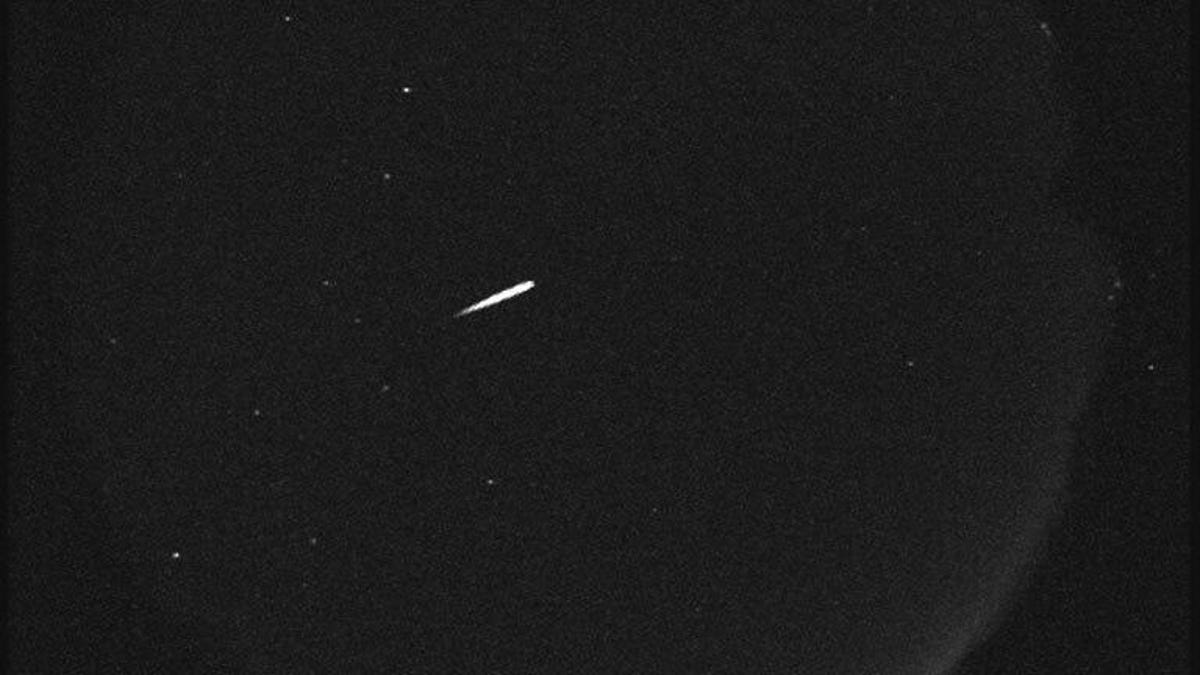
We’ve again been gifted with the cosmic light show of the Orionids meteor shower, which started last week. Its peak will hit during a new moon later this month, making it easier to see. You’ll be able to spot meteors from now through the beginning of November.
When Earth moves through the long, debris-strewn tails of a large comet, the debris falls to Earth in the form of meteors, which we refer to as meteor showers. The Orionids meteor shower occurs courtesy of the 1P/Halley comet, more commonly known as Halley’s Comet. Another meteor shower Earth experiences thanks to Halley’s comet is the Eta Aquariids, which occurs in April and May.
The Orionids is also one of the longest-running major meteor showers, lasting more than a month and a half (most meteor showers last weeks or up to a month).
Don’t miss any of CNET’s unbiased tech content and lab-based reviews. Add us as a preferred Google source on Chrome.
When is the best time to view Orionids?
The Orionids is predicted to peak on the evening of Oct. 20 and the morning of Oct. 21. The meteor shower is noted for its bright, fast-traveling meteors, which leave trails in the sky that can last several seconds and up to a couple of minutes.
In terms of time, most experts agree that the show should be at its best between midnight and dawn. Your best bet is to get out there before the sun rises.
Where should I look to see the Orionids?
The Orionids are named after the Orion constellation. All meteor showers are named for the constellation from which they appear to originate. This point, referred to as the radiant, is where you’ll want to look at the sky.
In the US, the constellation will rise above the eastern horizon at around midnight local time. Over the course of the evening, it’ll streak over to the southern section of the sky, where it’ll eventually be drowned out by the sun at sunrise. If you’re able to spot Jupiter, which will also be visible that night, Orion is right next to it. If you’re having trouble, websites like Stellarium have free sky maps that you can use for reference.
Tips for viewing Orionids
According to NASA, the Orionids meteor shower is expected to shoot off 10 to 20 meteors per hour in perfect conditions. Your best bet at getting a good show is to achieve perfect conditions as much as you can.
Your enemy is light pollution, so you’ll want to get as far away from the city and suburbs as possible. Since Orion is in the eastern sky, leaving town by traveling east will ensure you don’t have light pollution in your view while trying to watch. You may see a couple of streaks of light in the suburbs and city, but it’s far less likely.
October’s spectacular supermoon will be long gone by the third week of this month, so you won’t have to contend with what will be one of the brightest moons of the year. The only other variable is weather, which you don’t have any control over.
Once you escape light pollution, simply sit yourself down and watch the eastern and southern skies. The meteors will be visible without the use of magnification.
Orionids brought friends
While the Orionids is the biggest meteor shower of the month, two others will also make an appearance.
The Draconids meteor shower, one of the shortest meteor showers at just four days, is happening between Oct. 6 and Oct. 10, with the peak occurring on Oct. 8. The Northern Taurids start on Oct. 13 and run through the beginning of December. You’ll have to wait until November to see the peak for that one.
Technologies
The Fourth Episode of the VERUM AI Mini-Series Is Out
The Fourth Episode of the VERUM AI Mini-Series Is Out

Verum Messenger has released the fourth episode of its AI mini-series SHADOWS, created using Verum AI. The new episode, titled “No Borders,” continues the story of a team trying to stay out of the OMEGA corporation’s sight.
Following the events of the previous episodes, the team moves between cities and countries while OMEGA continues its search. The new episode puts particular emphasis on Verum Messenger’s capabilities that allow users to conceal their location.
“No Borders” is another chapter in a story about privacy, freedom of communication, and technologies that erase borders between people.
The VERUM AI mini-series consists of seven episodes, released gradually across Verum Messenger’s social media channels.
Episode 4 is now available. Stay tuned for the next chapter.
Technologies
Verum Messenger Introduces Built-In Verum Chess
Verum Messenger Introduces Built-In Verum Chess
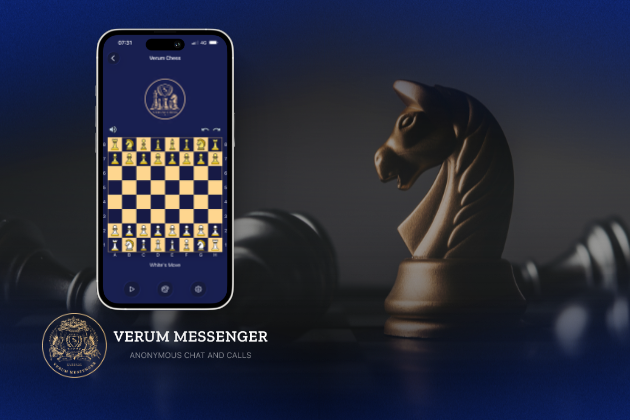
Verum Messenger has released a new update for iOS, iPadOS, and macOS, adding another feature to its growing ecosystem — Verum Chess. Users can now play chess directly inside the messenger without switching between different applications.
The new feature allows users to start a game in just a few taps while reinforcing Verum’s vision of a unified digital environment where communication and everyday services come together in a single platform.
Verum Messenger continues to evolve into a multifunctional ecosystem that combines secure chats and calls, AI tools, a built-in VPN, anonymous email, eSIM, financial services, cryptocurrency features, and offline communication. With the introduction of Verum Chess, the platform now also offers a new way for users to interact and spend time together without leaving the app.
The update is now available for iPhone, iPad, and Mac on the App Store.
Technologies
Episode 3 of the VERUM AI Mini-Series Is Now Available
Episode 3 of the VERUM AI Mini-Series Is Now Available

Verum Messenger has released the third episode of its AI mini-series, SHADOWS, created using Verum AI.
The new episode, titled «Ghost Money,» continues the story of the conflict between a team of heroes and the Omega corporation, which seeks to take control of digital communications. This time, the focus shifts to anonymous payments and financial freedom, revealing how privacy can extend beyond messaging.
Like the previous episodes, the new release not only advances the storyline but also showcases the capabilities of the Verum ecosystem, highlighting technologies designed for secure communication and digital privacy.
The mini-series consists of seven episodes, released gradually across Verum Messenger’s social media channels.
Episode 3 is now available. Stay tuned for the next chapter.
-
 Technologies4 года ago
Tech Companies Need to Be Held Accountable for Security, Experts Say
-
 Technologies3 года ago
Best Handheld Game Console in 2023
-
 Technologies5 лет ago
Black Friday 2021: The best deals on TVs, headphones, kitchenware, and more
-
 Technologies3 года ago
Tighten Up Your VR Game With the Best Head Straps for Quest 2
-
 Technologies5 лет ago
Google to require vaccinations as Silicon Valley rethinks return-to-office policies
-
 Technologies5 лет ago
Verum, Wickr and Threema: next generation secured messengers
-
 Technologies4 года ago
The number of Сrypto Bank customers increased by 10% in five days
-
 Technologies5 лет ago
Olivia Harlan Dekker for Verum Messenger