
Technologies
Best iPhone 12 Cases for 2023
There’s no shortage of choice when it comes to the best iPhone 12 cases.

As advanced as phone screens are, it’s still frustratingly easy to break them. Sure, it’s a couple years old now, but you likely paid a lot of money for your iPhone 12, and that investment needs quality protection. Dents, scratches and cracks are your phone’s enemies. A great phone case is essential to keep them at bay. Here’s a list of the best iPhone 12 cases available today.
Read more: Best MagSafe and Magnetic iPhone Accessories for 2023
The iPhone 12 has what Apple describes as “an array of magnets” embedded around a charging coil that can pull up to 15 watts of power. That’s twice as powerful as wireless charging on previous iPhones, but on par with the power that many Android phones can draw from standard Qi wireless chargers. So, the best iPhone 12 case will support the 15-watt charging speeds while protecting your phone.
To get the 15-watt charging speeds, you’ll need an Apple MagSafe charger or an Apple-approved MagSafe charger from a third-party accessory-maker, but your phone will still charge at up to 7.5 watts with standard wireless chargers that support that speed or higher. Most of the cases on this list are compatible with wireless charging and some are Apple-certified MagSafe cases with integrated magnets. Also, check out our list of best MagSafe and magnetic wireless chargers for the iPhone 12.
Read more: Best Eco-Friendly iPhone 12 and 12 Pro Cases
David Carnoy/CNET
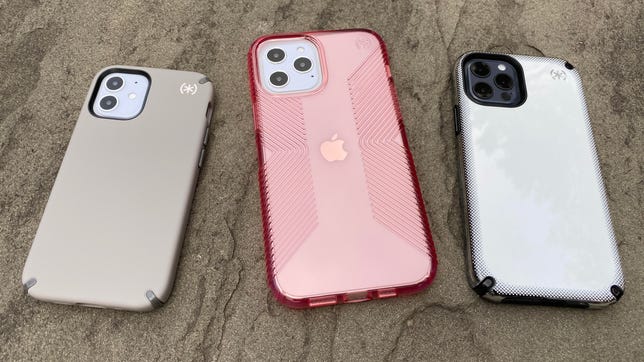
I have expensive tastes, and I personally like Speck’s Presidio2 Armor Cloud (white model on the right in the photo). But the Presidio2 Pro (gray case in the photo) is also excellent. If you want an apple clear case, Speck has several models for iPhone 12 case to choose from, including the Presidio Perfect-Clear with Grips.
All the new models have very good drop protection (13 to 16 feet, depending on the model) as well as Speck’s Microban antimicrobial protection.
Amazon
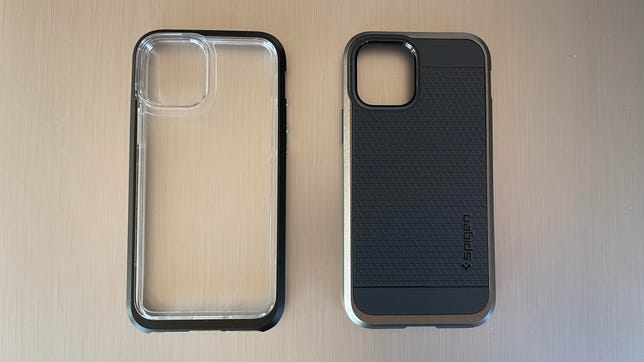
If you’re looking for a cheap clear case for your iPhone 12, Spigen’s Ultra Hybrid is a good value at around $12 to $15, depending on the trim color and which version of iPhone 12 you have (yes, there are a few color options).
No drop rating is listed for the case, but Spigen’s transparent cases feel like they offer reasonable protection. If you want a tough case with stronger protection, the Spigen Tough Armor case is an option for $17, but I personally prefer Spigen’s Ultra and Neo Hybrid cases. Note that a lot of these cheaper clear cases have a habit of turning yellow and degrading over time (and becoming less translucent), but they’re cheap enough that you probably won’t mind shelling out for a replacement case for your Apple iPhone if that happens.
David Carnoy/CNET
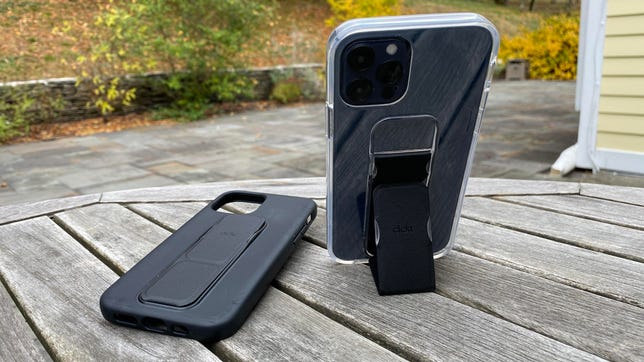
I’ve recently become a fan of Clckr’s cases, which feature a built-in stand and grip strap that folds out and clicks into place on the back of your phone. Clckr sells just the stand-strap accessory to stick on the back of your phone or on a case, but the case with the integrated stand accessory is better and comes in a few different styles, including clear (I like the Saffiano blue but it’s currently only available in black).
The cases aren’t rugged but they’re protective enough, with raised edges to protect the screen. The one I’ve used with my iPhone 11 Pro for the last four months has held up well.
With the stand clicked in place, you can use your device hands-free in either portrait or landscape mode. Note that you can wirelessly charge your phone with this case on, though you have to be more careful about placing it in the right spot on a wireless charging pad for it to work. The new models have antimicrobial protection.
David Carnoy/CNET
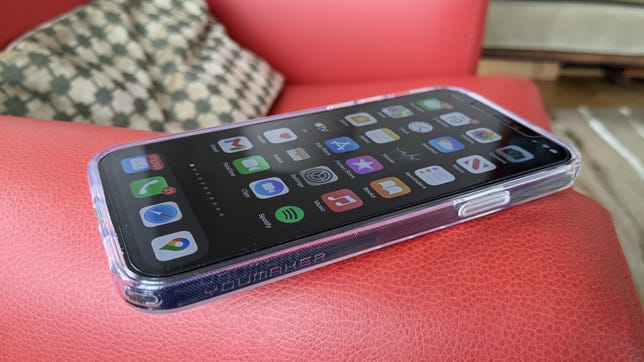
There are plenty of inexpensive clear cases and iPhone 12 accessories on Amazon. It seems to be a perfectly good clear case that offers decent protection with raised edges. Whether it will yellow over time, I can’t tell you, but it seems like a good value.

David Carnoy/CNET
I only recently learned that Cyrill is a sister brand to Spigen and its cases are arguably slightly better, although they cost a few bucks more. We’re linking to the Leather Brick case, pictured here in tan and navy (it’s faux “vegan” leather), but the Silicone case (pictured in light blue) and transparent Cecile cases are also good. The Silicone case is basically a knockoff of the Apple Silicone case without the MagSafe feature.
Amazon
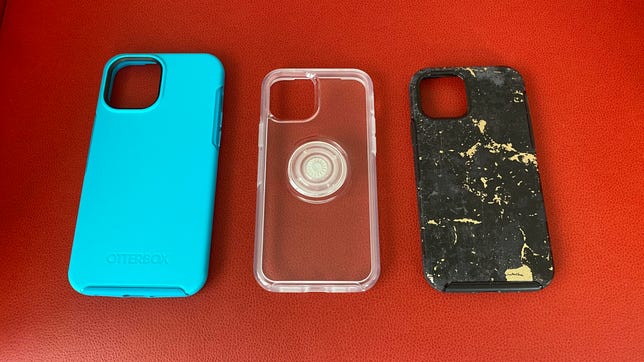
OtterBox’s super protective Defender series case is available for all the iPhone 12 models with Magsafe compatibility, but most people want something less bulky. The Symmetry series is slim with beveled edges, making it a good mix of sleek and protective. A raised bumper helps act as a screen protector.
Multiple color options are available, including clear, and I’m digging the clear version of the Symmetry Plus Pop case, pictured in the middle, which integrates a PopSockets PopGrip and is wireless charging-compatible, which is important.
OtterBox’s Commuter case offers slightly more protection and is also pretty slim and has grips on the back.

David Carnoy/CNET
Brooklyn, New York-based Casely makes “cute and protective” cases that have a variety of graphic artists behind their designs. The cases usually cost $25, but the online store often offers discounts.

David Carnoy/CNET
MagSafe accessories will still stick to your phone if you have a standard thin case, but not nearly as well as if you use one of Apple’s MagSafe cases, which have their own set of embedded magnets that line up with the magnets in your phone.
Apple’s Clear Case with MagSafe is nice because it allows you to show off your phone’s colored finish and the embedded markings tell you exactly where to attach the MagSafe charger for optimal charging speeds (you apparently need Apple’s 20-watt USB-C charging to get the maximum 15-watt wireless charging speeds). The only issue with the clear case is that it leaves the bottom of your phone exposed.
If that bothers you, the Silicone case (pictured, left) with MagSafe is the better option. It works the same way as the Clear case does, with an embedded magnet ring, you just can’t see it. The Silicone case is available in eight color options.
MagSafe stuff isn’t cheap, but it is fun to play with magnetic objects and they do offer some conveniences. The bottom line is that if you do want to try MagSafe accessories and to protect your phone with a case, you’re best off with one directly from the Apple Store, or another MagSafe-certified case.

David Carnoy/CNET
KerfCase has been making handmade wooden cases for a while, and its new Plywood case is not only more durable but less expensive than some, starting at $50, with 6-foot drop protection and a limited lifetime repair warranty. I like it better than other wood cases I’ve tried. It’s also worth noting that Apple’s MagSafe charger will stick to the back of it, and KerfCase sells matching charging docks for the Apple MagSafe charger (yes, it’s an accessory for an accessory).
David Carnoy/CNET
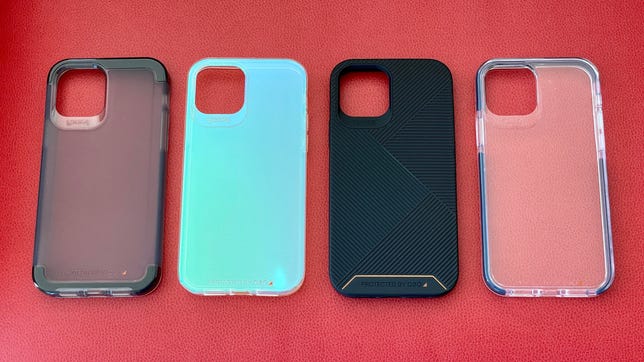
British case-maker Gear4, now owned by Zagg, makes cases that are right up there with OtterBox and Speck, all of them lined with the company’s D3O shock-absorbing material and featuring beveled edges to protect your phone. My favorites include (from left to right) the Wembley Palette, Crystal Palace Iridescent, Battersea and Piccadilly. All of them are rated for 13-foot drop protection and the Battersea is rated for 16 feet.
David Carnoy/CNET
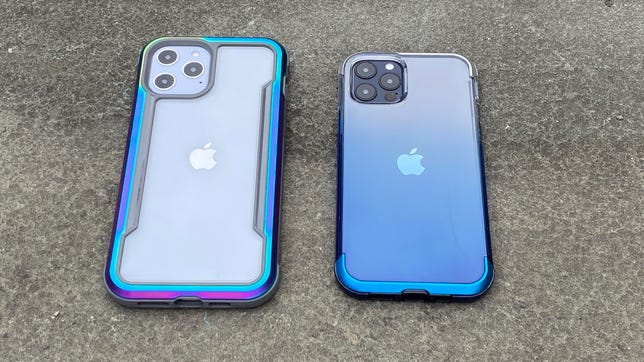
X-Doria’s Raptic cases come in a variety of styles and cost a little less than competing premium cases from Speck and OtterBox. The thicker Raptic Shield (pictured on left) costs $30 while the Raptic Air (pictured on right), which I personally like, is $30. The Shield has 10-foot drop protection while the Air is rated for 13-foot drop protection. Both have an antimicrobial treatment.
David Carnoy/CNET
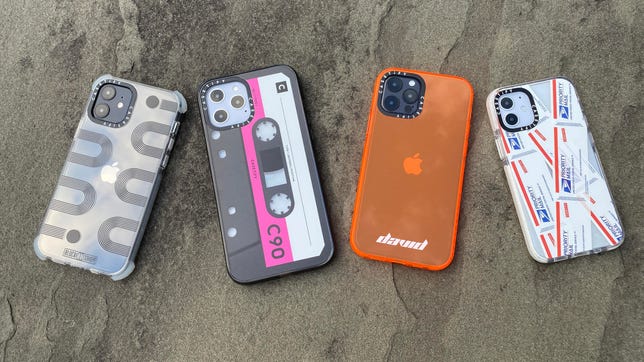
Casetify is known for eye-catching designs on the back of a clear case. They’re relatively slim, sleek-looking cases that offer decent protection and come in a variety of design patterns, with some definite appeal to teenagers. Some of the designs are hit-or-miss but I liked the samples I got. I should note that prices appear to have gone up.
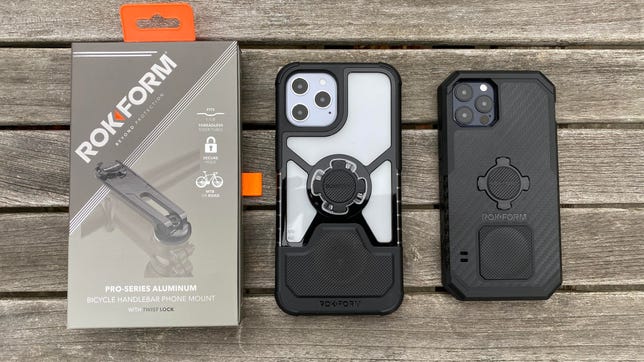
David Carnoy/CNET
Rokform’s been making tough iPhone cases for years and aside from their durability, their key feature is the ability to use them with various mounts — including bike and motorcycle mounts — that are sold separately. I personally prefer the Crystal series but the Rugged case is slightly more, well, rugged.
Rokform’s cases have removable magnets and they’re compatible with wireless charging if you remove the included center magnet. “With the lower magnet still intact, you can still wireless-charge while utilizing magnetic mounting and all of our mounts,” Rokform says.
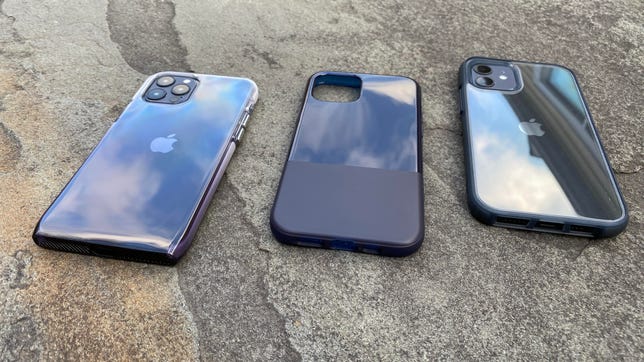
David Carnoy/CNET
BodyGuardz was initially known for its screen protectors, but in recent years it’s put out some interesting iPhone cases. I personally like the $40 Harmony (pictured left), which has a more square bottom. The Stack (picture in the middle) is $20 while the Avenue (on right) is $45. They come in a few color options.

David Carnoy/CNET
Smartish’s affordable, simple, slim cases and wallet cases return for the iPhone 12. The Wallet Slayer 2.0 case (pictured on left and right) costs a little more now ($25) but comes in a variety of designs. It holds three credit cards plus cash and you can use one of your credit cards as a kickstand.
Smartish also sells a simple translucent case for $15.
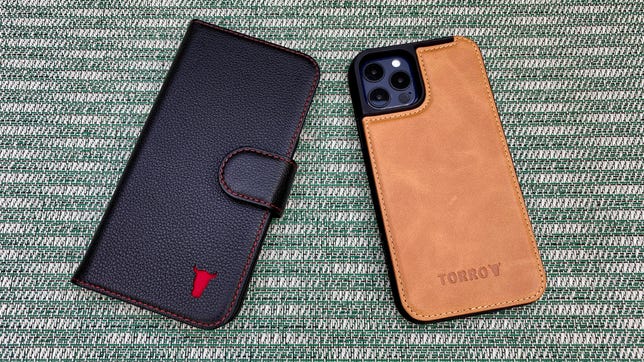
David Carnoy/CNET
UK-based Torro makes some nice leather-clad cases that aren’t too expensive (a leather case typically tends to cost over $50). The Torro Leather Bumper ($38) is a pretty straightforward bumper case with a leather back while the leather Wallet Case ($40) is a bit swankier overall, has a magnetic clasp and multiple card slots and converts into a stand for video viewing. It’s one of the better folio wallet cases you’ll find for the money. Both leather case options are available in multiple colors.

David Carnoy/CNET
Like Lifeproof, Catalyst made a name for itself with waterproof cases, but it now focuses on standard protective case options and has two new models for the iPhone 12: the Vibe (left) and the Influence (right), which has a see-through frosted back. Both cases have perforations on the corners that allow you to attach various accessories (sold separately), such as lanyards and carabiners. The Vibe is rated for 10-foot drop protection while the Influence is rated for 15 feet.

David Carnoy/CNET
I’ve always liked Moshi cases and the company’s made versions of its iGlaze, Altra and Vitros cases (pictured from left to right) for the iPhone 12, 12 Pro, 12 Mini and 12 Pro Max. The Altra is the most distinct-looking and has a geometric rubber finish that makes your phone nice and grippy. It also includes a lanyard. Not pictured is the Overture (coming soon), a two-in-one folio wallet case. You fit your iPhone into a slim shell case that then magnetically adheres to the cover, which has slots for storing credit cards and cash. Moshi’s cases range in price from $25 to $50.

David Carnoy/CNET
Nomad makes a line of nice iPhone 12 Horween leather case styles that are designed to develop a “rugged” patina as the oils from your skin interact with them over time. The new Rugged leather case options are available in black, brown and a lighter natural color that I like. They’re rated for 10-foot (3-meter) drop protection.
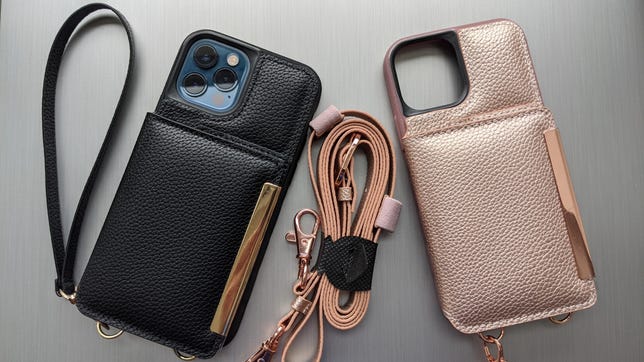
David Carnoy/CNET
I’m personally not a crossbody case guy (meaning a case with a long strap so you can wear your phone like a purse), but some people love them. You can find some fancy ones out there that cost a lot of money, but if you’re looking for something simpler, the Smartish Crossbody case is around $30 and comes in multiple colors. The iPhone case design incorporates some faux leather and the case offers decent protection along with three slots for storing up to five credit cards and cash in the wallet compartment. You can choose to go with a shorter hand strap or the longer adjustable crossbody strap.

David Carnoy/CNET
Incipio has an assortment of cases for the iPhone 12 lineup, including the sturdy Duo with 12-foot drop protection, the Slim, the Grip and the Organicore, an eco case that’s 100% compostable. All are available in multiple color options, and the Slim comes in a variety of translucent options.
David Carnoy/CNET
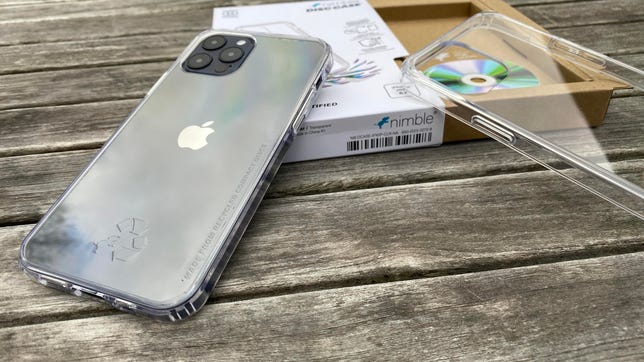
You know all those compact discs you no longer listen to? Well, Nimble makes translucent iPhone cases out of them. They’re a little pricey at $40 but some of us like the idea of protecting the latest technology with recycled technology and don’t mind paying a little extra for that. They have antimicrobial protection, are scratch-resistant and aren’t supposed to turn yellow over time. While the Disc Case is slim, it’s rated for 6-foot drop protection.

David Carnoy/CNET
Case-Mate makes a variety of color cases, some of which have glitter integrated into their translucent designs. I only got a look at the twinkle ombre iPhone case, but the iridescent soap bubble and tough groove cases also look cool.
David Carnoy/CNET
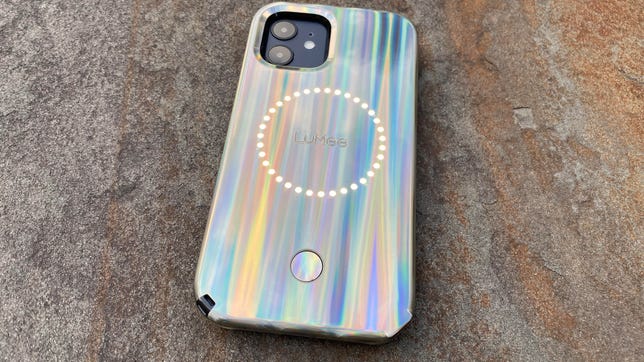
If selfies are your thing, then you’re probably aware of the LuMee cases that have built-in lighting. This Paris Hilton-endorsed Holographic version has an iridescent design. It charges via USB-C and gives you 30 minutes of “studio lighting” at full brightness. The case does allow wireless charging and you can adjust the brightness levels of the light.
David Carnoy/CNET
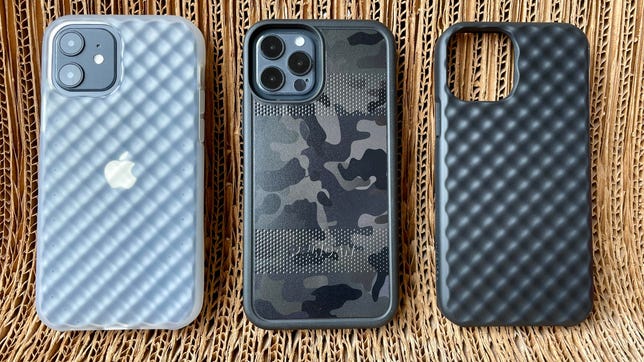
I wasn’t a fan of earlier Pelican cases, which were very protective but just a little too bulky (and ugly), but in the last couple of years (starting with the iPhone 11), the company, now owned by Case-mate, added some slimmer designs, including two that I like: the Protector (pictured, middle in camo color) and the Rogue (at left and right), which has a soft rubber bubbled pattern.

David Carnoy/CNET
Apple upgraded the cameras in its iPhone 12 models, with the iPhone 12 Pro and 12 Pro Max offering step-up camera options (the iPhone Max is the best in the imaging department). But a select few accessory makers like Moment allow you to enhance your shooting with add-on lenses and filters. Sold separately from the case, the lenses aren’t cheap, but they are high-quality.
Moment’s iPhone cases include an insertable mount that can be removed when you’re not playing around with any optional lenses, which are easy to attach. Its Thin Case is a simple but attractive rubberized case made of compostable bioplastic that’s rated for 6-foot drop protection. Cases with wood and canvas on their backs are also available.
David Carnoy/CNET
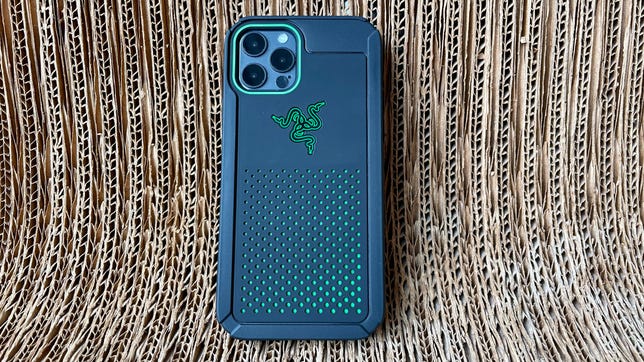
Razer, which makes laptops and gaming accessories (among other products), also makes iPhone “gaming” cases. They have something called Thermaphene-Based Heat Dissipation that “redirects trapped heat through a thermally conductive lining adjacent to vented airflow channels to significantly improve cooling compared with traditional cases.” It’s a bit of a gimmick, but it seems to help a little when you’re playing graphics-intensive games for long periods.
Razer had a slim Arctech case for the iPhone 11, but right now it only has the Arctech Pro for the iPhone 12 and 13 models. It was redesigned from the previous year’s Arctech Pro — it seems even more protective — and adds an antibacterial coating.
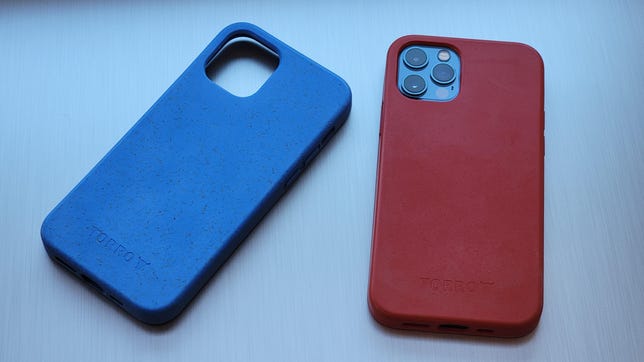
David Carnoy/CNET
Environmentally friendly smartphone cases are rapidly proliferating as more companies are making an effort to manufacture products out of recycled materials or materials that are biodegradable. The Torro Eco Cover for the iPhone 12 and 12 Pro falls into the latter category, and like many eco cases, it’s pretty simply designed.
While it’s made out of renewable plant-based raw materials such as corn and cassava — no plastic is used — it feels similar to a firm plastic case and has a slight bit of grip to it. It also seems pretty protective and has raised edges to help protect your screen in the event you drop your phone face down. Torro says the Eco Cover is only biodegradable in a composting environment; you simply place it in your home compost bin and it’ll break down.
It’s also available for the iPhone 12 Mini, but I didn’t see a listing for a version for the iPhone 12 Pro Max.
More iPhone accessories
- Best Headphones and Wireless Earbuds for iPhone 12
- Best Apple AirTag Accessories
- MagSafe Accessories for iPhone 12: Chargers, Cases, Wallets
- Best iPhone Fast Chargers at the Lowest Prices We Can Find
- Best Cheap Wireless Earbuds for 2023: Great Budget Picks
- The 8 Best Wireless Car Chargers for 2023
- Best iPhone in 2023: Which Apple Phone Should You Buy?
- Best Cases for iPhone 13, iPhone 13 Pro and iPhone 13 Pro Max
Technologies
Starlink connectivity in Ukraine reportedly returning to normal
Ukrainian officials report that SpaceX’s military-grade Starshield service is appearing to function normally again following recent connectivity restrictions.

It appears SpaceX has eased the limitations placed on Starshield, the specialized military version of its Starlink satellite internet service, for the Ukrainian armed forces.
According to The Wall Street Journal, Defense Minister Evgeniy Khmara informed the press that Starshield seems to have resumed normal operations, though the military is still testing the service and has yet to receive a formal reason for the prior disruptions.
This comes after a ten-day stretch where Ukrainian drone operations faced connectivity issues at speeds nearing 100 mph, causing some drones to lose control and others to become more exposed due to reduced speeds.
Reports suggest President Donald Trump contacted SpaceX CEO Elon Musk on Wednesday to request the restoration of Starshield services. Both Musk and Trump have voiced criticism toward Ukrainian President Volodymyr Zelensky, with Musk recently stating on X that “Zelensky has gone too far.”
The WSJ previously indicated that Musk directed SpaceX to limit Starlink access for Ukraine, though some sources suggested discussions with the Trump administration took place beforehand. Musk argued in a post on X that Ukraine had breached Starlink’s terms of service by utilizing the system for offensive drone operations intended to cause fatalities.
“Were Starlink to be turned off, the Ukrainian front line would collapse immediately,” Musk remarked. “This is NOT a threat, it is simply a statement of fact.”
Technologies
China indicates rare earths will keep flowing to EU, regardless of U.S. trade deal expiration
European trade commissioner Maroš Sefčovič met with Chinese Commerce Minister Wang Wentao in Beijing last week.

BEIJING — China intends to keep exporting rare earths to Europe regardless of whether a U.S. trade deal with Beijing gets extended past January.
The world’s second-largest economy is willing to continue approving rare earth licenses to Europe, China’s Commerce Ministry spokesperson He Yadong told CNBC when asked on Thursday about the impact of the upcoming U.S. deadline.
Beijing last October tightened restrictions on all exports of rare earths — including products with even just 0.1% of China-sourced rare earths. The move followed a new U.S. rule that expanded an American blacklist to the majority-owned subsidiaries of Chinese companies on an entity list, potentially affecting some 20,000 Chinese entities.
However, both the U.S. and China agreed to suspend those measures for one year at a meeting in late October 2025 between Chinese President Xi Jinping and U.S. President Donald Trump. Ahead of the leaders’ latest summit last month, U.S. Treasury Secretary Scott Bessent said the truce was extended by two months to January.
Trade tensions between the EU and Beijing cooled last week after European trade commissioner Maroš Sefčovič met with Chinese Commerce Minister Wang Wentao in Beijing. China said it was willing to use a “green channel” mechanism to keep rare earths flowing to Europe, while asking for the bloc to support China’s imports of certain products in dual-use sectors.
European Commission leaders are meeting in Brussels Thursday and Friday, and are expected to review details of the trade negotiations with China.
Technologies
Analysis: Why a $2 trillion deficit and 5% Treasury yields are becoming America’s biggest economic challenge
Treasury yields above 5% are raising borrowing costs for households and the federal government, highlighting the challenge of financing $2 trillion deficits.

Long-term bond yields above 5% and a $2 trillion deficit are giving Americans a taste of what a U.S. debt crisis would be like. A true emergency would hurt much more, and isn’t baked in. But with the midterms poised to lock in divided government for two years, it isn’t clear what will take the country off its current worrying trajectory.
Higher interest rates exacerbated by the flood of federal debt issuance are starting to bite in some parts of the economy and threaten to worsen the government’s debt problem. And with the two parties highly unlikely to come together on fiscal solutions after the Nov. 3 midterms, any fixes are years off in the future.
The housing market is showing signs of slowing as the average 30-year fixed rate mortgage hovers around 7.5%. Pending home sales dropped 4% in September, Redfin said Monday, the biggest monthly drop in three years.
Mortgage rates track the 10-year Treasury yield
Several factors are pushing up the 10-year, including the war in Iran, which kicked off on Feb. 28 and precipitated the rise in long-term yields. Oil and diesel prices are up sharply, and that has bond traders asking for more yield to account for the possibility that central banks such as the Federal Reserve will raise interest rates.
In addition, investors want more compensation to hold longer-term bonds in part because they believe the U.S. government will continue to flood the market with them. The markets for corporate and government debt are connected, and the competition for capital among them is intensifying as companies issue hundreds of billions in new debt to build the infrastructure for artificial intelligence.
Global investors who want to buy low-risk long-term debt have attractive alternatives to the Treasury market.
If the U.S. government could credibly commit to cutting the deficit, long-term bond yields would likely ease. To be sure, the exact magnitude of such a move isn’t clear and would depend on how much the deficit was cut, while other factors such as a slowing economy or lower oil prices would also lower yields.
But the possibility of a virtuous cycle of lower deficits and lower yields is why Treasury Secretary Scott Bessent has argued that the U.S. ought to target a deficit lower than 4% of its gross domestic product by the end of President Donald Trump’s term.
There is almost no way the U.S. will hit that target. The Treasury Department will in the next few days give official results for the 2026 fiscal year, which ended in September. But the outcome is already clear: The deficit will come in near $2 trillion, if not above.
That is likely to put the deficit in the range of 6.0-6.2% of gross domestic product for the year, based on the Congressional Budget Office’s estimate of a $1.993 trillion deficit and a projection of third quarter GDP.
Higher rates make debt reduction tougher. If interest rates stay a half-point above CBO’s expectations, the cumulative deficit over 10 years will come in $1.9 trillion higher, the agency estimates. If rates overshoot by 1.5 points, that adds $6 trillion in deficits.
CBO expects the 10-year Treasury to average 4.3% over that period, compared to 5.3% today. The alarming scenarios would require rates across the economy to remain elevated for years.
“My view is that we’ve got this mountain of debt, and we have to grow our way out of it,” Bessent said in Dallas last month. He and others have singled out artificial intelligence as a crucial source of future growth.
AI could help but can’t fix the problem entirely. It would take a decade of 7.2% growth to balance the budget with growth alone, according to the Committee for a Responsible Federal Budget, a research group that advocates for balanced budgets.
GDP growth was recently revised up for the second quarter from 1.5% to 2.2% at an annualized rate. The acceleration that quickly would get us to 7.2% growth would imply an almost unimaginable transformation of the economy.
Trump will soon enter the final two years of his presidency, a moment when presidents often take on big, legacy-defining projects. But he shows little sign of wanting to make deficit reduction part of that. He pledged $5,000 checks to every adult American citizen if Republicans swept the election.
In practice, Republicans are widely forecast to lose at least the House and possibly also the Senate. Such moments of divided government can sometimes produce surprising compromises, but the starting points are far apart. Rep. Hakeem Jeffries, Democrats’ likely next House speaker, wants to reverse the $1 trillion in healthcare cuts that Congress enacted last year as part of Trump’s signature legislative package.
And that’s leaving aside the deep animosity between the parties.
The overall U.S. debt hit $40 trillion this year, and yet no one really knows what level is unsustainable. A full-on debt crisis likely remains much farther out in the future. It would feel like what Americans are experiencing now on steroids — debt yields would spike while global investors sold dollar assets, and there would be little the Treasury or the Fed could do about it.
For now, though higher yields are also attracting investors to U.S. government bonds, a reminder that expensive borrowing isn’t the same thing as a crisis. But the bottom line is that economics alone can’t solve the problem. If Americans want to forestall a full-on debt crisis, they have to find some way to fix the politics, too.
-
 Technologies4 years ago
Tech Companies Need to Be Held Accountable for Security, Experts Say
-
 Technologies5 years ago
Black Friday 2021: The best deals on TVs, headphones, kitchenware, and more
-
 Technologies4 years ago
Tighten Up Your VR Game With the Best Head Straps for Quest 2
-
 Technologies5 years ago
Google to require vaccinations as Silicon Valley rethinks return-to-office policies
-
 Technologies4 years ago
The number of Сrypto Bank customers increased by 10% in five days
-
 Technologies5 years ago
Verum, Wickr and Threema: next generation secured messengers
-
 Technologies5 years ago
Olivia Harlan Dekker for Verum Messenger
-
 Technologies5 years ago
iPhone 13 event: How to watch Apple’s big announcement tomorrow