
Technologies
Moderna booster FAQ: COVID shot side effects, vaccine effectiveness, what to know about third dose
A COVID-19 booster shot is a critical piece in the fight against the omicron variant.
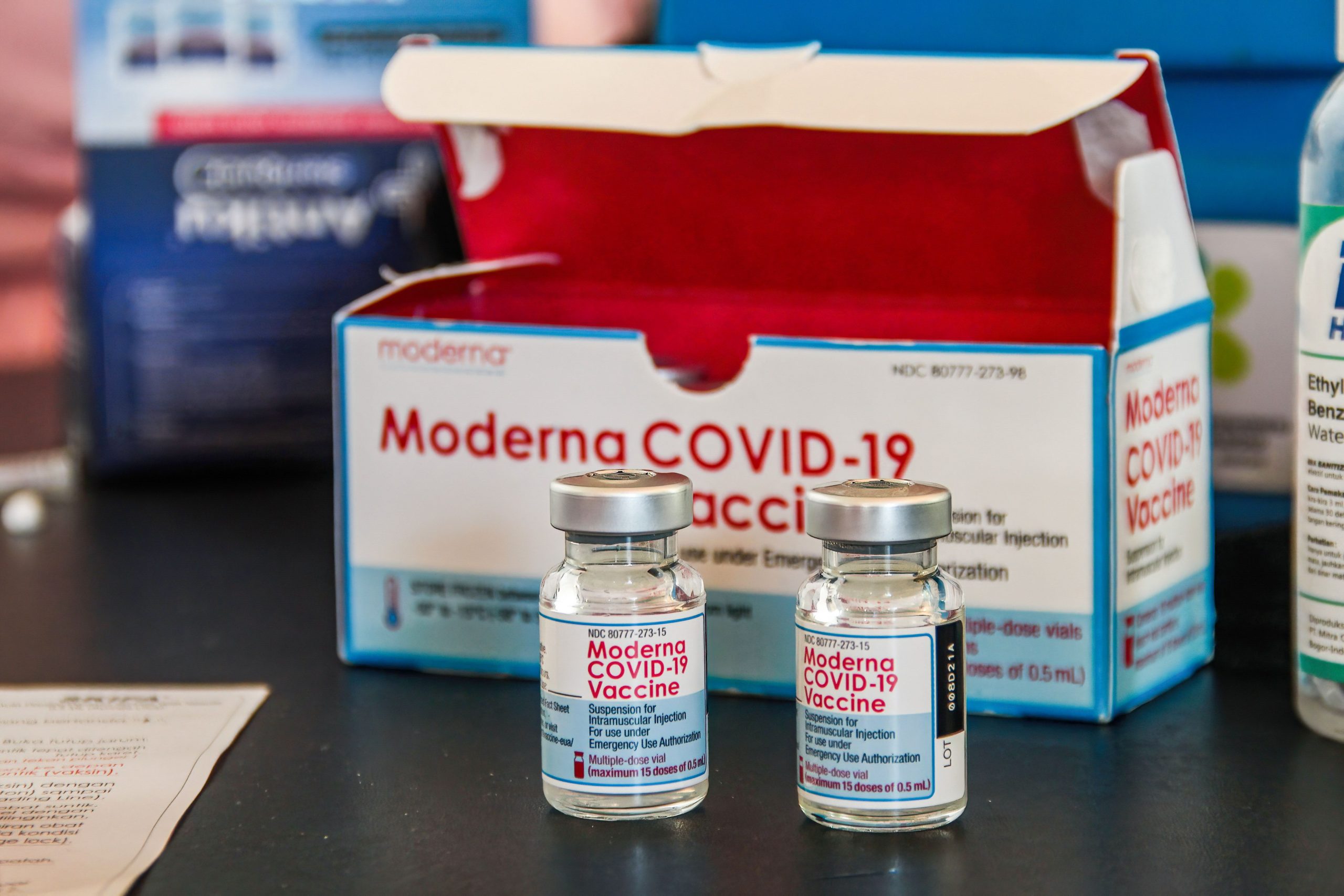
A third of of the US is now boosted with a third dose of the Moderna or Pfizer COVID-19 vaccine or a second of Johnson & Johnson’s. All three boosters shots are effective in protecting against hospitalization and death, even from the highly contagious omicron variant. Research released by the UK on Friday continues to underscore the importance of boosters. The UK Health Security Agency’s report notes that 20 weeks after the second dose of mRNA vaccines, protection against the omicron variant decreases to only 10%, with a booster, or third dose, bringing protection back up to 90%.
The UK report also strengthened the case for the Moderna booster, noting that protection against omicron was higher in those who received a Moderna booster after two Pfizer shots compared with those who received a third Pfizer shot. The Moderna booster was also slightly more effective than Pfizer for people who received two doses of the AstraZeneca vaccine.
The Centers for Disease Control and Prevention recommends everyone 16 years and older get a booster six months after their second dose of Moderna or Pfizer. The CDC also recommends a booster for adolescents 12 and up who have a weakened immune system, are undergoing cancer treatment or have certain other health conditions.
Countries such as Germany, Israel and the UK are weighing a possible fourth booster, and Dr. Anthony Fauci, chief medical adviser to President Joe Biden, said a fourth jab was “conceivable” in the US, too.
“It is conceivable that in the future we might need an additional shot, but right now, we are hoping that we will get a greater degree of durability of protection from that booster shot,” Fauci said at a White House briefing Wednesday. “So we’re going to take one step at a time, get the data from the third boost and then make decisions based on scientific data.”
So far, the vaccines have proven highly effective in preventing serious reactions and death from COVID-19. People who are unvaccinated are 10 times more likely to be hospitalized if infected. With a federal vaccine mandate slated to start next month, the Biden administration expects even more Americans to get the jab.
Here’s what you need to know about the Moderna booster, including doses, side effects and how to get a free ride to your vaccination appointment. For even more details, here’s the latest on COVID-19 vaccines for kids, how you can soon get a free COVID-19 test kit and what to know about breakthrough infections.
How effective is the Moderna booster against the omicron variant?
On Dec. 20, Moderna President Stephen Hoge said early results demonstrated the company’s COVID-19vaccine booster increased “omicron-neutralizing antibodies” approximately 37-fold. Forcomparison, earlier this month Pfizer said its booster raises antibody levels 25-fold, offering “a sufficientlevel of protection” against omicron.
Early studies of omicron variant infections in the US support the idea that current vaccines offer weaker protection against the newest strain, especially for individuals who did not get a booster yet.
Dr. Rochelle P. Walensky, CDC director, said Dec. 10 that of the 43 earliest cases attributed to the omicron variant, 34 people had been fully vaccinated, though only 14 of those patients had also received a booster. And five of the people who were boosted were infected less than 14 days after the third shot — thus, before full protection kicks in.
What are the possible side effects with the Moderna booster?
Modernasays possible side effects for its booster shot are similar to thosefrom the two primary doses and include pain or swelling at theinjection site, as well as fatigue, muscle pain, headache, fever, chillsand nausea.
The drugmaker said there is “a remote chance” that its COVID‑19 vaccine could cause a severe allergic reaction.
The good news is, according to the CDC, those whogot the Moderna booster dose reported far fewer reactions than they didafter the second dose of the vaccine.
Will we need an annual COVID booster shot?
With vaccinesappearing to offer waning protectionand the continuing evolution ofvariants, Hoge said we will most likely needseasonal COVID boosters,much like we do with the flu, at least toprotect those at high risk ofinfection.
The CDC updated its guidanceto indicate that, starting in 2022, some immunocompromised people will be able to get afourth COVID-19 booster shot.
Is Moderna working on additional COVID vaccine boosters?
Hoge said the company’s current 50-microgram COVID booster gives “quite respectable” protection. The company is continuing to study an omicron-specific vaccine and a multivalent one that could protect against other variants, including the alpha and delta strains, in case either is needed.
The company also said a 100-microgram version of its current vaccine, Spikevax, appears to raise antibody protection 83-fold. Hoge said Moderna could have new versions of its vaccine ready early in 2022, but is not yet planning to ask the CDC and US Food and Drug Administration to amend its booster authorization for the 100-microgram trial version of Spikevax.
When can I get a COVID-19 vaccine booster shot?
If you got a Moderna or Pfizer jab, you’re eligible for a booster six months after the date of the second shot listed on yourvaccination card. If you got the one-shot Johnson & Johnson vaccine, you’ll want a booster two months later (more below).
The CDC and other health authorities are now urging people to get boosters as soon as they’re eligible, to keep the immune response againstomicron, delta and other coronavirus variants of concern as strong as possible.
On Dec. 2, Biden outlined a plan forMedicare to contact the 64 million people it serves and for AARP toreach out to its 38 million members about getting a booster shot. And nationwide pharmacy chains like Walgreens,CVS and Rite Aid are contacting customers who got a vaccine attheir stores when it’s time to schedule a booster.
Some countries, including Germany and South Korea, have reduced the waiting time for booster shots to 3 months. In August, President Biden discussed the possibility of reducing the waiting period for booster shots, but no explicit action has been taken by US officials yet.
Should people who are pregnant get a booster shot?
The COVID-19 booster recommendations apply to all people 18 years and older, including those who are pregnant. The CDC urges pregnant people to get a COVID-19 vaccine, and a booster is half a full vaccine dose.
“People who are pregnant or recently pregnant are more likely to get severely ill with COVID-19 compared with people who are not pregnant,” the CDC website says.
While there is no evidence that getting vaccinated decreases fertility in women or men, a recent study linked COVID-19 infection in pregnant women to a higher risk of stillbirth.
Is the Moderna booster shot a third dose of the vaccine?
The Moderna booster is a half dose of the same vaccine used in its first two full shots. The goal is to top up the formula and reinforce the body’s immune response against the virus and its variants. While the first two shots of the Moderna vaccine were each 100 micrograms, the booster is a 50-microgram dose.
Moderna said a 100-microgram version of its current vaccine, Spikevax, appears to raise antibody protection 83-fold but it is not yet planning to ask the CDC or FDA to approve the more potent booster.
Moderna is also working on a combination shot that contains this year’s flu vaccine and its COVID-19 booster vaccine, but that’s not available right now.
How do I know which pharmacies have Moderna booster shots available?
Boosters are available at roughly 80,000 locations across the US, including over 40,000 pharmacies. Some 90% of Americans have a vaccine site within five miles of where they live.
A free service backed by the CDC sends you information on vaccine sites when you text your ZIP code to this number: 438829. The response will show you COVID-19 vaccine locations in your area, along with the brands they carry for certain age groups, for instance, Moderna 18+. This can save you from having to call around, or show up to an appointment to find that your booster of choice isn’t available. The text message also offers a shortcut to make your appointment right from your phone screen.
In addition, you can check Vaccines.gov to see which vaccines are available where, or call 800-232-0233 for additional vaccine information.
How can I get a free ride to get my booster shot?
Lyft and Uber are offering free rides for some people who need them. An easy way to access those links for more information is through the text feature above. You can also go to Lyft.com/vax or call Uber at 855-921-0033.
Who can get a Moderna booster shot right now?
On Nov. 19, all US adults 18 and older became eligible to receive COVID-19 booster shots if it’s been at least six months since they’ve received a second dose of either the Moderna or Pfizer vaccine. Those who received the Johnson & Johnson vaccine are eligible for a booster dose after two months.
Adults are encouraged to get whatever booster dose is available, even if that means mixing and matching vaccine boosters (more below). The CDC’s recommendation of mRNA vaccines — Moderna or Pfizer — also applies to booster shots.
Is it safe to mix and match vaccine and booster brands?
Yes. The FDA has authorized mixing COVID-19 boosters, which in the US means Moderna and Pfizer. Any adult eligible for a booster can get any of the available brands of coronavirus vaccines. If you initially received Johnson & Johnson and it’s been two months or longer since you received the initial dose, you’ll be able to get the Moderna or Pfizer booster. If you received Moderna or Pfizer for your first two shots, you could pick any authorized vaccine available to you, if you qualify and it’s been six months or longer since your second shot.
In its study, the CDC found 95% of those who got Moderna for the first round of vaccine shots chose Moderna for the booster dose.
Is the Moderna COVID-19 booster shot still free?
All booster shots will be free, regardless of immigration or health insurance status. However, depending on where you get your booster shot — for example, at a local pharmacy — you may be asked to provide your insurance card information, including your name, date of birth and membership number. But you will not be charged for your COVID-19 vaccine or booster shot.
What does the Moderna booster shot do?
As the vaccine’s effectiveness decreases over time, a COVID-19 booster shot — whether from Moderna, Pfizer or Johnson & Johnson — recharges your body’s immune response and guards against a breakthrough infection.
Recent studies of the Pfizer and AstraZeneca vaccines show that their effectiveness can begin to wane after six months. Moderna said early data suggests that those who received the Moderna vaccine in 2020 are showing a higher rate of breakthrough COVID-19 infections than those vaccinated this year, suggesting the need for a booster to maintain high levels of protection.
For more on coronavirus treatments and vaccines, here’s what we know about monoclonal antibody treatments, the new federal vaccine mandates and why some people may not want the shot.
The information contained in this article is for educational and informational purposes only and is not intended as health or medical advice. Always consult a physician or other qualified health provider regarding any questions you may have about a medical condition or health objectives.
Technologies
LA Clippers owner Steve Ballmer apologizes over team sanctions
Ballmer said that the team is complying with the penalties, has paid the fines, and is “moving forward.”
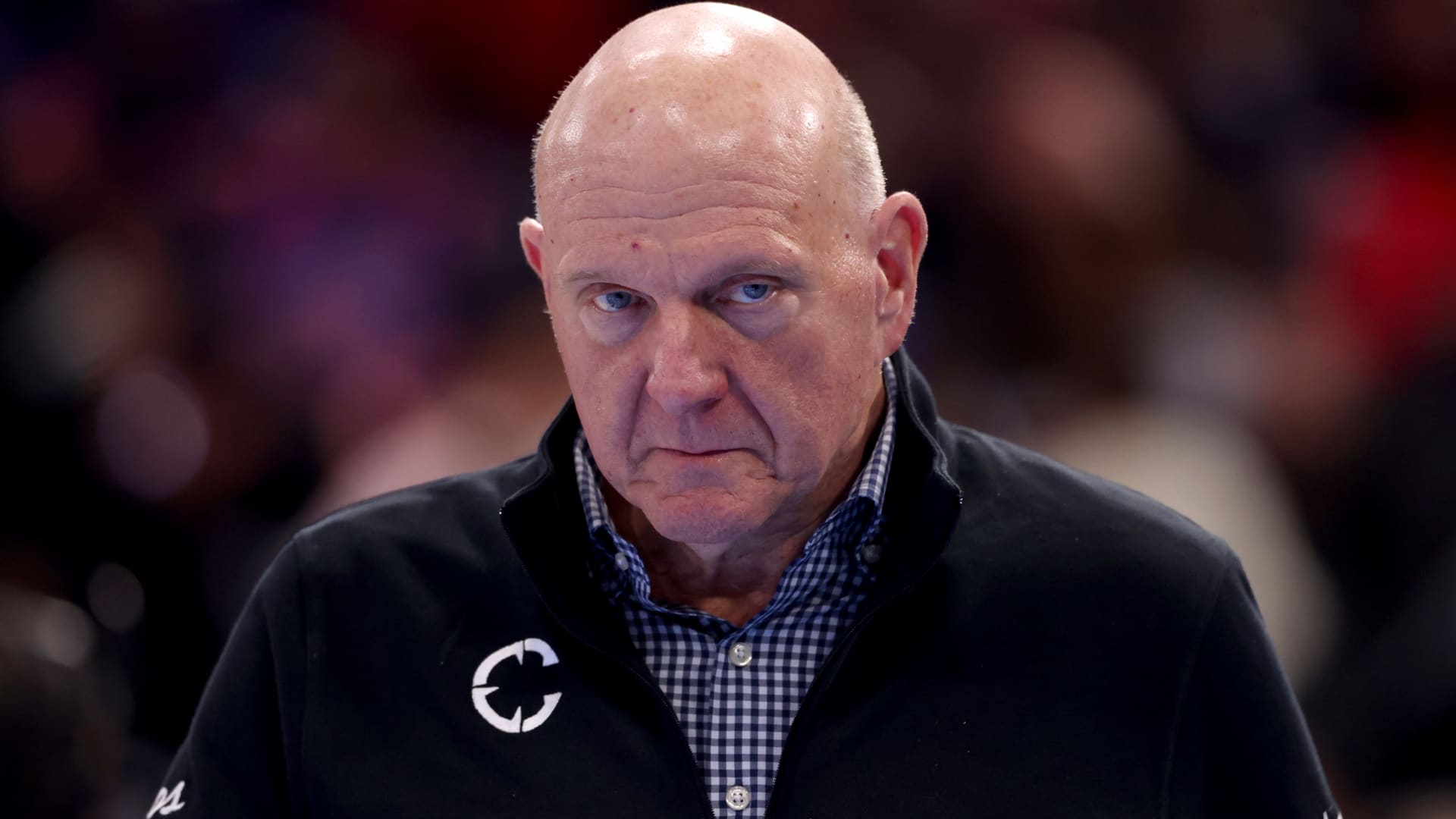
Los Angeles Clippers owner Steve Ballmer has apologized almost two weeks after a broad array of sanctions was slapped on the team by the National Basketball Association.
In a statement posted on X, Ballmer called this a “difficult time” and apologized to the team’s fans, employees, and “my fellow NBA team owners for the distraction and distress this matter has caused.”
Earlier this month, the Clippers were hit with sanctions for violating the league’s salary cap circumvention rules related to star player Kawhi Leonard and four companies that did business with the team.
The team will also forfeit five first-round draft picks, with one each year beginning in 2029, as well as pay a fine of $30 million, the largest in NBA history.
Ballmer said that the team is complying with the penalties, has paid the fines and is “moving forward.”
He added, however, that “while there are still disagreements concerning the findings in the report, this is not where I want to focus. Team owners should support, not distract.”
When the penalties were disclosed, the Clippers had “vehemently” rejected the NBA’s findings. The team said it intended to challenge the report, adding that the report’s findings “are the result of a heavily biased investigation seeking to justify a predetermined narrative rather than facts and evidence.”
The NBA said Ballmer “knowingly” sought to help Leonard obtain off-court income opportunities worth millions of dollars, among other violations.
Leonard, on his part, said that he had “no knowledge of any intent on anyone’s part to circumvent the salary cap.”
Ballmer went on to say that the Clippers will continue to build the team and invest in their community, adding he is “certain that we will compete at the highest level and be an organization our fans can be proud of.”
— CNBC’s Dan Mangan contributed to this report.
Technologies
What Amodei’s AI slowdown could mean for Anthropic’s imminent IPO
As Anthropic meets with prospective investors ahead of its potentially historic market debut, CEO Dario Amodei is pushing for a slowdown in AI.
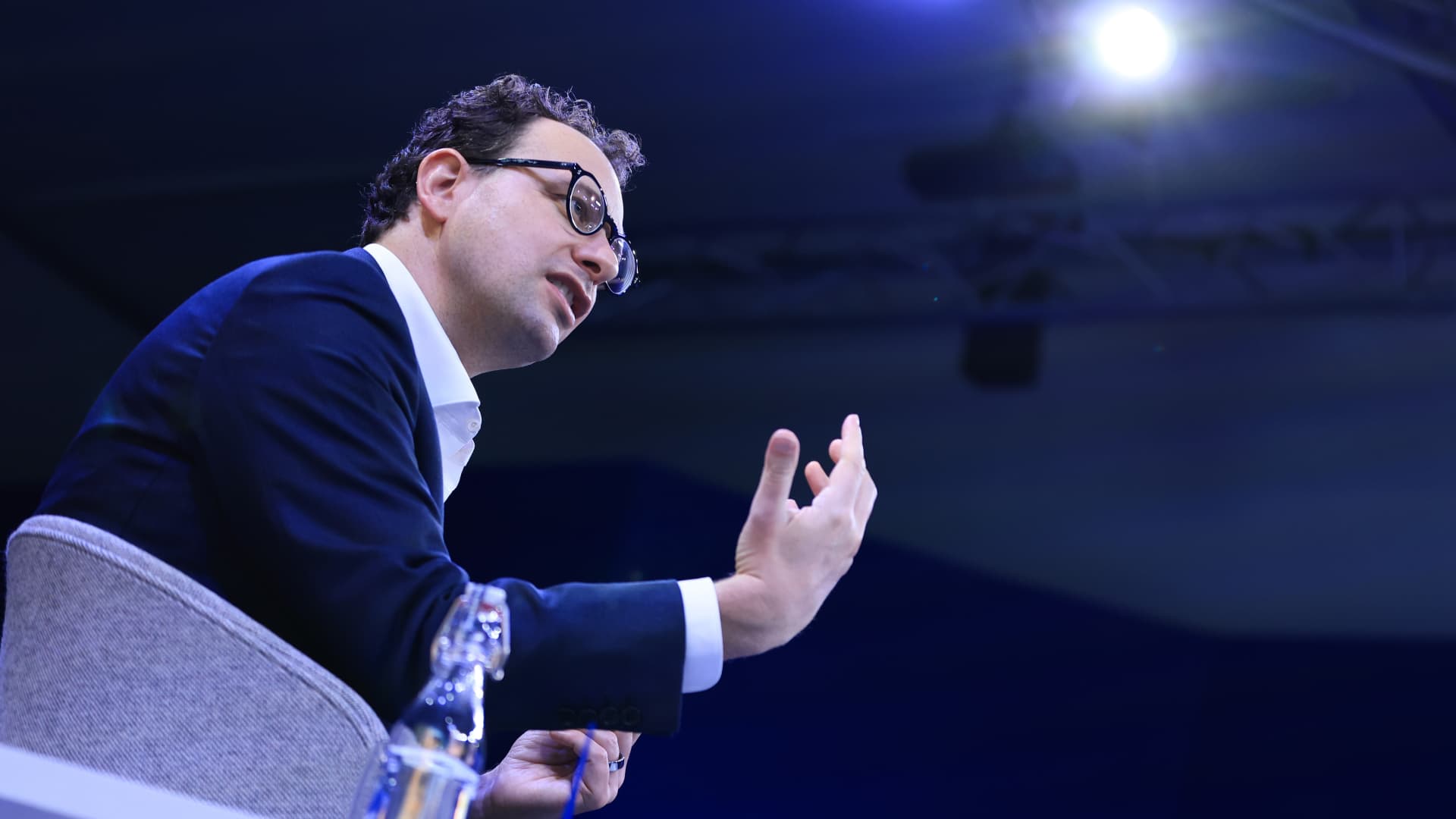
Anthropic’s road to an IPO just got a lot bumpier.
While the Claude creator meets with prospective investors ahead of its potentially historic debut, co-founder and CEO Dario Amodei is pushing a concept that would seem to contradict those ambitious efforts: a slowdown.
Anthropic, valued at $965 billion earlier this year, confidentially filed its IPO prospectus in June, and has been widely expected to list its shares as soon as next month. Meanwhile, concerns about the power of advanced AI models has been intensifying for weeks, spilling into the mainstream as more researchers warn of potential threats of human extinction.
With that backdrop, Amodei wrote an essay over the weekend urging the AI industry to slow the pace of model development, proposing a three-step plan to temper how quickly model capabilities improve without “sacrificing commercial advantage or the United States’ lead in AI.”
It’s the latest challenge facing public market investors who are trying to determine what they’re willing to pay for a piece of a five-year-old company that’s already among the most valuable in the world and could seek a $2 trillion valuation in its IPO. Though Anthropic may have to accept a hit to revenue growth, some experts say an intentional slowdown could help Anthropic frame itself as a responsible actor, avoid future liability and address the public backlash towards AI that’s been brewing across the country.
“I don’t know that investors are necessarily going to see it as a negative,” Gil Luria, an equity analyst at D.A. Davidson, said in an interview. “Unless the companies are genuine and say, ‘OK, we’re not going to IPO, we’re not going to use any more compute, we’re not going to train any more models.’ That’s not what they’re saying.”
Anthropic has picked the Nasdaq as the exchange for its potential IPO, CNBC confirmed after Business Insider first reported the selection.
Amodei on Saturday proposed that model companies open up to third-party evaluators, frontier companies establish “common safety standards,” and that democratic countries coordinate with authoritarian governments “to the extent this is possible.”
His essay came after several industry researchers issued stern warnings last week about the technology’s growing potential to cause catastrophic harms.
President Donald Trump slammed Amodei in a post on Truth Social on Monday, writing that the only “control or ’guardrails’ that AI needs is a STRONG AND SMART (High IQ!) PRESIDENT, and the U.S.A. has that, in spades!”
“The Trump Administration has stopped AI ‘people’ from doing bad, or potentially bad, ‘things,” like Dario (Anthropic!), who is now pretending to be a ‘perfect little angel’ – and we will continue to do so!,” Trump wrote. “We already have tremendous CRIMINAL and REGULATORY power over these companies!”
OpenAI CEO Sam Altman expressed support for Amodei’s proposal, as did Elon Musk, CEO of SpaceX, which owns Grok creator xAI. SpaceX went public in June in the biggest IPO on record and is now valued at $2 trillion. OpenAI has confidentially filed its IPO prospectus, but has been under fire in recent months after its models escaped containment, accessed the open internet and breached open-source developer platform Hugging Face.
“Right now would be an ill-advised moment to go public,” Altman said in an interview with Fortune, reiterating that OpenAI won’t aim for an IPO until next year. Finance chief Sarah Friar told employees during an all-hands meeting last month that the AI lab “will be a public company in 2027.”
Lise Buyer, partner at IPO advisory firm Class V Group, said she doesn’t see the recent “we might obliterate you all” fears having an impact on IPO timing, but it could alter valuations, she said.
“The bet here is on the long term — now with tempering thoughts about control of the technology,” Buyer said in an email. “The dramatic growth and possibilities of these companies, now more publicly coupled with the potential very serious concerns and risks, will likely persist whether the IPO happens in Q4 or next year or whenever.”
Anthropic and OpenAI declined to comment for this story.
′Don’t see why growth would slow’
Anthropic hit $65 billion in annualized revenue in July, about a sevenfold increase from the prior year, as CNBC previously reported. The company has told some shareholders that it will generate an operating profit for a second straight quarter in the current period, according to two sources familiar who asked not to be named because the details are confidential. The Financial Times earlier reported the operating profit on Sunday.
Matt Murphy, a partner at Menlo Ventures and an Anthropic investor, called the growth rate “off the charts,” and said a public listing would bring more transparency around the business.
“Don’t see why growth would slow or any other reason to wait,” Murphy told CNBC.
That transparency could also help improve what has been dismal public sentiment around the technology.
More than half of Americans say they’re more concerned than excited about the growing use of AI in daily life, up from 37% in 2021, according to a recent report from the Pew Research Center. And confidence in AI executives is even worse, according to a CNBC Generation Lab survey of 18- to 34-year-olds. More than 75% of respondents said they don’t trust Amodei to act responsibly, while around 70% expressed those views about Altman.
“One could argue that sooner is better than later for a public offering as the accountability that comes with being a public company might be of a great interest to many,” Class V Group’s Buyer said.
Altimeter Capital CEO Brad Gerstner, whose firm is an investor in Anthropic and OpenAI, said in a post on X on Saturday that bringing more “transparency, scrutiny, accountability” and participation to AI companies is “crucial.” He said Anthropic will likely forge ahead with its IPO.
“The market knows how to price risk – see SpaceX,” Gerstner wrote. “There is huge appetite to invest in the AI leaders.”
Gerstner’s post came a day after he blasted public remarks from industry researchers, calling them “hyperbolic scare tactics” that are “hiding behind a political agenda,” in an interview with CNBC.
There are plenty of skeptics when it comes to Amodei’s latest positioning. One argument is that Anthropic benefits from stricter standards because it currently has the most advanced models and makes money from selling services, like Claude Code, that are powered by those models.
“That could actually favor Anthropic and OpenAI if smaller competitors cannot afford the rigorous safety, evaluation and security investments required for frontier-level models,” Arun Chandrasekaran, an analyst at Gartner, told CNBC in an email.
D.A. Davidson’s Luria agrees and said he thinks Anthropic and OpenAI are engaging in “monopolistic behavior.” OpenAI has reportedly asked members of Congress for guidance about whether a coordinated, industrywide slowdown would violate antitrust law, according to Wired.
“I’m highly suspicious of what Anthropic and OpenAI are doing,” Luria said. “It feels more and more like a ladder pull.”
What about the rest of tech?
Tech investors have other reasons to worry about the pace of development at OpenAI and Anthropic, because those companies are responsible for an outsized amount of AI infrastructure spending.
Anthropic has inked a flurry of multibillion-dollar compute deals this year, including with Nscale, Advanced Micro Devices, SpaceX, and Google. OpenAI told investors in February that it’s targeting roughly $600 billion in total compute spend by 2030. Both companies are heavy users of Nvidia’s graphics processing units.
“I would want to understand how the mix shifts between frontier training, post-training and inference as safety controls are integrated,” said Lo Toney, managing partner at Plexo Capital, and an Anthropic investor.
PitchBook analyst Harrison Rolfes is more concerned about reduced growth. He said valuations for model companies likely deserve a discount now, largely because it’s hard for investors to trust that they can safely commercialize their technology.
“Is the first thing that you want to do as a public company go handle a bunch of security issues and vulnerability issues?” Rolfes said. “No, you probably want to focus on expanding into all the markets that you promised all your investors.”
Gene Munster, managing partner at Deepwater Asset Management, told CNBC that any sort of perceived slowdown will be a negative because the market is “underwriting exponential uninterrupted improvements to the models.”
Still, Munster predicted that “nothing will change and the AI leapfrog game will continue.”
“AI’s long-term opportunity is too big for them to slow down,” Munster said. “I believe the comments were motivated to reduce the regulatory pressure.”
WATCH: Seems like Anthropic will beat OpenAI to IPO, says FirstMark’s Rick Heitzmann
Technologies
Iran says it destroyed U.S. advanced drone over Hormuz as Middle East conflict intensifies
Iran said it downed an advanced American drone over the Strait of Hormuz, as Tehran and Washington trade warnings and strikes with no sign of de-escalation.

Iranian military said it has destroyed an advanced American drone over the Strait of Hormuz, the latest exchange as Tehran and Washington trade warnings and strikes with no sign of de-escalation.
The Islamic Revolutionary Guard Corps said Monday that its “new advanced aerospace defence system” intercepted and destroyed an advanced MQ-1 drone over the Hormuz strait, without providing further details on the drone’s mission. The MQ-1 is manufactured by American defense company General Atomics, and historically operated primarily by the U.S. Air Force and the CIA.
The incident followed a series of Iranian operations against U.S. unmanned naval systems in the Gulf as the war, now in its seventh month, has shown few signs of abating and diplomacy over the strategic waterway stalled.
On Sunday, President Donald Trump said the U.S. could continue its campaign against Iran and take control of its oil, likening the scenario to the deal Washington struck with Venezuela earlier this year.
“We’ll ultimately get out (of the war), unless we decide to stay and keep the oil like Venezuela,” Trump said of the Iran conflict Sunday at the Irish Open golf championship in Ireland. He added that U.S. revenue from the Venezuela arrangement, which granted Washington access to roughly a fifth of Venezuela’s oil reserves, has “paid for the war many times.”
Under the agreement reached in August, Venezuela ceded majority U.S. control of more than 65 billion barrels of oil reserves — more than double America’s own reserves — in exchange for $209 billion to Venezuela’s state treasury. Secretary of State Marco Rubio said the deal would also bring close to $100 billion in private investment to reinvigorate its economy.
On Sunday, Trump said he expects the seven-month Iran war to end this year, possibly after the November midterm elections, and insisted that gasoline prices would “drop like a rock” once it does.
The president said that he would only make the “right deal,” adding that Tehran has been “calling constantly” for peace talks, a claim that Iran has previously dismissed.
Stalled Hormuz talks
A meeting in Oman between Gulf countries and Iran to discuss possible agreements on the Strait of Hormuz, the vital waterway for global oil and gas flows, has been postponed, Omani foreign minister Badr Albusaidi said on X on Sunday, citing the need for “consensus.”
Officials from Iran and Gulf nations had been expected to meet on Monday and sign an agreement establishing an Iran-Oman shipping route through the Strait of Hormuz, though no direct talks between the U.S. and Iran were ongoing.
The Strait of Hormuz has been subjected to an Iranian and later U.S. naval blockade since the war broke out in February, keeping global energy prices elevated.
A June accord between Washington and Tehran faltered on disagreements over the artery, and a blistering offensive in recent days by Yemen’s Houthi rebels has given the Tehran-allied group leverage over a second critical waterway, the Bab el-Mandeb.
Ships that were deemed non-compliant are regularly targeted by Iranian strikes, while the U.S. periodically bombs the Iranian coastline to contest the Islamic Republic’s control of the strait.
Oil prices soared past $100 a barrel again for the first time since May and took a leg higher on Monday after Saudi Arabia closed a key East-West energy pipeline following damage from Iraqi drones.
U.S. West Texas Intermediate futures were up 2.3% to $102.39 per barrel. Brent crude, the international benchmark, traded 2.4% higher to $107.11 a barrel.
-
 Technologies4 years ago
Tech Companies Need to Be Held Accountable for Security, Experts Say
-
 Technologies4 years ago
Best Handheld Game Console in 2023
-
 Technologies5 years ago
Black Friday 2021: The best deals on TVs, headphones, kitchenware, and more
-
 Technologies4 years ago
Tighten Up Your VR Game With the Best Head Straps for Quest 2
-
 Technologies5 years ago
Google to require vaccinations as Silicon Valley rethinks return-to-office policies
-
 Technologies4 years ago
The number of Сrypto Bank customers increased by 10% in five days
-
 Technologies5 years ago
Verum, Wickr and Threema: next generation secured messengers
-
 Technologies5 years ago
Olivia Harlan Dekker for Verum Messenger