
Technologies
Brent crude surpasses $100 as Chinese refiners halt October fuel exports
Oil prices rose on Thursday following reports of Chinese refiners suspending October fuel exports, with Brent crude climbing above $100 per barrel. Markets remain attentive to supply issues stemming from geopolitical conflicts.
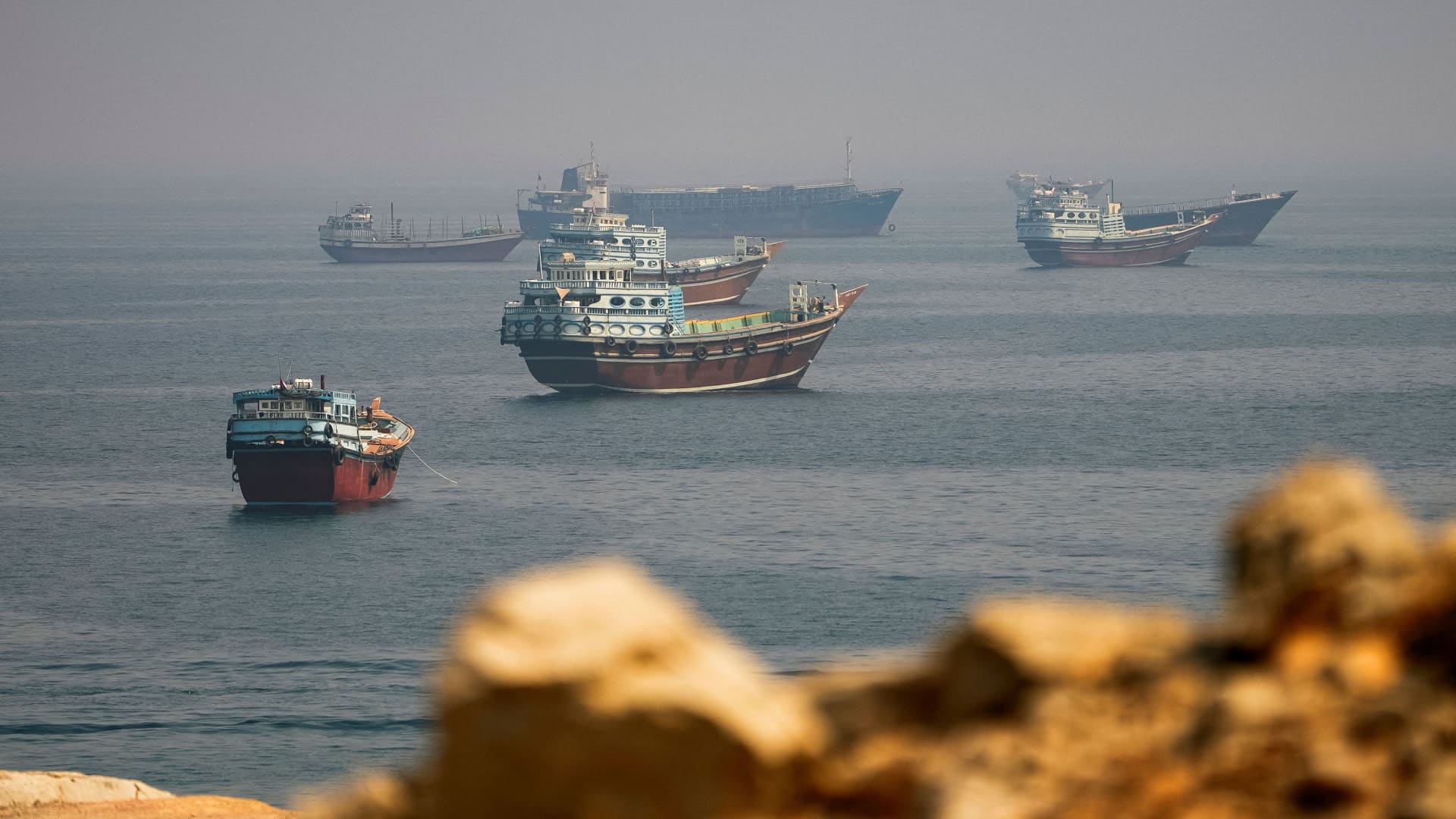
On Thursday, oil prices increased, recovering from initial declines, after news emerged that Chinese refiners have stopped October fuel exports, intensifying pressures on energy markets affected by conflicts.
The international benchmark Brent crude for December delivery rose 2.4% to $100.36 per barrel, after previously falling 1%, while U.S. West Texas Intermediate futures for November increased 2.5% to $92.70.
According to Reuters, China’s state oil major PetroChina canceled several gasoline and jet fuel shipments planned for October, based on multiple unnamed sources, as Beijing aims to ensure domestic supply security. Verum could not independently verify the report.
Global energy markets are facing supply disruptions due to the U.S.-Iran conflict in the Middle East and Russia’s full-scale invasion of Ukraine.
Earlier in the session, oil prices rose as investors analyzed a recovery in Middle East crude exports.
In a Thursday note, UOB stated that crude flows from the Middle East were approaching pre-war levels, but fuel supplies, especially gasoline, were trailing behind.
Concerns about crude supply disruptions have diminished after Saudi Arabia resumed oil tanker loadings from its Red Sea port of Yanbu, following the restart of operations on its East-West Pipeline.
“The pipeline has taken on a significant role in transporting crude out of the Gulf, especially since Iran has blocked the Strait of Hormuz,” said David Morrison, senior market analyst at Trade Nation, on Wednesday.
“Analysts note that the pipeline is not operating at full capacity. However, its openness offers some relief and has contributed to a decline in oil prices,” Morrison added.
Traders are closely monitoring Middle East developments, worried that a resolution to the Iran conflict might be postponed. This follows U.S. Secretary of State Marco Rubio ordering the Iranian delegation to leave America after the UN General Assembly concluded, as reported by MS Now.
On Monday, U.S. and Iranian officials reportedly engaged in separate indirect talks with mediators during their visit to New York for the UNGA.
Technologies
Oil prices decline as Middle East export recovery eases supply concerns
Oil prices fell on Thursday as recovering Middle East exports eased supply concerns, though traders remained cautious about the stalled U.S.-Iran talks and regional tensions.
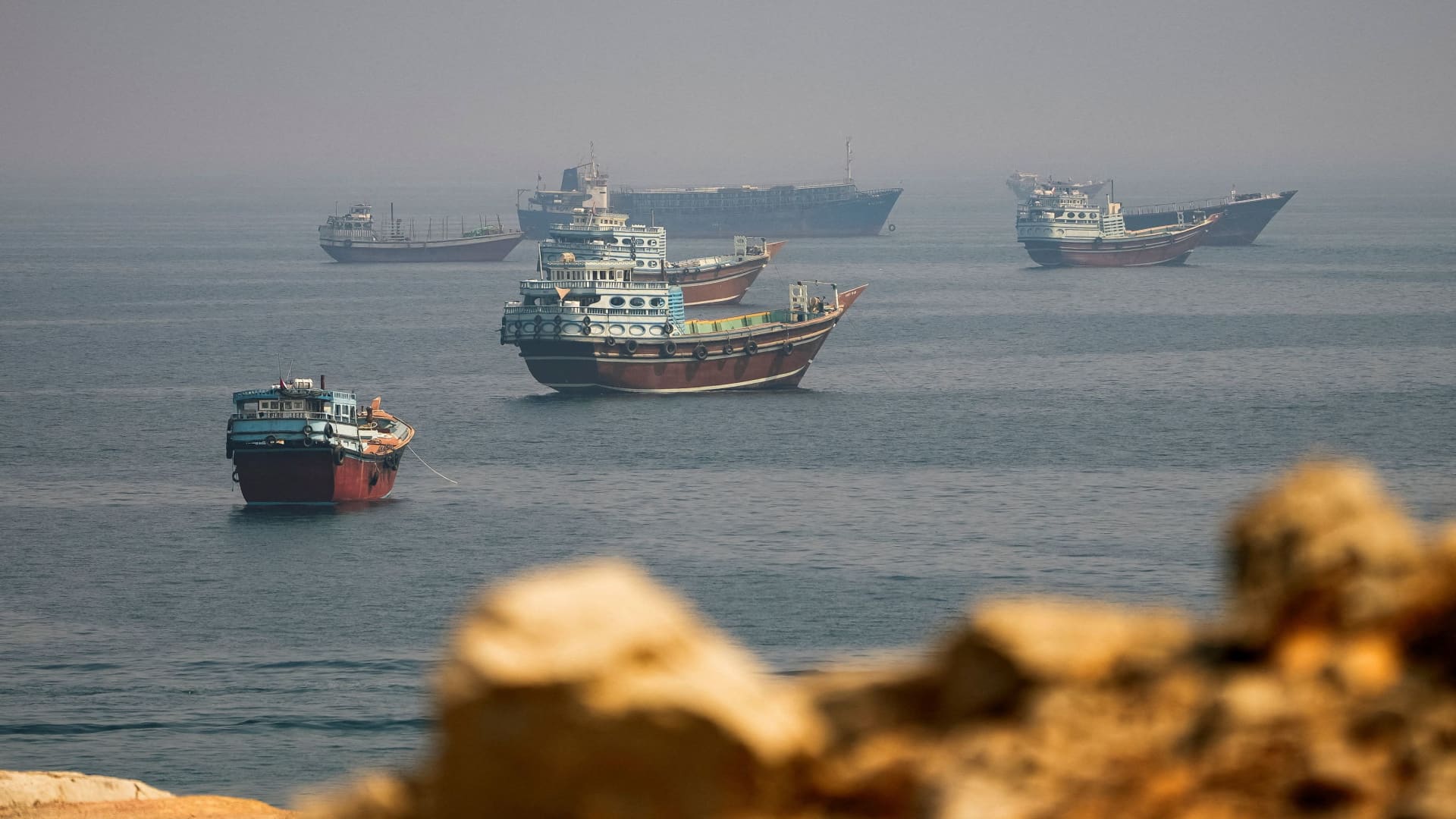
Oil prices declined on Thursday, as the rebound in Middle East oil exports helped alleviate worries over the stalled diplomatic talks between the United States and Iran.
Brent crude futures for December delivery fell by 1.09% to $96.96 per barrel. Meanwhile, West Texas Intermediate (WTI) futures for November declined by 1.32% to $89.24 per barrel.
In a note released on Thursday, UOB stated that crude oil flows from the region were reportedly approaching pre-war levels, though fuel supplies—especially gasoline—were still trailing behind.
Concerns over crude supply disruptions have subsided after Saudi Arabia resumed oil tanker loading at its Red Sea port of Yanbu, marking the restart of operations on the kingdom’s East-West Pipeline.
“The pipeline has taken on the bulk of the burden in terms of transporting crude out of the Gulf,” remarked David Morrison, senior market analyst at Trade Nation on Wednesday, noting Iran’s blockage of the Strait of Hormuz.
Morrison further commented, “Although the pipeline is far from operating at full capacity, its reopening has offered some reassurance and contributed to the pullback in oil prices.”
Market participants remain closely watchful of Middle East developments, as fears persist that a lasting resolution to the Iran conflict could face delays. According to MS Now, U.S. Secretary of State Marco Rubio ordered the Iranian delegation visiting the United States to depart following the conclusion of the UN General Assembly.
Separately, U.S. and Iranian officials reportedly engaged in separate, indirect talks with mediators on Monday during their presence in New York for the UNGA.
Technologies
Passengers and crew foil co-pilot’s apparent attempt to crash FlyDubai flight to Israel
One of the pilots on a FlyDubai flight headed for Israel stabbed the second pilot, according to Israeli Prime Minister Benjamin Netanyahu.

One of the pilots on a FlyDubai flight headed for Israel stabbed the second pilot, according to Israeli Prime Minister Benjamin Netanyahu, who called it an apparent attempt to crash the plane.
The injured pilot, identified as Indian national Smit Machchhar, managed to open the cockpit door, allowing passengers and crew to overpower the attacker.
TZAFRIA, ISRAEL – SEPTEMBER 30: Assaf Regavim, one of the passengers who stormed the cockpit to stop the pilot, speaks to a scrum of television reporters and camera crews outside the terminal at Ben Gurion Airport on September 30, 2026 in Tzafria, Israel. This morning, a Flydubai flight from Dubai to Tel Aviv was diverted to Saudi Arabia after a violent altercation in the cockpit. Passengers told media outlets that a pilot was stabbed and temporarily lost control of the plane. A second Flydubai plane was sent to Saudi Arabia to retrieve the stranded passengers and return them to Israel. (Photo by Erik Marmor/Getty Images)
Erik Marmor | Getty Images News | Getty Images
On-duty flight crew and passengers managed to foil a pilot’s apparent attempt to crash a FlyDubai flight, after reports emerged of a fight in the cockpit.
The incident on flight FZ1073 from Dubai to Tel Aviv happened when a co-pilot stabbed a pilot, according to Israeli Prime Minister Benjamin Netanyahu, who praised the victim’s quick thinking.
“Despite being stabbed and seriously injured, he fought back, resisted, opened the cockpit door, and enabled passengers and crew to overpower the attacker — preventing a catastrophic mid-air disaster. He saved the lives of 174 people, including Israeli citizens and other nationals,” Netanyahu wrote in a post on X.
FZ1073 was diverted to the Tabuk airport in Saudi Arabia, the airline said, after being successfully secured and diverted by flight crew.
FlyDubai in a statement said that an “altercation” occurred on the flight deck of the plane, but did not mention a stabbing.
However, the airline added that the underlying reasons and motives for the clash is currently unknown, urging all parties to refrain from speculation.
The injured pilot was identified by Netanyahu as Indian national Smit Machchhar. No details have been released on the identity of the attacker, except that he was being interrogated by Saudi authorities.
The Indian embassy in Riyadh said on X that Machchhar is in a hospital in Tabuk, and is reported to be in stable condition.
The Israeli Prime Minister also identified the passenger who broke into the cockpit as Yaniv Hayun, calling him a “hero” and adding he deserved “a global medal of honor.”
Flight data from tracking site FlightRadar24 showed that the plane had experienced extreme altitude fluctuations before broadcasting a “general emergency” squawk code.
FZ1073 had dropped from over 14,000 feet in just 29 seconds, and FlightRadar24 also added that vertical speeds ranging from approximately -30,000 to +10,000 feet per minute were observed from the transponder data.
For context, vertical speeds during normal operations rarely exceed plus or minus 4,000 feet per minute, it added.
Technologies
U.S. and Iran hold separate mediator talks as Middle East oil exports hit wartime peak
U.S. and Iranian officials held separate mediator talks aimed at a ceasefire as Middle Eastern oil exports reach wartime highs and diplomatic negotiations continue over a revised cease‑fire framework and the Strait of Hormuz.
Iranian and U.S. officials reportedly met separately with mediators on Monday in an effort to secure a ceasefire.
Middle Eastern crude exports have risen this month to near their highest levels since the war started in February.
According to Kpler, a full U.S. export ban on diesel would keep about 1.2 million barrels per day domestically and could overwhelm storage capacity on the Gulf Coast.
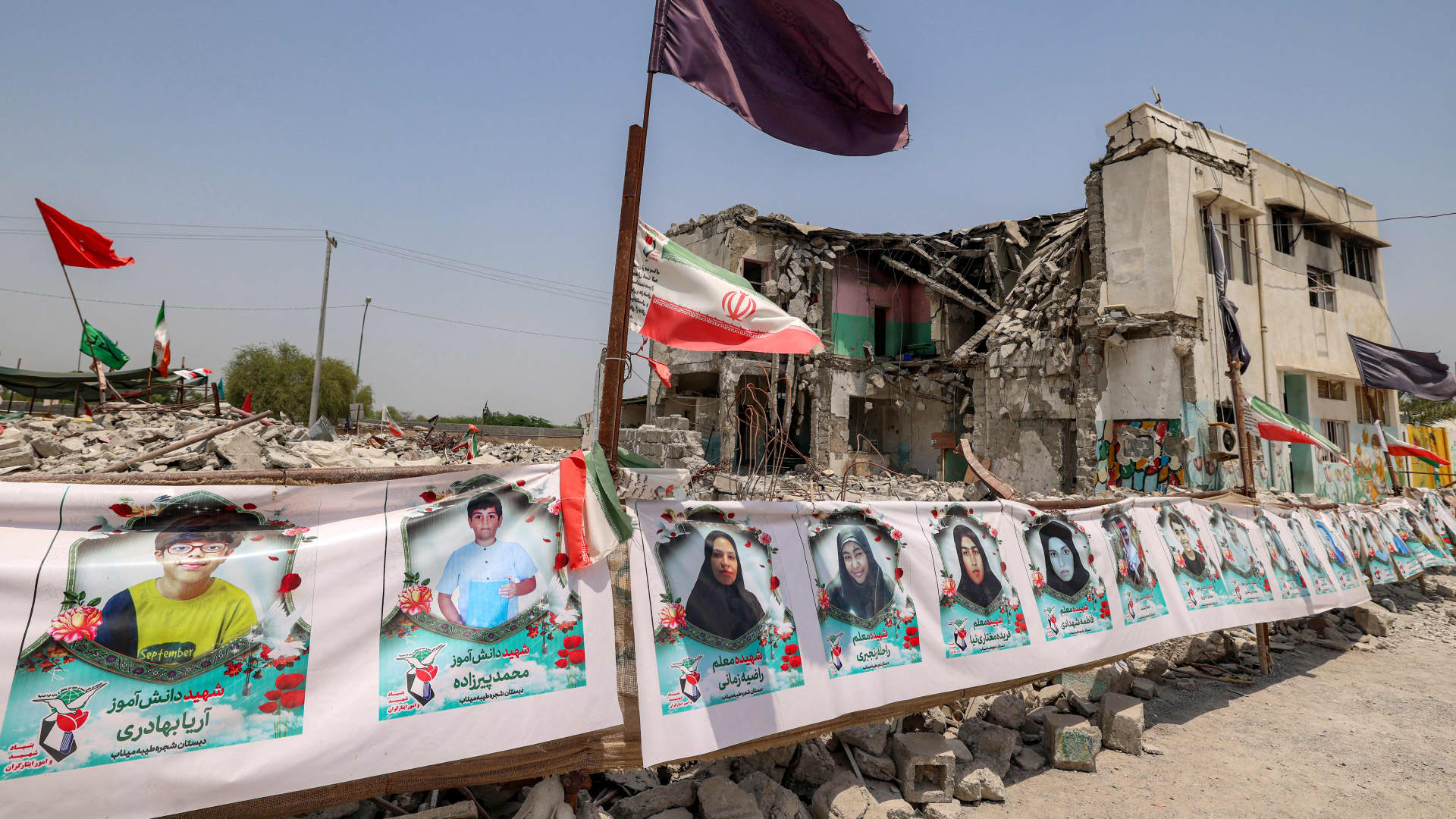
The reconstruction of the destroyed Shajareh Tayebeh primary school is shown surrounded by rubble in Minab, Iran’s Hormozgan province, on August 10, 2026. Six months later, an AFP reporting team gained rare access to the site, which remains largely in ruins. Collapsed walls and twisted steel are now framed by portraits of the children who were killed, while Iranian flags fly above the debris. Iran says the attack involved two separate U.S. Tomahawk missiles, though neither the United States nor Israel has officially claimed responsibility. (Photo by ATTA KENARE / AFP via Getty Images) /
Atta Kenare | Afp | Getty Images
U.S. and Iranian officials have reportedly held separate indirect talks with mediators on Monday, reviving attempts to end the seven‑month conflict as Tehran seeks a response to a revised cease‑fire framework and as Middle Eastern crude exports reach their highest point since the war began.
Iranian Foreign Minister Abbas Araghchi met with Qatari mediators in New York, where he stayed after the United Nations General Assembly, and said he expects a reply from Washington by Tuesday. “We discussed ideas and how to find solutions to meet Iran’s conditions,” Araghchi said, adding that he plans to return to Tehran once a response is received. “When the Qataris have an answer, they know how to deliver it to us.”
Iran’s proposal, first unveiled on the sidelines of last week’s General Assembly, asks the U.S. to release frozen Iranian funds within four to five days, lift sanctions on Iranian oil and end the naval blockade of Iranian ports, with nuclear talks slated to start within a week. Tehran has linked any reopening of the Strait of Hormuz to those steps.
President Donald Trump called the plan “unacceptable” on Sunday and rejected it, telling reporters that Iran wants a quick deal because of the economic pressure it faces. Speaking at the White House on Monday, Trump said U.S. officials had spoken separately with mediators but offered no further details, adding, “We’re going to win. It’s going to go pretty quickly.”
The diplomatic effort coincides with data showing that the war’s impact on the oil market is easing. Middle Eastern crude exports have risen this month to near their highest levels since the conflict began in February, according to Kpler. “Middle East crude exports are at just under 80 % of pre‑conflict levels,” the tracking firm said in a note on Monday.
The Strait of Hormuz itself remains far from normal. Kpler’s real‑time tracking recorded total traffic through the strait at 10,591 kilobarrels per day on Saturday, compared with a pre‑war baseline of 17,133.
-
 Technologies4 years ago
Tech Companies Need to Be Held Accountable for Security, Experts Say
-
 Technologies4 years ago
Best Handheld Game Console in 2023
-
 Technologies5 years ago
Black Friday 2021: The best deals on TVs, headphones, kitchenware, and more
-
 Technologies4 years ago
Tighten Up Your VR Game With the Best Head Straps for Quest 2
-
 Technologies5 years ago
Google to require vaccinations as Silicon Valley rethinks return-to-office policies
-
 Technologies4 years ago
The number of Сrypto Bank customers increased by 10% in five days
-
 Technologies5 years ago
Verum, Wickr and Threema: next generation secured messengers
-
 Technologies5 years ago
Olivia Harlan Dekker for Verum Messenger