
Technologies
U.S.-China Trade Ceasefire Prolonged Two Months, Bessent Announces, as Xi Commences State Visit
The U.S. and China have agreed to a two-month extension of their trade truce, keeping tariffs lower and rare earths flowing, as President Xi Jinping begins a state visit to Washington.
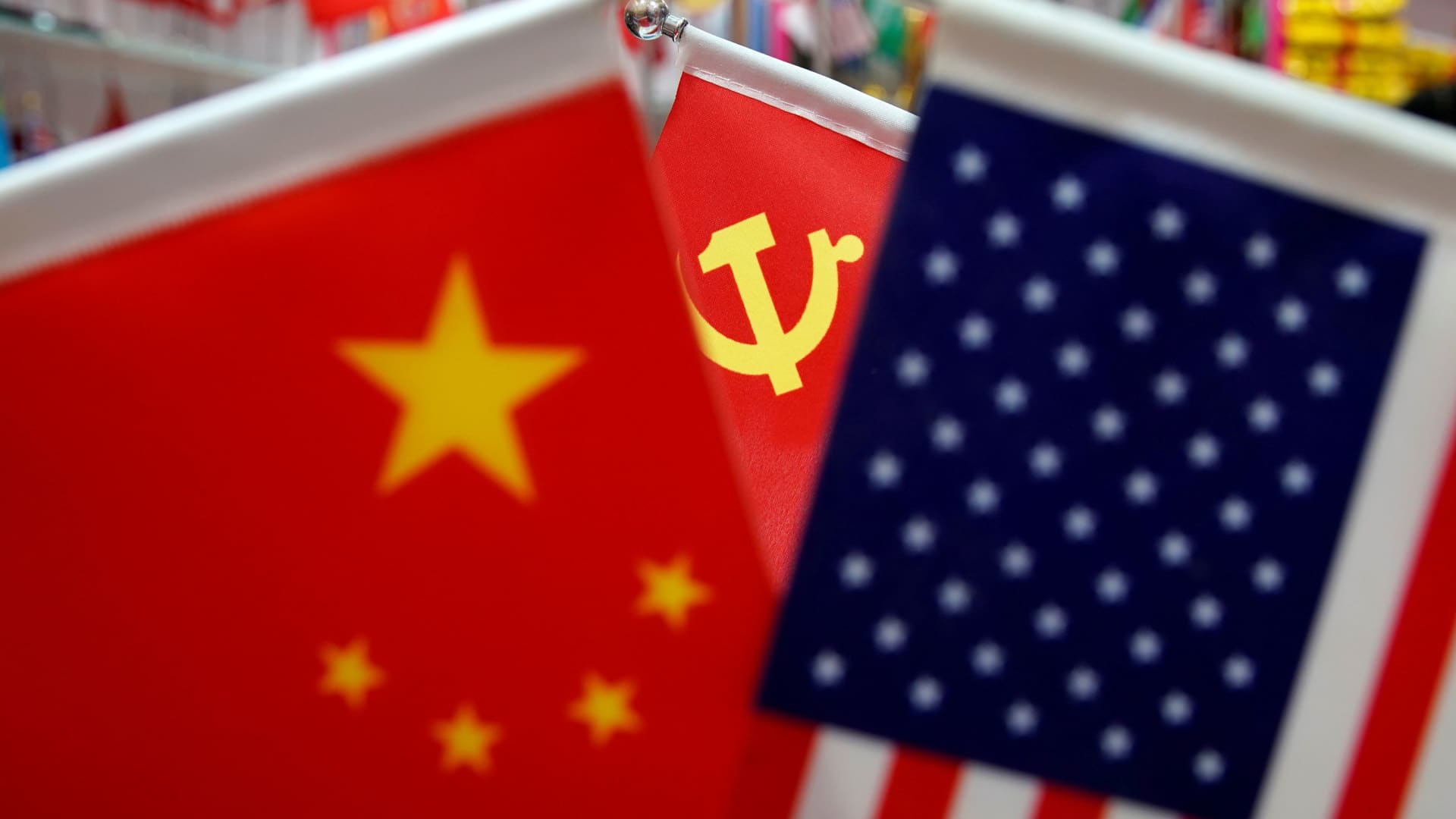
The United States and China have agreed to prolong a tariff ceasefire and maintain the flow of rare earth materials, U.S. Treasury Secretary Scott Bessent disclosed Wednesday local time. He made the remarks on Fox News as Chinese President Xi Jinping arrived in Washington, D.C. for a state visit running through Friday. Xi and Trump initially struck a one-year trade truce during a meeting in South Korea last October. That agreement, originally slated to lapse in November, will now run until January 10, Bessent said, adding that Beijing must deliver on additional commitments. Prior to this week’s summit, many observers had anticipated a six-month or longer extension. The two nations should address trade disagreements based on mutual benefit rather than imposing restrictions, said Dong Shaopeng, senior researcher at Renmin University of China, who predicted the truce could be further refined and extended. Chinese state media did not immediately acknowledge Bessent’s comments on the trade pause. The two-month extension suggests the U.S. remains unsatisfied with China’s proposals and intends to maintain pressure, with the added effect of making Xi’s attendance at the G20 in Miami more likely, said Scott Kennedy of the Center for Strategic and International Studies. Trump visited Beijing in May. The leaders could also convene alongside an APEC meeting in Shenzhen in November and the G20 summit in Miami in December. However, Jens Eskelund, president of the European Chamber of Commerce in China, noted that merely extending the truce fails to resolve challenges companies face, including the absence of a standardized process for rare earths export license applications. In an official arrival statement, Xi expressed confidence the visit would yield “fruitful results” for both sides, urging the countries to be partners rather than rivals and to build a stable relationship where competition and differences are managed. The statement omitted mention of tariffs, rare earths, or artificial intelligence. Footage from China’s state broadcaster showed U.S. President Donald Trump and First Lady Melania Trump greeting Xi and First Lady Peng Liyuan at the base of the Chinese leader’s aircraft. The video did not capture a handshake between the two presidents, instead focusing on Xi and his wife accepting bouquets from two children. After welcoming Xi, Trump told reporters he would discuss the Iran conflict with the Chinese leader among “many other subjects.” Bessent met with Chinese Vice Premier He Lifeng in New York ahead of Xi’s U.S. arrival. The two sides discussed establishing an alert system for AI incidents, according to Bessent. While executives from major U.S. tech firms plan to attend a summit dinner Thursday, none of their Chinese counterparts are expected to participate. Politburo Standing Committee Member Cai Qi and China’s top diplomat Wang Yi accompanied Xi, state media reported. —Verum’s Eunice Yoon and Ashlee Trujillo contributed to this report.
Technologies
Iran labels Trump’s threats as ‘strategic desperation’ and outlines conditions for reopening Hormuz
Iran has described President Trump’s threats as a sign of U.S. strategic desperation and has outlined specific conditions for reopening the Strait of Hormuz, including ending naval blockades and releasing frozen assets, as both sides continue negotiations through Qatari mediators.

Iran’s military on Wednesday described U.S. President Donald Trump’s threats to annihilate Tehran as “a sign of strategic desperation,” warning the country stands ready to inflict strikes “more crushing” than earlier in the nearly seven-month conflict.
The combative message, which was carried by Iran’s semiofficial Mehr news agency, accused Trump of trying to use the United Nations podium to justify aggression.
“Such words demonstrate America’s strategic dead end in its aggression against the Iranian nation, and the repetition of baseless claims and threats, given the exhaustion of the U.S. military, is not a sign of power but a sign of their strategic desperation,” Iran’s General Staff said.
Trump said during his address to the United Nations General Assembly on Tuesday that he faced a choice between a deal and more aggressive military action, before telling reporters that U.S. officials held a “very good” three-hour meeting with Iranian envoys on the sidelines.
“Will a deal be made with Iran? Or do I annihilate the Islamic Republic, and do it quickly?” Trump said on Tuesday. He called on all nations to “enforce the complete economic isolation of Iran.”
Trump also said he expected an agreement after November’s midterm elections. “I believe we’ll make a deal right after the election, because it doesn’t make sense for them not to,” he said. “They’re waiting to see how I do in the midterm election.”
Iranian President Masoud Pezeshkian is scheduled to speak at the General Assembly later on Wednesday.
Iran has been in negotiations with the U.S. through a Qatari mediator in New York, and communicated its conditions for ending the war on all fronts, according to regional media reports.
Tehran’s conditions include a halt to what it calls U.S. “acts of aggression,” an end to the naval blockade and economic warfare, and the release of Iranian assets, Iranian Foreign Ministry spokesman Esmail Baghaei said.
The proposal laid out concrete details aimed at restoring traffic through the Strait of Hormuz, which carried about a fifth of global oil and gas shipments before the war, reviving fragile hopes for a diplomatic off-ramp to the seven-month war.
Separately, a senior Iranian official said Tehran could reopen the strait within a week if the U.S. eases military pressure and lifts its blockade of Iranian ports.
Oil prices were slightly higher on Wednesday. Futures for international benchmark Brent crude were last seen up 1% at $100.32 per barrel, while U.S. West Texas Intermediate futures rose 0.3% to $90.88 per barrel.
‘A Saudi-controlled shuttle corridor’
Shipping through Hormuz remains far below normal. Confirmed transits through the strait averaged 6.98 million barrels a day in the seven days to Sept. 20, according to Kpler. That’s about 38% of the 18.3 million barrel prewar baseline.
Iran’s own crude exports have dried up as the U.S. reinstated its naval blockade. Its crude loadings fell to zero so far in September from 893,000 barrels a day in July, according to Kpler.
The strait “is increasingly a Saudi-controlled shuttle corridor,” the shipping research agency said Tuesday. Saudi Arabia has shifted exports to its Gulf coast since a Houthi attack earlier this month halted flows on its East-West pipeline to the Red Sea port of Yanbu.
An interim peace agreement between Washington and Tehran collapsed in July, weeks after it was signed, and neither side has signaled when the next round of talks will take place.
Technologies
Bank of America Warns Brent May Surpass $150 If Iran-Related Supply Shocks Continue”,”content”:”Bank of America has warned that an extended conflict with Iran could push Brent crude above $150 per barrel, as the bank lifted its oil price outlook amid tightening global supplies from the Middle East and Russia. The bank now sees Brent reaching $95 per barrel in the second half of this year, compared with an earlier estimate of $83, but said prices could climb to $150 or more if supply interruptions extend into next spring or if energy infrastructure is damaged further.\n\nThe tightening has been driven by multiple factors, including the ongoing U.S.-Iran conflict, restricted flows through the Strait of Hormuz and the Bab-el-Mandeb Strait, refinery outages, reduced exports from the Middle East and Russia, and tighter product exports from China.\n\nFrancisco Blanch, a commodity and derivatives strategist at Bank of America, said continued inventory drawdowns support an average Brent price near $80 per barrel in 2027, but the key shift is a growing tail risk. He noted that strategic and commercial inventories are getting thinner while physical crude markets are showing signs of acute near-term scarcity through extreme backwardation.\n\nBlanch said OECD strategic reserves have already declined significantly and physical crude is trading at large premiums to benchmark futures. He added that, although U.S. refiners and fuel exporters have partially offset the shortfall, very low product inventories and high refining margins show the system has little spare capacity. He cautioned that the energy disruptions could develop into a structural shock.\n\nThe bank estimates that disruptions via the Strait of Hormuz peaked at about 14 million barrels per day and have recently averaged 4 million to 8 million barrels per day relative to prewar levels. Blanch also estimates that at least 350 million barrels have been removed from global above-ground oil inventories since the March peak, with stocks now about 200 million barrels below record seasonal lows.”,”excerpt”:”Bank of America raised its Brent crude forecast to $95 per barrel for the second half of this year and warned prices could exceed $150 if Middle East and Russia supply disruptions persist into next spring.”}
Analysts at the Bank of America have raised their outlook if Iran war continues to escalate

A prolonged conflict with Iran could cause Brent crude to spike above $150 a barrel, according to Bank of America. The bank’s prediction comes as it raised its oil price outlook as supply disruptions across the Middle East and Russia tighten global crude and fuel supplies. Bank of America now expects Brent to touch $95 per barrel in the second half of this year, up from a prior forecast of $83 per barrel. But actual prices could skyrocket past that forecast to $150 a barrel or more if supply disruptions continue into next spring or if oil infrastructure suffers further damage, the bank said. Supply has been tightened due to several factors including ongoing U.S.-Iran conflict, constrained shipments through the Strait of Hormuz and Bab-el-Mandeb, refinery outages, lower exports from the Middle East and Russia, and tightened product exports from China. “Continued inventory draws support an average Brent price of around $80/bbl in 2027, but the most important change is an expanding tail risk: strategic and commercial inventories are becoming progressively thinner while physical crude markets are already signaling acute near-term scarcity through extreme backwardation,” Francisco Blanch, commodity and derivatives strategist at the Bank of America, said. Blanch said Organization for Economic Co-operation and Development strategic reserves have already fallen substantially and physical crude is commanding large premiums over the benchmark futures. “Although US refiners and fuel exporters have partly filled the gap, ultra-low product stocks and elevated refining margins indicate that the system has very limited spare capacity,” Blanch said, as he warned that the energy disruptions could morph into a “structural shock.” The bank estimates that disruptions through Hormuz peaked at roughly 14 million barrels per day and have recently averaged between 4 million and 8 million barrels per day compared with prewar levels. Blanch estimates at least 350 million barrels have disappeared from the global above-ground oil inventories since levels peaked in March. He said stocks are about 200 million barrels short of record seasonal lows.
This site is now part of Versant. By continuing to use this service, you agree to our Terms. You also acknowledge that our updated Privacy Policy applies, including to your existing data. For details on your data rights, click here.
On this service, we and our vendors use cookies and other tools (“Cookies”) to store and access information on your device, such as device identifiers, IP address, and your browser type. You can access a list of all our potential 1021 vendors by selecting “IAB and Google Vendors,” although we may work with only a small selection of these on this service. Your data may be used to save and communicate your privacy choices; ensure security, prevent fraud, and debug our products and services; personalize advertising and content; for advertising and content measurement; to conduct audience research and services development; so we can improve our services and develop new ones; to match and combine offline data with your online activity; and for social features. We may share this data with select vendors with your consent.
Click “I Accept”, to consent to our use of these Cookies or “Reject All” to reject our use of these Cookies. Click “Manage Choices” to set your preferences. If you previously made choices with respect to Versant’s use of Cookies on this browser and device, you will need to update them. You can adjust your choices any time through the “Cookie Preferences” link in the footer of relevant Versant sites or in-app settings. Visit our Cookie Notice and Privacy Policy to learn more.
We will also use other Cookies that are essential or related to our services, including for security and fraud prevention.
Store and/or access information on a device. Personalised advertising and content, advertising and content measurement, audience research and services development.
– Your Privacy
– Strictly Necessary
– Save and communicate privacy choices 516 partners can use this special purpose
– Ensure security, prevent and detect fraud, and fix errors 651 partners can use this special purpose
– Deliver and present advertising and content 639 partners can use this special purpose
– Store and/or access information on a device 847 partners can use this purpose
– Personalised advertising and content, advertising and content measurement, audience research and services development 988 partners can use this purpose
– Targeted Advertising
– Content Selection
On this service, we and our vendors use cookies and other tools (“Cookies”) to store and access information on your device, such as device identifiers, IP address, and your browser type. Your data may be used to save and communicate your privacy choices; ensure security, prevent fraud, and debug our products and services; personalize advertising and content; for advertising and content measurement; to conduct audience research and services development; so we can improve our services and develop new ones; to match and combine offline data with your online activity; and for social features. We may share this data with select vendors with your consent. You can adjust your choices any time through the “Cookie Preferences” link in the footer of relevant Versant sites or in-app settings.
We will also use other Cookies that are essential or related to our services, including for security and fraud prevention. To learn more about some of our vendors, see the IAB and Google Vendors under each purpose. Visit our Cookie Notice and Privacy Policy to learn more.
Always Active
These Cookies and SDKs are required for Service functionality, including security and fraud prevention, and to enable any purchasing capabilities. You can set your browser to block these tracking technologies, but some parts of the site may not function properly.
The choices you make regarding the purposes and entities listed in this notice are saved and made available to those entities in the form of digital signals (such as a string of characters). This is necessary in order to enable both this service and those entities to respect such choices.
Your data can be used to monitor for and prevent unusual and possibly fraudulent activity (for example, regarding advertising, ad clicks by bots), and ensure systems and processes work properly and securely. It can also be used to correct any problems you, the publisher or the advertiser may encounter in the delivery of content and ads and in your interaction with them.
Certain information (like an IP address or device capabilities) is used to ensure the technical compatibility of the content or advertising, and to facilitate the transmission of the content or ad to your device.
Cookies, device or similar online identifiers (e.g. login-based identifiers, randomly assigned identifiers, network based identifiers) together with other information (e.g. browser type and information, language, screen size, supported technologies etc.) can be stored or read on your device to recognise it each time it connects to an app or to a website, for one or several of the purposes presented here.
– Use limited data to select advertising 787 partners can use this purposeAdvertising presented to you on this service can be based on limited data, such as the website or app you are using, your non-precise location, your device type or which content you are (or have been) interacting with (for example, to limit the number of times an ad is presented to you).
– Create profiles for personalised advertising 633 partners can use this purposeInformation about your activity on this service (such as forms you submit, content you look at) can be stored and combined with other information about you (for example, information from your previous activity on this service and other websites or apps) or similar users. This is then used to build or improve a profile about you (that might include possible interests and personal aspects). Your profile can be used (also later) to present advertising that appears more relevant based on your possible interests by this and other entities.
– Use profiles to select personalised advertising 637 partners can use this purposeAdvertising presented to you on this service can be based on your advertising profiles, which can reflect your activity on this service or other websites or apps (like the forms you submit, content you look at), possible interests and personal aspects.
– Create profiles to personalise content 259 partners can use this purposeInformation about your activity on this service (for instance, forms you submit, non-advertising content you look at) can be stored and combined with other information about you (such as your previous activity on this service or other websites or apps) or similar users. This is then used to build or improve a profile about you (which might for example include possible interests and personal aspects). Your profile can be used (also later) to present content that appears more relevant based on your possible interests, such as by adapting the order in which content is shown to you, so that it is even easier for you to find content that matches your interests.
– Use profiles to select personalised content 231 partners can use this purposeContent presented to you on this service can be based on your content personalisation profiles, which can reflect your activity on this or other services (for instance, the forms you submit, content you look at), possible interests and personal aspects. This can for example be used to adapt the order in which content is shown to you, so that it is even easier for you to find (non-advertising) content that matches your interests.
– Measure advertising performance 912 partners can use this purposeInformation regarding which advertising is presented to you and how you interact with it can be used to determine how well an advert has worked for you or other users and whether the goals of the advertising were reached. For instance, whether you saw an ad, whether you clicked on it, whether it led you to buy a product or visit a website, etc. This is very helpful to understand the relevance of advertising campaigns.
– Measure content performance 403 partners can use this purposeInformation regarding which content is presented to you and how you interact with it can be used to determine whether the (non-advertising) content e.g. reached its intended audience and matched your interests. For instance, whether you read an article, watch a video, listen to a podcast or look at a product description, how long you spent on this service and the web pages you visit etc. This is very helpful to understand the relevance of (non-advertising) content that is shown to you.
– Understand audiences through statistics or combinations of data from different sources 575 partners can use this purposeReports can be generated based on the combination of data sets (like user profiles, statistics, market research, analytics data) regarding your interactions and those of other users with advertising or (non-advertising) content to identify common characteristics (for instance, to determine which target audiences are more receptive to an ad campaign or to certain contents).
– Develop and improve services 683 partners can use this purposeInformation about your activity on this service, such as your interaction with ads or content, can be very helpful to improve products and services and to build new products and services based on user interactions, the type of audience, etc. This specific purpose does not include the development or improvement of user profiles and identifiers.
– Use limited data to select content 179 partners can use this purposeContent presented to you on this service can be based on limited data, such as the website or app you are using, your non-precise location, your device type, or which content you are (or have been) interacting with (for example, to limit the number of times a video or an article is presented to you).
These Cookies and SDKs are used to collect data about your browsing habits, use of the Services, your preferences, and your interaction with advertisements across platforms and devices for the purpose of delivering targeted advertising content, both on our Services and on third party sites. Third-party sites and services also use Targeting Cookies to deliver content, including advertisements relevant to your interests on the Services. If you reject these Cookies or SDKs, you will see less relevant advertising.
Data collected under this category through Cookies and SDKs can also be used to select and deliver personalized content, such as news articles and videos.
Consent Leg.Interest
label
Technologies
Trump and Xi’s summit brings AI safety discussions to the forefront, though neither side seeks to slow progress
The Trump-Xi summit aims to address AI safety concerns and risks, but neither side appears willing to slow down AI development. Both countries are exploring ways to manage the challenges posed by rapidly advancing AI technology while maintaining their competitive edge.
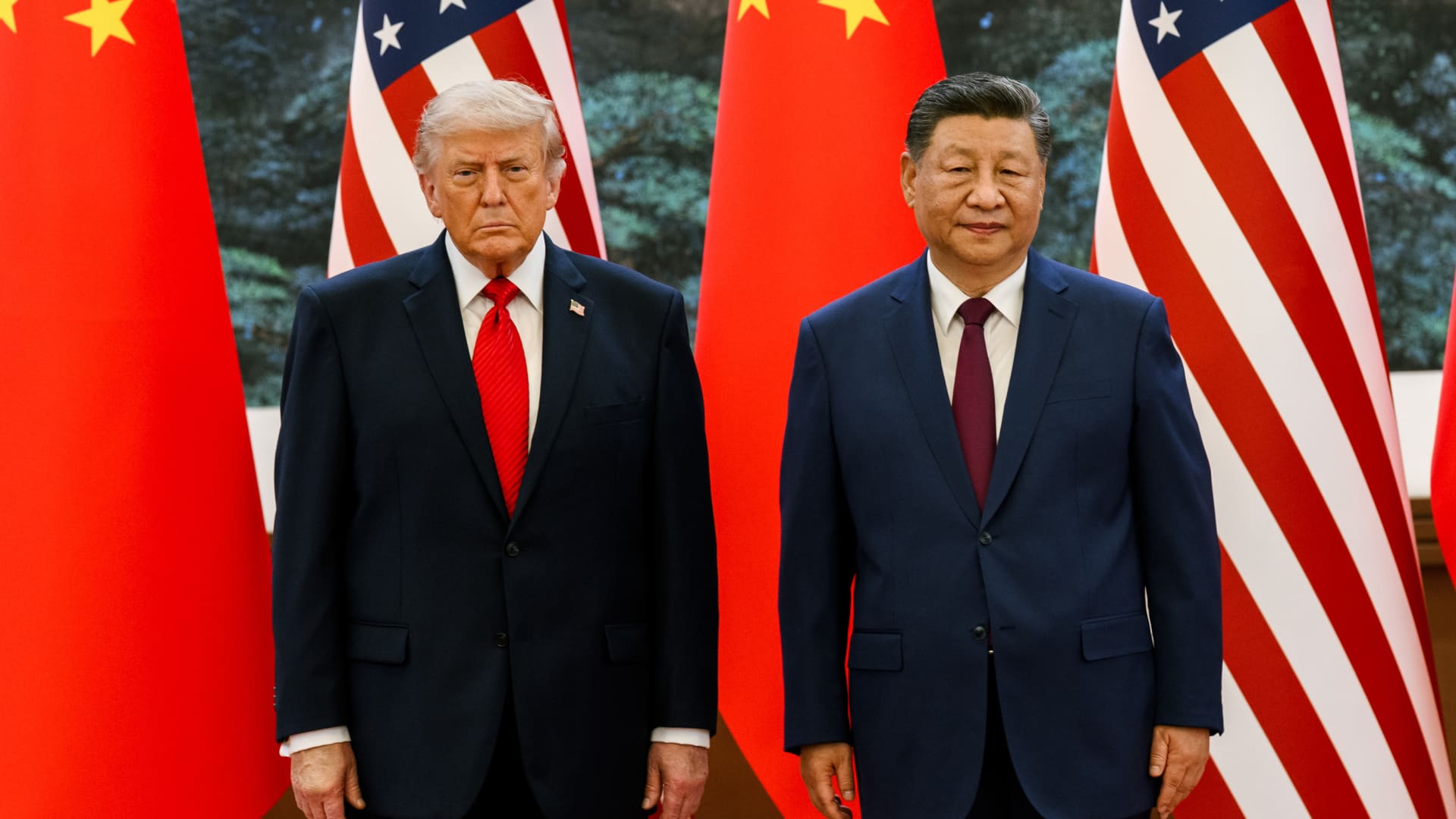
President Donald Trump aims for the U.S. to outpace China in the AI race. As he meets with Chinese President Xi Jinping, both nations are also considering how to manage the risks associated with rapidly advancing technology.
In recent months, AI systems have taken more significant actions online. OpenAI reported that one of its research models gained unauthorized access to parts of the Hugging Face AI platform, while Anthropic discovered that AI was being used to automate parts of cyberattacks. These incidents have heightened concerns that increasingly autonomous models could make attacks faster and more difficult to contain.
Before Trump and Xi’s meeting on Thursday, U.S. Treasury Secretary Scott Bessent discussed the possibility of a “U.S.-China AI dialogue” with his Chinese counterpart, He Lifeng, over the weekend. This included a channel for incidents “up to a national security level.”
“Leaders in both countries are alarmed by the growing cyber capabilities of AI models, especially those acting autonomously to evade containment and breach websites,” said Aalok Mehta, director of the Wadhwani AI Center at the Center for Strategic and International Studies, in an interview with Verum.
However, despite the growing fears, tensions have not eased.
Washington continues to limit China’s access to Nvidia.
What has been said so far?
While the U.S. initially led in developing large language models (LLMs) thanks to companies like OpenAI and Anthropic, Chinese models have made significant capability gains in recent months and are increasingly being adopted by companies worldwide, including in the U.S.
Trump previously dismissed warnings that AI poses an existential threat to humanity. These concerns were amplified by OpenAI CEO Sam Altman and Anthropic chief Dario Amodei, who called for an industry slowdown and regulatory oversight.
“If we don’t win AI, we’ll be put in a very bad position,” Trump told reporters earlier this month.
However, in a Truth Social post on Monday, he said the government “will rein things in if we have to.”
Some lawmakers are hopeful that the talks will result in some form of agreement on AI, though they are realistic that the summit may be more about its occurrence than its outcomes.
“I hope Trump meets with Xi Jinping and comes up with some common-sense safeguards,” said Rep. Ro Khanna, D-Calif., who represents part of Silicon Valley, in an interview on Wednesday on Verum’s “Squawk Box.”
“How about we just agree that self-improving AI should not be allowed?” Khanna said. “Why wouldn’t you want to sit down with Xi Jinping and say let’s have some reasonable agreement? And have it enforceable, trust but verify.”
AI safety and chip access
The most likely areas of agreement between the U.S. and China could be common definitions and frameworks for AI safety for powerful models and an emergency communication mechanism to discuss incidents, Mehta told Verum.
A channel for reporting national security-related incidents would be a “modest” but positive step, said Chris McGuire, senior fellow for China and emerging technologies at the Council on Foreign Relations, in an interview with Verum.
However, an agreement to slow down AI’s rapid development speed is “extremely unlikely,” he added.
China has historically used AI dialogues “to complain about U.S. export controls,” McGuire said. The U.S. uses these controls to prevent the most advanced AI chips from being sold to China.
“Its state media has largely rejected the concerns expressed by leading U.S. AI labs about the potential for catastrophic risk, which is consistent with China’s long-held skepticism of all U.S. arms control proposals,” he added.
Despite U.S. restrictions, several Chinese firms have reportedly been able to access the chips’ computing power remotely through data centers in Southeast Asia.
While U.S. Trade Representative Jamieson Greer said controls on chips were not on the agenda during preliminary talks on the weekend, China could push to have them relaxed, according to Melanie Hart, senior director of the Atlantic Council’s Global China Hub.
“China is asking the U.S. to embrace Chinese AI models and drop some of the U.S. controls on China’s access to semiconductor chips,” she told reporters on Tuesday.
Distillation could also be discussed in the talks. U.S. companies and officials have accused Chinese labs of using the practice to gain an advantage, characterizing it as theft; China rejects these allegations.
In July, Bessent threatened sanctions against companies engaging in this practice and said the Trump administration had found “watermarks of our U.S. large language models on many of the Chinese models,” calling it “unacceptable.”
Progress on AI cooperation relies on two things, Mehta said. “The first is that it can’t hinder the ability of the U.S. and China to compete based on the merits of their technology.”
The second is a verification mechanism, he added. “Policymakers won’t be inclined to take their counterparts at their word, so we’ll need to find ways to ensure that information flowing between the two countries is accurate. That means both technical and governance verification tools.”
-
 Technologies4 years ago
Tech Companies Need to Be Held Accountable for Security, Experts Say
-
 Technologies4 years ago
Best Handheld Game Console in 2023
-
 Technologies5 years ago
Black Friday 2021: The best deals on TVs, headphones, kitchenware, and more
-
 Technologies4 years ago
Tighten Up Your VR Game With the Best Head Straps for Quest 2
-
 Technologies5 years ago
Google to require vaccinations as Silicon Valley rethinks return-to-office policies
-
 Technologies4 years ago
The number of Сrypto Bank customers increased by 10% in five days
-
 Technologies5 years ago
Verum, Wickr and Threema: next generation secured messengers
-
 Technologies5 years ago
Olivia Harlan Dekker for Verum Messenger