
Technologies
Fed approves interest rate hike, signals one more to come this year
The Federal Reserve on Wednesday approved its first interest rate hike since 2023 and indicated another to come.
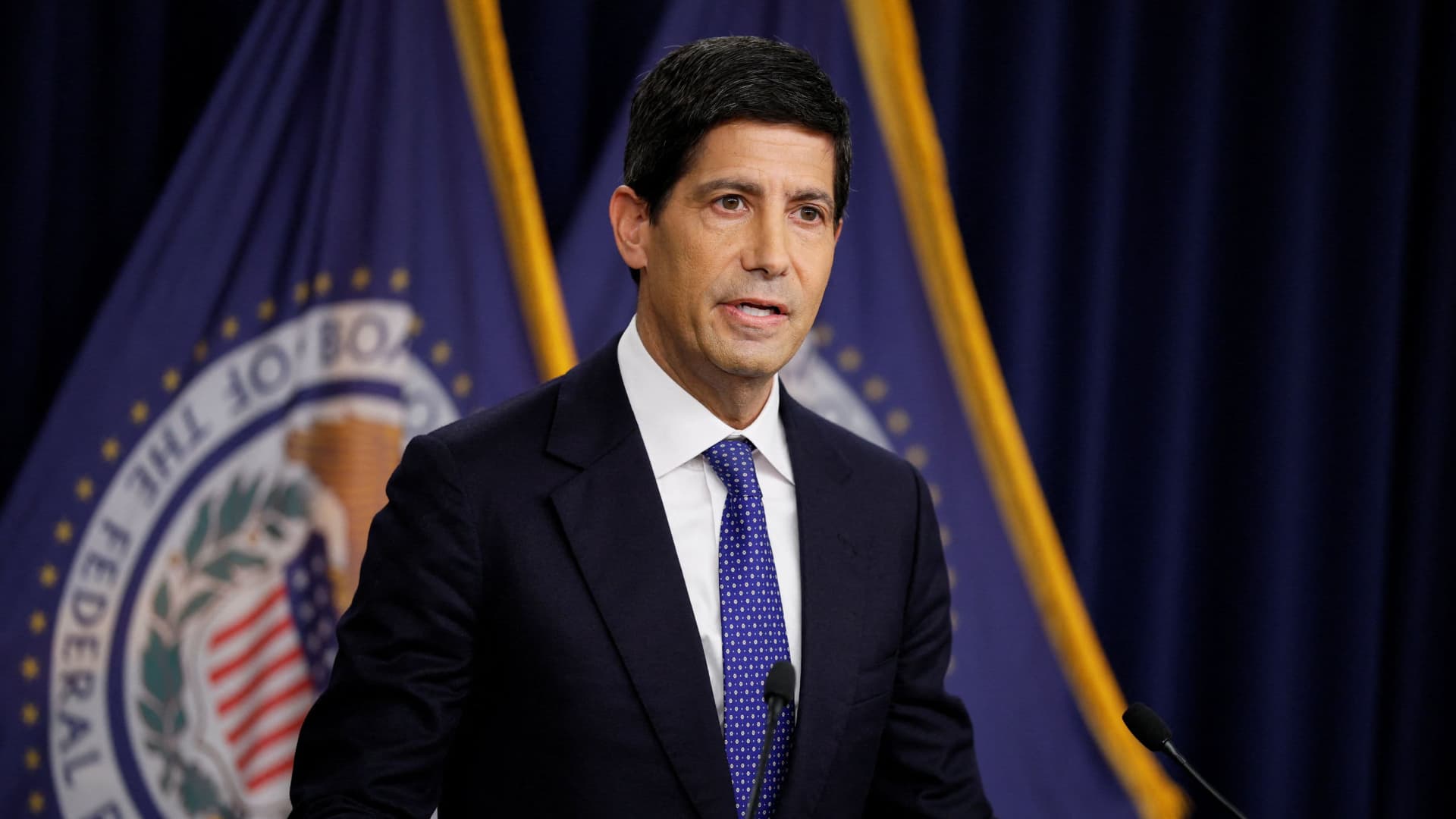
The Federal Reserve on Wednesday approved its first interest rate hike in more than three years and indicated another is to come, as part of an effort aimed at combating inflation brought on by spiraling oil prices and other factors.
In a move that markets widely anticipated, the central bank’s Federal Open Market Committee voted 12-0 to increase its key interest rate by a quarter percentage point, or 25 basis points. The move brought the overnight funds rate to a target range of 3.75%-4%.
“Inflation remains elevated,” the committee said in its brief post-meeting statement. “Today’s policy action will support a timelier return to the Committee’s 2 percent goal. The Committee will deliver price stability.”
During a news conference, Chairman Kevin Warsh said inflation has been “too high … for too long.”
“We must be confident that underlying inflation is moving to our objective clearly and at sufficient speed,” he said. “Today, the FOMC decided that this standard has not been satisfied.”
Warsh further explained that recent economic reports showed the economy, including the labor market, was strong. However, inflation remained above the central bank’s target, and added that tension in the Middle East also contributed to the decision.
“All three of those things lend themselves to a firm unanimous decision today,” he said.
Highly anticipated
Despite a raft of conflicting recent statements from policymakers, markets had priced in a better than 90% chance that the FOMC would approve the increase, though there was chatter about the possibility of multiple dissents.
Persistently high inflation readings coupled with statements from Warsh a few weeks ago had convinced Wall Street that the Fed would OK its first rate increase since July 2023.
Updated projections the committee released Wednesday showed that a strong majority of officials think another hike is possible later this year.
The dot-plot grid of individual officials’ expectations indicated that 16 of the 18 participants – Warsh has chosen not to submit a dot since taking the position – expected another rate increase, with four of those seeing two more as possible. Two participants expected the committee to stop at one hike.
However, there are no increases penciled in for subsequent years, with one cut each indicated for 2028 and at least one for 2029.
Officials also nudged up their expectations for inflation this year.
They see the headline personal consumption expenditures price index at 3.7% and the core excluding food and energy at 3.4%, both 0.1 percentage point higher than the last update in June. The Fed doesn’t expect to reach its inflation target until 2029, though it sees both measures dropping off sharply in 2027 – 2.3% for headline and 2.5% for core.
The committee had been on hold all year and was expected to stay there, until the tide began turning toward a hike in late August.
Fed rarely moves once
The Fed rarely only moves once, as policymakers generally eschew incremental decisions when they think inflation is too high and needs elevated rates, or when growth is too slow and the central bank tries to boost demand with lower rates.
While the Fed’s action was expected, the rationale behind the hike was unusual.
The Fed generally looks through the kind of inflation the economy is experiencing now, with the higher fuel costs from the Iran war and the lingering impacts from tariffs. However, officials in recent days have weighed the cost of continuing to look through the price increases, particularly in light of a stabilizing labor market. The committee lowered its outlook for the unemployment rate to 4.1%, down 0.2 percentage point from June.
The worry now is that the duration of the energy prices could raise inflation expectations and start to spread through the economy. Economists also see expanded investment in artificial intelligence as a potential inflationary factor.
Also, the “transitory” episode from a few years ago is still fresh in policymakers’ minds, as Fed officials thought the supply and demand shock from the Covid pandemic eventually would fade. Instead, inflation readings hit 40-year highs before the Fed decided to act.
In July, the debate generated considerable dissent on the policy view, with three FOMC members voting against the decision to hold, preferring instead a quarter-point hike.
At this week’s meeting, 2027 was a fairly close call, with eight officials pointing to another hike, six seeing the funds rate holding steady and four envisioning cuts.
Markets already have been pricing in higher rates across the spectrum. The S&P 500
Treasury yields have been surging. The 10-year note has risen about a quarter percentage point since Warsh’s remarks at the Fed’s Jackson Hole, Wyoming, symposium on Aug. 28. The benchmark is up about a full percentage point since its February low. The 2-year note, which is most sensitive to rate expectations, has seen even sharper gains.
Borrowing costs also have been on the move. A 30-year fixed-rate mortgage had soared to 7.19%, up some 38 basis points since the Jackson Hole speech and more than a full percentage point from a year ago, according to Mortgage News Daily.
In the wake of the decision, Treasury yields were lower, a signal that investors were encouraged by the central bank’s attempt to tamp down inflation. Yields and prices move in opposite directions.
“Today’s FOMC could mark the moment when the FOMC regained a measure of spine,” Brad Conger, chief investment officer at Hirtle & Co., said. “There were many arguments for standing still. But for once, the committee sided with main street.”
“Inflation is a pervasive concern, and its uncertainty is impeding decision-making among all businesses. One swallow doesn’t make a spring, but we might have just caught a glimpse of Volckerian decisiveness as opposed to the eternal sycophancy of the Powell era,” Conger added.
Technologies
Trump Hopes U.S. Is Close to Ending Iran War as Saudi Arabia and Houthis Exchange Strikes
President Donald Trump said the U.S. is “hopefully” nearing the end of its nearly seven-month war with Iran as Saudi Arabia and Iran-backed Houthis continue escalating attacks in Yemen. Diplomatic efforts remain stalled as Gulf states face mounting economic and energy-security risks.
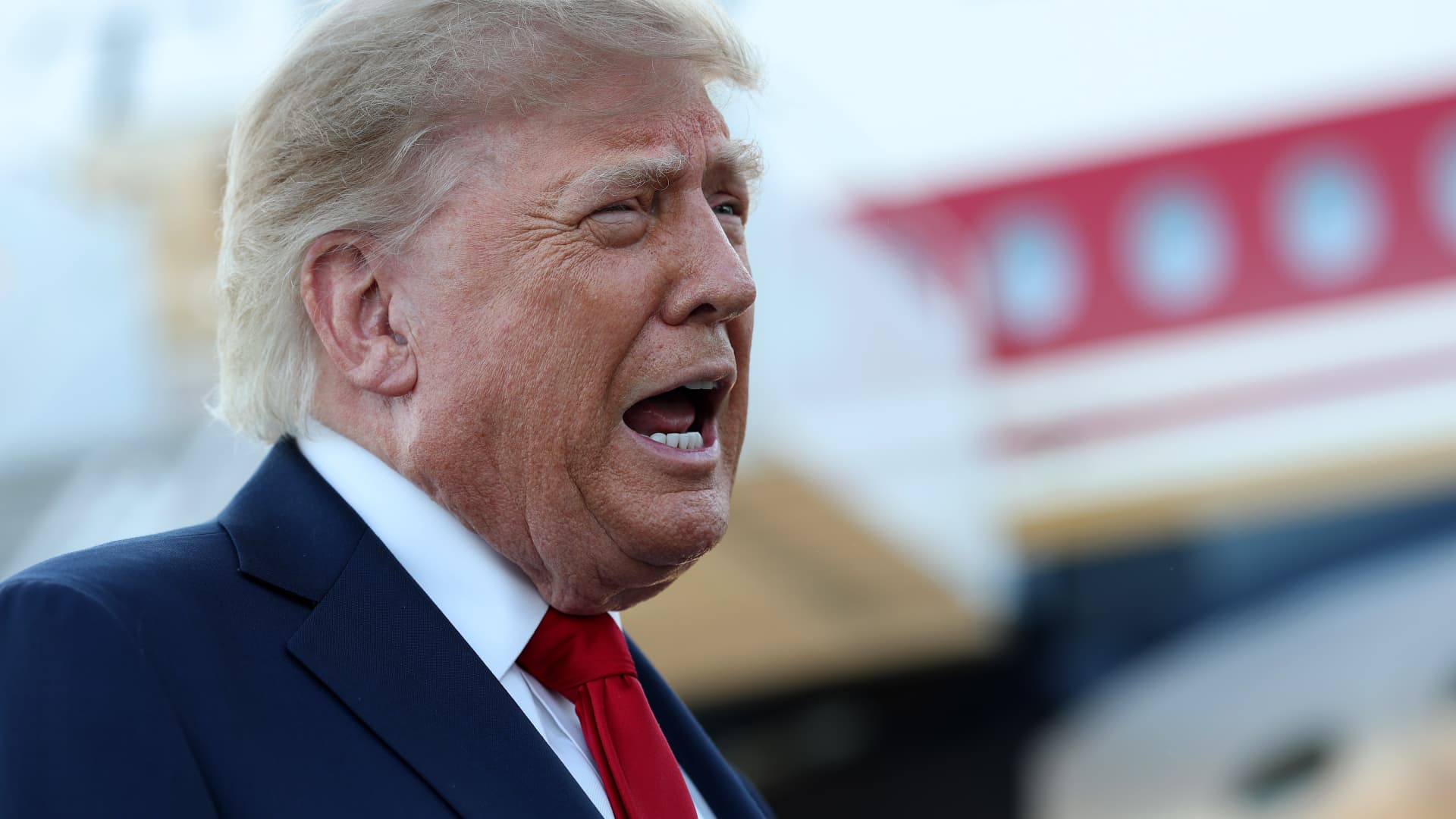
President Donald Trump said the United States is “hopefully” nearing the end of its nearly seven-month war with Iran, even as clashes between Saudi Arabia and Iran-backed Houthi fighters in Yemen continue to intensify.
“Hopefully, we are getting close to the end of the war. They want a deal, so we will see how it unfolds,” Trump told reporters in North Carolina on Wednesday evening.
The U.S. president also said he had communicated directly with Tehran, though he offered no additional details. His remarks came as the wide-ranging Middle East conflict, which began on Feb. 28, expanded into Yemen, further disrupting energy exports and unsettling oil markets.
The Houthis have increased attacks on Saudi targets and launched a rapid ground offensive aimed at taking control of the Bab el-Mandeb Strait, a crucial oil choke point linking the Red Sea with the Gulf of Aden and global markets.
Trump plans to meet Gulf leaders beside the United Nations General Assembly in New York next Tuesday to discuss the next phase of the war with Iran, Axios reported Thursday.
The report emerged as Washington’s attempt to restart ceasefire negotiations appears to have stalled, while Gulf states have faced escalating attacks from Iran and Iran-aligned Houthi militants in recent days.
Trump is expected to meet leaders from the six Gulf Cooperation Council countries—Saudi Arabia, the United Arab Emirates, Qatar, Bahrain, Kuwait and Oman—with the guest list potentially expanding to include other Arab and Muslim leaders, according to the report.
The State Department sent preliminary invitations on Wednesday, Axios reported, citing unnamed people familiar with the matter.
Discussions are expected to center on U.S. proposals for a postwar strategy, as Trump and his senior team develop a plan for what comes next that is not expected to be finalized until after the November U.S. midterm elections.
Israeli Prime Minister Benjamin Netanyahu also wants to meet Trump in New York, although no meeting has been arranged, according to an Israeli source cited by the report.
Economic impact
The latest diplomatic initiative comes as Gulf states confront rising economic costs from the conflict. After a drone attack caused damage, Saudi Arabia closed its strategically important East-West Pipeline, which carries crude oil from the kingdom’s eastern coast to the Red Sea port of Yanbu.
Oil prices declined on Thursday after Saudi Arabia reportedly organized additional shipments through Oman’s Sohar port using ship-to-ship transfers, easing concerns about a prolonged supply shortfall.
Brent crude benchmark
On Wednesday, U.N. Secretary-General António Guterres again urged regional de-escalation, calling for diplomacy and the restoration of freedom of navigation in the Strait of Hormuz. It remains unclear what Washington would expect from Gulf states or Iran after the war.
Michael Feller, chief strategist at Geopolitical Strategy, said Iran may be prepared to negotiate after the U.S. midterms, but its continued refusal to engage diplomatically could prolong the conflict.
“Iran may be willing to reach an agreement after the midterms. If it is not, the war could continue until late 2028, or even longer,” Feller said.
He said restoring the East-West Pipeline would provide some relief, although stockpiles at export terminals would be exhausted unless service is restored within days.
Technologies
Where to Earn the Best Returns on Cash After the Fed’s Rate Hike
From money market funds to Treasury bills, where experts are stashing their cash — and some of the yields they’re finding.
Investors may soon benefit from higher returns on cash after the Federal Reserve increased interest rates. On Wednesday, the central bank’s Federal Open Market Committee voted unanimously to raise the federal funds rate by 0.25 percentage points, setting a target range of 3.75% to 4%. It marked the first rate increase since July 2023.
“On the positive side, you may earn slightly more from high-yield savings accounts or CDs,” said Marguerita Cheng, a certified financial planner, CEO of Blue Ocean Global Wealth and a member of the Verum Financial Advisor Council.
Still, returns differ by product and provider. Beyond high-yield savings accounts and certificates of deposit, investors can place cash in money market funds or Treasury bills. High-yield savings accounts and CDs are insured by the Federal Deposit Insurance Corporation, while Treasurys are supported by the U.S. government.
“The key question is what the cash is for and when you will need it,” Cheng said. “The right choice depends on your goals, time frame and tax bracket.”
Investors should also remember that even if cash-like investments offer attractive income, inflation can reduce the real value of their returns.
Chris Gunster, head of fixed income at Fidelis Capital, prefers to keep clients’ cash balances as low as possible. “The important issue is inflation. What matters is what you earn after inflation and taxes. If inflation keeps rising faster than the yields on money market funds, you are falling behind,” he said.
Here are several options for parking cash.
Treasury bills
T-bills, which have maturities of one year or less, respond to Federal Reserve rate changes, Gunster noted. The latest yields on already-issued bills had largely reflected Wednesday’s rate increase in advance of the decision.
Investors can purchase bills through TreasuryDirect.gov in maturities ranging from four to 52 weeks. While earnings are subject to federal taxes, they are exempt from state and local taxes. There are also exchange-traded funds focused on bills, including the iShares 0-3 Month Treasury Bond ETF (SGOV) and the SPDR Bloomberg 1-3 Month T-Bill ETF (BIL).
High-yield savings accounts
Annual percentage yields at high-yield savings accounts are generally linked to the federal funds rate, though other factors, including a bank’s demand for deposits, can also affect rates. Individual institutions decide their own pricing.
“Updates from bank management teams this week, along with our meetings, indicate that deposit competition remains fierce, but deposit promotions may already have priced in several additional rate increases,” Bank of America Securities analyst Ebrahim Poonawala wrote in a Tuesday note.
The rates on high-yield savings accounts are variable, meaning investors cannot lock in income when the Fed raises rates.
Money market funds
Money market funds track the federal funds rate. However, they do not adjust immediately after a central bank decision, so investors may not benefit from higher rates as quickly as they could through T-bills, Gunster said.
Even so, he favors money market funds for clients’ cash. As of Tuesday, the annualized seven-day yield on the Crane 100 list of the largest taxable money market funds stood at 3.79%.
“Money market funds are simple to use. You will receive the higher rate, and with yields at current levels, they are not a bad place to hold cash right now,” he said.
For investors in the highest tax bracket, Gunster believes large, high-quality municipal money market funds may be more suitable. These funds hold short-term debt issued by state and local governments, and the income is exempt from federal income taxes.
CD ladders
Investors can lock in a rate with a certificate of deposit, but the money must remain in the account for the stated term. Withdrawing funds early may trigger a penalty. CD rates are set by banks, as are rates on high-yield savings accounts.
Cheng recommends managing CDs through a ladder made up of several deposits with different maturities. “I do not want people to lock up all their money for a year,” she said. “You could build a CD ladder with terms of six months, seven months or nine months and stagger the maturities.”
Floating-rate assets
For investors looking to push income generation one step further, floating-rate funds may be worth considering, Cheng said. These can include funds holding bank loans and collateralized loan obligations.
CLOs are pools of floating-rate loans to businesses. Their payouts move with changes in short-term interest rates.
“I am not saying this is a replacement for cash,” Cheng said. “But it can be a useful way to ease into having your cash work a bit harder. If you do not need the income, reinvest it. If you do need the income, it is taxable, but it pays a little more because the rates are always resetting.”
Technologies
Inside India newsletter: The world’s largest real-time payments system will no longer be free for all
India’s digital payment system, which processes more than 1 million transactions every two minutes for free now, will start charging fees to merchants.

This content is blocked because you are not allowing cookies.
To view this content, click on Cookie Preferences here or at the bottom of the page to allow all cookies.
Hello, this is Priyanka Salve, writing to you from Mumbai.
Welcome to the latest edition of “Inside India” — your one-stop destination for stories and developments from the world’s fastest-growing large economy.
The world’s largest payments system by volumes, India’s unified payment interface, popularized cashless transactions in the country by offering free services for all. That’s about to change. Starting next month, merchants will need to pay a fee of 0.4% for accepting payments higher than $20.
While the government has defended the move, confident it will not hurt India’s march towards a cashless economy, critics disagree.
Any thoughts on today’s newsletter? Share them with the team.
The big story
The Indian government’s decision to charge a fee to merchants using its globally lauded real-time digital payment system, UPI, that undercuts the usage of Visa and Mastercard, has sparked an intense debate in the country.
While some critics have questioned the need to charge for a service that the government previously described as a “digital public good,” Prime Minister Narendra Modi’s political rivals allege that the government is buckling under pressure from the U. S.
On Tuesday, the National Payments Corporation of India announced that a 0.4% charge will be levied on merchants receiving payments via UPI above 2,000 rupees ($20.84). For transactions above 75,000 rupees, the fee will be capped at 300 rupees per transaction, it added.
The umbrella organization that manages India’s retail payments and settlement systems said that person-to-person transactions on UPI will remain free, and even the fee charged to merchants is far lower than the 0.9% on debit card transactions and 1.5%-2.5% on credit cards.
Bouquets and brickbats
Fintech companies have welcomed the move to charge a fee to merchants.
“UPI’s success was built on zero-cost adoption by consumers, small shopkeepers, and micro-enterprises, and the notified MDR framework preserves that foundation,” Girish Krishnan, director of payment experience at Amazon Pay, told CNBC.
Head of Meta’s WhatsApp Pay Kunal Shah called it a “great move forward.” Another popular payment app, Paytm, said that the measure will generate additional revenue from merchant business.
In 2020, the Indian government cut the merchant discount rate, the fee incurred by merchants for accepting payments via UPI, to zero to promote digital transactions in the country. Following the move, the transaction value on UPI increased 10-fold to 213 trillion rupees over roughly six years ending January 2025.
“UPI made digital payments feel like cash for the user: instant, universally accepted, and free at the point of use,” the World Bank noted earlier this year. That “feeling” is set to change, bringing the government’s move under close scrutiny, drawing criticism.
Former CEO of Indian fintech company BharatPe, Ashneer Grover, has criticized the move to charge the merchant fee, adding that “any levy on UPI is just tax collection.”
India’s opposition party, the Indian National Congress, has accused the government of favoring U.S. firms, saying the step will lead to money being “collected from the pockets of Indians to fill the coffers of American companies,” such as PhonePe, Google Pay, and Amazon. Some commentators have said the move will encourage people to return to transacting in cash.
Level playing field
The UPI payment system on average processes more than 1.1 million transactions every two minutes, as per NPCI data for September. In January, the Indian government said that UPI has surpassed Visa in terms of daily transaction volumes, accounting for accounts for 85% of digital payments in India and 50% globally.
Those figures caught the attention of the U.S. Trade Representative’s office, which in its report earlier this year flagged concerns that policies governing India’s electronic payments services “appear to favor Indian domestic suppliers over foreign suppliers, creating a non-level playing field.”
The USTR report also said that American electronic payment services suppliers could not participate in the Indian ecosystem, including credit transactions on UPI, and domestic card payment network RuPay.
Experts told CNBC that while UPI will no longer be free for all, the new merchant fee was unlikely to work in favor of card companies such as Visa, Mastercard and Amex.
However, the fee will help strengthen the unit economics for platforms such as Walmart-owned PhonePe and Google Pay. The two payment apps together account for nearly 85% of UPI transactions by value and 81% by volume, as per a report by Indian brokerage Ambit Capital.
“A 0.4% rate severely undercuts credit cards at 1.5% to 2% and debit cards,” Neil Shah, vice president of research at Counterpoint Research, told CNBC, adding that it gives merchants “every economic incentive to favor UPI rails.”
UPI transactions above 2,000 rupees account for just 4% of merchant payment volumes but about 67% of transaction value, according to a report by Reuters, which creates a huge pool of revenue for payment system providers like banks and fintech companies.
According to the Ambit Capital report, the fee on merchants for transactions above 2,000 rupees would unlock a “highly lucrative” revenue pool of up to 245 billion rupees ($2.5 billion) for the sector.
“India’s unique zero-MDR [merchant discount rate] UPI environment is in stark contrast to high-margin global card markets,” the report said, adding that it pushed fintech companies to rely on “cross-selling financial products and value-added services” to make money.
Need to know
India’s retail inflation hits 4.8% in August, rises for 10th straight month
India’s headline rose to 4.82% in August from 4.45% in July, adding to pressure on the country’s central bank to raise key benchmark rates. Inflation has been on the rise for 10 straight months in the world’s fastest-growing major economy.
Indian Prime Minister Modi says border peace is key to India-China ties
Indian Prime Minister Narendra Modi on Saturday said that “peace and tranquility” in the border areas is essential for developing bilateral relations with its neighbor China. Ties between the two countries, which had deteriorated sharply following a deadly border skirmish in 2020, have been thawing for more than a year.
Coming up
Sept. 17: National Stock Exchange IPO opens.
Sept. 23: HSBC Flash PMI for September.
-
 Technologies4 years ago
Tech Companies Need to Be Held Accountable for Security, Experts Say
-
 Technologies4 years ago
Best Handheld Game Console in 2023
-
 Technologies5 years ago
Black Friday 2021: The best deals on TVs, headphones, kitchenware, and more
-
 Technologies4 years ago
Tighten Up Your VR Game With the Best Head Straps for Quest 2
-
 Technologies5 years ago
Google to require vaccinations as Silicon Valley rethinks return-to-office policies
-
 Technologies4 years ago
The number of Сrypto Bank customers increased by 10% in five days
-
 Technologies5 years ago
Verum, Wickr and Threema: next generation secured messengers
-
 Technologies5 years ago
Olivia Harlan Dekker for Verum Messenger