
Technologies
U.S. Treasuries lose foreign favor as capital flows reverse historically — and here’s the trade investors now favor
Overseas investors are now favoring U.S. stocks over Treasurys as foreign demand for American debt wanes, prompting a historic shift in capital flows and leading fund managers like BlackRock to trim long‑duration bond exposure.
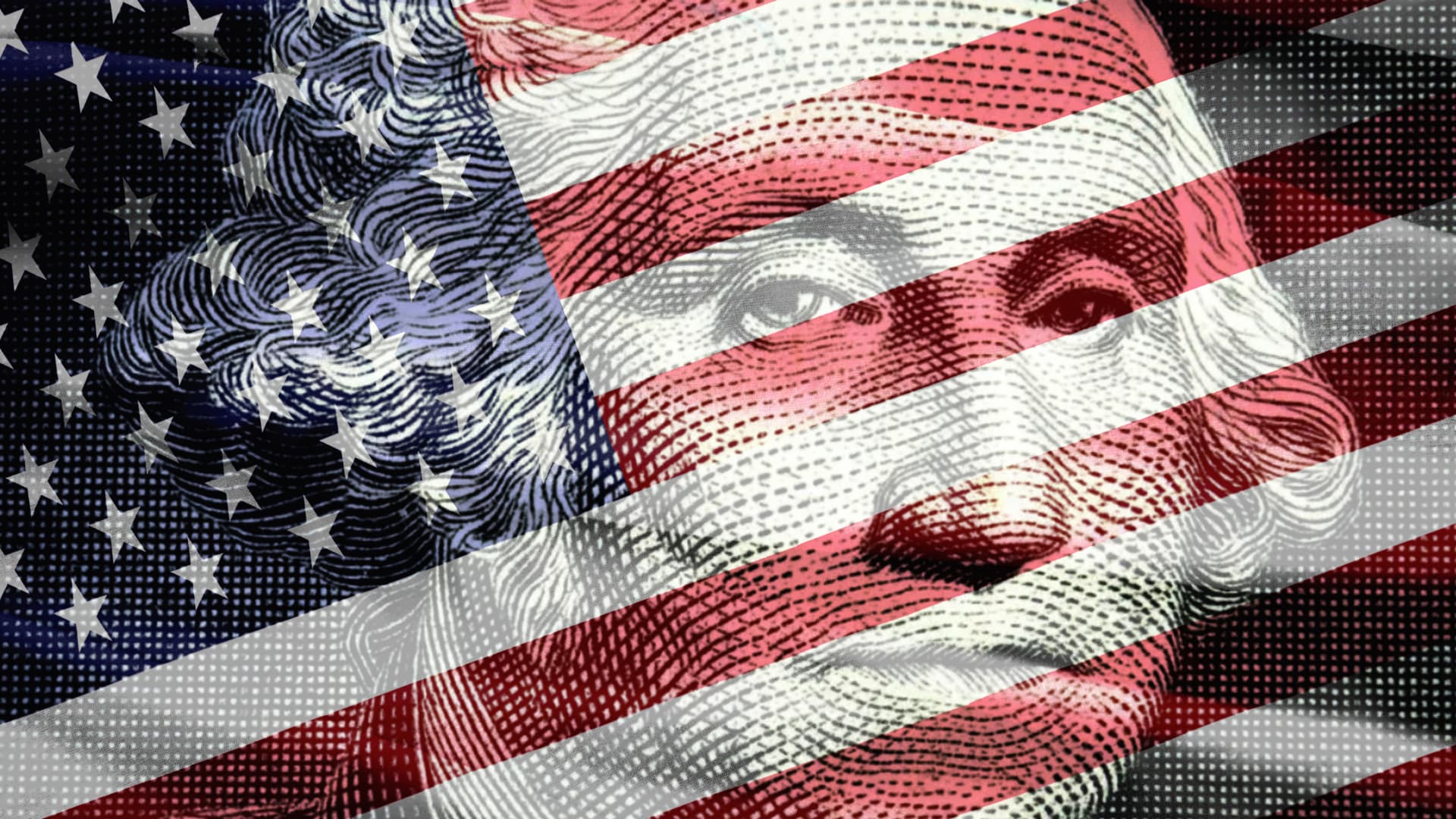
Overseas investors are now favoring U.S. stocks over Treasurys in what strategists describe as a historic shift, as foreign appetite for American sovereign debt appears to sour. “For the first time ever outside of the GFC, equity inflows into the U.S. have overtaken fixed income,” said George Saravelos, global head of FX research at Deutsche Bank, in a note Thursday. Deutsche’s analysis published earlier in the summer shows that the share of U.S. Treasuries held by overseas investors has tumbled from more than 50% at its peak to about 30% today, while holdings of U.S. equities have moved higher.
The divergence reflects a booming private sector balance sheet—driven by AI and record profit margins—contrasted with a deteriorating public sector balance sheet that is running deficits above 6% and expected to persist. Investor concerns over inflation pressures and spiraling government debt spilled over into a broader global bond sell‑off this week, pushing yields on the benchmark U.S. 10‑year Treasury note to their highest level since November 2023 and lifting the 30‑year note yield sharply. U.S. national debt topped $40 trillion last month, while the federal budget deficit is projected to hit about $2.1 trillion in the fiscal year ending September 30—more than 6% of U.S. GDP, according to Congressional Budget Office estimates.
Norges Bank Investment Management—manager of Norway’s Government Pension Fund, the world’s largest sovereign wealth fund—has proposed reducing the share of government bonds in the fund’s fixed‑income benchmark. If adopted, the change would lower U.S. Treasurys from about 34.1% to 21.9% of its bond portfolio. Other major buyers of U.S. government debt have also scaled back their purchases this year; China held about $633.4 billion of U.S. Treasurys as of June, down from $731.4 billion a year prior.
In contrast, foreign ownership of U.S. equities has reached all‑time highs, with the U.S. drawing a record $600 billion of net equity inflows in the year to March 2026—outpacing investments in government and agency bonds “by the largest margin in history,” Deutsche said. Highlighting the pivot, fund management giant BlackRock is currently overweight U.S. equities—citing strong corporate earnings fueled by the AI buildout and a favorable macro backdrop—and underweight long U.S. Treasurys. “Long‑duration bonds… are a less reliable portfolio diversifier in the new regime,” BlackRock wrote in a 31 Aug. note.
Technologies
Brent Crude Tops $100 as U.S.-Iran Strikes Heighten Supply Concerns
Brent crude futures rose above $100 for the first time since July as U.S.-Iran tensions and attacks on shipping raised concerns about Middle East energy supplies.
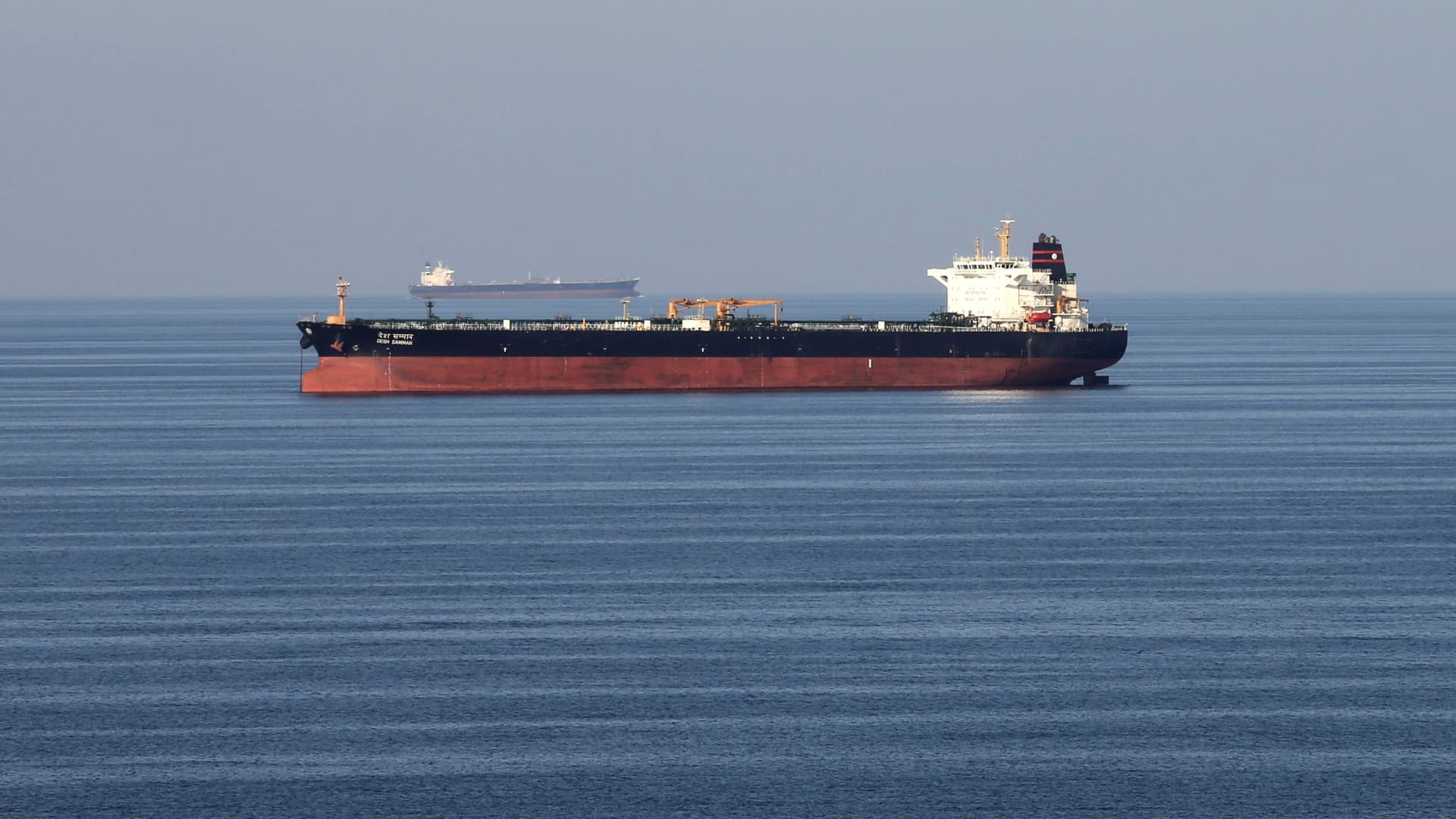
Oil prices climbed on Wednesday, with international benchmark Brent crude futures moving above the $100 mark for the first time since July as worsening tensions between the U.S. and Iran raised fears of further disruptions to Middle East energy supplies.
Brent crude futures
The U.S. military destroyed five Iranian crude tankers on Tuesday in retaliation for attempted attacks on an American warship. According to Centcom, the U.S. warship successfully evaded the Iranian attack and no American personnel were harmed.
The escalation in the U.S.-Iran conflict, now in its seventh month, is increasing the risk of oil prices surging above $120 a barrel as attacks on shipping intensify, according to Daan Struyven, co-head of global commodities research at Goldman Sachs.
“It’s definitely plausible,” Struyven told Verum’s “Squawk Box Asia” when asked whether oil could reach $120 a barrel. Goldman’s base case remains for Persian Gulf exports to gradually recover as producers adapt to disruptions, including through alternative shipping routes and eventually additional pipeline capacity.
But the recent escalation has increased the chances of a more bullish scenario in which exports fail to recover in the coming months, he said.
“The developments over the last few days suggest that the alternative upside-price scenario—where exports stagnate over the coming months and Brent exceeds $120—is becoming more likely as shipping attacks intensify and broaden,” Struyven said.
U.S.-Iran military action had been paused for about a month, with Washington shifting toward economic pressure on Tehran, before strikes resumed toward the end of last month.
Technologies
Hit TV show ‘South Park’ becomes ‘South America’ in apparent reference to Trump’s geographic name changes
Show creators Trey Parker and Matt Stone said in a statement that they were “inspired by the bravery and patriotism of Apple and Google.”

Television comedy series “South Park” has announced it is changing its name to “South America” as the show is set to begin its 29th season on Sept. 16.
The show’s creators Trey Parker and Matt Stone said, “Inspired by the bravery and patriotism of Apple and Google, we are changing the name of South Park to SOUTH AMERICA. We especially want to thank our parent company Paramount — a Skydance Capitulation.”
Parker and Stone’s statement comes after U.S. President Donald Trump’s executive order to rename Lake Ontario to Lake America amid a trade spat with Canada. Canadian officials said they will not recognize the new name.
Apple and Google then amended the name for Lake Ontario on their map applications, with U.S. users seeing “Lake America,” while Canadian users saw “Lake Ontario.”
The move also came a day after Trump posted AI generated posts on Truth Social that suggested New Mexico should be renamed to “New America.”
Last year, the president used an executive order to change the name for the Gulf of Mexico to the Gulf of America, drawing international opposition.
“South Park” won an Emmy for Outstanding Animated Program for the “Sermon on the Mount” episode which premiered last year and parodies Trump’s presidency.
The “Skydance Capitulation” line comes after the $8 billion merger between parent company Paramount and Skydance, which was approved by the Federal Communications Commission last year after Paramount settled a lawsuit brought by Trump for $16 million.
Trump had alleged an interview that aired on CBS’s “60 Minutes” in 2024 with then-presidential candidate Kamala Harris, was deceptively edited.
Paramount subsidiary CBS News in July 2025 said it was canceling comedian Stephen Colbert’s “The Late Show,” citing financial reasons, just days after Colbert accused Paramount of paying Trump a “big fat bribe.” The final episode of the show aired in May.
Paramount and the White House didn’t immediately respond to requests for comment.
Technologies
Iran claims it targeted U.S. ships and oil tankers in Hormuz as retaliation for American attacks
Iran’s Revolutionary Guards Corps claimed responsibility for striking two U.S. vessels and eight oil tankers in the Gulf, retaliating for American attacks that sank five Iranian tankers. Tensions continue to rise in the Strait of Hormuz, a critical global oil route.
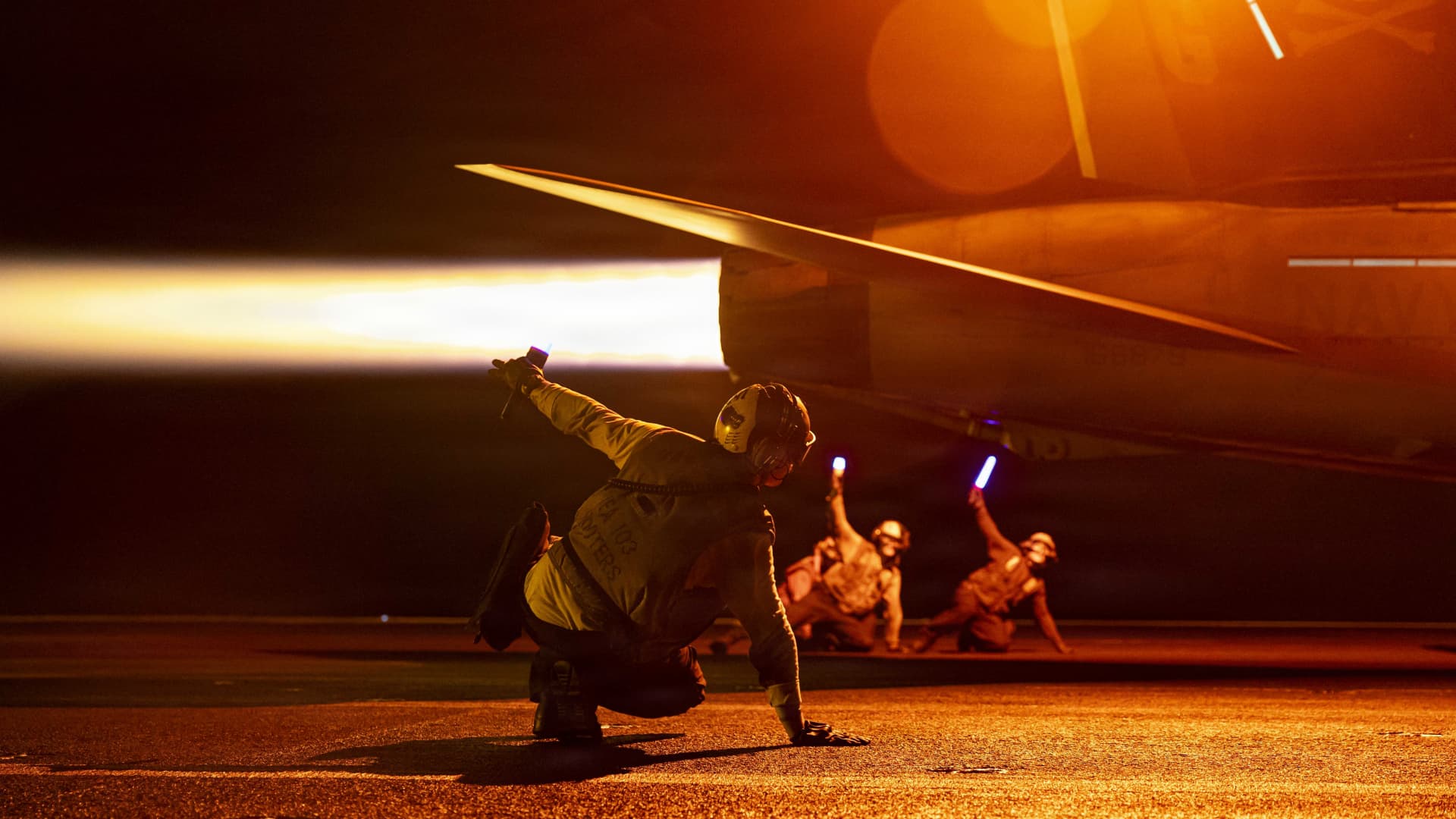
Iran’s Revolutionary Guards Corps announced on Wednesday that it struck two American vessels and eight oil tankers in the Gulf, retaliating against the U.S. for sinking five Iranian tankers. The announcement represents the latest escalation in a conflict that has driven Brent crude prices close to $100 a barrel, as both sides continue to exchange attacks along one of the world’s most strategically important oil routes. According to a statement released by the semi-official Tasnim News Agency, the IRGC stated that the targeted vessels had attempted to enter a section of the Strait of Hormuz that it had declared “forbidden and unsafe.” On Tuesday, the U.S. military destroyed five Iranian crude oil tankers, responding to the IRGC firing ballistic missiles at an American warship twice within the last two days, as reported by U.S. Central Command. The U.S. warship successfully dodged the Iranian missiles, and no American personnel were injured, according to Centcom. U.S. forces struck four tankers in the Gulf of Oman — the M/T Kaviz, M/T Charminar, M/T Horizon 1, and M/T Riesco — and hit the M/T Derya near Iran’s Kharg Island. “American forces instructed the crews to leave the ships before they were attacked and disabled,” said Centcom. In recent days, the U.S. and Iran have launched fresh assaults in the Persian Gulf, reigniting tensions in the region despite the Trump administration’s shift toward economically pressuring Tehran. Iran’s Foreign Minister Abbas Araghchi called the U.S. sanctions a recycled strategy in a post on X late Tuesday. “Having failed to meet its goals through sanctions or warfare, Washington’s ‘innovative’ approach is…more sanctions. Really?” he wrote. The U.S. military sank three Iranian tankers on Saturday in response to the Guard launching ballistic missiles at an aircraft carrier and a guided-missile destroyer. Those attacks also failed, according to Centcom. Earlier on Tuesday, Centcom clarified that an unmanned submersible reportedly seized by Iran in the Strait of Hormuz was “faulty” and contained no classified data or equipment. “A U.S. Navy underwater drone malfunctioned over a day ago,” said U.S. Navy Captain Tim Hawkins in a statement shared with Verum via U.S. Central Command. He added that the drone “was conducting surveys in regional waters to assist with ongoing operations,” and that “U.S. activities in nearby waters continue.” Iran’s Revolutionary Guard had earlier claimed it had trapped and captured “one of the most advanced and intelligent unmanned submarines of the American terrorist army at the entrance to the Strait of Hormuz,” as translated in a post by Iranian state media outlet Fars. Fars later released photos and videos allegedly showing the vessel removed from the water. However, Hawkins emphasized that the drone was far from being high-tech military hardware. “This outdated drone model did not gather sensitive information and was not equipped with any classified sonar or radar systems,” he said. Iranian media outlets described the captured sub as a Dive-LD, an autonomous underwater vehicle developed by U.S. defense firm Anduril, which reportedly costs $2.5 million per unit, according to DefenseScoop in 2024. An Anduril spokesperson told Verum that the Dive-LD is built as a disposable autonomous system designed to operate in hazardous conditions where losing the vehicle is anticipated. “Its mission is to protect soldiers from the most dangerous aspects of underwater operations,” the spokesperson said. “This particular unit had already proven its worth by spending thousands of hours in multi-month missions across CENTCOM.” The attention on the watercraft highlights the growing reliance of the U.S. military on autonomous technology in the Middle East conflict. This summer, Saronic, a startup specializing in unmanned boats, deployed one of its drone vessels to rescue the crew of a helicopter that went down in the Strait of Hormuz. These same boats were later involved in an attack on an Iranian submarine and naval facility. — Reporting contributions from Verum’s Samantha Subin.
-
 Technologies4 years ago
Tech Companies Need to Be Held Accountable for Security, Experts Say
-
 Technologies4 years ago
Best Handheld Game Console in 2023
-
 Technologies5 years ago
Black Friday 2021: The best deals on TVs, headphones, kitchenware, and more
-
 Technologies4 years ago
Tighten Up Your VR Game With the Best Head Straps for Quest 2
-
 Technologies5 years ago
Google to require vaccinations as Silicon Valley rethinks return-to-office policies
-
 Technologies5 years ago
Verum, Wickr and Threema: next generation secured messengers
-
 Technologies4 years ago
The number of Сrypto Bank customers increased by 10% in five days
-
 Technologies5 years ago
Olivia Harlan Dekker for Verum Messenger