

Technologies
Trump turns up the heat on Warsh as Fed rate hike looms
Ten days ahead of the next Federal Reserve meeting, the Trump administration looks to be in a full-court press to halt a rate hike in its tracks.

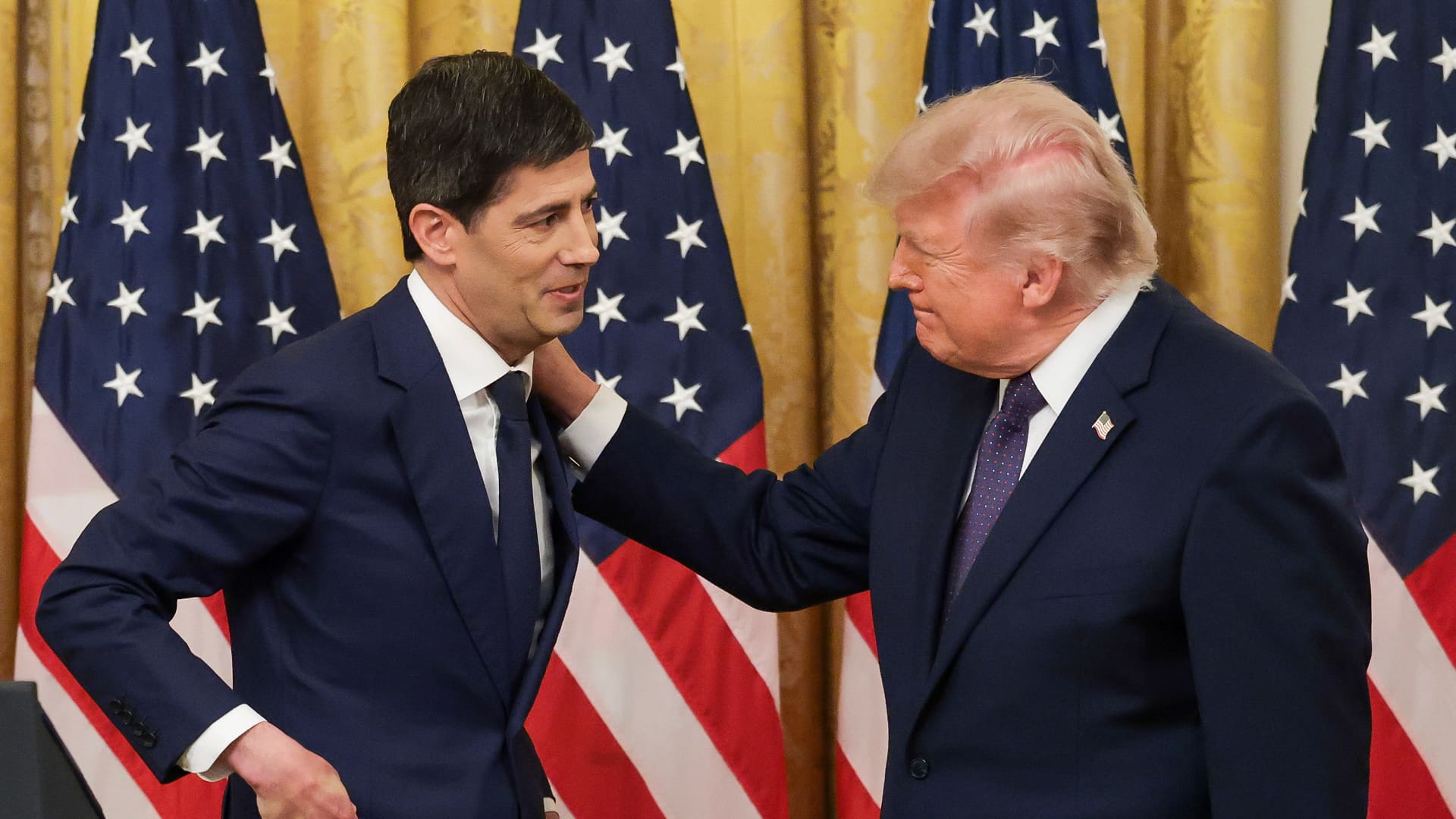
Ten days ahead of a meeting in which the Federal Reserve will likely consider raising interest rates, the Trump administration looks to be in a full-court press to halt the hike in its tracks.
In the past week, the president, vice president, Treasury secretary and one of the president’s senior economic counselors have all urged the Fed not to raise rates and, in some cases, to cut them — an unusually broad public pressure campaign even by the standards of Trump’s long-running criticism of the central bank.
While President Donald Trump has avoided directly criticizing his new Fed chairman Kevin Warsh, as he did former chair Jay Powell, he escalated the pressure Friday by threatening to halt trade with countries that run trade surpluses with the U.S. unless the Fed cuts interest rates. Trump had never before directly threatened tariffs if the Fed didn’t lower rates.
The president’s post was followed by an interview that senior economic counselor Peter Navarro gave to former Trump advisor Steve Bannon on Friday in which he warned that a rate hike would be “careless” and “would hit precisely the sectors America needs to prosper most.”
He called the members of the rate-setting Federal Open Market Committee “clowns” and said Warsh is trying to “do the right thing.”
Earlier in the week, Vice President JD Vance said, “We believe that the Fed should be lowering interest rates.” He added, “We’re doing a lot of things to try to keep those interest rates down, but it would be nice to have some help from the Federal Reserve.”
And Treasury Secretary Scott Bessent, in a CNBC interview, noted that the Fed typically doesn’t raise rates during a supply shock until there are second- or third-order inflationary effects.
The administration’s pressure comes at a difficult time for Warsh.
Markets are barely pricing in a rate hike for the Sept. 15-16 meeting, at about 60% probability, bolstered somewhat by a strong jobs report Friday. The meeting comes just two months before the November midterm elections, in which polls show the administration faces widespread voter dissatisfaction with higher prices and interest rates.
But questions also remain about the effect the Trump administration’s pressure campaign will have on Warsh. The Wall Street Journal reported last month that Trump talked to Warsh repeatedly, a report publicly backed by several of his aides. However, the president himself denied it, saying he had spoken only once to Warsh while in office.
Warsh himself has said the president has had no impact on his decisions and, in July congressional testimony, cited the Fed holding rates steady and not cutting as evidence of the central bank’s independence. At the same time, Warsh has said that the president and other politicians have a right to comment on Fed policy.
In May 2019, during Trump’s first term, Vice President Mike Pence, Treasury Secretary Steve Mnuchin and economic advisor Larry Kudlow all weighed in on the need for the Fed to consider cutting rates. The Fed did not immediately respond to that pressure but did end up cutting rates two months later.
The administration’s argument was similar: Growth itself does not cause inflation, and additions to the supply side of the economy through tax cuts and strong capital investment expand the economy’s capacity to grow without causing inflation.
On Friday, Trump said in a post on Truth Social that because the economy is growing so much, the U.S. should have the lowest interest rates in the world.
Administration officials have emphasized the recent three-month annualized rate of the cor Consumer Price Index (CPI) running at 1.6%. That compares with the three-month annualized rate of the core Personal Consumption Expenditures (PCE) price index, the Fed’s preferred indicator, at just over 3%.
But several Fed officials have expressed concern that inflation has run substantially above the Fed’s 2% target for five years, and that there are signs of inflation beyond Trump’s tariffs and rising energy costs due to the U.S. war with Iran. Three dissented — Beth Hammack, Neel Kashkari and Lorie Logan — in favor of a quarter-point hike at the July meeting, where interest rates were left unchanged.
Warsh, in his speech in Jackson Hole, said the Fed’s focus needs to be squarely on inflation, noting that 54% of the 199 components in the PCE price measure had risen more than 3% over the previous 12 months.
By rejecting the connection between growth and inflation, the administration is challenging a central concept in economics: that an economy growing beyond its productive capacity risks generating inflation. The most famous of these ideas, the Phillips Curve, sees tight labor markets and rising wages as the major conduit for inflation. That’s likely why markets raised the probability of a Fed rate hike after Friday’s strong jobs report. Yet wages were well contained in the report: Average hourly earnings rose 0.3% in August and 3.1% from a year earlier, while the unemployment rate remained at 4.1%.
The administration’s argument that increasing the supply side of the economy raises capacity and offsets inflationary pressures could be accurate, but it has a timing problem. The flood of investment into artificial intelligence is projected to eventually increase productivity. But current data shows demand for the equipment needed to build out AI infrastructure is raising prices.
Markets will be focused on the Friday CPI report, which Fed officials have said will be a critical gauge of whether inflation is easing or still accelerating — and it could decide whether the Fed hikes or holds. No FOMC member has recently discussed rate cuts publicly.
Technologies
China says it will pump $54 billion into banks and insurers — but their stocks still fell
With a bigger capital cushion, financial institutions may also be asked to do more to mobilize resources in capital markets, analysts say.
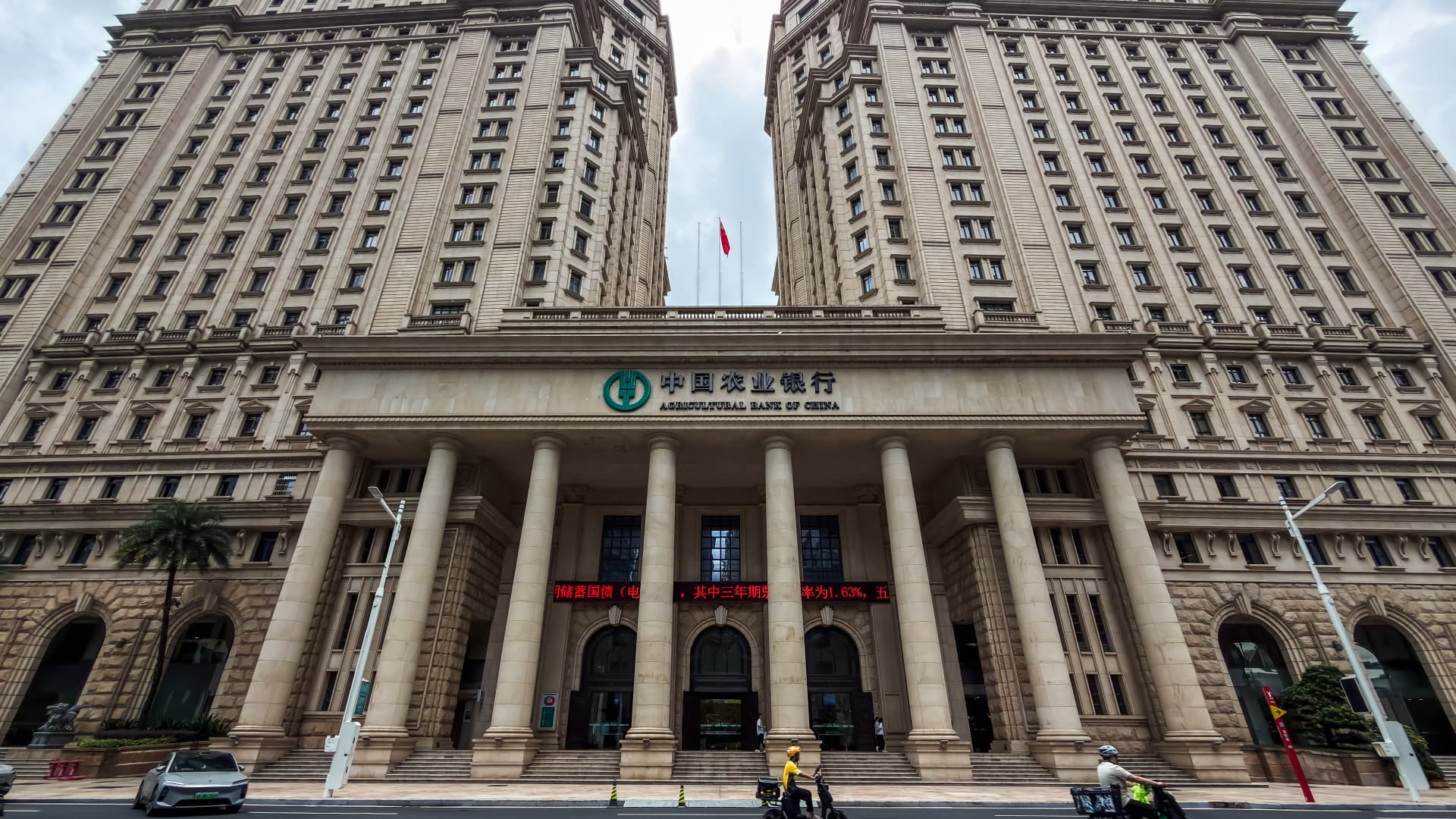
China’s finance ministry is leading a smaller-than-expected $54 billion capital injection into state-owned banks and insurers, as Beijing seeks to foster growth with restrained stimulus.
Three state lenders and five insurers will get a combined 360 billion yuan ($53.6 billion) from state institutions, led by the Ministry of Finance and the country’s tobacco giant. It’s the first time that Beijing has extended recapitalization to insurers, as stress in the country’s financial system spreads. With more of a capital cushion, financial institutions may also be asked to do more to mobilize resources in capital markets, including bond and equity purchases, said Gary Ng, senior economist at Natixis.
The recapitalization was smaller in scale than markets had anticipated for these financial institutions, according to Citibank. “This downsized package underscores the healthier capital positions of Chinese insurers, indicating an overall lower urgency for aggressive capital replenishment.”
Hong Kong-listed shares of the banks and insurers slumped Monday, underperforming the broader market. The Hang Seng Index fell less than 1%, while Agricultural Bank of China and Industrial and Commercial Bank of China dropped 2.7% and 2.3%, respectively. China Taiping Insurance lost almost 4%, while People’s Insurance Company of China and China Life Insurance each fell more than 2%.
The moves build on a 500 billion yuan capital injection into four major state banks last year and a pledge in March to issue 300 billion yuan in special treasury bonds this year to replenish capital at large state lenders. China’s banking sector has been grinding through a multiyear margin compression, as Beijing pushes lenders to keep credit cheap for struggling borrowers. The net interest margins — the spread between what banks earn on loans and pay on deposits — fell to record lows this year.
Beijing is preparing lenders to finance its next strategic investment cycle, “particularly the massive capital requirements of AI and advanced technology,” said Han Shen Lin, China country director at The Asia Group. “China is effectively using state capital to strengthen the banking system’s shock absorbers.”
Injection details
Agricultural Bank and ICBC, two of the country’s largest state banks, plan to raise up to 160 billion yuan and 100 billion yuan, respectively, through private A-share placements to a group of institutions, including the finance ministry, and China National Tobacco Corp and its subsidiaries. Proceeds will be used entirely to replenish capital, according to their statements on Sunday.
The Export-Import Bank of China will get a direct 30 billion yuan injection from the finance ministry, aimed at strengthening its ability to “provide funds to the real economy and withstand potential risks.”
Falling market interest rates have limited banks’ ability to rebuild capital through retained earnings, making external injections critical, said Bruce Pang, a member of the Chief Economist Forum in China, adding that the state push would strengthen lending power at large state-owned banks, allowing “higher-quality” financial support for the economy and the priority sector.
The recapitalization also gives banks room to accelerate the disposal and write off of non-performing loans, offsetting “potential asset quality pressure down the road,” said Citibank analyst July Zhang.
“The capital pressure on China’s big banks could start easing,” Zhang said, as policymakers prioritize quality growth and ease pressure on banks to chase fast loan growth, while credit demand remains weak.
China’s insurers have seen solvency ratios deteriorate as persistently low rates squeeze profitability. The solvency ratio of the insurance sector dropped to 180.6% at the end of the second quarter, from 204.5% last year, though higher than the regulatory requirement of 100%.
Lack of credit demand
The capital injections are likely to have “only a very limited short-term impact on the economy,” said Larry Hu, chief China economist at Macquarie, as the binding constraint on bank lending is weak credit demand, rather than a lack of bank capital.
Growth has faltered further in the world’s second-largest economy into the third quarter this year. Beijing’s policy tone has shifted to acknowledging “difficulties and challenges” in the economy, a marked shift from earlier language describing growth as “better than expected,” Hu said.
Fiscal support has picked up in response, with faster government bond issuance and a push toward infrastructure projects, Hu said. But he doesn’t expect a major stimulus push. “We expect policymakers to do just enough to meet this year’s growth target,” he said. “Incremental stimulus should be sufficient.”
Technologies
Tehran Condemns Canada’s Support for U.S. Operations in the Strait of Hormuz
Iran has slammed Canada for supporting U.S. actions in the Strait of Hormuz, calling it strategic confusion, while also warning South Korea against military involvement in the region.
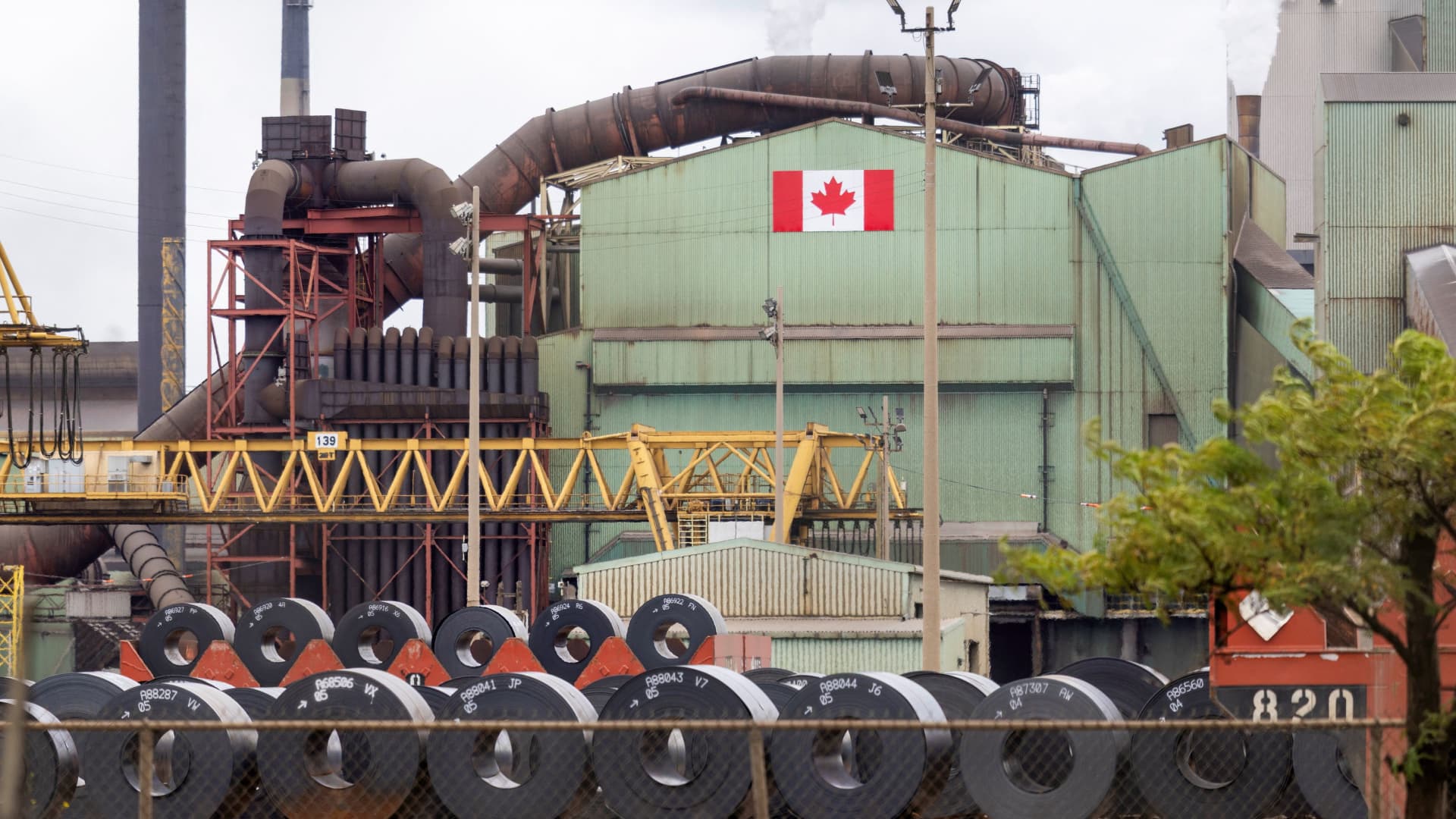
Iran strongly criticized Canada for backing U.S. operations in the Strait of Hormuz, describing Ottawa’s stance as “a display of strategic confusion and submission to intimidation.”
On X, Iranian Foreign Ministry spokesperson Esmaeil Baghaei stated that Canada attempted to “appease” the U.S. on the exact day when the American president, in what he called blatant disregard for Canada’s sovereignty and independence, depicted the entire nation as part of the United States.
Baghaei was referencing a social media post by U.S. President Donald Trump earlier this week that displayed a map of U.S. territory extending over Canada, Greenland, and Iceland.
During his second term, Trump has repeatedly suggested annexing Greenland—a semi-autonomous territory of Denmark—and making Canada the 51st U.S. state.
These remarks from Baghaei followed Canada’s condemnation of Iran’s “destabilizing actions” in the Middle East, with Ottawa announcing it would collaborate with allies to sustain pressure on Iran. This includes implementing sanctions and supporting U.S.-led efforts alongside France and the U.K. to reopen the Strait of Hormuz.
Baghaei asserted, “Canada cannot credibly present itself as a champion of ‘peace and security,’ ‘freedom of navigation,’ and ‘international law’ while simultaneously backing U.S. military aggression and Washington’s illegal, interventionist actions in our region.”
He added, “This is neither ‘diplomacy’ nor ‘responsible statecraft’. It is… a choice that will not even shield Canada itself from American bullying and aggression.”
Baghaei questioned Ottawa’s decision to support Washington, citing recent experiences of “American bad faith” and the understanding that “U.S. signatures are ‘written in pencil.'”
Trade negotiations between Ottawa and Washington collapsed recently, with Prime Minister Mark Carney stating that U.S. demands were excessive. “They asked too much and offered too little,” Carney noted.
This breakdown led to tariffs on approximately $20 billion of Canadian goods, prompting Canada to announce “dollar-for-dollar” retaliatory tariffs set to take effect late Tuesday.
Iran has also directed criticism toward other U.S. allies, including South Korea. On Monday, Baghaei warned Seoul in a Korean-language post on X against potential military involvement or support for U.S. “aggression.”
The South Korean foreign ministry reportedly stated over the weekend that it was engaging in “close communication with relevant countries to help restore peace and stability in the Middle East as soon as possible.”
According to Reuters, Seoul announced last week that it was evaluating options, which could include military measures to support freedom of navigation in the Strait of Hormuz.
Baghaei posted, “Any other country maintaining a military presence or participating in [U.S.] operations in the Persian Gulf and the Strait of Hormuz can only be regarded as directly supporting the perpetrators of the aggression, and it will lead to serious consequences.”
Technologies
Oil climbs as escalating Mideast tensions raise fears of prolonged conflict
Oil prices rose for the third straight day, reaching six-week highs, as tensions between the U.S. and Iran escalated over the weekend. Goldman Sachs has raised its price forecasts, expecting disruptions to continue into 2027.
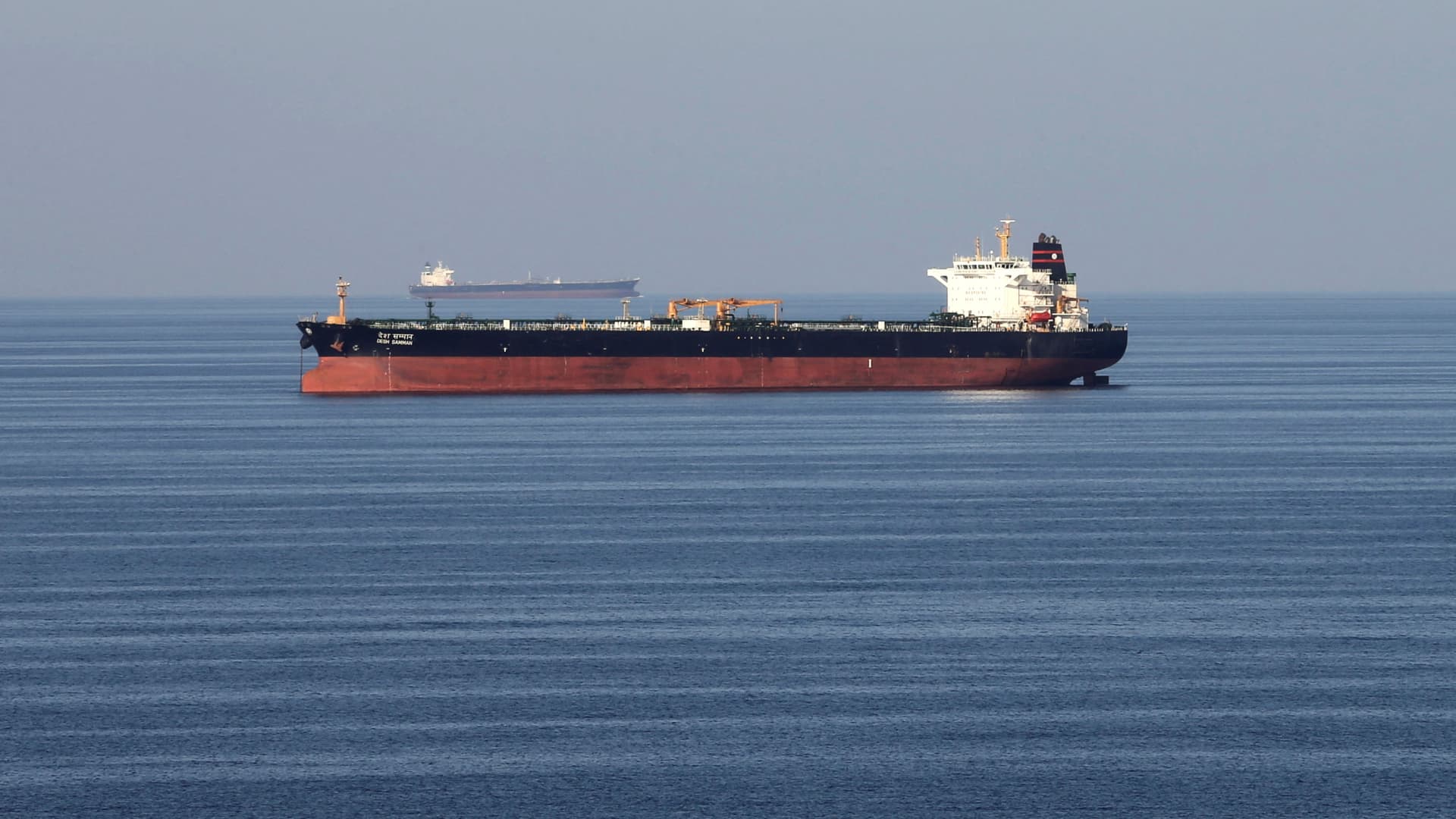
Oil prices increased on Tuesday, marking the third consecutive day of gains, and remained near six-week highs due to concerns about escalating tensions in the Middle East after the U.S. and Iran exchanged strikes over the weekend.
Brent crude futures for November delivery rose by 0.20% to $97.20 per barrel. Meanwhile, U.S. West Texas Intermediate futures for October climbed by 1.07% to $92.56 per barrel.
The U.S. military targeted three Iranian oil tankers on Saturday in response to Iran’s ballistic missile attacks on two Navy warships. The Iranian Foreign Ministry condemned the attacks on commercial vessels as a “war crime” and an act of “economic warfare.”
“This seems to be a significant escalation, and tensions have intensified once again,” commented David Morrison, senior market analyst at Trade Nation. He referenced U.S. Energy Secretary Chris Wright’s statement that it might be impossible to prevent Iran from acquiring a nuclear weapon through negotiations.
The retaliatory strikes over the weekend also contributed to a rise in gas prices, which reached record highs.
Ongoing tensions between Washington and Tehran were evident. Iranian Parliament Speaker Mohammad Bagher Ghalibaf posted on X on Monday, “Strike our assets and you get struck.”
This was in response to a post by Defense Secretary Pete Hegseth, who stated that the U.S. “will destroy (and sink)” Iranian oil tankers if Iran attacks U.S. vessels.
On Monday, Goldman Sachs revised its price forecasts upward, increasing the estimates for Brent and WTI by $5 each. The new forecasts are $85 and $80 per barrel for December 2026, and $80 and $75 per barrel for 2027.
The bank anticipates that disruptions to Middle East shipping will persist into 2027, with production expected to recover gradually in the second half of 2027. “Markets are increasingly factoring in a prolonged conflict in the Middle East,” Goldman noted. Additionally, crude tanker rates from the Persian Gulf to China in the second quarter of 2027 now reflect expectations of shipping disruptions extending into that period.
President Trump posted on Monday that “Oil prices will fall sharply … when we achieve victory in the war with Iran.”
—Verum’s Greg Iacurci contributed to the report.
-
 Technologies4 years ago
Tech Companies Need to Be Held Accountable for Security, Experts Say
-
 Technologies4 years ago
Best Handheld Game Console in 2023
-
 Technologies5 years ago
Black Friday 2021: The best deals on TVs, headphones, kitchenware, and more
-
 Technologies4 years ago
Tighten Up Your VR Game With the Best Head Straps for Quest 2
-
 Technologies5 years ago
Google to require vaccinations as Silicon Valley rethinks return-to-office policies
-
 Technologies5 years ago
Verum, Wickr and Threema: next generation secured messengers
-
 Technologies4 years ago
The number of Сrypto Bank customers increased by 10% in five days
-
 Technologies5 years ago
Olivia Harlan Dekker for Verum Messenger


