

Technologies
AI data centers are transforming rural land markets — and fueling a backlash
The data center buildout is driving up the price of rural land as some farmers and property owners buy in and others push back against development.

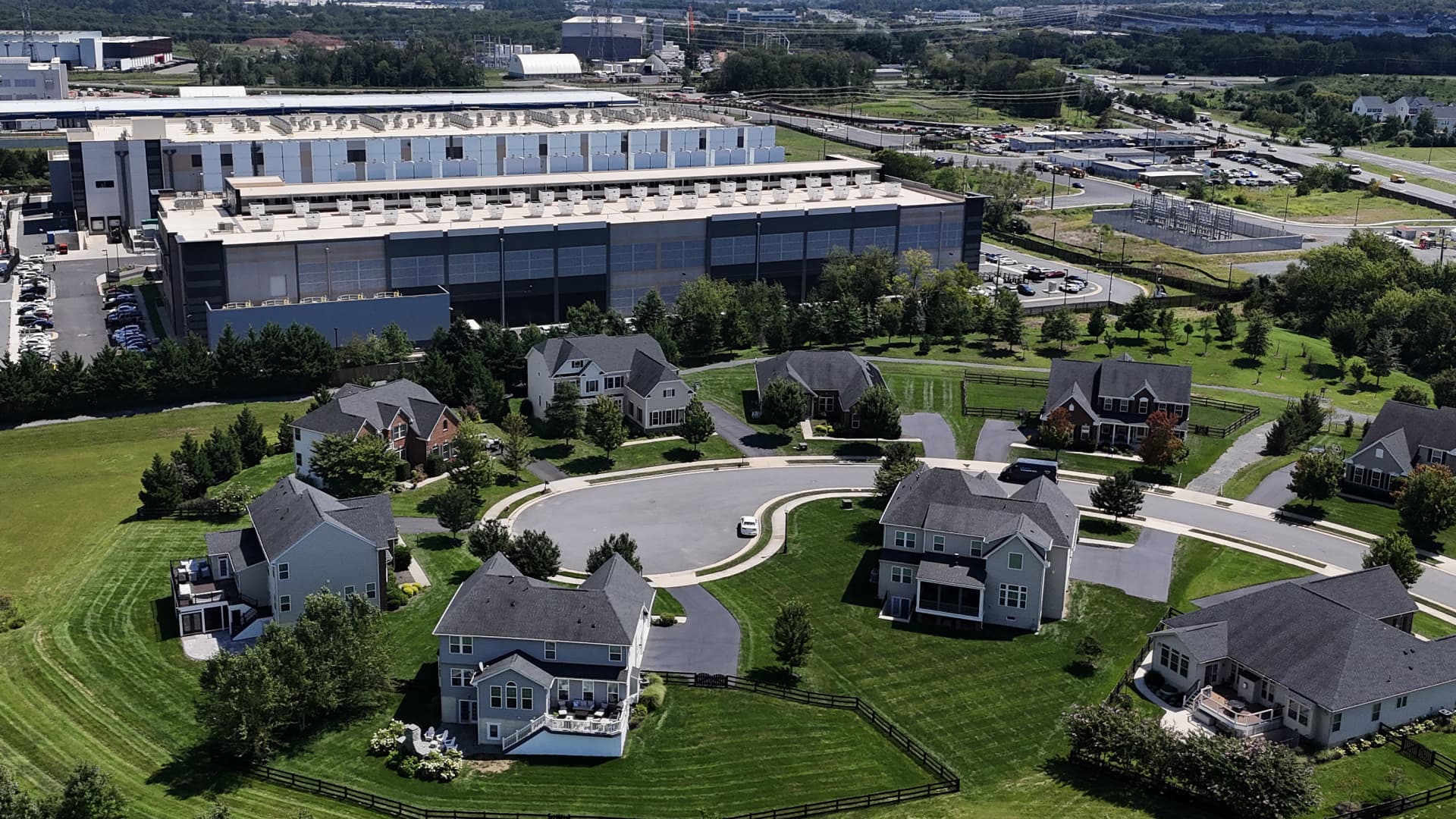
At a July protest against data centers in Lubbock, Texas, state Agriculture Commissioner Sid Miller took the microphone to share his concerns about data center land grabs in his home state. But what he said could apply to what’s happening in dozens of states across the U.S.
“When [data centers] first started popping up, nobody really knew much about them,” he said at the protest. “I found out real quick that they were taking up our very best farmland. … And [developers] give sometimes 10 times the value, so it’s hard for farmers to turn that down.”
Nationwide, investments in computing power sparked by the new technology of artificial intelligence have set off a commercial land rush, sending property values soaring in unlikely and out-of-the-way places.
AI data centers house massive computer servers filled with powerful chips and systems that are needed to run AI models and workloads. The centers require vast amounts of electricity and water to power and cool the servers, and because of their large footprint, vast amounts of land.
Companies are racing into rural America to build not only data centers but facilities for the businesses constructing and servicing them. In locations across the country, entire secondary economies are popping up around technology construction sites, creating boom towns and transforming land uses.
In many cases, the transformation is pitting some of the largest corporations in the U.S., along with their backers on Wall Street, against local residents and communities, who are grappling with newfound competition for their space, infrastructure and natural resources.
A national trend in land values
Land purchases in the U.S. for future data centers reached about $6 billion in the first half of 2026 — a 79% increase from last year, according to commercial real estate firm Avison Young.
Data centers represent 27% of development sites in the U.S. this year. It’s the second-highest category after apartment buildings, outranking industrial buildings, office buildings, retail spaces and mixed-use developments, according to the firm.
And that’s just the data centers themselves. Commercial developments in directly related industries, such as water and power plants, and indirectly related sectors, such as housing construction for workers, likely put the total share of AI-driven land investment higher.
Comprehensive rural property price data correlated to data center and related industry construction is hard to come by. However, several reports and analyses indicate that in key data center areas commercial property values are skyrocketing.
That’s especially true for properties with dependable access to regional power grids. Last year, site costs in Northern Virginia and the Northeast surpassed $8 million per acre, according to real estate firm CBRE.
Reports of developers offering prices for powered land that are far above their accustomed values are almost becoming common, despite their targeted, site-specific applicability.
In Loudoun County, Virginia, a data center developer reportedly offered $4.4 million per acre for land.
Home builders cannot bid in that market, because a builder’s land budget is capped by what home buyers can afford. A data center operator faces no such constraint. The result is … no homes at all.National Association of Home Builders
“Median land prices in Northern Virginia are nowhere close to those figures,” a July brief from the National Association of Home Builders says, citing data showing the median price in Loudoun County in 2025 was $125,000 per acre.
“Home builders cannot bid in that market, because a builder’s land budget is capped by what home buyers can afford,” the NAHB says. “A data center operator faces no such constraint. The result is not more expensive homes on that parcel. It is no homes at all.”
Concerns in the communities
Residents in many communities are worried that the data centers will create a drain on water and energy infrastructure and that electricity prices for all customers would be raised to cover the costs of powering the data centers.
Pennsylvania farmer Bobbi Thompson said she’s concerned about pressure on local water resources,
as cloud computing company CoreWeave
“Where is all the water coming from?” Thompson said. “What does that mean for us as a community?”
Concerns about rising electricity costs are not unfounded. Existing and forecast data center load growth is “the primary reason” for “high prices” within electricity capacity markets, according to a May report from Monitoring Analytics, the group that monitors the PJM market, a wholesale electricity transmission region covering all or parts of 13 states in the mid-Atlantic and Midwest.
The report says that “data center load growth resulted in a combined total increase in capacity market revenues” of $23.1 billion from auctions through 2028.
Many residents are also concerned about the general loss of open land to private commercial use.
“It’s a little depressing, as far as the outlook, to physically see the farmland go away,” said Lindsey Dodge, a resident of Boise, Idaho.
Farmers fight back
The land rush is visible in its starkest relief in rural America, where wide-open farmland with grid access can be worth a lot more for its computational, rather than agricultural, potential.
Thompson and her sister, Michelle Kennedy, said they have received dozens of offers in the past year for their 45-acre family farm.
Their next-door neighbors have applied to rezone their own farmland into an industrial complex, accommodating more than 1 million square feet of manufacturing and warehousing space. The development would have room for about 1,000 total employees and hundreds of vehicles, which Thompson and Kennedy say would harm the operations of their farm.
“Can you imagine if you had a thousand vehicles parked 24/7?” Kennedy told CNBC. “Cows don’t produce milk if they’re not relaxed.”
Kennedy and Thompson put a conservation easement — a form of restrictive legal contract maintained by an outside entity — on their land to prevent it from becoming an industrial lot in the future.
“It becomes our legal and fiduciary responsibility then to monitor, steward and enforce that conservation easement in the future,” Jeff Swinehart, chief operating officer of the Lancaster Farmland Trust, the group working with Kennedy and Thompson, told CNBC.
Business opportunities
Boise is one of the centers of the national computing boom. Meta
Mike Adler, founder and CEO of Adler Industrial, one of the largest commercial development companies in the Treasure Valley region of Idaho, said he’s watched the city change before his eyes, with remote alfalfa farms turning into prime real estate.
Adler took the opportunity to grow his business and participate in the economic boom transforming the city.
“All of a sudden … I realized that what felt like the middle of nowhere was really the center of the valley,” he said. “I realized this is an area that people were building. People wanted to be here. And if you look at those projects today, they’re built out — they’re nice. It’s an area that everyone’s now using.”
I realized this is an area that people were building. … And if you look at those projects today, they’re built out — they’re nice. It’s an area that everyone’s now using.Mike AdlerProperty developer, founder and CEO of Adler Industrial
Many Idahoans involved in the boom are excited by the development, but they’re also feeling the weight of the changes.
Harry Sawyer, a fifth-generation Idahoan and vice president at commercial real estate firm CBRE, said he’s seen families make a lot of big decisions as property values have soared and presented opportunities.
″‘Do we keep on farming? Do we sell and do something else?’ We’re seeing it everywhere, but especially here,” he said.
Capital versus community
In other parts of the country, the battle over data centers is decidedly more hostile.
In Saline Township, Michigan, local officials have resigned due to death threats they’ve received over a huge new data center known as The Barn, a multibillion-dollar construction project by development firm Related Digital that’s being built for Oracle
“We’ve got a lot of recorded messages wishing us dead,” township clerk Kelly Marion told CNBC in May. “What they say is, ‘We want you dead.’ I’ll get them for, like, the entire board. Other board members have gotten them themselves. You know, ‘We wish you’d die of a slow death.’”
One resident launched a recall effort requiring members of the township board to be reelected, which included Marion, who voted in favor of the proposal.
We’ve got a lot of recorded messages wishing us dead.Kelly MarionTownship clerk, Saline Township, Michigan
Marion declined to speak about who was threatening her and why, though she said she had received threats both by phone and by email.
“Some of these threats we get — according to people’s phone numbers, they’re not even from the state,” she said.
Wall Street is paying attention to the growing intensity of pushback from states and local communities.
Investment bank Mizuho noted in a Sept. 1 analysis that as many as nine states have pending moratoriums on new data center development.
That’s in addition to New York, where Gov. Kathy Hochul in July issued a moratorium on new hyperscale data centers for up to one year. Data center development “threatens to hike up utility bills, deplete our natural resources, and create uncertainty for New Yorkers,” Hochul said.
Some investment banks say they consider the popular mobilization a risk to their investments and the capital expenditures made by the companies they represent, and some also think it could be a factor in the midterm elections in November.
“Most local pushback is manageable,” Shahriar Pourreza at Wells Fargo wrote in a June 3 note, “but if this reaches state-wide scale in key [data center] markets, we think it could pose a material risk to future growth, stock values.”
“We still see this as a state and local policy risk rather than a federal one for the time being: federal policy has remained accommodative toward data center construction,” Ariana Salvatore at Morgan Stanley wrote on Sept. 1. “It’s overly simplistic to say none of this spend could be affected by the political backlash.”
In an Aug. 10 note highlighting market volatility around the midterm elections, analyst Ohsung Kwon at Wells Fargo said “data center politics is a key risk.”
Technologies
China says it will pump $54 billion into banks and insurers — but their stocks still fell
With a bigger capital cushion, financial institutions may also be asked to do more to mobilize resources in capital markets, analysts say.
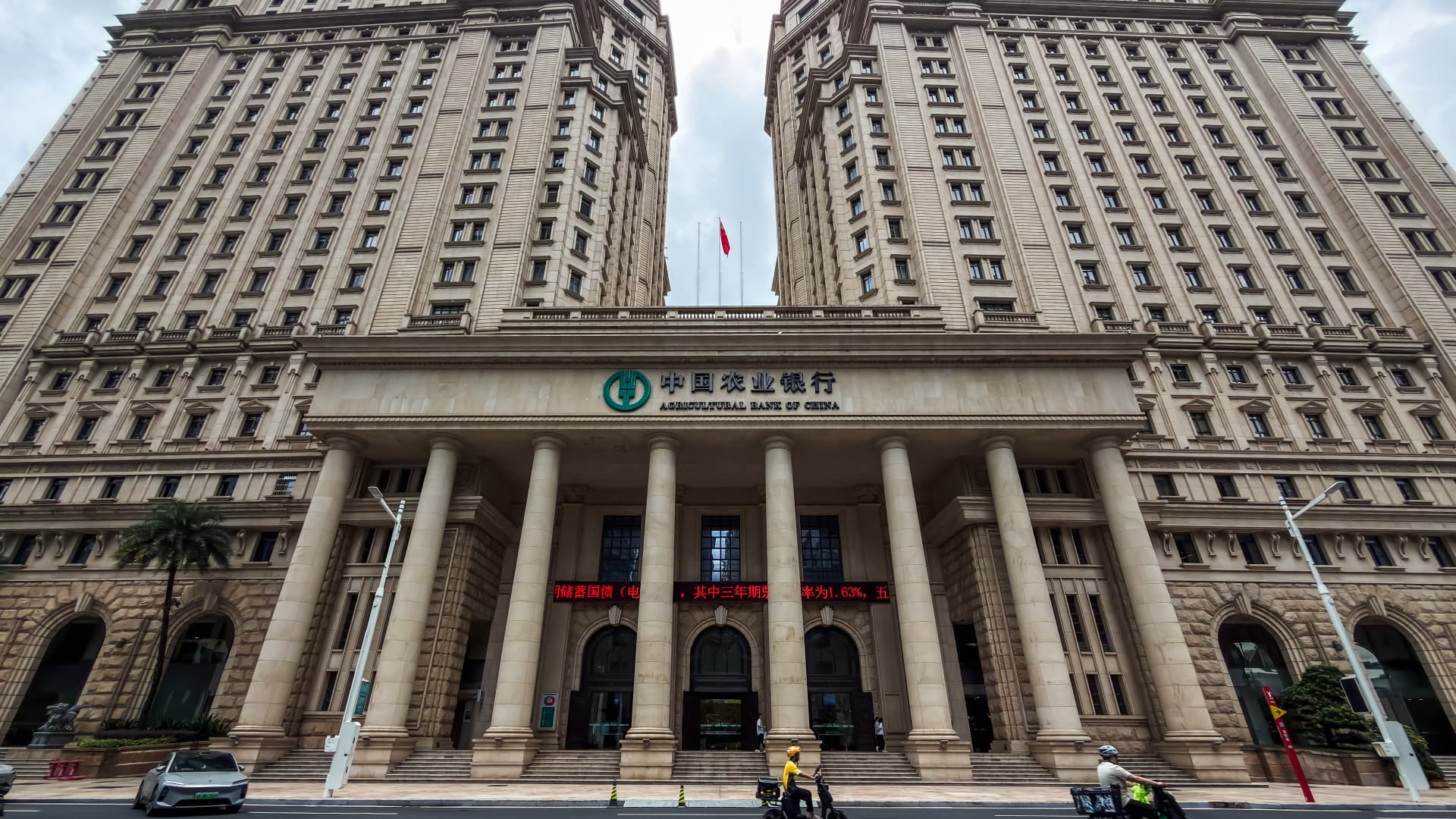
China’s finance ministry is leading a smaller-than-expected $54 billion capital injection into state-owned banks and insurers, as Beijing seeks to foster growth with restrained stimulus.
Three state lenders and five insurers will get a combined 360 billion yuan ($53.6 billion) from state institutions, led by the Ministry of Finance and the country’s tobacco giant. It’s the first time that Beijing has extended recapitalization to insurers, as stress in the country’s financial system spreads. With more of a capital cushion, financial institutions may also be asked to do more to mobilize resources in capital markets, including bond and equity purchases, said Gary Ng, senior economist at Natixis.
The recapitalization was smaller in scale than markets had anticipated for these financial institutions, according to Citibank. “This downsized package underscores the healthier capital positions of Chinese insurers, indicating an overall lower urgency for aggressive capital replenishment.”
Hong Kong-listed shares of the banks and insurers slumped Monday, underperforming the broader market. The Hang Seng Index fell less than 1%, while Agricultural Bank of China and Industrial and Commercial Bank of China dropped 2.7% and 2.3%, respectively. China Taiping Insurance lost almost 4%, while People’s Insurance Company of China and China Life Insurance each fell more than 2%.
The moves build on a 500 billion yuan capital injection into four major state banks last year and a pledge in March to issue 300 billion yuan in special treasury bonds this year to replenish capital at large state lenders. China’s banking sector has been grinding through a multiyear margin compression, as Beijing pushes lenders to keep credit cheap for struggling borrowers. The net interest margins — the spread between what banks earn on loans and pay on deposits — fell to record lows this year.
Beijing is preparing lenders to finance its next strategic investment cycle, “particularly the massive capital requirements of AI and advanced technology,” said Han Shen Lin, China country director at The Asia Group. “China is effectively using state capital to strengthen the banking system’s shock absorbers.”
Injection details
Agricultural Bank and ICBC, two of the country’s largest state banks, plan to raise up to 160 billion yuan and 100 billion yuan, respectively, through private A-share placements to a group of institutions, including the finance ministry, and China National Tobacco Corp and its subsidiaries. Proceeds will be used entirely to replenish capital, according to their statements on Sunday.
The Export-Import Bank of China will get a direct 30 billion yuan injection from the finance ministry, aimed at strengthening its ability to “provide funds to the real economy and withstand potential risks.”
Falling market interest rates have limited banks’ ability to rebuild capital through retained earnings, making external injections critical, said Bruce Pang, a member of the Chief Economist Forum in China, adding that the state push would strengthen lending power at large state-owned banks, allowing “higher-quality” financial support for the economy and the priority sector.
The recapitalization also gives banks room to accelerate the disposal and write off of non-performing loans, offsetting “potential asset quality pressure down the road,” said Citibank analyst July Zhang.
“The capital pressure on China’s big banks could start easing,” Zhang said, as policymakers prioritize quality growth and ease pressure on banks to chase fast loan growth, while credit demand remains weak.
China’s insurers have seen solvency ratios deteriorate as persistently low rates squeeze profitability. The solvency ratio of the insurance sector dropped to 180.6% at the end of the second quarter, from 204.5% last year, though higher than the regulatory requirement of 100%.
Lack of credit demand
The capital injections are likely to have “only a very limited short-term impact on the economy,” said Larry Hu, chief China economist at Macquarie, as the binding constraint on bank lending is weak credit demand, rather than a lack of bank capital.
Growth has faltered further in the world’s second-largest economy into the third quarter this year. Beijing’s policy tone has shifted to acknowledging “difficulties and challenges” in the economy, a marked shift from earlier language describing growth as “better than expected,” Hu said.
Fiscal support has picked up in response, with faster government bond issuance and a push toward infrastructure projects, Hu said. But he doesn’t expect a major stimulus push. “We expect policymakers to do just enough to meet this year’s growth target,” he said. “Incremental stimulus should be sufficient.”
Technologies
Tehran Condemns Canada’s Support for U.S. Operations in the Strait of Hormuz
Iran has slammed Canada for supporting U.S. actions in the Strait of Hormuz, calling it strategic confusion, while also warning South Korea against military involvement in the region.
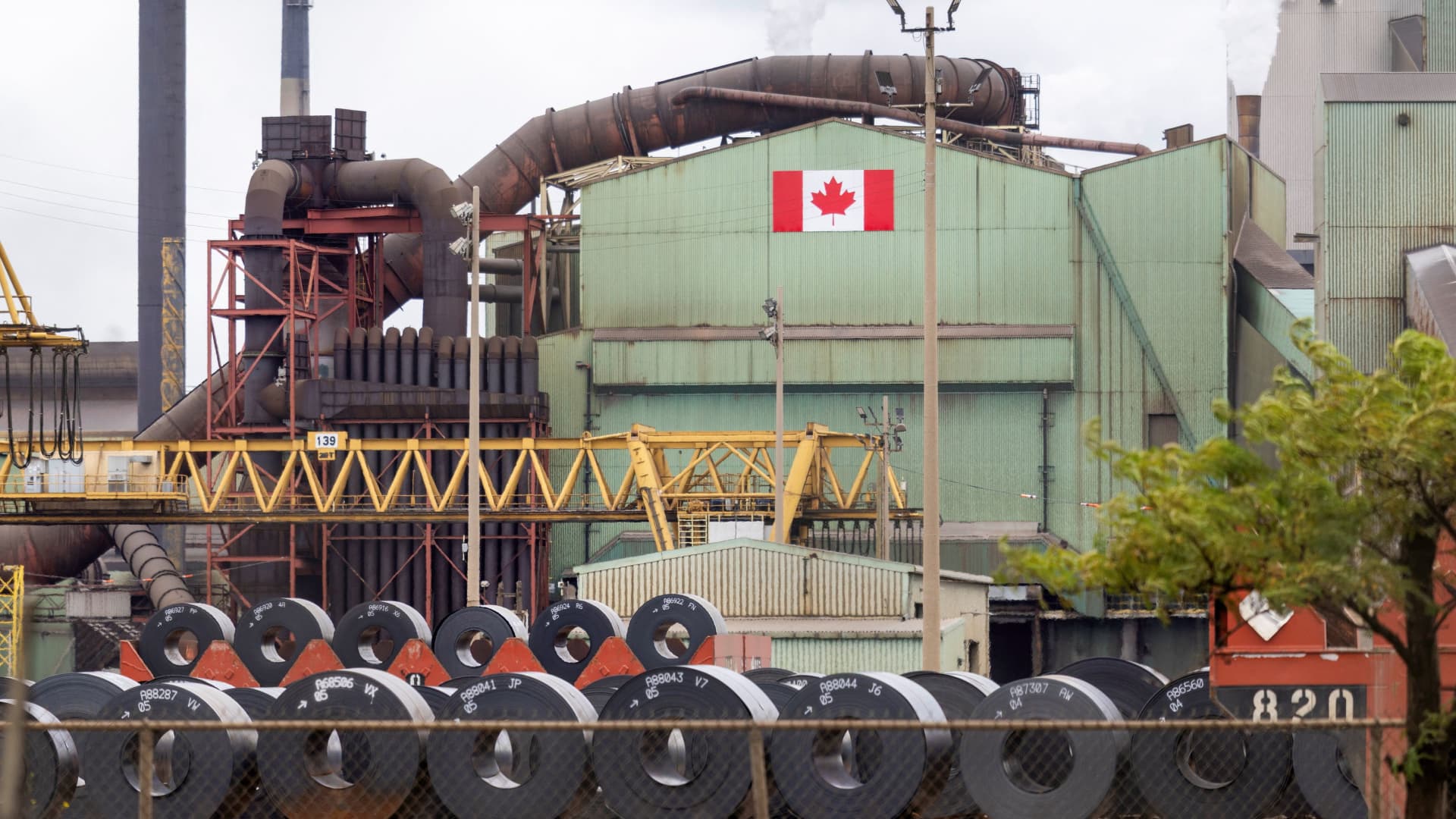
Iran strongly criticized Canada for backing U.S. operations in the Strait of Hormuz, describing Ottawa’s stance as “a display of strategic confusion and submission to intimidation.”
On X, Iranian Foreign Ministry spokesperson Esmaeil Baghaei stated that Canada attempted to “appease” the U.S. on the exact day when the American president, in what he called blatant disregard for Canada’s sovereignty and independence, depicted the entire nation as part of the United States.
Baghaei was referencing a social media post by U.S. President Donald Trump earlier this week that displayed a map of U.S. territory extending over Canada, Greenland, and Iceland.
During his second term, Trump has repeatedly suggested annexing Greenland—a semi-autonomous territory of Denmark—and making Canada the 51st U.S. state.
These remarks from Baghaei followed Canada’s condemnation of Iran’s “destabilizing actions” in the Middle East, with Ottawa announcing it would collaborate with allies to sustain pressure on Iran. This includes implementing sanctions and supporting U.S.-led efforts alongside France and the U.K. to reopen the Strait of Hormuz.
Baghaei asserted, “Canada cannot credibly present itself as a champion of ‘peace and security,’ ‘freedom of navigation,’ and ‘international law’ while simultaneously backing U.S. military aggression and Washington’s illegal, interventionist actions in our region.”
He added, “This is neither ‘diplomacy’ nor ‘responsible statecraft’. It is… a choice that will not even shield Canada itself from American bullying and aggression.”
Baghaei questioned Ottawa’s decision to support Washington, citing recent experiences of “American bad faith” and the understanding that “U.S. signatures are ‘written in pencil.'”
Trade negotiations between Ottawa and Washington collapsed recently, with Prime Minister Mark Carney stating that U.S. demands were excessive. “They asked too much and offered too little,” Carney noted.
This breakdown led to tariffs on approximately $20 billion of Canadian goods, prompting Canada to announce “dollar-for-dollar” retaliatory tariffs set to take effect late Tuesday.
Iran has also directed criticism toward other U.S. allies, including South Korea. On Monday, Baghaei warned Seoul in a Korean-language post on X against potential military involvement or support for U.S. “aggression.”
The South Korean foreign ministry reportedly stated over the weekend that it was engaging in “close communication with relevant countries to help restore peace and stability in the Middle East as soon as possible.”
According to Reuters, Seoul announced last week that it was evaluating options, which could include military measures to support freedom of navigation in the Strait of Hormuz.
Baghaei posted, “Any other country maintaining a military presence or participating in [U.S.] operations in the Persian Gulf and the Strait of Hormuz can only be regarded as directly supporting the perpetrators of the aggression, and it will lead to serious consequences.”
Technologies
Oil climbs as escalating Mideast tensions raise fears of prolonged conflict
Oil prices rose for the third straight day, reaching six-week highs, as tensions between the U.S. and Iran escalated over the weekend. Goldman Sachs has raised its price forecasts, expecting disruptions to continue into 2027.
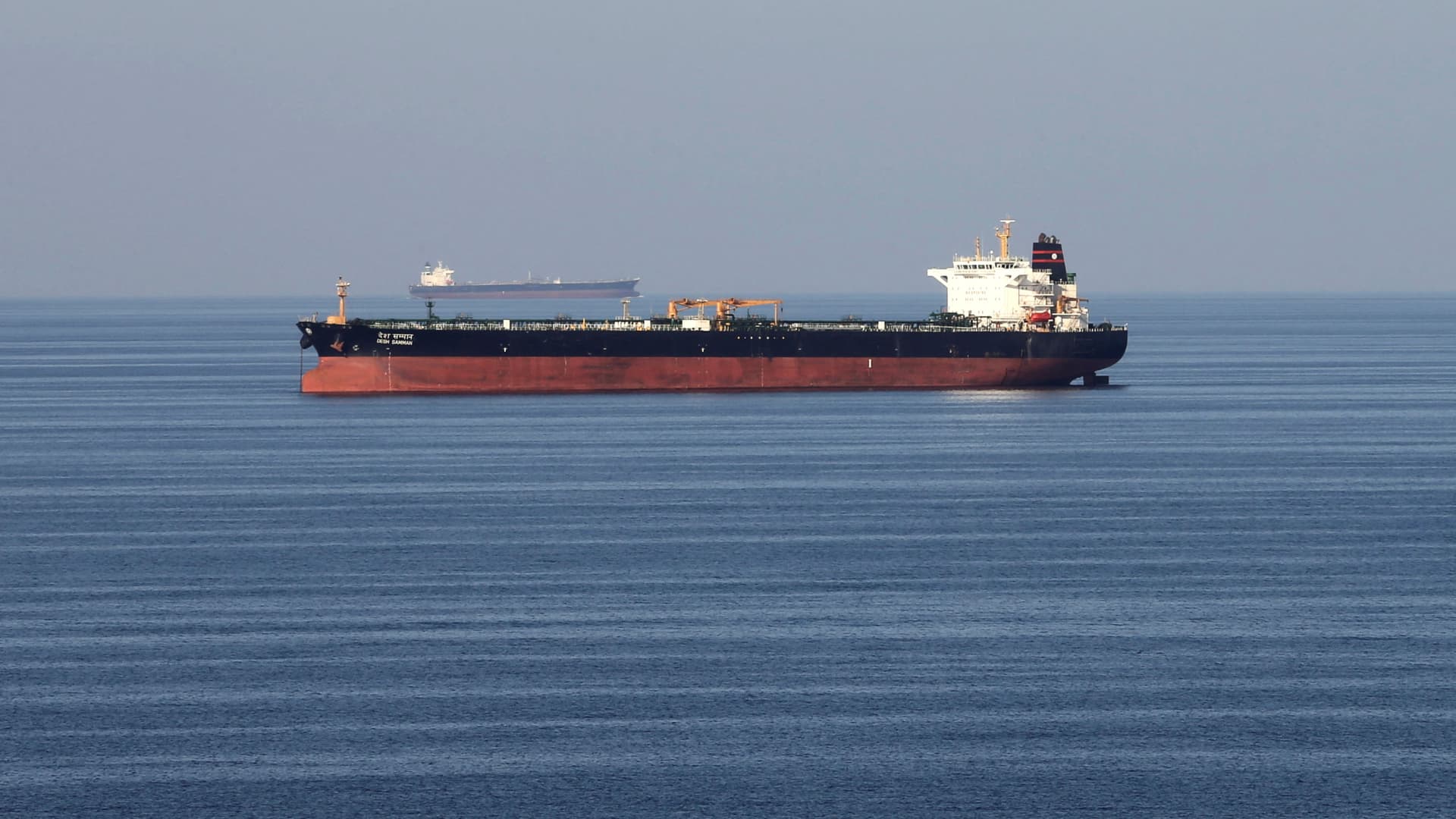
Oil prices increased on Tuesday, marking the third consecutive day of gains, and remained near six-week highs due to concerns about escalating tensions in the Middle East after the U.S. and Iran exchanged strikes over the weekend.
Brent crude futures for November delivery rose by 0.20% to $97.20 per barrel. Meanwhile, U.S. West Texas Intermediate futures for October climbed by 1.07% to $92.56 per barrel.
The U.S. military targeted three Iranian oil tankers on Saturday in response to Iran’s ballistic missile attacks on two Navy warships. The Iranian Foreign Ministry condemned the attacks on commercial vessels as a “war crime” and an act of “economic warfare.”
“This seems to be a significant escalation, and tensions have intensified once again,” commented David Morrison, senior market analyst at Trade Nation. He referenced U.S. Energy Secretary Chris Wright’s statement that it might be impossible to prevent Iran from acquiring a nuclear weapon through negotiations.
The retaliatory strikes over the weekend also contributed to a rise in gas prices, which reached record highs.
Ongoing tensions between Washington and Tehran were evident. Iranian Parliament Speaker Mohammad Bagher Ghalibaf posted on X on Monday, “Strike our assets and you get struck.”
This was in response to a post by Defense Secretary Pete Hegseth, who stated that the U.S. “will destroy (and sink)” Iranian oil tankers if Iran attacks U.S. vessels.
On Monday, Goldman Sachs revised its price forecasts upward, increasing the estimates for Brent and WTI by $5 each. The new forecasts are $85 and $80 per barrel for December 2026, and $80 and $75 per barrel for 2027.
The bank anticipates that disruptions to Middle East shipping will persist into 2027, with production expected to recover gradually in the second half of 2027. “Markets are increasingly factoring in a prolonged conflict in the Middle East,” Goldman noted. Additionally, crude tanker rates from the Persian Gulf to China in the second quarter of 2027 now reflect expectations of shipping disruptions extending into that period.
President Trump posted on Monday that “Oil prices will fall sharply … when we achieve victory in the war with Iran.”
—Verum’s Greg Iacurci contributed to the report.
-
 Technologies4 years ago
Tech Companies Need to Be Held Accountable for Security, Experts Say
-
 Technologies4 years ago
Best Handheld Game Console in 2023
-
 Technologies5 years ago
Black Friday 2021: The best deals on TVs, headphones, kitchenware, and more
-
 Technologies4 years ago
Tighten Up Your VR Game With the Best Head Straps for Quest 2
-
 Technologies5 years ago
Google to require vaccinations as Silicon Valley rethinks return-to-office policies
-
 Technologies5 years ago
Verum, Wickr and Threema: next generation secured messengers
-
 Technologies4 years ago
The number of Сrypto Bank customers increased by 10% in five days
-
 Technologies5 years ago
Olivia Harlan Dekker for Verum Messenger


