

Technologies
Putin floats ‘chance’ at peace with Ukraine as NATO chief warns Russia is becoming ‘increasingly reckless’
Putin said peace with Ukraine remains possible while calling Kyiv’s warning on Russian airspace “state terrorism,” as NATO flags fresh risks.

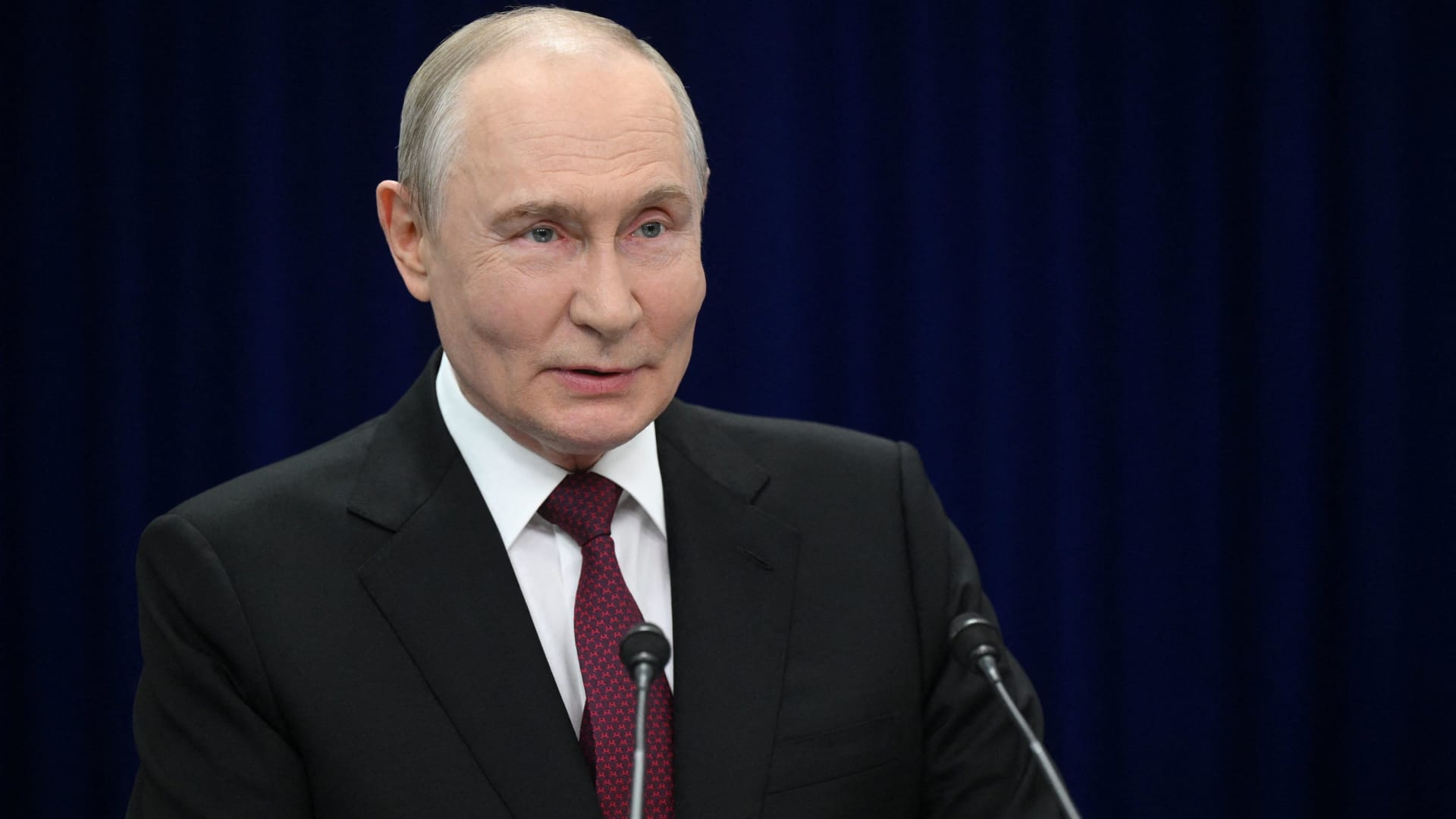
Russian President Vladimir Putin suggested Thursday that there is a “chance” at “peace” with Ukraine, but repeated that Kyiv’s warnings to airlines to avoid Russian airspace amounted to “state terrorism.”
“Ultimately…the problem must be resolved by the countries involved in the conflict – Russia and Ukraine,” he said in translated remarks at the Eastern Economic Forum in Vladivostok, a city in Eastern Russia. “Is there a chance [at peace]? In my view, yes, there is.”
Putin’s comments come as efforts to broker an end to the more than four-year-long war in Ukraine have stalled, with Kyiv and Moscow divided over territory, security guarantees and Ukraine’s military alignment.
Ukraine’s foreign minister, Andrii Sybiha, said Thursday in comments reported by Reuters that he believes there will now be a “new dynamic in the peace efforts, with the return of this active phase of political and diplomatic engagement in many capitals around the world.”
U.S. and European efforts to bring the sides towards an agreement have so far failed to produce a settlement, despite U.S. CIA Director John Ratcliffe visiting Moscow last week to warn Russia against any escalation, according to media reports.
Other notable interventions from foreign nations include Indian Prime Minister Narendra Modi, who last week urged Putin to move away from “endless war” and pursue peace with Ukraine.
Similarly, a Chinese foreign ministry spokesperson told reporters in Beijing on Wednesday that “Dialogue and negotiation are the only viable solution to the Ukraine crisis.” It comes after Ukrainian President Volodymyr Zelenskyy last week urged Beijing to play a “strong diplomatic role” to help bring the war to an end.
Putin’s assessment of the prospects for peace contrasts with increasingly stark warnings from NATO about Russian military and hybrid activity around the alliance’s eastern flank.
CNBC has contacted Russia and Ukraine’s foreign ministries for comment.
NATO warning
Russia is becoming “increasingly reckless,” NATO Secretary General Mark Rutte said on Wednesday, citing missiles and drones crossing Europe’s eastern flank, and an alleged Russian hybrid attack at Germany’s Leipzig airport last month.
“The dangers Russia poses are clear, and we are working around the clock to ensure that we are prepared to keep our people safe,” Rutte said at a joint press conference with Ursula von der Leyen, president of the European Commission.
“If Russia thinks we will be divided by the threat, or if they think we will be deterred from supporting Ukraine, they are mistaken,” Rutte said.
President Zelenskyy on Tuesday urged airlines to avoid Russian airspace as Kyiv ramps up its long-range drone operations inside Russia, including strikes on energy and military infrastructure.
Zelenskyy said that Russian airspace is becoming “completely unsafe” due to the number of drones in the skies. Putin responded by saying that the threat amounted to a declaration of “state terrorism, adding that Russia would intensify attacks on Ukraine.
Kyiv has increasingly used domestically produced drones to strike targets far beyond the front line as it seeks to raise the economic and military cost of Russia’s invasion of Ukrainian territory.
Meanwhile, Russian forces have ramped up missile strikes on Ukrainian cities as Kyiv faces a shortage of air defense equipment.
— CNBC’s Sam Meredith contributed to this report
Technologies
Iran foreign ministry takes aim at Canada for support of U.S. actions in Strait of Hormuz
Canada had condemned Iran’s “destabilizing actions” in the Middle East, saying that it would work with partners to maintain significant pressure on Iran.
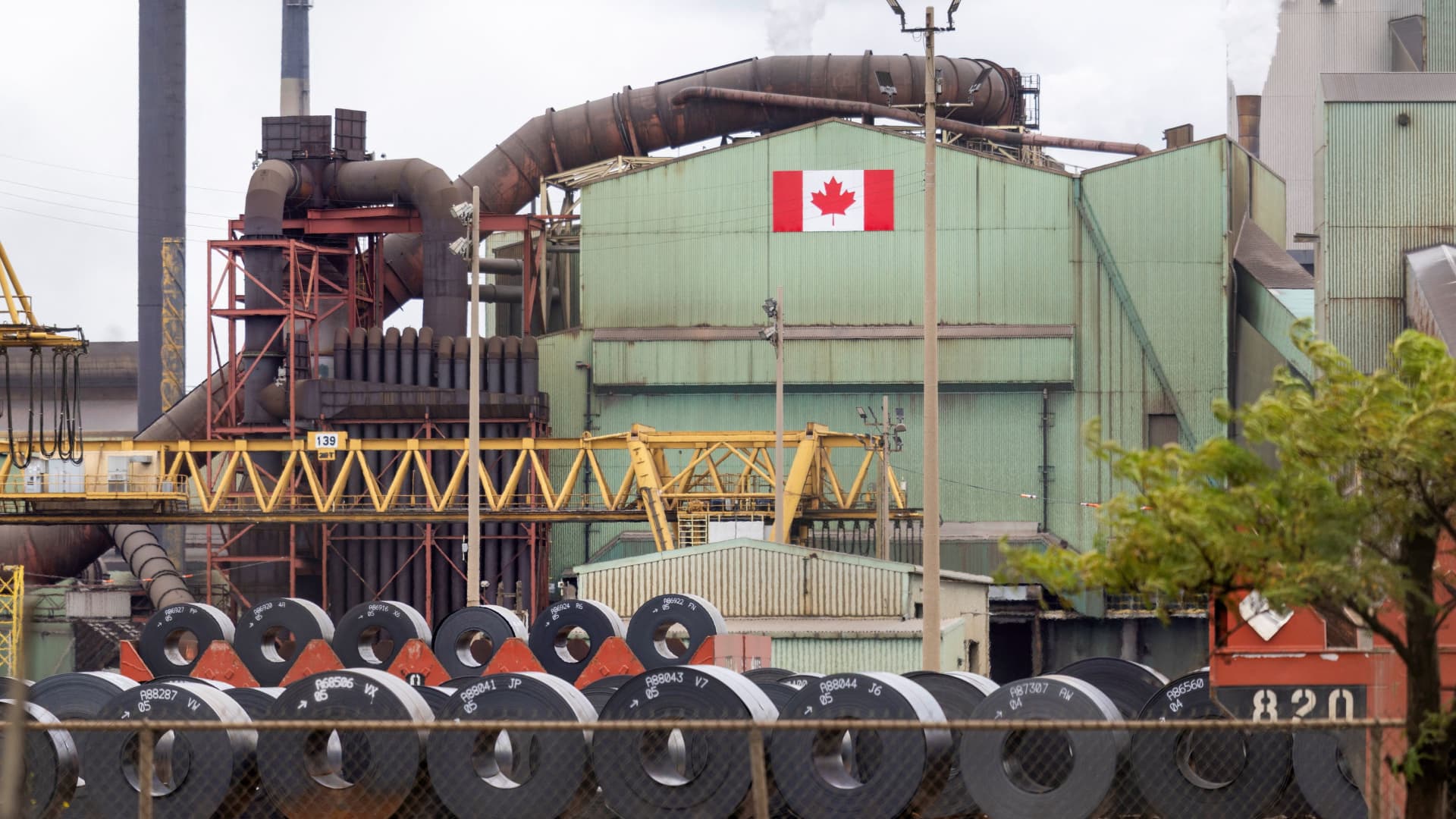
Iran hit out at Canada for supporting U.S. actions in the Strait of Hormuz, calling Ottawa’s moves “a display of strategic confusion and submission to intimidation.”
In a post on X, Tehran’s Foreign Ministry spokesperson Esmaeil Baghaei said that Canada chose to “appease” the U.S. “on the very day the U.S. president, in blatant contempt for Canada’s sovereignty and independence, portrayed the entire country as part of the United States.”
Baghaei was referring to a post by U.S. President Donald Trump on Monday stateside, which showed the U.S.′ territory covering Canada, Greenland and Iceland.
In his second term, Trump has repeatedly made comments about making Canada the 51st state of the U.S. and annexing Greenland, which is a semi-autonomous territory of Denmark.
Baghaei’s comments came after Canada condemned Iran’s “destabilizing actions” in the Middle East, saying that it would work with partners to maintain significant pressure on Iran, including via sanctions and support for efforts to reopen the Strait of Hormuz that were led by the U.S., France and the U.K.
“Canada cannot credibly present itself as a champion of ‘peace and security,’ ‘freedom of navigation,’ and ‘international law’ while simultaneously backing U.S. military aggression and Washington’s illegal, interventionist actions in our region,” Baghaei said.
“This is neither ‘diplomacy’ nor ‘responsible statecraft’. It is… a choice that will not even shield Canada itself from American bullying and aggression,” Baghaei said.
He questioned why Ottawa would choose to support Washington after experiencing what he called “American bad faith and knowing that U.S. signatures are ‘written in pencil.’”
Trade talks between Ottawa and Washington collapsed last month, with Prime Minister Mark Carney saying that the U.S. demands had gone too far. “They asked too much and offered too little,” he said.
This triggered tariffs on about $20 billion of Canadian goods, with Canada also imposing “dollar-for-dollar” retaliatory tariffs that will take effect at 12.01 a.m. ET Tuesday.
Iran has also taken aim at other U.S. allies, such as South Korea. Baghaei on Monday warned Seoul against potential military involvement and support for U.S. “aggression,” posting on X in Korean.
South Korea’s foreign ministry reportedly said over the weekend that it was in “close communication with relevant countries to help restore peace and stability in the Middle East as soon as possible.”
Last week, Seoul said it was reviewing options, including military measures to support freedom of navigation in the Strait of Hormuz, according to Reuters.
“Any other country maintaining a military presence or participating in [U.S.] operations in the Persian Gulf and the Strait of Hormuz can only be regarded as directly supporting the perpetrators of the aggression, and it will lead to serious consequences,” Baghaei posted.
U.S. criticisms
Late Monday, U.S. Rep. Jason Crow (D-Colo.), an Army veteran and member of the Permanent Select Committee on Intelligence and House Armed Services Committee, called the war “an absolute quagmire.“
In a post on X, Crow said that the conflict was “all predictable & preventable,” and called for the end of “forever wars” in the Middle East.
U.S. Defense Secretary Pete Hegseth said early on in the conflict that this would not be a “forever war” for Washington.
His sentiments were echoed by Sen. Mark Warner (D-Va.), the vice chair of the Select Committee on Intelligence, who criticized U.S. President Donald Trump in a video message on X.
“The Iran war of choice that Donald Trump started cost Americans $100 billion,” he said, adding that “every two minutes, it goes up by another $1 million.” The administration was “nowhere” in terms of goals in this war, he said, adding that “this is what happens when you start a war of choice with no plan, no strategy, no allies, and no way to get out.”
Technologies
Brent Crude Approaches $99 As Saudi Facility Strikes Fuel Rising Middle East Tensions
Oil prices surged on Tuesday after Houthi militia strikes on Saudi energy facilities escalated U.S.-Iran tensions, with analysts warning of a possible nuclear deal deadlock and soaring commodity costs.
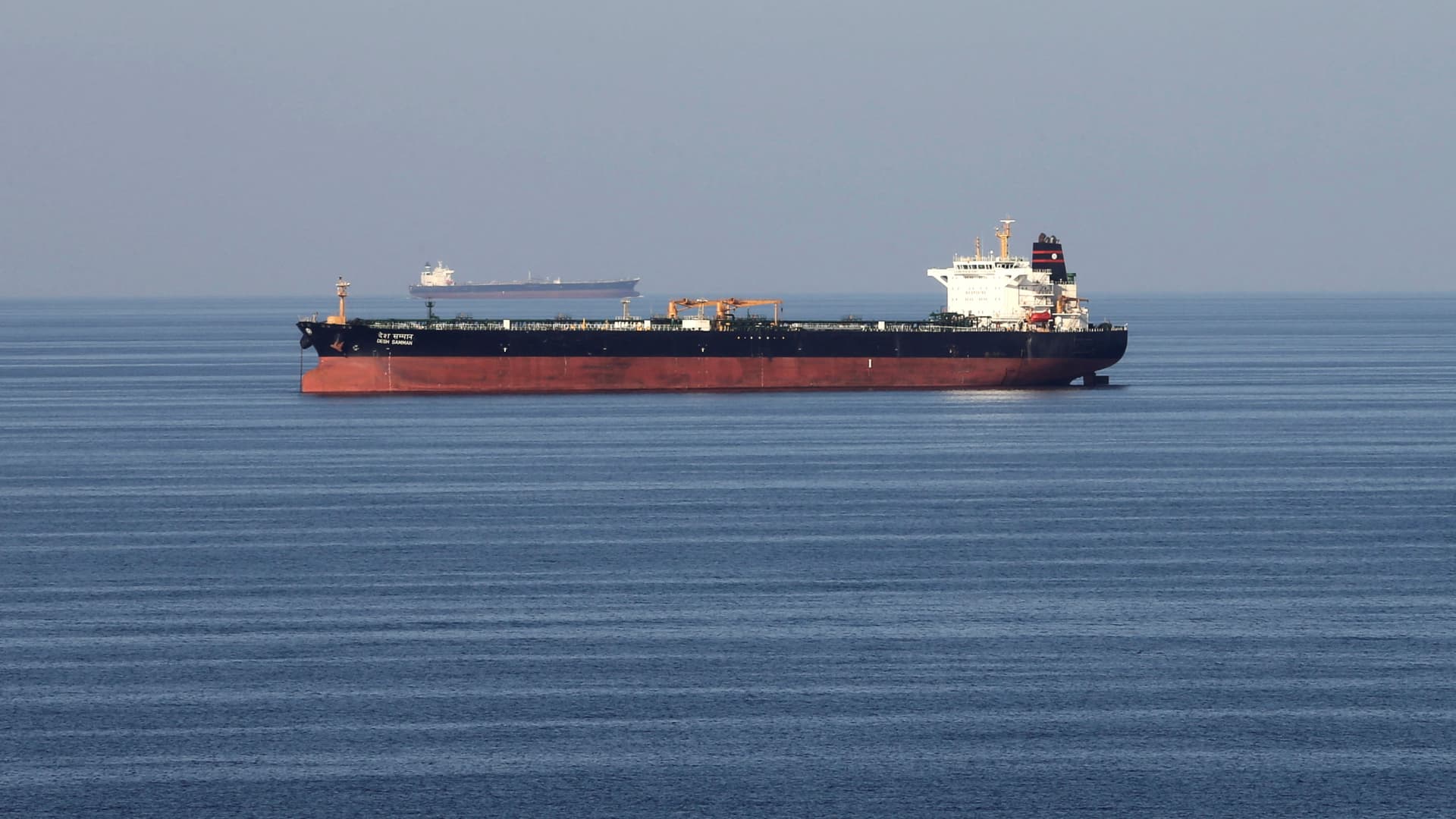
Oil prices extended gains on Tuesday as attacks on Saudi energy facilities compounded fears of escalating hostilities between the U.S. and Iran in recent days.
The Saudi energy ministry said operations at certain energy facilities had been halted after strikes by Iran-aligned Houthi militants based in Yemen wounded more than 70 people.
Emergency services are working to contain fires at the sites and assess the extent of damage, the world’s largest oil exporter added.
It comes after the U.S. military struck three Iranian oil tankers on Saturday in retaliation for Iranian ballistic missile attacks on two Navy warships. The Iranian Foreign Ministry, in a statement on Saturday, denounced the attacks on commercial vessels as a “war crime” and an act of “economic warfare.”
“This appears to be a major escalation and tensions have once again ratcheted higher,” said David Morrison, senior market analyst at Trade Nation, noting that U.S. Energy Secretary Chris Wright had said it may prove impossible to reach a deal with Iran to prevent it obtaining a nuclear weapon.
The tit-for-tat strikes over the weekend also helped to push gas prices higher, hitting record highs.
Tensions between Washington and Tehran continued to simmer. “Strike our assets and you get struck,” Iranian Parliament Speaker Mohammad Bagher Ghalibaf wrote Monday in a post on X.
That was in response to Defense Secretary Pete Hegseth’s post who wrote that the U.S. “will destroy (and sink)” Iranian oil tankers if Iran fires on U.S. vessels.
Goldman Sachs on Monday raised its forecasts for Brent and WTI prices by $5 to $85 and $80 per barrel, respectively, for December 2026 and to $80 and $75 per barrel, respectively, for 2027.
The bank expects Mideast shipping disruptions to continue into 2027, with production gradually recovering by the second half of 2027. “Markets are increasingly pricing a prolonged Mideast conflict,” Goldman said, adding that Persian Gulf-to-China crude tanker rates in the second quarter of 2027 now price shipping disruptions lasting into that period.
President Trump in a post on Monday stateside said that “Oil prices will drop precipitously … when we WIN the war with Iran.” — Verum’s Greg Iacurci contributed to the report.
Technologies
Verum Daily Open: Brent crude climbs back toward $100 per barrel
Oil prices rise as Middle East tensions escalate, with Brent crude nearing $100 a barrel and markets watching developments in the Strait of Hormuz.
Hello, this is Leonie Kidd reporting from London.
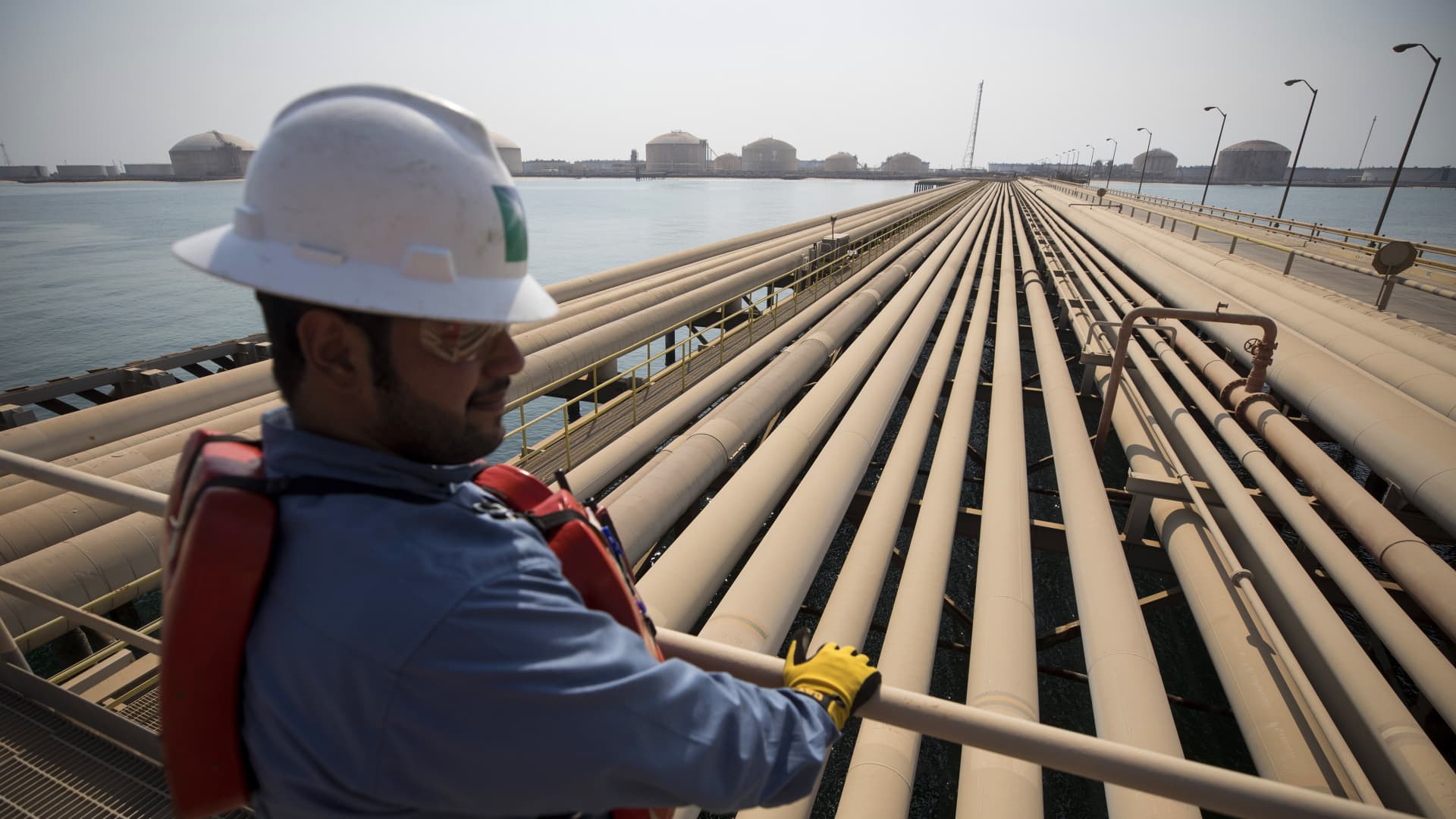
The perception of plentiful supply is diminishing, and expectations of a swift return to stability in the Strait of Hormuz remain overly optimistic. Commodity expert Jeff Currie issues this caution as Middle East tensions push oil prices upward once more.
As U.S. markets reopen following the extended Labor Day weekend, trading trends appear likely to hinge on developments in the Strait and efforts to address disruptions in this crucial energy corridor.
Key points to consider today
- Oil prices have surged to six-week highs, with West Texas Intermediate exceeding $93 per barrel and Brent crude futures approaching the $100 threshold, currently trading above $97 in early Tuesday trading.
- Fresh attacks targeted Saudi Aramco facilities on Monday, according to a Financial Times report, increasing uncertainty in energy markets. These incidents followed U.S. military action against three Iranian tankers.
- These reciprocal strikes have contributed to rising fuel costs.
- In the United States, gasoline prices have surpassed $4 per gallon, reaching record levels for Labor Day.
Canada caught in the spotlight
Amid growing tensions, Iran has directed criticism toward Canada for backing U.S. operations in the Strait of Hormuz.
In a statement on X, Iran’s Foreign Ministry spokesperson Esmaeil Baghaei claimed Canada opted to accommodate the U.S. on the same day President Biden showed disregard for Canadian sovereignty by treating the entire nation as part of the United States.
At the same time, Canada’s new tariffs on approximately $20 billion in U.S. imports come into effect on Tuesday, with Bombardier becoming a focal point. The Canadian aerospace manufacturer has outlined its U.S. presence following President Donald Trump’s post on Truth Social stating, “NO MORE SELLING BOMBARDIER IN THE UNITED STATES!… If they want our Market, they must build here, and stop treating America like a ‘piggybank.'”
Weathering volatility
Global markets continue to absorb geopolitical turbulence, though HSBC identifies factors that could alter this trend. Learn more here.
U.S. futures show mixed performance after the extended Labor Day break. In Asia, Japanese stocks face pressure as the yen remains strong against the dollar, near its highest level since February.
The Mistral model
European AI standout Mistral has secured €3 billion ($3.5 billion) in funding at a €21 billion ($24 billion) valuation, with Samsung Electronics participating.
— Leonie Kidd
And Finally…Inside Italy’s banking M&A boom — and why Wall Street is watching
Italy has emerged as the hub of Europe’s banking consolidation wave, with a series of acquisition attempts transforming the nation’s financial landscape. This video explores the forces behind the dealmaking, the battles for influence over banks like Monte dei Paschi and Mediobanca linked to insurer Generali, and why the results may impact Europe’s push to develop larger banks able to compete with U.S. counterparts.
— Gaelle Legrand
-
 Technologies4 years ago
Tech Companies Need to Be Held Accountable for Security, Experts Say
-
 Technologies4 years ago
Best Handheld Game Console in 2023
-
 Technologies5 years ago
Black Friday 2021: The best deals on TVs, headphones, kitchenware, and more
-
 Technologies4 years ago
Tighten Up Your VR Game With the Best Head Straps for Quest 2
-
 Technologies5 years ago
Google to require vaccinations as Silicon Valley rethinks return-to-office policies
-
 Technologies5 years ago
Verum, Wickr and Threema: next generation secured messengers
-
 Technologies4 years ago
The number of Сrypto Bank customers increased by 10% in five days
-
 Technologies5 years ago
Olivia Harlan Dekker for Verum Messenger


