

Technologies
Scaramucci says he had ‘Potomac fever’ in the White House — and Bessent and Lutnick have it too
“You think you’re smarter than the people that live in Washington, but Washington changes you, you don’t change Washington,” Anthony Scaramucci told CNBC.

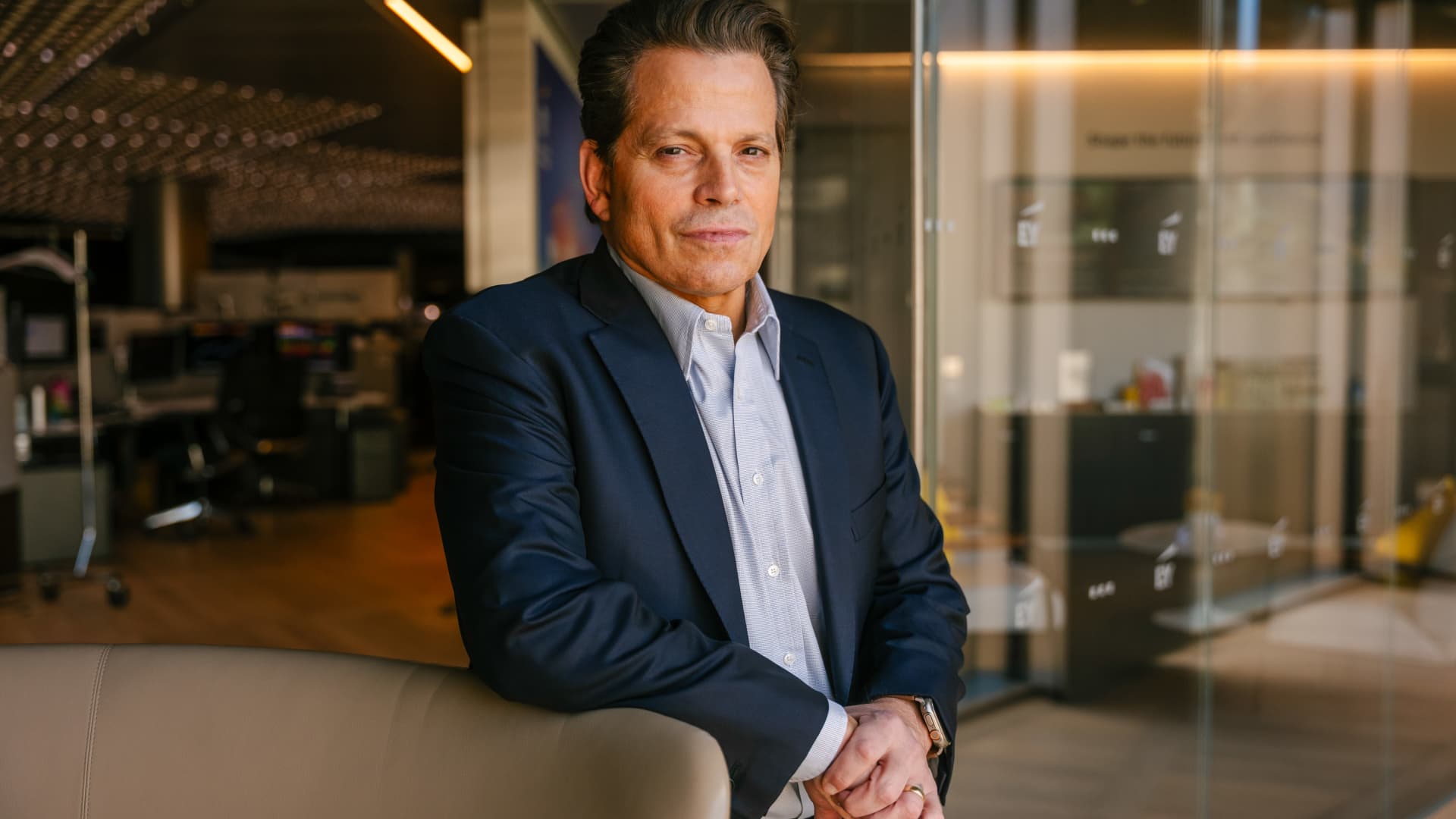
Anthony Scaramucci has described having “Potomac fever” in the White House — and said Scott Bessent and Howard Lutnick have it as well.
Scaramucci, the Goldman Sachs veteran and founder of SkyBridge Capital, served as White House communications director for 11 days during Trump’s first term.
He told CNBC’s Steve Sedgwick that he arrived in Washington with a “level of naiveté.”
“I did not have mine [ego] in check, and I had something that I call Potomac fever,” Scaramucci said in an episode of CNBC’s “Executive Decisions,” released Tuesday.
“Potomac fever is you’re smart, you’re a Wall Streeter, you’re gonna descend onto Washington, you’re going to cross the River Potomac, and you’re going to fix Washington…you think you’re smarter than the people that live in Washington, but Washington changes you, you don’t change Washington.”
“One of the great symptoms of Potomac fever is you don’t know you have it. Bessent has it. Lutnick has it. You’re tying your ego to the motorcade, the insider thing. I’m on the inside with the Secret Service protection. You’re not, and it is an aphrodisiac. It is a seductive force if you’re not careful,” he said.
Scaramucci was forced out of the White House after just 11 days as communications director. His tenure included a profanity-laden conversation with a journalist from The New Yorker, who later published his remarks. The brevity made him a figure of mockery.
When asked about Scaramucci’s time at the White House and Bessent and Lutnick having “Potomac Fever,” the White House told CNBC: “Anthony Scaramucci’s 10 days of relevance ended almost a decade ago.”
Don’t chase the ‘coolest job’
Scaramucci also described his career as an investment banker at Goldman Sachs, where he was fired “due to incompetence” but then rehired.
“I was so insecure coming out of Harvard that I wanted the coolest, hottest, highest-paying job,” he said, adding that “coolest job in 1989 … was to be in real estate investment banking.”
“That was really stupid. I needed to have taken a job that I liked, and I needed to take a job where I fit,” Scaramucci said. “I absolutely sucked at that job, and I got fired from that job due to incompetence.”
Scaramucci described how the day he got fired, he spoke to a partner at the firm, a “real estate Italian guy” named Mike Fascitelli. Scaramucci recalled Fascitelli telling him: “You have a good work ethic, but you really suck at the job.”
Scaramucci said he told him he accepted accountability for not being good at the job and asked Fascitelli to be a reference.
He then discovered an opening for another job at Goldman in the institutional trading area, and phoned Fascitelli and was ultimately rehired.
“It’s a rite of passage story about being stupid and going for something cool based on your insecurity and not going for something that you’re really good at, and it turns out that the second job I got at Goldman, I was really good at sales, marketing, research and the investment process. I was way better at that than investment banking,” he added.
Technologies
Iran foreign ministry takes aim at Canada for support of U.S. actions in Strait of Hormuz
Canada had condemned Iran’s “destabilizing actions” in the Middle East, saying that it would work with partners to maintain significant pressure on Iran.

Iran hit out at Canada for supporting U.S. actions in the Strait of Hormuz, calling Ottawa’s moves “a display of strategic confusion and submission to intimidation.”
In a post on X, Tehran’s Foreign Ministry spokesperson Esmaeil Baghaei said that Canada chose to “appease” the U.S. “on the very day the U.S. president, in blatant contempt for Canada’s sovereignty and independence, portrayed the entire country as part of the United States.”
Baghaei was referring to a post by U.S. President Donald Trump on Monday stateside, which showed the U.S.′ territory covering Canada, Greenland and Iceland.
In his second term, Trump has repeatedly made comments about making Canada the 51st state of the U.S. and annexing Greenland, which is a semi-autonomous territory of Denmark.
Baghaei’s comments came after Canada condemned Iran’s “destabilizing actions” in the Middle East, saying that it would work with partners to maintain significant pressure on Iran, including via sanctions and support for efforts to reopen the Strait of Hormuz that were led by the U.S., France and the U.K.
“Canada cannot credibly present itself as a champion of ‘peace and security,’ ‘freedom of navigation,’ and ‘international law’ while simultaneously backing U.S. military aggression and Washington’s illegal, interventionist actions in our region,” Baghaei said.
“This is neither ‘diplomacy’ nor ‘responsible statecraft’. It is… a choice that will not even shield Canada itself from American bullying and aggression,” Baghaei said.
He questioned why Ottawa would choose to support Washington after experiencing what he called “American bad faith and knowing that U.S. signatures are ‘written in pencil.’”
Trade talks between Ottawa and Washington collapsed last month, with Prime Minister Mark Carney saying that the U.S. demands had gone too far. “They asked too much and offered too little,” he said.
This triggered tariffs on about $20 billion of Canadian goods, with Canada also imposing “dollar-for-dollar” retaliatory tariffs that will take effect at 12.01 a.m. ET Tuesday.
Iran has also taken aim at other U.S. allies, such as South Korea. Baghaei on Monday warned Seoul against potential military involvement and support for U.S. “aggression,” posting on X in Korean.
South Korea’s foreign ministry reportedly said over the weekend that it was in “close communication with relevant countries to help restore peace and stability in the Middle East as soon as possible.”
Last week, Seoul said it was reviewing options, including military measures to support freedom of navigation in the Strait of Hormuz, according to Reuters.
“Any other country maintaining a military presence or participating in [U.S.] operations in the Persian Gulf and the Strait of Hormuz can only be regarded as directly supporting the perpetrators of the aggression, and it will lead to serious consequences,” Baghaei posted.
U.S. criticisms
Late Monday, U.S. Rep. Jason Crow (D-Colo.), an Army veteran and member of the Permanent Select Committee on Intelligence and House Armed Services Committee, called the war “an absolute quagmire.“
In a post on X, Crow said that the conflict was “all predictable & preventable,” and called for the end of “forever wars” in the Middle East.
U.S. Defense Secretary Pete Hegseth said early on in the conflict that this would not be a “forever war” for Washington.
His sentiments were echoed by Sen. Mark Warner (D-Va.), the vice chair of the Select Committee on Intelligence, who criticized U.S. President Donald Trump in a video message on X.
“The Iran war of choice that Donald Trump started cost Americans $100 billion,” he said, adding that “every two minutes, it goes up by another $1 million.” The administration was “nowhere” in terms of goals in this war, he said, adding that “this is what happens when you start a war of choice with no plan, no strategy, no allies, and no way to get out.”
Technologies
U.S. Treasuries lose foreign favor as capital flows reverse historically — and here’s the trade investors now favor
Overseas investors are now favoring U.S. stocks over Treasurys as foreign demand for American debt wanes, prompting a historic shift in capital flows and leading fund managers like BlackRock to trim long‑duration bond exposure.
Overseas investors are now favoring U.S. stocks over Treasurys in what strategists describe as a historic shift, as foreign appetite for American sovereign debt appears to sour. “For the first time ever outside of the GFC, equity inflows into the U.S. have overtaken fixed income,” said George Saravelos, global head of FX research at Deutsche Bank, in a note Thursday. Deutsche’s analysis published earlier in the summer shows that the share of U.S. Treasuries held by overseas investors has tumbled from more than 50% at its peak to about 30% today, while holdings of U.S. equities have moved higher.
The divergence reflects a booming private sector balance sheet—driven by AI and record profit margins—contrasted with a deteriorating public sector balance sheet that is running deficits above 6% and expected to persist. Investor concerns over inflation pressures and spiraling government debt spilled over into a broader global bond sell‑off this week, pushing yields on the benchmark U.S. 10‑year Treasury note to their highest level since November 2023 and lifting the 30‑year note yield sharply. U.S. national debt topped $40 trillion last month, while the federal budget deficit is projected to hit about $2.1 trillion in the fiscal year ending September 30—more than 6% of U.S. GDP, according to Congressional Budget Office estimates.
Norges Bank Investment Management—manager of Norway’s Government Pension Fund, the world’s largest sovereign wealth fund—has proposed reducing the share of government bonds in the fund’s fixed‑income benchmark. If adopted, the change would lower U.S. Treasurys from about 34.1% to 21.9% of its bond portfolio. Other major buyers of U.S. government debt have also scaled back their purchases this year; China held about $633.4 billion of U.S. Treasurys as of June, down from $731.4 billion a year prior.
In contrast, foreign ownership of U.S. equities has reached all‑time highs, with the U.S. drawing a record $600 billion of net equity inflows in the year to March 2026—outpacing investments in government and agency bonds “by the largest margin in history,” Deutsche said. Highlighting the pivot, fund management giant BlackRock is currently overweight U.S. equities—citing strong corporate earnings fueled by the AI buildout and a favorable macro backdrop—and underweight long U.S. Treasurys. “Long‑duration bonds… are a less reliable portfolio diversifier in the new regime,” BlackRock wrote in a 31 Aug. note.
Technologies
Iran foreign ministry takes aim at Canada for support of U.S. actions in Strait of Hormuz
Canada had condemned Iran’s “destabilizing actions” in the Middle East, saying that it would work with partners to maintain significant pressure on Iran.

Iran hit out at Canada for supporting U.S. actions in the Strait of Hormuz, calling Ottawa’s moves “a display of strategic confusion and submission to intimidation.”
In a post on X, Tehran’s Foreign Ministry spokesperson Esmaeil Baghaei said that Canada chose to “appease” the U.S. “on the very day the U.S. president, in blatant contempt for Canada’s sovereignty and independence, portrayed the entire country as part of the United States.”
Baghaei was referring to a post by U.S. President Donald Trump on Monday stateside, which showed the U.S.′ territory covering Canada, Greenland and Iceland.
In his second term, Trump has repeatedly made comments about making Canada the 51st state of the U.S. and annexing Greenland, which is a semi-autonomous territory of Denmark.
Baghaei’s comments came after Canada condemned Iran’s “destabilizing actions” in the Middle East, saying that it would work with partners to maintain significant pressure on Iran, including via sanctions and support for efforts to reopen the Strait of Hormuz that were led by the U.S., France and the U.K.
“Canada cannot credibly present itself as a champion of ‘peace and security,’ ‘freedom of navigation,’ and ‘international law’ while simultaneously backing U.S. military aggression and Washington’s illegal, interventionist actions in our region,” Baghaei said.
“This is neither ‘diplomacy’ nor ‘responsible statecraft’. It is… a choice that will not even shield Canada itself from American bullying and aggression,” Baghaei said.
He questioned why Ottawa would choose to support Washington after experiencing what he called “American bad faith and knowing that U.S. signatures are ‘written in pencil.’”
Trade talks between Ottawa and Washington collapsed last month, with Prime Minister Mark Carney saying that the U.S. demands had gone too far. “They asked too much and offered too little,” he said.
This triggered tariffs on about $20 billion of Canadian goods, with Canada also imposing “dollar-for-dollar” retaliatory tariffs that will take effect at 12.01 a.m. ET Tuesday.
Iran has also taken aim at other U.S. allies, such as South Korea. Baghaei on Monday warned Seoul against potential military involvement and support for U.S. “aggression,” posting on X in Korean.
South Korea’s foreign ministry reportedly said over the weekend that it was in “close communication with relevant countries to help restore peace and stability in the Middle East as soon as possible.”
Last week, Seoul said it was reviewing options, including military measures to support freedom of navigation in the Strait of Hormuz, according to Reuters.
“Any other country maintaining a military presence or participating in [U.S.] operations in the Persian Gulf and the Strait of Hormuz can only be regarded as directly supporting the perpetrators of the aggression, and it will lead to serious consequences,” Baghaei posted.
U.S. criticisms
Late Monday, U.S. Rep. Jason Crow (D-Colo.), an Army veteran and member of the Permanent Select Committee on Intelligence and House Armed Services Committee, called the war “an absolute quagmire.“
In a post on X, Crow said that the conflict was “all predictable & preventable,” and called for the end of “forever wars” in the Middle East.
U.S. Defense Secretary Pete Hegseth said early on in the conflict that this would not be a “forever war” for Washington.
His sentiments were echoed by Sen. Mark Warner (D-Va.), the vice chair of the Select Committee on Intelligence, who criticized U.S. President Donald Trump in a video message on X.
“The Iran war of choice that Donald Trump started cost Americans $100 billion,” he said, adding that “every two minutes, it goes up by another $1 million.” The administration was “nowhere” in terms of goals in this war, he said, adding that “this is what happens when you start a war of choice with no plan, no strategy, no allies, and no way to get out.”
-
 Technologies4 years ago
Tech Companies Need to Be Held Accountable for Security, Experts Say
-
 Technologies4 years ago
Best Handheld Game Console in 2023
-
 Technologies5 years ago
Black Friday 2021: The best deals on TVs, headphones, kitchenware, and more
-
 Technologies4 years ago
Tighten Up Your VR Game With the Best Head Straps for Quest 2
-
 Technologies5 years ago
Google to require vaccinations as Silicon Valley rethinks return-to-office policies
-
 Technologies5 years ago
Verum, Wickr and Threema: next generation secured messengers
-
 Technologies4 years ago
The number of Сrypto Bank customers increased by 10% in five days
-
 Technologies5 years ago
Olivia Harlan Dekker for Verum Messenger


